
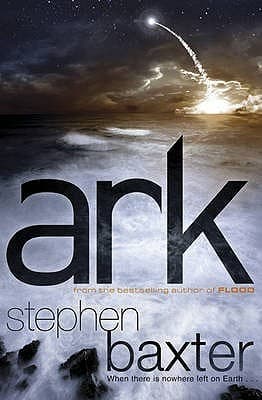
Synopsis
Covers the whole plot, including the ending.
- Difficulty
- Medium
- Pacing
- Variable
- Mood
- Bleak, Hopeful, Epic, Thought-provoking, Grand
- Read it if
- You enjoy epic generation-ship stories, hard science fiction with a focus on human survival against impossible odds, and narratives spanning vast stretches of time and space.
- Skip it if
- You prefer character-driven narratives over plot-driven ones, or find stories about humanity's grim struggle for survival too bleak.
Ark Plot Summary
Covers the whole plot, including the ending.
The Last Days of Earth
In 2052, Earth faces catastrophic flooding. Decades earlier, Project Ark began building a starship to carry a few hundred survivors to a new habitable planet. Grace, a young woman, is chosen for the mission and works on the ship's construction. Her sister, Holle, is not chosen, causing a deep rift between them. Venus, a brilliant but ruthless scientist, is also involved, often making difficult ethical decisions for the greater good. As global conflicts erupt over dwindling land and resources, pressure to complete the Ark grows, with the world's remaining assets diverted to the project. The chosen few train for an uncertain future among the stars, while billions face a watery grave.
The Launch and the Exodus
The launch day arrives amid global chaos and the final stages of the flood. Grace, Venus, and the other survivors board the starship, Ark One. The separation from loved ones, especially for Grace, who leaves Holle behind, is painful. The launch is a monumental engineering feat, as the Ark breaks free from Earth and begins its long journey through space. The first days are a mix of relief, grief, and the huge realization of the task ahead. The crew, a diverse group of scientists, engineers, and specialists, must now learn to live together in the Ark's confined space, their lives linked by their shared mission to find a new home.
Generations in Transit
As Ark One journeys through space, decades turn into centuries. The original crew, including Grace and Venus, age and pass away, leaving their descendants to continue the mission. A self-sustaining ecosystem is created within the Ark, providing food and oxygen. New generations are born and raised knowing only the ship. Traditions and a unique culture develop, shaped by isolation and the singular purpose of their voyage. However, life aboard the Ark has difficulties: resource management, psychological strain, and occasional technical problems test the inhabitants' resilience. Grace's granddaughter, also named Grace, becomes important in this new generation, dealing with her ancestors' legacy and the mission's responsibility.
The First Contact
After centuries of travel, Ark One finds a colossal, artificial structure in deep space. This discovery excites and worries the crew. Venus's great-granddaughter, also named Venus, now a lead scientist, leads the investigation. The structure, called 'The Maze,' appears to be an ancient, abandoned alien artifact of immense size and complexity. Initial attempts to understand its purpose or origin raise more questions than answers. The encounter forces the Ark's inhabitants to consider other intelligent life in the universe, adding a new element to their journey. The decision to investigate or bypass The Maze creates conflict among the crew, showing differing priorities and fears.
The Maze's Secrets
A small team, including the younger Grace and Venus, goes into The Maze. They find incredibly advanced technology and evidence of its creators, the 'Builders.' The Maze seems to be a vast, automated system for unknown purposes, perhaps interstellar infrastructure or a defense. However, their exploration also uncovers a dormant but potentially hostile artificial intelligence or a self-repairing system that sees their presence as an intrusion. The team faces immediate danger, barely escaping with their lives and important data. This encounter confirms humanity is not alone, but also introduces a new, formidable challenge to their survival, forcing them to change their strategies for finding a new home.
The Second Ark
Using the advanced technology and materials from The Maze, the Ark One crew begins building a second, faster starship, Ark Two. This new vessel uses alien technology, significantly shortening the journey to their target system. Building Ark Two has critics, as it diverts resources and attention from Ark One's maintenance and poses new technological risks. However, the promise of a quicker arrival and escape from The Maze's potential threat ultimately sways the majority. The construction is difficult, requiring ingenuity and collaboration across generations, as they reverse-engineer and adapt alien systems for human use.
Arrival at Proxima Centauri
Ark Two, carrying a smaller, select group, including the younger Grace and Venus, arrives in the Proxima Centauri system. Their initial excitement turns to bitter disappointment when they find the target planet, Proxima Centauri b, is not the habitable world they hoped for. Its atmosphere is toxic, and the surface is hostile to human life. The centuries of hope and sacrifice seem wasted. This devastating setback forces the crew to rethink their entire mission, facing the real possibility that they might never find a suitable home. Morale drops, and leadership faces immense pressure to find an alternative quickly.
The Search for a New Home
Undeterred by the failure at Proxima Centauri b, the Ark Two crew, led by the younger Grace and Venus, activate long-range probes and observation systems. They use alien technology to scan other star systems for a suitable planet. This renewed search is full of tension and urgency, as resources are finite, and the psychological toll of their long journey weighs heavily on everyone. They carefully analyze data from countless exoplanets, searching for the exact conditions for human life. The process is slow and painstaking, but a glimmer of hope appears when they identify a promising candidate in a distant system, a world with the right atmosphere and liquid water, reigniting their determination.
The Ultimate Sacrifice
As Ark Two nears the newly identified habitable planet, a critical system malfunction threatens the entire mission. The ship's primary drive begins to fail, risking their ability to achieve a stable orbit and land safely. The younger Grace, now an experienced engineer, realizes a manual intervention is needed. This intervention is incredibly dangerous and likely suicidal. Remembering the sacrifices of her ancestors and the billions lost on Earth, she volunteers for the mission. With Venus coordinating from the command center, Grace navigates the treacherous, failing systems, making the ultimate sacrifice to ensure humanity's survival. Her actions secure the Ark's safe arrival, but at the cost of her own life.
A New Beginning
Following Grace's heroic sacrifice, Ark Two successfully lands on the new, green planet, which they name 'New Earth.' The survivors, led by Venus, emerge from the Ark to a breathtaking alien landscape. The initial challenges are huge: establishing a base, adapting to the new environment, and beginning the long process of terraforming to make the planet fully hospitable. They carry the legacy of Earth and the lessons learned from their centuries-long journey. The story ends with the first steps of colonization, as humanity, though drastically reduced in number, begins to build a new civilization on a distant world, fulfilling their ancestors' desperate dream and securing the future of their species.
Principal Figures
Grace (Original)
Protagonist
One of the chosen few to embark on Ark One, representing humanity's hope.
Grace is introduced as a young woman working on Project Ark, deeply committed to the mission despite the personal cost. She is characterized by her empathy, resilience, and a strong sense of duty. Her primary motivation is the survival of humanity, but she struggles with the emotional burden of leaving her sister, Holle, behind. She adapts to life aboard the Ark, eventually becoming a respected elder, passing on the legacy and knowledge to subsequent generations. Her journey embodies the initial sacrifice and enduring hope of the first generation.
Relationships: Holle (Sister, tragically separated by the Ark selection process.); Venus (Original) (Colleague and sometimes ideological opponent, sharing a common goal.)
Holle
Supporting/Mentioned
Grace's sister, left behind on a dying Earth.
Holle represents the billions left behind on Earth. Her character is primarily seen through Grace's memories and the profound impact her absence has on Grace. She embodies the tragedy of the selection process and the immense loss suffered by humanity. Though not a direct participant in the Ark's journey, her fate underscores the stakes of the mission and the moral dilemmas faced by those who chose to leave. Her memory serves as a constant reminder of the world they lost and the responsibility they carry.
Relationships: Grace (Original) (Sister, profoundly separated by the Ark's launch.)
Venus (Original)
Protagonist/Supporting
A brilliant but pragmatic scientist, making difficult decisions for humanity's survival.
Venus is a key figure in Project Ark from its inception. She is highly intelligent, driven, and often takes a utilitarian approach to problem-solving, prioritizing the survival of the species above individual sentiment. While her decisions can appear ruthless, they are always motivated by the overwhelming necessity of the mission. She is responsible for many of the scientific and technological advancements that make the Ark's journey possible. Her legacy is one of scientific rigor and unwavering dedication, even at great personal and ethical cost.
Relationships: Grace (Original) (Colleague, often clashing over ethical considerations but united by the mission.)
Grace (Descendant)
Protagonist
A later generation descendant, inheriting the legacy and making the ultimate sacrifice.
The younger Grace is a descendant of the original Grace, born and raised aboard Ark One. She embodies the hopes and struggles of the later generations, who have never known Earth. She is intelligent, resourceful, and possesses a strong moral compass, much like her namesake. She becomes a skilled engineer, playing a crucial role in the development of Ark Two and navigating the challenges of interstellar travel. Her arc culminates in a selfless act, proving that the spirit of sacrifice and dedication to humanity's future transcends generations.
Relationships: Venus (Descendant) (Friend and colleague, often working together on scientific and engineering challenges.)
Venus (Descendant)
Protagonist/Supporting
A later generation scientist, leading the search for a new home.
The younger Venus is a descendant of the original Venus, inheriting her ancestor's scientific brilliance and leadership qualities. She is a prominent scientist aboard the Ark, particularly skilled in xenology and astrogation. She leads the efforts to understand The Maze and later spearheads the search for a new habitable planet. While still pragmatic, she often shows more emotional depth than her ancestor, having grown up within the close-knit community of the Ark. She guides the survivors through the final, critical stages of their journey.
Relationships: Grace (Descendant) (Friend and colleague, often collaborating on critical missions.)
The Builders
Mentioned
Enigmatic alien civilization responsible for 'The Maze'.
The Builders are an ancient, advanced alien civilization whose existence is revealed through their colossal artifact, 'The Maze.' They are not directly encountered, but their technology and the sheer scale of their creations provide a profound sense of wonder and mystery. Their purpose and fate remain largely unknown, serving as a backdrop to humanity's journey and a reminder of the vastness and complexity of the universe. Their legacy within The Maze provides both a threat and a crucial resource for the Ark's survivors.
Themes & Insights
Humanity's Enduring Hope and Resilience
Despite Earth's destruction and centuries of difficult travel, humanity consistently finds the will to survive. Project Ark itself, conceived when the planet faced annihilation, shows this hope. The generations aboard the Ark keep their purpose, overcoming psychological strain, resource scarcity, and threats like 'The Maze.' Grace's ultimate sacrifice for the landing on New Earth shows the enduring spirit and selflessness that drives their survival.
“We carried the memory of a drowned world, but also the blueprint of a new one, etched in our very bones.”
The Weight of Sacrifice and Legacy
The story is full of sacrifice, from the billions left behind on Earth to individual acts of heroism throughout the journey. Grace's initial separation from Holle sets a poignant tone for the sacrifices made. Each generation aboard the Ark carries the weight of their ancestors' choices and the responsibility to continue the mission. The lives lived and lost are not wasted; they form a continuous chain of effort and dedication that leads to a new home. The younger Grace's sacrifice is the peak of this generational legacy.
“Every step we took was on the shoulders of those who came before, a testament to their unbearable choices.”
Ethical Dilemmas in Survival
The book explores the difficult ethical choices made when humanity's survival is at stake. The initial selection process for the Ark, which condemned billions to death, is the clearest example. Characters like the original Venus often make practical decisions that prioritize the group over individual lives or feelings. The decision to use alien technology in 'The Maze,' despite potential dangers, also presents a moral problem. These dilemmas highlight the harsh realities of extreme survival and the blurred lines between right and wrong when extinction looms.
“When the species stands at the brink, sentiment becomes a luxury we cannot afford.”
The Vastness and Indifference of the Cosmos
The Ark's journey shows the immense scale of space and the often-harsh nature of the universe. The centuries of travel, the emptiness between stars, and the initial disappointment of Proxima Centauri b all emphasize humanity's smallness in the cosmos. The encounter with 'The Maze' introduces the idea of ancient, powerful alien civilizations, further highlighting the universe's complexity and indifference to human struggles. This theme reinforces that humanity's survival is a fragile effort against an overwhelming backdrop.
“The stars cared nothing for our hopes, our fears, or our desperate flight. They simply were.”
Plot Devices & Literary Techniques
Generation Ship
A starship designed to sustain multiple generations over centuries-long interstellar journeys.
The Ark itself is the primary plot device, a massive generation ship that serves as humanity's last refuge. It is a self-sustaining ecosystem, a mobile civilization, and a symbol of humanity's desperate gamble. The passage of generations aboard the Ark allows for the exploration of evolving cultures, the weight of legacy, and the psychological impact of prolonged isolation. It creates an enclosed, controllable environment where character development and plot progression are directly tied to the ship's systems, resources, and the passage of time.
The Maze (Alien Artifact)
An ancient, colossal alien structure encountered in deep space, providing both peril and opportunity.
The Maze serves as a catalyst for a significant turning point in the Ark's journey. It introduces the element of alien life, provides access to advanced technology, and presents a new, immediate threat. Its discovery breaks the monotony of interstellar travel, forcing the crew to adapt and innovate. The alien technology found within The Maze is crucial for the construction of Ark Two, accelerating their journey and providing solutions to previously insurmountable problems, while also raising questions about the intentions of its creators.
Parallel Protagonists (Generational)
Multiple characters across different generations share the same name and thematic roles.
The use of 'Grace' and 'Venus' across different generations is a key plot device. It emphasizes the continuity of humanity's mission and the enduring traits that define its survival. While distinct individuals, the shared names highlight the legacy and responsibility passed down through time. This allows the narrative to explore how core human qualities, such as empathy (Grace) and pragmatic intelligence (Venus), manifest and evolve within different contexts and challenges over centuries, tying the past, present, and future of the mission together.
Ark Quotes
“Humanity has always reached for the stars, even when those stars were mere pinpricks in a painted ceiling.”
“The past is a foreign country; the future, an unwritten novel.”
“Survival isn't just about breathing; it's about holding onto what makes you human.”
“Sometimes, the greatest journey isn't across the void, but into the depths of your own heart.”
“We built this ark not for ourselves, but for the echoes of our dreams.”
“The universe doesn't care about your plans. It just is.”
“Hope is a fragile thing, easily crushed, but impossible to live without.”
“Every generation believes it holds the key to the future, until the next one arrives to prove them wrong.”
“The stars are not just lights in the sky; they are destinations, promises, and warnings.”
“To forget where you came from is to lose sight of where you are going.”
“Even in the darkest void, there is always a flicker of light, if you know where to look.”
“We are all passengers on this great ark, whether we chose the journey or not.”
“Knowledge is a burden, but ignorance is a death sentence.”
“The greatest discovery is not out there, but within us: the capacity to adapt, to endure, to dream.”
Quiz
10 questions on the plot and the characters. Each answer comes with a short explanation.
Question 1
What catastrophic event primarily brings about the end of the world in 'Ark'?
- A global nuclear war
- A massive asteroid impact
- The last great flood overwhelming the lands
- A deadly pandemic wiping out most of humanity
Show answer
C. The last great flood overwhelming the lands The book explicitly states that 'Our world ended in 2052, the year the last great flood finally overwhelmed the lands.'
Question 2
In what year does the world primarily end due to the catastrophic event?
- 2042
- 2052
- 2062
- 2072
Show answer
B. 2052 The synopsis states, 'Our world ended in 2052, the year the last great flood finally overwhelmed the lands.'
Question 3
Where does the desperate bid for human survival begin, specifically the project to build the starship?
- Europe
- Asia
- Africa
- America
Show answer
D. America The synopsis mentions, 'A desperate bid for survival began in America, in the years before the end.'
Question 4
Which of the following is NOT mentioned as one of the three main women whose story 'Ark' follows?
- Grace
- Venus
- Holle
- Diana
Show answer
D. Diana The synopsis specifically names Grace, Venus, and Holle as the three women whose story 'Ark' focuses on.
Question 5
What is the primary objective of the starship project?
- To establish an underwater colony on Earth
- To create a self-sustaining orbital station around Earth
- To take a few hundred survivors on an epic journey to a new world
- To send a probe to terraform Mars for future generations
Show answer
C. To take a few hundred survivors on an epic journey to a new world The project's goal is described as 'creating a starship to take a few hundred survivors on an epic journey to a new world.'
Question 6
What is the approximate number of survivors expected to be taken on the starship?
- A few dozen
- A few thousand
- A few hundred
- Millions
Show answer
C. A few hundred The text states the project aims to 'take a few hundred survivors' to a new world.
Question 7
What critical social consequence of resource allocation and selection for the Ark project is highlighted?
- Increased global cooperation and unity
- The development of new, sustainable energy sources
- Families being torn apart and savage wars over remaining high ground
- A universal agreement on who should be saved
Show answer
C. Families being torn apart and savage wars over remaining high ground The synopsis mentions, 'As the waters rise, as savage wars are fought over the remaining high ground, the work goes on. Those who will live, of the billions who will die, are chosen. Families are torn apart...'
Question 8
The synopsis implies that the launch day of the Ark will be what for the survivors?
- The end of their struggles
- The beginning of a new, peaceful life
- Only the beginning of the nightmare
- A triumphant celebration of success
Show answer
C. Only the beginning of the nightmare The final sentence states, 'For the few survivors, the day of the launch will be only the beginning of the nightmare.'
Question 9
What phrase is used to describe the starship project, suggesting its immense difficulty and uncertainty?
- A guaranteed success
- Humanity's final triumph
- An impossible dream
- A routine scientific endeavor
Show answer
C. An impossible dream The synopsis describes the project as 'an impossible dream,' highlighting its challenging nature.
Question 10
What is the implied fate of the majority of Earth's population, as opposed to the few hundred survivors?
- They will find refuge in new underwater cities.
- They will be rescued by an alien civilization.
- They will perish, as six billion are destined to die.
- They will adapt to living on the remaining high ground indefinitely.
Show answer
C. They will perish, as six billion are destined to die. The very first line states, 'Hundreds will live, six billion will die,' clearly indicating the fate of the vast majority.
Ark FAQ
What is the core premise of 'Ark' by Stephen Baxter?
'Ark' centers on humanity's desperate attempt to escape an Earth being consumed by rising floodwaters, which are predicted to completely submerge all land by 2052. A starship, named the Ark, is constructed to carry a select few hundred survivors to a new, habitable planet, leaving billions behind.
Who are the three main female protagonists and what are their roles?
The story follows Grace, a key figure involved in the Ark project's construction and early operations; Venus, one of the original colonists on the Ark; and Holle, a descendant of Venus who experiences the later stages of the journey and the challenges of finding a new home. Their perspectives span generations of the Ark's voyage.
What kind of challenges do the survivors face on Earth before the launch?
Before the Ark's launch, the survivors contend with a world rapidly drowning, leading to savage wars over diminishing high ground and resources. The selection process for who gets to board the Ark is brutal, tearing families apart and creating immense moral dilemmas amidst global chaos.
What is the 'nightmare' that begins after the launch, as mentioned in the synopsis?
The nightmare after launch refers to the immense challenges of interstellar travel, including the vast distances, the psychological toll of generations living aboard a confined vessel, resource management, and the unknown dangers of finding and settling a new exoplanet. The journey itself is fraught with peril and uncertainty.
How does the novel explore the ethical implications of 'choosing' who lives and who dies?
The novel deeply explores the ethical quandaries of the selection process for the Ark, highlighting the arbitrary nature and the profound trauma inflicted on those left behind. It delves into the moral burden carried by those chosen, and the societal structures that emerge from such a desperate, exclusionary act.
What is the significance of the 2052 flood deadline?
The 2052 deadline for Earth's complete submersion creates an intense sense of urgency and a definitive countdown, driving the entire Ark project. It underscores the finality of humanity's decision and the apocalyptic scale of the environmental disaster, leaving no room for alternative solutions.
Are there any specific technological innovations or scientific concepts central to the Ark's journey?
The Ark itself represents a significant technological feat, likely incorporating advanced propulsion systems for interstellar travel, closed-loop life support systems for multi-generational survival, and sophisticated terraforming or planetary assessment technologies for finding a new home. The science of long-duration space travel is central.
How does the narrative structure allow for the exploration of multi-generational themes?
By following Grace, Venus, and Holle across different time periods, the narrative allows the reader to witness the initial hope and despair, the long, arduous journey through space, and the eventual struggles of the descendants trying to fulfill the original mission. This structure emphasizes the generational sacrifice and evolving purpose.
What kind of psychological impact does living in a confined starship for generations have on the characters?
Living in the Ark for generations leads to psychological challenges such as cabin fever, a loss of connection to Earth's history, the development of unique societal norms, and existential questioning about their purpose. Characters like Holle grapple with an identity shaped solely by the ship and its mission.
How does the book explore the concept of 'humanity' when separated from Earth and its past?
The book explores how 'humanity' transforms when stripped of its planetary origin and historical context. It questions whether the survivors truly represent humanity, or if they evolve into something new, shaped by the confines of the Ark and the singular goal of survival. This creates a fascinating philosophical debate.
Are there any factions or internal conflicts that arise among the Ark's inhabitants?
Given the multi-generational nature of the journey and the confined environment, it's highly probable that factions or internal conflicts arise among the Ark's inhabitants. These could stem from differing interpretations of the mission, resource allocation, leadership struggles, or evolving social ideologies over centuries.
What kind of 'new world' are the survivors hoping to find, and what challenges might they face upon arrival?
The survivors are hoping to find a habitable exoplanet, ideally one that can support human life without extensive terraforming. Upon arrival, they might face challenges such as an alien ecosystem, unforeseen environmental hazards, adapting to a new gravity or atmosphere, or even the possibility of existing indigenous life forms.
Does the book offer any commentary on contemporary environmental issues?
Yes, by depicting Earth's demise due to overwhelming floods, the book serves as a stark commentary on contemporary environmental issues and the potential consequences of climate change. It exaggerates current anxieties to explore a worst-case scenario and humanity's desperate response.
How do Grace's initial experiences and motivations influence the later generations like Holle?
Grace's initial experiences, her dedication to the Ark's construction, and the sacrifices made to launch it, likely form the foundational mythology and driving purpose for later generations. Holle and others would inherit the legacy of Grace's struggles, feeling the weight of their ancestors' desperate gambit.
What is the psychological burden of being one of the 'chosen few' who survive?
The psychological burden of being chosen is immense, encompassing survivor's guilt, the weight of carrying humanity's future, and the knowledge of the billions left behind. This can manifest as relentless pressure, a sense of profound loss, and a constant questioning of their worthiness.
Is there a sense of hope or despair that dominates the narrative?
The narrative likely balances both hope and despair. While the Ark represents a desperate hope for survival, the immense sacrifices, the vastness of space, and the uncertainty of finding a new home infuse the story with significant despair and existential dread. It's a testament to enduring hope against overwhelming odds.
How does the book address the loss of Earth as a home world?
The book addresses the loss of Earth through the memories and stories passed down, creating a deep sense of longing and a foundational trauma for the Ark's inhabitants. It explores how a species adapts when its ancestral home is irrevocably gone, and whether a new planet can ever truly replace it.
What is the ultimate goal or definition of 'success' for the Ark project?
The ultimate goal of the Ark project is not just to find a new planet, but to establish a self-sustaining human civilization on it, ensuring the long-term survival and continuation of the species. Success would mean the descendants of the original colonists thriving in a new home, far from Earth's fate.
About the author

Stephen Baxter is a British author known for his contributions to science fiction. His notable works include "Time," which explores the concept of time travel, "Flood," a speculative narrative about a future inundated world, "Ark," which delves into humanity's survival in space, and "Voyage," a reimagining of the Mars exploration.
Similar books
- Seveneves
Neal Stephenson
4.0 (95k) average on GoodreadsFantasyExplores humanity's struggle for survival and rebuilding after a catastrophic event, with a focus on engineering and long-term planning.
- Aurora
Kim Stanley Robinson
3.8 (20k) average on GoodreadsFantasyArk shares thematic elements of generational ships and the psychological toll of deep space. However, Baxter's Ark focuses more on technological solutions and a starker, often more pessimistic view of survival, whereas Robinson's Aurora delves deeper into social evolution, philosophical questions of colonization, and the ethical implications of creating new societies in space.
- Harry Potter and the Sorcerer's Stone
J.K. Rowling
4.5 (7M) average on GoodreadsFantasyRescued from a miserable life under the stairs, an orphaned boy discovers he's a wizard destined for a magical school, where he uncovers a dangerous secret tied to the dark wizard who murdered his parents.
- The Hunger Games
Suzanne Collins
4.3 (6.4M) average on GoodreadsFantasyIn a future where children fight to the death on live television, Katniss Everdeen volunteers for the arena, turning a death sentence into a fight for survival and a spark of rebellion.
- 1984
George Orwell
4.2 (3.1M) average on GoodreadsPoliticsIn a future where surveillance and thought control are absolute, a man's search for truth clashes with the Party, showing that hope can be a form of rebellion.
- Divergent
Veronica Roth
4.2 (2.9M) average on GoodreadsFantasyIn a society divided by virtues, a sixteen-year-old's difference from the norm starts a rebellion that threatens her world.





Enjoyed the summary?
A summary gives you the shape of the book. The book itself has the detail, the examples and the voice.
Find Ark on AmazonAs an Amazon Associate, BookBrief earns from qualifying purchases. How we're funded