

Synopsis
Covers the whole plot, including the ending.
- Difficulty
- Medium
- Pacing
- Moderate
- Mood
- Whimsical, Romantic, Comedic, Pastoral
- Read it if
- You enjoy classic romantic comedies with witty banter, mistaken identities, and a pastoral setting.
- Skip it if
- You prefer modern, straightforward narratives without archaic language or gender-bending plot devices.
As You Like It Plot Summary
Covers the whole plot, including the ending.
A Brother's Cruelty and Budding Love
The play begins with Orlando de Boys complaining to Adam, an old family servant, about the poor treatment he receives from his older brother, Oliver. Their father's will provided for Orlando, but Oliver denies him an education and keeps him in servitude. At Duke Frederick's court, Rosalind, daughter of the banished Duke Senior, and her cousin Celia, Duke Frederick's daughter, discuss Rosalind's sadness. A wrestling match is announced, featuring the strong Charles. Orlando decides to compete despite warnings about Charles's strength. Rosalind and Celia try to stop him, but Orlando is set on it. He defeats Charles, surprising and impressing the court, especially Rosalind, who immediately falls in love with him.
Exile and Flight to Arden
Duke Frederick, despite promising to protect Rosalind, suddenly banishes her from his court. He fears her popularity might outshine his own daughter, Celia. He gives her ten days to leave, threatening death if she stays. Celia, loyal to Rosalind, says she will go with her. They decide to disguise themselves for safety on their trip to the Forest of Arden, where Duke Senior lives. Rosalind pretends to be a boy named Ganymede, while Celia dresses as a shepherdess named Aliena. They convince the jester, Touchstone, to join them, adding humor and some protection to their dangerous journey. They leave the court's dangers for the unknown wild.
Life in the Forest and Oliver's Plot
In the Forest of Arden, Duke Senior and his loyal lords live a simple, thoughtful life, finding comfort and wisdom in nature. Among them is Jaques, a sad lord known for his critical views of people. Back at court, Duke Frederick, angry about Orlando's victory and his connection to Rosalind, orders Oliver to find his brother and bring him back, threatening to take Oliver's lands if he fails. Oliver, who already dislikes Orlando, readily agrees to this task, though his real plan is to harm his brother. Orlando, fearing for his life after learning of Oliver's plot, also flees to the Forest of Arden with his faithful servant, Adam.
Ganymede and Aliena Arrive
Rosalind (as Ganymede) and Celia (as Aliena), with Touchstone, arrive in the Forest of Arden, tired from their journey. They meet Corin, an old shepherd, and Silvius, a lovesick young shepherd who pines for Phoebe. Corin tells them that the owner of a flock of sheep and a nearby cottage wants to sell. Rosalind and Celia, with their remaining money, decide to buy the property, hoping to start a new life. Soon after, they meet Jaques, who gives his famous 'All the world's a stage' speech, reflecting on how human life changes and its different stages, further showing the thoughtful mood of the forest.
Orlando's Love Poetry and Ganymede's Scheme
Orlando, now in the forest, expresses his love for Rosalind by carving her name into trees and hanging love poems on branches. Rosalind and Celia find these romantic messages. Rosalind, touched but also amused, meets Orlando while disguised as Ganymede. She playfully criticizes his bad poetry and, pretending to be wise, offers to cure him of his lovesickness. Ganymede suggests that Orlando should woo 'him' as if 'he' were Rosalind, believing this will either cure Orlando or teach him about true love. Orlando, interested by the 'youth's' wit and resemblance to his beloved, agrees to this unusual plan.
The Mock Courtship Begins
The pretend courtship between Orlando and 'Ganymede' begins. Rosalind uses her disguise to test Orlando's affection, wit, and understanding of love. She challenges his romantic ideals, advises him on how a true lover should act, and even playfully criticizes women's fickleness, all while subtly showing her own deep feelings. Celia, disguised as Aliena, often watches these interactions, sometimes adding her own comments. Touchstone, meanwhile, talks with Corin and other forest dwellers, providing comedy and a country contrast to the romantic situations.
The Shepherd's Plight and Phoebe's Cruelty
Silvius continues to long for Phoebe, a shepherdess who, despite his devotion, treats him with scorn. Rosalind, still disguised as Ganymede, sees Phoebe's harshness towards Silvius and steps in, scolding Phoebe for her pride and lack of kindness. Ironically, Phoebe, charmed by Ganymede's confident manner and looks, immediately falls in love with 'him'. She sends Silvius to deliver a love letter to Ganymede, creating a complex love triangle where Silvius loves Phoebe, Phoebe loves Ganymede, and Ganymede (Rosalind) loves Orlando, who in turn loves Rosalind.
Oliver's Transformation and New Love
Oliver, sent by Duke Frederick to find and harm Orlando, enters the Forest of Arden. He falls asleep under a tree, where a lioness and a venomous snake threaten him. Orlando, despite his brother's past abuses, finds Oliver in danger and bravely saves him from the attacking lioness, getting injured in the process. This act of selfless love deeply affects Oliver, leading to a real change of heart and reconciliation between the brothers. Oliver then meets Celia (as Aliena), and they immediately fall in love, a quick and intense connection that reflects the magical mood of the forest.
The Promise of Resolution
With Orlando injured and Oliver now changed and in love with Celia, the stage is set for a big resolution. Rosalind, still as Ganymede, learns of Oliver and Celia's sudden engagement. Seeing the complex web of affections — Orlando's love for Rosalind, Phoebe's love for Ganymede, and Silvius's steady love for Phoebe — she decides it is time to reveal her true identity. She promises everyone that the next day, she will use her 'magic' to ensure each lover finds their right partner, setting the scene for multiple weddings and the return of harmony.
Weddings and Restorations
On the promised day, all the lovers gather. Rosalind, after getting promises from Phoebe that she will marry Silvius if Ganymede cannot be hers, and from Orlando that he will marry Rosalind, disappears briefly. She then reappears in her true female clothes, stunning everyone. Orlando is overjoyed, Phoebe is shocked but accepts Silvius, and Duke Senior is reunited with his daughter. A messenger arrives with news that Duke Frederick, on his way to attack Duke Senior, met a religious hermit and converted, giving up his worldly ambitions and returning his brother to the dukedom. Four couples — Orlando and Rosalind, Oliver and Celia, Silvius and Phoebe, and Touchstone and Audrey — marry, and the play ends with joyful celebration and a dance.
Principal Figures
Rosalind
Protagonist
The witty, intelligent, and resourceful daughter of Duke Senior.
Rosalind is the central figure of the play, known for her sharp intellect, quick wit, and profound emotional depth. Exiled by her uncle, Duke Frederick, she disguises herself as Ganymede, a young man, for safety in the Forest of Arden. This disguise allows her remarkable freedom to observe, test, and guide Orlando, the man she loves, in their mock courtship. She is fiercely loyal to Celia and deeply devoted to her father, Duke Senior. Her intelligence and capacity for strategic thinking make her the primary orchestrator of the play's romantic resolutions.
Relationships: Orlando (Love interest, future husband); Celia (Cousin and best friend); Duke Senior (Father); Touchstone (Companion and jester)
Orlando
Protagonist
The youngest son of Sir Rowland de Boys, a noble but mistreated young man.
Orlando is a virtuous and honorable young man, initially oppressed by his older brother, Oliver. He is physically strong, capable of defeating the wrestler Charles, but also possesses a sensitive and romantic soul, expressed through his love poetry for Rosalind. He is somewhat naive and easily swayed but learns valuable lessons about love and relationships through his interactions with 'Ganymede'. He is defined by his loyalty, bravery, and earnest desire for justice and affection. His journey into the forest represents a quest for self-discovery and true love.
Relationships: Rosalind (Love interest, future husband); Oliver (Brother, initially antagonistic, later reconciled); Adam (Loyal servant and mentor)
Celia
Supporting
Duke Frederick's daughter, Rosalind's loyal cousin and best friend.
Celia is a kind, devoted, and practical young woman. Despite being the daughter of the tyrannical Duke Frederick, she chooses loyalty to her cousin Rosalind over her privileged life at court. She accompanies Rosalind into exile, disguised as the shepherdess Aliena, and provides a grounded, often humorous, counterpoint to Rosalind's more elaborate schemes. Her love for Rosalind is profound and unwavering. She is less prone to introspection than Rosalind but equally capable of deep affection, as evidenced by her instant love for Oliver.
Relationships: Rosalind (Cousin and best friend); Oliver (Love interest, future husband); Duke Frederick (Father)
Duke Senior
Supporting
Rosalind's banished father and the rightful Duke, living philosophically in Arden.
Duke Senior is the rightful Duke, unjustly overthrown and banished to the Forest of Arden by his younger brother, Frederick. Despite his misfortune, he maintains a serene and philosophical outlook, finding 'sermons in stones and good in everything.' He embodies a Stoic acceptance of fate and a deep appreciation for nature's simplicity, contrasting sharply with the corrupting influences of court life. He is a benevolent leader to his loyal followers in the forest and a loving father to Rosalind, though unaware of her presence for much of the play.
Relationships: Rosalind (Daughter); Duke Frederick (Brother and usurper); Jaques (Lord and companion)
Jaques
Supporting
A melancholic lord attending Duke Senior in the Forest of Arden.
Jaques is a contemplative and cynical lord, one of Duke Senior's companions in exile. He is known for his elaborate philosophical speeches, most famously 'All the world's a stage.' He finds amusement in observing human folly and the ironies of life but rarely participates directly in the action, preferring to comment from the sidelines. His melancholy is more of an intellectual pose than a deep sorrow, allowing him to offer sharp, often witty, critiques of society and human nature. He represents a detached, observational perspective within the play.
Relationships: Duke Senior (Lord and companion); Rosalind (as Ganymede) (Debating partner)
Oliver
Supporting
Orlando's elder brother, initially cruel but later reformed.
Oliver is initially presented as a cruel and avaricious older brother, denying Orlando his rightful inheritance and even plotting his death. His malice stems from jealousy and a desire for absolute control over his family's estate. However, after being saved by Orlando from a lioness in the Forest of Arden, he undergoes a profound transformation, recognizing his past wrongs and embracing brotherly love. This sudden change of heart also makes him receptive to falling instantly in love with Celia (Aliena), showcasing the transformative power of the forest.
Relationships: Orlando (Brother, initially antagonistic, later reconciled); Celia (Love interest, future husband)
Touchstone
Supporting
The witty court jester who accompanies Rosalind and Celia into exile.
Touchstone is Duke Frederick's jester, a professional fool who joins Rosalind and Celia in their flight to Arden. He provides much of the play's comic relief through his clever wordplay, philosophical musings, and satirical observations on love, court life, and rustic simplicity. Despite his intellectual superiority, he pursues the country wench Audrey, demonstrating that even a wise fool can be swayed by base desires. His humor often serves to highlight the absurdities of the other characters' romantic predicaments.
Relationships: Rosalind (Companion); Celia (Companion); Audrey (Love interest, future wife)
Phoebe
Supporting
A proud shepherdess who scorns Silvius but falls for 'Ganymede'.
Phoebe is a shepherdess in the Forest of Arden who is loved by Silvius but treats him with disdain. She is proud, somewhat vain, and initially unfeeling towards Silvius's devotion. However, she quickly falls in love with Rosalind disguised as Ganymede, demonstrating a susceptibility to outward appearance and a lack of insight into genuine affection. Her sudden infatuation with 'Ganymede' creates a humorous and complicated love triangle, which Rosalind ultimately resolves.
Relationships: Silvius (Admirer, future husband); Rosalind (as Ganymede) (Object of unrequited affection)
Themes & Insights
Love and Its Varieties
The play explores many kinds of love, from Orlando's idealized, poetic love for Rosalind to the practical, sudden love between Oliver and Celia. It also looks at unrequited love (Silvius for Phoebe), foolish love (Touchstone for Audrey), and Jaques's critical view of love. Rosalind, disguised as Ganymede, actively tests and teaches Orlando about true love, challenging superficiality and encouraging depth. The forest helps characters experience love in its purest, most transforming forms, free from social rules.
“Men have died from time to time, and worms have eaten them, but not for love.”
Nature vs. Court
A main theme is the difference between Duke Frederick's corrupt, artificial court and the natural, freeing Forest of Arden. The court has banishment, unjust takeovers, and sibling rivalry (Duke Frederick versus Duke Senior, Oliver versus Orlando). In contrast, Arden is a place of freedom, thought, reconciliation, and romantic fulfillment. Characters find peace, self-discovery, and moral change in the forest, suggesting that nature offers a more real and virtuous life than the strict, dangerous court society. Even Duke Frederick eventually finds redemption through a hermit near the forest.
“Hath not old custom made this life more sweet / Than that of painted pomp? Are not these woods / More free from peril than the envious court?”
Disguise and Identity
Disguise is a key theme, especially with Rosalind becoming Ganymede. This cross-dressing gives her great freedom of speech and action, allowing her to change events, test Orlando's love, and observe others without being limited by her gender or status. Celia's disguise as Aliena also gives her freedom and leads to her unexpected love. The play uses disguise to explore how fluid identity can be, the performance aspects of gender, and how changing one's appearance can reveal deeper truths about character and desire. The many layers of disguise (a boy actor playing a girl playing a boy pretending to be a girl) make this theme richer.
“I will be more active than you, you dull Celia, I will be the Ganymede, the page, the boy. / Nay, come, I am sure you have some boy's clothes.”
Forgiveness and Reconciliation
The play ends with a strong message of forgiveness and reconciliation. The bitter sibling rivalries that start much of the plot—Duke Frederick's takeover from Duke Senior and Oliver's cruelty to Orlando—are resolved through acts of kindness. Oliver's change after Orlando saves his life is a clear example of redemption from compassion. Also, Duke Frederick's sudden conversion and giving up power lead to Duke Senior's return without conflict. The Forest of Arden is a place where past wrongs can be acknowledged and overcome, leading to happy endings.
“I do not shame to tell you what I was, / A most unnatural brother.”
Plot Devices & Literary Techniques
Cross-Dressing
Rosalind and Celia's male and female disguises that enable freedom and manipulation.
The most significant plot device is Rosalind's disguise as Ganymede and Celia's as Aliena. This allows Rosalind to circumvent societal restrictions placed on women, granting her agency and the ability to directly engage with Orlando in a way impossible as herself. It facilitates the 'mock courtship,' which serves to test Orlando's sincerity and educate him about love. The disguise also complicates romantic entanglements, as Phoebe falls for 'Ganymede.' Celia's disguise as Aliena allows her to meet and fall in love with the reformed Oliver. This device is crucial for character development, comedic situations, and the ultimate resolution of the plot.
The Forest of Arden
A pastoral setting that functions as a sanctuary and transformative space.
The Forest of Arden acts as a magical, almost mythical, setting that contrasts sharply with the corrupt court. It is a 'green world' where societal rules are relaxed, identities can be shed or altered, and personal growth occurs. It is a place of banishment that paradoxically offers freedom and solace. Characters find philosophical enlightenment (Duke Senior, Jaques), reconciliation (Orlando and Oliver), and true love (all the main couples). The forest facilitates the play's romantic and comedic elements, allowing for encounters and transformations that would be impossible in the structured world of the court.
Deus ex Machina (Duke Frederick's Conversion)
An unexpected and sudden resolution to the play's political conflict.
The sudden conversion of Duke Frederick to a religious life, leading him to restore his dukedom to Duke Senior, is a classic example of a deus ex machina. This unexpected event quickly resolves the primary political conflict of the play without any direct confrontation or struggle. While somewhat abrupt, it allows the focus to remain on the romantic and comedic resolutions in the forest, ensuring a wholly joyful and peaceful ending. It highlights the play's preference for harmony and reconciliation over extended conflict.
Love at First Sight
The immediate and intense romantic connection between characters.
Love at first sight is a recurring motif, particularly between Rosalind and Orlando, and later, Oliver and Celia. This device accelerates the romantic plotlines, establishing strong, immediate attractions that drive much of the characters' actions and desires. While seemingly superficial, the play often uses Rosalind's 'Ganymede' persona to test and deepen this initial attraction, moving it beyond mere physical infatuation. It serves as a romantic ideal that the characters strive to fulfill, often through humorous and challenging circumstances.
As You Like It Quotes
“All the world's a stage, And all the men and women merely players; They have their exits and their entrances, And one man in his time plays many parts, His acts being seven ages.”
“Blow, blow, thou winter wind, Thou art not so unkind As man's ingratitude.”
“Men have died from time to time, and worms have eaten them, but not for love.”
“O, how full of briers is this working-day world!”
“Sweet are the uses of adversity, Which, like the toad, ugly and venomous, Wears yet a precious jewel in his head.”
“I like this place and willingly could waste my time in it.”
“The fool doth think he is wise, but the wise man knows himself to be a fool.”
“He that wants money, means, and content, is without three good friends.”
“No, faith, I will not cry. I have had my say.”
“Down on your knees, and thank heaven, fasting, for a good man's love.”
“From henceforth all things shall be set right.”
“I would not be cured of love, though for a million.”
“The more pity that fools may not speak wisely what wise men do foolishly.”
“Do you not know I am a woman? when I think, I must speak.”
“It is a melancholy of mine own, compounded of many simples, extracted from many objects, and indeed the sundry contemplation of my travel, in which my often rumination wraps me in a most humorous sadness.”
Quiz
10 questions on the plot and the characters. Each answer comes with a short explanation.
Question 1
Which character overthrew Duke Senior and forced him into exile?
- Duke Ferdinand
- Duke Frederick
- Oliver
- Jaques
Show answer
B. Duke Frederick Duke Frederick, Duke Senior's younger brother, is responsible for overthrowing him and sending him into exile in the Forest of Arden.
Question 2
What is the name of the forest where the exiled characters find refuge?
- The Blackwood Forest
- The Sherwood Forest
- The Forest of Arden
- The Whispering Woods
Show answer
C. The Forest of Arden Rosalind, Celia, Touchstone, Duke Senior, and Orlando all find refuge in the Forest of Arden after their respective exiles.
Question 3
What is the name of the male disguise Rosalind adopts in the Forest of Arden?
- Ganymede
- Silvius
- Phebe
- Corin
Show answer
A. Ganymede Rosalind disguises herself as a young man named Ganymede while in the Forest of Arden, which allows her to interact with Orlando in a unique way.
Question 4
What is the specific legal concept mentioned that causes conflict between brothers in the play?
- Feudalism
- Primogeniture
- Entailment
- Usufruct
Show answer
B. Primogeniture The play is grounded in issues like primogeniture, the passing of property from a father to his oldest son, which is a source of intense conflict between brothers like Oliver and Orlando.
Question 5
Who is the 'cynical' character among Duke Senior's courtiers in the Forest of Arden?
- Touchstone
- Oliver
- Jaques
- Corin
Show answer
C. Jaques Jaques is described as the 'cynical' courtier among Duke Senior's followers in the forest, known for his philosophical and melancholic observations.
Question 6
How does Orlando end up in the Forest of Arden?
- He was banished by Duke Frederick.
- He fled after his older brother Oliver plotted his death.
- He went there to find Rosalind after she was exiled.
- He was a native resident of the forest.
Show answer
B. He fled after his older brother Oliver plotted his death. Orlando flees to the Forest of Arden because his older brother, Oliver, plotted to have him killed, highlighting the fraternal conflict driven by primogeniture.
Question 7
What is the primary role of Touchstone in the play?
- A romantic interest for Celia
- A loyal knight to Duke Senior
- The Fool, providing comic relief and witty commentary
- A shepherd who helps the exiles
Show answer
C. The Fool, providing comic relief and witty commentary Touchstone is Rosalind and Celia's Fool, a brilliant conversationalist who provides comic relief and often astute observations.
Question 8
The epilogue reveals a key detail about the performance practices of Shakespeare's time concerning Rosalind's role. What is it?
- Rosalind was originally played by Shakespeare himself.
- The role of Rosalind was played by a male actor.
- Rosalind's lines were often improvised by the actor.
- The actor playing Rosalind also played Orlando.
Show answer
B. The role of Rosalind was played by a male actor. The epilogue highlights the sixteenth-century practice where female roles, including Rosalind, were played by male actors, adding another layer to the cross-dressing theme.
Question 9
How does Orlando's courtship of Rosalind primarily unfold while she is in disguise?
- He writes love letters to Ganymede, believing him to be a messenger from Rosalind.
- He pretends that Ganymede is his beloved Rosalind, at Ganymede's urging, for practice.
- He discovers Ganymede's true identity early on and plays along.
- He is unaware of Rosalind's presence in the forest until the end of the play.
Show answer
B. He pretends that Ganymede is his beloved Rosalind, at Ganymede's urging, for practice. While Rosalind is disguised as Ganymede, she urges Orlando to pretend that Ganymede is his beloved Rosalind, allowing them to engage in a unique form of courtship.
Question 10
The description notes that 'As You Like It depicts intense conflict between brothers, exposing the human suffering that primogeniture entails.' Which pair of brothers most prominently embodies this conflict?
- Duke Senior and Duke Frederick
- Orlando and Oliver
- Silvius and Corin
- Touchstone and Jaques
Show answer
B. Orlando and Oliver The conflict between Orlando and his older brother Oliver, stemming from Oliver's plot to kill Orlando, is a direct result of the issues surrounding primogeniture mentioned in the text.
As You Like It FAQ
What is the central premise of 'As You Like It'?
'As You Like It' follows the intertwined fates of characters who are exiled to the magical Forest of Arden, primarily Rosalind and Celia, and Orlando. They seek refuge from courtly intrigue and familial treachery, finding love, reconciliation, and self-discovery amidst nature.
Who are the main romantic leads in the play?
The primary romantic leads are Rosalind, disguised as Ganymede, and Orlando. Their courtship forms the emotional core of the play, characterized by wit, playful deception, and genuine affection, culminating in their marriage.
Why do Rosalind, Celia, and Touchstone go into exile?
Rosalind is banished by her uncle, Duke Frederick, out of fear and jealousy, despite her close bond with Celia. Celia, out of loyalty and love for Rosalind, chooses to accompany her into exile, bringing along the witty Fool, Touchstone, for companionship.
What is Orlando's reason for fleeing to the Forest of Arden?
Orlando flees to the Forest of Arden to escape the murderous plots of his elder brother, Oliver, who resents him and seeks to disinherit him. He finds refuge with Duke Senior and his banished courtiers, eventually encountering Rosalind there.
Who is Duke Senior, and what is his situation?
Duke Senior is Rosalind's father and the rightful Duke, who was usurped and banished to the Forest of Arden by his younger brother, Duke Frederick. He lives a pastoral life in the forest with his loyal followers, finding contentment in nature's simplicity.
How does the theme of primogeniture manifest in the play?
Primogeniture is a core issue, evident in Oliver's cruel treatment of Orlando, driven by the desire to consolidate his inheritance as the elder son. This system creates deep-seated conflict and suffering between the brothers, highlighting its injustices and human cost.
What is the significance of Rosalind's disguise as Ganymede?
Rosalind's disguise as Ganymede grants her freedom and agency typically denied to women in her society. It allows her to test Orlando's love, observe him candidly, and control the pace and terms of their courtship, revealing her intelligence and wit.
How does Shakespeare use the Forest of Arden as a setting?
The Forest of Arden serves as an idyllic, liminal space where societal norms are relaxed, and characters can undergo transformation and self-discovery. It contrasts sharply with the corrupt court, offering a refuge for love, reconciliation, and philosophical reflection.
Beyond Rosalind and Orlando, what other romantic pairings develop in the forest?
Several other romances blossom: Celia falls in love with Oliver, Touchstone marries the country wench Audrey, and Silvius, a shepherd, eventually wins the love of Phoebe. These diverse pairings add layers to the play's exploration of love and social class.
How does the play explore the psychological impact of exile?
Exile initially brings hardship but ultimately fosters resilience and self-awareness. Characters like Duke Senior and Rosalind adapt to their new circumstances, finding peace and a deeper understanding of themselves and others away from the pressures of court.
What role does the character of Jaques play in the psychological landscape of the forest?
Jaques serves as the melancholic observer and philosopher, providing a cynical counterpoint to the pastoral idealism of the Forest of Arden. His famous 'All the world's a stage' speech offers a detached, yet profound, reflection on the human condition and life's transience.
How does Rosalind's 'Ganymede' persona affect Orlando's psychological journey of love?
Orlando's courtship of Ganymede, believing him to be a young man, forces him to articulate his love for Rosalind in a unique way, strengthening his emotional commitment. It allows him to explore his feelings without the immediate pressure of Rosalind's true identity, deepening his understanding of love.
How does the play depict the psychological transformation of Oliver?
Oliver undergoes a significant psychological transformation, moving from bitter resentment and murderous intent towards his brother Orlando, to genuine remorse and brotherly love. This change is catalyzed by Orlando's selfless act of saving him from a lioness, leading to his redemption and a new life with Celia.
What is the ultimate interpretation of the play's comedic resolution?
The comedic resolution suggests that love, forgiveness, and natural justice ultimately triumph over malice and usurpation. It presents an optimistic view that even after significant hardship, harmony and happiness can be restored through human connection and a return to fundamental values.
How does the epilogue, mentioning the male actor playing Rosalind, complicate the themes of gender and identity?
The epilogue's revelation that a boy played Rosalind, who in turn played Ganymede pretending to be Rosalind, adds a meta-theatrical layer to the exploration of gender. It highlights the constructed nature of identity and performance, inviting audiences to reflect on the fluidity of gender roles and theatrical illusion.
Is 'As You Like It' primarily a commentary on court corruption or the virtues of rural life?
While it critiques court corruption through Duke Frederick's actions, the play leans more towards celebrating the virtues and restorative power of rural life in the Forest of Arden. It suggests that true happiness and virtue are found away from the artificiality and power struggles of the court.
How does the play balance idealism with realism, particularly through characters like Touchstone and Jaques?
The play masterfully balances idealism, seen in the lovers and Duke Senior's contentment, with realism, embodied by Touchstone's earthy wit and Jaques's cynical observations. These characters ground the pastoral fantasy, providing humorous and philosophical commentary on human folly and the complexities of life.
What is the lasting appeal of Rosalind as a character?
Rosalind's lasting appeal stems from her intelligence, wit, emotional depth, and agency. Her ability to navigate complex situations, control her own destiny, and engage in brilliant conversation while in disguise makes her one of Shakespeare's most beloved and dynamic heroines.
About the author
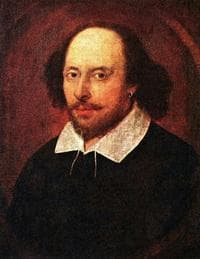
William Shakespeare was an English playwright, poet and actor. He is widely regarded as the greatest writer in the English language and the world's pre-eminent dramatist. He is often called England's national poet and the "Bard of Avon". His extant works, including collaborations, consist of some 39 plays, 154 sonnets, three long narrative poems, and a few other verses, some of uncertain authorship. His plays have been translated into every major living language and are performed more often than those of any other playwright. Shakespeare remains arguably the most influential writer in the English language, and his works continue to be studied and reinterpreted.
Similar books
- Twelfth Night
William Shakespeare
4.0 (3k) average on GoodreadsHistorical FictionFeatures cross-dressing, mistaken identity, and comedic romance.
- A Midsummer Night's Dream
William Shakespeare
4.0 (443k) average on GoodreadsFantasyInvolves a magical forest, multiple intertwined love plots, and comedic elements.
- Pride and Prejudice
Jane Austen
4.3 (3M) average on GoodreadsHistorical FictionFocuses on witty dialogue, social commentary, and the complexities of romance.
- The Hunger Games
Suzanne Collins
4.3 (6.4M) average on GoodreadsFantasyIn a future where children fight to the death on live television, Katniss Everdeen volunteers for the arena, turning a death sentence into a fight for survival and a spark of rebellion.
- The Great Gatsby
F. Scott Fitzgerald
3.9 (3.8M) average on GoodreadsHistorical FictionIn the opulent Roaring Twenties, a mysterious millionaire's lavish parties hide his desperate, tragic pursuit of a lost love, exposing the emptiness within the American Dream.
- The Fault in Our Stars
John Green
4.2 (3.6M) average on GoodreadsYoung AdultA girl with a terminal illness finds her story rewritten when a charming boy with a similar past enters her life at a cancer support group, leading to a star-crossed romance.






Enjoyed the summary?
A summary gives you the shape of the book. The book itself has the detail, the examples and the voice.
Find As You Like It on AmazonAs an Amazon Associate, BookBrief earns from qualifying purchases. How we're funded