
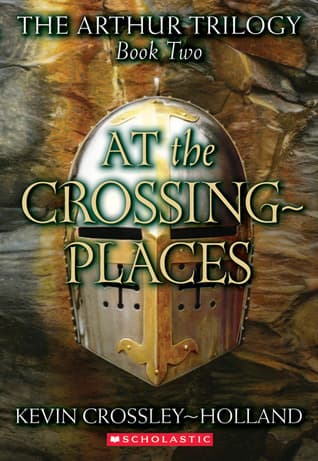
Synopsis
Covers the whole plot, including the ending.
- Difficulty
- Medium
- Pacing
- Moderate
- Mood
- Atmospheric, Reflective, Adventurous
- Read it if
- You enjoy historical fiction with a strong coming-of-age narrative, medieval setting, and elements of Arthurian legend.
- Skip it if
- You prefer fast-paced plots without much introspection or detailed historical context.
At the Crossing Places Plot Summary
Covers the whole plot, including the ending.
A New Beginning at Holt Castle
Arthur de Caldicot, now fifteen, arrives at Holt Castle to begin his squireship under Lord Stephen. He quickly learns horsemanship, combat skills, and courtly manners. He enjoys the company of other squires and his new role, but his past still troubles him. He continues to have visions through the seeing stone, which often show him glimpses of King Arthur. He also wonders about his parentage, especially his birth mother, and remembers his cold father, Sir John. His friend Gatty, a free-spirited peasant girl, keeps him connected to his old life at Caldicot.
Visions and Uncertainties
The seeing stone remains a strong influence in Arthur's life. His visions become clearer and more frequent, showing him parts of King Arthur's life, including his struggles with betrayal, loyalty, and leadership. These visions often match Arthur's own early experiences and moral problems, making him question his path. He feels pulled between proving himself a knight in this world and the mystical draw of the Arthurian past. Lord Stephen, a wise mentor, notices Arthur's thoughtful nature but does not fully understand his inner conflicts, putting some of it down to a young man's natural worries.
The Allure of Winnie
While at Holt, Arthur falls for Winnie, a beautiful lady of the court. Their interactions develop into a romance, and Arthur dreams of a future with her, including marriage and a respectable life. This new affection, however, creates a problem for Arthur, as he also cares deeply for Gatty. Winnie represents the noble world he wants, while Gatty embodies the wild spirit of his childhood and the freedom he sometimes misses. The difference between these two women shows Arthur's struggle to balance different parts of his identity and desires.
Gatty's Journey and Return
Gatty, no longer happy with her life in Caldicot, goes to London to find a better one. Her absence leaves a gap in Arthur's world, but she eventually returns, having gained experience and a better understanding of the world. Her return to Holt Castle is important for Arthur, renewing their deep friendship and challenging his growing feelings for Winnie. Gatty's independent spirit and practical wisdom keep Arthur grounded, offering a different view on life and love than the courtly ideals he finds at Holt. Their bond stays strong, showing their shared past and understanding.
Crusader Dreams and Moral Dilemmas
The call for a new Crusade to the Holy Land begins to spread, exciting many young men, including Arthur. He sees it as a chance for glory, honor, and to prove his worth as a knight. However, the seeing stone visions, along with his growing maturity, make him question the justice and true reasons behind the Crusades. He grapples with the moral complexities of holy war, the potential for violence, and the suffering it could cause. Lord Stephen, having experienced war, offers careful advice, urging Arthur to consider all aspects before committing to such an important undertaking, adding to Arthur's inner struggle.
The Shadow of Sir John
Arthur's difficult relationship with his father, Sir John, continues to bother him. He wants his father's approval but receives only coldness. The mystery of his birth, especially his true mother's identity, remains a constant thought. Arthur wants to know why Sir John resents him and why his mother's identity is a secret. This search for his personal history ties into his desire to form his own identity, separate from his father's shadow. The emotional distance between them drives Arthur to uncover the truth and find his place in the world.
A Tournament at Holt
A large tournament is held at Holt Castle, drawing knights and squires from the area. Arthur, eager to prove himself, competes in the squires' events, showing his improved combat skills and horsemanship. He performs well, earning recognition from Lord Stephen and his peers. This event is a key step in his development as a warrior and a young man, boosting his confidence and strengthening his reputation. The tournament also allows for new interactions with Winnie and Gatty; both watch him, each reacting with pride and concern for his safety and future.
The Revelation of His Mother
Through a series of events and a key conversation, Arthur finally learns the secret of his birth mother's identity. He discovers his mother was Gwynneth, a noblewoman who had a secret affair with Sir John. This news brings mixed emotions: relief at knowing the truth, but also sadness and a deeper understanding of his upbringing. The information explains Sir John's distant behavior and the complex family history. This discovery deeply affects Arthur's sense of self and his place in the world, giving him a clearer lineage.
The Path to Knighthood
As his squireship ends, Arthur seriously considers becoming a knight. He has shown his physical skill, learned chivalry, and matured under Lord Stephen's guidance. The idea of becoming a knight is both exciting and daunting, bringing with it the duties of leadership, protection, and justice. He thinks about the lessons from the seeing stone visions of King Arthur, understanding the burdens of power and the importance of wise choices. His mentors discuss his readiness, and Arthur feels the weight of expectation and the importance of the choices ahead, especially regarding his future service.
A Difficult Choice
Arthur faces a difficult choice that forces him to weigh his personal desires against his growing responsibilities. He must decide between his developing love for Winnie and his deep connection with Gatty. At the same time, the call to Crusade is strong, offering glory and spiritual purpose, but also danger and moral uncertainty. His decision will shape his future as a knight and a man, determining his loyalties and the life he will lead. This moment highlights his coming-of-age, requiring him to make a mature and deeply personal commitment.
The Departing Crusader
After much inner struggle, Arthur makes his choice. He decides to join the Crusade, believing it is his duty and fate to fight for what he sees as a just cause, despite the moral problems. This choice means leaving both Winnie and Gatty, though he cares for both. He prepares for his departure, readying himself for the unknown dangers and challenges of the Holy Land. Lord Stephen, understanding Arthur's ambition, offers a final piece of advice, urging him to remember the true meaning of knighthood beyond just fighting. Arthur, now a young man on the edge of true knighthood, sets off with both fear and determination, ready for the next part of his journey.
Principal Figures
Arthur de Caldicot
Protagonist
A young squire grappling with his identity, love, and the call to knighthood and Crusade.
Arthur is a sensitive and introspective young man, now fifteen, who serves as a squire at Holt Castle. He is driven by a strong moral compass and a desire to understand his past, particularly the identity of his birth mother and the truth about his father, Sir John. His connection to the seeing stone grants him visions of King Arthur, which profoundly influence his understanding of leadership, loyalty, and the responsibilities of power. He is torn between the courtly world and the wilder, more natural world represented by Gatty, and he yearns for love and acceptance.
Relationships: Lord Stephen (Mentor and lord); Gatty (Childhood friend and confidante, a deep bond); Winnie (Love interest, courtly romance); Sir John (Distant and unfeeling father); Gwynneth (Birth mother (revealed))
Gatty
Supporting
Arthur's free-spirited childhood friend who embarks on her own journey before returning.
Gatty is a spirited and independent young woman, originally from Caldicot, who shares a deep, almost telepathic bond with Arthur. She is practical, resourceful, and possesses a keen understanding of human nature, often acting as Arthur's emotional anchor. Unlike the noble ladies, Gatty is unburdened by courtly constraints and represents a simpler, more authentic way of life. She leaves Caldicot to seek her fortune in London, demonstrating her courage and self-reliance, and returns with new experiences that further shape her perspective.
Relationships: Arthur de Caldicot (Childhood friend, deep emotional connection)
Winnie
Supporting
A beautiful and refined lady of the court who becomes Arthur's love interest.
Winnie is a graceful and beautiful young lady at Holt Castle, embodying the ideals of courtly love and elegance. She captures Arthur's heart and represents the promise of a respectable, noble future. Her presence in Arthur's life highlights his aspirations for social advancement and his desire for a conventional, romantic partnership. While she is kind and gentle, her world is confined by courtly expectations, contrasting with Gatty's freedom. Her relationship with Arthur is a significant emotional journey for him, forcing him to consider his place within the noble hierarchy.
Relationships: Arthur de Caldicot (Love interest)
Lord Stephen
Supporting
Arthur's wise and experienced lord and mentor at Holt Castle.
Lord Stephen is the benevolent and astute lord of Holt Castle, under whom Arthur serves as a squire. He is a seasoned warrior and a just leader, who takes a genuine interest in Arthur's development. Lord Stephen provides guidance in combat, courtly manners, and moral conduct, often offering sage advice rooted in his own experiences of war and life. He observes Arthur's introspection and potential, subtly pushing him towards maturity and responsible decision-making, particularly concerning the call to Crusade. He represents a model of honorable knighthood for Arthur.
Relationships: Arthur de Caldicot (Lord and mentor)
Sir John
Supporting
Arthur's cold and unfeeling father.
Sir John is Arthur's legal father, a distant and emotionally cold figure who has always treated Arthur with indifference, if not resentment. His harshness stems from the secret of Arthur's true parentage and his own past. He represents the oppressive shadow from which Arthur constantly tries to escape, driving Arthur's quest for identity and acceptance. His character highlights themes of parental duty, hidden truths, and the emotional impact of family secrets.
Relationships: Arthur de Caldicot (Legal father, strained relationship); Gwynneth (Mother of Arthur, past lover)
King Arthur (visions)
Mentioned
The legendary king whose life and dilemmas are revealed through Arthur's seeing stone.
King Arthur appears to young Arthur through the mystical seeing stone, not as a direct character but as a series of vivid visions. These visions depict key moments and moral challenges in the legendary king's life, including his struggles with loyalty, betrayal, leadership, and the quest for justice. The legendary Arthur serves as a spiritual guide and a powerful mirror for young Arthur's own journey, providing lessons and parallels that help him navigate his path towards knighthood and moral understanding. His presence underscores the timeless themes of heroism and destiny.
Gwynneth
Supporting
Arthur's true birth mother, whose identity is revealed.
Gwynneth is Arthur's birth mother, a noblewoman who had a secret affair with Sir John. Her existence is a long-held secret that profoundly impacts Arthur's sense of identity and his relationship with his legal father. The revelation of her identity provides Arthur with crucial answers about his lineage and the reasons behind Sir John's distant behavior. Though she does not appear directly in the narrative, her story is a powerful force, shaping Arthur's understanding of his past and his place in the world.
Relationships: Arthur de Caldicot (Son); Sir John (Past lover)
Themes & Insights
Identity and Belonging
Arthur's journey is a search for identity, as he deals with his unknown parents, his cold father, and his place in the world. He wants to know who he truly is, apart from Sir John's coldness, and where he belongs—whether with Winnie in the courtly world, with Gatty in the free world, or on a Crusade. The seeing stone visions of King Arthur also add to this theme, as Arthur sees similarities between the legendary king's identity struggles and his own. His eventual discovery of his birth mother's identity provides a key piece to his personal puzzle, giving him a stronger sense of self and family.
“What does a man become when he knows not whence he came?”
Love and Loyalty
Arthur is torn between different kinds of love and loyalty. His deep, almost family-like bond with Gatty represents a steady, unconditional connection from his childhood. In contrast, his growing love for Winnie represents a more courtly, romantic ideal. This emotional triangle forces Arthur to confront what he truly values in relationships and where his loyalties lie. Furthermore, his loyalty to Lord Stephen and the ideals of knighthood compete with his personal desires, especially as the call to Crusade appears, demanding a different kind of commitment and sacrifice. His final choice to join the Crusade, while leaving both women, shows his complex understanding of loyalty.
“A man's heart can be a battlefield, where love and duty clash like swords.”
The Nature of Knighthood and War
The novel explores the idealized image of knighthood versus its harsh realities, especially during the Crusades. Arthur is drawn to the glory and honor of knighthood and the Crusader's cause, seeing it as a way to prove his worth. However, his visions of King Arthur and Lord Stephen's wisdom introduce him to the moral complexities of war, the suffering it causes, and the true meaning of justice beyond just conquest. He grapples with the ethical problems of 'holy war,' questioning the justice of violence and the reasons behind such campaigns. This theme challenges Arthur to develop a mature understanding of what it means to be a righteous knight.
“Honor is not found in the sharpness of a blade, but in the justice of its cause.”
Destiny vs. Free Will
Arthur's life is constantly influenced by the mystical visions from the seeing stone, which show fragmented stories of King Arthur, hinting at a grand, perhaps fated, destiny for young Arthur. These visions often mirror his own experiences and moral problems, suggesting a predetermined path. However, Arthur also has agency through the important choices he must make: his love interests, his relationship with his father, and ultimately, his decision to join the Crusade. The novel explores the tension between these forces, suggesting that while destiny may offer a framework, an individual's free will and choices ultimately shape their character and future. Arthur's final decision to join the Crusade, despite his doubts, is a strong statement of his own agency within a seemingly fated narrative.
“The stones show a path, but the feet that walk it are your own.”
Plot Devices & Literary Techniques
The Seeing Stone
A magical artifact that grants Arthur visions of King Arthur's life.
The seeing stone is a central magical plot device that connects Arthur to the legendary King Arthur. Through its polished surface, Arthur receives vivid, often fragmented, visions of the legendary king's life, battles, and moral dilemmas. This device serves multiple functions: it acts as a form of foreshadowing, a source of moral guidance for Arthur, and a means of weaving Arthurian legend into the narrative of medieval life. It deepens Arthur's understanding of leadership, loyalty, and the responsibilities of power, influencing his personal growth and his decisions regarding knighthood and the Crusade.
The Love Triangle
Arthur's romantic dilemma between Winnie and Gatty.
The love triangle between Arthur, Winnie, and Gatty is a significant plot device that drives much of Arthur's emotional development and decision-making. Winnie represents the idealized, courtly love and a path of respectability and noble marriage, while Gatty embodies a more earthy, free-spirited connection from his past. This device forces Arthur to confront his desires, loyalties, and the kind of life he truly wants to lead. His struggle to choose between them, and his eventual decision to embark on the Crusade, highlights his coming-of-age and the complex nature of his heart.
The Quest for Parentage
Arthur's search for his true birth mother and understanding of his father's coldness.
Arthur's quest to uncover the identity of his birth mother and understand the reasons behind Sir John's unfeeling demeanor is a powerful driving force throughout the narrative. This device provides Arthur with a compelling internal motivation, fueling his desire for truth and a stronger sense of self. The eventual revelation of Gwynneth's identity not only resolves a long-standing mystery but also sheds light on the complexities of his family history, influencing his understanding of his own lineage and place in the world. It is a classic narrative device that grounds the fantasy elements in a personal, relatable journey of self-discovery.
The Call to Crusade
The widespread summons to the Holy Land, presenting Arthur with a moral and physical challenge.
The call to Crusade serves as a major external conflict and a catalyst for Arthur's ultimate decision. It represents a prevalent historical and religious force in medieval Europe, offering young men a path to glory, spiritual redemption, and adventure. For Arthur, it becomes a crucial test of his nascent knighthood, forcing him to weigh the ideals of holy war against its brutal realities, as seen through his visions and Lord Stephen's counsel. This device pushes Arthur to make a profound choice about his future, challenging his understanding of justice, violence, and his role in the wider world.
At the Crossing Places Quotes
“The wind had a voice, and it spoke of old things, of stones and the sea, and the spirits that dwelt between them.”
“There are some truths that even the wisest cannot speak aloud, but must be felt in the bones.”
“A man is not measured by the strength of his arm, but by the courage in his heart when all seems lost.”
“The past is not a dead thing, but a river that flows through us, shaping the banks of who we are.”
“Sometimes the greatest journeys are not across lands, but within the landscape of one's own soul.”
“Fear is a shadow, but it has no power unless you let it eclipse the light within you.”
“The old ways are not always the best ways, but they carry the echoes of those who came before.”
“Even the smallest stone can cause a ripple that changes the course of a great river.”
“Magic is not in the spells, but in the seeing; in understanding what lies hidden beneath the ordinary.”
“The world is full of crossing places, where one path ends and another begins, and the choice is always yours.”
“Silence can speak more loudly than any shout, if you only learn to listen with your heart.”
“To forget where you come from is to lose a piece of your own soul's compass.”
“The land remembers. It holds the stories of every footstep, every battle, every whispered prayer.”
“Hope is a stubborn weed that grows even in the coldest stones, if given the slightest crack of light.”
Quiz
10 questions on the plot and the characters. Each answer comes with a short explanation.
Question 1
What is Arthur de Caldicot's new role at the beginning of 'At the Crossing Places'?
- A knight of Holt Castle
- A Crusader in the Holy Land
- Squire to Lord Stephen of Holt Castle
- An apprentice blacksmith
Show answer
C. Squire to Lord Stephen of Holt Castle At the start of the novel, Arthur has achieved his dream of becoming a squire to Lord Stephen, serving at Holt Castle.
Question 2
Which character does Arthur wish to marry in 'At the Crossing Places'?
- Gatty
- Winnie
- Lady Alice
- Lady Guinevere
Show answer
B. Winnie Arthur expresses a desire to marry the beautiful Winnie, while also maintaining his friendship with Gatty.
Question 3
What is one of Arthur's primary longings that carries over from the previous book?
- To become a wealthy merchant
- To escape the shadow of his unfeeling father and meet his birth mother
- To learn to read and write
- To travel to distant lands as an explorer
Show answer
B. To escape the shadow of his unfeeling father and meet his birth mother Arthur's desire to escape his father's shadow and find his birth mother is a significant personal quest mentioned in the book's description.
Question 4
What major historical/religious event does Arthur contemplate joining?
- A pilgrimage to Canterbury
- A tournament in France
- A Crusader expedition
- A diplomatic mission to the King
Show answer
C. A Crusader expedition Arthur considers becoming a Crusader, which brings up questions of 'might and right' for him.
Question 5
How does the author, Kevin Crossley-Holland, typically blend elements in this series?
- By combining futuristic technology with ancient myths
- By weaving Arthurian legend with everyday medieval life
- By contrasting modern psychology with historical battles
- By merging Roman history with Viking sagas
Show answer
B. By weaving Arthurian legend with everyday medieval life The description explicitly states that Crossley-Holland 'weaves Arthurian legend with everyday medieval life' in his stories.
Question 6
The title 'At the Crossing Places' implies themes of:
- Geographical exploration and map-making
- Physical journeys and literal crossroads
- Significant life choices, transitions, and moral dilemmas
- The meeting points of different cultures and languages
Show answer
C. Significant life choices, transitions, and moral dilemmas The 'crossing places' metaphorically refer to Arthur's coming of age, facing new visions, old concerns, and making crucial life decisions, such as marriage and crusading, which involve moral questions.
Question 7
What is the primary genre classification for 'At the Crossing Places' according to the provided information?
- Science Fiction
- Contemporary Romance
- Fantasy, Children's, Historical Fiction, Young Adult
- Mystery Thriller
Show answer
C. Fantasy, Children's, Historical Fiction, Young Adult The genre classifications provided are 'Fantasy, Children's, Historical Fiction, Young Adult'.
Question 8
The description mentions Arthur's desire to 'maintain his ties with his friend Gatty'. What does this suggest about Arthur's character development?
- He struggles with commitment and often abandons old friends for new ones.
- He values loyalty and seeks to balance new relationships with existing important friendships.
- He is indecisive and cannot make up his mind between Winnie and Gatty.
- He uses Gatty as a means to achieve his other goals.
Show answer
B. He values loyalty and seeks to balance new relationships with existing important friendships. The phrase 'maintain his ties' implies a conscious effort to preserve an important friendship, indicating a valuing of loyalty and the complexity of balancing different relationships as he matures.
Question 9
What is the significance of the phrase 'with all the questions of might and right involved' in relation to Arthur's desire to become a Crusader?
- It suggests Arthur is primarily concerned with proving his physical strength in battle.
- It highlights Arthur's internal struggle with the moral implications and justifications of warfare.
- It indicates Arthur's interest in medieval legal systems and military law.
- It refers to the political power struggles among the Crusader leaders.
Show answer
B. It highlights Arthur's internal struggle with the moral implications and justifications of warfare. The phrase points to Arthur's deeper contemplation beyond just fighting. It suggests he is grappling with the ethical dilemmas and justifications behind the Crusades, a common theme in historical fiction about such conflicts.
Question 10
Considering the book's place as the 'second thrilling novel in Kevin Crossley-Holland's bestselling Arthur trilogy,' what can be inferred about Arthur's journey in this particular book?
- It marks the definitive end of his coming-of-age story.
- It serves as an intermediate stage, deepening his experiences and challenges before a final resolution.
- It primarily focuses on introducing new characters for the next book.
- It is a standalone adventure with little connection to the overarching trilogy plot.
Show answer
B. It serves as an intermediate stage, deepening his experiences and challenges before a final resolution. As the second book in a trilogy, 'At the Crossing Places' would naturally build upon the first book and set the stage for the third, focusing on an intermediate stage of Arthur's development and facing new challenges before a final conclusion.
At the Crossing Places FAQ
What is the primary setting and time period of 'At the Crossing Places'?
'At the Crossing Places' is set in the medieval period, specifically the late 12th century, around 1190-1191. The story unfolds across various locations in England, including Holt Castle where Arthur serves as a squire, and later during his travels, vividly depicting everyday medieval life.
Who is Arthur de Caldicot and what is his main goal at the beginning of this book?
Arthur de Caldicot is the protagonist, a young man who has achieved his immediate dream of becoming a squire to Lord Stephen of Holt Castle. His main goal at the outset is to master his squire duties, navigate the complexities of courtly life, and continue his personal quest for identity and belonging, especially regarding his parentage.
Who are Winnie and Gatty, and what is Arthur's relationship with them?
Winnie is a beautiful, high-born lady with whom Arthur is deeply in love and hopes to marry, representing his aspirations for status and affection. Gatty is a childhood friend from his village, a commoner, with whom Arthur shares a deep, uncomplicated bond, representing his past and genuine connection.
What is the significance of Arthur's desire to become a Crusader?
Arthur's desire to become a Crusader is multifaceted. It reflects the prevailing religious fervor and knightly ideals of his time, offering a path to honor and spiritual fulfillment. However, it also forces him to confront complex questions of might versus right, the morality of warfare, and his personal motivations for seeking glory.
How does Arthur's relationship with his father, Sir John, evolve in this novel?
Arthur's relationship with his unfeeling father, Sir John, remains strained, casting a long shadow over Arthur's life. He actively seeks to escape his father's influence and disapproval, driving his ambition to forge his own identity and destiny, separate from his perceived origins and his father's legacy.
What 'hidden' connection does Arthur make regarding his birth mother?
Arthur makes significant progress in unraveling the mystery of his birth mother, discovering clues and hearing whispers that point towards a connection to the royal court or a lady of higher standing than his adoptive parents. This revelation complicates his understanding of his true heritage and place in the world.
Are there any subtle allusions to the legendary King Arthur within Arthur de Caldicot's journey?
Yes, the novel subtly weaves Arthurian legend into Arthur de Caldicot's story. His name itself is a direct allusion, and his journey often parallels themes found in the legends, such as his quest for identity, his eventual wielding of power, and the complex loyalties he must navigate, hinting at a greater destiny.
How does the 'seeing stone' from the first book continue to influence Arthur in this sequel?
While the physical 'seeing stone' may not be as central a plot device, its influence persists in Arthur's developing perception and inner vision. It represents his growing ability to see beyond superficial appearances, understand deeper truths about people and situations, and connect with a more spiritual or intuitive understanding of the world.
What role does the historical figure of King Richard the Lionheart play in Arthur's world?
King Richard the Lionheart serves as an inspirational, almost mythical, figure for Arthur and many other young knights-in-training. His call to crusade and his reputation for chivalry and martial prowess heavily influence Arthur's aspirations to become a Crusader and embody the ideals of knighthood, even though Arthur doesn't directly interact with him.
How does Arthur's internal conflict regarding Winnie and Gatty reflect his psychological development?
Arthur's struggle between Winnie and Gatty mirrors his internal conflict between aspiration and authenticity. Winnie represents the desired social status and courtly love, while Gatty embodies his roots, genuine affection, and simpler past. This tension forces Arthur to confront what truly matters to him and define his own values, contributing significantly to his psychological maturation.
In what ways does Arthur grapple with the concept of 'chivalry' versus the harsh realities of medieval life?
Arthur idealizes chivalry, aspiring to its noble tenets of honor and righteousness. However, his experiences as a squire expose him to the brutal realities of medieval warfare, political maneuvering, and social injustice, forcing him to question whether true chivalry can exist amidst such harshness and how he can uphold his ideals in a flawed world.
How does Arthur's search for his birth mother impact his sense of self-worth and identity?
The search for his birth mother profoundly impacts Arthur's sense of self-worth by suggesting he might be more than the son of Sir John, offering hope for a more noble or loving lineage. This quest is central to his identity formation, as he seeks to understand who he truly is and where he belongs, separate from the shadow of his adoptive father.
What psychological challenges does Arthur face in adapting to life at Holt Castle?
At Holt Castle, Arthur faces significant psychological challenges, including navigating complex social hierarchies, enduring the strict discipline of squire training, and dealing with potential jealousy or rivalry from other squires. He must learn to control his impulses, adapt to new customs, and prove his worth in a demanding environment, fostering resilience and self-control.
Is Arthur's desire to be a Crusader purely religious, or are there other underlying motivations?
Arthur's desire to be a Crusader is not purely religious. While faith plays a role, he is also driven by a yearning for glory, a desire to escape his father's shadow, and a quest for a definitive purpose that would elevate his status and provide a clear path to honor and recognition, reflecting a mix of spiritual and worldly ambitions.
How does the novel challenge or affirm traditional notions of heroism in medieval literature?
The novel both affirms and challenges traditional notions of heroism. It affirms the ideal of the brave, honorable knight, but challenges it by showing the moral complexities of warfare, the personal sacrifices required, and the internal doubts a hero faces. Arthur's journey suggests that true heroism lies not just in martial prowess, but in moral integrity and self-discovery.
What is the deeper meaning behind the title 'At the Crossing Places'?
The title 'At the Crossing Places' carries significant metaphorical weight, referring to the many literal and figurative crossroads Arthur encounters. These include choices between love interests (Winnie vs. Gatty), paths for his future (squire vs. Crusader), and the intersection of his past and his unknown origins, symbolizing his journey through pivotal life decisions and transformations.
Does the book suggest that destiny is predetermined for Arthur, or does he forge his own path?
The book presents a nuanced view, hinting at elements of destiny through Arthur's name and subtle allusions to legend, suggesting he is part of a larger narrative. However, it strongly emphasizes Arthur's agency, showing him actively making choices, grappling with consequences, and forging his own path through his decisions, demonstrating a balance between fate and free will.
How does the portrayal of female characters like Winnie and Gatty contribute to the novel's themes?
Winnie and Gatty represent contrasting aspects of Arthur's aspirations and reality, contributing to themes of love, loyalty, and social class. Winnie embodies the allure of courtly love and status, while Gatty symbolizes genuine connection and the comforts of home. Their differing roles highlight the choices Arthur faces and the diverse influences shaping his identity.
About the author

Kevin Crossley-Holland is a British author known for his contributions to children's literature, particularly in the realm of fiction. His notable works include "The Seeing Stone" and "At the Crossing Places," both of which explore themes of adventure and self-discovery. Crossley-Holland's writing often draws on historical and mythical elements, enriching the narratives he creates.
Similar books
- The Seeing Stone
Kevin Crossley-Holland
3.9 (37k) average on GoodreadsFantasyIt's the first book in the same trilogy, following Arthur's earlier life.
- A Wizard of Earthsea
Ursula K. Le Guin
4.0 (241k) average on GoodreadsFantasy"At the Crossing Places" shares with A Wizard of Earthsea the theme of a young protagonist's journey of self-discovery and the grappling with nascent powers and responsibilities. Both novels explore moral choices and the consequences of actions on a personal and societal level. However, Le Guin's work is pure high fantasy, focusing on magic and a created world, whereas Crossley-Holland grounds his narrative in historical reality, with Gatty's 'visions' being more ambiguous and spiritual than outright magical, offering a different kind of 'crossing place' for the protagonist.
- The Eagle of the Ninth
Rosemary Sutcliff
3.9 (9k) average on GoodreadsFantasyBoth "At the Crossing Places" and The Eagle of the Ninth are exemplary works of historical fiction for young adults, renowned for their historical accuracy and engaging narratives. Sutcliff's novel, however, tends to maintain a more consistent adventurous plotline and a clearer external quest, focused on Roman Britain. Crossley-Holland's book, while having its moments of external drama, is more deeply rooted in Gatty's internal, spiritual, and emotional journey, making it a more introspective and less action-driven read than Sutcliff's classic.
- Harry Potter and the Sorcerer's Stone
J.K. Rowling
4.5 (7M) average on GoodreadsFantasyRescued from a miserable life under the stairs, an orphaned boy discovers he's a wizard destined for a magical school, where he uncovers a dangerous secret tied to the dark wizard who murdered his parents.
- The Hunger Games
Suzanne Collins
4.3 (6.4M) average on GoodreadsFantasyIn a future where children fight to the death on live television, Katniss Everdeen volunteers for the arena, turning a death sentence into a fight for survival and a spark of rebellion.
- 1984
George Orwell
4.2 (3.1M) average on GoodreadsPoliticsIn a future where surveillance and thought control are absolute, a man's search for truth clashes with the Party, showing that hope can be a form of rebellion.




Enjoyed the summary?
A summary gives you the shape of the book. The book itself has the detail, the examples and the voice.
Find At the Crossing Places on AmazonAs an Amazon Associate, BookBrief earns from qualifying purchases. How we're funded