
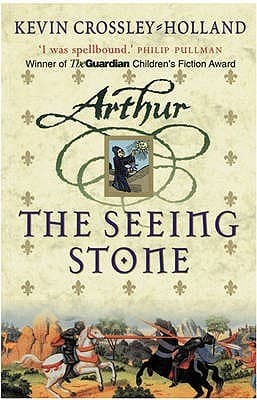
Synopsis
Covers the whole plot, including the ending.
- Difficulty
- Medium
- Pacing
- Moderate
- Mood
- Historical, Reflective, Magical, Evocative, Coming-of-age
- Read it if
- You enjoy historical fiction blended with classic fantasy, particularly if you're interested in medieval life and Arthurian legends from a fresh perspective.
- Skip it if
- You prefer fast-paced, action-heavy fantasy and are not keen on a more reflective, character-driven narrative with a historical setting.
The Seeing Stone Plot Summary
Covers the whole plot, including the ending.
The Gift of the Seeing Stone
In 1199, twelve-year-old Arthur de Caldicot lives at Caldicot Castle in the Welsh Marches. He trains as a page under his father, Sir John, and dreams of knighthood and adventure. One day, an old man named Merlin, a friend of Sir John, visits. Merlin watches Arthur closely and, before leaving, gives him a smooth, black stone. He tells Arthur it is a 'seeing stone' and will show him things if he looks into it with an open mind. Arthur is at first doubtful and disappointed, expecting a more exciting gift, but he keeps the stone.
Visions of Another Arthur
Arthur soon finds the stone is magical. When he looks into it, he sees clear images and scenes. These are not from his own world but from another boy, also named Arthur, who lives in a different time. This other Arthur is younger, lives in a simpler place, and faces different challenges. The visions are at first scattered and confusing, but they become clearer, showing the other Arthur's daily life, his struggles, and his interactions with his foster family, Sir Ector, and his foster brother, Kay. Arthur de Caldicot feels increasingly drawn into these parallel stories.
Life at Caldicot Castle
Along with his visions, Arthur de Caldicot continues his training as a page. His days are full of lessons in Latin, French, history, and courtly manners from Master John. He practices sword fighting, archery, and horsemanship, often under Sir John and Sir William, the castle's master-at-arms. Arthur also learns about falconry and hunting. He sees the social order of the castle, from the lord and lady to the servants. He experiences daily chores, grand feasts, religious events, and occasional tensions among the castle residents, including his cousin, Gawain.
The Other Arthur's Early Life
Through the seeing stone, Arthur de Caldicot watches the early life of the legendary Arthur. He sees Arthur's humble upbringing with Sir Ector and his wife, Lady Eleanor, alongside their son, Kay. The visions show the boys' training, their arguments, and their growing skills. Arthur learns that this other Arthur does not know his true parents, believing Sir Ector is his father. The stone shows details of their everyday life: hunting, practicing with wooden swords, and the strong, sometimes difficult, bond between Arthur and Kay. These glimpses contrast with Arthur de Caldicot's own noble upbringing.
A Journey to London and a Royal Encounter
Arthur de Caldicot goes with his father, Sir John, on a trip to London. This trip is because King Richard I has died, and preparations for his funeral are underway. In London, Arthur is overwhelmed by the busy city, its size, and its many sights, very different from his castle. He sees the seriousness and grandeur of the royal court and the sadness for the late king. This journey shows Arthur the wider politics of England and the duties of loyalty to the crown, deepening his understanding of the world beyond Caldicot.
The Tournament and the Sword in the Stone
The visions in the seeing stone reach a key point, showing a tournament in London. Sir Ector, Kay, and the young Arthur travel to the city for the jousting. In an emergency, Kay realizes he forgot his sword. The young Arthur, wanting to help his foster brother, tries to get a sword he sees in an anvil in a churchyard. To everyone's surprise, he pulls the sword free easily. This act makes him the rightful king, a destiny he at first does not know about and does not want to accept, to the wonder and confusion of those present, including Sir Ector and Kay.
Arthur's Doubts and Aspirations
As Arthur de Caldicot watches the legendary Arthur's destiny unfold, he thinks about his own future and identity. He continues his training, hoping to become a knight and join the Crusades, a common goal for young nobles then. However, the stone's visions make him question heroism, leadership, and the responsibilities of power. He sees the legendary Arthur's initial reluctance and eventual acceptance of his fate, which makes Arthur de Caldicot think about his own desires versus what his family and society expect of him. He feels a growing connection to his namesake.
Challenges and Responsibilities
Arthur de Caldicot faces challenges at Caldicot Castle. He struggles with his studies, especially Latin, and deals with occasional teasing and rivalry from other squires. He also learns about managing the estate and the well-being of the common people, watching his father's duties as a lord. Through the stone, he sees the legendary Arthur beginning to face the challenges of ruling a kingdom, dealing with jealous lords, and establishing his authority. These parallel stories show the universal themes of responsibility and the difficulties in leadership, whether on a small estate or a new kingdom.
A Crusader's Calling
Inspired by tales of chivalry and religious passion, Arthur de Caldicot wants to join the Crusades. He sees it as the ultimate test of knighthood and a path to glory and spiritual salvation. He discusses this ambition with his father and other knights, who share stories of their own experiences or dreams of pilgrimage and holy war. This goal is deeply rooted in the medieval mindset, where fighting for Christendom was seen as noble. The visions of the legendary Arthur's growing responsibilities as a leader also make Arthur de Caldicot think about different forms of service.
Merlin's Return and a Prophecy
Merlin eventually returns to Caldicot Castle. He observes Arthur's growth and listens to his accounts of the seeing stone's visions. Merlin confirms the visions are real and explains that the stone links times and destinies. He offers advice, encouraging Arthur to keep looking into the stone for guidance. Merlin hints that Arthur de Caldicot has his own path to make, one that will require wisdom and courage, like his legendary namesake. This meeting confirms Arthur's understanding of the stone's purpose and his own potential.
The Weight of Destiny
As the visions of the legendary Arthur becoming king become more complete, Arthur de Caldicot feels the weight of this extraordinary destiny. He understands the great responsibility, sacrifices, and trials awaiting his namesake. This understanding deepens his own self-reflection. He continues to train, learn, and grow, but the seeing stone has changed his perspective. He sees that his own path, though different, also has meaning, and that lessons from the legendary Arthur's story apply to his own life and the choices he will make as he grows into manhood and knighthood. The stone becomes a constant companion and guide.
A Glimpse of the Future
Toward the end of the story, Arthur de Caldicot, now more mature, makes a decision about his future. While the exact details are somewhat open, it is clear that his experiences with the seeing stone and the legendary Arthur's story have shaped his view. He has learned about leadership, loyalty, love, and loss, both from his own medieval world and from the story of King Arthur. He is now ready to begin his own journey, whether knighthood, the Crusades, or another path, with a unique perspective and a deeper understanding of himself and the world.
Principal Figures
Arthur de Caldicot
Protagonist
A twelve-year-old page who dreams of knighthood and discovers a magical seeing stone.
Arthur is a curious, imaginative, and somewhat naive boy living in a medieval castle. He is the son of Sir John and Lady Alice, and is being trained for knighthood. He is observant and reflective, often comparing his own experiences to the visions he sees in the stone. He is eager for adventure and glory, but also sensitive and thoughtful, grappling with the moral complexities of his world and the legendary world revealed to him. His aspirations are typical of a noble boy of his time, but his unique gift sets him apart.
Relationships: Sir John (Father; a stern but loving lord and mentor.); Lady Alice (Mother; provides comfort and maternal guidance.); Merlin (Mentor/Mysterious benefactor; gifts him the seeing stone and offers cryptic guidance.); Gawain (Older cousin; a more experienced squire and rival.); Master John (Tutor; teaches him Latin, French, and history.)
Merlin
Supporting
A mysterious old friend of Sir John who gifts Arthur the seeing stone and provides enigmatic wisdom.
Merlin is an ancient, wise, and enigmatic figure, seemingly timeless and possessing magical insight. He is a friend of Sir John, but his true origins and purpose remain shrouded in mystery. He acts as a catalyst for Arthur's journey of self-discovery, intentionally guiding him towards a deeper understanding of destiny and history. He speaks in riddles and prophecies, challenging Arthur to interpret the visions for himself. He appears and disappears with little explanation, suggesting a connection to forces beyond the ordinary medieval world.
Relationships: Arthur de Caldicot (Mentor; gifts him the stone and provides guidance.); Sir John (Friend; their relationship allows Merlin access to Caldicot Castle.)
Sir John de Caldicot
Supporting
Arthur's father, the lord of Caldicot Castle, a stern but just knight.
Sir John is a traditional medieval lord and knight, embodying the values of chivalry, duty, and authority. He is a loving father, though his expressions of affection are often tempered by the demands of his position and the need to raise Arthur to be a strong leader. He is concerned with the practicalities of estate management, military training, and political alliances. He is a respected figure in his community and a loyal subject to the king, representing the established order and expectations that Arthur must navigate.
Relationships: Arthur de Caldicot (Father; trains him for knighthood and leadership.); Lady Alice (Husband; head of the household.); Merlin (Friend; trusts Merlin despite his eccentricities.)
Lady Alice de Caldicot
Supporting
Arthur's mother, a nurturing and gentle presence in the castle.
Lady Alice is Arthur's kind and loving mother, providing a comforting and stable presence in his life. She is responsible for the domestic affairs of the castle and the upbringing of her children, instilling in them values of faith and compassion. While she understands the necessities of a knight's training, she often worries about Arthur's safety and well-being. She represents the softer, more nurturing aspect of medieval life, offering solace and understanding when Arthur faces difficulties.
Relationships: Arthur de Caldicot (Mother; nurturing and supportive.); Sir John (Wife; runs the household alongside him.)
The Legendary Arthur
Mentioned/Parallel Protagonist
The boy whose life is revealed in the seeing stone, destined to become King Arthur.
This Arthur is the younger, legendary figure whose story unfolds through the visions in the seeing stone. He is initially portrayed as a simple, good-hearted boy, raised by Sir Ector and unaware of his royal lineage. He is loyal to his foster family, particularly his foster brother Kay, despite Kay's occasional unkindness. He possesses an innate sense of justice and a quiet strength. His journey from an unknown boy to the destined king, marked by the pulling of the sword from the stone, serves as a powerful parallel and inspiration for Arthur de Caldicot.
Relationships: Sir Ector (Foster Father; raises him as his own son.); Kay (Foster Brother; a complex relationship of rivalry and affection.)
Kay
Supporting
The legendary Arthur's foster brother, often portrayed as boastful and somewhat unkind.
Kay is the biological son of Sir Ector and the foster brother of the legendary Arthur. He is often shown as proud, somewhat arrogant, and prone to taking credit for others' deeds. While he can be a bully to Arthur, there is an underlying, albeit often hidden, bond between them. His character serves as a foil to Arthur's humility and inherent goodness, highlighting the legendary Arthur's virtues. His forgetfulness of his sword is the catalyst for the legendary moment of the sword in the stone.
Relationships: The Legendary Arthur (Foster Brother; complex relationship of rivalry, occasional cruelty, and underlying familial bond.); Sir Ector (Father.)
Sir Ector
Supporting
The foster father of the legendary Arthur, a kind and honorable knight.
Sir Ector is a noble and kind knight who raises the legendary Arthur as his own son, unaware of the boy's true royal parentage. He is a man of integrity and good judgment, providing a loving home and proper training for both Arthur and his own son, Kay. He is shocked and humbled when Arthur pulls the sword from the stone, immediately recognizing the divine significance of the act and offering his loyalty to the newfound king. He represents steadfast loyalty and paternal love.
Relationships: The Legendary Arthur (Foster Father; raises him with love and care.); Kay (Father.)
Gawain
Supporting
Arthur de Caldicot's older cousin and a fellow squire, often a rival.
Gawain is Arthur de Caldicot's older cousin and a more experienced squire at Caldicot Castle. He is often portrayed as more confident, skilled, and sometimes a bit boastful, serving as a rival and a benchmark for Arthur's own progress. Their relationship is typical of boys growing up together in a competitive environment, marked by both camaraderie and occasional friction. Gawain represents the more conventional path to knighthood, contrasting with Arthur's unique introspective journey with the seeing stone.
Relationships: Arthur de Caldicot (Cousin; a fellow squire and sometimes rival.)
Themes & Insights
Identity and Destiny
The novel explores how people find who they are and their purpose, often through outside influences and inner thought. Arthur de Caldicot deals with his own identity as a medieval page who will become a knight, while also seeing the legendary Arthur find his royal destiny. The seeing stone acts as a mirror, making Arthur consider if destiny is set or made through choices. The difference between the two Arthurs shows that while situations differ, the journey of self-discovery and accepting one's path is universal. Arthur de Caldicot's dreams of the Crusades are part of his own search for meaning.
“The stone shows you what you need to see, Arthur. Not always what you want.”
The Power of Storytelling and History
The story shows how stories, both personal and legendary, shape understanding and inform the present. The visions in the seeing stone are a form of ancient storytelling, connecting Arthur de Caldicot directly to the legend of King Arthur. This connection blurs the lines between history, myth, and personal experience. The novel suggests that legends are not just old tales, but living stories that can offer guidance and insight to those now. Arthur's own life becomes a story, influenced by the ancient one he sees.
“The past is a story, Arthur, and stories have power.”
Coming of Age and Moral Development
Arthur's journey is a coming-of-age story. He moves from childhood innocence to a more mature understanding of the world, its complexities, and his place in it. His training as a page, his travels to London, and his experiences with the seeing stone make him face moral problems, understand different viewpoints, and develop a sense of responsibility. He learns about loyalty, courage, justice, and the results of actions, both through his own life and the legendary story. The legendary Arthur's initial hesitation to become king helps Arthur de Caldicot understand the burdens of leadership.
“A knight must be brave, Arthur, but he must also be just.”
The Duality of Worlds (Medieval Reality vs. Legendary Myth)
A main theme is the contrast between Arthur de Caldicot's realistic medieval world and the legendary world of King Arthur. The novel details the daily life of a 12th-century castle, its customs, difficulties, and social structures. This historical accuracy contrasts with the magical parts of the legendary Arthur's tale. The seeing stone connects these two worlds, allowing Arthur de Caldicot to experience both, showing how myth can be based in human experience and how reality can contain wonder. The legendary Arthur's story offers an ideal vision of chivalry that Arthur de Caldicot tries to reach in his own, more ordinary, life.
“The stone shows you a world that was, and a world that might yet be.”
Plot Devices & Literary Techniques
The Seeing Stone
A magical, polished black stone that allows Arthur de Caldicot to witness the life of the legendary King Arthur.
The seeing stone is the primary magical artifact and plot device in the novel. Gifted by Merlin, it functions as a portal through time and legend, enabling Arthur de Caldicot to observe the parallel narrative of his namesake. It is not merely a passive viewing device; its visions prompt Arthur to reflect on his own life, identity, and future. The stone serves as a catalyst for his personal growth and moral development, linking his mundane medieval reality to the grander, mythical past. It also acts as a subtle mentor, guiding his introspection without direct instruction.
Parallel Narratives
The simultaneous unfolding of Arthur de Caldicot's life and the legendary King Arthur's story.
This device involves telling two distinct but interconnected stories concurrently. One narrative follows Arthur de Caldicot's coming-of-age in 12th-century England, detailing his training, family life, and aspirations. The other, experienced through the seeing stone, recounts the legendary King Arthur's youth, his upbringing, and his eventual pulling of the sword from the stone. These parallel narratives allow for thematic comparisons, character development through contrast, and a deeper exploration of destiny, leadership, and heroism. The legendary story provides context and inspiration for Arthur de Caldicot's own journey.
Merlin's Prophetic Guidance
Merlin's cryptic advice and foreknowledge that subtly steers Arthur de Caldicot's understanding.
Merlin's role as a prophetic guide is a key plot device. He doesn't directly tell Arthur what to do but offers enigmatic statements and hints about the stone's purpose and Arthur's own potential. His reappearances punctuate Arthur's journey, providing validation for the visions and encouraging Arthur to trust his intuition and the lessons learned. Merlin's wisdom connects Arthur de Caldicot's personal experiences to a larger, more mystical understanding of fate and history, reinforcing the idea that Arthur's path, while different, is no less significant than that of his legendary namesake.
First-Person Perspective (Diary/Journal)
The story is told through Arthur de Caldicot's personal entries, creating intimacy and immediacy.
The novel is structured as Arthur de Caldicot's personal journal or diary entries. This first-person perspective provides intimate access to Arthur's thoughts, feelings, and observations. It allows the reader to experience events, both real and visionary, directly through his eyes, fostering empathy and a deep connection with the protagonist. This device also emphasizes Arthur's introspective nature and his process of making sense of the extraordinary events unfolding around him, lending authenticity to his medieval world and his encounters with the magical. It highlights his journey of self-discovery as he records his experiences.
The Seeing Stone Quotes
“The wind was rising, and the sky was darkening, and Arthur knew, with a certainty that chilled him, that something momentous was about to happen.”
“Magic, like everything else, had its own rules, and to break them was to invite disaster.”
“A true knight did not boast of his strength, but showed it in his deeds.”
“It was not the sword that made the king, but the king who made the sword significant.”
“Fear was a cold companion, but courage was a fire that could burn away the shadows.”
“The past was not a dead thing, but a living root that fed the present.”
“Sometimes, the greatest battles were fought not with swords, but within one's own heart.”
“The world was full of wonders, if only one knew where to look.”
“Loyalty was a bond stronger than steel, and betrayal a wound that never truly healed.”
“Even the smallest pebble could start an avalanche, if it fell in the right place.”
“To truly see, one must look beyond what the eyes perceived.”
“The road ahead was long and uncertain, but Arthur knew he would not walk it alone.”
“A king's duty was not to rule, but to serve his people.”
Quiz
10 questions on the plot and the characters. Each answer comes with a short explanation.
Question 1
In what year does the main story of 'The Seeing Stone' begin?
- 1066
- 1199
- 1215
- 1300
Show answer
B. 1199 The book explicitly states that the year is 1199, setting the historical context for Arthur de Caldicot's story.
Question 2
What is the name of the magical object given to young Arthur de Caldicot by Merlin?
- A shining silver sword
- A black scrying mirror
- A shining black stone
- An ancient leather bound book
Show answer
C. A shining black stone Merlin gives Arthur a 'shining black stone' which allows him to see visions of his namesake.
Question 3
What is Arthur de Caldicot's primary aspiration as he grows up?
- To become a scholar
- To become a knight
- To become a priest
- To become a merchant
Show answer
B. To become a knight The description states Arthur 'waits impatiently to grow up and become a knight,' highlighting his primary goal.
Question 4
How does Arthur de Caldicot's life become 'entwined' with that of his namesake?
- He meets the other Arthur in person during a quest.
- He sees stories of the other Arthur's life in the magical stone.
- He reads about the other Arthur in historical texts.
- He is told tales of the other Arthur by his father.
Show answer
B. He sees stories of the other Arthur's life in the magical stone. The text explains, 'When Arthur starts to see stories in the stone, his life quickly becomes entwined with that of his namesake.'
Question 5
What is Arthur de Caldicot learning to be as a page to his father?
- A dutiful page
- A skilled scribe
- An accomplished musician
- A master falconer
Show answer
A. A dutiful page The description mentions he 'learns to be a dutiful page to his father,' indicating his role and training.
Question 6
What specific skills does young Arthur de Caldicot practice?
- Reading and writing
- Tilting and archery
- Hunting and fishing
- Cooking and cleaning
Show answer
B. Tilting and archery The text states Arthur 'practises his tilting and archery,' which are essential skills for a future knight.
Question 7
The boy who pulls the sword from the stone is referred to as Arthur de Caldicot's 'namesake.' What does this imply about their relationship?
- They are brothers.
- They are from the same noble family.
- They share the same first name.
- They are fated to fight each other.
Show answer
C. They share the same first name. A 'namesake' is a person or thing having the same name as another. This is a key detail connecting the two Arthurs.
Question 8
The setting of the story, the Welsh Marches, is historically significant. What does this geographical location typically represent in medieval England?
- A peaceful, prosperous agricultural region.
- A border territory often marked by conflict and military importance.
- The primary center of royal power and administration.
- A region known for its advanced technological innovations.
Show answer
B. A border territory often marked by conflict and military importance. The Welsh Marches were historically the borderlands between England and Wales, frequently subject to skirmishes and requiring strong military presence, fitting the context of a knight-in-training.
Question 9
What thematic element is suggested by Arthur de Caldicot's impatience to 'grow up and become a knight'?
- The theme of rebellion against authority.
- The theme of the loss of innocence.
- The theme of aspiration and the journey to adulthood/identity.
- The theme of historical accuracy over fantasy.
Show answer
C. The theme of aspiration and the journey to adulthood/identity. His impatience highlights his strong desire to achieve his identity as a knight and transition from childhood to adulthood, a common theme in young adult literature.
Question 10
Given the description, what is Merlin's role in the narrative of 'The Seeing Stone'?
- He is Arthur de Caldicot's father.
- He is a historical figure from Arthur's time, unrelated to magic.
- He is a magical mentor figure who introduces a supernatural element.
- He is the antagonist who seeks to harm Arthur.
Show answer
C. He is a magical mentor figure who introduces a supernatural element. Merlin, as 'his father's friend' and the giver of the 'shining black stone' that reveals 'stories,' clearly serves as a magical mentor figure bridging the historical and fantastical elements.
The Seeing Stone FAQ
What is the primary setting and time period of 'The Seeing Stone'?
'The Seeing Stone' is set in the Welsh Marches during the year 1199. Arthur de Caldicot lives in a manor house, learning the duties of a page and aspiring to knighthood in a historically detailed medieval world.
Who is Arthur de Caldicot and what are his initial aspirations?
Arthur de Caldicot is a young boy from a noble family, serving as a page in his father's household. His main aspirations are to master knightly skills like tilting and archery, and to eventually become a knight himself, much like the heroes of the chivalric romances he admires.
How does Merlin become involved in Arthur de Caldicot's life, and what gift does he bestow?
Merlin is an old friend of Arthur de Caldicot's father, Sir John. During a visit, Merlin gives young Arthur a mysterious, shining black stone. This stone becomes the catalyst for Arthur's extraordinary experiences, connecting him to another time and place.
What is the function of the 'seeing stone' and what does Arthur experience through it?
The 'seeing stone' allows Arthur de Caldicot to witness events from another timeline, specifically the life of his namesake, the legendary King Arthur. Through the stone, he sees the boy who will pull the sword from the stone, experiencing the parallel narrative of the Arthurian legend unfolding.
How does Arthur de Caldicot's personal life intertwine with the events he sees in the stone?
As Arthur de Caldicot watches the legendary King Arthur's story, his own life begins to mirror or echo those events. His experiences and decisions are often influenced by the wisdom or warnings gleaned from the stone, creating a unique parallel between the historical and mythical Arthurs.
Are there any subtle clues in Arthur de Caldicot's world that hint at the broader Arthurian legend before Merlin's gift?
While not explicitly stated, the very name 'Arthur' for the protagonist, combined with the medieval setting and the presence of a character named Merlin, subtly primes the reader for the connection to the legendary King Arthur, even before the stone is introduced as the direct link.
What is the significance of the year 1199 for Arthur de Caldicot's story, beyond just being a historical setting?
The year 1199 places Arthur de Caldicot's story firmly in the late 12th century, a time when chivalric ideals were strong but also facing changes. This historical context allows for a realistic portrayal of medieval life, contrasting it with the more fantastical elements of the legendary Arthur's world, and perhaps subtly foreshadowing the decline of pure chivalry.
Does Merlin's character in 'The Seeing Stone' align with traditional depictions of Merlin, or does he have unique traits?
Merlin in 'The Seeing Stone' is depicted as an old friend of Arthur's father, rather than an omnipresent sorcerer. While possessing magical foresight, his role is more of a mentor and facilitator, providing the stone and guiding Arthur, rather than actively manipulating events with grand spells, which is a nuanced portrayal.
How does observing the legendary Arthur's trials affect young Arthur de Caldicot's emotional development?
Witnessing the legendary Arthur's struggles, triumphs, and betrayals through the stone deeply impacts young Arthur de Caldicot. It forces him to confront complex moral dilemmas, understand the burdens of leadership, and mature beyond his years, shaping his own sense of justice and duty.
What internal conflicts does Arthur de Caldicot face regarding his duties as a page versus his fascination with the stone?
Arthur de Caldicot struggles with balancing his responsibilities as a page, such as learning etiquette and practical skills, with his overwhelming desire to retreat and use the seeing stone. This creates an internal conflict between his present reality and the compelling, often more exciting, world he observes through magic.
How does Arthur de Caldicot's perspective on knighthood evolve as he watches the legendary Arthur's journey?
Initially, Arthur de Caldicot views knighthood romantically, focused on glory and combat. However, witnessing the legendary Arthur's reign, he learns about the responsibilities, political machinations, and tragic sacrifices inherent in leadership and true chivalry, leading to a more nuanced and realistic understanding.
Does Arthur de Caldicot ever question the reality or morality of what he sees in the stone?
Yes, Arthur de Caldicot frequently questions the reality of the visions, grappling with whether they are dreams, prophecies, or actual parallel events. He also ponders the morality of observing without interfering, and the implications of knowing future events for the legendary Arthur's fate.
What is the author's potential message about the nature of history and legend through the dual narratives?
The author likely suggests that history and legend are deeply intertwined, with legends often being idealized or symbolic representations of historical truths and human experiences. By juxtaposing the two Arthurs, the book explores how stories shape our understanding of the past and inform our present.
Is the 'seeing stone' a literal magical artifact, or could it be interpreted as a metaphor for imagination or storytelling itself?
While presented as a literal magical object, the seeing stone can also be interpreted metaphorically. It acts as a conduit for stories, much like a book or a vivid imagination, allowing Arthur to access and engage with narratives that profoundly influence his perception of the world and his own identity.
How does the book explore the concept of destiny versus free will for both Arthurs?
The book explores destiny through the legendary Arthur's seemingly predetermined path to kingship and subsequent tragedy. For Arthur de Caldicot, the knowledge gained from the stone presents a tension between his awareness of a potential 'destiny' and his own choices, raising questions about whether he can alter or escape similar fates.
Does 'The Seeing Stone' imply that all individuals named Arthur are somehow connected to the legendary king?
The book doesn't explicitly state that all Arthurs are connected, but it strongly suggests a unique bond between Arthur de Caldicot and the legendary Arthur, perhaps implying a spiritual or archetypal connection. The shared name acts as a powerful symbol tying them across time and reality, highlighting themes of legacy and namesake.
What is the significance of the Welsh Marches as a setting, considering its historical and cultural ties to Arthurian legend?
The Welsh Marches, a borderland between England and Wales, are historically rich with Arthurian folklore and contested identities. This setting grounds Arthur de Caldicot's story in a landscape where ancient myths and chivalric tales would have felt particularly potent and real, enhancing the connection to the legendary past.
About the author

Kevin Crossley-Holland is a British author known for his contributions to children's literature, particularly in the realm of fiction. His notable works include "The Seeing Stone" and "At the Crossing Places," both of which explore themes of adventure and self-discovery. Crossley-Holland's writing often draws on historical and mythical elements, enriching the narratives he creates.
Similar books
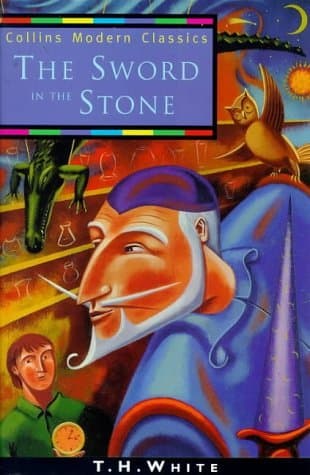
- The Sword in the Stone
T.H. White
3.9 (23k) average on GoodreadsFantasyExplores the youth and education of King Arthur with a touch of magic and historical grounding.
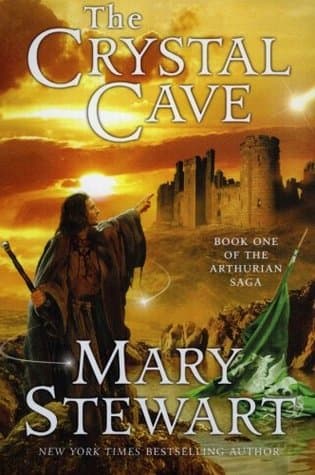
- The Crystal Cave
Mary Stewart
4.1 (42k) average on GoodreadsFantasyStewart's novel offers a first-person perspective of Merlin's early life, rich in magic and political intrigue, but lacks Crossley-Holland's innovative dual-narrative device. The Seeing Stone uniquely explores both the myth's origins and its historical resonance through its parallel narratives, a feature not central to Stewart's more traditional biographical approach to Merlin.
- Harry Potter and the Sorcerer's Stone
J.K. Rowling
4.5 (7M) average on GoodreadsFantasyRescued from a miserable life under the stairs, an orphaned boy discovers he's a wizard destined for a magical school, where he uncovers a dangerous secret tied to the dark wizard who murdered his parents.
- The Hunger Games
Suzanne Collins
4.3 (6.4M) average on GoodreadsFantasyIn a future where children fight to the death on live television, Katniss Everdeen volunteers for the arena, turning a death sentence into a fight for survival and a spark of rebellion.
- 1984
George Orwell
4.2 (3.1M) average on GoodreadsPoliticsIn a future where surveillance and thought control are absolute, a man's search for truth clashes with the Party, showing that hope can be a form of rebellion.
- Divergent
Veronica Roth
4.2 (2.9M) average on GoodreadsFantasyIn a society divided by virtues, a sixteen-year-old's difference from the norm starts a rebellion that threatens her world.




Enjoyed the summary?
A summary gives you the shape of the book. The book itself has the detail, the examples and the voice.
Find The Seeing Stone on AmazonAs an Amazon Associate, BookBrief earns from qualifying purchases. How we're funded