
Synopsis
Covers the whole plot, including the ending.
- Difficulty
- Easy
- Pacing
- Moderate
- Mood
- Adventurous, Resolute, Loyal, Evocative
- Read it if
- You love historical adventures, stories of deep friendship, and quests for honor set in ancient, wild landscapes.
- Skip it if
- You prefer fast-paced fantasy over historical detail and character-driven exploration.
The Eagle of the Ninth Plot Summary
Covers the whole plot, including the ending.
Marcus Flavius Aquila Takes Command
Marcus Flavius Aquila, a newly commissioned centurion, arrives in Roman Britain, having chosen to serve on the frontier rather than in a safer province. His father, a centurion with the Ninth Legion, disappeared with his entire legion fourteen years prior in the Caledonian wilds, a disgrace that bothers Marcus. He is given command of a small fort at Isca Dumnoniorum (modern Exeter) and proves himself a capable and fair leader, earning the respect of his men. However, during a sudden attack by local British tribesmen, Marcus is severely wounded in the leg, ending his military career. This injury leaves him with a limp and a sense of frustration, as his dream of restoring his family's name through military service is gone.
Recovery and a New Purpose
After his injury, Marcus is sent to recover at his Uncle Aquila's villa in Calleva (Silchester). During his recovery, he struggles with his lost future and his disability. His uncle, a wise and kind man, encourages him to find a new purpose. It is here that Marcus purchases a young British slave named Esca at a slave market, saving him from a cruel master. Initially, their relationship is tense due to their master-slave dynamic, but Esca's quiet loyalty, intelligence, and knowledge of the British land and customs slowly earn Marcus's trust and respect, building a deeper bond that goes beyond their social divide.
The Rumor of the Eagle
While recovering, Marcus begins to hear rumors among the Britons and Roman traders about the lost Eagle standard of the Ninth Legion. The standard, a golden eagle, was the sacred emblem of the legion, and its loss was a dishonor. These rumors suggest that the Eagle was not destroyed but was seen far to the north, beyond Hadrian's Wall, in the hands of a fierce, un-Romanized tribe. Marcus realizes that recovering the Eagle would not only restore his father's and the legion's honor but would also give him a new purpose in life. He decides to undertake a journey into the unknown territories to find it.
Preparations for the North
Marcus begins to plan his expedition. To avoid suspicion and survive in the hostile territories beyond the Wall, he decides they must travel in disguise. He pretends to be a Greek oculist, Demetrius, a traveling physician, with Esca as his slave and translator. They gather supplies, learn about the northern tribes, and Marcus even learns some basic Greek phrases. Esca's knowledge of the British dialects and his ability to blend in are important to their success. Before departing, Marcus reveals his true intentions to Esca, who, despite the dangers, pledges his loyalty and agrees to accompany him on this quest, driven by his growing bond with Marcus and a sense of adventure.
Journey Beyond the Wall
Marcus and Esca, disguised as Demetrius and his slave, go north, crossing Hadrian's Wall into the lands of Caledonia. They encounter various British tribes, some wary, some hostile, and rely heavily on Esca's language skills and cultural understanding to manage these encounters. Marcus, despite his Roman pride, learns to adapt to the ways of the north and to trust Esca's judgment. They endure harsh weather, difficult terrain, and constant watch against discovery. Their bond deepens as they face shared dangers and rely on each other for survival, blurring the lines of master and slave.
Following the Eagle's Trail
As they travel deeper into the north, Marcus and Esca gather more clues about the Eagle. They hear stories and see carvings that confirm the standard's presence among a powerful and fierce tribe known as the Epidaii, far to the north. They also begin to understand the fate of the Ninth Legion, learning that the legion was ambushed and destroyed, not simply lost, and that the survivors were enslaved or killed. The realization of his father's probable death in battle, rather than a cowardly disappearance, brings Marcus some peace but also strengthens his resolve to recover the Eagle as a final act of respect for his father and his legion.
Among the Seal People
Marcus and Esca finally reach the territory of the Epidaii, or 'Seal People,' a powerful tribe living by the northern sea. They discover that the Eagle is held by the tribe's chieftain, a revered war trophy. Marcus, still disguised as the oculist, gains entry to the chieftain's dwelling by offering medical services. This allows him to observe the Eagle, confirming its authenticity. The situation is dangerous; discovery would mean death. Esca, using his British heritage, tries to learn more about the tribe's customs and the Eagle's security, all while maintaining their deception. The tension is high as they move closer to their objective.
The Escape with the Eagle
Seizing a chaotic moment during a tribal feast or celebration, Marcus and Esca execute their plan to steal the Eagle. They are discovered, forcing a desperate flight. They are pursued by the enraged warriors of the Seal People, who consider the Eagle a sacred totem. Marcus, despite his injured leg, pushes himself to his limits, while Esca, with his knowledge of the land, guides them through difficult terrain, using every trick he knows to evade their pursuers. The chase is long and brutal, testing their endurance and their bond.
Betrayal and Rescue
During their flight, they encounter a former Roman slave, Guern, who offers them passage on his boat. However, Guern, driven by resentment against Rome, betrays them to a group of British warriors. Marcus is captured, and the Eagle is nearly lost again. At this moment, Esca, despite having many opportunities to abandon Marcus and reclaim his freedom, shows his loyalty. He fights to free Marcus, proving that his allegiance is no longer that of a slave but of a friend and comrade. Together, they escape their captors and continue their journey south, closer to Roman territory.
Return to Roman Britain
Exhausted and battered, Marcus and Esca finally reach Hadrian's Wall. The moment they cross back into Roman territory, carrying the battered but recognizable Eagle, is one of relief and triumph. They present the Eagle to the Roman authorities, proving the fate of the Ninth Legion and restoring its honor. Marcus, no longer just a disabled centurion, is seen as a hero. His quest is complete, and he has fulfilled his family's legacy in a way no one expected, not through military might, but through courage, determination, and the loyalty of his companion.
Freedom and a New Beginning
With the Eagle recovered, Marcus is offered a new position in the Roman administration, a desk job. However, his most important act is to grant Esca his freedom. Esca, no longer a slave, chooses to remain with Marcus, not out of obligation, but out of friendship and affection. Their journey has created a strong bond, going beyond social barriers. They decide to settle down together, with Marcus taking up farming and Esca by his side. The story concludes with Marcus and Esca, two men from different worlds, having found a new life and a connection in Roman Britain, united by their shared adventure and mutual respect.
The Eagle of the Ninth Characters
Marcus Flavius Aquila
Protagonist
A young Roman centurion seeking to restore his family's honor.
Marcus is a proud, determined, and honorable young Roman officer. Son of a centurion of the lost Ninth Legion, he is driven by a deep desire to redeem his family's name after the legion's mysterious disappearance. His military career is cut short by a debilitating leg injury, forcing him to find a new purpose. Despite his Roman pride and initial prejudices, he possesses a strong sense of justice and a capacity for deep loyalty and friendship, particularly towards Esca. He is intelligent and resourceful, able to adapt to difficult circumstances and think strategically under pressure.
Relationships: Esca (Master-slave turned deep friendship and loyalty); Uncle Aquila (Supportive and wise guardian); Cottia (Young, admiring friend, potential romantic interest)
Esca
Supporting
A young British slave who becomes Marcus's loyal companion and friend.
Esca is a young British slave of the Brigantes tribe, purchased by Marcus. He is initially quiet, watchful, and resentful of his servitude, but intelligent, resourceful, and deeply knowledgeable about the British land and its peoples. He is fiercely loyal to those he chooses to serve, and his bond with Marcus develops into an unbreakable friendship. His ability to speak various British dialects, understand local customs, and navigate the wilderness makes him indispensable to Marcus's quest. Esca represents the 'other' in Roman Britain, yet his character highlights universal virtues of courage and loyalty.
Relationships: Marcus Flavius Aquila (Slave-master turned deep friendship and loyalty)
Uncle Aquila
Supporting
Marcus's kind and wise Roman uncle.
Uncle Aquila is Marcus's paternal uncle, a retired Roman citizen living in Britain. He is a kind, understanding, and pragmatic man who provides Marcus with a home and emotional support after his injury. He is a voice of reason and encourages Marcus to find a new purpose beyond his shattered military career. He is initially skeptical of Marcus's quest for the Eagle but ultimately supports him, providing resources and a safe base. His wisdom and quiet strength offer a contrast to Marcus's youthful impetuousness and Roman pride.
Relationships: Marcus Flavius Aquila (Uncle and guardian)
Cottia
Supporting
A spirited young Roman girl, friend to Marcus and Esca.
Cottia is a young Roman girl, the daughter of a neighboring Roman official, who becomes a friend to Marcus and Esca. She is spirited, curious, and somewhat rebellious, often flouting Roman social norms. She is fascinated by the Britons and develops a particular fondness for Esca, treating him as an equal despite his slave status. Her presence provides a touch of youthful innocence and a different perspective on the rigid Roman world. She is brave and compassionate, showing concern for both Marcus and Esca.
Relationships: Marcus Flavius Aquila (Close friend, potential romantic interest); Esca (Friend, admiring him as a Briton)
Guern
Supporting
A former Roman slave, now a British boatman.
Guern is a former Roman slave who helps Marcus and Esca escape from the Seal People but later betrays them out of deep-seated resentment against Rome. He represents the complex and often bitter relationship between the conquered Britons and their Roman occupiers. His betrayal highlights the dangers and moral ambiguities of their quest beyond the Wall. Though a minor character, his actions are pivotal in testing Esca's loyalty and demonstrating the harsh realities of the Roman-British divide.
Relationships: Marcus Flavius Aquila (Betrayer); Esca (Temporary ally, then betrayer)
Liathan
Mentioned
Chieftain of the Epidaii (Seal People).
Liathan is the powerful chieftain of the Epidaii, the 'Seal People,' a fierce tribe far north of Hadrian's Wall. He is the one who possesses the Eagle of the Ninth Legion, holding it as a sacred war trophy. He is depicted as a strong and respected leader among his people, symbolizing the un-Romanized and formidable nature of the northern tribes. Marcus and Esca must navigate his court and territory with extreme caution to retrieve the Eagle. He represents the ultimate obstacle to their quest.
Drusillus
Supporting
Marcus's loyal orderly at Isca Dumnoniorum.
Drusillus is Marcus's faithful orderly at the fort of Isca Dumnoniorum. He is a seasoned soldier who respects Marcus's leadership and cares for him during his injury. He represents the ordinary Roman soldier and the camaraderie within the legion. Though his role is brief, his loyalty and concern for Marcus underscore Marcus's good character as a leader.
Relationships: Marcus Flavius Aquila (Orderly and subordinate)
Kaeso
Mentioned
Marcus's father, centurion of the Ninth Legion.
Kaeso is Marcus's father, a centurion of the Ninth Legion who disappeared with his entire legion fourteen years before the story begins. His perceived disgrace is the primary motivation for Marcus's quest. Though never seen, his memory and the mystery surrounding his fate loom large over Marcus's life. The recovery of the Eagle is ultimately a way for Marcus to honor his father's memory and clear his name, realizing his father died bravely in battle.
Relationships: Marcus Flavius Aquila (Father)
The Eagle of the Ninth Themes
Identity and Belonging
The novel explores how individuals find their identity outside of predefined roles and where they truly belong. Marcus, stripped of his military career, must find a new identity, one not solely defined by Roman military service. Esca, a Briton enslaved by Romans, deals with his dual identity and where his loyalty truly lies. Their journey together allows them to go beyond their societal labels (Roman soldier, British slave) and find a sense of belonging in their shared purpose and mutual respect, ultimately choosing a life together that defies conventional expectations.
“For the first time in his life, Marcus felt truly free, not from the Empire, but from the burden of what he thought he should be.”
Loyalty and Friendship
The evolving relationship between Marcus and Esca is central to this theme. Initially bound by master-slave dynamics, their shared danger and reliance on each other create a strong bond of loyalty and deep friendship that goes beyond their social and cultural divides. Esca's commitment to Marcus, even when he could gain his freedom by abandoning him, shows the power of true allegiance. This theme questions Roman societal norms, suggesting that loyalty can be earned through respect and shared experience, rather than solely dictated by status or birth.
“I am a Briton and a free man, but I am your man, Marcus.”
Honor and Redemption
Marcus's entire quest is driven by the desire to restore the honor of his father and the lost Ninth Legion. The loss of the Eagle represents a shame for Rome, and Marcus seeks to redeem this dishonor. His personal honor is also tied to his ability to serve, and when his military career ends, he finds a new path to honor through this dangerous, unofficial mission. The successful recovery of the Eagle brings not just public recognition but also a deep personal sense of redemption for Marcus and his family's name.
“The Eagle, you see, was more than just a standard. It was the soul of the Legion.”
Cultural Clash and Understanding
The story shows the differences between Roman and British cultures. Marcus, initially embodying Roman superiority, is forced to understand the ways of the 'barbarian' Britons, relying heavily on Esca's knowledge. The story explores the prejudice and misunderstanding between the two cultures, but also shows how mutual respect and shared humanity can bridge these divides. Esca's perspective offers insights into the British way of life, challenging Marcus's ideas and leading to a more nuanced understanding of the world beyond the Roman frontier.
“He had thought of all Britons as savages, but Esca… Esca was simply Esca.”
Plot Devices & Literary Techniques
The Eagle Standard
A powerful symbol of Roman honor, identity, and the quest's objective.
The golden Eagle standard of the Ninth Legion is the central macguffin and a potent symbol in the novel. For Marcus, it represents the lost honor of his father and the entire legion, driving his perilous quest. For the Roman Empire, its loss signifies a deep shame and a military disaster. For the northern British tribes, it becomes a sacred war trophy, symbolizing their defiance against Roman conquest. Its recovery is not merely a physical act but a symbolic restoration of pride, identity, and a bridging of cultural divides.
Disguise and Deception
A narrative tool to allow protagonists to operate in hostile territory.
Marcus's disguise as a Greek oculist, Demetrius, along with Esca acting as his slave/translator, is a crucial plot device. This deception allows them to travel deep into hostile, un-Romanized territory beyond Hadrian's Wall without immediately being identified as Romans and attacked. It creates constant tension and provides opportunities for Marcus to observe and learn about British customs firsthand, forcing him to shed some of his Roman prejudices. The maintenance of this disguise is vital to their survival and the success of their mission.
The Injured Leg
A physical limitation that forces a change in the protagonist's path.
Marcus's severe leg injury, sustained early in the novel, serves as a significant plot device. It abruptly ends his military career, shattering his initial dreams of glory and forcing him to seek an alternative path to honor. This disability not only makes his subsequent journey more challenging and perilous but also symbolizes his departure from conventional Roman military service. It compels him to rely on his intellect and the assistance of others, particularly Esca, fostering a deeper bond and a more humble perspective than a fully able-bodied soldier might have developed.
Hadrian's Wall
A physical and symbolic barrier between Roman civilization and the unknown wild.
Hadrian's Wall functions as more than just a physical boundary; it is a powerful symbol of the frontier between Roman civilization and the wild, untamed lands of Caledonia. For Marcus, crossing the Wall represents stepping into the unknown, leaving the security of his familiar world behind. It marks the transition from Roman order to British chaos, from known history to uncharted mystery. The Wall emphasizes the danger and isolation of their quest, highlighting the courage required to venture beyond its perceived safety.
The Eagle of the Ninth Quotes
“The Eagle is not a thing to be lost.”
“A man can bear what he must bear.”
“The Legion is the world, and the world is the Legion.”
“There is a kind of freedom in being a slave that free men do not know.”
“The gods give; the gods take away; and what is left is for men to make of it.”
“It is not the sword that makes the warrior, but the heart behind it.”
“The past is a foreign country; they do things differently there.”
“To lose the Eagle is to lose the soul of the Legion.”
“A friend is a second self.”
“The north is a hard master, but a fair one.”
“We are all exiles in one way or another.”
“The wound is the place where the light enters you.”
“Every man has his own frontier to cross.”
“The silence of the mountains is a language of its own.”
Quiz
10 questions on the plot and the characters. Each answer comes with a short explanation.
Question 1
What is the name of the protagonist in 'The Eagle of the Ninth'?
- Marcus Flavius Aquila
- Lucius Septimius Severus
- Gaius Julius Caesar
- Tiberius Claudius Maximus
Show answer
A. Marcus Flavius Aquila Marcus Flavius Aquila is the young Roman officer and protagonist who leads the quest to recover the lost eagle standard of the Ninth Legion, driven by his father's connection to the legion.
Question 2
What object does Marcus seek to recover from beyond Hadrian's Wall?
- A Roman sword
- A golden crown
- The eagle standard of the Ninth Legion
- A map of Northern Britain
Show answer
C. The eagle standard of the Ninth Legion The eagle standard is a sacred symbol of the legion's honor, and Marcus's quest centers on retrieving it to restore his family's reputation and solve the mystery of the Ninth Legion's disappearance.
Question 3
Who is Esca, and what is his role in Marcus's journey?
- A Roman centurion who betrays Marcus
- A British slave who becomes Marcus's companion and guide
- A tribal chieftain who opposes Marcus
- A merchant who provides supplies for the expedition
Show answer
B. A British slave who becomes Marcus's companion and guide Esca is a British slave whom Marcus frees; he serves as a loyal guide and translator, crucial for navigating the hostile territories beyond the Wall and understanding local cultures.
Question 4
Why does Marcus have a personal stake in finding the Ninth Legion's eagle?
- He was once a soldier in the Ninth Legion
- His father was an officer in the Ninth Legion
- He was ordered by the Emperor to retrieve it
- He wants to sell it for wealth and fame
Show answer
B. His father was an officer in the Ninth Legion Marcus's father served in the Ninth Legion, and its disappearance tarnished the family's honor; recovering the eagle is a way to redeem his father's legacy and find closure.
Question 5
What injury does Marcus sustain early in the story that affects his military career?
- A broken arm from a fall
- A leg wound that leaves him with a limp
- Blindness in one eye from an attack
- A severe fever that weakens him permanently
Show answer
B. A leg wound that leaves him with a limp Marcus is wounded in the leg during a battle at his first command, forcing him to retire from active military service and motivating his quest for the eagle as an alternative path to honor.
Question 6
Which of these themes is most central to 'The Eagle of the Ninth'?
- The conflict between technology and nature
- The pursuit of honor and redemption in the face of loss
- The importance of political power in ancient Rome
- The role of women in historical societies
Show answer
B. The pursuit of honor and redemption in the face of loss The story explores themes of honor, loyalty, and redemption through Marcus's quest to recover the eagle, which symbolizes restoring his family's name and overcoming the trauma of the Ninth Legion's loss.
Question 7
How does Marcus initially gain Esca's loyalty?
- By promising him freedom after the quest
- By buying him as a slave and then freeing him
- By saving him from execution
- By offering him a share of the eagle's value
Show answer
B. By buying him as a slave and then freeing him Marcus purchases Esca as a slave and immediately grants him freedom, demonstrating trust and respect that fosters a deep bond and loyalty essential for their dangerous journey.
Question 8
What is the significance of the 'Lost Legion' in the historical context of the book?
- It was a fictional legion created for the story
- It refers to the Ninth Legion, which historically disappeared in Britain
- It was a legion that defected to the British tribes
- It symbolizes all Roman legions that failed in conquest
Show answer
B. It refers to the Ninth Legion, which historically disappeared in Britain The Ninth Legion (Hispana) is based on a real historical mystery from Roman Britain, where it vanished around 120 AD, adding depth and intrigue to the novel's plot.
Question 9
In the climax, where is the eagle standard finally discovered?
- Buried in a Roman fort south of Hadrian's Wall
- Hidden in a cave in the Scottish Highlands
- In a tribal shrine of the Seal People
- At the bottom of a river in Northern Britain
Show answer
C. In a tribal shrine of the Seal People Marcus and Esca find the eagle in a sacred place of the Seal People, a British tribe, where it is kept as a trophy, leading to a tense confrontation to retrieve it.
Question 10
How does the relationship between Marcus and Esca evolve throughout their journey?
- They remain master and slave with mutual distrust
- They develop a deep friendship based on equality and shared purpose
- Esca betrays Marcus to join the British tribes
- Marcus becomes dependent on Esca but never fully trusts him
Show answer
B. They develop a deep friendship based on equality and shared purpose Starting as freed slave and former master, their bond grows into one of true friendship and partnership, overcoming cultural barriers and highlighting themes of loyalty and humanity.
The Eagle of the Ninth FAQ
What is 'The Eagle of the Ninth' about?
The novel follows Marcus Flavius Aquila, a young Roman officer in 2nd-century Britain, who embarks on a dangerous quest north of Hadrian's Wall to recover the lost eagle standard of his father's legion, the Ninth Hispana, which disappeared years earlier. Accompanied by his British slave-turned-friend Esca, Marcus ventures into hostile tribal territory to uncover the truth behind the legion's fate and restore his family's honor.
Why should I read 'The Eagle of the Ninth'?
This book offers a compelling blend of historical adventure, friendship, and mystery set against the richly detailed backdrop of Roman Britain. It explores themes of loyalty, cultural identity, and redemption through Marcus's perilous journey and evolving relationship with Esca, making it both an exciting quest story and a thoughtful character study.
What is the background/setting of 'The Eagle of the Ninth'?
The story is set in Roman Britain around 130 AD, primarily in the frontier regions near Hadrian's Wall. The setting shifts from the Roman fort of Isca Dumnoniorum (modern-day Exeter) to the wild, unconquered lands of the Picts and other tribes north of the Wall, highlighting the cultural tensions between Roman civilization and indigenous British societies.
What are the most memorable quotes?
Key quotes include Marcus's reflection, 'A man can bear anything if his heart is whole,' and Esca's declaration of loyalty, 'I am your hound, and I will follow you.' Another poignant line is Marcus's realization about the eagle: 'It is not the Eagle that is important, but the men who followed it.'
What writing style does the author use?
Rosemary Sutcliff employs a descriptive, atmospheric prose style that vividly evokes the landscapes and cultures of Roman Britain. Her writing is detailed yet accessible, blending historical accuracy with emotional depth, and she uses subtle symbolism, such as the eagle representing lost honor and cultural clash.
What minor details add significant meaning?
The carved dolphin on Marcus's dagger, a gift from his uncle, symbolizes his Roman heritage and becomes a token of trust with Esca. The recurring motif of mists and fog in the northern landscapes represents the obscurity of the Ninth Legion's fate and the uncertainty of Marcus's quest.
What are some subtle foreshadowing moments?
Early scenes where Marcus injures his leg in battle foreshadow his later physical limitations during the quest. Esca's initial resentment as a slave hints at the complex loyalty that will develop, and mentions of the 'Lost Legion' in campfire tales subtly build the mystery before Marcus's journey begins.
What unexpected character connections exist?
Esca, a British tribesman enslaved by Romans, becomes Marcus's closest ally, subverting expected master-slave dynamics. Guern, the Silurian hunter they meet, shares a hidden kinship with Marcus through a shared experience of loss, linking disparate characters across cultural divides.
What are unspoken character motivations?
Marcus is driven not just by duty but by a deep-seated need to redeem his father's memory and overcome his own sense of failure after his military career ends. Esca's loyalty stems from a desire for purpose and respect beyond his slave status, though he rarely voices this directly.
What psychological complexities do characters exhibit?
Marcus grapples with pride and vulnerability as a disabled ex-soldier, while Esca navigates conflicting loyalties to his British heritage and his bond with Marcus. Their relationship evolves from mutual distrust to profound interdependence, reflecting themes of identity and reconciliation.
What are the major emotional turning points?
Key moments include Marcus's injury and discharge from the army, which shatters his identity; the scene where Esca chooses to save Marcus from the Seal People, cementing their friendship; and the climax where Marcus decides to bury the eagle, letting go of the past for a new future.
How do relationship dynamics evolve?
Marcus and Esca's relationship transforms from master-slave to equals and brothers-in-arms, marked by Esca's oath of loyalty and their shared sacrifices. This mirrors the broader theme of bridging Roman and British cultures, moving from conquest to mutual respect.
Which parts remain ambiguous or open-ended?
The exact fate of the Ninth Legion is left ambiguous—whether they were destroyed in battle or assimilated into local tribes. The novel also leaves open whether Marcus and Esca's friendship will fully heal the cultural rifts between Romans and Britons, suggesting ongoing tensions.
What are controversial scenes or decisions?
Marcus's initial ownership of Esca as a slave raises ethical questions, though the story critiques this through their evolving equality. Some readers debate Marcus's final choice to bury the eagle, seeing it as a rejection of Roman glory or a pragmatic act of peace.
'The Eagle of the Ninth' ending explained: how it ends & what it means
Marcus recovers the eagle but chooses to bury it near Hadrian's Wall, symbolically laying to rest the ghosts of the past and rejecting imperial conquest. He and Esca return to start a new life on a farm, representing a personal resolution that prioritizes friendship and peace over military honor.
About the author

Rosemary Sutcliff was a British author known for her historical fiction, particularly set in ancient and medieval Britain. Among her notable works are "The Eagle of the Ninth," which explores Roman Britain, and "The Lantern Bearers," a tale of the decline of Roman influence in Britain. Her writing often reflects themes of courage and identity.
Similar books
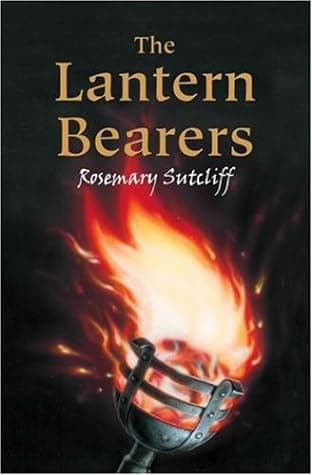
- The Lantern Bearers
Rosemary Sutcliff
4.1 (2k) average on GoodreadsFantasyAnother Sutcliff classic exploring Roman Britain, loyalty, and the fall of an empire.
- Harry Potter and the Sorcerer's Stone
J.K. Rowling
4.5 (7M) average on GoodreadsFantasyRescued from a miserable life under the stairs, an orphaned boy discovers he's a wizard destined for a magical school, where he uncovers a dangerous secret tied to the dark wizard who murdered his parents.
- The Hunger Games
Suzanne Collins
4.3 (6.4M) average on GoodreadsFantasyIn a future where children fight to the death on live television, Katniss Everdeen volunteers for the arena, turning a death sentence into a fight for survival and a spark of rebellion.
- 1984
George Orwell
4.2 (3.1M) average on GoodreadsPoliticsIn a future where surveillance and thought control are absolute, a man's search for truth clashes with the Party, showing that hope can be a form of rebellion.
- Divergent
Veronica Roth
4.2 (2.9M) average on GoodreadsFantasyIn a society divided by virtues, a sixteen-year-old's difference from the norm starts a rebellion that threatens her world.
- The Hobbit, or There and Back Again
J.R.R. Tolkien
4.3 (2.9M) average on GoodreadsFantasyA comfort-loving hobbit named Bilbo Baggins is whisked away by a mischievous wizard and a band of dwarves on an unexpected journey to reclaim stolen treasure from a fearsome dragon, discovering courage and a magical ring along the way.





Enjoyed the summary?
A summary gives you the shape of the book. The book itself has the detail, the examples and the voice.
Find The Eagle of the Ninth on AmazonAs an Amazon Associate, BookBrief earns from qualifying purchases. How we're funded