

Synopsis
Covers the whole plot, including the ending.
- Difficulty
- Easy
- Pacing
- Moderate
- Mood
- Thought-provoking, Melancholy, Hopeful, Dreamlike
- Read it if
- You enjoy poignant, introspective stories about children navigating difficult circumstances, with a touch of magical realism and a focus on belonging and self-discovery.
- Skip it if
- You prefer fast-paced, action-driven plots or stories with clear-cut fantasy elements rather than ambiguous, dream-like experiences.
Awake and Dreaming Plot Summary
Covers the whole plot, including the ending.
A Miserable Existence
Ten-year-old Theo lives a nomadic and impoverished life with her mother, Gwen. Gwen is artistic and free-spirited but deeply irresponsible. She often forgets to feed Theo or pay rent. They move frequently, staying in rundown apartments. Theo constantly feels the weight of her mother's neglect and the instability of their existence. Theo often retreats into her imagination, dreaming of a stable home and a 'real' family with a father and siblings, and the simple comforts she lacks. She longs for a sense of belonging and permanence, a sharp contrast to her current reality where she is often left alone.
The Mysterious Adoption
One day, after Gwen has left Theo alone for a long time, Theo is drawn to a beautiful old house. A woman, Mrs. Kaldor, appears at the door and, without explanation, invites Theo to stay. Theo is quickly absorbed into the large, loving Kaldor family. It consists of Mr. and Mrs. Kaldor and their many children: Hilary, a kind teenager; twins Laura and Lucy; and the younger boys, Ben and Peter. The Kaldors provide Theo with everything she has ever dreamed of: a warm bed, regular meals, new clothes, and, most importantly, a sense of belonging and affection. She feels safe and cherished for the first time in her life.
Life with the Kaldors
Life with the Kaldors is everything Theo imagined. She attends school regularly, makes friends, and enjoys family meals and outings. She forms a special bond with Hilary, who acts as an older sister, and enjoys the chaos and affection of the younger children. The Kaldor house is full of laughter, books, and art, a sharp contrast to the sterile, temporary rooms she shared with Gwen. Theo thrives in this environment. Her confidence grows, and she begins to forget the harsh realities of her past life. She feels completely integrated into the family, even though the circumstances of her arrival remain a mystery.
The Fading Reality
As time passes, subtle cracks appear in Theo's perfect new life. She occasionally glimpses a shadowy figure that makes her uneasy. The Kaldor children sometimes seem to forget things she has told them about her past, or their memories of events differ from hers. Objects in the house occasionally shift or disappear. Theo also notices that the Kaldors never mention her mother, Gwen, and she herself finds it increasingly difficult to recall specific details about her old life. These inconsistencies make Theo question her new reality.
The Return of Gwen
One day, Gwen suddenly reappears at the Kaldor house, seemingly unaware of the time that has passed or where Theo has been. She takes Theo away without much explanation. Theo is thrust back into her old life of instability and neglect. The transition is jarring; the warmth and comfort of the Kaldor home are replaced by the familiar coldness and uncertainty. Theo is heartbroken and confused, unable to reconcile the two vastly different realities. She struggles to understand what happened and why she was taken from a place where she finally felt she belonged.
The Search for Answers
Back with Gwen, Theo tries to make sense of her experience with the Kaldors. She clings to memories, but they begin to feel hazy and dreamlike. Gwen dismisses Theo's stories as fantasies, further confusing Theo. Theo desperately searches for any tangible proof of the Kaldors' existence: a drawing, a school paper, anything. She revisits the location of the Kaldor house, only to find an empty lot or a different building, adding to her despair and leading her to question her own sanity. The shadowy figure from her time with the Kaldors also reappears in her thoughts, deepening the mystery.
A New Beginning, A New Friend
Gwen, in her typical fashion, decides they need a fresh start and moves them to a new town. Here, they settle into a slightly more stable, though still modest, apartment. Theo meets Matthew, a kind and curious boy her age. Matthew is empathetic and a good listener, and Theo cautiously begins to confide in him about her past, including her experiences with the Kaldors. Matthew, unlike Gwen, takes Theo's stories seriously and believes she might have experienced something extraordinary, offering her much-needed validation and companionship. Their friendship provides a new anchor for Theo.
The Shadow's Identity
As Theo and Matthew spend more time together, Theo continues to be haunted by the shadowy figure. Through conversations with Matthew and her own introspection, Theo realizes that the figure is not menacing. Instead, it represents her own suppressed memories and grief. She begins to understand that the figure is connected to the loss of her father, who died when she was very young. This realization is painful but also brings clarity, allowing her to process a grief she hadn't consciously acknowledged before. The shadow symbolizes the unresolved sadness within her.
Understanding Gwen
With Matthew's help and her own growing maturity, Theo begins to see Gwen not just as an irresponsible parent, but as a flawed individual struggling with her own demons and grief. She understands that Gwen's artistic nature and flightiness are coping mechanisms. While Gwen loves her, she is incapable of providing the stability Theo craves. This understanding does not excuse Gwen's behavior, but it allows Theo to approach their relationship with more empathy and less resentment, recognizing her mother's limitations without taking them as a personal failing.
The Truth About the Kaldors
Theo eventually accepts that her time with the Kaldors was a magical, dream-like experience. It was a manifestation of her deepest desires for a stable family and a safe home. It was not a hallucination, but a profound emotional and psychological journey that allowed her to heal and grow. The Kaldors represented the ideal family, a space where she could process her grief and longing. She understands that while they may not have been 'real' in a conventional sense, the love and lessons she learned from them were real and have shaped her into a stronger, more resilient person.
Finding Her Own Strength
Armed with a new understanding of herself, her mother, and her experiences, Theo begins to take more control over her own life. She actively seeks out positive influences, like Matthew and a kind librarian. She starts to build her own support system and finds ways to create moments of stability and joy for herself, even within the unpredictable framework of her life with Gwen. Theo realizes that while she may not have the perfect family she once dreamed of, she has the inner strength and resilience to navigate her reality and find happiness.
A Glimmer of Hope
Towards the end of the story, there are small but significant improvements in Theo and Gwen's relationship. While Gwen does not completely transform, she shows glimmers of more attentiveness and responsibility, partly due to Theo's growing independence and maturity. Theo, having processed her grief and understood her mother better, is less reliant on Gwen for her emotional well-being. She is no longer just a passive recipient of her mother's whims but an active participant in shaping her own life. The ending suggests a future where Theo, though still living with Gwen, is better equipped to thrive.
Principal Figures
Theo
Protagonist
A ten-year-old girl longing for stability and a 'real' family.
Theo is a sensitive, imaginative, and resilient ten-year-old. She yearns for the simple comforts of a stable home and a loving family, a stark contrast to her chaotic life with her irresponsible mother, Gwen. Despite her difficult circumstances, Theo possesses a strong inner world, often retreating into dreams and fantasies. She is observant and deeply affected by her environment, initially feeling helpless but gradually discovering her own agency and strength. Her journey is one of self-discovery and coming to terms with reality.
Relationships: Gwen (Daughter-mother; Theo often feels neglected and responsible for Gwen.); Mrs. Kaldor (Surrogate mother figure; provides unconditional love and care.); Hilary Kaldor (Surrogate older sister; a source of warmth, guidance, and friendship.); Matthew (Close friend; provides validation, understanding, and support.)
Gwen
Supporting
Theo's artistic but irresponsible and neglectful mother.
Gwen is Theo's mother, an artistic and free-spirited woman who is charming but deeply irresponsible. She struggles with providing basic care and stability for Theo, often prioritizing her own fleeting interests over her daughter's needs. Gwen is depicted as a dreamer herself, perhaps using her art and transient lifestyle as an escape from her own unacknowledged grief or trauma. While she loves Theo in her own way, she lacks the maturity and practical skills to be an effective parent. She often dismisses Theo's concerns as childish fantasies.
Relationships: Theo (Mother-daughter; relationship marked by neglect, love, and Theo's eventual understanding.)
Mrs. Kaldor
Supporting
The warm, nurturing matriarch of the ideal family Theo dreams of.
Mrs. Kaldor is the kind and welcoming mother figure in the Kaldor family. She embodies the ideal of maternal love and stability that Theo desperately craves. She is patient, understanding, and provides Theo with unconditional affection, regular meals, and a sense of belonging. Her presence in Theo's life, whether real or imagined, is crucial for Theo's emotional development, offering a stark contrast to Gwen's neglect. She represents the safety and comfort of a 'real' home.
Relationships: Theo (Surrogate mother; provides love and stability.); Mr. Kaldor (Husband; together they form the ideal parental unit.); Kaldor children (Biological mother; loving and attentive.)
Hilary Kaldor
Supporting
Theo's kind and supportive older 'sister' in the Kaldor family.
Hilary is the eldest daughter of the Kaldor family and quickly becomes Theo's closest confidante and surrogate older sister. She is patient, empathetic, and provides Theo with guidance and friendship. Hilary helps Theo navigate the new family dynamics and school, offering a sense of stability and understanding that Theo has never experienced. Her bond with Theo is deep and represents the sisterly connection Theo longed for. Hilary's influence helps Theo to feel truly accepted and loved within the Kaldor household.
Relationships: Theo (Surrogate older sister; a mentor and friend.); Kaldor family (Sister to the other children; supportive and responsible.)
Matthew
Supporting
Theo's first true friend, who offers her understanding and validation.
Matthew is a boy Theo meets after she and Gwen move to a new town. He is intelligent, observant, and possesses a quiet empathy that allows him to listen to Theo's fantastical stories without judgment. Matthew becomes Theo's first genuine friend, providing her with the emotional support and validation she desperately needs. He encourages her to explore her memories and helps her piece together the truth about her experiences. Matthew represents the possibility of real connection and understanding in Theo's life, outside of her family.
Relationships: Theo (Close friend; a supportive and understanding confidante.)
The Shadowy Figure
Mentioned
A recurring, indistinct presence that haunts Theo's thoughts.
The shadowy figure is a recurring, unsettling image that Theo glimpses or senses, particularly during her time with the Kaldors and afterward. It is initially a source of vague fear or unease, but as Theo matures, she comes to understand its true meaning. The figure is not a literal ghost but a symbolic representation of Theo's repressed grief and unacknowledged memories of her deceased father. It embodies the unspoken sadness and loss that Theo carries, and its resolution is key to her emotional healing.
Relationships: Theo (Internal manifestation of Theo's grief and suppressed memories.)
Themes & Insights
The Power of Imagination and Dreams
Theo's imagination is both a refuge and a tool for processing her reality. Her 'dream' of the Kaldor family provides her with the emotional nourishment and stability she lacks in her real life with Gwen. This theme explores how imagination can be a coping mechanism for trauma and neglect, and how it can also be a pathway to self-discovery. The vividness of the Kaldor experience highlights the impact of Theo's inner world, suggesting that emotional truths can manifest in deeply personal, non-literal ways. The story emphasizes that even if an experience is not 'real' in the conventional sense, its emotional and psychological impact can be true and transformative.
“Maybe it was a dream, but it was the most real dream I ever had.”
The Search for Belonging and Stability
Central to Theo's journey is her longing for a stable home and a sense of belonging. Her life with Gwen is characterized by constant movement, neglect, and a lack of permanence. The Kaldor family represents the ideal of this desire, a large, loving, and stable household where Theo feels cherished and secure. This theme explores the human need for connection and a safe haven, especially for a child. Theo's search for belonging drives her story, and her eventual understanding is that true belonging comes not just from outside circumstances but from within herself and the connections she builds.
“She wanted a house where the furniture stayed in the same place, where there was a father, and a mother who remembered to feed you.”
Maternal Love and Neglect
The novel sharply contrasts two forms of maternal figures: Gwen, Theo's biological mother, who is loving but deeply neglectful and irresponsible, and Mrs. Kaldor, the idealized, nurturing surrogate mother. This theme examines the complexities of motherhood, showing that love alone is not enough to provide for a child's needs. Gwen's inability to care for Theo highlights the impact of parental neglect on a child's development and emotional well-being. Conversely, Mrs. Kaldor represents the transformative power of consistent, unconditional care. The theme ultimately encourages understanding Gwen's flaws while affirming Theo's right to proper care and her eventual ability to seek it out for herself.
“Gwen loved her, Theo knew that, but it was a slippery, unreliable kind of love.”
Grief and Loss
Beneath Theo's longing for a stable family is an unacknowledged grief for her deceased father. The shadowy figure that haunts her thoughts is eventually revealed to be a manifestation of this suppressed loss. This theme explores how unresolved grief can impact a child's emotional state and behavior, and how it can subtly shape their desires and fears. Theo's journey involves confronting this grief, understanding its origins, and integrating it into her sense of self. Her ability to finally name and process this loss is a step in her healing and maturity, allowing her to move forward with greater emotional clarity.
“The shadow wasn't a monster, she realized. It was just sadness, waiting to be seen.”
Plot Devices & Literary Techniques
Magical Realism/Dream Logic
The blurring of reality and fantasy, making Theo's experience with the Kaldors ambiguous.
The novel employs magical realism or dream logic to present Theo's time with the Kaldor family. It is never explicitly stated whether the Kaldors were 'real' or a product of Theo's imagination. The narrative maintains this ambiguity, presenting the Kaldor experience with vivid detail and emotional truth, while simultaneously introducing subtle inconsistencies and a dreamlike quality that hints at its fantastical nature. This device allows the author to explore Theo's psychological journey and her deepest desires without needing a literal explanation, emphasizing the emotional reality over objective facts.
Symbolism of the Kaldor House
The house represents the ideal home and family Theo craves.
The Kaldor house serves as a powerful symbol throughout the novel. It is described as warm, welcoming, full of books, art, and laughter – everything Theo's real-life homes are not. It represents the stability, comfort, and unconditional love of the 'real' family Theo longs for. When Theo returns to her old life and finds the house gone or changed, it underscores the ephemeral nature of her dream, yet the memory of the house continues to symbolize the ideal she strives for and the emotional nourishment she received there.
The Shadowy Figure
A recurring motif that symbolizes Theo's repressed grief.
The shadowy figure is a significant symbolic device. Initially, it appears as an unsettling, indistinct presence, causing Theo vague unease. As the story progresses and Theo matures, she comes to understand that this figure is not an external threat but an internal manifestation of her suppressed grief for her deceased father. Its gradual unveiling and Theo's eventual confrontation with its meaning represent her journey of emotional processing and healing from unacknowledged loss. The shadow is a concrete representation of an abstract internal state.
Awake and Dreaming Quotes
“The wind was blowing a gale, and the rain was coming down in sheets, but Megan didn't care. She was free.”
“There were other worlds, she thought, and sometimes, if you were lucky, you could slip into them.”
“It was like looking through a window into another time, another life.”
“Sometimes the past wasn't really past at all. Sometimes it was just waiting for you to find it.”
“She felt a strange pull, a sense of belonging that she hadn't felt anywhere else.”
“The house was alive, whispering secrets she was only just beginning to understand.”
“Grief was a funny thing. It could make you do things you never thought you would.”
“It wasn't just about seeing the past; it was about feeling it, living it.”
“Children, she thought, were often braver than anyone gave them credit for.”
“The hardest part wasn't letting go, but realizing you had to.”
“Even ghosts needed someone to remember them, to tell their story.”
“Sometimes the magic wasn't in the big, grand gestures, but in the quiet, everyday moments.”
“She was no longer just dreaming; she was awake, and she was living.”
“The world was full of wonders, if you only knew where to look.”
Quiz
10 questions on the plot and the characters. Each answer comes with a short explanation.
Question 1
What is the name of Theo's irresponsible mother at the beginning of the story?
- Margot
- Stella
- Lila
- Brenda
Show answer
B. Stella Theo's mother is named Stella, who struggles to provide a stable home for Theo.
Question 2
Which specific object does Theo often use to escape into her imagination, particularly at the library?
- A worn-out teddy bear
- A small, smooth stone
- A book of fairy tales
- A miniature dollhouse
Show answer
C. A book of fairy tales Theo frequently uses a book of fairy tales from the library as a means of escape and to fuel her dreams of a better life.
Question 3
What is the primary desire Theo has that leads to her 'dream' of the Kaldor family?
- To become rich and famous
- To have a 'real' family and a stable home
- To travel the world
- To be a powerful magician
Show answer
B. To have a 'real' family and a stable home Theo's deepest longing is for a stable, loving family, which manifests in her experience with the Kaldors.
Question 4
What is the name of the oldest Kaldor child who initially seems to resent Theo's presence?
- Emily
- Sarah
- Rebecca
- Jessica
Show answer
C. Rebecca Rebecca is the eldest Kaldor child who is initially unwelcoming towards Theo.
Question 5
Where do Theo and her mother live before Theo is 'adopted' by the Kaldors?
- In a small, clean apartment in a bustling city
- In a rundown house in a quiet suburban neighborhood
- In a series of temporary, often squalid, rooms and hotels
- With Theo's grandmother in the countryside
Show answer
C. In a series of temporary, often squalid, rooms and hotels Theo and Stella's life is characterized by transience and poverty, moving between various unsatisfactory accommodations.
Question 6
What specific 'magic' or feeling begins to fade when Theo senses the Kaldor family might not be real?
- The ability to fly and talk to animals
- The warmth, security, and sense of belonging she felt
- Her ability to understand their language
- The physical appearance of the Kaldor children
Show answer
B. The warmth, security, and sense of belonging she felt The 'magic' is not literal enchantment but the emotional security and belonging that slowly dissipate as Theo questions the reality of her situation.
Question 7
Who is the 'shadowy figure' that haunts Theo's thoughts and is eventually revealed to be a key to understanding her situation?
- A mysterious old woman from the library
- Her estranged father, who she barely remembers
- Her deceased grandmother, who loved fairy tales
- A character from one of her favorite books
Show answer
C. Her deceased grandmother, who loved fairy tales The shadowy figure is revealed to be Theo's deceased grandmother, whose influence and stories are central to Theo's imaginative escape.
Question 8
What is the primary internal conflict Theo faces regarding her mother, Stella, even when she wishes for a different family?
- Whether to tell Stella about the Kaldors or keep it a secret.
- Her desire for a 'normal' life versus her underlying love and loyalty to her flawed mother.
- Her anger at Stella for not being wealthy enough.
- Whether Stella will ever find a stable job.
Show answer
B. Her desire for a 'normal' life versus her underlying love and loyalty to her flawed mother. Despite Stella's irresponsibility, Theo struggles with her deep-seated love for her mother, even as she yearns for a different life.
Question 9
How does the author subtly suggest the ambiguity of whether the Kaldors are real or a dream throughout the narrative?
- By explicitly stating it's a dream at the beginning of each Kaldor chapter.
- Through Theo's own wavering memories, the lack of concrete evidence for others, and the sudden shifts in her reality.
- By having other characters occasionally mention Theo's 'imaginary friends'.
- By introducing a magical mentor who explains the nature of her experiences.
Show answer
B. Through Theo's own wavering memories, the lack of concrete evidence for others, and the sudden shifts in her reality. The ambiguity is maintained through Theo's subjective experience, the absence of external confirmation, and the fluid transitions between her two lives.
Question 10
What is the ultimate resolution for Theo at the end of the book regarding her two realities?
- She permanently returns to the Kaldor family, leaving her mother behind.
- She definitively concludes that the Kaldors were a dream and accepts her life with Stella.
- She learns to integrate the lessons and feelings from her 'dream' into her real life, finding a way to cope with her reality.
- She discovers a magical portal that allows her to visit the Kaldors whenever she wishes.
Show answer
C. She learns to integrate the lessons and feelings from her 'dream' into her real life, finding a way to cope with her reality. Theo doesn't discard her experience but uses the strength and lessons learned from her time with the Kaldors to face her life with Stella more resiliently.
Awake and Dreaming FAQ
What is the central premise of 'Awake and Dreaming'?
'Awake and Dreaming' follows Theo, a young girl living in poverty with her irresponsible mother. She longs for a stable, loving family, and her wish seems to come true when she is mysteriously adopted by the warm and bustling Kaldor family, only to find herself back with her mother later, questioning if the Kaldors were ever real.
Who are the main characters in Theo's original life?
Theo lives with her mother, who is often depicted as self-absorbed and neglectful, struggling with poverty and instability. Theo herself is a sensitive and imaginative girl who yearns for a better life and a sense of belonging.
How does Theo come to live with the Kaldor family?
Theo's transition to the Kaldor family is mysterious and seemingly magical; she simply wakes up in their home, accepted as one of their own. There's no clear explanation or legal process, suggesting a dreamlike or fantastical element to her adoption.
What kind of life do the Kaldors offer Theo?
The Kaldor family provides Theo with everything she has ever longed for: warmth, stability, plentiful food, a comfortable home, and the love of many siblings and attentive parents. They offer a stark contrast to her previous life of neglect and poverty, fulfilling her deepest desires for belonging.
What causes Theo's return to her original life?
Theo's return is gradual; as she grows older and becomes more aware, the magic of the Kaldor family begins to fade, and she feels a growing sense of detachment. Eventually, she simply finds herself back with her mother, leaving the reader to wonder about the nature of her experience.
Who is the 'shadowy figure' that haunts Theo's thoughts?
The shadowy figure is revealed to be a representation of Theo's younger self, a lost and forgotten part of her identity that she left behind when she entered the dream world of the Kaldors. This figure embodies her past trauma and the reality she tried to escape.
What is the significance of the recurring dream of the bridge?
The bridge symbolizes the transition between Theo's two realities – her impoverished life and her dream life with the Kaldors. It represents the liminal space she occupies and the psychological journey of moving between desire and reality.
Are there any subtle clues that the Kaldors might not be real even while Theo is with them?
Yes, there are subtle hints, such as the Kaldors' almost too-perfect nature and the lack of any real conflict or hardship within their family. Theo also notices that they never seem to age or change significantly, and her memories of her past life become increasingly hazy, suggesting a dream state.
How does Theo's longing for a 'real' family drive her journey?
Theo's intense longing for a stable, loving family is the catalyst for her entire experience with the Kaldors. Her desire is so powerful that it manifests a complete alternate reality, reflecting her deep emotional needs and the coping mechanisms of her psyche.
What psychological purpose does the Kaldor family serve for Theo?
The Kaldor family serves as a psychological refuge for Theo, a safe space where she can experience the love and security she lacks in her real life. It's a manifestation of her mind's attempt to heal and provide itself with what it desperately needs to survive her difficult circumstances.
How does Theo's maturation impact her ability to stay in the dream world?
As Theo matures, her increasing awareness and understanding of reality make it harder for her to fully immerse herself in the dream world. Her growing consciousness begins to unravel the illusion, forcing her to confront her true circumstances and the need to integrate her experiences.
What is the psychological significance of Theo eventually accepting her mother?
Theo's eventual acceptance of her mother, despite her flaws, signifies a crucial step in her psychological development. It represents her coming to terms with her reality, integrating her past, and finding a more mature way to cope with her circumstances rather than escaping them entirely.
Is the Kaldor family truly a dream, or is there a magical element to their existence?
This is left open to interpretation. While strong evidence points to the Kaldors being a dream or a psychological construct, the narrative maintains a subtle ambiguity, allowing readers to consider a magical explanation where Theo's powerful wish momentarily manifested an alternate reality.
What does the ending suggest about the nature of reality and imagination?
The ending suggests that imagination and dreams can be powerful forces, capable of creating profound experiences that feel real. It blurs the lines between internal and external realities, implying that our inner worlds can significantly shape our perception and coping mechanisms.
How does Theo's journey reflect the challenges of growing up and facing reality?
Theo's journey is a powerful metaphor for growing up, highlighting the transition from childhood escapism to adult acceptance. She learns that while dreams can offer comfort, true growth comes from confronting and integrating one's reality, even when it's difficult and imperfect.
What is the ultimate message about family and belonging in the book?
The book suggests that true belonging isn't just about perfect circumstances, but about finding a way to connect with and accept one's own reality and the people in it, even with their imperfections. It emphasizes the importance of self-acceptance and resilience in creating one's own sense of family and stability.
How does the author use the shifting narrative to create ambiguity?
The author masterfully uses Theo's perspective, which is often unreliable due to her age and circumstances, to create ambiguity. The narrative shifts seamlessly between her two 'realities,' making it difficult for both Theo and the reader to discern what is truly happening, enhancing the dreamlike quality of the story.
What role does the setting play in emphasizing Theo's initial struggles?
The initial setting of poverty-stricken apartments and the grim reality of her mother's life starkly emphasizes Theo's struggles. It highlights her lack of comfort, security, and consistent care, making her escape to the warm, abundant Kaldor home even more poignant and desired.
Similar books
- A Little Princess
Frances Hodgson Burnett
4.2 (4k) average on GoodreadsFantasyFeatures a resilient young girl facing hardship and using imagination to cope.
- Bridge to Terabithia
Katherine Paterson
4.0 (445k) average on GoodreadsFantasyExplores childhood friendship, imagination, and coping with difficult realities.
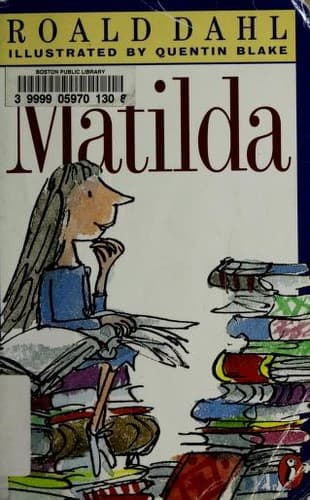
- Matilda
Roald Dahl
4.3 (648k) average on GoodreadsFantasyBoth books depict children escaping neglect through imagination and books. However, 'Matilda' emphasizes the child's extraordinary intellectual and magical abilities, while 'Awake and Dreaming' delves more deeply into the psychological necessity and function of fantasy as a coping mechanism, without supernatural elements.
- Harry Potter and the Sorcerer's Stone
J.K. Rowling
4.5 (7M) average on GoodreadsFantasyRescued from a miserable life under the stairs, an orphaned boy discovers he's a wizard destined for a magical school, where he uncovers a dangerous secret tied to the dark wizard who murdered his parents.
- The Hunger Games
Suzanne Collins
4.3 (6.4M) average on GoodreadsFantasyIn a future where children fight to the death on live television, Katniss Everdeen volunteers for the arena, turning a death sentence into a fight for survival and a spark of rebellion.
- 1984
George Orwell
4.2 (3.1M) average on GoodreadsPoliticsIn a future where surveillance and thought control are absolute, a man's search for truth clashes with the Party, showing that hope can be a form of rebellion.





Enjoyed the summary?
A summary gives you the shape of the book. The book itself has the detail, the examples and the voice.
Find Awake and Dreaming on AmazonAs an Amazon Associate, BookBrief earns from qualifying purchases. How we're funded