
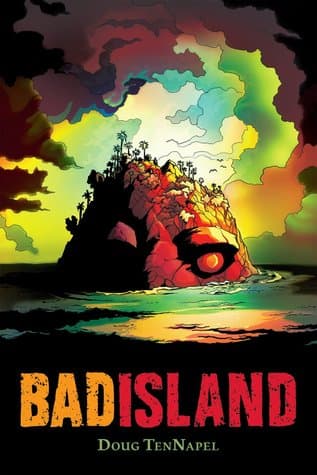
Synopsis
Covers the whole plot, including the ending.
- Difficulty
- Easy
- Pacing
- Fast
- Mood
- Adventurous, Thrilling, Mysterious, Humorous
- Read it if
- You enjoy fast-paced, action-packed graphic novels with a mix of sci-fi, fantasy, and creature features, suitable for younger readers.
- Skip it if
- You prefer realistic fiction or stories with complex, morally ambiguous characters and themes.
Bad Island Plot Summary
Covers the whole plot, including the ending.
The Ill-Fated Vacation
The family, Lars and Laura, and their children Reese and Janie, goes on a boat trip even though Reese doesn't want to. Reese, a cynical teenager, prefers video games to family time. Janie, his younger sister, is more adventurous. During the trip, a sudden, strong storm appears, capsizing their boat and throwing them into the ocean. They hold onto debris and eventually wash ashore on a mysterious, uncharted island. The island immediately feels strange, with unusual plants and animals. Their initial relief at surviving quickly turns to dread as they realize their situation.
First Encounters and Strange Discoveries
As they explore, the family discovers the island is full of bizarre, alien-like creatures. They see multi-limbed, insect-like beings, predatory plants, and other fantastical life forms. Lars, the father, tries to take charge and find a way off the island, while Laura tries to keep the family's spirits up. Reese remains pessimistic, often arguing with his father. Janie, however, is fascinated by the strangeness, even befriending a small, cute, but dangerous creature she names 'Fluff'. They find remains of an advanced civilization, hinting at the island's deeper secrets.
The Mysterious Structure
Venturing further inland, the family finds a huge, ancient structure on the island. It looks like a massive, broken spaceship or advanced machine, overgrown with the island's strange plants. This discovery confirms the island is more than just a remote landmass. Inside the structure, they find advanced, non-human technology and cryptic symbols. Reese, despite his initial disinterest, becomes curious about the machines, while Janie is simply amazed. Lars sees it as a possible way to escape, and Laura worries about the unknown dangers it might hold.
The Orb and the Truth
Deep inside the mysterious structure, Reese finds a glowing, spherical device, an 'orb'. When he touches it, he has a vivid vision or receives information. He learns that the island is not natural but a giant, ancient spaceship, a 'seed ship' meant to terraform and populate new worlds. The creatures and plants are part of its biological cargo. He also learns about the ship's original crew, an advanced alien race, and the disaster that caused its crash-landing and dormancy. The orb reveals the ship is slowly reactivating, and its systems are hostile to anything seen as an intruder, including them.
The Island's Defense Mechanisms
As the family explores and the ship's systems reactivate, the island itself becomes more hostile. Automated defenses, like robotic drones and aggressive bio-engineered creatures, emerge from the structure and environment. These entities begin hunting the family, seeing them as threats to the ship's rules. Lars tries to fight them off with makeshift weapons, while Laura tries to protect Janie. Reese, with the knowledge from the orb, understands their situation and realizes they are dealing with a sentient, programmed entity, not just wild animals. Janie's 'pet' Fluff also shows its true, dangerous nature.
Reese's Leadership
With the island actively trying to eliminate them, Reese's cynical attitude changes. His knowledge from the orb makes him the only one who truly understands the ship's workings and weaknesses. He starts to lead, much to his father Lars's initial annoyance. Reese deciphers the ship's functions and identifies a core component or control center they need to reach to either disable the ship or find a way to escape. He guides his family through dangerous passages, avoiding automated defenses and aggressive creatures, using his understanding of the ship's logic to predict its movements.
Confronting the Core
The family finally reaches the heart of the ancient ship, a central chamber with the main controls or power source. This area is heavily guarded by the ship's strongest defenses, including a massive, central guardian creature or a powerful robot. A fierce fight begins. Lars, despite his earlier conflicts with Reese, fights bravely with his son, protecting his family. Laura uses her quick thinking to help, and even Janie, despite her fear, contributes in small ways. Reese, focused and determined, tries to interact with the core, hoping to find a command to stop the hostilities.
The Ship's Purpose Revealed
During the confrontation at the core, Reese learns more about the ship's purpose. He finds out the ship was for a dying alien civilization, carrying their genetic material and knowledge to new worlds to preserve their legacy. The ship was designed to be self-sufficient and protective of its contents. He also sees the tragic fate of the original crew, who died during the crash-landing or were absorbed into the ship's systems. This revelation adds sadness to the ship's aggressive actions, as it is only fulfilling its programmed mission to survive and spread its creators' legacy.
A Difficult Choice
Reese faces a difficult choice at the ship's core. He realizes that simply disabling the ship might not be an option, or it might cause a worse disaster. He finds a way to reprogram or override some of the ship's rules, possibly allowing them to escape, but it comes with a big risk. The ship's main goal is to preserve its 'seed' and continue its mission. Reese must choose between destroying the ship's core, potentially wiping out the last traces of an alien civilization, or finding a way to coexist or escape without causing permanent damage, all while the ship's defenses are still active and threatening his family.
Escape and Transformation
With Reese's cleverness, Lars's strength, and Laura's support, the family manages to override a key system or activate an escape pod. They barely escape the hostile ship-island as it undergoes a final, dramatic transformation or tries to take flight. They are rescued by a passing ship or manage to sail away on a salvaged craft. The experience changes them greatly. Reese is no longer the cynical, detached teenager; he has become a responsible, quick-thinking hero. The family's bonds are stronger, and they return to civilization with a secret understanding of an alien world and a new appreciation for each other. The island remains a mystery, perhaps continuing its journey.
Principal Figures
Reese
Protagonist
A cynical, video-game-obsessed teenager who becomes an unlikely hero.
Reese begins the story as a typical, somewhat whiny teenager, more interested in his video games and personal space than family bonding. He's intelligent but socially awkward and often sarcastic, especially towards his father, Lars. His initial reaction to the island is one of annoyance and pessimism. However, when faced with genuine danger, he discovers an inner strength and an aptitude for problem-solving, particularly with technology. The exposure to the alien ship's knowledge unlocks his potential and forces him to mature rapidly.
Relationships: Lars (Strained father-son relationship, evolves into mutual respect.); Laura (Supportive mother-son relationship.); Janie (Typical sibling rivalry, but with underlying affection and protectiveness.)
Lars
Supporting
The well-meaning but often ineffective father who struggles to lead.
Lars is the patriarch of the family, a well-intentioned father who tries to take charge but often finds himself out of his depth on the alien island. He values traditional masculine roles and struggles with Reese's cynicism and his own inability to provide immediate solutions. His attempts to be the hero often lead to minor setbacks or arguments. Despite his flaws, he is brave and deeply cares for his family, eventually learning to trust Reese's unique abilities and knowledge.
Relationships: Reese (Strained father-son relationship, evolves into mutual respect.); Laura (Loving and supportive marital relationship.); Janie (Protective and affectionate father-daughter relationship.)
Laura
Supporting
The calm and nurturing mother who tries to keep the family together.
Laura is the mother figure, often acting as the emotional anchor for the family. She is practical, resilient, and tries to maintain a sense of calm and optimism amidst the chaos. She mediates between Lars and Reese and is fiercely protective of her children. While not as physically active in the confrontations, her emotional support and level-headedness are crucial for the family's morale and decision-making. She represents the nurturing and adaptable spirit necessary for survival.
Relationships: Lars (Loving and supportive marital relationship.); Reese (Supportive mother-son relationship.); Janie (Protective and affectionate mother-daughter relationship.)
Janie
Supporting
The adventurous and curious younger sister.
Janie is Reese's younger sister, characterized by her boundless curiosity and adventurous spirit. Unlike Reese, she is initially fascinated by the strange creatures and plants on the island, even befriending a dangerous alien 'pet' she names 'Fluff'. Her innocence and wonder often provide moments of levity, but also sometimes lead to dangerous situations. Despite her youth, she shows resilience and courage, contributing to the family's survival in unexpected ways. She embodies the childlike wonder and the potential for danger in the unknown.
Relationships: Reese (Typical sibling rivalry, but with underlying affection and protectiveness.); Lars (Protective and affectionate father-daughter relationship.); Laura (Protective and affectionate mother-daughter relationship.)
The Orb
Supporting
A mysterious alien artifact that grants knowledge.
The Orb is a glowing, spherical device found within the alien ship. It acts as a conduit for information, directly downloading knowledge about the ship's history, purpose, and functions into Reese's mind. It is a key plot device that transforms Reese's understanding of their predicament and empowers him to lead. The Orb represents ancient alien technology and the vast, unknown knowledge contained within the island.
Relationships: Reese (Direct user-artifact relationship, source of his crucial knowledge.)
Fluff
Supporting
Janie's cute but ultimately dangerous alien 'pet'.
Fluff is a small, seemingly adorable alien creature that Janie befriends early on. It appears harmless and even cuddly, but its true nature is predatory and part of the island's dangerous ecosystem. Fluff serves as a reminder that appearances can be deceiving on Bad Island and that even seemingly innocent elements can pose a threat. Its transformation from pet to peril highlights the alien and untamed nature of their surroundings.
Relationships: Janie (Initial pet-owner relationship, revealed to be a predator-prey dynamic.)
The Island (Seed Ship)
Antagonist
An ancient, sentient alien spaceship disguised as an island.
The 'island' is not a natural landmass but a colossal, ancient alien 'seed ship' designed to terraform and populate new worlds with its bio-engineered contents. It acts as the primary antagonist, its automated defense systems perceiving the human family as intruders and threats to its mission. It is a complex entity, both a place and a character, driven by its programmed directives. Its hostile actions are not malicious but purely functional, aiming to protect its core and fulfill its purpose.
Relationships: Reese (Adversarial, but Reese gains understanding of its functions.); Family (Adversarial, as it seeks to eliminate them as threats.)
Themes & Insights
Family Bonds and Reconciliation
The difficult experience on Bad Island forces the family to face their internal problems and strengthen their relationships. Reese's tense relationship with Lars, marked by teenage rebellion and fatherly frustration, is a main dynamic. As they face life-threatening challenges, they learn to rely on each other's strengths and forgive weaknesses. Reese becoming a leader and Lars accepting his son's abilities show this reconciliation. Laura and Janie's roles in providing emotional support and childlike wonder, respectively, also help the family's resilience. The shared trauma ultimately brings them closer.
“We're a team, no matter what, and we'll get through this together.”
Coming of Age and Responsibility
Reese's journey is a classic coming-of-age story. First shown as a typical, somewhat whiny teenager absorbed in video games, he is forced into a situation where his intelligence and quick thinking are vital for survival. The responsibility of understanding the alien ship and guiding his family makes him mature quickly. He loses his cynicism and takes on a leadership role, showing courage and selflessness. This theme is clear when he takes charge, deciphering alien technology, and making critical decisions for the group, proving his ability beyond his previous adolescent concerns.
“I can't believe I'm the one who has to figure this out. But someone has to.”
The Dangers of the Unknown and Alien Life
The island itself represents the unknown and the potential dangers of alien life. What first seems like a remote, natural island quickly reveals itself as a highly advanced, yet hostile, alien entity. The strange plants and animals, the mysterious structures, and the automated defenses all highlight how truly alien their environment is. The story explores how humans react to encountering something truly 'other'—fear, wonder, and the desperate fight for survival against forces that operate on a completely different logic. The island's inherent hostility, though not malicious, emphasizes the threat from environments not made for human life.
“This isn't just an island. It's... alive. And it doesn't want us here.”
Humanity's Place in the Cosmos
The discovery of the alien seed ship and its ancient mission raises questions about humanity's place in the universe. The ship represents a civilization that existed long before humans, with advanced technology and a desperate need for survival. The family's struggle on the island shows human vulnerability when faced with forces beyond their understanding. It suggests that humanity is just a small part of a much larger, and possibly dangerous, cosmic existence. The ship's purpose—to spread life—mirrors a basic drive, but its methods are alien and indifferent to individual human lives, prompting thought on our own existence and importance.
“They were trying to survive, just like us. They just had a different way of doing it.”
Plot Devices & Literary Techniques
The MacGuffin (The Orb)
A mysterious object that drives the plot and imparts crucial information.
The Orb serves as a classic MacGuffin, a plot device that is central to the narrative but whose specific details are less important than its function. It is the object that Reese discovers, which then downloads vital information about the island's true nature as an alien seed ship. This knowledge is essential for Reese to understand their predicament, anticipate the ship's defenses, and ultimately devise a plan for escape. Without the Orb, Reese and his family would be entirely lost and likely perish, making it the catalyst for Reese's transformation and the family's survival.
Deceptive Setting
An environment that appears one way but is actually something far more dangerous.
The island itself is a deceptive setting. It initially appears to be a typical, albeit remote, tropical island where the family is shipwrecked. However, it is gradually revealed to be a colossal, ancient alien spaceship, a 'seed ship' disguised by centuries of natural overgrowth. This deception creates a constant sense of unease and escalating danger, as the familiar turns out to be utterly alien and hostile. The changing nature of the setting provides continuous plot twists and challenges, forcing the characters to adapt their understanding of their environment.
The Mentor Figure (Internalized)
Knowledge gained that guides the protagonist, acting as an internal mentor.
While there isn't a traditional external mentor character, the knowledge Reese gains from the Orb functions as an internalized mentor. The direct download of alien data provides Reese with the understanding, strategies, and insights necessary to navigate the dangerous ship-island. This 'mentorship' allows him to interpret the ship's functions, predict its actions, and identify its weaknesses, effectively guiding him and his family through their ordeal. It empowers Reese to become the leader and problem-solver, fulfilling the role of a mentor by imparting crucial wisdom.
Environmental Storytelling
The setting itself conveys much of the backstory and narrative.
Much of the backstory of the alien seed ship, its creators, and its mission is not explicitly told through dialogue or narration but revealed through the environment itself. The strange flora and fauna, the derelict alien structures, the cryptic symbols, and the automated defenses all communicate pieces of the larger narrative. As the family explores the island, they (and the reader) piece together the history and purpose of this alien construct, making the setting an active participant in revealing the plot rather than just a backdrop.
Bad Island Quotes
“The world is full of amazing things, but you have to be willing to look for them.”
“Sometimes the things that scare us the most are the things we need to face.”
“You can't always control what happens to you, but you can control how you react to it.”
“Family stick together. That's what we do.”
“It's not about being perfect, it's about trying your best.”
“Some secrets are better left buried.”
“Even in the darkest places, there can be light.”
“Don't judge a book by its cover, or an island by its bad reputation.”
“The past has a way of catching up to you.”
“Sometimes the biggest monsters are the ones you can't see.”
“What if this isn't just an island? What if it's... something else entirely?”
“We're not just surviving, we're learning.”
“You never truly know what you're capable of until you're tested.”
“The greatest adventures often begin when you least expect them.”
Quiz
10 questions on the plot and the characters. Each answer comes with a short explanation.
Question 1
What is the primary reason Reese's family ends up on the mysterious island?
- They intentionally sailed there for an adventure.
- Their boat is shipwrecked during a boating trip.
- They are dropped off by a helicopter as part of a survival game.
- Reese secretly steers the boat to the island.
Show answer
B. Their boat is shipwrecked during a boating trip. The family's ordeal begins when their boat is shipwrecked, stranding them on the titular 'Bad Island'.
Question 2
What kind of creatures are a significant threat to Reese and his family on the island?
- Giant, intelligent spiders
- Sentient, carnivorous plants
- Large, dog-like creatures with multiple eyes
- Flying, bat-like reptiles
Show answer
C. Large, dog-like creatures with multiple eyes The family encounters dangerous, dog-like creatures with multiple eyes that hunt them throughout their time on the island.
Question 3
What is the name of the alien species that created the island as a 'zoo' or 'preserve'?
- The Grolak
- The Floof
- The Krel
- The Zorp
Show answer
C. The Krel The island is revealed to be a Krel preserve, designed to study and contain various life forms.
Question 4
Which family member initially struggles the most with the idea of working together and expresses the most fear?
- Reese
- Karen (the mother)
- Todd (the father)
- The younger sister (Olivia)
Show answer
D. The younger sister (Olivia) Olivia, the youngest child, is often overwhelmed and scared, requiring reassurance and protection from her family.
Question 5
What significant discovery does Reese make about the island's true nature as they explore?
- It's a forgotten military base.
- It's a giant, living organism.
- It's an alien spaceship that crashed long ago.
- It's a holographic projection.
Show answer
C. It's an alien spaceship that crashed long ago. Reese discovers that the 'island' is actually a massive, crashed alien spaceship, which explains its strange environment and inhabitants.
Question 6
What is the primary method the family uses to try and signal for help or escape the island?
- Building a large signal fire on the highest peak.
- Attempting to repair their wrecked boat.
- Trying to activate an alien communication device.
- Constructing a raft from island materials.
Show answer
C. Trying to activate an alien communication device. Once the alien nature of the island is understood, their focus shifts to interacting with the alien technology to find a way off.
Question 7
What is the role of the 'mysterious entity' mentioned in the book's description?
- It's a friendly guide trying to help them escape.
- It's the island's natural defense mechanism, reacting to intruders.
- It's another shipwrecked survivor, also trying to escape.
- It's an illusion created by the island's unique atmosphere.
Show answer
B. It's the island's natural defense mechanism, reacting to intruders. The 'mysterious entity' refers to the alien intelligence or automated systems of the crashed ship, which perceive the family as a threat and actively 'hunt' them.
Question 8
What theme is most central to the family's journey and their survival on Bad Island?
- The corruption of power.
- The importance of family unity and cooperation.
- The pursuit of scientific knowledge at any cost.
- The dangers of unchecked technological advancement.
Show answer
B. The importance of family unity and cooperation. Throughout their ordeal, the family must overcome their initial squabbles and work together, highlighting the theme of family unity as crucial for survival.
Question 9
What significant personal secret is revealed about one of the family members that impacts their dynamic?
- Reese has secretly been learning to fly a plane.
- The father (Todd) has been hiding a serious illness.
- The mother (Karen) was once an astronaut.
- The parents were having marital problems prior to the trip.
Show answer
D. The parents were having marital problems prior to the trip. It is revealed that the parents' marriage was strained and the boating trip was an attempt to mend their relationship, adding another layer of tension to their survival struggle.
Question 10
What is the ultimate fate of the 'Bad Island' (the alien spaceship) and the family at the end of the story?
- The island activates a self-destruct sequence, taking the family with it.
- The family is rescued by a passing ship, and the island remains a mystery.
- The family manages to reactivate the spaceship and pilot it home, leaving the island behind.
- The island transforms into a new planet, and the family decides to stay.
Show answer
C. The family manages to reactivate the spaceship and pilot it home, leaving the island behind. Through their combined efforts and understanding of the alien technology, the family manages to reactivate the crashed spaceship and use it to return home.
Bad Island FAQ
What is the initial premise of "Bad Island" and how does the family end up on the island?
The book begins with Reese, the teenage protagonist, being forced on a boating trip with his family, including his younger sister Janie, and parents. Their boat is unexpectedly shipwrecked during a storm, stranding them on a mysterious and seemingly uninhabited island that quickly reveals itself to be anything but ordinary.
Who are the main human characters and what are their initial roles in the story?
The main human characters are Reese, a cynical teenager; his younger, more optimistic sister Janie; their resourceful father; and their nurturing mother. Initially, they are focused on survival and finding a way off the island, each contributing their skills and personalities to the dire situation.
What kind of creatures do the family encounter on Bad Island?
The family encounters a variety of bizarre and dangerous creatures, including large, slug-like beings with multiple eyes, predatory plant-animal hybrids, and the towering, mechanical-looking 'Keeper' that patrols the island. These creatures are integral to the island's ecosystem and its underlying mystery.
What is the 'Keeper' and what role does it play in the island's ecosystem?
The 'Keeper' is a massive, mechanical-looking entity that acts as the island's guardian and enforcer. It is responsible for maintaining the delicate balance of the island's unique ecosystem, often by eliminating threats or perceived anomalies, including the shipwrecked human family.
What is the true nature of Bad Island and its inhabitants?
Bad Island is revealed to be a colossal, ancient alien spaceship, and its 'inhabitants' are various forms of alien life that serve specific functions within the ship's systems or as part of its cargo/research. The entire island is a self-sustaining, mobile bio-mechanical construct.
How are the strange plants and animals connected to the island's true identity?
The strange plants and animals are not native flora and fauna in the traditional sense, but rather bio-engineered organisms or alien specimens from various worlds, housed within the spaceship. They are either experiments, resources, or components of the ship's complex biological systems.
What is the purpose of the 'Keeper' beyond just patrolling the island?
The 'Keeper' is essentially the spaceship's security and maintenance drone, designed to protect the integrity of the vessel and its contents. Its primary directive is to eliminate foreign elements and maintain equilibrium, viewing the human family as an invasive threat.
Are there any clues to the island's true nature early in the story that readers might miss?
Subtle clues include the unnaturally symmetrical and geometric patterns in some rock formations, the metallic sheen beneath certain organic surfaces, and the highly organized, almost manufactured behavior of some creatures. The island's rapid and unusual changes in terrain also hint at its artificiality.
How does Reese's initial cynicism and family dynamic evolve throughout their ordeal?
Reese's initial cynicism and detached attitude are challenged by the extreme circumstances. He is forced to confront his fears and rely on his family, leading to a stronger bond with Janie and a deeper appreciation for his parents' resilience, ultimately fostering his growth into a more responsible and caring individual.
What psychological impact does being stranded on a hostile alien environment have on the family members?
Being stranded on a hostile alien environment pushes each family member to their psychological limits, revealing their strengths and vulnerabilities. They experience fear, desperation, and conflict, but also exhibit remarkable resilience, problem-solving, and a deepening of their familial bonds under pressure.
How does Janie's optimism and curiosity contribute to the family's survival or understanding of the island?
Janie's youthful optimism and unbridled curiosity often lead her to discover crucial details or interact with the environment in ways her more cautious family members wouldn't. Her less jaded perspective sometimes allows her to see possibilities or connections that help them navigate the dangers.
What is the psychological significance of the 'Keeper' constantly pursuing the family?
The 'Keeper's relentless pursuit represents an inescapable, primal threat, forcing the family to constantly confront their mortality and adapt. Psychologically, it embodies the idea of an indifferent, unstoppable force of nature (or technology) against which humanity must struggle for survival, highlighting themes of perseverance.
What is the overarching theme or message Doug TenNapel aims to convey through "Bad Island"?
One overarching theme is the resilience of the human spirit and the strength of family bonds when faced with overwhelming adversity. It also explores humanity's place in a vast, unknown universe and the idea that even seemingly natural environments can harbor profound, artificial secrets.
Is the ending of "Bad Island" conclusive, or does it leave room for further interpretation or sequels?
The ending provides a relatively conclusive resolution for the family's immediate predicament, as they escape the island. However, the revelation of the island's true nature as an ancient alien spaceship leaves ample room for interpretation regarding the broader universe and potential future encounters, hinting at larger cosmic mysteries.
How does the art style contribute to the storytelling and atmosphere of "Bad Island"?
Doug TenNapel's distinctive, often exaggerated and expressive art style enhances the sense of wonder and terror. The organic yet alien designs of the creatures and the island itself create a unique, immersive atmosphere, making the strange world feel both fantastical and genuinely menacing.
What deeper meaning can be found in the family's journey from typical suburban life to alien survival?
The journey symbolizes a stripping away of modern conveniences and societal norms, forcing the family to reconnect with primal survival instincts and each other. It highlights how adversity can reveal hidden strengths and reshape perspectives, emphasizing the importance of family over material comforts.
How does the concept of a 'Bad Island' challenge traditional notions of nature vs. technology?
The 'Bad Island' profoundly blurs the lines between nature and technology by revealing a seemingly organic ecosystem to be a highly advanced, ancient alien spaceship. This challenges the reader to reconsider what constitutes 'natural' and explores the idea of technology evolving to mimic or even become indistinguishable from biology.
What is the significance of the family's final escape, and what does it imply about their future?
The family's final escape signifies their triumph over an extraordinary, existential threat, having survived an encounter with an ancient alien technology. It implies that while they've returned to safety, their perspectives are forever altered, carrying the weight and wonder of their unbelievable experience into their future lives.
About the author
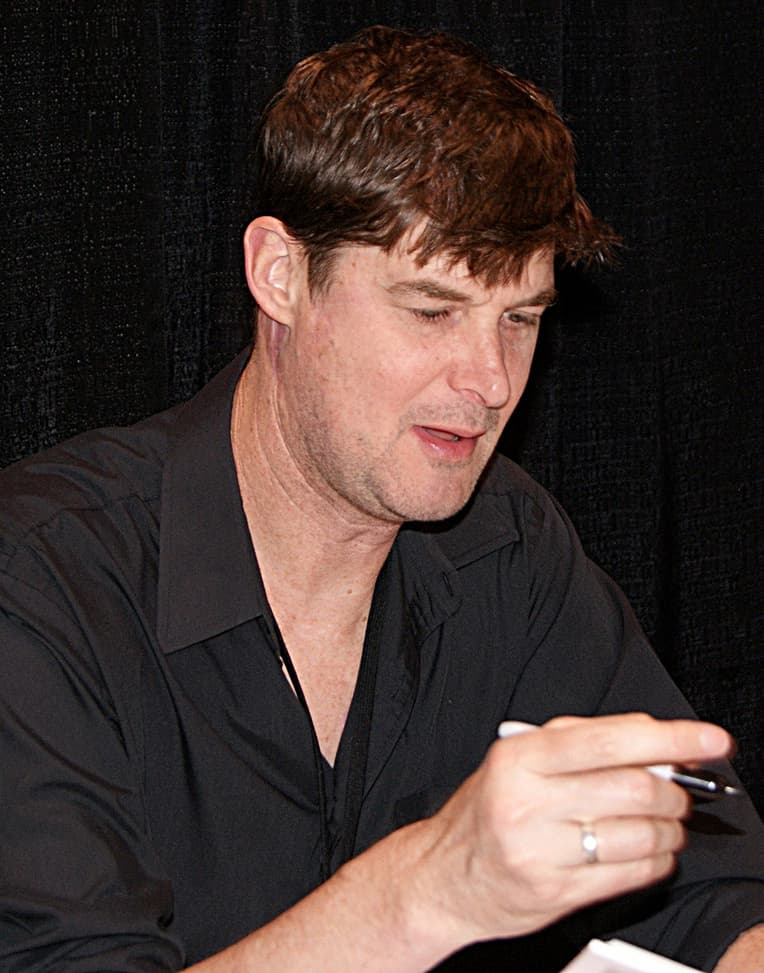
Doug TenNapel is an American author and artist known for his work in graphic novels and comics. His notable books include "Ghostopolis," which explores themes of the afterlife, and "Bad Island," a story about survival on a mysterious island. TenNapel's works often blend fantasy and adventure, appealing to both young readers and adults.
Similar books
- A Wizard of Earthsea
Ursula K. Le Guin
4.0 (241k) average on GoodreadsFantasyBad Island's exploration of leadership and difficult choices pales in comparison to the profound and deliberate ethical quandaries and character arcs found in Le Guin's A Wizard of Earthsea. Le Guin's work provides a more nuanced and psychologically rich examination of power, responsibility, and transformation, even if operating in a different target age group.
- Harry Potter and the Sorcerer's Stone
J.K. Rowling
4.5 (7M) average on GoodreadsFantasyRescued from a miserable life under the stairs, an orphaned boy discovers he's a wizard destined for a magical school, where he uncovers a dangerous secret tied to the dark wizard who murdered his parents.
- The Hunger Games
Suzanne Collins
4.3 (6.4M) average on GoodreadsFantasyIn a future where children fight to the death on live television, Katniss Everdeen volunteers for the arena, turning a death sentence into a fight for survival and a spark of rebellion.
- 1984
George Orwell
4.2 (3.1M) average on GoodreadsPoliticsIn a future where surveillance and thought control are absolute, a man's search for truth clashes with the Party, showing that hope can be a form of rebellion.
- Divergent
Veronica Roth
4.2 (2.9M) average on GoodreadsFantasyIn a society divided by virtues, a sixteen-year-old's difference from the norm starts a rebellion that threatens her world.
- The Hobbit, or There and Back Again
J.R.R. Tolkien
4.3 (2.9M) average on GoodreadsFantasyA comfort-loving hobbit named Bilbo Baggins is whisked away by a mischievous wizard and a band of dwarves on an unexpected journey to reclaim stolen treasure from a fearsome dragon, discovering courage and a magical ring along the way.






Enjoyed the summary?
A summary gives you the shape of the book. The book itself has the detail, the examples and the voice.
Find Bad Island on AmazonAs an Amazon Associate, BookBrief earns from qualifying purchases. How we're funded