
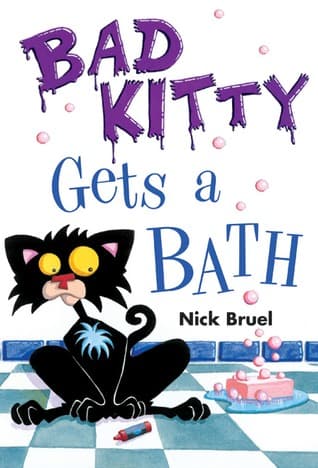
Synopsis
Covers the whole plot, including the ending.
- Difficulty
- Easy
- Pacing
- Fast
- Mood
- Hilarious, Lighthearted, Silly
- Read it if
- You enjoy humorous stories about pets, especially cats, and appreciate slapstick comedy and exaggerated situations.
- Skip it if
- You prefer serious, plot-driven narratives or dislike absurd humor.
Bad Kitty Gets a Bath Plot Summary
Covers the whole plot, including the ending.
The Unbearable Stench of Kitty
The book starts with Kitty's owner, a young boy, noticing a terrible smell from his cat. He tries to ignore it, but the smell fills the house, making plants wilt and paint peel. The owner realizes that Kitty needs a bath. This thought causes immediate worry, as both the owner and narrator know how hard this will be, given Kitty's bad temper and dislike of water.
Gathering the Supplies (and Precautions)
Before even trying to give a bath, the narrator lists all the needed supplies. These start with practical items like a bathtub, water, and dry towels, but quickly become silly: armor, a letter to loved ones, clean underwear, an ambulance, and paramedics. The long list shows the extreme danger of bathing Kitty, humorously suggesting one should prepare for a dangerous event. The last, and hardest, item on the list is Kitty herself.
The Elusive Feline and the Bait
The first problem is finding Kitty, who has hidden herself, perhaps sensing danger. The owner searches the house, calling her name, but Kitty stays hidden. To get her out, the narrator suggests using anchovies. The smell of the anchovies brings Kitty out, and she eats the fish, distracted from the owner's real plan. This short moment of calm ends when the owner sees Kitty and can start the next step.
The Capture and the First Attempt
With Kitty distracted by the anchovies, the owner moves quickly and grabs her. Kitty immediately realizes what is happening and fights hard. She scratches, bites, and thrashes, escaping the owner's grip. This starts a chaotic chase through the house. Kitty is surprisingly agile and determined to avoid the bath. The owner, bruised, must rethink his plan, seeing that a direct approach will not work.
The Strategic Trap
After the first failed attempt, the owner, with the narrator's help, makes a new plan. They decide to lure Kitty into the bathroom without her knowing. This involves making a trail of treats, like tuna and catnip, leading into the bathroom and toward the bathtub. Kitty, always ready for food, carefully follows the trail, her suspicions temporarily forgotten by her hunger. The tension grows as she gets closer to the water-filled tub, unaware of the trap.
The Moment of Truth: In the Tub
Kitty reaches the end of the treat trail and, to her shock, finds herself in the bathtub. The moment she realizes she is in water, her reaction is immediate and violent. She screams and thrashes wildly, claws out, trying to escape. The owner, despite his preparations, is overwhelmed by Kitty's fury, struggling to hold her. The bathroom becomes a scene of chaos, with water splashing everywhere and Kitty's desperate tries to escape.
The Bathtub Battle
What follows is a full battle in the bathtub. The owner, now wearing armor (as the narrator suggested), tries to apply soap and scrub Kitty. Kitty fights back with all her might, becoming a furry, wet, and very angry whirlwind. She scratches, bites, and sprays water, making it almost impossible for the owner to clean her. The narrator gives humorous warnings and survival tips, showing how hard and dangerous the task is, reinforcing that bathing Kitty is an epic struggle.
The Soapy Slip and Escape
Despite the owner's best efforts, Kitty, covered in soap and very slippery, gets free. She leaps out of the tub and runs from the bathroom, leaving wet paw prints and suds. The owner, tired and defeated, watches Kitty disappear, the bathroom left messy. Her escape shows Kitty's strong will and her complete dislike of baths, making the owner wonder if the task is even possible.
The Unforeseen Outcome: A Clean Kitty (Sort Of)
After the chaos, the owner finds Kitty hiding under a bed. To his surprise, even though the bath was not fully done, Kitty is quite clean. Her frantic thrashing, the soap, and her escape through the house have cleaned her fur. She is still wet and very angry, but the bad smell is gone. The owner realizes that while the bath was a disaster, Kitty is clean, in a roundabout way.
The Aftermath and Future Fears
Kitty, now clean but upset, glares at her owner, promising future revenge. She is wrapped in a towel, still damp, and refuses comfort. The owner, relieved the smell is gone, is bruised and tired. The narrator ends by saying that while Kitty is clean for now, the experience was so difficult that the thought of bathing her again fills everyone with dread. The book finishes with Kitty still angry, and the owner left to think about the next time Kitty gets stinky.
Bad Kitty Gets a Bath Characters
Kitty
Protagonist/Antagonist
A notoriously bad-tempered and stinky cat who absolutely hates baths.
Kitty is the titular character, a domestic cat whose primary characteristic is her 'badness,' especially when faced with the prospect of a bath. She is initially portrayed as incredibly smelly, prompting the entire plot. Kitty is fiercely independent, cunning, and has a formidable temper, using her claws and teeth to defend herself. Despite her aggressive resistance, she is also driven by basic cat instincts like hunger (easily lured by anchovies) and a desire for comfort. Her transformation from stinky to clean, albeit unwillingly, is the central focus. She is the catalyst for all the humorous chaos.
Relationships: The Owner (Her human owner, whom she tolerates but fiercely resists when forced into a bath.); The Narrator (The unseen, omniscient guide who offers humorous (and often absurd) advice on how to handle her.)
The Owner
Protagonist/Supporting
Kitty's long-suffering human, tasked with the perilous mission of bathing her.
The Owner is a young boy who loves Kitty despite her bad behavior and overwhelming stench. He is the one who initiates the bath, driven by necessity. He is depicted as determined, though increasingly desperate and bruised throughout the ordeal. He follows the narrator's absurd advice, even donning a suit of armor, showcasing his commitment and resilience. He represents the typical cat owner who faces the often-challenging realities of pet care, and his struggle provides much of the book's humor.
Relationships: Kitty (His pet cat, with whom he has a love-hate relationship, especially during bath time.); The Narrator (The unseen voice providing him with (often unhelpful) instructions and commentary.)
The Narrator
Supporting
The omniscient, humorous guide who provides instructions and commentary.
The Narrator acts as a direct address to the reader, guiding them through the 'how-to' process of bathing Kitty. This character is never seen but is a central comedic voice, offering increasingly exaggerated and absurd advice, from preparing an ambulance to wearing a suit of armor. The Narrator's tone is dry, witty, and full of dramatic irony, constantly highlighting the extreme dangers and difficulties of the task. They serve to amplify the humor and create a sense of shared experience with the reader.
Relationships: The Reader (Directly addresses and instructs the reader, creating an interactive experience.); Kitty (Observes and comments on Kitty's behavior, often with a sense of dread and exasperation.); The Owner (Provides (often unhelpful) advice and commentary on the owner's struggles.)
Ambulance Driver/Paramedics
Mentioned
A team of emergency responders humorously suggested as necessary for Kitty's bath.
While not appearing as active characters, the ambulance driver and paramedics are prominently mentioned in the 'supplies' list, instructed to be waiting with the engine running. Their inclusion is purely for comedic effect, emphasizing the extreme perceived danger of bathing Kitty. They symbolize the potential for serious injury to anyone undertaking the task, heightening the exaggerated stakes of the story.
The Reader
Supporting
The implied participant in the 'how-to' guide.
The reader is an integral, albeit unseen, character in the book, directly addressed by the narrator as if they are preparing to bathe their own 'Bad Kitty.' The 'how-to' format places the reader in an active role, making them a participant in the unfolding chaos. This engagement enhances the humor as the reader is invited to imagine themselves in the owner's perilous shoes.
Relationships: The Narrator (Directly addressed and instructed by the narrator throughout the book.)
Bad Kitty Gets a Bath Themes
The Challenges of Pet Ownership
The book humorously exaggerates the common difficulties of owning a pet, focusing on the dreaded task of bathing a cat. It shows the conflict between an owner's duty to keep a pet clean and a pet's natural instincts, like a cat's dislike of water. The owner's struggles and planning reflect real pet owner efforts, made funnier for comedy. The book suggests that loving a pet means dealing with difficult and messy situations.
“The following are some items you will need for Kitty's bath: one bathtub, plenty of water, dry towels, a suit of armor, a letter to your loved ones, clean underwear (because stressful situations can cause 'accidents'), an ambulance in your driveway with the engine running, and, oh, yeah, you'll also need Kitty…but good luck with that!”
Humor in Exaggeration and Absurdity
A main theme is using extreme exaggeration and absurdity for humor. The simple task of bathing a cat becomes a dangerous mission needing emergency services and protective gear. The narrator's over-the-top advice, Kitty's strong resistance, and the owner's battered look all create comedy by taking a normal situation to its most ridiculous extreme. This theme makes the book relatable yet very funny for young readers.
“First, you will need to find Kitty. This may be difficult. Kitty is very good at hiding. When she doesn't want to be found, she cannot be found.”
Conflict Between Instinct and Necessity
The book explores the conflict between Kitty's animal instincts (her deep dislike of water and strong independence) and the human need for cleanliness. Kitty's strong resistance is her natural instinct, while the owner's persistence comes from the need for a clean home. This struggle drives the plot, showing how hard it can be to put human rules on an animal driven by its own nature.
“Kitty, however, has other plans. She does not like water. She does not like baths. She does not like YOU, if you try to give her a bath.”
Plot Devices & Literary Techniques
How-To Guide Format
The narrative is structured as an instructional manual for bathing a cat.
The entire book is framed as a 'how-to' guide, directly addressing the reader with instructions and advice. This format immediately engages the audience, making them feel like participants in the daunting task. The humor arises from the contrast between the seemingly simple premise of a 'how-to' and the increasingly absurd and dangerous steps involved. It also allows the narrator to offer comedic warnings and exaggerated precautions, enhancing the overall tone of the book.
Dramatic Irony
The narrator and reader are aware of the impending chaos, while Kitty remains oblivious.
Dramatic irony is heavily used, particularly in the scenes leading up to Kitty entering the bathroom. The narrator constantly warns the reader about Kitty's impending fury, and the reader knows the owner's true intentions when he lures Kitty with treats. Kitty, however, is completely unaware of the trap until she is in the bathtub. This creates suspense and heightens the humor as the reader anticipates Kitty's explosive reaction, making her eventual outburst even funnier.
Exaggeration/Hyperbole
Over-the-top descriptions and scenarios for comedic effect.
Exaggeration is the primary comedic device. From Kitty's unbearable stench causing plants to wilt, to the necessity of a suit of armor and an ambulance for her bath, every aspect of the situation is blown out of proportion. This hyperbole turns a mundane household task into an epic, dangerous adventure, making the challenges of pet ownership relatable yet hilariously extreme. It's key to the book's lighthearted, humorous tone.
Anthropomorphism
Attributing human-like emotions and motivations to Kitty.
While Kitty doesn't speak, she is consistently portrayed with human-like emotions and motivations, such as 'realizing' she's been tricked, having 'other plans,' or giving a 'vengeful' glare. This anthropomorphism allows readers to connect with Kitty's 'bad' personality and understand her actions in a more relatable way, even as she acts on animal instinct. It makes her a more complex and engaging character, despite her animal nature, and fuels much of the story's humor.
Bad Kitty Gets a Bath Quotes
“BATH TIME! Oh, no! Not bath time! Anything but bath time!”
“The cat was a mess. A very, very dirty mess. A very, very, very dirty mess.”
“You're going to love it! It'll be fun! A nice warm bath!”
“But Kitty did not love it. Kitty did not think it was fun. Kitty did not think it was a nice warm bath.”
“It was a cold, wet, soapy, bubbly, splashy, scary, awful, horrible, terrible, no-good, very bad bath!”
“No, no, no! Not the water! The water is evil! It will melt me!”
“A-C-H-O-O! Kitty sneezed. A big, wet, bubbly sneeze.”
“This is ridiculous! I am a cat! Cats do not take baths!”
“But sometimes... just sometimes... cats get so dirty that they have to take a bath.”
“And then... it was over. The bath was done.”
“Kitty was clean. Very, very clean. Sparkly clean. Fluffy clean. But... still a little mad.”
“And the owner was wet. Very, very wet. Soapy wet. Messy wet. But... happy.”
“Because even a very bad kitty can be a very clean kitty.”
“Next time... maybe a shower?”
Quiz
10 questions on the plot and the characters. Each answer comes with a short explanation.
Question 1
What is the primary event that Bad Kitty is forced to endure in this particular book?
- A trip to the vet
- Taking a bath
- Eating vegetables
- Meeting a new puppy
Show answer
B. Taking a bath The book description clearly states that Bad Kitty 'is forced to take a bath,' which is the central conflict and theme of this installment.
Question 2
Which of the following items is NOT humorously suggested as needed for Kitty's bath?
- A suit of armor
- A letter to your loved ones
- A tranquilizer gun
- An ambulance in your driveway
Show answer
C. A tranquilizer gun The book description lists a suit of armor, a letter to loved ones, and an ambulance as necessary items, highlighting the extreme difficulty of bathing Kitty. A tranquilizer gun is not mentioned.
Question 3
What kind of guide is 'Bad Kitty Gets a Bath' presented as?
- A biography of a cat
- A fictional adventure story
- A how-to guide
- A collection of short poems
Show answer
C. A how-to guide The description explicitly calls it a 'hysterical new illustrated how-to for young readers' and a 'riotous how-to guide,' indicating its instructional, albeit humorous, format.
Question 4
What is one of the main sensory details mentioned that characterizes Kitty's state before her bath?
- Loud meowing
- Bad smells
- Shedding fur
- Claw marks everywhere
Show answer
B. Bad smells The description mentions 'bad smells' as one of the elements filling the 'riotous how-to guide,' implying Kitty's need for a bath is partly due to her odor.
Question 5
The description suggests that stressful situations can cause 'accidents.' What item is humorously recommended for this reason?
- Extra soap
- Rubber gloves
- Clean underwear
- A first-aid kit
Show answer
C. Clean underwear The text states, 'clean underwear (because stressful situations can cause 'accidents'),' adding a layer of humor about the potential stress of bathing Kitty.
Question 6
How long has the 'Bad Kitty' series been capturing hearts according to the description?
- Since last year
- Since 2005
- For over a decade
- Since the first book's release
Show answer
B. Since 2005 The description specifically states, 'Since its publication in 2005, BAD KITTY has captured the hearts of cat lovers and haters alike,' indicating the series' longevity.
Question 7
What is the implied emotional state of the human character(s) attempting to give Kitty a bath?
- Excited and eager
- Calm and prepared
- Anxious and potentially injured
- Annoyed but resigned
Show answer
C. Anxious and potentially injured The suggestions of needing a suit of armor, a letter to loved ones, and an ambulance all humorously imply that the person attempting the bath faces significant danger and stress, thus would be anxious and potentially injured.
Question 8
The book description mentions 'cautionary tales of horror.' What does this detail primarily contribute to the book's tone?
- It makes the book genuinely scary for children.
- It emphasizes the exaggerated difficulty and humor of bathing Bad Kitty.
- It introduces a subplot about ghosts.
- It suggests the book is not suitable for young readers.
Show answer
B. It emphasizes the exaggerated difficulty and humor of bathing Bad Kitty. The phrase 'cautionary tales of horror' is used humorously to exaggerate the challenges of bathing Kitty, fitting the book's overall comedic and over-the-top tone, rather than suggesting actual horror.
Question 9
What is the ultimate, hopeful outcome mentioned for the end of the bath saga?
- Kitty will finally be calm.
- Kitty will forgive her owner.
- Some soap will be used.
- The bathtub will be clean.
Show answer
C. Some soap will be used. The description ends with 'and hopefully by the end…some soap,' humorously implying that even getting soap on Kitty is a significant victory, given the difficulty of the task.
Question 10
Why does the description advise, 'though don't tell her that,' when stating this is the funniest of Kitty's adventures?
- Because Kitty prefers serious books.
- Because Kitty is known for her 'bad' and grumpy personality and wouldn't appreciate being called funny.
- Because it's a secret for the readers only.
- Because it would make her too proud.
Show answer
B. Because Kitty is known for her 'bad' and grumpy personality and wouldn't appreciate being called funny. This is a nod to Kitty's established 'bad' and grumpy character. Telling her she's funny would likely contradict her persona or make her even more difficult, aligning with the humorous tone of the series.
Bad Kitty Gets a Bath FAQ
What is "Bad Kitty Gets a Bath" about?
"Bad Kitty Gets a Bath" is a humorous children's book about a very reluctant cat named Kitty who absolutely detests baths. The book comically details the extensive, often absurd, preparations and struggles involved in trying to give Kitty a bath, presenting it as a perilous mission for her owner.
Why should I read "Bad Kitty Gets a Bath"?
You should read "Bad Kitty Gets a Bath" for its laugh-out-loud humor, relatable premise for anyone who has owned a cat, and its engaging, chaotic illustrations. It's a fantastic read-aloud that will entertain both children and adults with its exaggerated portrayal of a common pet owner's dilemma.
What is the background/setting of "Bad Kitty Gets a Bath"?
The book is primarily set within a typical home environment, specifically focusing on the bathroom and the chaotic journey leading up to and during Kitty's bath. The setting is ordinary, which makes the extraordinary preparations and ensuing pandemonium even funnier.
What writing style does the author use?
Nick Bruel uses a highly comedic, direct, and instructional writing style, often breaking the fourth wall to address the reader directly with warnings and advice. The text is interspersed with large, expressive illustrations that enhance the humor and action, making it very accessible and engaging for young readers.
What minor details add significant meaning?
The 'list of items you will need for Kitty's bath' is a brilliant minor detail that sets the tone, including absurdities like 'a suit of armor,' 'a letter to your loved ones,' and 'an ambulance in your driveway.' This list immediately establishes the perilous and exaggerated nature of the task at hand.
What are some subtle foreshadowing moments?
The early illustrations showing Kitty looking disheveled, covered in various stains and smells, subtly foreshadow the inevitable need for a bath. Also, the owner's increasingly worried expressions and the growing list of 'safety' equipment hint at the epic struggle to come.
What are unspoken character motivations?
Kitty's unspoken motivation is a primal feline aversion to water and a fierce desire to maintain her independence and perceived cleanliness through self-grooming. The owner's motivation, while seemingly simple, is driven by a deep, if exasperated, love for Kitty and a desire for her well-being, despite the extreme difficulty of the task.
What psychological complexities do characters exhibit?
Kitty exhibits a complex mix of stubbornness, fear, and a strong sense of self-preservation, escalating from mild annoyance to full-blown panic and aggression. The owner displays remarkable patience, determination, and a touch of masochism, continually trying to care for Kitty despite the clear danger.
What are the major emotional turning points?
A major emotional turning point is when Kitty finally gets into the water and surprisingly, after her initial fury, begins to enjoy it, purring contentedly. This shift from pure rage to unexpected bliss is a significant emotional twist, both for Kitty and the relieved owner.
How do relationship dynamics evolve?
The relationship dynamics between Kitty and her owner evolve from a contentious battle of wills into a moment of shared, albeit brief, understanding and affection when Kitty finally relaxes in the bath. This temporary truce highlights the underlying bond that endures despite the constant humorous conflict.
Which parts remain ambiguous or open-ended?
The long-term impact of the bath on Kitty's future behavior remains ambiguous. While she enjoys this particular bath, it's left open whether she will be more amenable to future baths or if her 'bad' nature will simply return for the next grooming adventure.
What are controversial scenes or decisions?
While not 'controversial' in a serious sense for a children's book, the extreme measures the owner is advised to take, such as needing an ambulance or writing a letter to loved ones, could be seen as comically extreme. Some readers might debate the prudence of forcing such a reluctant animal into a bath, despite the humorous intent.
"Bad Kitty Gets a Bath" ending explained: how it ends & what it means
The book ends with Kitty, surprisingly, enjoying the bath after all the struggle, purring happily. She emerges clean, fluffy, and even 'good.' This ending means that even the most difficult tasks can have a surprisingly positive outcome, and that sometimes, what seems like the worst thing can turn out to be enjoyable, at least for a little while, before the 'bad' kitty inevitably returns.
About the author

Nick Bruel is an author and illustrator known for his children's books, particularly the "Bad Kitty" series. One of his works, "Bad Kitty Gets a Bath," features humorous stories that engage young readers. Bruel's books often combine playful illustrations with entertaining narratives, making them popular among children and parents alike.
Similar books
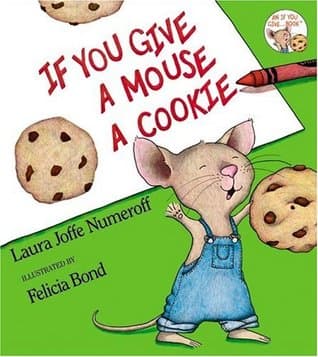
- If You Give a Mouse a Cookie
Laura Joffe Numeroff
4.3 (251k) average on GoodreadsFantasy"If You Give a Mouse a Cookie" uses a simpler, more predictable cause-and-effect narrative. Bruel's work is more text-heavy, visually dynamic, and integrates explicit educational content, offering a richer experience for slightly older readers compared to Numeroff's books which are excellent for very early readers due to their simplicity and repetition.
- Harry Potter and the Sorcerer's Stone
J.K. Rowling
4.5 (7M) average on GoodreadsFantasyRescued from a miserable life under the stairs, an orphaned boy discovers he's a wizard destined for a magical school, where he uncovers a dangerous secret tied to the dark wizard who murdered his parents.
- The Hobbit, or There and Back Again
J.R.R. Tolkien
4.3 (2.9M) average on GoodreadsFantasyA comfort-loving hobbit named Bilbo Baggins is whisked away by a mischievous wizard and a band of dwarves on an unexpected journey to reclaim stolen treasure from a fearsome dragon, discovering courage and a magical ring along the way.
- Harry Potter and the Goblet of Fire
J.K. Rowling
4.6 (2.6M) average on GoodreadsFantasyA bewildered Harry Potter, underage and thrust into a deadly Triwizard Tournament, must brave dragons, mermaids, and a resurgent dark magic to survive a year that will forever alter the wizarding world.
- Harry Potter and the Order of the Phoenix
J.K. Rowling
4.5 (2.5M) average on GoodreadsFantasyIn a year of oppressive secrets and the threat of Voldemort, Harry Potter and Dumbledore's Army secretly train for war, shown through Jim Kay and Neil Packer's dark illustrations.
- The Lightning Thief
Rick Riordan
4.3 (2M) average on GoodreadsFantasyThrust into a world of mythological monsters and divine treachery, an ordinary boy discovers he's the son of Poseidon and must embark on a perilous quest across modern America to prevent an Olympian war.





Enjoyed the summary?
A summary gives you the shape of the book. The book itself has the detail, the examples and the voice.
Find Bad Kitty Gets a Bath on AmazonAs an Amazon Associate, BookBrief earns from qualifying purchases. How we're funded