
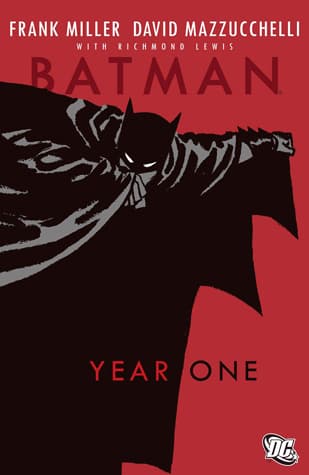
Synopsis
Covers the whole plot, including the ending.
- Difficulty
- Easy
- Pacing
- Moderate
- Mood
- Gritty, noir, determined, struggling, hopeful
Batman Plot Summary
Covers the whole plot, including the ending.
Arrivals and Initial Impressions
Bruce Wayne returns to Gotham City after 12 years of training abroad. On the same train, Lieutenant James Gordon arrives, transferring to the corrupt Gotham Police Department. Both men immediately see the city's decay. Bruce tries to stop a mugging but is shot, realizing his current approach is not working. Gordon sees deep corruption within the police, especially from Detective Flass, who assaults him for not conforming. Gordon's pregnant wife, Barbara, worries about the city's dangers. Bruce begins to plan a more effective strategy, understanding he needs to become something more than just a man.
The Bat's Genesis
Bruce Wayne makes his first attempt at vigilantism in a makeshift costume, targeting street thugs. He saves a young prostitute, Holly, but is badly injured. He barely makes it back to Wayne Manor, bleeding and collapsing in his study. Lying on the floor, thinking about his failure and the need for a symbol to frighten criminals, a bat crashes through the window, landing near him. This provides the inspiration Bruce needs, solidifying his new identity: Batman. He realizes he must become a creature of the night, a terrifying legend.
Batman's Debut and Gordon's Vigilance
Batman appears, targeting organized crime and corrupt officials. His initial actions are brutal and effective, frightening criminals and police alike. He interrupts a dinner party of Gotham's elite, including Mayor Hill and Commissioner Loeb, sending a clear message. Lieutenant Gordon, despite facing pressure from his corrupt colleagues, takes an immediate interest in the mysterious vigilante. He starts his own investigation into Batman's identity and methods, recognizing that Batman's actions are making a difference in the city's crime, even as police are ordered to catch him, dead or alive.
The Police Hunt and Gordon's Moral Stand
Commissioner Loeb mobilizes the police to capture Batman, seeing him as a threat to his authority and the corrupt system. Batman, though hunted, continues his campaign, stopping drug operations and making a public statement against the city's powerful figures. Gordon, increasingly fed up with the corruption, feels isolated. He begins an affair with his colleague, Detective Sarah Essen, for comfort. His moral compass remains steady, even as his corrupt peers target him for his integrity. He also faces a personal crisis as his wife, Barbara, expresses her fears.
Batman's Escalation and Gordon's Confrontation
Batman escalates his war, targeting Carmine 'The Roman' Falcone, a powerful crime boss. He infiltrates Falcone's penthouse, leaving him tied to his bedsheets, sending a humiliating message. Meanwhile, Gordon's investigation into Batman and police corruption deepens. He confronts Commissioner Loeb, accusing him of complicity in the city's crime. This confrontation further isolates Gordon but strengthens his reputation among the few honest officers. Gordon's actions show his commitment to justice, even at risk to his career and life.
The Hostage Crisis and Batman's Rescue
Batman rescues a cat from a tree, showing a less violent side. This is contrasted by a dramatic event: Commissioner Loeb's men corner Batman in an abandoned building. A police helicopter crashes, leaving a hostage dangling. Despite being surrounded and under fire, Batman saves the hostage, showing his core principle of protecting the innocent. He successfully rescues the man, making the public's view of him as a simple criminal more complicated.
The Riot and Batman's Escape
The police close in on Batman in an abandoned building. They use tear gas and overwhelming force, but Batman escapes. As the situation intensifies, Batman, badly injured, makes a daring escape by using a sonic device to summon a swarm of bats from the building's rafters. The bats disorient the police, allowing Batman to disappear. This escape solidifies his mythic status and shows his ingenuity, turning a desperate situation into a victory. Gordon, witnessing this, considers the nature of this enigmatic vigilante.
Gordon's Family Under Threat
Detective Flass, seeking revenge for Commissioner Loeb, targets Gordon's family. While Barbara and their son, James Jr., are driving, Flass and his associates corner them, threatening their lives. Gordon, alerted, races to their aid. This incident pushes Gordon to his breaking point, cementing his resolve to fight corruption directly. It highlights the personal cost of his integrity and how far corrupt elements will go to silence dissent. Batman, watching, is also affected by this act against an innocent family.
Batman and Gordon's Unlikely Alliance
As Flass and his men threaten Gordon's family, Batman intervenes. He brutally dispatches Flass and his cronies, saving Barbara and James Jr. Gordon, arriving on the scene, witnesses Batman's powerful action. This event marks a turning point in their relationship. An unspoken understanding forms between them. Gordon, though still upholding the law, now sees Batman as a necessary force for justice. Batman, in turn, sees Gordon as the only incorruptible element within the GCPD, setting the stage for their future collaboration.
The Fall of Loeb and Falcone
Following the attack on his family, Gordon takes action, leading to the arrest and conviction of Detective Flass. Pressure on Commissioner Loeb intensifies, leading to his resignation and the start of a purge within the corrupt GCPD. Batman continues his campaign against Carmine Falcone, dismantling his operations and eroding his power. The combined efforts of the lieutenant and the dark knight begin to chip away at the corruption and crime that has plagued Gotham for years. The city, though still dangerous, shows signs of hope for change.
The Harvey Dent Connection
After Loeb's downfall, Gordon, now a captain, works closely with the new District Attorney, Harvey Dent. Gordon receives a cryptic phone call from an unknown individual, hinting at a new, more dangerous criminal emerging in Gotham. The caller mentions a 'freak' who uses gas and targets people. This brief scene teases future threats, hinting at the Joker and other Batman villains, signifying that Gotham's darkness is far from purged, and new evils are always on the horizon for Batman and Gordon.
Principal Figures
Bruce Wayne / Batman
Protagonist
The returned heir who becomes Gotham's dark vigilante.
Bruce Wayne returns to Gotham City after 12 years of intense training abroad, driven by the trauma of his parents' murder. He initially attempts to fight crime as an ordinary man but quickly realizes the need for a symbol to instill fear. Intelligent, disciplined, and deeply committed to justice, he transforms into Batman, a terrifying figure of the night who uses stealth, martial arts, and advanced gadgets. He is a man consumed by his mission, often operating on the fringes of the law, but always with a strict moral code against killing. His internal monologues reveal his struggles, doubts, and unwavering resolve.
Relationships: Alfred Pennyworth (Loyal butler and surrogate father); James Gordon (Reluctant ally and future confidant); Carmine Falcone (Primary criminal adversary)
Lieutenant James Gordon
Protagonist/Supporting
The honest cop fighting corruption within and without the GCPD.
James Gordon is a new transfer to the Gotham City Police Department, a rare honest cop in a deeply corrupt system. He is a man of strong morals, integrity, and a keen sense of justice, often finding himself at odds with his colleagues. Gordon is dedicated to his wife, Barbara, and their unborn child, which fuels his desire to make Gotham safer. He is initially tasked with hunting Batman but slowly comes to respect the vigilante's effectiveness, eventually forming an uneasy alliance. His internal monologues provide a grounded perspective on Gotham's decay and the challenges of upholding the law.
Relationships: Barbara Gordon (Wife); Detective Sarah Essen (Colleague and brief romantic entanglement); Batman (Reluctant ally and future confidant); Detective Arnold Flass (Corrupt subordinate and antagonist); Commissioner Gillian Loeb (Corrupt superior and antagonist)
Selina Kyle / Catwoman
Supporting
The dominatrix-turned-cat burglar who crosses paths with Batman.
Selina Kyle is a resourceful and independent woman who works as a dominatrix, living in the seedy East End of Gotham. Witnessing Batman's first public appearances inspires her to adopt her own costumed identity, Catwoman, becoming a cat burglar. She is agile, cunning, and self-reliant, operating in the grey areas of morality. Her initial encounters with Batman are adversarial, but there's an undeniable attraction and a mutual respect for their respective skills. She represents a different kind of vigilante, one driven by self-interest and thrill-seeking, but still operating outside the law.
Relationships: Batman (Adversary, potential romantic interest, and inspiration); Holly Robinson (Friend and protégé)
Alfred Pennyworth
Supporting
Bruce Wayne's loyal butler and moral compass.
Alfred Pennyworth is Bruce Wayne's devoted butler and surrogate father. He is a man of unwavering loyalty, sharp wit, and deep concern for Bruce's well-being. Alfred provides both practical support and emotional guidance, often expressing his worries about Bruce's dangerous crusade while still enabling his mission. He is the only person Bruce truly trusts and confides in, serving as a grounding force in Bruce's isolated life as Batman. His dry humor and steadfast presence offer moments of humanity amidst the grim narrative.
Relationships: Bruce Wayne / Batman (Employer, ward, and surrogate son)
Commissioner Gillian Loeb
Antagonist
The corrupt police commissioner who maintains Gotham's status quo.
Gillian Loeb is the corrupt Commissioner of the Gotham City Police Department, deeply entrenched in the city's criminal underworld, particularly with Carmine Falcone. He uses his position to protect his own interests and those of his criminal associates, actively hindering any honest police work. Loeb views Batman as a direct threat to his power and the established order, leading the intense manhunt for the vigilante. He is a symbol of the systemic corruption that has crippled Gotham, representing the very forces Batman and Gordon are fighting against.
Relationships: James Gordon (Antagonistic superior); Carmine Falcone (Criminal associate)
Carmine 'The Roman' Falcone
Antagonist
Gotham's most powerful crime boss.
Carmine Falcone is the undisputed head of Gotham's most powerful crime family, known as 'The Roman.' He wields immense influence over the city's politicians, judges, and police force, including Commissioner Loeb. Falcone is a ruthless and calculating figure, accustomed to operating with impunity. His empire is the primary target of Batman's initial war on crime. He represents the entrenched organized crime that Batman seeks to dismantle, and his downfall is a significant step in the vigilante's mission to clean up Gotham.
Relationships: Batman (Primary criminal adversary); Commissioner Gillian Loeb (Corrupt associate)
Detective Arnold Flass
Antagonist
Gordon's corrupt, brutal partner.
Arnold Flass is a detective in the Gotham City Police Department and James Gordon's initial partner. He is a crude, brutal, and thoroughly corrupt officer who embodies the worst aspects of the GCPD. Flass is involved in various illicit activities and uses his badge to intimidate and abuse. He resents Gordon's honesty and quickly becomes a personal antagonist, even going so far as to threaten Gordon's family. His violent actions and eventual comeuppance serve as a clear example of the corruption that needs to be rooted out.
Relationships: James Gordon (Corrupt partner and personal antagonist)
Barbara Gordon
Supporting
James Gordon's pregnant wife.
Barbara Gordon is James Gordon's pregnant wife, a loving and supportive partner who struggles with the dangers and corruption of Gotham City. She represents the innocent civilian caught in the crossfire of Gotham's crime and her husband's dedication to justice. Her fears for James's safety and the well-being of their unborn child highlight the personal stakes of Gordon's mission. Her eventual rescue by Batman from Flass's attack is a pivotal moment in the forming of the Batman-Gordon alliance.
Relationships: James Gordon (Husband)
Harvey Dent
Supporting
The new, honest District Attorney.
Harvey Dent is introduced briefly at the end of the narrative as the new District Attorney, replacing a corrupt predecessor. He is depicted as an honest and ambitious lawyer who shares Gordon's desire to clean up Gotham. His appearance signals a potential new ally for Gordon in the fight against crime, operating within the legal system. His inclusion sets the stage for future narratives and the ongoing struggle for justice in Gotham.
Relationships: James Gordon (Professional ally)
Themes & Insights
Corruption and Decay of a City
Gotham City is a central character, shown as a metropolis consumed by corruption, from its highest officials to street thugs and the police. This widespread decay makes traditional law enforcement useless, requiring a vigilante like Batman. The city's grim atmosphere reflects its moral rot, making the fight for justice seem almost impossible, but also showing the great need for it. The story constantly reinforces that Gotham is a sick city needing a cure.
“Gotham is a sick city. Sick at its heart. It needs a cure. I will be the cure.”
The Nature of Justice and Law
The story explores the relationship between law enforcement and vigilante justice. Lieutenant Gordon represents justice within the law, upholding it despite overwhelming corruption. Batman operates outside the law, believing traditional methods are not enough for Gotham's evil. The story questions if true justice is possible through legal means when the system itself is broken, suggesting that sometimes, a more brutal, extra-legal force is needed. Their eventual, uneasy alliance shows a practical compromise between these two approaches.
“I've tried to be a good cop. I've tried to be a good husband. But the city... it's too much. Too much.”
The Birth of a Symbol
A core theme is the transformation of a man into a symbol. Bruce Wayne realizes that being a skilled fighter is not enough; he needs to become something more, something to frighten criminals. The bat, initially a random occurrence, becomes a potent, terrifying symbol of his war on crime. This transformation shows that symbols can be more powerful and lasting than individuals, inspiring fear and hope. Batman is not just a man, but an idea, a force that transcends the individual, making him a lasting legend.
“I shall become a bat! I shall become a creature of the night! They will fear me!”
Moral Ambiguity and Compromise
The story examines the moral complexities faced by its characters. Gordon, a good man, makes compromises, such as his affair with Sarah Essen, and reluctantly accepts Batman's extra-legal methods to achieve justice. Batman operates in a morally ambiguous zone, using intimidation and violence, though he does not kill. Even Selina Kyle, as Catwoman, embodies this ambiguity, acting as a criminal but with complex motives. This theme suggests that in a city as corrupt as Gotham, pure morality is often impossible, and difficult choices must be made to create change.
“Maybe I can't be a good cop. Maybe I can't be a good husband. But I can be a good man. I can try.”
The Cost of Vigilantism
The story shows the personal and physical cost of Bruce Wayne's choice to become Batman. He endures brutal injuries, constant danger, and a life of isolation. The story emphasizes the physical toll, with Bruce often battered and bleeding. Beyond the physical, there is a psychological cost, as he dedicates his entire being to his mission, sacrificing personal relationships and a normal life. Similarly, Gordon's integrity costs him professionally and endangers his family. This theme shows that fighting for justice, especially outside the system, demands significant sacrifice.
“Every bone in my body screams. Every muscle aches. But the mission... the mission is everything.”
Plot Devices & Literary Techniques
Internal Monologue
Provides deep insight into character motivations and perspectives.
Both Bruce Wayne/Batman and James Gordon frequently narrate their experiences through internal monologues. This device allows readers direct access to their thoughts, fears, motivations, and moral struggles. It provides a nuanced understanding of their individual perspectives on Gotham's corruption and their respective roles in combating it. The contrasting voices highlight their different approaches to justice while revealing their shared dedication. This technique also builds tension and suspense, drawing the reader intimately into their psychological states.
Symbolism of the Bat
Transforms a creature into a powerful, fear-inducing icon.
The bat serves as a profound symbol throughout the story. Initially, it's a mundane creature that accidentally crashes through Bruce Wayne's window, but this event triggers Bruce's epiphany, leading him to adopt the bat as his personal emblem. The bat then transforms into a symbol of fear for criminals, a creature of the night that preys on their superstitions. It represents the primal, the dark, and the unknown, perfectly encapsulating Batman's methodology of striking terror into the hearts of Gotham's underworld. It's a symbol born from a moment of failure and transformed into an icon of power.
Juxtaposition of Protagonists
Highlights contrasting approaches to fighting corruption.
The narrative cleverly juxtaposes the journeys of Bruce Wayne/Batman and James Gordon. Bruce operates in the shadows, outside the law, using fear and brute force. Gordon, conversely, works within the corrupt legal system, striving to uphold the law and inspire change from within. Their parallel narratives highlight the dual nature of the fight for Gotham's soul. This device allows the story to explore different facets of justice and heroism, ultimately demonstrating that both approaches, though distinct, are necessary for the city's salvation, leading to their eventual, reluctant partnership.
The Corrupt City as a Character
Gotham's pervasive decay acts as a formidable antagonist.
Gotham City itself is presented as a living, breathing entity, deeply corrupt and decaying. It's not just a backdrop but an active antagonist, constantly challenging the protagonists. The widespread crime, the compromised institutions, and the general moral rot of the city create the very conditions that necessitate Batman's existence and test Gordon's resolve. This device establishes a powerful sense of place and amplifies the stakes, making the fight for justice feel like a battle against the very soul of the city, rather than just against individual villains.
Quiz
10 questions on the plot and the characters. Each answer comes with a short explanation.
Question 1
Who are the primary writer and artist credited for "Batman: Year One"?
- Alan Moore and Brian Bolland
- Frank Miller and David Mazzucchelli
- Scott Snyder and Greg Capullo
- Jeph Loeb and Tim Sale
Show answer
B. Frank Miller and David Mazzucchelli Frank Miller wrote the story and David Mazzucchelli provided the artwork for "Batman: Year One".
Question 2
What is the main focus of "Batman: Year One"?
- Batman's final days and retirement
- The origin story of Batman and his early days
- The formation of the Justice League
- The Joker's first appearance
Show answer
B. The origin story of Batman and his early days "Batman: Year One" is a reinterpretation of the origin of Batman, detailing who he is and how he came to be.
Question 3
In what year was "Batman: Year One" originally published?
- 1980
- 1986
- 1990
- 2000
Show answer
B. 1986 The graphic novel was produced by Frank Miller and David Mazzucchelli in 1986.
Question 4
Which comic book issues does the "Batman: Year One" volume collect?
- Batman #1-4
- Detective Comics #27
- Batman #404–407
- Batman: The Dark Knight Returns #1-4
Show answer
C. Batman #404–407 This volume collects Batman #404–407, which form the "Year One" storyline.
Question 5
What other significant Batman work by Frank Miller is mentioned as being written shortly before "Year One"?
- Batman: The Long Halloween
- Batman: The Killing Joke
- Batman: Hush
- Batman: The Dark Knight Returns
Show answer
D. Batman: The Dark Knight Returns The text states that "Year One" was written shortly after Miller's "The Dark Knight Returns".
Question 6
What kind of additional material is included in this edition of "Batman: Year One"?
- Interviews with DC Comics executives
- Character and layout sketches, sample script pages, and developmental material
- A prequel story about the Joker
- A crossover with Superman
Show answer
B. Character and layout sketches, sample script pages, and developmental material The edition includes over 40 pages of developmental material, such as character sketches, script pages, and more.
Question 7
What does the "Year One" subtitle imply about the story's place in Batman's timeline?
- It's the very last story of Batman's career.
- It's set during his first year as Batman.
- It's a story told in the year 2040.
- It's a retrospective from Batman's old age.
Show answer
B. It's set during his first year as Batman. The title "Year One" directly refers to the first year of Batman's crime-fighting career.
Question 8
Which of the following is NOT mentioned as being included in this edition of "Batman: Year One"?
- A new introduction by Frank Miller
- A new illustrated afterword by David Mazzucchelli
- A complete adaptation into a screenplay
- Developmental material and sketches
Show answer
C. A complete adaptation into a screenplay While the edition includes introductions, afterwords, and developmental material, a screenplay adaptation is not mentioned.
Question 9
The description mentions Frank Miller's "dystopian fable of Batman's final days." Which work is this referring to?
- Batman: Year One
- Batman: The Long Halloween
- Batman: The Dark Knight Returns
- All-Star Batman and Robin the Boy Wonder
Show answer
C. Batman: The Dark Knight Returns The text explicitly states that "Year One" was written shortly after Miller's "dystopian fable of Batman's final days," which is "The Dark Knight Returns."
Question 10
Considering the context of "Batman: Year One" being a reinterpretation of his origin, what does this suggest about previous Batman stories?
- Previous stories were considered non-canonical.
- It aimed to provide a fresh and definitive take on his beginnings.
- It was a direct sequel to all previous Batman stories.
- It ignored all established Batman lore.
Show answer
B. It aimed to provide a fresh and definitive take on his beginnings. The term "reinterpretation" implies a new perspective or a definitive version of the origin story, suggesting a desire to shape how Batman's beginnings were understood.
Batman FAQ
What is Batman: Year One about?
Batman: Year One is a seminal graphic novel that reimagines the early days of Bruce Wayne as Batman and his complex relationship with Lieutenant Jim Gordon as they both fight crime in Gotham City. It details their first year operating in the city and the challenges they face.
Who wrote Batman: Year One?
Batman: Year One was written by Frank Miller, a legendary comic book writer known for his influential work on The Dark Knight Returns and Sin City.
Who drew Batman: Year One?
The art for Batman: Year One was created by David Mazzucchelli, whose distinctive style brought Gotham City and its inhabitants to life.
Is Batman: Year One a good starting point for new Batman fans?
Yes, Batman: Year One is widely considered one of the best origin stories and is an excellent starting point for new readers interested in understanding Batman's beginnings and the gritty tone of his world.
What makes Batman: Year One significant?
It's significant for its realistic and grounded portrayal of Batman's early struggles, its mature themes, and its influence on subsequent Batman stories and adaptations, including Christopher Nolan's 'Batman Begins' film.
What is the relationship between Batman and Jim Gordon in Year One?
Year One focuses heavily on the early, often adversarial, relationship between a newly established Batman and a principled Jim Gordon. They are on opposite sides initially but gradually develop a grudging respect and eventually a vital alliance against corruption in Gotham.
What is the tone of Batman: Year One?
The tone is dark, gritty, and realistic, portraying Gotham City as a deeply corrupt and dangerous place. It explores the psychological toll of vigilantism and police work in such an environment.
What additional content is included in the new edition?
New editions often include a new introduction by Frank Miller, an illustrated afterword by David Mazzucchelli, and extensive developmental material like sketches, character designs, and script pages, offering insights into the creation process.
What comic issues does Batman: Year One collect?
Batman: Year One collects the original story arc from Batman #404–407.
How does Batman: Year One differ from other Batman origin stories?
Year One emphasizes Bruce Wayne's raw, unrefined beginnings as Batman, focusing on his physical training and early mistakes. It also gives significant focus to Jim Gordon's perspective, portraying his own difficult journey to clean up Gotham.
About the author
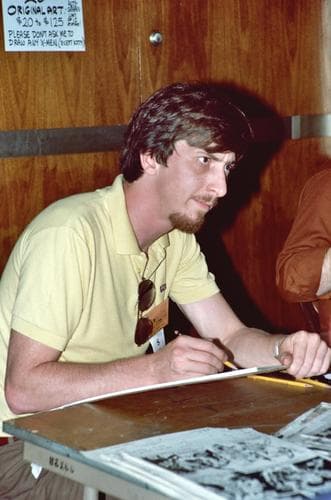
Frank Miller is an American comic book writer and artist known for his influential work in the graphic novel genre. He is best known for "Batman: Year One," "Batman: The Dark Knight Returns," and "300," which have significantly shaped modern comic storytelling and aesthetics. His contributions have earned him a prominent place in the comic book industry.
Similar books
- Harry Potter and the Sorcerer's Stone
J.K. Rowling
4.5 (7M) average on GoodreadsFantasyRescued from a miserable life under the stairs, an orphaned boy discovers he's a wizard destined for a magical school, where he uncovers a dangerous secret tied to the dark wizard who murdered his parents.
- The Hunger Games
Suzanne Collins
4.3 (6.4M) average on GoodreadsFantasyIn a future where children fight to the death on live television, Katniss Everdeen volunteers for the arena, turning a death sentence into a fight for survival and a spark of rebellion.
- 1984
George Orwell
4.2 (3.1M) average on GoodreadsPoliticsIn a future where surveillance and thought control are absolute, a man's search for truth clashes with the Party, showing that hope can be a form of rebellion.
- Divergent
Veronica Roth
4.2 (2.9M) average on GoodreadsFantasyIn a society divided by virtues, a sixteen-year-old's difference from the norm starts a rebellion that threatens her world.
- The Hobbit, or There and Back Again
J.R.R. Tolkien
4.3 (2.9M) average on GoodreadsFantasyA comfort-loving hobbit named Bilbo Baggins is whisked away by a mischievous wizard and a band of dwarves on an unexpected journey to reclaim stolen treasure from a fearsome dragon, discovering courage and a magical ring along the way.
- Animal Farm
George Orwell
4.0 (2.7M) average on GoodreadsPoliticsA farm animals' rebellion against humans turns into a pig-led dictatorship, showing how power corrupts and revolutionary ideals are betrayed.






Enjoyed the summary?
A summary gives you the shape of the book. The book itself has the detail, the examples and the voice.
Find Batman on AmazonAs an Amazon Associate, BookBrief earns from qualifying purchases. How we're funded