
Core Idea
- Difficulty
- Easy
- Read it if
- You are a parent interested in exploring alternative, more authoritarian parenting styles, or you enjoy memoirs that challenge conventional wisdom and spark debate about cultural differences in child-rearing. You're open to controversial ideas about discipline, academic rigor, and the pursuit of excellence.
- Skip it if
- You are looking for a gentle, affirmation-focused parenting guide, or you are firmly against strict, highly demanding, or culturally insensitive parenting approaches. You prefer books that offer balanced perspectives rather than a strong, singular viewpoint.
Key Takeaways from Battle Hymn of the Tiger Mother
The 'Tiger Mother' Manifesto
Unwavering discipline and high expectations are paramount for success.
Chua's parenting, known as 'Tiger Mothering,' involves strict rules, intense academic and musical training, and avoiding activities seen as unimportant, like playdates or school plays. This method comes from a strong belief that children can achieve great things, and parents must push them to do so, even if it means choosing long-term success over short-term happiness. The main goal is to build discipline, resilience, and mastery in key skills, which will lead to real self-confidence and more opportunities. This differs greatly from Western ideas that value self-esteem and individual expression early on.
“Chinese parents believe that the best way to protect their children is by preparing them for the future and arming them with skills, strong work habits, and inner confidence.”
In the book: Chua's list of 'never allowed' activities for her daughters, including not being the #1 student in every subject (except gym and drama), not playing piano or violin, or not practicing instruments for hours daily.
Try this: Parents can identify areas where they might be too permissive and consider introducing more structured routines or higher expectations in academic or skill-based pursuits. This doesn't mean adopting every 'Tiger Mother' rule, but rather examining where gentle nudges could become firm pushes towards excellence.
Related ideas: authoritarian-parenting, discipline, high-expectations
The Instrument Imperative
Mastery of a challenging instrument is a crucible for character development.
For Chua, learning an instrument like the piano or violin is not just about music; it is a rigorous way to train discipline, perseverance, and the pursuit of excellence. The amount of practice needed—two to three hours daily, double on weekends—builds a strong work ethic. This intense focus teaches children that consistent effort leads to real results and that overcoming frustration is a vital life skill. The 'perfection' demanded involves not just notes, but the mental strength developed through many repetitions and the constant pursuit of improvement. This builds a deep sense of accomplishment beyond music.
“If the next time's not PERFECT, I'm going to take all your stuffed animals and burn them!”
In the book: Her daughters, Sophia and Lulu, were only allowed to play the piano or violin and practiced for hours every day, highlighting the non-negotiable nature of this commitment.
Try this: Parents can select one or two challenging, skill-based activities for their children and commit to supporting consistent, rigorous practice, emphasizing the process of mastery over innate talent. Focus on the long-term benefits of perseverance.
Related ideas: deliberate-practice, grit, skill-acquisition
Love Through Sacrifice, Not Just Comfort
True parental love involves demanding the best, even when it's uncomfortable.
Chua challenges the Western idea that love mainly means nurturing comfort and respecting individuality. For her, love is shown through great personal sacrifice—spending huge amounts of time and energy overseeing her daughters' education and practice, often giving up her own free time or career pursuits. This demanding, 'tough love' approach is based on the belief that preparing children for the difficult realities of the world, giving them valuable skills, and building inner strength is the ultimate expression of care. It is about providing a future, not just a comfortable present, even if it means seeming harsh in the short term.
“In her sacrifices—the exacting attention spent studying her daughters' performances, the office hours lost shuttling the girls to lessons—the depth of her love for her children becomes clear.”
In the book: Chua's willingness to spend office hours lost to shuttle her daughters to lessons and her 'exacting attention' to their performances.
Try this: Parents can reflect on where their sacrifices are directed. Instead of solely providing comfort, consider how time, energy, and resources can be redirected towards fostering skill development, academic rigor, or character building, even if it requires difficult conversations or pushing boundaries.
Related ideas: tough-love, parental-sacrifice, long-term-thinking
The Culture Clash Within
Parenting philosophies are deeply cultural, leading to internal and external conflict.
Chua's memoir is not just a guide; it is an honest account of the internal and external conflicts that happen when two different cultural parenting styles meet, even within one family. Her 'Chinese way' faced much resistance, especially from her younger daughter, Lulu, who wanted more independence and passion-driven activities, like a 'Western' child. This clash shows that while some methods may produce impressive results, they are not always applicable or easy to adopt without significant emotional cost. The book ultimately becomes a journey of finding balance and compromise, forced by individual personalities and the pressures of a multicultural environment.
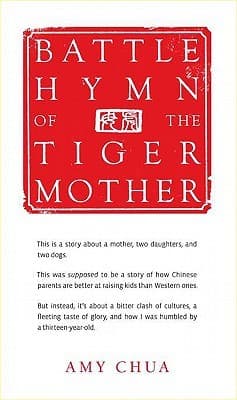
“This was supposed to be a story of how Chinese parents are better at raising kids than Western ones. But instead, it's about a bitter clash of cultures, a fleeting taste of glory, and how I was humbled by a thirteen-year-old.”
In the book: The intense conflict with Lulu, who eventually rebelled against the strict regime and threatened to leave home, forcing Chua to re-evaluate her approach.
Try this: Parents from different cultural backgrounds should openly discuss their ingrained parenting beliefs and be prepared for potential conflicts, recognizing that a blend or compromise might be necessary for family harmony and individual child well-being.
Related ideas: intercultural-parenting, cultural-values, parenting-styles
The Myth of Innate Talent
Effort, not inherent ability, is the true determinant of success.
A key part of the 'Tiger Mother' philosophy is rejecting the idea that children are born with fixed talents. Instead, it suggests that consistent, rigorous effort is the main reason for achievement. If a child struggles, it is not due to a lack of talent, but a lack of trying hard enough. This belief allows parents to push their children, as failure is seen as a temporary setback that can be overcome with more practice and determination, rather than a sign of inherent limitation. This view builds a growth mindset, where challenges are chances to improve, not impossible obstacles.
“What Battle Hymn of the Tiger Mother reveals is that the Chinese just have a totally different idea of how to do that.”
In the book: Chua's consistent refusal to accept anything less than perfection or top grades, implying that any shortfall was due to insufficient effort rather than ability.
Try this: Parents should praise effort and process over innate ability. When a child struggles, reframe it as an opportunity for more practice and strategizing, rather than a sign of a fixed limitation. Encourage a mindset where 'I can't do it' becomes 'I can't do it *yet*.'
Related ideas: growth-mindset, effort-vs-talent, perseverance
The Cost of Extreme Parenting
While effective, the 'Tiger Mother' approach comes with significant emotional and relational costs.
While Chua's methods clearly produced high-achieving daughters, the memoir openly shows the intense emotional stress and possible harm to the parent-child relationship. Her harsh criticisms and threats, though often effective short-term, created an environment of fear and resentment, especially for Lulu. The book serves as a warning, showing that while strict discipline can lead to external success, it risks harming a child's natural motivation, self-esteem, and the basic trust in the parent-child bond. Chua's eventual humbling by her daughter highlights that even the most rigid systems must eventually adapt to human nature.
“Oh my God, you're just getting worse and worse.”
In the book: Chua's admission of saying harsh things to her daughters, like threatening to burn stuffed animals, and the deep rebellion and emotional distress experienced by Lulu.
Try this: Parents adopting strict methods should regularly check in with their children's emotional well-being and be prepared to adapt their approach. Balance high expectations with empathy, open communication, and unconditional love, ensuring that the child feels seen and valued beyond their achievements.
Related ideas: emotional-toll, parent-child-bond, rebellion
The Power of Parental Authority
Unquestioned parental authority can streamline decision-making and enforce consistency.
In Chua's system, parental authority is absolute and unquestioned. This removes long negotiations, debates, and the need for children to 'find their passion' before committing to difficult tasks. By setting activities and expectations, Chua ensured a consistent, rigorous schedule focused on skill development. This top-down approach, though debated, shows how a clear, united parental front can enforce discipline and commitment, especially when children might otherwise choose easier or less productive paths. It assumes that parents, with their life experience, know what is best for a child's long-term future, even if the child does not realize it yet.
“Here are some things Amy Chua would never allow her daughters to do: - have a playdate - be in a school play - complain about not being in a school play...”
In the book: The extensive list of activities her daughters were explicitly forbidden from doing, demonstrating her complete control over their schedules and choices.
Try this: Parents can establish clearer boundaries and non-negotiable expectations in key areas (e.g., homework completion, specific chores, essential skill practice). This doesn't mean dictatorship, but rather a firm stance on core values and responsibilities, reducing decision fatigue and fostering consistency.
Related ideas: authoritative-parenting, parental-control, structured-environment
The Pursuit of 'Glory' and Self-Esteem
True self-esteem comes from demonstrated competence, not empty praise.
Chua fundamentally disagrees with the Western focus on building self-esteem through constant praise and shielding children from failure. Instead, she argues that real confidence, or 'inner confidence,' comes from the difficult process of mastering challenging skills and achieving real success. The 'glory' she mentions, whether winning a piano competition or getting a high score on a test, is not just about external validation; it is about the internal realization that one's hard work has paid off. This hard-earned competence builds a strong self-worth that is much more solid than that from unearned praise, preparing children for a competitive world where actual performance matters.
“The Chinese believe that the best way to protect your children is by preparing them for the future and arming them with skills, strong work habits, and inner confidence.”
In the book: Sophia's eventual success in piano competitions, which brought her recognition and a deep sense of accomplishment, validating Chua's belief in the 'glory' of achievement.
Try this: Parents can shift focus from generic praise to specific, effort-based feedback. Encourage children to tackle challenging tasks and celebrate their perseverance and eventual mastery, emphasizing the process of learning and improvement rather than just the outcome.
Related ideas: earned-self-esteem, competence-based-confidence, achievement-motivation
The Necessity of Flexibility and Adaptation
Even the most rigid systems must evolve when faced with individual needs.
Despite her initial strict adherence to the 'Chinese way,' Chua's journey eventually makes her face the limits of her rigid approach. Her younger daughter, Lulu, rebelled intensely, even threatening to burn her violin. This moment was a significant wake-up call. It shows that children are not all the same, and a one-size-fits-all parenting strategy, no matter how effective it seems, can be harmful to certain personalities. The memoir's ending, where Chua learns to compromise and allow Lulu more independence, highlights the importance of parental flexibility and adapting methods to fit each child's unique temperament and needs.
“I was humbled by a thirteen-year-old.”
In the book: Lulu's extreme rebellion, culminating in her threatening to burn her violin and eventually causing Chua to allow her to switch to tennis, a sport she genuinely enjoyed.
Try this: Parents should observe their children's individual responses to discipline and expectations. While maintaining core values, be prepared to adjust methods, listen to feedback, and allow for some individual choice and passion pursuits, especially as children mature.
Related ideas: parental-flexibility, individualized-parenting, compromise
Battle Hymn of the Tiger Mother Quotes
“Chinese mothers believe that their kids can get straight A's. American parents think that it's okay not to get straight A's.”
“The Chinese mother believes that her kids owe her everything.”
“What Chinese parents understand is that nothing is fun until you're good at it.”
“I've found that the best way to get my children to do something is to tell them they can't do it.”
“It's not about what you want, it's about what's good for you.”
“Chinese parenting emphasizes obedience, self-control, and the belief that children can always do better.”
“My husband, Jed, once said to me, 'You know, Amy, I think it's possible that you sometimes go too far.'”
“A lot of people wonder how Chinese parents raise such stereotypically successful kids. They wonder what they do to produce so many math whizzes and music prodigies, what it's like inside the family, and whether they could do it too.”
“I would often tell Lulu that she was lazy, or spoiled, or pathetic. I would say, 'You are a disgrace to this family.'”
“Even when Lulu rebelled, it was clear that she loved us, and that she knew we loved her.”
“Western parents are concerned about their children's self-esteem. Chinese parents are concerned about their children's future.”
“I had a moment of doubt, a tiny crack in my armor, where I wondered if I was doing the right thing.”
“I'm not saying it's easy. I'm saying it's worth it.”
Quiz
10 questions on the main ideas. Each answer comes with a short explanation.
Question 1
Which of the following activities would Amy Chua explicitly forbid her daughters from doing, according to the provided text?
- Playing the piano for two hours a day
- Being the #1 student in math
- Having a playdate
- Perfecting their Mandarin
Show answer
C. Having a playdate The text explicitly states: 'Here are some things Amy Chua would never allow her daughters to do: - have a playdate'.
Question 2
What two musical instruments were Sophia and Lulu exclusively allowed to play?
- Flute and Guitar
- Piano and Violin
- Cello and Clarinet
- Drums and Trumpet
Show answer
B. Piano and Violin The text states Amy Chua would never allow her daughters to 'play any instrument other than the piano or violin'.
Question 3
What was Amy Chua's initial intention for writing 'Battle Hymn of the Tiger Mother'?
- To document her daughters' musical journey.
- To explain the challenges of cultural assimilation.
- To show how Chinese parents are better at raising kids than Western ones.
- To criticize Western parenting styles.
Show answer
C. To show how Chinese parents are better at raising kids than Western ones. Amy Chua herself states: 'This was supposed to be a story of how Chinese parents are better at raising kids than Western ones.'
Question 4
According to the book's description, what is a primary difference in how Chinese parents, as exemplified by Chua, believe they protect their children?
- By encouraging individuality and true passions.
- By providing a nurturing and emotionally supportive environment.
- By preparing them for the future with skills, strong work habits, and inner confidence.
- By allowing them freedom to explore their own interests.
Show answer
C. By preparing them for the future with skills, strong work habits, and inner confidence. The text states: 'The Chinese believe that the best way to protect your children is by preparing them for the future and arming them with skills, strong work habits, and inner confidence.'
Question 5
What ultimately 'humbled' Amy Chua, according to her own words in the book's introduction?
- A bitter clash of cultures.
- A fleeting taste of glory.
- The challenges of teaching Mandarin.
- A thirteen-year-old.
Show answer
D. A thirteen-year-old. Amy Chua explicitly states: 'But instead, it's about a bitter clash of cultures, a fleeting taste of glory, and how I was humbled by a thirteen-year-old.'
Question 6
How much time did Lulu and Sophia typically spend practicing their instruments daily, according to the text?
- One hour a day
- Two to three hours a day, with double sessions on weekends
- Four hours a day, including weekends
- Only on weekends for several hours
Show answer
B. Two to three hours a day, with double sessions on weekends The text mentions: 'They were too busy practicing their instruments (two to three hours a day and double sessions on the weekend)'.
Question 7
What is one of the extreme threats Amy Chua made to Sophia during piano practice, as recounted by Sophia?
- She would be sent to her room without dinner.
- All her stuffed animals would be burned if her playing wasn't perfect.
- She would never be allowed to play the piano again.
- Her allowance would be taken away for a month.
Show answer
B. All her stuffed animals would be burned if her playing wasn't perfect. Sophia recalls Amy saying: 'If the next time's not PERFECT, I'm going to take all your stuffed animals and burn them!'
Question 8
Despite the harshness of her parenting methods, what does the book's description suggest is the underlying motivation for Amy Chua's actions?
- Her desire for personal recognition through her daughters' achievements.
- A deep-seated belief in cultural superiority.
- The depth of her love for her children, demonstrated through her sacrifices and exacting attention.
- A competitive drive to prove her parenting style is better than Western approaches.
Show answer
C. The depth of her love for her children, demonstrated through her sacrifices and exacting attention. The text concludes: 'And in her sacrifices—the exacting attention spent studying her daughters' performances, the office hours lost shuttling the girls to lessons—the depth of her love for her children becomes clear.'
Question 9
The title 'Battle Hymn of the Tiger Mother' implies a certain approach to parenting. Which statement best captures the essence of 'Tiger Mother' parenting as described?
- A flexible, child-led approach prioritizing emotional well-being.
- A strict, disciplined approach focused on academic and skill mastery, often through demanding methods.
- A collaborative approach where parents and children negotiate expectations.
- A hands-off approach that allows children to learn from their own mistakes.
Show answer
B. A strict, disciplined approach focused on academic and skill mastery, often through demanding methods. The description highlights 'iron-willed decision to raise her daughters... the Chinese way' and lists prohibitions like 'not be the #1 student' and 'two to three hours a day' practice, indicating a strict, demanding approach.
Question 10
What is the overarching theme the book aims to explore regarding parenting, beyond just Chua's personal story?
- The superiority of one parenting style over another.
- The benefits of intensive musical training for children.
- The differences in Eastern and Western parenting and the lessons parents and children teach one another.
- The importance of strict discipline in all aspects of a child's life.
Show answer
C. The differences in Eastern and Western parenting and the lessons parents and children teach one another. The final sentence of the description states: 'Battle Hymn of the Tiger Mother is an eye-opening exploration of the differences in Eastern and Western parenting—and the lessons parents and children everywhere teach one another.'
Battle Hymn of the Tiger Mother FAQ
What is 'Tiger Mother' parenting?
Tiger Mother parenting, as depicted in the book, is a strict, authoritarian parenting style often associated with traditional Chinese cultural values. It emphasizes academic excellence, intensive musical training, and rigorous discipline, with a focus on preparing children for future success and instilling strong work habits.
Does 'Tiger Mother' parenting work for all children?
The book explores the challenges and triumphs of this parenting style, showing that while it can lead to remarkable achievements, it may not be suitable for every child's personality. Amy Chua herself recounts how her approach had different effects on her two daughters, leading to a 'bitter clash of cultures' with one.
How is 'Tiger Mother' parenting different from Western parenting styles?
Western parenting often prioritizes respecting children's individuality, encouraging passions, and providing a nurturing environment. In contrast, 'Tiger Mother' parenting, as described, focuses on discipline, skill acquisition, and building inner confidence through demanding standards and strict routines, with less emphasis on playdates or individualistic pursuits.
What are some specific rules Amy Chua imposed on her daughters?
Amy Chua's daughters were not allowed to have playdates, be in school plays, complain about not being in a school play, or get anything less than an A in any subject except gym and drama. They were also restricted to playing only the piano or violin and had to practice these instruments for several hours daily.
What are the perceived benefits of the 'Chinese way' of parenting?
The book suggests that the 'Chinese way' aims to arm children with skills, strong work habits, and inner confidence, preparing them rigorously for the future. It can lead to exceptional academic and musical achievements, fostering a sense of discipline and resilience.
Did Amy Chua ever compromise on her strict parenting style?
The memoir chronicles Chua's initial iron-willed decision to raise her daughters 'the Chinese way,' but it also reveals her journey of being 'humbled by a thirteen-year-old.' This suggests that she faced challenges and had to adapt her approach, especially with her younger daughter, Lulu.
What instruments did Amy Chua's daughters have to play?
Amy Chua strictly mandated that her daughters play only the piano or violin. They were required to practice these instruments for two to three hours a day, with double sessions on weekends, in pursuit of musical excellence.
Is the book a guide on how to be a 'Tiger Mother'?
While the book details Amy Chua's experiences with 'extreme parenting,' it is primarily a memoir and an exploration of cultural differences in parenting. It's not presented as a prescriptive guide but rather an honest account of the rewards and costs of her approach, including her own struggles and eventual self-reflection.
What is the main takeaway from 'Battle Hymn of the Tiger Mother'?
The book offers an eye-opening exploration of the differences between Eastern and Western parenting philosophies. It reveals the depth of a mother's love through her sacrifices and demanding standards, ultimately highlighting the lessons parents and children teach one another amidst cultural clashes and personal growth.
About the author

Amy Chua is a lawyer, writer, and professor at Yale Law School. She is best known for her memoir "Battle Hymn of the Tiger Mother," which sparked widespread debate about parenting styles. Chua's work often explores themes of cultural identity, ethnicity, and the law.
Similar books
- The Diary of a Young Girl
Anne Frank
4.2 (2.7M) average on GoodreadsBiographyDuring the Nazi occupation, a teenage girl's diary, written from a secret annex, shares observations on humanity, hope, and the wait for freedom.
- Eat, Pray, Love
Elizabeth Gilbert
3.6 (1.5M) average on GoodreadsLifestyleA heartbroken writer leaves her conventional life for a year-long global search for pleasure in Italy, spiritual devotion in India, and unexpected love and balance in Bali.
- Night
Elie Wiesel
4.3 (970k) average on GoodreadsBiographyIn the darkness of Auschwitz and Buchenwald, a teenage Elie Wiesel faces the extermination of his family, the loss of his faith, and the lasting scars of humanity's deepest cruelty.
- Steve Jobs
Walter Isaacson
4.1 (957k) average on GoodreadsBusinessSteve Jobs was a visionary who fused creativity and technology to revolutionize six industries and shape our digital world.
- The Glass Castle
Jeannette Walls
4.3 (903k) average on GoodreadsBiographyJeannette Walls's memoir describes her unusual childhood with brilliant, free-spirited parents whose poverty-stricken life shaped her independence and love despite family problems.
- Bossypants
Tina Fey
4.0 (848k) average on GoodreadsBiographyFrom a 'vicious nerd' with stress dreams to the comedic force behind Liz Lemon and 'Weekend Update,' Tina Fey chronicles her journey to proving that 'you're no one until someone calls you bossy.'






Enjoyed the summary?
A summary gives you the shape of the book. The book itself has the detail, the examples and the voice.
Find Battle Hymn of the Tiger Mother on AmazonAs an Amazon Associate, BookBrief earns from qualifying purchases. How we're funded