
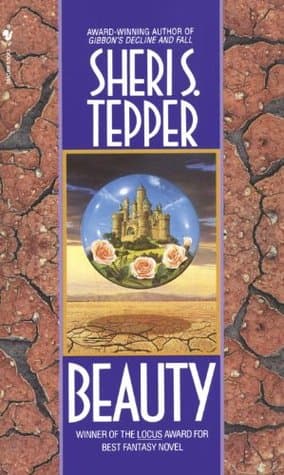
Synopsis
Covers the whole plot, including the ending.
- Difficulty
- Medium
- Pacing
- Moderate
- Mood
- Philosophical, whimsical, adventurous, introspective, melancholic
Beauty Plot Summary
Covers the whole plot, including the ending.
The Curse and the Sidestep
On her sixteenth birthday, Beauty, a young woman in an ancient castle, faces a family curse: she will die from a spindle prick. Despite precautions, she pricks her finger, but instead of death or sleep, she is transported to a distant future. This new world is different, with strange technologies and altered lands. She meets people who know her story, suggesting a larger, fated role for her. This displacement begins her long journey through time and reality, immediately challenging her understanding of her destiny and the curse.
Awakening in the Future
Beauty awakens in a futuristic hospital, tended by advanced humans. She learns centuries have passed since her 'death' and her story is a known fairy tale. She meets the 'Lords,' powerful, long-lived individuals who guide humanity and understand time and magic. They explain her curse was a complex system to preserve her and transport her through time for a specific purpose. Beauty struggles to grasp the world's changes and her own unexpected immortality, feeling disoriented and burdened.
The First Journey Back
The Lords, recognizing her magic and connection to history, send Beauty back to her original time. She finds her ancestral castle in ruins and the lands damaged. She meets her older Aunt and other villagers, hardened by time. Beauty must hide her identity and knowledge of the future to avoid disrupting the timeline. During this visit, she begins to understand the destructive forces that ravaged her world, foreshadowing the decay she saw in the future. This journey is her first lesson in time manipulation and history's delicate balance.
Encounter with the Wild Hunt
During one displacement, Beauty encounters the Wild Hunt, a supernatural force of chaos and destruction. This experience is a symbol of the unchecked forces threatening nature and humanity. The Hunt is a relentless, destructive force. Beauty realizes these ancient, dark magics are linked to the land's damage and the loss of natural beauty. This confrontation clarifies the stakes of her mission and the connection between magic, nature, and human well-being.
The Court of Faerie
Beauty is transported to Faerie, a land of magical creatures ruled by ancient beings. Here, she learns about the relationship between human belief, imagination, and magic's existence. The Faerie folk lament the dwindling human belief, which affects their power and realm. She discovers Faerie's fading is linked to the natural world's degradation and human cynicism. This visit highlights the importance of wonder and imagination for preserving magic and the environment, showing her role as a vessel of this fading beauty.
The Lost Gardens and Ancient Wisdom
In her travels, Beauty uncovers ancient, magical gardens and forgotten places of power. These sites hold beauty and vast ecological and magical knowledge, guarded by reclusive beings or spells. She learns about sustainable practices, the interconnectedness of living things, and natural magic. These discoveries are essential to her understanding of how the world was once and how it can be healed. The gardens are examples of the larger world she is trying to save, embodying restoration and nature's power when respected. This knowledge becomes key to her mission.
The Serpent and the Shadow
Beauty encounters a malevolent entity, the 'Serpent' or 'Shadow.' This being represents humanity's darkest impulses: greed, destruction, and lust for power that leads to environmental and spiritual decay. This entity works to extinguish magic, destroy natural beauty, and foster despair. Beauty realizes this 'Serpent' is the true antagonist, the force behind many of the world's problems, past and future. Her confrontation with this entity is a key moment, forcing her to understand the challenge and the nature of evil.
The Lords' Revelation
The Lords, who guided Beauty, finally reveal her full purpose. They explain she is not just a traveler but a living conduit for magic and beauty, a 'seed' preserved to rekindle humanity's connection to the enchanted world. Her curse was a protective system, ensuring her survival so she could witness the decline and participate in renewal. They stress that without beauty and magic, humanity risks becoming purely rational and destructive, losing its soul. This revelation changes Beauty's understanding of herself from a cursed girl to a vital guardian of humanity's spiritual heritage.
The Search for the True Prince
Beauty learns that to fully awaken her powers and fulfill her destiny, she needs to be 'kissed' by a 'Prince.' This is not a romantic quest but a symbolic one. The 'Prince' represents humanity's capacity for wonder, imagination, and appreciation for beauty and magic. He is not a single person but the ideal human spirit, capable of seeing and cherishing enchantment. Her search for this 'Prince' is a quest to find and foster this spirit within humanity, understanding that her awakening is linked to humanity embracing its magical heritage. This quest highlights the collective effort needed for renewal.
The World Tree and the Wellspring
Beauty's journey leads her to the mythical World Tree and the Wellspring of Magic, the ultimate sources of all enchantment and life. These sacred sites are the heart of the magical world, their health mirroring the planet's health and magic's vitality. She understands that the world's damage has poisoned these sources, leading to magic's decline. Her mission culminates in a deep connection with these ancient forces, drawing strength and understanding from them. The World Tree and Wellspring symbolize all existence's interconnectedness and magic's essential nature as a life-giving force.
The Final Confrontation
Beauty faces her ultimate challenge: a confrontation with cynicism, materialism, and environmental destruction, often personified by the 'Serpent' and its human agents. This is not a single battle but a series of struggles across different times and realities, where she uses her wisdom, magic, and beauty to inspire hope and rekindle wonder. She works to heal damaged lands, awaken dormant magical sites, and remind humans of the enchantment they lost. Her actions show the power of belief and nature's strength against neglect and exploitation.
The Reawakening
Through her efforts, Beauty sees results. Fading magical creatures reappear, damaged lands heal, and some humans begin to believe in enchantment. Her presence acts as a catalyst, reversing decay. The 'Prince' — the collective human spirit of wonder — stirs, leading to a gradual reawakening of magic and appreciation for beauty. This reawakening is a slow, continuous process, signifying a shift in human consciousness and a return to harmony with the natural and magical worlds. Beauty's mission, though ongoing, shows success.
Principal Figures
Beauty
Protagonist
The cursed princess transported through time to save magic and beauty.
Beauty is initially a naive, sheltered young woman living under the shadow of a curse. After being transported through time, she develops into a wise, resilient, and compassionate figure. She possesses an innate connection to magic and natural beauty, making her a living conduit for these forces. Her gentle nature belies an inner strength and determination to understand and fulfill her unique destiny. She is observant, empathetic, and often burdened by the weight of her mission, yet she consistently chooses to act with hope and conviction. Her perspective shifts from an individual seeking to break a curse to a guardian of humanity's spiritual heritage.
Relationships: The Lords (mentors/guardians); Her Aunt (guardian/initial antagonist); The Serpent/Shadow (arch-nemesis)
The Lords
Supporting
Ancient, powerful beings who guide Beauty through her temporal journey.
The Lords are mysterious, ancient entities who possess immense knowledge of magic, history, and the intricate workings of time. They appear in various forms and guises across different eras, acting as Beauty's mentors and protectors. They are not omnipotent but are deeply invested in the preservation of magic and the spiritual well-being of humanity. Their motivations are complex, driven by a long-term vision for the world. They reveal information to Beauty incrementally, allowing her to discover her purpose organically. They represent the enduring wisdom and remnants of the old magic, acting as stewards of a fading world.
Relationships: Beauty (mentors/protectors); The Serpent/Shadow (opponents)
The Serpent / The Shadow
Antagonist
A malevolent entity representing humanity's destructive impulses and the despoiling of magic.
The Serpent, also referred to as the Shadow, is the primary antagonist of the story, though it often manifests indirectly through human greed, cynicism, and environmental destruction. It is a powerful, ancient force that seeks to extinguish magic, destroy natural beauty, and foster despair, thereby reducing humanity to a purely rational, materialistic, and ultimately self-destructive species. It is not a singular creature but a pervasive influence, thriving on humanity's neglect of wonder and nature. It embodies the forces that have led to the despoilation of the world and the fading of magic, directly opposing Beauty's mission.
Beauty's Aunt
Supporting
Beauty's stern guardian, initially responsible for enforcing the curse.
Beauty's Aunt is a severe and traditional woman, bound by the ancient family curse and the customs of their secluded castle. She is fiercely protective of Beauty, albeit in a rigid and often fear-driven manner, constantly trying to prevent the curse from taking effect. Her actions, though seemingly antagonistic in their restrictiveness, stem from a misguided sense of duty and love. She represents the old ways and the initial, literal interpretation of the curse. After Beauty's disappearance, she ages and experiences the decline of their world, offering a poignant contrast to Beauty's timeless journey.
Relationships: Beauty (guardian/family)
The Faerie Folk
Supporting
Inhabitants of Faerie, whose existence is tied to human belief in magic.
The Faerie Folk are various magical creatures and beings from the realm of Faerie. They are ethereal, mischievous, and deeply connected to the natural world and human imagination. Their vitality and power are directly dependent on humanity's belief in magic and wonder. As human cynicism and materialism grow, the Faerie Folk dwindle and fade, their realm becoming increasingly fragile. They serve as a living barometer for the state of magic in the world, embodying the delicate balance between the mundane and the magical. They provide Beauty with insights into the nature of magic and the consequences of its decline.
Relationships: Beauty (allies/informants); The Serpent/Shadow (enemies)
The Prince (Symbolic)
Supporting
A symbolic figure representing humanity's capacity for wonder and belief in magic.
The 'Prince' is not a single, identifiable character in the traditional sense, but rather a symbolic representation of humanity's collective capacity for wonder, imagination, and a genuine appreciation for beauty and magic. He embodies the ideal human spirit that can see beyond the mundane and recognize the enchantment in the world. Beauty's quest to find and awaken this 'Prince' is a quest to rekindle this spirit within humanity, understanding that her own full awakening and the restoration of magic are dependent on this collective shift in consciousness. He is the hope for a future where magic and beauty are cherished.
Relationships: Beauty (destined partner/catalyst for awakening)
The Chroniclers
Supporting
Future scholars who document Beauty's story and the decline of magic.
The Chroniclers are individuals from the distant future who have meticulously documented Beauty's story, often perceiving it as a historical fairy tale. They are scholars and historians, often detached and analytical, representing a humanity that has largely lost its direct connection to magic but retains a fascination with its past. They provide Beauty with historical context and insights into the future, although their understanding of magic is often academic rather than experiential. They serve as a reminder of how far humanity has strayed from its magical roots and the importance of preserving stories and knowledge.
Relationships: Beauty (observers/informants)
Themes & Insights
The Enduring Power of Beauty and Magic
This theme explores beauty and magic as essential for humanity's spiritual and ecological well-being. The novel argues that without beauty and wonder, humanity becomes sterile, destructive, and loses its soul. Beauty herself embodies this theme, her existence and mission focused on rekindling appreciation for enchantment. The narrative shows how magic's fading correlates with the degradation of nature and the human spirit, emphasizing that preserving beauty is paramount for survival.
“Without our enchanted places, humanity is no more than an upstart ape. And this, we realize, is why Beauty must be saved, both in the fantastical world of Tepper's novel and in the actual world in which we live.”
Environmental Degradation and Restoration
The novel portrays the consequences of humanity's disregard for nature. Beauty witnesses landscapes ravaged by pollution, deforestation, and unchecked development across different time periods. This environmental decay is linked to magic's decline and cynicism's rise. Conversely, the theme explores restoration through respect for nature, ancient wisdom, and rekindling magical connections. Beauty's mission involves healing damaged lands and rediscovering forgotten ecological knowledge, highlighting the link between a healthy planet and a magical existence.
“The trees were dying. Not just here and there, but everywhere. Like a disease of the spirit, infecting the very wood.”
The Nature of Curses and Destiny
The traditional fairy tale curse is reinterpreted as a complex mechanism for preservation and a catalyst for a grander destiny. Beauty's curse is not just misfortune but a protective spell designed to transport her through time, allowing her to witness magic's decline and become its savior. This theme challenges fate as rigid doom, presenting it as a path with purpose and agency. It explores how a seemingly negative force can be a hidden gift, guiding an individual towards their true calling and a profound impact on the world.
“The curse was not to kill, but to keep. To hold you safe until the time was ripe for your awakening.”
The Power of Belief and Imagination
The novel emphasizes that magic is linked to human belief and imagination. Faerie's fading and magic's decline are attributed to humanity's growing cynicism, rationality, and loss of wonder. Conversely, magic's reawakening depends on humans rediscovering their capacity for belief, dreaming, and seeing enchantment. This theme suggests imagination is not just escapism but a vital faculty that sustains reality's magical fabric, making it a powerful tool for change and restoration.
“When men cease to believe in Faerie, Faerie ceases to be. Or at least, to be as it was.”
Time Travel and the Fluidity of History
The narrative uses time travel to explore the interconnectedness of past, present, and future, and the idea that history can be influenced. Beauty's journeys through different eras allow her to witness the long-term consequences of human actions and understand the origins of the world's problems. Her ability to move between times highlights reality's fluidity and the potential for intervention. This theme explores the responsibilities and challenges of altering historical trajectories and one individual's impact across millennia.
“The threads of time are woven, not laid straight. And a single hand may pluck a thread and change the pattern.”
Plot Devices & Literary Techniques
Temporal Displacement / Time Travel
Beauty's magical transport through different eras.
Beauty's curse acts as a mechanism for involuntary time travel, transporting her from her medieval-esque era to various points in the distant future and back again. This device allows the narrative to explore the long-term consequences of humanity's actions on the environment and magic. It enables Beauty to gain a broad perspective on the world's decline and to gather the necessary knowledge and wisdom for her mission. The temporal shifts also create a sense of disorientation and wonder, highlighting the vast changes in human society and the natural world over centuries.
The Sleeping Beauty Motif (Reimagined)
A classic fairy tale trope reinterpreted for a larger purpose.
The traditional Sleeping Beauty story serves as a foundational motif, but it is radically reinterpreted. The curse, the spindle prick, and the long 'sleep' are not merely romantic plot points but sophisticated magical mechanisms designed to preserve Beauty and transport her through time. Instead of waiting for a prince to awaken her to a happy ending, Beauty is awakened to a mission to save the world. This device subverts reader expectations and uses a familiar story structure to convey deeper themes about environmentalism, magic, and destiny, giving the fairy tale a profound, modern relevance.
Symbolic Antagonism (The Serpent/Shadow)
A pervasive evil representing destructive human qualities.
Instead of a single, identifiable villain, the primary antagonist is a symbolic entity referred to as the 'Serpent' or 'Shadow.' This device allows the novel to personify abstract concepts like human greed, cynicism, and environmental destruction. The Serpent is not a physical being Beauty can simply defeat in battle; rather, it is a pervasive force that manifests through human actions and attitudes. This makes the conflict more profound, suggesting that the true battle is against humanity's own destructive impulses and the loss of its spiritual connection to the world.
The World Tree / Wellspring
Mythical sources of life and magic.
The World Tree and the Wellspring of Magic function as powerful symbolic and literal plot devices. They represent the ultimate source of all life, magic, and interconnectedness in the universe. Their health directly reflects the health of the planet and the vitality of magic. Beauty's connection to them and her efforts to restore them are central to her mission. This device provides a tangible goal for Beauty's efforts and anchors the fantastical elements in a cosmic, ecological framework, emphasizing the sacredness of nature and the profound consequences of its desecration.
Quiz
10 questions on the plot and the characters. Each answer comes with a short explanation.
Question 1
What genre does the book "Beauty" by Sheri S. Tepper primarily belong to, according to the provided text?
- Science Fiction
- Fantasy
- Mystery
- Historical Fiction
Show answer
B. Fantasy The text explicitly states, "Now the author of Raising the Stones and Grass -- a New York Times Notable Book and Hugo Award finalist -- turns to Beauty, a fantasy with a story that is more, much more than fable."
Question 2
On her sixteenth birthday, what happens to Beauty instead of sidestepping her aunt's curse?
- She is transported to the past.
- She gains magical powers.
- She is transported to the future.
- She breaks the curse and stays home.
Show answer
C. She is transported to the future. The text states, "On her sixteenth birthday Beauty is seemingly able to sidestep her aunt's curse. Instead she is transported to the future."
Question 3
What is described as the source of Beauty's magical abilities?
- An ancient artifact
- Her lineage
- The concept of beauty itself
- A pact with a sorcerer
Show answer
C. The concept of beauty itself The text says, "For in Beauty, there is beauty. And in beauty, magic."
Question 4
Sheri S. Tepper was recognized as a major science fiction writer with the publication of which earlier book?
- Raising the Stones
- Grass
- The Gate to Women's Country
- Beauty
Show answer
C. The Gate to Women's Country The text states, "With the publication of The Gate to Women's Country, Sheri S. Tepper came to be recognized as a major science fiction writer."
Question 5
What is implied to be the reason why Beauty must be saved?
- To preserve a magical bloodline
- To prevent a future war
- Because humanity without enchanted places is merely an ape
- To fulfill an ancient prophecy
Show answer
C. Because humanity without enchanted places is merely an ape The text explains, "Without our enchanted places, humanity is no more than an upstart ape. And this, we realize, is why Beauty must be saved..."
Question 6
Beauty's adventures involve traveling to places that are both:
- Ancient and modern
- Known and unknown
- Imaginary and real
- Past and future
Show answer
C. Imaginary and real The text states, "...she travels magically back and forth in time to visit places both imaginary and real."
Question 7
The novel "Beauty" draws inspiration from which source?
- Mythological legends
- Classical literature
- Well-loved fairy tales
- Historical events
Show answer
C. Well-loved fairy tales The text mentions, "Drawing on the wellspring of much-loved, well-remembered fairy tales, Tepper delivers a thought-provoking and finely crafted novel..."
Question 8
What is Beauty's "special gift to humanity" as understood by the end of the novel?
- The ability to control time
- The understanding of the importance of beauty and magic
- The power to break any curse
- The capacity to create imaginary worlds
Show answer
B. The understanding of the importance of beauty and magic The text implies this gift through the connection made: "Finally she comes to understand what has been her special gift to humanity all along. For in Beauty, there is beauty. And in beauty, magic."
Question 9
The description suggests that the novel "Beauty" is intended to make the reader consider the importance of saving not only the fantastical world within the story but also:
- The historical past
- The actual, real world
- The future of technology
- The natural environment
Show answer
B. The actual, real world The text concludes, "And this, we realize, is why Beauty must be saved, both in the fantastical world of Tepper's novel and in the actual world in which we live."
Question 10
Which of the following is NOT mentioned as a characteristic of Beauty's journey or the novel's themes?
- A struggle against an aunt's curse
- The exploration of the link between beauty and magic
- A quest to find a lost city
- A reflection on humanity's connection to enchantment
Show answer
C. A quest to find a lost city While the text discusses curses, beauty, magic, and humanity's connection to enchantment, there is no mention of a quest to find a lost city.
Beauty FAQ
What is the genre of Sheri S. Tepper's "Beauty"?
Sheri S. Tepper's "Beauty" is a fantasy novel with elements of romance. It draws inspiration from classic fairy tales while offering a unique and thought-provoking narrative.
Who is the main character in "Beauty"?
The main character is Beauty, a captivating heroine on her sixteenth birthday. Her journey involves magical travel through time and space, leading her to understand a special gift she possesses.
What is the central theme of "Beauty"?
The central theme revolves around the concept of beauty itself, both in a fantastical sense and its importance to humanity's existence and connection to the natural world. The novel suggests that without enchanted places, humanity loses its deeper essence.
How does "Beauty" relate to fairy tales?
The novel is deeply inspired by well-loved and well-remembered fairy tales, reimagining them with a modern fantasy sensibility. It takes the familiar elements of fairy tales and weaves them into a new and complex story.
What is Beauty's special gift to humanity?
Beauty's special gift is intrinsically linked to the concept of beauty itself, and its connection to magic and the preservation of humanity's deeper connection to the world. Her existence and understanding are vital for humanity's well-being.
What kind of adventures does Beauty go on?
Beauty's adventures involve magical travel back and forth in time, transporting her to both imaginary and real places. These journeys are central to her discovering her purpose and the significance of beauty.
Is "Beauty" a retelling of the classic "Beauty and the Beast" story?
While "Beauty" draws inspiration from fairy tales, it is not a direct retelling of the classic "Beauty and the Beast." It uses the archetypal character of Beauty and themes of enchantment in a broader, more complex fantasy narrative.
What message does the book convey about humanity's relationship with nature?
The book conveys a message about humanity's dependence on and connection to the natural and enchanted world. It suggests that a loss of this connection, symbolized by the loss of beauty and magic, diminishes humanity.
What is the significance of Beauty being transported to the future?
Beauty's transportation to the future on her sixteenth birthday marks the beginning of her extraordinary journey. It's a pivotal event that sets her on a path of discovery about her gift and the role she plays.
Where can I find "Beauty" by Sheri S. Tepper?
"Beauty" by Sheri S. Tepper can be found at most major bookstores, online retailers, and libraries. It's a widely available fantasy novel.
About the author
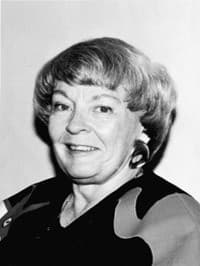
Sheri S. Tepper was an American author known for her contributions to speculative fiction. Her notable works include "Grass," a complex exploration of ecology and society, "The Visitor," which delves into themes of alien contact, "After Long Silence," a reflection on trauma and memory, and "Beauty," a reimagining of classic fairy tales.
Similar books
- The Mists of Avalon
Marion Zimmer Bradley
4.1 (192k) average on GoodreadsFantasyWhile both "Beauty" and "The Mists of Avalon" retell classic narratives (fairy tales vs. Arthurian legend) from a feminist perspective, Tepper's approach is far more radical and deconstructive. Bradley's work, while empowering, largely stays within the bounds of a historical fantasy narrative, re-centering female characters within existing myths. Tepper, however, actively subverts and critiques the very foundations of these myths, questioning their origins and long-term societal impact. "Beauty" is also more overtly philosophical and incorporates science fiction elements, which are absent in Bradley's more traditional fantasy setting.
- Uprooted
Naomi Novik
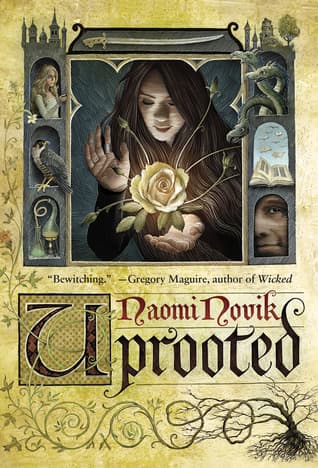
4.1 (167k) average on GoodreadsFantasyBoth "Beauty" and "Uprooted" draw inspiration from Eastern European fairy tales, particularly 'Beauty and the Beast' and 'Sleeping Beauty' motifs. However, Novik's "Uprooted" is a more traditional, albeit exceptionally well-executed, fantasy romance, focusing on character-driven magic, a looming evil, and a developing love story. Tepper's "Beauty," in contrast, uses the fairy tale framework as a jumping-off point for a much broader and darker social critique. While Novik celebrates the magic and wonder, Tepper interrogates the underlying power dynamics and often horrific implications of such narratives, offering a far less romanticized and more cynical view of the 'enchanted' world.
- Harry Potter and the Sorcerer's Stone
J.K. Rowling
4.5 (7M) average on GoodreadsFantasyRescued from a miserable life under the stairs, an orphaned boy discovers he's a wizard destined for a magical school, where he uncovers a dangerous secret tied to the dark wizard who murdered his parents.
- The Hunger Games
Suzanne Collins
4.3 (6.4M) average on GoodreadsFantasyIn a future where children fight to the death on live television, Katniss Everdeen volunteers for the arena, turning a death sentence into a fight for survival and a spark of rebellion.
- 1984
George Orwell
4.2 (3.1M) average on GoodreadsPoliticsIn a future where surveillance and thought control are absolute, a man's search for truth clashes with the Party, showing that hope can be a form of rebellion.
- Divergent
Veronica Roth
4.2 (2.9M) average on GoodreadsFantasyIn a society divided by virtues, a sixteen-year-old's difference from the norm starts a rebellion that threatens her world.





Enjoyed the summary?
A summary gives you the shape of the book. The book itself has the detail, the examples and the voice.
Find Beauty on AmazonAs an Amazon Associate, BookBrief earns from qualifying purchases. How we're funded