

Synopsis
Covers the whole plot, including the ending.
- Difficulty
- Medium
- Pacing
- Variable
- Mood
- Witty, Melancholy, Introspective, Quirky, Observational
- Read it if
- You enjoy intricate family sagas spanning generations, with a unique narrative voice and a blend of humor and underlying melancholy.
- Skip it if
- You prefer a straightforward, linear plot without frequent temporal shifts or a large cast of interconnected characters.
Behind the Scenes at the Museum Plot Summary
Covers the whole plot, including the ending.
Conception and Early Years
Ruby Lennox begins her narrative from the moment of her conception in 1951, a rather unromantic affair between her mother, Bunty, and father, George, in a cinema. She immediately establishes her unique perspective, observing her family's history unfold. Ruby describes her early childhood in York, living above her father's pet shop, and the often-tense atmosphere within her family home. Her mother, Bunty, is frequently unhappy and withdrawn, while her father, George, is more jovial but often distant. Ruby's older sister, Patricia, is already present, and her younger sister, Gillian, will soon follow. Ruby's narrative voice is inquisitive and somewhat detached, as she begins to piece together the fragments of her family's past, always sensing unspoken secrets and a pervasive sadness.
Childhood in York and Family Dynamics
Ruby continues to detail her childhood experiences in York, providing vivid descriptions of the pet shop and the cramped living quarters above it. She paints a picture of a largely isolated existence, where her primary interactions are with her immediate family. Her mother, Bunty, is often resentful and prone to fits of temper, particularly towards Patricia. George, her father, attempts to maintain a cheerful facade but struggles with his own disappointments. Ruby also introduces her grandmother, Alice, and her great-aunts, Nell and Lillian, whose visits and stories provide glimpses into earlier generations. The family dynamics are complex, marked by a lack of overt affection, unresolved tensions, and a pervasive sense of things left unsaid, which fuels Ruby's search for understanding.
The Arrival of Gillian and Family Tensions
The arrival of Ruby's youngest sister, Gillian, into the Lennox household does little to alleviate existing tensions; in fact, it seems to make them worse. Bunty's postpartum depression and general dissatisfaction deepen, making her even more withdrawn and irritable. Ruby observes the stark differences between her sisters: Patricia, the eldest, is often the target of Bunty's frustrations and develops a quiet resilience, while Gillian, the youngest, is more fragile and prone to illness. Ruby, caught in the middle, becomes an astute observer of these dynamics, trying to make sense of the emotional state of her home. She begins to realize that her family's present unhappiness is deeply rooted in their past, an idea that solidifies her determination to uncover their history.
Grandmother Alice's Stories and the Past
Ruby starts to learn more about her family's past through fragmented conversations and overheard remarks, particularly from her grandmother, Alice. Alice, a stern but ultimately loving figure, occasionally reveals details about her own difficult upbringing and the lives of her sisters, Nell and Lillian. These snippets reveal a history marked by poverty, loss, and hardship in early 20th-century Yorkshire. Ruby learns about the various men who came and went in her grandmother's life and the struggles faced by her female ancestors. These stories, though often incomplete and disjointed, begin to form a mosaic in Ruby's mind, connecting her present reality to the historical misfortunes and resilience of her foremothers.
Adolescence and Escapism
As Ruby transitions into adolescence, she becomes increasingly aware of the limitations and unhappiness within her family. She finds solace and escape in books, immersing herself in fictional worlds that offer a stark contrast to her own reality. Her relationship with her mother, Bunty, remains difficult, characterized by misunderstandings and unspoken resentments. Ruby witnesses Patricia's growing independence and Gillian's continued fragility, which sometimes manifests as illness. She starts to form her own identity, often feeling like an outsider even within her own home. This period marks her growing desire to break free from the cycle of unhappiness she perceives in her family and to forge her own path, distinct from the shadows of the past.
University and Independence
Ruby eventually leaves York to attend university, a significant step towards independence. This physical distance allows her a new perspective on her family, though she remains tethered to them by her ongoing search for understanding. She experiences freedom and intellectual stimulation, but questions about her family's secrets continue to haunt her. During her time away, she reflects on the lives of her parents and sisters, trying to reconcile their current unhappiness with the fragments of their history she has gathered. Despite her new environment, Ruby finds that her family's psychological legacy is not easily shed, and her narrative continues to weave between her present experiences and the historical threads she is uncovering.
Uncovering the Truth about Nell
Through a combination of fragmented memories, old photographs, and finally, direct conversations with her grandmother Alice, Ruby begins to piece together the full, tragic story of her great-aunt Nell. She learns that Nell, Alice's sister, was pregnant out of wedlock and, in a desperate act, abandoned her baby, who subsequently died. The family, particularly Alice, was complicit in covering up the scandal, leading to a lifetime of guilt and unspoken sorrow that permeated through generations. This revelation is an important moment for Ruby, explaining much of the underlying sadness and tension she observed in her mother and grandmother. The secret of Nell's baby is the central trauma that has cast a long shadow over the family.
Bunty's Deep-Seated Resentment
With the discovery of Nell's story, Ruby begins to understand the impact this secret had on her grandmother, Alice, and consequently, on her mother, Bunty. Alice's guilt and grief over Nell's fate made her emotionally distant and unable to fully nurture Bunty. This lack of maternal affection created a deep resentment in Bunty, which she then unwittingly passed on to her own daughters, particularly Patricia. Ruby realizes that Bunty's unhappiness and her often-harsh treatment of her children were not simply arbitrary but were a direct consequence of her own unfulfilled need for love and her mother's emotional unavailability, a chain reaction of unresolved trauma across generations.
Gillian's Fragility and Patricia's Escape
Ruby continues to observe the diverging paths of her sisters. Gillian, the youngest, remains fragile and somewhat sickly, seemingly bearing the weight of the family's unspoken sorrows in her physical being. Her dependency often draws Bunty's attention, albeit in a strained manner. Patricia, on the other hand, the eldest, eventually makes a decisive break from the family's emotional entanglement. She marries and moves away, creating her own life and seemingly escaping the direct influence of their mother's unhappiness. Ruby sees Patricia's departure as both an act of self-preservation and a confirmation of the difficulty of remaining within the suffocating family dynamic without succumbing to its historical burdens.
Reconciliation and Acceptance
Towards the end of her narrative, Ruby, now an adult, starts to achieve a measure of reconciliation with her family's complicated past. While the secrets and tragedies cannot be undone, her understanding of them allows her to view her family members, particularly her mother Bunty and grandmother Alice, with more empathy and less judgment. She recognizes the chain of circumstances and historical pressures that shaped their lives and, by extension, her own. This newfound understanding brings a sense of release for Ruby, allowing her to accept her family for who they are and to begin to forge her own future, no longer solely defined by the shadows of the past, but enriched by the knowledge she has painstakingly uncovered.
Principal Figures
Ruby Lennox
Protagonist
The narrator, an inquisitive girl determined to uncover her family's secrets.
Ruby Lennox is the central protagonist and omniscient narrator of the story, recounting her life from conception onwards. She possesses a keen observational eye and an insatiable curiosity, constantly piecing together fragments of her family's history to understand their present unhappiness. Though often feeling like an outsider in her own family, her detached perspective allows her to analyze the complex dynamics and unspoken truths with remarkable clarity. Her drive is to understand 'why' her family is the way it is, particularly her mother's pervasive sadness and resentment.
Relationships: Bunty Lennox (Daughter, often puzzled and hurt by her mother's resentment); George Lennox (Daughter, sees him as largely ineffectual but well-meaning); Patricia Lennox (Sister, observes her sister's resilience and eventual escape); Gillian Lennox (Sister, observes her sister's fragility); Alice Wilson (Granddaughter, seeks truth from her grandmother, eventually understanding her pain)
Bunty Lennox (née Wilson)
Supporting
Ruby's perpetually unhappy and resentful mother.
Bunty is Ruby's mother, a woman defined by her deep-seated unhappiness and resentment. She is often critical and emotionally distant, particularly towards her eldest daughter, Patricia. Her dissatisfaction stems from a lifetime of feeling unloved and neglected by her own mother, Alice, who was consumed by guilt and grief over past family tragedies. Bunty struggles to express affection and often projects her own unresolved pain onto her children, creating a tense home environment. Her character embodies the generational trauma passed down through the female line of the family.
Relationships: Ruby Lennox (Mother, often distant and critical); George Lennox (Wife, their marriage is strained and lacks passion); Patricia Lennox (Mother, frequently critical and resentful towards her eldest); Gillian Lennox (Mother, more attentive due to Gillian's fragility, but still strained); Alice Wilson (Daughter, feels unloved and neglected by her mother)
George Lennox
Supporting
Ruby's well-meaning but often ineffectual father.
George Lennox is Ruby's father, who runs a pet shop. He is generally a more jovial and less complicated character than his wife, Bunty, but is also somewhat ineffectual in navigating the family's emotional turmoil. He often attempts to lighten the mood or mediate arguments but largely fails to address the deeper issues. George seems to genuinely love his daughters but struggles to connect with them on an emotional level, often retreating into his own world. He represents a softer, yet ultimately passive, male presence in a household dominated by female historical trauma.
Relationships: Ruby Lennox (Father, somewhat distant but generally kind); Bunty Lennox (Husband, their marriage is strained and lacks deep emotional connection); Patricia Lennox (Father, loves her but struggles to protect her from Bunty's criticism); Gillian Lennox (Father, caring but somewhat detached)
Alice Wilson
Supporting
Ruby's stern but ultimately protective grandmother, holding many family secrets.
Alice Wilson is Ruby's maternal grandmother, a formidable woman who lived through significant hardship in the early 20th century. She is stern, practical, and often seems emotionally hardened, but beneath her tough exterior lies profound grief and guilt, particularly concerning her sister Nell. Alice is a key source of fragmented historical information for Ruby, slowly revealing pieces of the past. Her life story, marked by poverty, loss, and the need for survival, profoundly shaped her and, by extension, her daughter Bunty, passing on a legacy of unexpressed sorrow.
Relationships: Ruby Lennox (Grandmother, becomes a source of truth for Ruby); Bunty Lennox (Mother, emotionally distant due to her own trauma, leading to Bunty's resentment); Nell Wilson (Sister, complicit in covering up Nell's tragedy, leading to lifelong guilt); Lillian Wilson (Sister, shares a bond of shared hardship)
Patricia Lennox
Supporting
Ruby's older sister, often the target of Bunty's resentment, who eventually escapes.
Patricia is Ruby's elder sister, who often bears the brunt of Bunty's unhappiness and criticism. She develops a quiet resilience and a strong desire to escape the confines of her family. Patricia is more reserved than Ruby and less overtly inquisitive about the past, but her actions demonstrate a clear drive for independence. Her experiences highlight the generational impact of Bunty's unresolved issues. Ultimately, Patricia is the one who successfully breaks free from the immediate family environment, marrying and moving away to forge her own life, creating distance from the emotional baggage.
Relationships: Ruby Lennox (Sister, Ruby observes her struggles and escape); Bunty Lennox (Daughter, frequently the target of her mother's criticism); George Lennox (Daughter, seeks his protection from Bunty); Gillian Lennox (Sister, protective of her younger sisters)
Gillian Lennox
Supporting
Ruby's youngest sister, who is often fragile and sickly.
Gillian is Ruby's youngest sister, often depicted as fragile, delicate, and prone to illness. Her physical vulnerability seems to reflect the unspoken emotional burdens within the family. Bunty often shows her a different kind of attention, perhaps born of concern for her health, though it is still tinged with the family's pervasive emotional distance. Gillian represents another manifestation of the family's historical trauma, not through resentment, but through a more passive, perhaps psychosomatic, suffering. Her presence highlights the varying ways individuals within the same family react to and embody inherited unhappiness.
Relationships: Ruby Lennox (Sister, Ruby observes her delicate nature); Bunty Lennox (Mother, receives more protective attention due to her fragility); George Lennox (Father, caring towards her); Patricia Lennox (Sister, protective of her)
Nell Wilson
Mentioned
Alice's sister, whose tragic secret profoundly impacts the family.
Nell Wilson is Alice's younger sister, whose tragic story lies at the heart of the family's deep-seated secrets and sorrow. Pregnant out of wedlock in a time of harsh social judgment, she abandoned her baby, who subsequently died. Her fate and the cover-up orchestrated by her family, particularly Alice, cast a long shadow over subsequent generations. Though she appears only in flashbacks and through Ruby's discoveries, Nell's story is the catalyst for much of the emotional repression and unhappiness inherited by Bunty and, indirectly, by Ruby and her sisters.
Relationships: Alice Wilson (Sister, Alice was complicit in covering up Nell's tragedy); Lillian Wilson (Sister, shared a difficult upbringing)
Lillian Wilson
Supporting
Alice's other sister, a kindlier presence in the family's past.
Lillian Wilson is Alice's other sister, depicted as a gentler and more compassionate figure than Alice. She also experienced significant hardship but seems to have carried her burdens with less bitterness. Lillian provides some of the initial fragments of family history to Ruby through her presence and occasional stories. She represents a softer thread in the tough fabric of the Wilson women, offering a contrast to Alice's stoicism and Nell's tragedy. Her memories contribute to Ruby's understanding of the pre-war period and the specific challenges faced by her foremothers.
Relationships: Alice Wilson (Sister, shared a difficult upbringing); Nell Wilson (Sister, shared a difficult upbringing); Ruby Lennox (Great-aunt, a source of early historical glimpses)
Themes & Insights
The Weight of the Past and Generational Trauma
The novel shows how unresolved traumas and secrets from previous generations impact the lives of subsequent ones. The tragedy of Nell's abandoned baby and Alice's subsequent guilt creates a chain reaction of emotional repression and unhappiness, directly affecting Bunty's ability to parent and her daughters' emotional well-being. Ruby's entire narrative is driven by her subconscious awareness of this inherited burden, forcing her to actively uncover the historical events that explain her family's present dysfunction. The past is not just history; it is a living, breathing entity shaping every interaction.
“The past is not a foreign country, it is a room we are all in, a room that we keep re-entering.”
The Search for Identity and Belonging
Ruby's journey is a quest for identity, both her own and that of her family. By meticulously piecing together the fragmented stories of her ancestors, she tries to understand where she comes from and why her family is the way it is. This understanding is crucial for her to forge her own identity, distinct from the cycle of unhappiness she observes. Her feeling of being an 'outsider' within her own family fuels her determination to uncover the truth, hoping that knowledge will bring a sense of belonging or, at least, a clear path to self-definition.
“I was always searching for the meaning of things, always looking for a pattern, a connection.”
The Power and Limits of Narrative
The novel explores storytelling itself. Ruby, as the narrator, self-consciously constructs her family's history, acknowledging the subjective nature of memory and the gaps in her knowledge. She emphasizes that history is not a linear, objective account but a collection of personal narratives, often contradictory or incomplete. Her act of narration is an attempt to impose order and meaning on a chaotic past, highlighting how stories shape our understanding of ourselves and our families. The 'museum' in the title symbolizes this curated collection of memories and artifacts that make up a family's history.
“All families have their secret histories, I suppose. All families are museums in their own right.”
Female Resilience and Suffering
The book focuses on the lives of the women in Ruby's family, tracing a lineage of both suffering and resilience. From Alice's endurance of poverty and loss to Nell's tragic fate and Bunty's lifelong resentment, the female characters bear the brunt of societal expectations and personal misfortunes. However, they also show strength in survival, adaptation, and, in Ruby's case, the courage to confront and understand their inherited burdens. The narrative celebrates their ability to endure, even if their resilience often comes at a significant emotional cost.
“Women, I thought, were like rivers, always flowing, always changing, yet always the same.”
Plot Devices & Literary Techniques
Omniscient First-Person Narration
Ruby Lennox narrates her life from conception with an all-knowing perspective.
The novel employs an unusual narrative device where Ruby Lennox narrates her own life story from the moment of her conception. This gives her an omniscient, detached, yet deeply personal perspective, allowing her to comment on events she couldn't possibly have witnessed first-hand, such as her parents' first meeting or her grandmother's past. This unique point of view enables a comprehensive historical sweep, weaving together different timelines and character perspectives into a cohesive, yet self-aware, narrative tapestry. It also highlights the idea that a person's story begins long before their birth, shaped by the lives and histories of their ancestors.
Non-Linear Narrative Structure
The story jumps between different time periods and family members' pasts.
The narrative frequently shifts between Ruby's present childhood/adolescence and various points in her family's past, sometimes going back several generations. These temporal jumps are often triggered by a memory, an object, or a question in Ruby's mind. This non-linear structure mirrors Ruby's investigative process, as she pieces together fragments of history to understand the present. It emphasizes that the past is not a closed chapter but constantly intersects with and influences the present, creating a sense of historical density and inevitability in the family's fate.
Intergenerational Secrets
Unspoken family secrets, particularly Nell's tragedy, drive the plot and characters' motivations.
The core of the novel's mystery and emotional depth lies in the intergenerational secrets, primarily the truth about Nell Wilson's abandoned baby and the subsequent cover-up. These unspoken traumas create a pervasive atmosphere of unease, guilt, and emotional distance that defines the family's dynamics for decades. The secrets act as a powerful engine for Ruby's quest, as she instinctively senses the hidden truths and meticulously works to uncover them. Their revelation explains the deep-seated unhappiness and resentment that has plagued her mother, Bunty, and grandmother, Alice, and allows Ruby to finally understand her family.
Symbolism of the Museum
The 'museum' represents the curated collection of family memories and artifacts.
The title 'Behind the Scenes at the Museum' is a significant symbolic device. The museum represents the family itself – a repository of memories, artifacts (like photographs or heirlooms), and stories, both public and private. Ruby, in her role as narrator, is like a curator, arranging and interpreting these exhibits to make sense of her family's history. The 'behind the scenes' aspect refers to the hidden truths, the unspoken narratives, and the private lives that are not typically displayed to the public but are crucial to understanding the full picture. It underscores the idea that every family has its own complex, often hidden, history.
Behind the Scenes at the Museum Quotes
“Life was a funny thing. A moment ago she was alive, now she was dead. It was as simple and as complicated as that.”
“History was a great shaper of lives, even if you weren't aware of it.”
“Every family has a secret, or two, or three. It's what makes them interesting.”
“Sometimes you just had to make do with what you were given, even if what you were given was a bit rubbish.”
“The past was like a foreign country; they did things differently there.”
“What was the point of remembering if you couldn't change anything?”
“You can never truly know someone until you've walked a mile in their shoes, and even then, you'll only know the state of their shoes.”
“The truth was a slippery thing, always changing its shape depending on who was holding it.”
“It wasn't that she didn't care, it was just that she cared about different things.”
“Life carried on, whether you wanted it to or not. It had a momentum all its own.”
“Sometimes the things you didn't say were more important than the things you did.”
“A museum was a repository of forgotten things, and sometimes, forgotten people too.”
“The past was not a foreign country, it was us, only younger.”
“Perhaps all families were like that, a collection of stories, some true, some embellished, some outright lies.”
Quiz
10 questions on the plot and the characters. Each answer comes with a short explanation.
Question 1
At what specific moment does Ruby Lennox state that her life begins in the novel?
- When she is born in the maternity ward.
- During her parents' first kiss.
- At the moment of her conception.
- When she first learns her family history.
Show answer
C. At the moment of her conception. Ruby Lennox explicitly states that her life begins 'the moment I was conceived', setting the unique narrative style of the book.
Question 2
Which of Ruby's grandmothers is known for her dramatic flair, theatrical aspirations, and a tendency towards exaggeration?
- Alice P. (Alice P. is Ruby's other grandmother, more grounded.)
- Nellie (Nellie is Ruby's mother.)
- Bunty (Bunty is Ruby's aunt.)
- Lil (Lil is Ruby's paternal grandmother, who loved theatre and drama.)
Show answer
D. Lil (Lil is Ruby's paternal grandmother, who loved theatre and drama.) Lil, Ruby's paternal grandmother, is depicted as a larger-than-life character with a passion for the stage and a penchant for dramatic storytelling.
Question 3
What significant historical event in England provides a backdrop for much of the early family history recounted in the novel?
- The Great Depression
- World War I
- World War II
- The Swinging Sixties
Show answer
C. World War II The early lives of Ruby's parents and grandparents are heavily influenced and shaped by the events and aftermath of World War II in England.
Question 4
What specific object does Ruby frequently refer to as a symbol of her family's hidden past and secrets?
- A locked diary
- A dusty old photograph album
- The 'big cupboard' in the hall (The 'big cupboard' is a recurring motif for hidden things and family secrets.)
- A collection of antique dolls
Show answer
C. The 'big cupboard' in the hall (The 'big cupboard' is a recurring motif for hidden things and family secrets.) The 'big cupboard' in the family home is a recurring motif, representing the concealed truths and unspoken histories that Ruby tries to uncover.
Question 5
Which character suffers from a mysterious illness that leads to their early death, casting a long shadow over the family?
- George (Ruby's father)
- Bunty (Ruby's aunt)
- Patricia (Ruby's aunt, who dies young from a mysterious illness.)
- Nellie (Ruby's mother)
Show answer
C. Patricia (Ruby's aunt, who dies young from a mysterious illness.) Patricia, Ruby's aunt, dies young from a mysterious illness, an event that deeply affects the family and remains a source of sadness and unresolved questions.
Question 6
What is the primary narrative device used by Kate Atkinson to tell Ruby's story and her family's history?
- A series of letters and diary entries.
- A linear, chronological third-person account.
- Ruby's first-person narration, frequently jumping back and forth in time and even into the perspectives of her ancestors.
- Interviews with various family members conducted by Ruby.
Show answer
C. Ruby's first-person narration, frequently jumping back and forth in time and even into the perspectives of her ancestors. The novel is distinctively narrated by Ruby in the first person, but with a fluid, non-linear structure that allows her to inhabit and recount the lives of her ancestors, often with prescient insight.
Question 7
What is the general tone of Ruby's narration, despite the often tragic or difficult events she recounts?
- Consistently melancholic and despairing.
- Dryly witty, observant, and often darkly humorous.
- Sentimental and nostalgic.
- Objective and detached.
Show answer
B. Dryly witty, observant, and often darkly humorous. Ruby's narration is characterized by a sharp wit, keen observation, and a distinctive dark humor, which often provides levity even when discussing profound family tragedies.
Question 8
Which of Ruby's parents is depicted as more emotionally distant and less outwardly affectionate?
- George (Ruby's father)
- Nellie (Ruby's mother)
- Both are equally distant.
- Neither; they are both very warm.
Show answer
A. George (Ruby's father) George, Ruby's father, is portrayed as a rather stoic and emotionally reserved man, in contrast to Nellie's more expressive, albeit often anxious, nature.
Question 9
What is the underlying thematic significance of the 'museum' in the title?
- It literally refers to a museum where Ruby works.
- It symbolizes the past as something preserved, displayed, and sometimes misinterpreted, much like Ruby's family history.
- It represents a place of escape for the characters.
- It is a metaphor for the British Empire's colonial past.
Show answer
B. It symbolizes the past as something preserved, displayed, and sometimes misinterpreted, much like Ruby's family history. The 'museum' is a central metaphor, representing the way family history is collected, curated, sometimes embellished, and often misunderstood, with hidden truths 'behind the scenes'.
Question 10
What eventually happens to the family home, a significant setting throughout the novel, by the end of Ruby's narrative?
- It is inherited by Ruby and she moves back in.
- It is sold, and its contents are dispersed, symbolizing the end of an era.
- It is converted into a bed and breakfast.
- It is destroyed in a fire.
Show answer
B. It is sold, and its contents are dispersed, symbolizing the end of an era. By the end of the novel, the family home is sold and its contents cleared, marking a poignant closure to Ruby's exploration of her family's past and the physical space that held so many of its memories.
Behind the Scenes at the Museum FAQ
What is the central premise of 'Behind the Scenes at the Museum'?
The novel follows Ruby Lennox, who narrates her life story from conception in 1951, tracing her family's history through the 20th century in York, England. As Ruby grows, she uncovers the complex and often tragic secrets of her mother Bunty, grandmother Nell, and great-grandmother Alice, revealing a pattern of misfortune and resilience across generations.
Who are the key female characters in Ruby Lennox's direct lineage?
Ruby's direct female lineage consists of her mother Bunty, her grandmother Nell, and her great-grandmother Alice. Each woman's story is interwoven with Ruby's own, showcasing how their experiences, choices, and secrets profoundly impacted the next generation and shaped the family's destiny.
What role does the city of York play in the novel?
York is not just a setting but a character itself, with its rich history and architecture providing a backdrop to the Lennox family's lives. The museum, the streets, and historical events of York are deeply integrated into the narrative, grounding the family's personal dramas within a tangible sense of place and time.
How does Ruby's narration style contribute to the book's unique feel?
Ruby's narration is distinctive for beginning at her conception and often jumping between past and present, providing a fragmented yet comprehensive view of her family's history. Her witty, observant, and sometimes cynical voice allows for both humorous and poignant reflections on the human condition and the nature of memory.
What is the significance of the recurring motif of 'the museum' in the title and narrative?
The museum serves as a metaphor for the past, a repository of collected memories and artifacts, much like Ruby's own mind as she pieces together her family's history. It represents the careful curation and sometimes misleading presentation of history, mirroring how families selectively remember and present their own narratives.
Are there any subtle clues about the true father of one of the main characters?
Yes, it is subtly revealed that Bunty's true father is not George, but rather a man named Mr. Jessop, a traveling salesman. This detail is hinted at through Nell's evasiveness and George's distant behavior towards Bunty, ultimately confirmed through Nell's later confessions and Ruby's discoveries.
How does the novel use the concept of 'fate' or 'destiny'?
The novel frequently explores the idea of a cyclical nature of misfortune and resilience, suggesting that certain patterns or 'fates' repeat across generations within the Lennox family. Ruby often reflects on whether her family is doomed to repeat past mistakes or if they can break free from inherited traumas and expectations.
What is the implied fate of Patricia, Ruby's sister, and how is it foreshadowed?
Patricia's tragic death is foreshadowed through various subtle hints, including her fragile health, her recurring dreams of water, and the general atmosphere of impending doom that surrounds the family. Her drowning in the river Foss is presented as both an accident and a culmination of her character's deep-seated melancholy.
How does the novel explore the psychological impact of secrets on family dynamics?
The novel meticulously dissects how unrevealed secrets, such as Bunty's true paternity or the circumstances surrounding Alice's past, create deep-seated anxieties, resentments, and misunderstandings within the family. These hidden truths lead to emotional distance, unresolved grief, and often dysfunctional relationships between parents and children.
Discuss Bunty's psychological state and her relationship with her children.
Bunty is depicted as a deeply unhappy and often resentful mother, burdened by her own unfulfilled desires and the emotional scars from her childhood. Her psychological state, marked by a sense of entrapment and a lack of affection from her own mother, leads her to be distant and critical towards Ruby, Patricia, and Gillian, perpetuating a cycle of emotional neglect.
What role does memory play in shaping the characters' identities and understanding of their past?
Memory is central, often shown as fluid, unreliable, and selective, shaping how each character constructs their identity and interprets their family history. Ruby's attempt to piece together fragmented memories, both her own and those of her ancestors, highlights the subjective nature of truth and the ongoing process of making sense of one's past.
How does Ruby's own identity develop as she uncovers her family's past?
As Ruby delves deeper into her family's secrets, her understanding of herself evolves from a curious child to a reflective adult grappling with her inheritance. The revelations about her ancestors' struggles, resilience, and flaws help her to contextualize her own experiences and forge a more complete, albeit complex, sense of identity and belonging.
To what extent is the novel a critique of traditional notions of family and domesticity?
The novel offers a nuanced critique of idealized family structures, exposing the frequently messy, tragic, and unglamorous realities behind the facade of domestic bliss. It challenges the romanticized view of motherhood and marriage, instead portraying families as complex systems often burdened by history, secrets, and unmet emotional needs.
Is the ending of the novel optimistic or pessimistic for Ruby's future?
The ending offers a cautiously optimistic outlook for Ruby. While she has fully confronted the often-painful truths of her family's past and the cyclical nature of their misfortunes, her act of writing and understanding suggests a potential for breaking free from those patterns. Her ability to articulate and process her history implies a future where she is more self-aware and capable of forging her own path, albeit with the echoes of her past.
How does Atkinson blend elements of literary fiction, historical fiction, and mystery?
Atkinson masterfully blends these genres by rooting the personal family drama in meticulously researched historical contexts, giving the narrative a rich sense of time and place. The 'mystery' element arises from Ruby's quest to uncover hidden family secrets, driving the plot forward and engaging the reader in solving the puzzles of the past, all while maintaining a high level of literary prose and character development.
What is the significance of the novel's non-linear structure?
The non-linear structure, with its frequent jumps in time and perspective, mirrors the fragmented nature of memory and the process of historical discovery. It allows Atkinson to gradually reveal secrets and build suspense, preventing a straightforward narrative and instead creating a rich tapestry of interwoven lives and events that contribute to the overall complexity and depth of the story.
How does the novel address the theme of female agency across different generations?
The novel explores female agency by showcasing how each woman—Alice, Nell, Bunty, and Ruby—navigates societal expectations and personal limitations in their respective eras. While some, like Alice, are victims of circumstance, others, like Nell, exert a quiet but powerful influence, and Ruby ultimately strives to understand and shape her own destiny, highlighting the evolving nature of female empowerment through the 20th century.
About the author

Kate Atkinson is a British author known for her fiction, particularly her exploration of themes such as time and memory. Her notable works include "Life After Life," which examines multiple lives lived by the same character, and "Case Histories," a detective novel featuring private investigator Jackson Brodie. Other significant titles include "One Good Turn," "Behind the Scenes at the Museum," and "Human Croquet."
Similar books
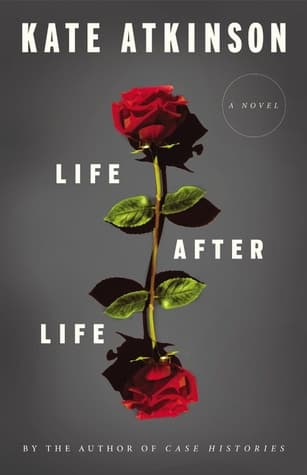
- Life After Life
Kate Atkinson
3.8 (198k) average on GoodreadsLiterary FictionExplores alternative timelines and a family's history in 20th-century England with a distinctive narrative style.
- The House of the Spirits
Isabel Allende
4.2 (190k) average on GoodreadsFantasyA multi-generational family saga spanning a century, rich in character and historical context.
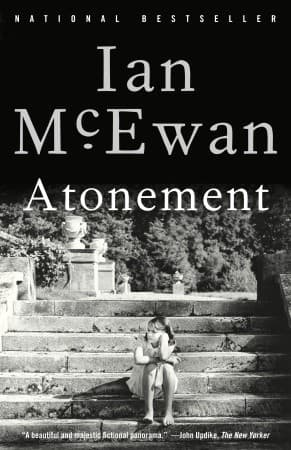
- Atonement
Ian McEwan
4.4 (70) average on GoodreadsDelves into family secrets and the impact of the past on future generations, with a strong sense of English history.
- One Hundred Years of Solitude
Gabriel García Márquez
4.1 (753k) average on GoodreadsLiterary FictionAtkinson's novel shares with García Márquez's masterpiece a multi-generational family saga structure and a fascination with the cyclical nature of history and inherited traits. Both novels feature eccentric characters, recurring motifs, and a sense of destiny guiding their protagonists. However, "One Hundred Years of Solitude" is a quintessential example of magical realism, where the fantastical is seamlessly integrated into the everyday. While Atkinson employs some elements of heightened reality and a distinctive narrative voice that can feel almost omniscient, her novel remains more firmly rooted in a realistic, albeit darkly humorous, portrayal of 20th-century British life. García Márquez's scope is epic and mythological, while Atkinson's, though extensive, maintains a more intimate, psychological focus on the Lennox family's specific traumas and triumphs within a defined historical context.
- The Old Man and the Sea
Ernest Hemingway
3.8 (831k) average on GoodreadsLiterary FictionA Cuban fisherman's long struggle with a giant marlin becomes a story of endurance and dignity, now retold for young adults with illustrations, phonetic guides, and writing prompts in Traditional Chinese.
- The Goldfinch
Donna Tartt
3.9 (720k) average on GoodreadsLiterary FictionHaunted by a tragic explosion and clutching a stolen Dutch masterpiece, a young orphan navigates the opulent drawing rooms of New York and the gritty underbelly of the art world, desperately seeking connection and redemption amidst a life spiraling into crime and obsession.



Enjoyed the summary?
A summary gives you the shape of the book. The book itself has the detail, the examples and the voice.
Find Behind the Scenes at the Museum on AmazonAs an Amazon Associate, BookBrief earns from qualifying purchases. How we're funded