
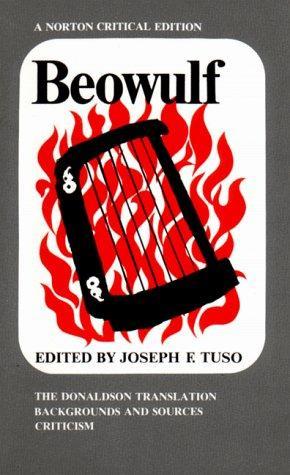
Synopsis
Covers the whole plot, including the ending.
- Difficulty
- Hard
- Pacing
- Moderate
- Mood
- Heroic, somber, epic, adventurous, reflective
- Read it if
- you enjoy classic epic poetry, tales of heroic deeds, monster battles, and exploring themes of courage, fate, and legacy.
- Skip it if
- you prefer modern prose, find ancient texts or poetry challenging, or dislike stories with a strong focus on violence and a somewhat somber tone.
Beowulf Plot Summary
Covers the whole plot, including the ending.
The Golden Hall and Grendel's Wrath
King Hrothgar of the Danes builds Heorot, a grand hall meant to show his wealth and power, a place for his warriors to feast and celebrate. Its splendor and the sounds of joy, however, attract Grendel, a monster descended from Cain, who lives in the fens. Angered by the human merriment, Grendel attacks Heorot, killing thirty of Hrothgar's sleeping warriors. This first massacre starts a twelve-year period of terror. Grendel repeatedly raids the hall, making it unusable for Hrothgar and his men, who cannot stop him. The once-proud Heorot becomes deserted and sad, and news of Grendel's acts spreads across the seas.
Beowulf's Arrival in Denmark
News of Hrothgar's trouble reaches Beowulf, a famous warrior from the Geats, a people across the sea. Wanting glory and feeling a sense of duty, Beowulf gathers fourteen of his bravest men and sails for Denmark. When they arrive, Hrothgar's coast-guard, Wulfgar, first challenges them, questioning their intentions. Beowulf, however, quickly states his noble purpose, explaining his family line and his plan to defeat Grendel. Impressed by Beowulf's manner and fame, Wulfgar lets them go to Heorot. Beowulf and his men are then presented to King Hrothgar, where Beowulf formally offers his help, boasting of his past deeds and vowing to fight Grendel without weapons, using only his strength.
Unferth's Challenge and Beowulf's Response
During the feast in Heorot, Unferth, one of Hrothgar's men, becomes jealous of Beowulf's boasts and questions his reputation. Unferth tells of a swimming contest between Beowulf and Breca, suggesting Beowulf lost and is not as strong as he claims. Beowulf calmly corrects Unferth, explaining that he did win in the sea, but was delayed by fighting many sea monsters. He then turns on Unferth, revealing Unferth's own act of killing his brothers, which discredits him. Beowulf's confident and truthful reply silences Unferth and further strengthens his standing with Hrothgar and the other Danes, who now have more hope for their rescue.
The Battle with Grendel
As night falls, Beowulf and his Geatish warriors prepare to face Grendel. Beowulf, true to his word, waits without weapons, planning to fight the monster hand-to-hand. Grendel, used to unchallenged raids, bursts into Heorot. He immediately grabs and eats one of Beowulf's sleeping men, showing his terrible power. However, when Grendel reaches for Beowulf, he finds himself in the grip of a strength much greater than his own. A fierce struggle follows, tearing apart the hall. Beowulf, with great power, rips Grendel's arm from its socket. Mortally wounded, Grendel flees back to his lair in the fens, leaving his severed arm as a trophy for Beowulf and the Danes. The hall is then cleaned, and the Danes celebrate Beowulf's victory.
Grendel's Mother's Revenge
The joy and relief after Grendel's defeat do not last long. Grendel's mother, a monster even stronger and more vengeful than her son, comes from her lair to avenge his death. She attacks Heorot at night, surprising the sleeping Danes. Unlike her son, she does not target the entire hall for killing, but specifically seeks revenge. She grabs Aeschere, Hrothgar's most trusted advisor and a beloved warrior, and flees with his body. She also takes Grendel's severed arm, taking back the trophy that symbolized Beowulf's victory. The Danes fall back into despair, and Hrothgar, deeply saddened by Aeschere's death, asks Beowulf once more to rid them of this new threat, describing the monster's terrible lair.
Beowulf Descends to the Mere
Guided by Hrothgar's descriptions and the monster's tracks, Beowulf and his men, along with Hrothgar's warriors, follow the trail to the terrible mere. The lake is a desolate and gruesome place, full of serpents and other sea creatures. They find Aeschere's head at the water's edge, a chilling sign of the monster's cruelty. Beowulf prepares for battle, putting on his armor and taking Hrunting, a sword given to him by Unferth. He makes a final speech to Hrothgar, entrusting his men and his treasures to the king if he should fall. With strong resolve, Beowulf dives into the murky, monster-filled waters, descending to the bottom where Grendel's mother's lair is hidden.
The Battle with Grendel's Mother
Beowulf confronts Grendel's mother in her underwater cave. Their battle is ferocious; Grendel's mother immediately attacks him, dragging him to her lair where other sea-monsters join the fight. Beowulf finds that Hrunting, Unferth's sword, is useless against her tough skin. She pins him down, trying to stab him with a dagger, but his mail-shirt protects him. At a critical moment, Beowulf sees a giant's sword, old and massive, hanging on the cave wall. With a surge of strength, he grabs the sword and, with a single powerful stroke, cuts off Grendel's mother's head. He then finds Grendel's corpse and also cuts off its head, bringing both heads as proof of his victory.
Return to Heorot and Farewell
Beowulf surfaces from the mere, carrying Grendel's head and the hilt of the melted giant's sword. His Geatish companions, who had waited anxiously, rejoice, while the Danes, who had given up hope, are astonished. They return to Heorot, where Beowulf presents the trophies to Hrothgar. Hrothgar praises Beowulf, offering him advice on how fleeting glory is and the duties of a king, warning against pride and greed. Beowulf and his men are generously rewarded with treasures. After a final night of feasting, Beowulf says goodbye to Hrothgar, promising continued loyalty between the Geats and the Danes. He and his men then sail for their homeland, laden with gifts and glory.
Beowulf Becomes King
When he returns to Geatland, Beowulf is greeted as a hero. He tells his adventures to his king, Hygelac, and queen, Hygd, giving them many of the treasures Hrothgar gave him. He shows his loyalty and humility by not keeping all the wealth for himself. Beowulf continues to serve Hygelac faithfully. After Hygelac is killed in battle and his son Heardred also falls, Beowulf, though he refused the throne earlier, finally accepts the kingship of the Geats. He rules wisely and justly for fifty years, bringing peace and prosperity to his people. His reign is stable and well-governed, establishing him as a respected monarch.
The Dragon's Awakening
Fifty years into Beowulf's peaceful reign, a new threat appears. A slave, fleeing his master, finds an ancient burial mound, a barrow filled with a vast treasure hoard guarded by a dragon. The slave steals a golden cup, planning to use it to calm his master. This theft awakens the dragon, which had been sleeping for centuries. Angered by the intrusion and the loss of its treasure, the dragon unleashes its fury on the Geatish kingdom. It flies through the night, breathing fire, burning down homes, villages, and Beowulf's own great hall, reducing the land to ashes and terrifying the people. Beowulf, now an old king, knows he must face this final enemy to protect his people.
Beowulf's Final Battle
Beowulf, despite his age, decides to fight the dragon alone, believing it is his duty as king. He says goodbye to his men, remembering his past victories. He equips himself with a shield, sword (Naegling), and armor, but senses that fate is against him. The battle is fierce. Beowulf's sword is ineffective against the dragon's scales, and he is overwhelmed by its fiery breath. His men, terrified, flee into the woods, abandoning their king. Only Wiglaf, a young and loyal kinsman, remains. He scolds the other warriors for their cowardice and rushes to Beowulf's aid, showing true loyalty. Together, Beowulf and Wiglaf manage to wound the dragon, but Beowulf receives a fatal bite to the neck.
Beowulf's Death and Funeral
Mortally wounded, Beowulf tells Wiglaf to bring him some of the dragon's treasure, so he can see what he died for. Wiglaf retrieves some of the hoard, and Beowulf looks at it, expressing thanks that he has won such wealth for his people. He gives his final commands to Wiglaf, naming him his successor and instructing him to build a towering burial mound on the headland, a memorial that sailors will see from the sea, forever remembering his name. Beowulf then dies. Wiglaf criticizes the cowardly men who return, predicting a bleak future for the Geats now that their great king is gone. Beowulf's body is placed on a funeral pyre, surrounded by his armor and the dragon's treasure, and burned. A barrow is then built as he requested.
Beowulf Characters
Beowulf
Protagonist
A heroic Geatish warrior who becomes king.
Beowulf is the epitome of the Anglo-Saxon heroic ideal: strong, brave, loyal, and boastful, yet ultimately humble in his service to his people. He possesses superhuman strength, demonstrated by his bare-handed defeat of Grendel and his ability to wield a giant's sword. He is driven by a desire for glory (lof) and a profound sense of duty. His unwavering courage and commitment to protecting others are central to his character. He is also a skilled orator, able to articulate his intentions and defend his reputation effectively.
Relationships: Hrothgar (Protector/Mentor); Hygelac (Nephew/Loyal warrior); Wiglaf (King/Loyal retainer); Grendel (Adversary); Grendel's Mother (Adversary); Dragon (Adversary)
Hrothgar
Supporting
The elderly King of the Danes, terrorized by Grendel.
Hrothgar is a wise and respected king, but in his old age, he is powerless against Grendel's attacks, highlighting the limits of even a great ruler when faced with supernatural evil. He is a generous host, rewarding Beowulf lavishly, and a sagacious mentor, offering Beowulf advice on the dangers of pride and the responsibilities of kingship. His suffering and reliance on an outsider underscore themes of vulnerability and the transient nature of human prosperity. He represents the ideal of a good king, even in his moments of despair.
Relationships: Beowulf (Benefactor/Mentor); Wealhtheow (Husband); Aeschere (Trusted advisor)
Grendel
Antagonist
A monstrous descendant of Cain, terrorizing Heorot.
Grendel is a malevolent creature, described as a descendant of Cain, embodying pure evil and a hatred for humanity's joy and order. He is depicted as a solitary, cannibalistic monster, living in the desolate fens. His actions are driven by envy and wrath, particularly provoked by the sounds of celebration from Heorot. He is impervious to ordinary weapons, making him a formidable and seemingly unstoppable foe for the Danes. Grendel represents the chaotic, destructive forces that threaten human civilization and the natural order.
Relationships: Beowulf (Adversary); Grendel's Mother (Son)
Grendel's Mother
Antagonist
A vengeful swamp hag, seeking retribution for her son's death.
Grendel's Mother is a fierce and more primal antagonist than her son, driven by maternal vengeance. She is depicted as a 'troll-dam' or 'wolf-den' inhabitant, representing a more ancient and insidious evil. Her attack on Heorot, specifically targeting Aeschere and retrieving Grendel's arm, demonstrates a calculated and personal vendetta rather than indiscriminate slaughter. She is a formidable warrior in her own right, nearly defeating Beowulf in her underwater lair, and her existence highlights the persistent threat of monstrous forces.
Dragon
Antagonist
An ancient, fire-breathing guardian of a treasure hoard.
The Dragon is the final and most powerful antagonist Beowulf faces, symbolizing greed, destruction, and the ultimate, inescapable force of fate. It is awakened from its centuries-long slumber by the theft of a single golden cup from its vast treasure hoard. Its rampage through Geatland is a catastrophic act of vengeance, burning down homes and land. The dragon represents a different kind of evil than Grendel; it is a force of nature, an ancient, elemental power that brings about Beowulf's tragic but heroic end, marking the end of an era.
Relationships: Beowulf (Adversary)
Wiglaf
Supporting
Beowulf's loyal kinsman and successor.
Wiglaf is a young warrior, Beowulf's kinsman, who embodies the ideal of loyalty and courage in contrast to the other Geatish warriors who abandon their king. He is the only one who remains by Beowulf's side during the final battle with the dragon, demonstrating unwavering fealty and bravery. His actions highlight the importance of the comitatus (warrior bond) and serve as a moral compass. He is chosen by Beowulf as his successor, representing the hope for the future of the Geats, though his lamentations also foreshadow their decline.
Relationships: Beowulf (Kinsman/Loyal retainer/Successor); Other Geatish warriors (Comrade/Critic)
Unferth
Supporting
A Danish warrior who initially challenges Beowulf.
Unferth is a retainer of Hrothgar who initially acts as a foil to Beowulf. He is envious and cynical, challenging Beowulf's reputation by recounting a distorted version of his swimming contest with Breca. However, after Beowulf's victorious battle with Grendel, Unferth recognizes Beowulf's heroism and lends him his ancestral sword, Hrunting, for the fight against Grendel's Mother. This act shows a degree of redemption and respect, demonstrating that even flawed characters can acknowledge true greatness.
Relationships: Beowulf (Antagonist/Respectful comrade); Hrothgar (Retainer)
Wealhtheow
Supporting
Queen of the Danes and Hrothgar's wife.
Wealhtheow is Hrothgar's queen, who embodies the role of a gracious hostess and peace-weaver. She moves through Heorot, offering the mead-cup and words of wisdom, especially to Beowulf, reminding him of his duty and the importance of generosity. Her presence represents the feminine influence in the court, advocating for harmony and the proper distribution of wealth. She also expresses concern for her sons' inheritance, highlighting the dynastic anxieties within the Danish court and the fragile nature of succession.
Beowulf Themes
Heroism and Glory (Lof)
The poem explores the idea of heroism, especially the Anglo-Saxon ideal of 'lof' (fame after death) and 'dom' (renown). Beowulf's actions are always driven by a wish to earn a lasting reputation through brave deeds, whether by defeating Grendel with his bare hands or facing the dragon as an old king. His boasts are not seen as arrogant but as a necessary statement of his abilities and commitment to his heroic code. The pursuit of glory is tied to the responsibility to protect one's people and keep social order.
“So Beowulf bore himself with valor; he was formidable in battle, never flinched at any foe. His reputation spread far and wide, for he was a mighty warrior.”
Good vs. Evil
A main theme is the clear contrast between good and evil, often shown by the heroic Beowulf and the monster antagonists. Grendel, Grendel's Mother, and the Dragon are forces of chaos, darkness, and malice, often linked to biblical evil (Cain) or pagan malevolence. Beowulf, in contrast, represents order, light, and righteous strength. The poem suggests a constant struggle between these opposing forces, with human civilization always open to the encroaching darkness. Beowulf's role is to stand as a defense against these destructive elements.
“Then out of the night came the shadow-stalker, stealthy and swift; the hall-watchers slept, but one man kept himself awake, watching for the fiend.”
Loyalty and Kinship (Comitatus)
The bond between a lord and his retainers, known as 'comitatus,' is a core theme. Warriors promise loyalty to their lord, fighting for him and defending him, in exchange for protection, gifts, and a share of the spoils. This mutual relationship is shown by Beowulf's service to Hygelac and Hrothgar, and most strongly by Wiglaf's loyalty to Beowulf in his final battle. The abandonment of Beowulf by his other warriors shows the sad results of breaking this sacred bond and hints at the decline of the Geats.
“And now the day has come when our lord needs the help of good fighters. Let us go to him, help our king through the heat of the fire and the dread of the dragon.”
Fate and Free Will
The interaction between fate (wyrd) and individual choice is a recurring idea. Characters, especially Beowulf, often acknowledge fate's role in outcomes, yet they still act with great courage and determination. Beowulf often says that 'fate goes as fate must,' suggesting a set destiny, but he never avoids battle, believing that he can influence his own glory through his actions. This creates a tension where human effort and divine or cosmic will are constantly in dialogue, shaping the story's tragic and heroic parts.
“Fate often saves an undoomed man when his courage is good.”
The Transience of Life and Material Wealth
The poem often thinks about how short human life, joy, and material possessions are. Heorot, a symbol of Hrothgar's power, is repeatedly threatened and eventually abandoned. Treasure, while a symbol of a lord's generosity and a warrior's reward, is also linked to sorrow, conflict, and ultimately, death (as seen with the dragon's hoard and Beowulf's funeral pyre). The poem suggests that while glory can be eternal, worldly accomplishments and lives are fleeting, leading to a pervasive sense of sadness and loss.
“So the treasure was won, but the life was lost, and for all that gold, there was no joy in it for his people.”
Plot Devices & Literary Techniques
Alliteration
Repetition of initial consonant sounds in stressed syllables.
As an Old English epic, Beowulf heavily relies on alliteration as a primary poetic device, replacing end rhyme. It creates a musicality and rhythm that enhances the oral tradition of the poem. For example, 'grim Grendel's grip' or 'whale-road' are common alliterative phrases. This device binds half-lines together, emphasizing key words and contributing to the poem's memorable and forceful language, making it easier to remember and recite before the advent of widespread literacy.
Kennings
Compound metaphorical expressions used in place of a noun.
Kennings are a hallmark of Old English poetry, serving as vivid, concise metaphors that enrich the language and demonstrate the poet's skill. Examples include 'whale-road' for the sea, 'ring-giver' for a king, 'battle-sweat' for blood, and 'sky-candle' for the sun. These poetic circumlocutions add layers of meaning, evoke strong imagery, and are central to the epic's elevated style. They also allowed for flexibility in alliterative verse, providing alternative words with the desired initial sounds.
Foreshadowing
Hints or warnings of future events.
The poem frequently uses foreshadowing to build suspense and underscore the role of fate. Early in the poem, Hrothgar's lament about his inability to defeat Grendel's mother hints at the greater challenge Beowulf will face. Beowulf's own premonitions before his fight with the dragon, and his sense that 'fate was against him,' clearly signal his impending death. The descriptions of Beowulf's funeral and the Geats' future decline also serve as powerful foreshadowing of the consequences of his loss.
Digressions (or Episodes)
Narrative detours that provide context or parallel stories.
Beowulf is rich with digressions, which are seemingly tangential stories or historical accounts woven into the main narrative. These include tales like the Finnsburg Episode, the Lay of Sigemund, and the account of Queen Modthryth. These digressions serve multiple purposes: they provide historical and mythological context, offer moral lessons, contrast with the main plot, or foreshadow events. For example, the tale of Sigemund, a dragon-slayer, foreshadows Beowulf's own final battle and heroic death, while also placing Beowulf within a lineage of legendary heroes.
Litotes
An ironic understatement, often expressed by negating the opposite.
Litotes is a rhetorical device frequently employed in Beowulf, contributing to its distinctive tone. It often involves a double negative to make an affirmative statement more emphatically or to create a sense of grim irony. Examples include describing something as 'not lacking in courage' (meaning very brave) or a place as 'not a pleasant place' (meaning truly terrible). This understatement adds a layer of sophistication and often a subtle, understated power to the descriptions of battles, monsters, and heroic deeds, emphasizing the severity without overt hyperbole.
Beowulf Quotes
“So the glittering sword was not too much for him, / the hard-edged blade, but he drew it, / his own sword by his shoulder, its name / Scufing, a treasure of the ancient world.”
“He was born of Cain, the accursed / killer, who murdered his own brother, / felled his father's son. For this, all / the race of men descended from him / were doomed to a dark death.”
“Then the dragon's hoard, gold under stone, / would be his, and the ring-prince's reign / would be ended.”
“He spoke in his greed, / remembering his boasts, and drew his sword, / the war-blade that hung by his hip, / a sharp weapon in his hand.”
“Grendel was the name of this grim demon / haunting the moorland, travelling in the waste, / miserable in his mind, who harried / the peaceful folk and fed on their flesh.”
“Then he saw the hoard, the gold rings, / the heaped-up treasure, the work of giants, / and the ancient, jeweled helmet, / lying there, the helm of the warrior.”
“The best of all the days that I have seen / has come to me now, and I have the right / to sell my life dearly, and to fell the dragon.”
“They had attacked him, the Geatish warriors, / and the hero Beowulf, in his days of strength, / had led them to glory.”
“So the Geats raised a barrow / on a headland, high and broad, / visible from afar to all who sailed / the sea-lanes.”
“He was not a man of malice, / nor did he seek to harm the folk, / but he was the greatest / of all the warriors.”
“They said that of all the kings / on the earth, he was the man most eager / to win fame, most ambitious / for renown.”
“He was the best of men, / but he was fated to die.”
“So the warriors / who were in the hall, the comrades of Hrothgar, / were filled with terror.”
“Then the ancient king, / the ring-giver, the lord of the Scyldings, / was laid in his grave.”
Quiz
10 questions on the plot and the characters. Each answer comes with a short explanation.
Question 1
What is the name of the great mead-hall built by King Hrothgar?
- Valhalla
- Heorot
- Asgard
- Grendel's Lair
Show answer
B. Heorot Heorot is the magnificent mead-hall that King Hrothgar of the Danes builds. It is a symbol of prosperity and joy, but becomes the target of Grendel's attacks.
Question 2
Who is the first monster Beowulf fights and defeats?
- The Dragon
- Grendel's Mother
- Grendel
- Unferth
Show answer
C. Grendel Beowulf's first major battle is against Grendel, a monstrous descendant of Cain who has been terrorizing Heorot.
Question 3
What is the name of the sword Beowulf uses to defeat Grendel's Mother?
- Naegling
- Hrunting
- Durendal
- Gram
Show answer
A. Naegling Beowulf finds a giant's sword in Grendel's Mother's lair and uses it to kill her. This sword is later identified as Naegling.
Question 4
Who is the king of the Geats when Beowulf returns from Denmark?
- Hrothgar
- Hygelac
- Heardred
- Aeschere
Show answer
B. Hygelac Hygelac is Beowulf's uncle and the king of the Geats. Beowulf serves him faithfully after his adventures in Denmark.
Question 5
What prompts the dragon to attack the Geats' land?
- Revenge for Grendel
- A thief stole a jeweled cup from its hoard
- The Geats invaded its territory
- It was summoned by a sorcerer
Show answer
B. A thief stole a jeweled cup from its hoard The dragon's rage is ignited when a thief steals a valuable jeweled cup from its treasure hoard, leading to its fiery attack on the Geats.
Question 6
Who is the only one of Beowulf's warriors who stays to help him fight the dragon?
- Hrothgar
- Unferth
- Aeschere
- Wiglaf
Show answer
D. Wiglaf Wiglaf is the only one of Beowulf's warriors who shows true loyalty and courage by staying to fight the dragon when the others flee.
Question 7
What is the fate of Beowulf after his battle with the dragon?
- He becomes king and rules wisely for many years.
- He dies from his wounds, but the dragon is defeated.
- He is captured by the dragon and imprisoned.
- He is banished for his failure to defeat the dragon.
Show answer
B. He dies from his wounds, but the dragon is defeated. Beowulf is mortally wounded in the fight with the dragon. Although he defeats the beast, he succumbs to his injuries shortly after.
Question 8
What is the primary theme explored in 'Beowulf'?
- The pursuit of wealth and material possessions
- The importance of love and family relationships
- Heroism, fate, and the struggle between good and evil
- The dangers of ambition and political power
Show answer
C. Heroism, fate, and the struggle between good and evil 'Beowulf' is an epic that delves into the nature of heroism, the inevitability of fate, and the eternal conflict between forces of good and evil.
Question 9
What is the significance of the lineage of Grendel?
- He is a descendant of ancient kings.
- He is a descendant of Cain, the biblical first murderer.
- He is a fallen angel seeking redemption.
- He is a creature born of the sea.
Show answer
B. He is a descendant of Cain, the biblical first murderer. The poem explicitly states that Grendel is a descendant of Cain, linking him to evil and banishment from God's grace.
Question 10
What is the name of the sword that Unferth lends to Beowulf to fight Grendel's Mother?
- Naegling
- Hrunting
- Durendal
- Siegfried
Show answer
B. Hrunting Unferth, initially skeptical of Beowulf, lends him his ancestral sword, Hrunting, for the battle against Grendel's Mother. However, Hrunting proves useless against her.
Beowulf FAQ
What is Beowulf about?
Beowulf is an Old English epic poem that tells the story of a heroic warrior named Beowulf from the land of the Geats. He travels to Denmark to defeat a monstrous creature named Grendel, and later faces Grendel's vengeful mother and a dragon.
Who wrote Beowulf?
The author of Beowulf is anonymous. It is an Old English poem, believed to have been composed by a single poet sometime between the 8th and early 11th centuries.
What is the historical context of Beowulf?
Beowulf is set in the 6th century among the Geats and Danes. The poem reflects the values and societal structures of early medieval Germanic culture, including concepts of heroism, kinship, and fate.
What are the main themes in Beowulf?
Key themes in Beowulf include heroism, bravery, loyalty, the struggle between good and evil, mortality, and the transient nature of life and glory. The poem also explores the importance of reputation and legacy.
Who are the main characters in Beowulf?
The central character is Beowulf, the heroic warrior. Other significant characters include Hrothgar, the King of the Danes; Grendel, the monstrous antagonist; Grendel's mother; and the dragon that Beowulf fights in his final battle.
What is a 'scop' in the context of Beowulf?
A scop was a poet or bard in Anglo-Saxon culture, responsible for composing and performing epic poems and songs. The poet of Beowulf is referred to as the scop, preserving the oral tradition.
What is the significance of the mead-hall in Beowulf?
The mead-hall, such as Heorot in the poem, represents a center of community, power, and celebration for the Danes. It is a symbol of order and civilization, which is threatened by the monstrous Grendel.
Is Beowulf a historical document?
While Beowulf is set in a historical period and mentions some historical figures and tribes, it is primarily a work of fiction and legend. It offers insights into the cultural beliefs and values of the time rather than providing accurate historical accounts.
What is the language of Beowulf?
Beowulf is written in Old English, also known as Anglo-Saxon. This is an early form of the English language that is very different from modern English, making it challenging for contemporary readers without translation.
What lessons can be learned from Beowulf?
Beowulf teaches lessons about courage in the face of overwhelming odds, the importance of leadership and loyalty, and the inevitability of death. It also serves as a reflection on the nature of good versus evil and the pursuit of glory.
About the author

Anonymous may refer to:Anonymity, the state of an individual's identity, or personally identifiable information, being publicly unknown Anonymous work, a work of art or literature that has an unnamed or unknown creator or author Anonymity, a property of a voting rule, saying that it does not discriminate apriori between voters
Similar books
- Harry Potter and the Sorcerer's Stone
J.K. Rowling
4.5 (7M) average on GoodreadsFantasyRescued from a miserable life under the stairs, an orphaned boy discovers he's a wizard destined for a magical school, where he uncovers a dangerous secret tied to the dark wizard who murdered his parents.
- The Hunger Games
Suzanne Collins
4.3 (6.4M) average on GoodreadsFantasyIn a future where children fight to the death on live television, Katniss Everdeen volunteers for the arena, turning a death sentence into a fight for survival and a spark of rebellion.
- Nineteen Eighty-Four
George Orwell
4.2 (5.5M) average on GoodreadsFictionWinston Smith dreams of truth and rebellion in a world where Big Brother watches all, but he confronts the terrifying power of a regime that controls not just actions, but thoughts.
- Pride & Prejudice
Jane Austen
4.3 (4.9M) average on GoodreadsElizabeth Bennet and Mr. Darcy navigate love and misunderstanding, learning that first impressions can be wrong.
- To Kill a Mockingbird
Harper Lee
4.3 (4.5M) average on GoodreadsHistorical FictionIn the 1930s Jim Crow South, Harper Lee writes about racial injustice, moral growth, and the quiet courage of a lawyer father, Atticus Finch, as seen through his young daughter's eyes.
- The Great Gatsby
F. Scott Fitzgerald
3.9 (3.8M) average on GoodreadsHistorical FictionIn the opulent Roaring Twenties, a mysterious millionaire's lavish parties hide his desperate, tragic pursuit of a lost love, exposing the emptiness within the American Dream.





Enjoyed the summary?
A summary gives you the shape of the book. The book itself has the detail, the examples and the voice.
Find Beowulf on AmazonAs an Amazon Associate, BookBrief earns from qualifying purchases. How we're funded