

Synopsis
Covers the whole plot, including the ending.
- Difficulty
- Easy
- Pacing
- Moderate
- Mood
- Whimsical, Romantic, Hopeful, Charming
- Read it if
- You enjoy unique romantic fantasies, stories about the power of books, or tales where characters literally jump off the page.
- Skip it if
- You prefer realistic fiction, dislike young adult romance, or aren't a fan of magical realism.
Between the Lines Plot Summary
Covers the whole plot, including the ending.
A Bookish Escape
Delilah, a shy high school student, feels isolated at school, often targeted by the popular girl, Jasmine. Her only escape is a well-worn fairy tale book, 'Between the Lines,' which she borrowed from the library. She is especially fond of Prince Oliver, the story's protagonist, finding him brave and kind. Delilah sketches him and daydreams about him, feeling a connection beyond the pages. She sees herself as an outsider, much like Oliver, who seems to long for something beyond his predetermined story. This book becomes her sanctuary, a place where she feels understood and safe from her daily life.
A Voice From the Page
One day, while reading 'Between the Lines' in the library, Delilah is stunned when Prince Oliver speaks directly to her from the pages. Initially disbelieving, she dismisses it as her imagination, but Oliver persists, revealing his consciousness and frustration with his predetermined story. He explains that he is aware of the reader and the cycle of his narrative, which he finds restrictive. This extraordinary event shatters Delilah's perception of reality and opens a secret channel of communication between them. She is both thrilled and terrified by this impossible connection, unsure how to process that a fictional character is alive and speaking to her.
Life Inside the Book
Through their conversations, Oliver gives Delilah a glimpse into the world within 'Between the Lines.' He explains that the characters live out their story daily, repeating the same lines and actions for every reader. When the book is closed, their world pauses, and they resume from where a reader last left off. He introduces her to other characters, like Princess Seraphima, whom he is destined to marry but does not love, and Queen Maureen, his overbearing mother. Oliver expresses his boredom and desire for freedom, revealing that the 'happily ever after' is a facade for a life he feels trapped in. This revelation changes Delilah's understanding of the fairy tale, making her empathize with Oliver.
The Quest for Freedom
Oliver confides in Delilah his desperate desire to escape his book and enter her world. He believes there must be a way out and sees Delilah as his only hope. Together, they begin to research and brainstorm methods for his liberation. Oliver, from inside the book, tries to manipulate the text, while Delilah searches for magical lore, scientific explanations, or any precedent for a fictional character becoming real. Their shared mission deepens their bond, turning initial fascination into a genuine connection. This quest becomes the central focus of their lives, consuming Delilah's thoughts and giving Oliver a purpose beyond his script.
Unexpected Consequences
As Oliver and Delilah experiment with ways to change his story, their actions have unforeseen consequences. Oliver's attempts to deviate from his script cause other characters to react with confusion and frustration, as they are programmed to follow the narrative. Princess Seraphima, for instance, becomes bewildered by Oliver's uncharacteristic behavior. These disruptions threaten the story's integrity, making it harder for new readers to follow. Delilah realizes the delicate balance they are upsetting and the potential harm they could cause to the book's world, even as she remains committed to helping Oliver achieve his freedom. The risk of unraveling the entire narrative worries them.
Jasper's Intervention
During her research, Delilah discovers Jasper, a wise figure from another fairy tale book, 'Off the Page,' also in her library. Jasper is aware of Oliver's sentience and the unique situation. He warns Delilah about the challenges and dangers of bringing a fictional character into the real world. He explains that such a transition could have dire consequences for both Oliver and her, stressing the fundamental differences between their two realities. Jasper's insights, while helpful, also introduce new complexity and fear, making Delilah question the true feasibility and safety of their plan.
The First Crack
Through a combination of Oliver's concentration and Delilah's intense desire, a small, tangible object from Oliver's world—a golden locket that belongs to Princess Seraphima—briefly appears in Delilah's hands. This miraculous event proves their efforts are not in vain and that a bridge between their worlds is possible. The locket's temporary manifestation fuels their hope and conviction, pushing them to pursue more drastic measures. However, it also highlights the fragility of this connection, as the locket quickly vanishes, leaving Delilah with only the memory of its presence and an increased sense of urgency.
The Sacrifice
Oliver and Delilah discover an ancient, forgotten spell hidden within the margins of the book itself, detailing the requirements for a character to cross over. The spell reveals that a character from the fictional world must willingly swap places with a character from the real world, or a powerful magical artifact must be used. Oliver realizes that true happiness for him means leaving his world behind, but it comes at a cost. He understands that for him to be free, someone else must take his place in the story, or the story itself must be altered in a way that allows for his departure without its complete collapse. This revelation forces him to confront the moral implications of his desire for freedom.
The Plot Twist
Delilah's eccentric friend, Edgar, who is often overlooked and enjoys writing fanfiction, reveals that he has been secretly adding new content to the library's copy of 'Between the Lines' by writing in the margins. He has been creating new adventures and dialogue for the characters, driven by his own desire to see the story evolve. This unexpected confession explains some of the inconsistencies Oliver has noticed in his world. More profoundly, Edgar's actions accidentally created a 'loophole' or a weakened barrier between the worlds, making Oliver's communication and potential escape possible. Edgar's fanfiction, initially an innocent hobby, becomes a crucial element in their plan, providing an unexpected avenue for Oliver's freedom.
The Switch
With Edgar's unwitting help and a final surge of magic, Oliver and Edgar execute a daring plan. Using the loophole created by Edgar's fanfiction and a specific magical moment within the story (the moment of Oliver's 'happily ever after' with Seraphima), they manage to facilitate a swap. As Oliver steps out of the book into Delilah's world, Edgar, driven by his love for storytelling and a desire to be part of the narrative, willingly steps into the book, taking Oliver's place as the prince. The transition is tumultuous, causing a momentary blur between realities, but ultimately successful. Oliver is finally free, though disoriented, in Delilah's world, while Edgar begins a new life within the pages of 'Between the Lines.'
A New Reality
Now in the real world, Oliver is overwhelmed by the sensory input and the lack of a predetermined script. Everything is new, from the taste of real food to the feeling of sunlight on his skin. He marvels at modern technology, the vastness of the world, and the freedom of choice. However, he also faces challenges: he has no identity, no money, and no understanding of social norms. Delilah becomes his guide, helping him navigate this alien environment. Their relationship deepens as they confront the practicalities of his new existence, from finding him clothes to explaining the complexities of human emotions and societal expectations that were absent in his fairy tale world.
The Author's Intent
Through further investigation, Delilah and Oliver stumble upon old notes and drafts by the original author of 'Between the Lines.' They discover that the author had always intended for characters to break free, weaving subtle clues and hidden magic into the narrative. The author, it turns out, was a dreamer who believed in the power of stories to transcend their boundaries. This revelation provides a deeper understanding of why Oliver was able to gain sentience and escape, suggesting that his journey was not a glitch but an intended, though extraordinary, outcome. It validates their impossible love story and gives their adventure literary significance.
Repercussions and Revelations
Meanwhile, back in 'Between the Lines,' the characters deal with Oliver's sudden disappearance and Edgar's unexpected arrival in his place. Princess Seraphima is initially confused and heartbroken by 'Oliver's' changed personality, but Edgar, with his knowledge of the story and his genuine desire to be a good prince, slowly wins her over. Queen Maureen is also puzzled but accepts the new 'Oliver.' The narrative continues, but with subtle shifts and new dialogue introduced by Edgar. This shows that the story, while altered, can still function, and that characters, even if programmed, can adapt to new circumstances, ensuring the continuity of the fairy tale for future readers.
Facing the World
Oliver and Delilah's relationship grows, but they face the challenge of integrating Oliver into the real world. They must create a new identity for him, explain his existence to Delilah's parents (who are initially skeptical), and deal with the skepticism of others. Oliver struggles with the nuances of human interaction and the complexities of real-world problems that do not have simple fairy tale solutions. Delilah, in turn, grows more confident as she advocates for Oliver and their unique love story. Their journey is one of mutual growth, as they learn to navigate reality together, showing that love can bridge worlds.
Between the Lines Characters
Delilah
Protagonist
A shy, introverted high school student who finds solace in books, especially 'Between the Lines.'
Delilah is a quiet and artistic teenager, often feeling like an outsider at school. She's intelligent and observant, but lacks confidence and struggles with social interactions, often retreating into the world of books. Her deep empathy and vivid imagination allow her to connect with Prince Oliver on an extraordinary level. She is driven by a profound loneliness and a desire for connection, which Oliver ultimately fulfills. Her love for stories and belief in magic make her the perfect person to help Oliver.
Relationships: Prince Oliver (Romantic interest; deep, impossible connection); Edgar (Close friend and confidant); Jasmine (Antagonist; school bully)
Prince Oliver
Protagonist
The brave, adventurous, and kind prince from 'Between the Lines' who yearns for freedom.
Prince Oliver is the archetypal fairy tale hero, noble and charming, but beneath the surface, he is a restless and intelligent young man trapped by his predetermined narrative. He is acutely aware of his existence as a fictional character, bored by the endless repetition of his story, and longs for the freedom and unpredictability of the real world. He is driven by a deep desire for self-determination and a genuine love for Delilah, which transcends the boundaries of his book. He is courageous not just in his story, but in his pursuit of a life beyond it.
Relationships: Delilah (Romantic interest; deep, impossible connection); Princess Seraphima (Fiancée in the story; a character he doesn't truly love); Queen Maureen (His mother in the story; overbearing)
Edgar
Supporting
Delilah's quirky, fanfiction-writing friend who inadvertently facilitates Oliver's escape.
Edgar is a socially awkward but brilliant and creative classmate of Delilah's. He has a passion for writing fanfiction and is deeply immersed in the world of stories. His innocent act of writing new scenes into the library's copy of 'Between the Lines' unknowingly creates the 'loophole' that allows Oliver to communicate and eventually escape. Edgar is driven by a desire to bring stories to life and to be a part of something extraordinary. He is loyal to Delilah and ultimately makes a profound sacrifice for her and Oliver.
Relationships: Delilah (Friend); Prince Oliver (Acquaintance who he helps, then replaces)
Princess Seraphima
Supporting
The beautiful, kind princess destined to marry Prince Oliver in the fairy tale.
Princess Seraphima is the quintessential fairy tale princess – beautiful, graceful, and kind. She is a static character within the book, living out her predetermined role as Oliver's love interest. She is oblivious to Oliver's sentience and his desire for freedom, simply following her script. Her character represents the traditional, unthinking aspect of the fairy tale world, highlighting Oliver's yearning for something more authentic. She is ultimately kind and forgiving, even when 'Oliver' (Edgar) begins to act differently.
Relationships: Prince Oliver (Fiancée in the story); Edgar (Marries him after he replaces Oliver)
Jasmine
Antagonist
The popular, mean girl at Delilah's school who bullies her.
Jasmine embodies the typical high school bully. She is popular, superficial, and enjoys tormenting Delilah, often making fun of her introverted nature and her love for books. She represents the mundane and often cruel realities of Delilah's life that make her seek refuge in fiction. Jasmine serves as a stark contrast to the idealized characters in 'Between the Lines,' emphasizing the escapist nature of Delilah's connection with Oliver. Her role is primarily to highlight Delilah's isolation and provide external conflict.
Relationships: Delilah (Bully and rival)
Queen Maureen
Supporting
Prince Oliver's overbearing mother in the fairy tale.
Queen Maureen is Oliver's regal and somewhat controlling mother in the story. She is concerned with appearances and the proper execution of the royal duties, including Oliver's marriage to Seraphima. She represents the rigid expectations and traditions that Oliver feels trapped by. Like Seraphima, she is a programmed character, unaware of her son's sentience, and her actions are dictated by the narrative. Her character reinforces the idea of Oliver's lack of agency within his book.
Relationships: Prince Oliver (Mother in the story); King Randall (Husband in the story)
Jasper
Supporting
A wise character from another book, 'Off the Page,' who advises Delilah.
Jasper is a character from a different fairy tale book, 'Off the Page,' who has a unique awareness of the boundaries between worlds. He acts as a mentor figure to Delilah, offering cryptic but valuable advice about the dangers and complexities of bringing a fictional character into reality. He is a source of ancient knowledge and wisdom regarding the mechanics of stories and the potential consequences of altering them. His existence confirms that Oliver's situation is not entirely unique, but still extraordinary, and provides a sense of a larger, interconnected literary universe.
Relationships: Delilah (Mentor/advisor)
Delilah's Parents
Supporting
Delilah's loving but concerned parents who struggle to understand her secret.
Delilah's parents are supportive but somewhat oblivious to the depth of her struggles and her secret life with Oliver. They are typical, well-meaning parents who worry about her social isolation and her constant reading. Their initial skepticism and confusion about Oliver's appearance in their lives provide a realistic grounding for the fantastical elements of the story. They represent the practical challenges and societal norms that Delilah and Oliver must navigate once he enters the real world, forcing Delilah to confront her fears and explain the impossible.
Relationships: Delilah (Parents); Prince Oliver (Future son-in-law (eventually))
Between the Lines Themes
The Power of Storytelling and Imagination
The novel explores how stories can shape reality and provide escape, connection, and liberation. Delilah's imagination helps bridge the gap between her world and Oliver's. Edgar's fanfiction, initially a simple act of creative writing, becomes the key to unlocking the book's magical potential, showing that reader interaction can alter a narrative. The story celebrates the idea that stories are not just passive entertainment but living entities capable of influencing and transforming lives, both fictional and real. The author's hidden intent for characters to break free further emphasizes this theme, suggesting a deliberate design for imaginative possibilities.
“Maybe a story is more than just words on a page. Maybe it's a living, breathing thing.”
Freedom vs. Predetermination
This theme is central to Oliver's character. He is a prince trapped by a predetermined script, yearning for the freedom to make his own choices and live an unwritten life. His struggle reflects a universal human desire for agency and self-determination. The contrast between his repetitive, unchangeable fairy tale existence and the unpredictable reality of Delilah's world highlights the value of free will, even with its challenges. His journey is a quest to break free from the confines of his 'happily ever after' and forge a genuine, uncertain future, emphasizing that true happiness comes from choice, not a perfect script.
“I want to choose my own ending. I want to live a life that isn't already written.”
The Nature of Reality and Fiction
The book constantly blurs the lines between what is real and what is fictional. Delilah finds more reality and connection with a book character than with her peers, questioning what truly defines 'real.' Oliver's transition from a two-dimensional character to a sentient being in the 'real' world forces both characters and the reader to re-evaluate their understanding of existence. The novel suggests that the boundaries between these realms are not as rigid as they appear and that belief, imagination, and shared experience can make the impossible real. The challenges Oliver faces in adapting to the real world further emphasize the distinct yet permeable nature of these two realities.
“What if the real world isn't the only real world?”
Love Transcending Boundaries
At its heart, 'Between the Lines' is a love story that defies all conventional boundaries. Delilah and Oliver's connection transcends the physical separation of their worlds, the limitations of fiction, and the skepticism of society. Their love is built on deep understanding, shared longing, and a willingness to believe in the impossible. It shows that love can be found in unexpected places and that true connection is not limited by superficial differences or even different planes of existence. Their journey to be together shows the power of love to overcome obstacles and create its own reality.
“Our love isn't just a story. It's real, even if it started on a page.”
Plot Devices & Literary Techniques
Sentient Fictional Characters
Characters within a book are aware of their story and the reader.
This device is the core of the novel's fantastical premise. Prince Oliver and other characters in 'Between the Lines' are not merely static figures; they are conscious beings living out their narrative every time the book is opened. This allows Oliver to communicate with Delilah, express his frustrations, and actively seek a way out of his predetermined existence. It raises philosophical questions about the nature of consciousness and challenges the reader's perception of what constitutes 'life,' making the characters more relatable and their plight more compelling. This sentience is what drives the entire plot forward.
The 'Loophole' of Fanfiction
Reader interaction and creative additions to the story create a breach between worlds.
Edgar's fanfiction, written in the margins of the library book, serves as a crucial plot device. His creative additions, though innocent, inadvertently weaken the barrier between the fictional world and the real one. This 'loophole' is what makes Oliver's communication with Delilah possible and ultimately provides the mechanism for his escape. It highlights the interactive and transformative power of storytelling, suggesting that a reader's engagement can literally rewrite reality. This device provides a unique and imaginative explanation for the fantastical crossover event, grounding it in a relatable act of creative expression.
The Magical Book Itself
The physical book is a portal and a living entity with hidden secrets.
The specific copy of 'Between the Lines' Delilah possesses is more than just a book; it's a magical artifact. It's the direct conduit for communication between Oliver and Delilah, and it contains hidden spells and the author's original intentions that guide their quest. The book's physical state (worn, with handwritten notes) reflects its history and significance. As a plot device, it functions as a literal gateway, a source of information, and a character in its own right, dictating the rules of its world and holding the key to Oliver's freedom. Its magical properties are essential for the story's fantastical elements.
The Sacrifice/Swap
A character must trade places to allow another to cross between worlds.
The discovery that a character must willingly swap places or be replaced for Oliver to cross into the real world is a powerful plot device. It introduces high stakes and a moral dilemma. Edgar's willingness to take Oliver's place as the prince in the book is the ultimate act of friendship and selflessness, completing the mechanism for Oliver's freedom. This device ensures that the fantastical transition has a tangible cost and consequence, preventing an easy or consequence-free resolution. It reinforces the theme of freedom having a price and highlights the depth of the characters' commitments.
Between the Lines Quotes
“What if the person we're meant to be with is a character in a book?”
“Sometimes the right thing to do is to break the rules.”
“A story doesn't end just because you close the book.”
“He was just a character, and I was just a reader, but to me, he was real.”
“Every time I read it, I find something new. It's like the book changes for me.”
“Maybe happy endings aren't about everything turning out perfectly, but about finding a way to be happy despite the imperfections.”
“The hardest part about being a character is knowing your fate before it happens.”
“It's not about being a hero, it's about doing what's right, even when it's hard.”
“Sometimes, the only way to get what you want is to rewrite the story.”
“Love isn't always convenient. Sometimes it's messy, and complicated, and completely illogical.”
“The world outside the book looked so much brighter than the one inside.”
“What if our real lives are just stories someone else is reading?”
“Every page turned was a step closer to an ending I didn't want.”
“You don't just read a book; you live it. And sometimes, it lives you back.”
Quiz
10 questions on the plot and the characters. Each answer comes with a short explanation.
Question 1
What is the name of the book that Delilah is particularly fond of reading?
- Off the Page
- Between the Lines
- The Royal Quest
- Oliver's Adventure
Show answer
B. Between the Lines The synopsis explicitly states that Delilah's favorite book is 'Between the Lines', which is also the title of the novel itself.
Question 2
What kind of book is 'Between the Lines' described as?
- A mystery novel
- A historical fiction
- A fairy tale
- A science fiction epic
Show answer
C. A fairy tale The description clearly states, 'Between the Lines may be a fairy tale, but it feels real.'
Question 3
What is Prince Oliver's primary complaint about his existence?
- He is lonely in his kingdom.
- He is trapped by his literary existence and his life is predetermined.
- He wishes he had more adventures in his story.
- He dislikes the other characters in his book.
Show answer
B. He is trapped by his literary existence and his life is predetermined. The text states that Oliver 'feels trapped by his literary existence and hates that his entire life is predetermined.'
Question 4
How does Prince Oliver first communicate with Delilah?
- He sends her a letter through the mail.
- He appears to her in a dream.
- He speaks to her directly from the pages of the book.
- He manifests in her classroom.
Show answer
C. He speaks to her directly from the pages of the book. The synopsis mentions, 'And then one day Oliver actually speaks to her,' implying a direct interaction from the book's world to hers.
Question 5
What does Oliver believe Delilah might be for him?
- His true love interest within the story.
- His key to freedom from his book world.
- A new character to introduce into his narrative.
- Someone who can rewrite his story's ending.
Show answer
B. His key to freedom from his book world. The text explicitly states, 'Delilah might just be his key to freedom' from his predetermined life.
Question 6
What is Delilah's preferred way to spend her time?
- Socializing with friends at school.
- Participating in school sports.
- Reading in the school library.
- Writing her own stories.
Show answer
C. Reading in the school library. The description states, 'Delilah is a bit of a loner who prefers spending her time in the school library with her head in a book.'
Question 7
How is Prince Oliver characterized within his storybook world, according to Delilah's perception?
- Mysterious and aloof
- Brave, adventurous, and loving
- Grumpy and cynical
- Shy and reserved
Show answer
B. Brave, adventurous, and loving The text says, 'Prince Oliver is brave, adventurous, and loving. He really speaks to Delilah.'
Question 8
What is the overarching theme suggested by the phrase 'fantastical power of fairy tales' at the end of the synopsis?
- The danger of losing oneself in fiction.
- The reality that fairy tales are just stories.
- The transformative and magical influence of stories on real life.
- The importance of distinguishing between fantasy and reality.
Show answer
C. The transformative and magical influence of stories on real life. The phrase 'will make every reader believe in the fantastical power of fairy tales' suggests that the book explores how stories can impact and even intertwine with the real world in magical ways.
Question 9
The book 'Between the Lines' is described as a 'companion novel' to which other book?
- The Storyteller
- Off the Page
- A Spark of Light
- The Book Thief
Show answer
B. Off the Page The synopsis explicitly states, 'this companion novel to Off the Page will make every reader believe in the fantastical power of fairy tales.'
Question 10
What does Oliver's desire for 'more for him out there in the real world' highlight as a central conflict or theme?
- The conflict between destiny and free will.
- The struggle between good and evil.
- The importance of historical accuracy in fiction.
- The challenge of adapting books into movies.
Show answer
A. The conflict between destiny and free will. Oliver feels 'trapped by his literary existence and hates that his entire life is predetermined.' His desire for the real world is a direct challenge to his predetermined fate, embodying the theme of destiny versus free will.
Between the Lines FAQ
What is the central premise of 'Between the Lines'?
'Between the Lines' follows Delilah, a high school loner who finds solace in a specific fairy tale book. Her world is turned upside down when Prince Oliver, the protagonist of her favorite story, begins to speak to her from within the book, revealing he is a sentient character trapped by his predetermined narrative.
Who are the main characters in the story?
The main characters are Delilah, a quiet teenager who loves books, and Prince Oliver, a fictional character from a fairy tale who longs for freedom and a life beyond his story's pages. Their unique connection drives the narrative.
How does Prince Oliver communicate with Delilah?
Prince Oliver initially communicates with Delilah by speaking to her directly from the pages of the physical book. This supernatural connection allows them to converse, with Delilah responding aloud and Oliver hearing her, bridging the gap between their two worlds.
What is Prince Oliver's primary motivation throughout the book?
Prince Oliver's primary motivation is to escape his predetermined storybook existence and experience the real world. He resents his fixed destiny and seeks a way to break free from the narrative constraints, believing Delilah holds the key to his liberation.
What kind of challenges do Delilah and Oliver face in their relationship?
Delilah and Oliver face the immense challenge of their different realities; Oliver is trapped in a book while Delilah lives in the real world. Their biggest hurdle is finding a way for Oliver to physically cross over, while also dealing with the skepticism and potential danger of such an impossible feat.
Are there any other characters in Oliver's book who are also aware of their fictional nature?
Yes, it is revealed that other characters within Oliver's fairy tale are also aware of their literary existence and predetermined fates. This includes characters like Princess Seraphina, who is Oliver's intended bride, and his loyal steed, who also express desires for agency.
How does the author subtly hint at the magical realism before Oliver speaks?
The author subtly hints at magical realism through Delilah's deep immersion in the book, making the world of the story feel unusually vivid and real to her. There are often descriptions of her feeling an unexplainable connection or a sense of the story 'breathing' before Oliver's direct communication begins.
Is there a specific mechanism or spell mentioned that allows characters to cross between worlds?
While the full mechanism is explored more deeply in the companion novel, 'Off the Page,' 'Between the Lines' hints at the power of belief and the collective imagination of readers as a potential catalyst. The bond between Delilah and Oliver seems to create a unique energetic pathway, suggesting that strong emotional connection can bend reality.
What is the significance of the specific fairy tale Oliver is from?
The specific fairy tale, though unnamed, is significant because it represents a classic, rigid narrative with a clear hero, villain, and damsel. Its traditional structure highlights Oliver's struggle against predestination, as he yearns for a story less predictable and more aligned with his own desires, rather than the expected 'happily ever after.'
How does Delilah's isolation contribute to her connection with Oliver?
Delilah's isolation makes her particularly receptive to Oliver's plea, as she finds a deep, unique connection with him that she lacks in her real-world interactions. Her loneliness fosters an intense empathy and willingness to believe in the impossible, making her the perfect conduit for Oliver's escape.
What psychological impact does Oliver's awareness of his fictional nature have on him?
Oliver's awareness of his fictional nature causes significant existential angst and a feeling of being trapped. He experiences a profound sense of powerlessness, knowing his actions and dialogue are predetermined, leading to frustration, rebellion, and a desperate desire for self-determination.
How does Delilah's perception of reality shift throughout the novel?
Delilah's perception of reality undergoes a radical shift from a conventional understanding to one that embraces the fantastical. Initially, she might question her sanity, but as her bond with Oliver strengthens, she fully accepts the possibility of a fictional character becoming real, expanding her worldview dramatically.
What does the story suggest about the power of imagination and belief?
The story strongly suggests that imagination and belief possess a powerful, almost tangible, force capable of bending reality. Delilah's unwavering belief in Oliver, coupled with her imaginative engagement with his story, acts as a crucial element in making the impossible seem possible, highlighting the transformative power of the mind.
Is 'Between the Lines' a critique of traditional fairy tales?
Yes, 'Between the Lines' can be interpreted as a subtle critique of traditional fairy tales, particularly their rigid structures and predetermined happy endings. By giving Oliver agency and a desire to escape his 'perfect' story, the novel questions the limitations and lack of genuine choice often found in classic narratives.
What is the significance of the title 'Between the Lines'?
The title 'Between the Lines' holds multiple significances. It literally refers to Oliver existing 'between the lines' of the book. Metaphorically, it suggests reading deeper into stories, finding hidden meanings, and the unspoken connections that form between readers and characters, transcending the literal text.
How does the novel explore the theme of destiny versus free will?
The novel explores destiny versus free will through Oliver's struggle against his predetermined narrative. His internal conflict and desperate attempts to alter his story highlight the desire for agency, while Delilah's role in helping him challenges the idea that any fate is truly unchangeable, emphasizing the power of individual choice.
What message does the book convey about finding connection in unexpected places?
The book conveys a powerful message about finding profound connection in the most unexpected places, even across different planes of reality. Delilah, a loner, finds her deepest bond with a fictional character, illustrating that true understanding and love can transcend conventional barriers and arise from shared vulnerabilities.
About the author
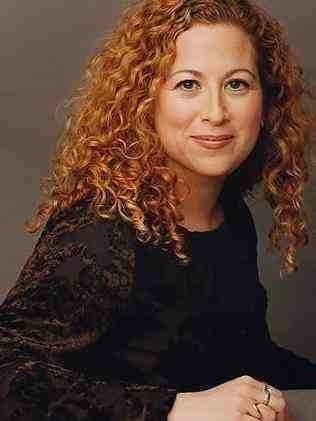
Jodi Picoult is an American author known for her thought-provoking fiction that often explores complex moral dilemmas. Her notable works include My Sister's Keeper, Nineteen Minutes, Small Great Things, Plain Truth, Leaving Time, and The Tenth Circle. Picoult's writing frequently delves into themes of family, justice, and the human experience.
Similar books
- Inkheart
Cornelia Funke
3.9 (369k) average on GoodreadsFantasyFeatures characters who come to life from books and the blurring of reality and fiction.
- Fairest
Gail Carson Levine
4.1 (19k) average on GoodreadsFantasyA fairy tale retelling with a strong, relatable female protagonist.
- A Great and Terrible Beauty
Libba Bray
3.8 (208k) average on GoodreadsFantasyExplores themes of escaping reality and finding magic within ordinary life.
- Harry Potter and the Sorcerer's Stone
J.K. Rowling
4.5 (7M) average on GoodreadsFantasyRescued from a miserable life under the stairs, an orphaned boy discovers he's a wizard destined for a magical school, where he uncovers a dangerous secret tied to the dark wizard who murdered his parents.
- The Hunger Games
Suzanne Collins
4.3 (6.4M) average on GoodreadsFantasyIn a future where children fight to the death on live television, Katniss Everdeen volunteers for the arena, turning a death sentence into a fight for survival and a spark of rebellion.
- To Kill a Mockingbird
Harper Lee
4.3 (4.5M) average on GoodreadsHistorical FictionIn the 1930s Jim Crow South, Harper Lee writes about racial injustice, moral growth, and the quiet courage of a lawyer father, Atticus Finch, as seen through his young daughter's eyes.





Enjoyed the summary?
A summary gives you the shape of the book. The book itself has the detail, the examples and the voice.
Find Between the Lines on AmazonAs an Amazon Associate, BookBrief earns from qualifying purchases. How we're funded