
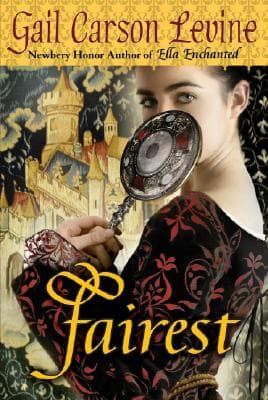
Synopsis
Covers the whole plot, including the ending.
- Difficulty
- Easy
- Pacing
- Moderate
- Mood
- Whimsical, Romantic, Enchanting, Heartwarming
- Read it if
- You enjoy clever fairy tale retellings with strong heroines, musical elements, and a focus on inner beauty.
- Skip it if
- You prefer gritty, dark fantasy or stories with complex magic systems over character-driven fairy tale narratives.
Fairest Plot Summary
Covers the whole plot, including the ending.
Aza's Peculiar Birth and Early Life
Aza is born in the mountains of Ayortha, a land where beauty is highly valued and singing is a cherished art. Unlike her beautiful older sister, Areida, Aza has an unusual appearance: pale, clear skin, white hair, and large, dark eyes. Her nursemaid, Zorka, discovers that Aza has an amazing singing voice that can charm anyone. Despite her singing gift, Aza feels insecure about her looks, always comparing herself to others and believing she is ugly. She spends her early years helping Zorka and improving her unique singing, often using it to entertain and comfort people.
Leaving the Mountains for the Capital
When Aza is a teenager, Zorka, who is getting old, arranges for Aza to leave their mountain village and go to the capital city, Ontio. Aza is to work at the Royal Nursery, caring for the royal children. The journey to Ontio is long, and Aza experiences the wider world for the first time. During her travels, she uses her voice to entertain fellow travelers and earn her way, making her talent even stronger. Arriving in Ontio, she is struck by the city's wealth and size, a sharp contrast to her simple mountain life, and begins her duties at the castle, nervous about her new surroundings.
Encounters with Prince Ijori and Queen Ivi
At Ontio Castle, Aza quickly wins over the royal children with her gentle nature and enchanting songs. She soon catches the eye of Prince Ijori, the handsome and kind heir to the throne, who is captivated by her voice. Aza, despite her shyness, feels drawn to the prince. However, she also meets Queen Ivi, King Uru's new wife, a woman of striking beauty but coldness. Queen Ivi is vain and obsessed with being the fairest in the land, a fact that becomes clear as she interacts with the castle staff and Aza. The queen's presence darkens Aza's otherwise pleasant experiences at court.
The Queen's Mirror and Aza's Secret
Queen Ivi owns a magical looking glass she consults daily, asking, 'Mirror, mirror, who is the fairest one of all?' The mirror always replies that she is. Meanwhile, Aza continues to sing, often unknowingly using her magic to influence those around her. Her voice can make listeners feel, believe, and even obey her words. Queen Ivi eventually hears Aza sing and, recognizing the great power in her voice, begins to take a dangerous interest in her. The Queen, wanting to keep her status as the most beautiful, sees Aza's unique talent as a possible tool or threat to her power.
The Queen's Jealousy and the Hunting Trip
As Aza and Prince Ijori grow closer, and her voice continues to charm the court, Queen Ivi's jealousy grows. The mirror, which once confirmed her beauty, now hints at another, 'fairest' person, though it never names Aza directly. Driven by envy and fear of being replaced, Queen Ivi orders one of her huntsmen, Skulni, to take Aza into the forest, kill her, and bring back her heart as proof. Aza, unaware of the queen's dark plans, is led into the forest on the pretense of a special outing, trusting the huntsman's words.
Aza's Escape and the Seven Dwarves
In the thick forest, Skulni cannot bring himself to kill Aza because of her innocence and perhaps her unintentional vocal charm. He warns her of the queen's plot and urges her to flee. He kills a wild boar and gives its heart to Queen Ivi as Aza's. Lost and scared, Aza wanders through the forest until she finds a small, hidden cottage lived in by seven dwarves: Borri, Norri, Porri, Dorri, Horri, Gorri, and Korri. They are careful at first but quickly like Aza, especially after hearing her sing. Aza finds a safe place with them, helping with chores and entertaining them with her songs.
Life with the Dwarves and a New Name
Aza settles into a comfortable routine with the dwarves, who work in the nearby gem mines. She finds a sense of belonging and happiness with them, something she rarely felt due to her self-consciousness about her looks. The dwarves are charmed by her pale skin and white hair, so different from their own, and lovingly rename her 'Snow White,' a name that, for the first time, makes Aza feel beautiful. She uses her magical voice to help them, often singing to ease their tiredness or inspire them. However, a lingering worry about Queen Ivi still troubles her.
The Queen's Discovery and the Poisoned Apple
Back at the castle, Queen Ivi's mirror eventually reveals that 'Snow White' is still the fairest, confirming Aza's survival. Angered, the queen disguises herself as an old peddler woman and travels to the dwarves' cottage. She tries to kill Aza three times: first with a tight corset, then with a poisoned comb, but each time Aza is revived by the dwarves. On her third try, the queen offers Aza a beautiful, seemingly harmless apple. Aza, not suspecting anything, takes a bite and immediately falls into a deep, death-like sleep, her magical voice silent.
The Dwarves' Grief and the Glass Coffin
The dwarves are heartbroken by Aza's apparent death. They try everything to revive her, but nothing works. Unable to bury her, as she still looks only asleep, they build a beautiful glass coffin and place her inside, setting it on a mountain path so all who pass can admire her calm beauty. They guard her coffin day and night, grieving the loss of their beloved 'Snow White.' Her magical voice, once so alive, is now silent, a sad symbol of their loss and the queen's cruelty.
Prince Ijori's Quest and the True Kiss
News of the beautiful girl in the glass coffin reaches Prince Ijori, who has been searching for Aza since she disappeared. He travels to the mountains and, seeing her, immediately recognizes his beloved Aza. Overwhelmed with grief and love, he bends down and kisses her. At that moment, the piece of poisoned apple dislodges from her throat, and Aza awakens from her deep sleep. Her magical voice returns, and she is filled with joy and relief. Prince Ijori proposes to her, and she accepts, her worries about her looks finally gone because of his true love and acceptance.
The Queen's Downfall and Aza's Coronation
Queen Ivi, still believing herself to be the fairest, consults her mirror one last time. It reveals that the new queen is the fairest. Angered, she demands to know who this rival is. When she discovers it is Aza, now engaged to Prince Ijori, she is invited to the wedding, where she is forced to see Aza's happiness. The queen is ultimately overcome by her own vanity and anger, meeting a tragic end. Aza marries Prince Ijori, becoming the new Queen of Ayortha. She accepts her unique appearance and her magical voice, using her power for good and ruling with kindness and wisdom, finally understanding her true beauty.
Principal Figures
Aza
Protagonist
A young woman with an unusual appearance and a magically enchanting voice.
Aza is a kind-hearted and intelligent young woman from the mountains of Ayortha. She possesses a unique physical appearance – pale skin, white hair, and large dark eyes – which makes her feel deeply insecure and convinced she is ugly. Despite this self-doubt, she has an extraordinary singing voice that can charm, influence, and even compel anyone who hears it. She is initially naive and trusting but grows in confidence and self-acceptance throughout her journey. Her empathy and inherent goodness are central to her character.
Relationships: Zorka (Caring nursemaid and mentor); Areida (Beautiful older sister); Prince Ijori (Love interest and eventual husband); Queen Ivi (Antagonist, stepmother-in-law); The Seven Dwarves (Friends and protectors)
Queen Ivi
Antagonist
The vain and cruel new queen of Ayortha, obsessed with her beauty.
Queen Ivi is exquisitely beautiful on the outside but utterly corrupt and malevolent within. She is consumed by vanity and an insatiable desire to be the fairest in the land, a belief she reinforces through her magical mirror. Her beauty is a facade for her deep-seated insecurity and jealousy, which manifest as cruelty and a willingness to commit murder to maintain her perceived superiority. She is a manipulative and ruthless character, representing the dangers of unchecked vanity and the superficiality of external beauty.
Relationships: King Uru (Husband); Aza (Rival, target of her jealousy and murderous plots); Skulni (Huntsman, unwilling accomplice)
Prince Ijori
Supporting
The kind and handsome prince who falls in love with Aza.
Prince Ijori is the compassionate and perceptive heir to the throne of Ayortha. Unlike his vain stepmother, he values kindness, genuine character, and talent over superficial beauty. He is drawn to Aza's enchanting voice and gentle spirit, seeing past her self-perceived flaws. He demonstrates loyalty and courage by actively searching for Aza after her disappearance and is instrumental in her awakening. He represents true love and the ability to see beauty beyond the physical.
Relationships: Aza (Love interest and eventual wife); Queen Ivi (Stepmother, whom he distrusts); King Uru (Father)
Zorka
Supporting
Aza's kind and protective nursemaid.
Zorka is Aza's devoted nursemaid and one of the few people who truly understands and appreciates Aza's unique qualities from a young age. She is a wise and nurturing figure who acts as Aza's primary caregiver and mentor in her early life. Zorka recognizes the power of Aza's voice and tries to guide her, while also protecting her from the harsh judgments of others. Her decision to send Aza to Ontio, though difficult, is driven by her desire for Aza to have a better life.
Relationships: Aza (Nursemaid and surrogate mother figure)
Skulni
Supporting
The huntsman ordered to kill Aza.
Skulni is Queen Ivi's loyal huntsman, initially tasked with the grim duty of murdering Aza. However, despite his profession, he possesses a moral compass and a sense of humanity. He is unable to bring himself to harm Aza, moved by her innocence and perhaps subconsciously influenced by her voice. He disobeys the queen's cruel order, choosing instead to warn Aza and allow her to escape, demonstrating compassion and a refusal to participate in pure evil. He is a character who chooses righteousness over blind obedience.
The Seven Dwarves
Supporting
A group of gem miners who provide refuge for Aza.
Borri, Norri, Porri, Dorri, Horri, Gorri, and Korri are a group of hardworking and boisterous dwarves who mine for gems in the mountains. They are initially cautious of Aza but quickly welcome her into their home, charmed by her singing and kind nature. They represent community, loyalty, and unconditional acceptance, providing Aza with a safe haven and a sense of belonging during her exile. Each dwarf has a distinct personality, but collectively they offer a loving and protective environment.
Relationships: Aza (Friend and housemate)
Areida
Mentioned
Aza's beautiful older sister.
Areida is Aza's older sister, known for her conventional beauty. She serves primarily as a contrast to Aza, highlighting Aza's early insecurities about her own appearance. While not a major character, her beauty is often referenced by Aza, fueling Aza's feelings of inadequacy in the early parts of the story.
Relationships: Aza (Sister)
King Uru
Mentioned
The King of Ayortha and Queen Ivi's husband.
King Uru is the ruler of Ayortha and Prince Ijori's father. He is depicted as somewhat oblivious to Queen Ivi's true nature and the dark events unfolding in his kingdom, perhaps blinded by her beauty or his own responsibilities. He is a background figure, signifying the power structure within the kingdom but not actively participating in the central conflict until the very end.
Relationships: Queen Ivi (Wife); Prince Ijori (Son)
Themes & Insights
Inner vs. Outer Beauty
This is the main theme of 'Fairest.' The novel constantly contrasts Aza's unusual looks and kind heart with Queen Ivi's stunning beauty and cruel, vain nature. Aza's journey is about learning to see her own inner beauty and unique qualities, rather than being defined by society's rules or her own doubts. Her magical voice, a symbol for her inner self, is what truly captivates others, proving that real worth comes from within. This is clear when Prince Ijori falls for her voice and character, not just her looks, and when the dwarves love her despite her unusual appearance.
“True beauty is not just in what you see, but in what you hear and what you feel.”
Self-Acceptance and Self-Worth
Aza's struggle with her appearance causes deep self-doubt and a feeling of being 'ugly.' Her journey is a strong look at learning to accept oneself, flaws and all. Living with the dwarves, who rename her 'Snow White' and value her for who she is, helps her begin to see herself differently. Her eventual acceptance of her unique appearance and magical voice shows her full acceptance of her identity. The story stresses that true self-worth comes from within and cannot be told by others' opinions or superficial standards, ending with her confident rise to queen.
“She was not beautiful in the way of the world, but in a way that was uniquely her own, a song sung only by her heart.”
The Power of Voice and Art
Aza's magical voice is not just a talent; it is a powerful force that can change emotions, make actions happen, and show truth. This theme highlights the power of art, especially music, to move, inspire, and connect people. Aza uses her voice for good, to comfort children, entertain friends, and eventually to heal. In contrast, Queen Ivi's reliance on a magical mirror (a visual tool) and her inability to appreciate Aza's vocal art shows the difference between surface perception and deep emotional connection. Aza's voice is her true power and her unique gift to the world.
“Her voice was more than just sound; it was a spell, weaving itself into the hearts of all who heard it.”
Jealousy and Vanity
Queen Ivi shows how damaging uncontrolled jealousy and vanity can be. Her obsession with being the 'fairest' leads her to cruelty, manipulation, and ultimately, attempted murder. Her use of the magical mirror means a life lived for superficial approval. This theme warns how seeking outside perfection and envying others' qualities can harm the soul and lead to a tragic end. Her inability to stand anyone being 'fairer' than her shows the emptiness of a life without real connection and kindness.
“Beauty, when it is all one cares for, becomes a prison.”
Fate vs. Choice
While Aza's story follows the familiar path of 'Snow White,' the novel quietly explores the role of choice. Skulni chooses not to kill Aza, the dwarves choose to welcome her, and Prince Ijori chooses to pursue her. Aza herself, despite being passive at first, actively chooses to accept herself and her future. This theme suggests that while some events might be fated, individual choices, especially those based on kindness and love, can change the course of destiny and lead to a more fair and fulfilling outcome. Even with magic, human choice matters a lot.
“Even a prophecy can be bent by a good heart and a strong will.”
Plot Devices & Literary Techniques
Aza's Magical Voice
Aza's extraordinary singing ability that can influence emotions and actions.
Aza's voice is the primary magical element and plot device in the story. It serves multiple functions: it immediately endears her to others (like Zorka, the royal children, and the dwarves), it captures Prince Ijori's attention, and it inadvertently triggers Queen Ivi's jealousy. The voice also subtly protects Aza, as seen when Skulni cannot bring himself to harm her. It is a manifestation of Aza's inner beauty and power, acting as both a source of her insecurity (because it's her only perceived asset) and ultimately her greatest strength. It is a unique twist on the traditional Snow White narrative, giving the protagonist an active, magical ability.
The Magical Looking Glass (Mirror)
Queen Ivi's enchanted mirror that answers questions about beauty.
The magical looking glass is a classic fairy tale device, serving as a catalyst for Queen Ivi's escalating jealousy and cruelty. It functions as a truth-teller, confirming the queen's beauty initially, but then revealing the existence of someone 'fairer' (Aza). This device fuels the central conflict by providing the queen with information that drives her murderous plots. It represents superficiality and the dangerous obsession with external validation, as the queen's entire self-worth is tied to its pronouncements. The mirror's 'truth' directly propels the plot forward by identifying Aza as a threat.
The Poisoned Apple
A seemingly innocent apple used by Queen Ivi to induce a death-like sleep.
The poisoned apple is a critical plot device used by Queen Ivi in her final attempt to eliminate Aza. It symbolizes betrayal, hidden danger beneath a beautiful exterior, and the ultimate act of malice. The apple induces a magical, death-like sleep, creating the dramatic tension of Aza's apparent demise and setting the stage for Prince Ijori's role in her awakening. Its specific function—lodging in Aza's throat—provides a tangible reason for her eventual revival, making the 'true love's kiss' not just a magical cure but a physical dislodgement, adding a layer of grounded fantasy to the magical solution.
The Kingdom of Ayortha's Culture of Song
The societal emphasis on singing and vocal talent in Ayortha.
The cultural backdrop of Ayortha, where singing is deeply valued and practiced, is a crucial plot device that legitimizes and elevates Aza's magical voice. This cultural context ensures that Aza's talent is immediately recognized and appreciated, making her voice a natural part of her world rather than an anomaly. It provides a logical framework for her to develop her abilities and for others to be captivated by them. Without this cultural emphasis, Aza's voice might not have had the same impact or drawn the same attention from characters like Prince Ijori and Queen Ivi, thus altering the entire trajectory of the plot.
Fairest Quotes
“My voice was a gift, but it was also a burden. It made me different, and difference was a dangerous thing in Ayortha.”
“Beauty is a mask, and I am tired of wearing it.”
“What good is a voice if it can only sing pretty songs?”
“A lie is a lie, even if it's a beautiful one.”
“It's not what you are, it's what you do that matters.”
“Sometimes the greatest strength is in knowing when to ask for help.”
“The world doesn't care about your feelings, only your performance.”
“Love isn't about perfection, it's about acceptance.”
“There are many kinds of beauty, and not all of them can be seen with the eyes.”
“A good story needs a good listener.”
“Fear can make you do terrible things, but it can also make you brave.”
“It's hard to be yourself when everyone expects you to be someone else.”
“Sometimes, the right thing to do is the hardest thing to do.”
“Silence can be a powerful thing. It can hide, or it can reveal.”
Quiz
10 questions on the plot and the characters. Each answer comes with a short explanation.
Question 1
What unique magical talent does Aza possess that captivates those who hear her?
- The ability to control weather with her thoughts
- A magical voice that can mimic any sound and entrance listeners
- The power to heal with a touch
- The skill to conjure objects out of thin air
Show answer
B. A magical voice that can mimic any sound and entrance listeners Aza's most prominent magical ability is her voice, which is described as being able to captivate and entrance anyone who hears it.
Question 2
In which kingdom does the story of Fairest take place?
- Kyrria
- Bambara
- Ayortha
- Montaigne
Show answer
C. Ayortha The story explicitly states that the kingdom in which Aza lives is Ayortha.
Question 3
What is the name of the castle where Aza's vocal talents attract the attention of the prince and new queen?
- Emerald Hall
- Ontio Castle
- Silver Spire
- Dragon's Keep
Show answer
B. Ontio Castle The synopsis mentions that Aza's talents attract attention in Ontio Castle.
Question 4
Despite her magical voice, how does Aza initially perceive her own physical appearance?
- She believes she is the most beautiful person in the kingdom.
- She thinks she is plain and ordinary.
- She is thoroughly convinced that she is ugly.
- She is indifferent to her looks, focusing only on her voice.
Show answer
C. She is thoroughly convinced that she is ugly. The book description clearly states, 'She is thoroughly convinced that she is ugly.'
Question 5
What character trait is highlighted as compensating for Aza's perceived lack of beauty?
- Her exceptional intelligence and wit
- Her incredible strength and bravery
- A kind heart
- Her vast knowledge of ancient spells
Show answer
C. A kind heart The synopsis states, 'What she may lack in looks, though, she makes up for with a kind heart.'
Question 6
Beyond the handsome prince, whose attention does Aza's voice attract at Ontio Castle, indicating a potential conflict?
- The King's royal advisor
- A dangerous new queen
- A jealous court musician
- A powerful sorcerer
Show answer
B. A dangerous new queen Her voice attracts the attention of 'a handsome prince - and a dangerous new queen,' foreshadowing a central conflict.
Question 7
What is the overarching journey or discovery Aza embarks on throughout the novel, as suggested by the description?
- She discovers how to defeat a dragon.
- She learns how to wield powerful magic for battle.
- She discovers how exquisite she truly is.
- She finds a hidden treasure that grants wishes.
Show answer
C. She discovers how exquisite she truly is. The final sentence of the synopsis states, 'Gail Carson Levine invites you to join Aza as she discovers how exquisite she truly is,' indicating a journey of self-acceptance and inner beauty.
Question 8
The description highlights 'humour, adventure, romance, and song' as elements of the novel. Which of these is most directly tied to Aza's unique magical ability?
- Humour
- Adventure
- Romance
- Song
Show answer
D. Song Aza's magical talent is her voice, which is directly linked to the element of 'song' within the story.
Question 9
Given the description, what literary trope or fairytale element does 'Fairest' most likely draw inspiration from, particularly concerning Aza's self-perception and a 'dangerous new queen'?
- Cinderella
- Sleeping Beauty
- Snow White
- Beauty and the Beast
Show answer
C. Snow White The elements of a protagonist who believes herself to be 'ugly' (or not the fairest) and a 'dangerous new queen' strongly echo the themes and characters found in 'Snow White'.
Question 10
What is the primary conflict Aza faces regarding her identity and how she is perceived?
- Her struggle to keep her magical voice a secret from the kingdom.
- Her internal battle with self-doubt and her conviction that she is ugly, contrasted with her inner worth.
- Her efforts to escape an arranged marriage to an undesirable suitor.
- Her quest to prove her lineage and claim her rightful place on the throne.
Show answer
B. Her internal battle with self-doubt and her conviction that she is ugly, contrasted with her inner worth. The core of Aza's character is her belief that she is 'ugly,' and the story is about her journey to discover 'how exquisite she truly is,' highlighting an internal conflict of self-worth and perception.
Fairest FAQ
What is the central conflict Aza faces regarding her appearance?
Aza believes herself to be incredibly ugly due to her large mouth and other features, a perception reinforced by the Ayorthan tradition that beauty is paramount. This deep-seated insecurity leads her to avoid mirrors and constantly compare herself unfavorably to others, especially the conventionally beautiful Queen Ivi, despite having an extraordinary singing voice.
How does Aza's unique voice differ from typical singing in Ayortha?
Aza possesses a magical voice, a 'gilded' voice, that can mimic any sound perfectly and entrance listeners, making them feel the emotions she conveys. This is distinct from regular Ayorthan singing, which often involves 'glamours' – magical illusions cast by the singer to enhance their beauty or performance, a skill Aza initially lacks.
Who is Queen Ivi and what is her initial relationship with Aza?
Queen Ivi is the new queen of Ayortha, known for her breathtaking beauty and powerful glamour. Initially, she takes Aza under her wing, appreciating Aza's unique voice and using her as a 'nightingale' to entertain and sing for her, seemingly as a mentor or patron.
What role does Prince Ijori play in Aza's journey?
Prince Ijori is the handsome prince of Ayortha who is captivated by Aza's voice, even when he cannot see her. He becomes a love interest for Aza, seeing beyond her perceived ugliness and appreciating her true self, eventually helping her realize her own worth and beauty.
What is a 'glamour' in the context of Ayorthan magic?
A glamour is a magical illusion used by Ayorthan singers to enhance their appearance or performance, making them seem more beautiful, graceful, or powerful. It's a key part of Ayorthan entertainment and royal custom, but it relies on deception, which contrasts with Aza's authentic voice.
How does the talking mirror in Ontio Castle connect to Queen Ivi's true nature?
The talking mirror, which only tells the truth, serves as a crucial antagonist for Queen Ivi, consistently revealing that Aza is 'fairest' once Aza begins to accept herself. This enrages Ivi, driving her to increasingly desperate and cruel acts against Aza, exposing Ivi's deep-seated vanity and insecurity.
What is the significance of the gnomes and their 'truth-telling' nature?
The gnomes, particularly the gnome king, are creatures who cannot lie and are bound by truth, which makes them immune to glamours and Ivi's deceptions. Their ability to see Aza's inner beauty and her true self, rather than her perceived flaws, helps her begin to understand her own worth.
How does Aza's ability to mimic voices become a plot device against Queen Ivi?
Aza's perfect mimicry allows her to impersonate Queen Ivi's voice, which becomes crucial in exposing Ivi's villainy. She uses this skill to communicate with Prince Ijori and others, revealing Ivi's true intentions and schemes, and ultimately helping to bring about Ivi's downfall.
What is the true nature of Queen Ivi's beauty and how does it relate to her magic?
Queen Ivi's beauty is largely enhanced by powerful glamours and is tied to her magic, which drains her life force. Her obsession with being the 'fairest' drives her to desperate measures, and without her magic, her true, withered appearance is revealed, showing the superficiality of her beauty.
How does Aza's initial self-perception as 'ugly' impact her interactions and choices?
Aza's belief in her ugliness makes her incredibly shy, causes her to avoid social situations, and leads her to believe she is unworthy of love or attention. This insecurity initially makes her susceptible to Queen Ivi's manipulations and hesitant to pursue her feelings for Prince Ijori.
What psychological shift does Aza undergo regarding her voice and self-worth?
Aza initially views her voice as her only redeeming quality, a source of power separate from her 'ugly' self. Over time, she realizes her voice is an extension of her true self and that her inner kindness and courage are what truly make her beautiful, leading to a profound acceptance of her whole being.
Compare the psychological motivations of Aza and Queen Ivi concerning beauty.
Aza's motivation stems from a deep insecurity about her perceived lack of conventional beauty, leading her to seek acceptance for her inner qualities. Queen Ivi, conversely, is driven by an insatiable vanity and fear of losing her beauty and power, leading her to cruelty and a desperate need for external validation.
How does the concept of 'true beauty' evolve for Aza throughout the story?
Aza initially equates beauty with flawless physical appearance, believing herself utterly lacking. Through her interactions with the gnomes, Prince Ijori, and her own self-reflection, she learns that true beauty encompasses kindness, courage, integrity, and the unique light within a person, ultimately seeing her own worth.
Does the book suggest that magic itself can be inherently good or evil, or is it neutral?
The book portrays magic as a neutral force that can be wielded for good or ill. Aza's magical voice, while powerful, is used for genuine expression and connection. Queen Ivi's magic, on the other hand, is twisted for selfish vanity and harm, suggesting that the user's intent defines its moral alignment.
How does 'Fairest' reinterpret or subvert elements of the 'Snow White' fairy tale?
'Fairest' reinterprets 'Snow White' by making the 'fairest' character, Aza, initially believe herself ugly, and by giving her a unique magical ability (her voice) that is not tied to conventional beauty. It shifts the focus from passive victimhood to active self-discovery and agency, with Aza's inner qualities being her true strength.
What is the significance of Aza's 'gilded voice' beyond its magical properties?
Aza's 'gilded voice' represents her unique gift and inner light, a talent so profound it transcends physical appearance. It symbolizes her true self, her ability to connect with others authentically, and ultimately becomes the catalyst for her self-acceptance and the means by which she overcomes adversity.
The Ayorthan tradition values physical beauty above all. How does the story critique this societal value?
The story critiques Ayorthan society's superficiality by showing how it fosters insecurity in Aza and fuels Queen Ivi's destructive vanity. It demonstrates that relying solely on external beauty leads to unhappiness and moral decay, ultimately proving that inner qualities and kindness are far more valuable and enduring.
Is Queen Ivi simply evil, or are there layers to her villainy?
Queen Ivi is not simply evil; her villainy stems from profound insecurity and an all-consuming obsession with external beauty and power. Her fear of aging and losing her 'fairest' status drives her to increasingly desperate and cruel acts, revealing a tragic figure consumed by vanity and a lack of self-worth beyond her appearance.
About the author

Gail Carson Levine is an American author known for her contributions to children's and young adult literature. She is best recognized for her novels such as "Ella Enchanted," a retelling of the Cinderella story, "The Two Princesses of Bamarre," which features themes of bravery and friendship, "Fairest," a unique take on beauty and identity, and "Cinderellis and the Glass Hill," a whimsical twist on classic fairy tales.
Similar books
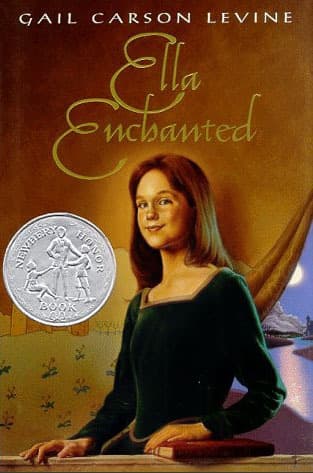
- Ella Enchanted
Gail Carson Levine
4.0 (387k) average on GoodreadsFantasyShares the same author, a strong female protagonist, and a clever twist on a classic fairy tale.
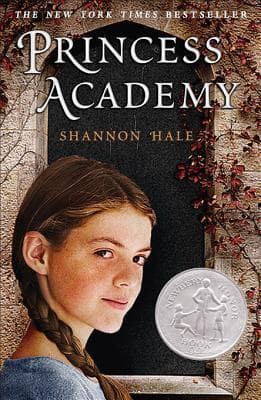
- Princess Academy
Shannon Hale
4.0 (105k) average on GoodreadsFantasyWhile both are YA fantasy books featuring young women navigating royal courts and personal growth, Princess Academy offers a more robust deconstruction of traditional princess tropes. Hale's Miri learns the importance of education, community, and collective female empowerment, whereas Levine's Aza's journey is more singularly focused on her unique vocal ability and individual romantic quest. Princess Academy presents a broader scope of female agency beyond individual talent or romantic love.
- Harry Potter and the Sorcerer's Stone
J.K. Rowling
4.5 (7M) average on GoodreadsFantasyRescued from a miserable life under the stairs, an orphaned boy discovers he's a wizard destined for a magical school, where he uncovers a dangerous secret tied to the dark wizard who murdered his parents.
- The Hunger Games
Suzanne Collins
4.3 (6.4M) average on GoodreadsFantasyIn a future where children fight to the death on live television, Katniss Everdeen volunteers for the arena, turning a death sentence into a fight for survival and a spark of rebellion.
- 1984
George Orwell
4.2 (3.1M) average on GoodreadsPoliticsIn a future where surveillance and thought control are absolute, a man's search for truth clashes with the Party, showing that hope can be a form of rebellion.
- Divergent
Veronica Roth
4.2 (2.9M) average on GoodreadsFantasyIn a society divided by virtues, a sixteen-year-old's difference from the norm starts a rebellion that threatens her world.




Enjoyed the summary?
A summary gives you the shape of the book. The book itself has the detail, the examples and the voice.
Find Fairest on AmazonAs an Amazon Associate, BookBrief earns from qualifying purchases. How we're funded