
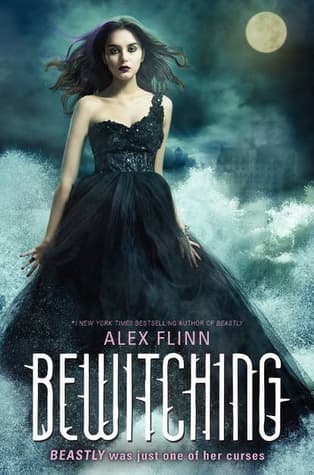
Synopsis
Covers the whole plot, including the ending.
- Difficulty
- Easy
- Pacing
- Moderate
- Mood
- Humorous, Witty, Enchanting, Romantic
Bewitching Plot Summary
Covers the whole plot, including the ending.
A New School and Old Habits
Emma, a seemingly ordinary high school girl, introduces her best friend, Kendra. Kendra is an ancient, immortal witch who looks like a teenager, constantly moving to new schools to avoid suspicion. Kendra recounts her past attempts to meddle in fairy tales, often with disastrous and unintended consequences. For example, she was temporarily killed by hanging after an incident with Hansel and Gretel, and she failed at matchmaking for a French prince. Despite her history, Kendra is drawn to Emma's situation, sensing Emma is being mistreated. Kendra believes she can help Emma navigate her difficult home life, especially concerning her beautiful and manipulative stepsister, Lexa. Kendra wants to intervene, even with her past failures, setting the stage for a new magical intervention.
The Cinderella Story Begins
Emma's home life is difficult. Her father, a kind but often absent-minded professor, has remarried. This brought Lexa and Lexa's equally unpleasant mother, Madame Dubois, into their lives. Emma is relegated to a small, attic-like room and is burdened with chores, while Lexa enjoys a life of luxury and attention. Lexa is not just spoiled; she is actively cruel, constantly belittling Emma and sabotaging her opportunities, including tearing up an application for a prestigious scholarship. Emma's father is oblivious to the mistreatment, making Emma feel isolated and helpless. Kendra observes this with growing indignation, convinced that Emma is a modern-day Cinderella in need of a fairy godmother. Kendra's protective instincts are fully engaged, despite her history of making things worse.
Kendra's First Intervention: The Scholarship
Witnessing Lexa sabotage Emma's scholarship application, Kendra decides to act. She uses a minor spell to ensure Emma's application is found and looks exceptionally impressive, hoping to give Emma an advantage. However, the spell's effects are more dramatic than intended. The scholarship committee is so overwhelmed by Emma's 'perfect' application that they become obsessed with her, creating an awkward and intense situation. Emma does get an interview, but the experience is unnerving, and she feels uncomfortable with the undue attention. This incident highlights Kendra's recurring problem: her magic, while well-intentioned, often has unforeseen and exaggerated consequences. This makes Emma question the true benefit of Kendra's help. It's a classic example of Kendra's 'help' going wrong.
The Prince and the Ball
The school announces a masquerade ball, a highly anticipated event. Lexa plans to attend and intends to sabotage Emma's chances, preventing her from getting a suitable dress or even attending. Kendra, seeing this as another opportunity to play fairy godmother, decides this is the perfect moment for Emma to shine. She subtly manipulates events, ensuring Emma finds a beautiful dress and a ride to the ball. Kendra also learns about the new student, Prince Charming, who has transferred to their school under a pseudonym, and sees him as the ideal match for Emma. Kendra plans to create a magical, unforgettable night for Emma, mirroring the classic Cinderella story, hoping that Emma will capture the Prince's attention and escape her miserable life. She is confident that this time, her magic will work perfectly.
A Magical Night and a Missing Shoe
Emma, against all odds and Lexa's schemes, attends the masquerade ball in a stunning gown, thanks to Kendra's subtle interventions. She meets and dances with Prince Charming, who is captivated by her. The night is magical, and Emma feels a connection with him. However, as the clock approaches midnight, Kendra's magic, in its usual unpredictable fashion, begins to unravel. Instead of simply turning a carriage into a pumpkin, the effects are more chaotic. Emma's beautiful dress starts to transform in an embarrassing way, and she flees the ball in a panic, leaving behind a single, enchanted shoe. The Prince, determined to find his mysterious dancer, begins his quest, unknowingly aided by Kendra's continued, albeit clumsy, magical guidance. The classic fairy tale elements are present, but with Kendra's unique, slightly unhinged touch.
The Prince's Search and Lexa's Deception
Prince Charming, having found the enchanted shoe, searches the school for its owner, hoping to reunite with the girl who captivated him at the ball. Lexa, ever opportunistic and conniving, sees this as her chance to snag the Prince. She attempts to force her foot into the shoe, even resorting to extreme measures, and tries to convince the Prince that she is the girl he danced with, weaving elaborate lies. Kendra, observing Lexa's blatant deception, is furious and uses her magic to subtly expose Lexa's trickery, causing humorous and embarrassing mishaps for Lexa during her attempts to mislead the Prince. The Prince, though initially confused, begins to see through Lexa's facade, slowly realizing that she is not the girl he is looking for. Kendra is determined to ensure Emma gets her rightful recognition.
Kendra's Past Revealed
As the story progresses, Kendra shares more about her long past, revealing her direct involvement in various famous fairy tales. She often acted as the 'fairy godmother' figure, but with her usual unpredictable results. She recounts her interactions with characters from 'Beauty and the Beast,' 'The Little Mermaid,' and other well-known stories, explaining how her attempts to help often led to unexpected twists in their narratives. These flashbacks provide context for Kendra's current approach to Emma's situation, highlighting her good intentions despite her history of accidental chaos. Emma begins to understand the depth of Kendra's experience and the burden of her immortality, as well as Kendra's genuine desire to make things right for her, even if her methods are unconventional and sometimes disastrous.
Lexa's True Nature Exposed
Kendra, tired of Lexa's constant cruelty towards Emma and her attempts to deceive the Prince, decides to escalate her magical intervention. She orchestrates a series of events that expose Lexa's true, wicked nature to Emma's oblivious father. Through subtle spells and carefully timed 'accidents,' Lexa's lies and manipulative behavior are brought to light. Emma's father, finally seeing the extent of his new wife and stepdaughter's mistreatment of Emma, is horrified and deeply regretful of his blindness. This revelation marks a turning point in Emma's home life, as her father begins to take action to protect her and rectify the situation, creating a visible rift within the family dynamic. Kendra feels a sense of triumph, believing she has finally achieved a truly positive outcome.
The Confrontation and Resolution
Following the exposure of Lexa's cruelties, Emma's father confronts Madame Dubois and Lexa directly. The confrontation is intense, with Madame Dubois attempting to deny everything and Lexa trying to manipulate her way out of trouble. However, the evidence is undeniable, thanks to Kendra's persistent magical nudges. Emma's father, now fully aware of the abuse, makes the difficult decision to separate from Madame Dubois, effectively removing Lexa and her mother from their home. This resolution brings a sense of peace and justice to Emma's life, as she is finally free from the constant torment. Kendra observes with satisfaction, confident that she has finally managed to orchestrate a happy ending, or at least a significant improvement, for her friend.
A Happily Ever After (for now)
With Lexa and Madame Dubois gone, Emma's life takes a turn for the better. She is able to pursue her interests without sabotage and enjoys a more harmonious relationship with her father. The Prince, having finally found Emma and realizing she was the girl from the ball, pursues her with genuine affection. They begin a sweet romance, and Emma finally gets her 'happily ever after,' at least for the moment. Kendra, witnessing Emma's newfound happiness, feels a rare sense of accomplishment. She reflects on her long history of botched interventions and realizes that, despite the chaos, her intentions were always pure. She acknowledges that sometimes, even with good intentions, magic can be unpredictable, but in Emma's case, the outcome was ultimately positive, making her consider her future as an immortal 'fairy godmother'.
Principal Figures
Kendra
Protagonist
The immortal, well-intentioned, but often clumsy witch.
Kendra is an ancient, immortal witch who appears to be a perpetual teenager. She has lived for centuries, witnessing and often meddling in various fairy tales, always with the best intentions but frequently with disastrous and unpredictable results. Despite her vast experience, she struggles to control the precise outcomes of her magic, leading to humorous and chaotic situations. She is fiercely loyal to her friends and possesses a strong sense of justice, compelling her to intervene when she sees someone being mistreated. Her past failures weigh on her, but her desire to help is stronger, making her a reluctant but determined fairy godmother figure.
Relationships: Emma (Best friend, mentee); Prince Charming (Subject of matchmaking)
Emma
Protagonist
The modern-day Cinderella.
Emma is a kind, intelligent, and resilient high school student who endures a difficult home life. She is a modern-day Cinderella, burdened with chores and constantly belittled by her stepsister, Lexa, and her stepmother, Madame Dubois. Despite her circumstances, Emma maintains a hopeful spirit and a strong desire for a better life. She is initially hesitant about Kendra's magical interventions, having witnessed their unpredictable nature, but she deeply values Kendra's friendship and support. Emma is observant and thoughtful, often trying to navigate her problems through practical means before Kendra's magic inevitably intervenes.
Relationships: Kendra (Best friend, recipient of magic); Lexa (Stepsister, antagonist); Madame Dubois (Stepmother, antagonist); Father (Loving but oblivious parent); Prince Charming (Love interest)
Lexa
Antagonist
The beautiful, cruel, and manipulative stepsister.
Lexa is Emma's stepsister and the primary antagonist. She is outwardly beautiful, charming, and popular, but beneath the facade lies a deeply selfish, cruel, and manipulative nature. Lexa relishes tormenting Emma, constantly belittling her, sabotaging her opportunities, and demanding attention. She is incredibly vain and believes she deserves everything, including the Prince. Lexa's ambition and ruthlessness drive much of the conflict, as she stops at nothing to get what she wants, even if it means lying and cheating. She is a classic 'evil stepsister' figure, embodying jealousy and malice.
Relationships: Emma (Stepsister, victim of abuse); Madame Dubois (Mother, co-conspirator); Prince Charming (Target of manipulation)
Prince Charming
Supporting
The charming new student searching for his true love.
Prince Charming is a new student at Emma's high school, attending under an assumed name to experience a more normal life. He is genuinely kind, honorable, and discerning, not easily swayed by superficial beauty or flattery. He is captivated by Emma at the masquerade ball, drawn to her inner beauty and spirit. His quest to find the owner of the enchanted shoe drives a significant portion of the plot, mirroring the classic fairy tale. He is persistent and romantic, embodying the ideal prince, and is ultimately able to see through Lexa's deceptions to find his true love.
Relationships: Emma (Love interest); Kendra (Unwitting recipient of magical guidance); Lexa (Target of deception)
Madame Dubois
Antagonist
Lexa's equally cruel and manipulative mother, Emma's stepmother.
Madame Dubois is Lexa's mother and Emma's stepmother. She is just as, if not more, cruel and manipulative than her daughter. She openly favors Lexa, showering her with attention and material possessions, while actively participating in the mistreatment and neglect of Emma. Madame Dubois is cunning and skilled at maintaining a veneer of respectability, making it difficult for Emma's father to see her true nature. She is driven by social climbing and a desire for her daughter to marry well, especially to a prince. She is the archetypal 'evil stepmother' figure, providing the structural support for Lexa's malice.
Relationships: Lexa (Daughter, co-conspirator); Emma (Stepmother, abuser); Father (Husband, ultimately separated)
Emma's Father
Supporting
The kind but oblivious professor.
Emma's father is a well-meaning but often absent-minded professor. He genuinely loves Emma but is tragically oblivious to the extent of the mistreatment she suffers at the hands of Madame Dubois and Lexa. He is easily manipulated by his new wife and stepdaughter, believing their fabricated stories and overlooking Emma's quiet suffering. He represents the kind of parental figure who means well but fails to protect his child due to a lack of awareness. His eventual realization of the truth is a crucial turning point, leading him to finally stand up for Emma.
Relationships: Emma (Daughter, protected); Madame Dubois (Wife, ultimately separated); Lexa (Stepdaughter)
Themes & Insights
The Dangers of Well-Intentioned Meddling
This theme explores how even the best intentions, when coupled with unpredictable power, can lead to unforeseen and often chaotic consequences. Kendra, despite her centuries of experience and her genuine desire to help, consistently finds her magical interventions going wrong, creating more problems than she solves. The narrative highlights the delicate balance between helping others and allowing them to navigate their own paths, suggesting that true assistance might sometimes mean stepping back or offering support in less overt ways. It questions whether a 'happily ever after' engineered by magic is truly authentic or sustainable.
“I want to help, but things just go awry in ways I could never predict.”
Modern Takes on Classic Fairy Tales
The novel recontextualizes classic fairy tale tropes within a contemporary high school setting. It explores how timeless narratives like Cinderella's can appear in modern life, complete with cruel stepsisters, oblivious parents, and a charming prince. By placing an ancient witch like Kendra, who has lived through and influenced these original tales, into this modern scenario, the book offers a commentary on the enduring power and adaptability of these stories. It examines how the core elements of good versus evil, true love, and transformation resonate across different eras, while also adding humor and self-awareness to the familiar narratives.
“Bewitching can be a beast. . . .Once, I put a curse on a beastly and arrogant high school boy. That one turned out all right.”
Inner Beauty vs. Outer Appearance
This theme is central to the Cinderella story and is explored through the contrast between Emma and Lexa. Lexa possesses stunning outward beauty and popularity, which she uses to manipulate and deceive, revealing an ugly inner character. Emma, though initially overlooked and plain due to her circumstances, possesses kindness, intelligence, and resilience, which constitute her true beauty. The Prince, despite being surrounded by beautiful and ambitious girls, is drawn to Emma's genuine spirit, reinforcing the idea that true worth lies beyond superficial appearances. Kendra's magic often highlights this contrast, sometimes humorously, by exposing Lexa's true nature or enhancing Emma's hidden qualities.
“Her gorgeous stepsister is conniving to the core. I think I have just the thing to fix that girl—and it isn’t an enchanted pumpkin.”
The Burden of Immortality and Experience
Kendra's immortality is not presented as a pure blessing but also as a burden. While it grants her vast knowledge and magical abilities, it also means she constantly witnesses suffering and feels compelled to intervene, often with frustrating results. Her centuries of life have given her perspective but haven't necessarily made her wiser in the practical application of her powers. The theme highlights the loneliness of being immortal, constantly moving and seeing generations pass, and the weight of carrying so much history and so many past failures. It questions whether endless life truly leads to perfect wisdom or merely a longer list of mistakes.
“I’m not still here because I’m stupid; I just don’t age. You see, I’m immortal. And I pretty much know everything after hundreds of years—except for when to take my powers and butt out.”
Plot Devices & Literary Techniques
First-Person Narrative (Kendra)
Provides an immortal, self-aware, and often humorous perspective.
The story is told from Kendra's first-person point of view, allowing readers direct access to her ancient wisdom, her often-misguided intentions, and her humorous self-awareness regarding her past magical mishaps. This perspective creates an intimate connection with the protagonist, making her relatable despite her extraordinary nature. It also allows for a meta-commentary on fairy tales, as Kendra recounts her direct involvement in their original tellings, adding depth and a unique voice to the modern retelling. Her internal monologues provide both exposition and comedic relief, shaping the overall tone of the novel.
Fairy Tale Tropes and Allusions
Reimagines classic fairy tale elements in a contemporary setting.
The novel heavily relies on and playfully subverts classic fairy tale tropes, particularly those from 'Cinderella.' Elements like the cruel stepsister and stepmother, the oblivious father, the magical transformation for a ball, the charming prince, and the lost shoe are all present but are given a modern, often humorous twist through Kendra's interventions. The allusions extend beyond Cinderella, with Kendra referencing her past involvement in 'Beauty and the Beast' and 'The Little Mermaid,' enriching the narrative with a sense of established magical history and demonstrating how these timeless stories continue to resonate and adapt.
Unpredictable Magic
Kendra's magic often has unintended and exaggerated consequences.
Kendra's magic serves as a key plot device, driving much of the conflict and humor. It is consistently portrayed as powerful but unpredictable, rarely delivering the precise outcome Kendra intends. This unpredictability creates tension and comedic situations, as Kendra's spells often go 'awry' in unexpected ways, forcing her and Emma to deal with the exaggerated consequences. This device highlights the theme of well-intentioned meddling and ensures that even seemingly straightforward magical solutions lead to complications, making the resolution more earned and less magically instant.
Flashbacks
Reveals Kendra's long history and past magical failures.
Throughout the narrative, Kendra intersperses her current story with flashbacks to her past, detailing her involvement in other well-known fairy tales. These flashbacks serve to establish Kendra's character, her long history, and her consistent pattern of well-intentioned but flawed magical interventions. They provide context for her current approach to helping Emma and underscore the theme of the burden of immortality. These snippets from her past also add a layer of intertextuality, connecting 'Bewitching' to a broader canon of fairy tale literature and reinforcing Kendra's role as a perpetual, albeit clumsy, fairy godmother.
Quiz
10 questions on the plot and the characters. Each answer comes with a short explanation.
Question 1
What is the protagonist's primary reason for attending a new high school?
- She is new to the town.
- She doesn't age and wants to avoid suspicion.
- She is trying to escape a curse.
- She is looking for a specific person.
Show answer
B. She doesn't age and wants to avoid suspicion. The protagonist explicitly states, 'I go to a new school now—one where no one knows that I should have graduated long ago. I’m not still here because I’m stupid; I just don’t age.' This indicates her immortality is the reason for attending a new school.
Question 2
The protagonist describes herself as immortal. What does this mean in the context of the story?
- She can live forever but gets old.
- She cannot be killed and does not age.
- She can only be killed by magical means.
- She ages very slowly.
Show answer
B. She cannot be killed and does not age. The text says, 'I just don’t age. You see, I’m immortal.' Later, when recounting a past event, she mentions, 'After I came back from the dead (immortal, remember?).' This confirms she doesn't age and can return from death.
Question 3
Which of the following is NOT an example of the protagonist's past misadventures mentioned in the text?
- Cursing a beastly and arrogant high school boy.
- Being hanged after trying to free children from a gingerbread house.
- Being banished from France for playing matchmaker.
- Turning a stepsister into a pumpkin.
Show answer
D. Turning a stepsister into a pumpkin. The text mentions all the other options as past events. The protagonist states, 'Like when I tried to free some children from a gingerbread house and ended up being hanged.' and 'After I came back from the dead (immortal, remember?), I tried to play matchmaker for a French prince and ended up banished from France forever.' She also mentions a curse on a high school boy. Turning a stepsister into a pumpkin is not mentioned; she only implies she has a plan for the stepsister.
Question 4
Who is the current person the protagonist feels compelled to help?
- A French prince.
- A mermaid.
- Emma.
- The arrogant high school boy.
Show answer
C. Emma. The text concludes with, 'Now a girl named Emma needs me.' This clearly identifies Emma as the person requiring her help.
Question 5
What is the protagonist's main internal conflict regarding her powers?
- She is afraid of her own powers.
- She struggles to control her powers.
- She doesn't know when to use her powers and when to refrain from interfering.
- She wishes she didn't have powers at all.
Show answer
C. She doesn't know when to use her powers and when to refrain from interfering. The protagonist reflects, 'And I pretty much know everything after hundreds of years—except for when to take my powers and butt out.' This highlights her struggle with knowing when to intervene and when to let things be.
Question 6
What is the protagonist's attitude towards her past interventions?
- She is proud of her accomplishments.
- She regrets most of her actions.
- She views them as learning experiences, even if they went wrong.
- She believes her intentions were always good, despite the outcomes.
Show answer
C. She views them as learning experiences, even if they went wrong. While she acknowledges things 'go awry' and recounts negative outcomes like being hanged or banished, her continued willingness to help and her reflection on knowing 'when to take my powers and butt out' suggest she learns from these experiences rather than purely regretting them. She states, 'I want to help, but things just go awry...' showing a persistent desire to help despite past failures.
Question 7
The phrase 'Bewitching can be a beast' suggests what about the protagonist's use of her powers?
- Her powers are inherently evil.
- Using her powers can lead to unpredictable and negative consequences.
- She is often forced to use her powers against her will.
- Her powers are difficult to control.
Show answer
B. Using her powers can lead to unpredictable and negative consequences. The opening line, 'Bewitching can be a beast,' combined with the subsequent examples of her powers leading to negative outcomes, implies that the act of 'bewitching' or using her magic can be wild, uncontrollable, and lead to difficult situations.
Question 8
What is the protagonist's goal regarding Emma's gorgeous stepsister?
- To turn her into a pumpkin.
- To curse her.
- To fix her, implying a change in her conniving nature.
- To banish her from France.
Show answer
C. To fix her, implying a change in her conniving nature. The protagonist says, 'I think I have just the thing to fix that girl—and it isn’t an enchanted pumpkin.' This indicates her intention is to 'fix' the stepsister, likely by changing her conniving behavior, rather than a specific magical transformation like a pumpkin or a curse.
Question 9
The protagonist's immortality is presented as a double-edged sword. Which aspect highlights this duality?
- She can live forever but is lonely.
- She has vast knowledge but lacks judgment on when to act.
- She can return from death but experiences great pain.
- She doesn't age but is unable to form lasting relationships.
Show answer
B. She has vast knowledge but lacks judgment on when to act. The text explicitly states she 'pretty much know[s] everything after hundreds of years—except for when to take my powers and butt out.' This directly contrasts her vast knowledge (a benefit of immortality) with her poor judgment on intervention (a consequence of her long life and perhaps detachment).
Question 10
Based on the text, what can be inferred about the protagonist's powers?
- They are limited to curses and match-making.
- They are primarily defensive.
- They are potent and can have unintended, significant consequences.
- They are only effective on high school boys.
Show answer
C. They are potent and can have unintended, significant consequences. The examples provided (cursing a boy, dealing with a gingerbread house, playing matchmaker, dealing with a stepsister) show a range of magical interventions. The recurring theme is that her attempts to 'help' often result in unexpected and negative outcomes, suggesting her powers are potent and unpredictable, not limited or defensive.
Bewitching FAQ
What is the genre of the book Bewitching by Alex Flinn?
Bewitching is a Young Adult fantasy novel with strong elements of romance. It features magic, mythical creatures, and a timeless protagonist.
Who is the main character in Bewitching?
The main character is an immortal witch who does not age. She has lived for hundreds of years and often interferes in the lives of mortals, usually with unpredictable and chaotic results.
What is the premise of Bewitching?
The story follows an immortal witch who tries to help people, but her interventions often lead to magical mishaps and unexpected consequences. She finds herself drawn into a new situation involving a girl named Emma and her conniving stepsister.
What kind of powers does the protagonist have in Bewitching?
The protagonist is a witch with a variety of magical abilities, including the power to curse people and bewitch them. Her powers are potent but she struggles with knowing when to use them or when to stay out of mortal affairs.
Does Bewitching have romance elements?
Yes, Bewitching is also a romance novel. The protagonist's immortal nature and her interactions with mortals often lead to romantic entanglements, and the story involves a potential love interest.
Is Bewitching similar to other Alex Flinn books like Beastly?
While both are fantasy novels by Alex Flinn with YA and romance elements, Bewitching features an immortal witch protagonist with a long history of magical interventions, which differs from the fairy tale retelling focus of Beastly.
What kind of challenges does the protagonist face in Bewitching?
The protagonist faces the challenge of her own uncontrolled magic and her tendency to meddle. She has a history of causing problems, even when trying to help, and must navigate the complexities of mortal lives and relationships.
What is the age of the protagonist in Bewitching?
The protagonist is hundreds of years old and immortal, meaning she does not age. While she appears to be a teenager or young adult, her true age is far beyond that.
What does 'bewitching' mean in the context of the book?
In the book, 'bewitching' refers to the protagonist's magical ability to influence or enchant people, often with unintended consequences. It also reflects the captivating and sometimes dangerous nature of her involvement in the lives of others.
Is Bewitching suitable for young adults?
Yes, Bewitching is categorized as Young Adult fiction, dealing with themes relevant to teenagers such as school, relationships, and navigating difficult social situations, albeit with a magical twist.
About the author

Alex Flinn is a best-selling author known for her captivating young adult fantasy novels. Her notable works include "Beastly," a modern retelling of Beauty and the Beast, and "Bewitching," which explores themes of magic and romance. Flinn's imaginative storytelling and relatable characters have earned her a dedicated readership in the fantasy genre.
Similar books
- A Curse So Dark and Lonely
Brigid Kemmerer
4.1 (53k) average on GoodreadsFantasy"Bewitching" shares with "A Curse So Dark and Lonely" (a Beauty and the Beast retelling) the theme of a cursed protagonist and the exploration of a magical world within or alongside our own. However, Flinn's approach is more expansive, drawing from multiple fairy tales and focusing heavily on the origins of the curse and the 'villain's' perspective. Kemmerer's novel places a stronger emphasis on the romantic development and the emotional journey of the main characters within a more singular, focused retelling, whereas Flinn's scope is broader, connecting several classic stories.
- Harry Potter and the Sorcerer's Stone
J.K. Rowling
4.5 (7M) average on GoodreadsFantasyRescued from a miserable life under the stairs, an orphaned boy discovers he's a wizard destined for a magical school, where he uncovers a dangerous secret tied to the dark wizard who murdered his parents.
- The Hunger Games
Suzanne Collins
4.3 (6.4M) average on GoodreadsFantasyIn a future where children fight to the death on live television, Katniss Everdeen volunteers for the arena, turning a death sentence into a fight for survival and a spark of rebellion.
- 1984
George Orwell
4.2 (3.1M) average on GoodreadsPoliticsIn a future where surveillance and thought control are absolute, a man's search for truth clashes with the Party, showing that hope can be a form of rebellion.
- Divergent
Veronica Roth
4.2 (2.9M) average on GoodreadsFantasyIn a society divided by virtues, a sixteen-year-old's difference from the norm starts a rebellion that threatens her world.
- The Hobbit, or There and Back Again
J.R.R. Tolkien
4.3 (2.9M) average on GoodreadsFantasyA comfort-loving hobbit named Bilbo Baggins is whisked away by a mischievous wizard and a band of dwarves on an unexpected journey to reclaim stolen treasure from a fearsome dragon, discovering courage and a magical ring along the way.





Enjoyed the summary?
A summary gives you the shape of the book. The book itself has the detail, the examples and the voice.
Find Bewitching on AmazonAs an Amazon Associate, BookBrief earns from qualifying purchases. How we're funded