

Synopsis
Covers the whole plot, including the ending.
- Difficulty
- Medium
- Pacing
- Moderate
- Mood
- Dark, Suspenseful, Intense, Psychological
- Read it if
- You enjoy psychological thrillers set in a high school, exploring themes of power, rebellion, and revenge, with complex, morally ambiguous characters.
- Skip it if
- You prefer lighthearted stories, clear-cut heroes and villains, or a narrative with a consistently optimistic tone.
Beyond the Chocolate War Plot Summary
Covers the whole plot, including the ending.
The Aftermath and the List
The school year at Trinity is ending, but the chocolate sale and Jerry Renault's defiance still affect everyone. Archie Costello, the Vigils' Assigner, prepares his last assignments before graduation. Obie, Archie's long-suffering right-hand man, watches Archie's careful process with mixed feelings of resentment and interest. Obie is tired of Archie's games and his control over Trinity. Archie enjoys his power, but he also feels a growing distance from the Vigils, knowing his rule is almost over. He takes pleasure in creating assignments that will secure his legacy and punish those who have subtly defied him or simply annoyed him.
Obie's Growing Discontent
Obie's inner struggle grows as he continues to serve Archie. He has been Archie's pawn for too long, enduring many humiliations and carrying out assignments he hates. Jerry Renault's stand against the chocolate sale, though ultimately defeated, sparked a rebellion in Obie. He begins to plan his revenge against Archie, a carefully orchestrated scheme to expose Archie's true nature and finally break his hold on Trinity. Obie's plan is not physical; it is psychological warfare, like Archie's own tactics, aiming to strip Archie of his power and reputation before he can leave Trinity unharmed.
The New Arrivals and Early Assignments
As the school year winds down, a few new students arrive at Trinity. These include Benny Carbone, a quiet, artistic boy, and a more outgoing, athletic student. These newcomers quickly become targets for the Vigils' assignments, especially those designed by Archie. Benny Carbone receives a seemingly harmless assignment that slowly becomes a public humiliation, meant to test his resolve and the students' obedience. These early assignments remind everyone of the Vigils' pervasive power, even as Archie's time ends. The incidents also give Obie more proof of Archie's cruelty, solidifying his decision to bring him down.
Goobler and the Retaliation
Goobler, a student who suffered during the previous chocolate sale, carries deep resentment. He was forced to eat too many chocolates, leading to illness and public ridicule. Now, Goobler seeks his own revenge, not directly against Archie, but against Emile Janza, who Goobler believes betrayed him during the chocolate sale and contributed to his torment. Goobler's plan is less complex than Obie's, driven by anger and a desire for immediate payback. His actions show the ripple effect of the Vigils' manipulations and the lasting psychological scars on their victims, demonstrating how the cycle of abuse can continue even without Archie's direct involvement.
The Black Box and Its Power
The Black Box, the Vigils' ultimate decider of assignments, becomes key to Archie's final acts. It contains white marbles and one black marble; drawing the black marble means Archie must do the assignment himself. Archie, confident in his ability to control fate, uses the Black Box to avoid responsibility and seem fair, even as he designs the assignments. He carefully plans a particularly humiliating and public assignment for Brother Leon, the acting Headmaster, as a final act of defiance and a way to show his power over the school administration. The Black Box legitimizes his actions for the Vigils, even if its real purpose is to protect Archie.
Brother Leon's Vulnerability
Brother Leon, still dealing with the fallout from the chocolate sale and the public relations disaster, is in a difficult position. Other faculty members question his authority, especially Brother Eugene, who criticizes his methods and the chaos he allowed. Archie, always observant, sees Brother Leon's weakness and an opportunity for a grand finale. He devises an assignment that will publicly humiliate Brother Leon, exposing his weakness and further undermining his shaky authority. This act is not just revenge for the past but Archie's way of showing his ultimate power to disrupt and control even Trinity's highest levels.
Obie's Trap for Archie
Obie's detailed plan to expose Archie finally unfolds. He has been gathering evidence, manipulating situations, and subtly turning other Vigils members against Archie. His main goal is to force Archie to draw the black marble from the Black Box, not for a simple assignment, but for one that will reveal Archie's manipulative nature to the entire school and administration. Obie arranges events so that Archie will be trapped, unable to escape the results of his own system. This is Obie's final stand against the tyranny he has endured, a desperate attempt to regain his own control and dismantle Archie's reign.
The Confrontation and the Revelation
The climax arrives when Obie's trap works, forcing Archie into a situation where he cannot avoid drawing the black marble for an assignment that will expose his manipulative genius to the entire school. The reveal of Obie's long-term planning and deep resentment shocks Archie, who had always seen Obie as a loyal, though resentful, subordinate. The carefully built illusion of the Black Box's fairness collapses, and Archie faces the public humiliation he often inflicted on others. This moment forces Archie to confront the true cost of his power and the deep anger he has created in those around him.
The Fallout and Archie's Departure
With his manipulations exposed and his authority broken, Archie Costello is finally stripped of his power. The image of the perfect Assigner is shattered, and he must leave Trinity in disgrace. While not a complete victory for all his victims, his departure marks the end of his rule. The school, however, must deal with the lasting effects of the Vigils' influence and the void left by Archie's absence. The ending is ambiguous, suggesting that while one tyrant is gone, the underlying systems and human weaknesses that allowed him to thrive may still exist.
The Lingering Shadows
Even with Archie gone, the Vigils' scars remain. Students like Goobler still deal with their personal vendettas, and power dynamics within Trinity are uncertain. The novel ends with a sense of unease, suggesting that the culture of conformity and subtle cruelty that defined Trinity might not be entirely gone with Archie's departure. The question of who will fill the void, or if the school will truly change, lingers. The story implies that real change requires more than removing one person; it demands a basic shift in the institution itself and the attitudes of its students.
Beyond the Chocolate War Characters
Archie Costello
Antagonist
The manipulative Assigner of The Vigils, a master of psychological warfare.
Archie is the brilliant but sadistic mastermind behind The Vigils, Trinity's secret society. He thrives on manipulation, control, and the psychological torment of others. His intelligence is undeniable, but it's channeled into cruel games and exercises of power. He sees people as pawns and enjoys orchestrating elaborate schemes that expose their weaknesses and force them into submission. Archie is detached and rarely shows genuine emotion, viewing the world as a stage for his elaborate experiments in human nature. He is driven by a desire for control and a perverse amusement in observing the suffering of others.
Relationships: Obie (His resentful, long-suffering right-hand man and eventual betrayer.); Brother Leon (A figure of authority whom Archie subtly undermines and eventually targets for humiliation.); The Vigils (The organization he controls and uses as an instrument of his will.)
Obie
Protagonist
Archie's resentful right-hand man, secretly plotting his downfall.
Obie is Archie's loyal but deeply resentful assistant in The Vigils. He is a meticulous observer, often the one to carry out Archie's assignments, but he despises Archie's cruelty and the power he wields. Obie has endured years of manipulation and humiliation, leading to a simmering hatred that he keeps carefully concealed. He is intelligent and calculating, and his quiet demeanor masks a strong desire for justice and revenge against Archie. Unlike Archie, Obie possesses a sense of morality, however buried, which makes his complicity in The Vigils' acts a source of internal conflict.
Relationships: Archie Costello (His tormentor and the object of his revenge.); Roland Goubert (Goobler) (A fellow victim of The Vigils' cruelty, though Obie's revenge is more calculated.)
Brother Leon
Supporting
The acting Headmaster of Trinity, struggling to maintain control and authority.
Brother Leon is the acting Headmaster of Trinity, a man whose ambition often outstrips his competence and ethics. He is insecure and easily manipulated, particularly by Archie, who exploits Leon's desire for control and his fear of public scrutiny. Leon is primarily concerned with appearances and maintaining his position, often at the expense of the students' well-being. He represents the corrupt and hypocritical aspects of the adult authority figures at Trinity, who either enable or turn a blind eye to The Vigils' activities. His vulnerability makes him a prime target for Archie's final acts of defiance.
Relationships: Archie Costello (A student who manipulates and ultimately humiliates him.); Brother Eugene (A fellow faculty member who questions his methods and authority.)
Roland Goubert (Goobler)
Supporting
A former victim of The Vigils, seeking his own form of revenge.
Goobler is a student who suffered greatly during the previous chocolate sale, forced to eat an excessive amount of chocolates as a Vigil assignment. This experience left him traumatized and filled with a burning desire for retribution. He is less calculating than Obie, driven by raw anger and a need for immediate satisfaction. Goobler's actions highlight the lasting psychological damage inflicted by The Vigils and the potential for a cycle of violence and revenge to continue even after the initial torment. He represents the victims who struggle to cope with their past and seek their own, often less effective, forms of justice.
Relationships: Emile Janza (The object of Goobler's revenge, whom he blames for his past torment.); Archie Costello (The ultimate orchestrator of his past suffering.)
Emile Janza
Supporting
A brutal and volatile member of The Vigils, known for his physical intimidation.
Emile Janza is one of the more physically imposing and violent members of The Vigils. He is a bully who enjoys inflicting pain and intimidation, often acting as Archie's enforcer. Janza lacks Archie's intellectual cunning but makes up for it with sheer brutality and a willingness to follow orders, especially if they involve violence. He is a dangerous and unpredictable element within Trinity, feared by many students. His presence reinforces the physical threat that underpins The Vigils' psychological control. Janza is a tool, but a formidable one, in Archie's arsenal.
Relationships: Archie Costello (His leader and the source of his assignments.); Roland Goubert (Goobler) (His victim and later, the one seeking revenge against him.)
Brother Eugene
Supporting
A concerned teacher who questions Brother Leon's leadership.
Brother Eugene is a more ethical and compassionate teacher at Trinity who expresses concern over the moral decay and unchecked power within the school. He represents a glimmer of conscience within the faculty, openly questioning Brother Leon's methods and the pervasive influence of The Vigils. While he lacks the power to directly challenge Archie, his presence highlights the failings of the adult world to protect the students and maintain a just environment. He is a voice of reason, though often unheard, in a school dominated by fear and manipulation.
Relationships: Brother Leon (A colleague whose leadership and ethics he openly questions.)
Benny Carbone
Supporting
A new student who becomes an early target for The Vigils' assignments.
Benny Carbone is a quiet, artistic new student at Trinity. He is initially unaware of the school's intricate power dynamics and quickly becomes an unwitting pawn in The Vigils' games. His artistic nature and mild-mannered personality make him an easy target for Archie's psychological torment, designed to test his compliance and the student body's obedience. Benny represents the innocent victims who are drawn into Trinity's dark underbelly, highlighting the casual cruelty of The Vigils and the way new arrivals are quickly assimilated into the school's oppressive culture.
Relationships: Archie Costello (The orchestrator of his early torment.)
Carter
Supporting
The President of The Vigils, often overshadowed by Archie's influence.
Carter is the official President of The Vigils, but his authority is largely symbolic. He is physically imposing and athletic, but lacks Archie's intellectual prowess and manipulative genius. Carter often finds himself deferring to Archie, even when he disagrees with his methods, demonstrating the true power dynamic within the organization. He is a figurehead, representing the outward strength of The Vigils, but ultimately controlled by Archie's cunning. His role highlights how power can be held by those who appear to lead, but truly rests with those who manipulate behind the scenes.
Relationships: Archie Costello (The true power behind The Vigils, whom Carter often defers to.)
Beyond the Chocolate War Themes
The Corrupting Nature of Power
The novel explores how unchecked power corrupts individuals and institutions. Archie Costello, as the Vigils' Assigner, holds absolute psychological power over his peers and even the faculty, using it for personal amusement and control. Brother Leon similarly abuses his administrative power for personal gain and to hide his own mistakes. This theme appears in Archie's assignments, designed for humiliation, and in Brother Leon's focus on the school's image over student well-being. The book suggests that power without accountability leads to tyranny and moral decline.
“The Vigils did not simply exist. They were a power, a force, a secret society that touched everyone at Trinity, even the teachers, even the Headmaster.”
Revenge and Retribution
Revenge drives several characters. Obie's carefully planned scheme to expose Archie stems from years of resentment and humiliation. Goobler, traumatized by his past experience, seeks his own payback against Emile Janza. These acts of revenge highlight the cycle of violence and suffering that the Vigils create. While Obie's revenge is calculated and aims to dismantle Archie's system, Goobler's is more emotional and potentially self-destructive. The novel questions whether revenge brings closure or simply continues the cycle of pain.
“He had lived too long in Archie’s shadow, a willing stooge, and now it was time for payment.”
Conformity Versus Individualism
The conflict between conformity and individualism appears repeatedly. Trinity, under the Vigils' influence, demands absolute conformity from its students. Those who defy, like Jerry Renault in the previous book, or new students like Benny Carbone who initially resist, face severe psychological and social punishment. Archie's assignments aim to break individualism and enforce obedience. Obie's eventual rebellion, however, is a powerful act of individualism, a refusal to remain a pawn. The novel explores the immense pressure to conform in a hierarchical system and the courage needed to break free, even at great personal cost.
“Trinity was a world of its own, with its own rules, its own gods, and its own punishments for those who dared to defy them.”
The Nature of Evil
The book explores the nature of evil, showing it not as a monstrous force but as a calculating, detached manipulation by Archie Costello. Archie's evil is intellectual and psychological, taking pleasure in observing and orchestrating others' suffering without direct physical violence. This contrasts with Emile Janza's more obvious, physical bullying. The novel suggests that evil can thrive where authority figures are weak or corrupt, and where bystanders are too afraid or uncaring to intervene. Archie's ability to manipulate without apparent remorse raises questions about the origins and continuation of such malevolence.
“Archie Costello was a genius, a master of manipulation, a boy who understood the dark corners of the human heart.”
The Illusion of Control
Archie carefully creates the illusion that he is always in control, both of the Vigils and of his assignments' outcomes. The Black Box is a prime example, appearing random and fair while Archie subtly manipulates its use. However, the novel ultimately shows this illusion's fragility. Obie's carefully planned revenge shatters Archie's sense of invincibility, exposing his manipulations to the school. This theme highlights that even the most cunning manipulators can be undone by unforeseen factors or their victims' quiet determination, proving that absolute control is ultimately impossible.
“He loved the illusion of control, the way he could pull the strings and watch the puppets dance.”
Plot Devices & Literary Techniques
The Black Box
A symbolic tool used by The Vigils to legitimize assignments and shield Archie.
The Black Box is a small, wooden box containing white marbles and one black marble. It's used to decide whether the Assigner (Archie) must perform an assignment himself. Its function is primarily symbolic: it lends an aura of impartial fate and tradition to The Vigils' often cruel assignments, while also providing Archie with a convenient alibi or a way to deflect responsibility. In reality, Archie often manipulates the circumstances surrounding its use. It becomes a crucial element in Obie's plan to expose Archie, turning Archie's own device against him and forcing him to confront the consequences of his system.
Psychological Manipulation
Archie's primary weapon, used to control and torment his victims.
Psychological manipulation is Archie's signature tactic. He rarely resorts to physical violence himself, instead preferring to break down his victims mentally through public humiliation, social ostracization, and carefully crafted assignments that exploit their fears and weaknesses. This device is evident in how he designs tasks for new students like Benny Carbone, and in his overarching control over The Vigils. The novel showcases the insidious power of psychological warfare, demonstrating how it can be far more damaging and pervasive than physical harm, leaving lasting scars on its victims.
The Vigils
Trinity's secret society, an instrument of power and control.
The Vigils are the secret student organization that holds immense, unofficial power at Trinity. They operate outside the official school hierarchy, dictating social norms and enforcing their will through a system of 'assignments' engineered by Archie. This device represents the corrupting influence of an unchecked power structure within an institution. The Vigils create an atmosphere of fear and conformity, where students are constantly aware of their presence and the potential for retribution. The organization serves as the primary antagonist, a collective entity that embodies the oppressive forces at play in Trinity.
The Unreliable Narrator (Subtle)
Though mostly third-person, the narrative subtly shifts perspectives, influencing reader perception.
While primarily told in a third-person omniscient style, the narrative subtly employs elements of an unreliable perspective, particularly when detailing Archie's internal thoughts or the perceptions of other characters. The reader is often privy to Archie's cynical and detached worldview, which can initially normalize his manipulative actions. Conversely, the narrative also delves into Obie's simmering resentment, painting Archie in a darker light. This device creates tension and forces the reader to critically evaluate the characters' motivations and the morality of their actions, preventing a simplistic good-versus-evil interpretation and reflecting the ambiguous moral landscape of Trinity.
Beyond the Chocolate War Quotes
“The world was a conspiracy of noise and shouting, and he was the only one who could not hear.”
“He knew that there were no easy answers, no magic solutions. There was only the battle, and the hope that he would not be destroyed.”
“The truth was, he liked the silence. It was a place where he could think, where he could be himself.”
“Sometimes, the hardest thing to do was to do nothing at all.”
“He saw the faces, the eyes, the hunger. And he knew that he was one of them, whether he wanted to be or not.”
“There was a fine line between courage and foolishness, and he often wondered which side he was on.”
“The silence was a weapon, too, sometimes, more powerful than any shout.”
“He was learning that the world was not always fair, that good intentions did not always lead to good results.”
“The battle was not over. It had only just begun.”
“He felt a coldness settle within him, a realization that some things, once broken, could never be truly mended.”
“The world had a way of twisting things, of making the innocent guilty and the guilty innocent.”
“He was an outsider, always would be, and in that knowledge, there was a strange kind of freedom.”
“The darkness was not just outside; it was inside, too, waiting.”
Quiz
10 questions on the plot and the characters. Each answer comes with a short explanation.
Question 1
What is the primary motivation behind Obie's actions as the school year draws to a close?
- He wants to take over leadership of the Vigils from Archie.
- He is planning a surprise for Archie, possibly as a form of rebellion or revenge.
- He is trying to gain more power within the Vigils by recruiting new members.
- He is attempting to reconcile with Jerry Renault after the events of the chocolate war.
Show answer
B. He is planning a surprise for Archie, possibly as a form of rebellion or revenge. The synopsis explicitly states, 'Archie is troubled by his right-hand man, Obie, who has started to move away from the Vigils. Luckily, Archie knows his stooges will fix that. But won't Archie be shocked when he discovers the surprise Obie has waiting for him?' This indicates Obie's actions are leading to a surprise for Archie.
Question 2
Which character is described as the 'commander of the secret school organization called the Vigils' and is still handing out 'torturous assignments'?
- Obie
- Jerry Renault
- Archie Costello
- Brother Leon
Show answer
C. Archie Costello The text states, 'Devious Archie Costello, commander of the secret school organization called the Vigils, stall has some torturous assignments to hand out before he graduates.'
Question 3
What past event is mentioned as something 'no one at Trinity School can forget'?
- The annual school fair
- The Chocolate War
- The football championship
- A major school prank
Show answer
B. The Chocolate War The first paragraph clearly states, 'But no one at Trinity School can forget The Chocolate War.'
Question 4
How does Archie Costello initially plan to address Obie's growing distance from the Vigils?
- He plans to confront Obie directly.
- He intends to assign Obie a particularly difficult task to reassert control.
- He believes his 'stooges' will fix the problem.
- He decides to ignore Obie, hoping he will return on his own.
Show answer
C. He believes his 'stooges' will fix the problem. The synopsis mentions, 'Archie is troubled by his right-hand man, Obie, who has started to move away from the Vigils. Luckily, Archie knows his stooges will fix that.'
Question 5
What is the overarching theme suggested by the phrase 'The time for revenge has come to those boys who secretly suffered the trials of Trinity'?
- The importance of forgiveness and moving on from past grievances.
- The cyclical nature of power and corruption within a school system.
- The eventual backlash against bullying and oppression.
- The struggle for academic excellence among students.
Show answer
C. The eventual backlash against bullying and oppression. The phrase directly implies that those who suffered previously are now seeking retribution, indicating a theme of revenge or backlash against past injustices.
Question 6
What is the state of the school year at the beginning of 'Beyond the Chocolate War'?
- It has just begun, with new students arriving.
- It is nearing its end, with graduation approaching for some.
- It is mid-year, during the peak of school activities.
- It has been suspended due to an unforeseen event.
Show answer
B. It is nearing its end, with graduation approaching for some. The opening line states, 'The school year is almost at an end, and the chocolate sale is past history.' Archie's actions are also described as 'before he graduates.'
Question 7
What specific characteristic is used to describe Archie Costello in the provided text?
- Charismatic
- Devious
- Benevolent
- Indecisive
Show answer
B. Devious The text introduces him as 'Devious Archie Costello, commander of the secret school organization called the Vigils.'
Question 8
The phrase 'The fuse is set for the final explosion' most strongly suggests what kind of outcome for the narrative?
- A peaceful resolution to all conflicts.
- An inevitable and dramatic confrontation or climax.
- A gradual decline in school morale.
- The formation of new alliances among students.
Show answer
B. An inevitable and dramatic confrontation or climax. The metaphor of a 'fuse' leading to an 'explosion' strongly implies an impending, significant, and likely destructive or highly impactful climax to the story's rising tensions.
Question 9
Given Archie's position as the 'commander of the Vigils' and his use of 'torturous assignments,' what does the synopsis imply about the power dynamics within Trinity School?
- The school administration maintains strict control over all student activities.
- Student organizations like the Vigils wield significant, unsupervised power over their peers.
- Students are largely independent and free from any hierarchical structures.
- The power dynamics are constantly shifting, with no single dominant group.
Show answer
B. Student organizations like the Vigils wield significant, unsupervised power over their peers. Archie's ability to hand out 'torturous assignments' and the existence of a 'secret school organization' like the Vigils, coupled with the suffering of other boys, suggests that student-led groups hold considerable, unchecked power within the school's social structure.
Question 10
The question 'Who will survive?' at the end of the synopsis implies what about the upcoming events?
- A literal physical threat to the students' lives.
- A period of intense emotional, social, or psychological struggle for the characters.
- A competition where only one student can emerge victorious.
- A challenge to see who can maintain their grades until the end of the year.
Show answer
B. A period of intense emotional, social, or psychological struggle for the characters. While 'survive' could imply physical danger, in the context of a young adult novel about school power struggles and revenge, it more commonly refers to enduring severe emotional, social, or psychological trials and maintaining one's integrity or standing.
Beyond the Chocolate War FAQ
What is the central conflict driving the plot of 'Beyond the Chocolate War'?
The central conflict revolves around the escalating power struggles and desires for revenge within Trinity School, particularly as the school year ends. Archie Costello, still commanding the Vigils, faces challenges from former allies like Obie, while other students who suffered during the chocolate sale seek retribution against Archie and his enforcers.
How does the legacy of the previous 'Chocolate War' impact the events in this sequel?
The aftermath of the chocolate sale, especially Jerry Renault's defiance and the subsequent chaos, casts a long shadow over Trinity. It fuels the resentment of students like Obie and Emile Janza, who felt manipulated or wronged, and sets the stage for their desire to dismantle Archie's control or exact personal revenge.
Who is Obie and what is his primary motivation in this book?
Obie is Archie Costello's former right-hand man in the Vigils, who has grown disillusioned with Archie's manipulative nature and the Vigils' cruelty. His primary motivation is to finally break free from Archie's influence and orchestrate a downfall for Archie, proving that even the puppet master can be outmaneuvered.
What role does Archie Costello play now that the chocolate sale is over, and what troubles him?
Archie Costello remains the cunning commander of the Vigils, delighting in assigning torturous tasks and maintaining his reign of psychological terror. However, he is increasingly troubled by Obie's growing independence and the subtle signs that his absolute control over the school might be weakening, despite his outward confidence.
Are there new characters introduced, or does the story focus solely on existing characters?
While the story primarily focuses on the established characters like Archie, Obie, and Emile Janza, their evolving dynamics and internal struggles are explored in greater depth. The narrative delves into how past events have shaped their current motivations and interactions, rather than introducing many new faces.
What is the 'surprise' Obie has planned for Archie, and how does it unfold?
Obie's surprise for Archie involves a meticulously planned psychological trap designed to expose Archie's vulnerability and dismantle his authority. He manipulates events and other students to create a scenario where Archie is publicly discredited and stripped of his power, rather than through direct physical confrontation.
How do characters like Emile Janza or Goober react to the lingering effects of the chocolate war?
Emile Janza, still resentful over his public humiliation during the chocolate war, becomes a volatile and unpredictable force, seeking opportunities for violent revenge. Goober, on the other hand, is likely still grappling with the trauma and disillusionment, potentially retreating further or finding quiet ways to resist the prevailing cruelties.
Are there any subtle clues or foreshadowing of Obie's plan early in the narrative?
Yes, subtle clues appear in Obie's detached observations of Archie, his internal monologues questioning Archie's methods, and his increasing reluctance to carry out Vigils assignments. These internal shifts foreshadow his eventual decision to actively work against Archie, rather than merely resent him.
What is the significance of the 'fuse being set for the final explosion' in the book's description?
The 'fuse being set' refers to the culmination of all the simmering resentments, desires for revenge, and power struggles. It signifies that the various plots and counter-plots, particularly Obie's machinations and Janza's violent tendencies, are all converging towards a decisive and potentially destructive climax at Trinity.
How does Archie's character evolve, or remain static, in the face of challenges?
Archie's core manipulative and cruel nature remains largely static; he continues to thrive on psychological control. However, he is forced to confront the limits of his power and the possibility of his own fallibility, leading to moments of genuine, albeit brief, vulnerability and fear when his schemes are threatened.
What psychological toll do the Vigils' assignments take on the students involved, both victims and perpetrators?
The Vigils' assignments inflict deep psychological scars on victims, fostering paranoia, fear, and a sense of powerlessness, as seen in Jerry's breakdown. Perpetrators like Obie experience moral corrosion and guilt, leading to internal conflict and a desire for redemption, while others like Janza become further desensitized and prone to violence.
How does Obie's transformation from Archie's 'stooge' to orchestrator of his downfall reflect themes of agency and moral awakening?
Obie's transformation represents a powerful moral awakening, as he reclaims his agency by rejecting his role as Archie's compliant 'stooge.' It highlights the theme that even those complicit in cruelty can experience a shift in conscience, choosing to actively fight against oppression rather than passively endure it.
What psychological impact does the constant threat of the Vigils have on the general student body at Trinity?
The constant threat of the Vigils creates an pervasive atmosphere of fear, suspicion, and conformity among the general student body. It fosters a culture where students are hesitant to speak out or defy authority, lest they become the next target, thereby stifling individuality and promoting passive obedience.
Does the book offer any hope for true reform or lasting change at Trinity, or does it suggest a cyclical nature of power and cruelty?
The book largely suggests a cyclical nature of power and cruelty, where even if one tyrant falls, the underlying systems that allow such power to flourish persist. While Obie's actions may bring temporary relief, the narrative often implies that the institutional culture of Trinity makes lasting reform difficult, leaving the future uncertain.
How does the ending of 'Beyond the Chocolate War' compare in tone and resolution to the first book?
The ending of 'Beyond the Chocolate War' offers a different kind of resolution than its predecessor. While the first book ended on a note of bleak, almost hopeless defeat for Jerry, this sequel might provide a more complex or even ambiguous resolution regarding Archie's fate, potentially hinting at a shifting power dynamic rather than a clear victory of good over evil.
What is the author's message about the nature of power, control, and rebellion in this specific context?
Robert Cormier explores how power can corrupt absolutely, not just through overt force but through psychological manipulation. The book suggests that true rebellion requires not just defiance, but also cunning and an understanding of the oppressor's weaknesses, highlighting the complex and often morally ambiguous nature of fighting for freedom.
Could Obie's actions be interpreted as a form of manipulation themselves, mirroring Archie's tactics?
Yes, Obie's actions can certainly be interpreted as a form of manipulation, as he employs strategic planning, deception, and the exploitation of others' weaknesses to achieve his goal of taking down Archie. This raises a crucial interpretive question about whether fighting fire with fire ultimately makes Obie no better than his adversary, or if his intentions justify his means.
How does the book challenge traditional notions of heroism and villainy?
The book challenges traditional notions by presenting characters who are morally complex; Archie, though a clear antagonist, possesses a chilling intelligence, while Obie, the 'hero' figure, resorts to manipulative tactics. This blurs the lines, suggesting that in the harsh world of Trinity, pure heroism or villainy is rare, and survival often requires compromising one's ideals.
About the author

Robert Cormier was an American author known for his young adult fiction that often explores complex themes of morality and the human experience. His notable works include The Chocolate War, After the First Death, Heroes, Tenderness, Beyond the Chocolate War, and We All Fall Down. Cormier's writing is characterized by its realistic portrayal of adolescence and its challenges.
Similar books
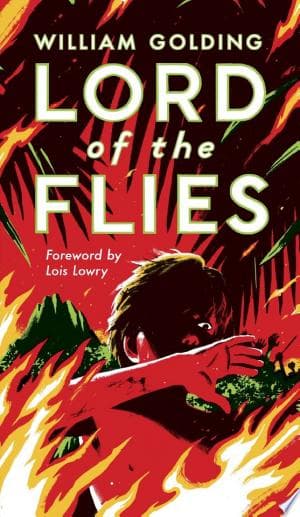
- Lord of the Flies
William Golding
3.7 (2.3M) average on GoodreadsYoung AdultExplores the darker aspects of human nature and power dynamics within a confined, unsupervised group.
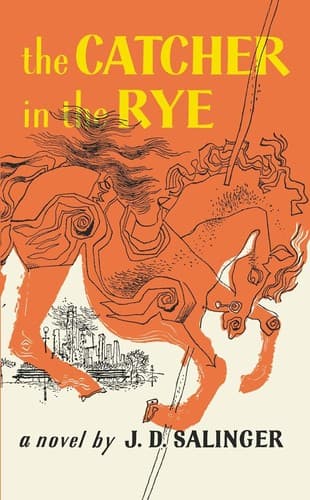
- The Catcher in the Rye
J.D. Salinger
3.8 (2.7M) average on GoodreadsYoung AdultFeatures a disillusioned adolescent protagonist navigating the hypocrisies of his school and society.
- A Separate Peace
John Knowles
3.6 (191k) average on GoodreadsHistorical FictionDeals with complex male friendships, rivalry, and the emotional turmoil of adolescence in a boarding school setting.
- Harry Potter and the Sorcerer's Stone
J.K. Rowling
4.5 (7M) average on GoodreadsFantasyRescued from a miserable life under the stairs, an orphaned boy discovers he's a wizard destined for a magical school, where he uncovers a dangerous secret tied to the dark wizard who murdered his parents.
- The Hobbit, or There and Back Again
J.R.R. Tolkien
4.3 (2.9M) average on GoodreadsFantasyA comfort-loving hobbit named Bilbo Baggins is whisked away by a mischievous wizard and a band of dwarves on an unexpected journey to reclaim stolen treasure from a fearsome dragon, discovering courage and a magical ring along the way.
- Harry Potter and the Goblet of Fire
J.K. Rowling
4.6 (2.6M) average on GoodreadsFantasyA bewildered Harry Potter, underage and thrust into a deadly Triwizard Tournament, must brave dragons, mermaids, and a resurgent dark magic to survive a year that will forever alter the wizarding world.




Enjoyed the summary?
A summary gives you the shape of the book. The book itself has the detail, the examples and the voice.
Find Beyond the Chocolate War on AmazonAs an Amazon Associate, BookBrief earns from qualifying purchases. How we're funded