
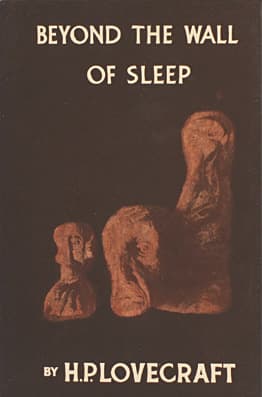
Synopsis
Covers the whole plot, including the ending.
- Difficulty
- Medium
- Pacing
- Variable
- Mood
- Atmospheric, Eerie, Dread-inducing, Nihilistic, Mysterious
- Read it if
- You enjoy classic cosmic horror, existential dread, and stories that explore the boundaries of human perception and sanity. Perfect for those new to Lovecraft or looking for a comprehensive collection of his work.
- Skip it if
- You prefer clear-cut resolutions, optimistic narratives, or are easily disturbed by themes of madness, grotesque descriptions, and the insignificance of humanity.
Beyond The Wall Of Sleep Plot Summary
Covers the whole plot, including the ending.
Beyond the Wall of Sleep
The unnamed narrator, a medical intern, meets Joe Slater, an uneducated, violent man from the Catskill Mountains, at a state asylum. Slater has intense, vivid dreams during which he shows unusual mental activity and speaks an unknown language. The narrator records Slater's brainwaves and finds an abnormally high frequency during these dreams. He believes Slater's mind, free from normal thought, receives cosmic energies. During one strong dream, a bright light comes from Slater. The narrator then shares a vision of two light beings fighting in space. He recognizes one as Slater's true cosmic self, an entity called 'An alien entity'. The vision is overwhelming, suggesting a vast existence beyond human understanding.
From Beyond
Crawford Tillinghast, a brilliant but private scientist, invents a device that stimulates the pineal gland. This lets people see dimensions beyond the usual five senses. He invites the narrator to his house to show the invention. At first, the narrator only sees a faint glow around objects. But as Tillinghast increases the machine's power, strange, invisible creatures appear, feeding on the energy around them. Tillinghast says these entities always live with humanity but are normally unseen. The narrator is horrified as Tillinghast's own appearance changes, seemingly from the machine. The experiment becomes terrifying, showing the thin line between our reality and other horrifying dimensions.
The Doom That Came to Sarnath
The story tells of Sarnath, a grand city built by humans in the land of Mnar. The people of Sarnath, proud and advanced, conquer the old, amphibian-like beings of Ib. They kill them and steal their idol, a green, carved image of their god, Bokrug. They put the idol in their temple as a trophy, making fun of the old gods. A thousand years pass. Sarnath thrives, its people forgetting the doom they brought upon Ib. On the anniversary of Ib's destruction, the king of Sarnath holds a big feast. As the party peaks, a terrible change happens: the city's people vanish, replaced by Ib's monstrous, frog-like beings. The city itself sinks into the lake, fulfilling an old prophecy and avenging the killed gods.
The Quest of Iranon
Iranon, a beautiful young king of Aira, is unhappy with his rich but ordinary kingdom. He longs for a legendary city of gold and marble, a place of beauty and art he has only seen in dreams. He leaves his throne and starts a long, hard journey. He travels through various lands, charming people with his stories and songs of the city he seeks. He meets different people, from humble shepherds to cynical bards, who first admire his dreams. However, as years pass and Iranon ages, his quest fails. His beauty fades, and fewer people listen to him. He eventually finds himself in a desolate, forgotten place, realizing his glorious city was only a childhood dream, which leads to deep sadness.
The Outsider
The narrator lives in a crumbling, old castle, alone. He remembers no parents or childhood, only dark hallways and one barred window showing a desolate view. Wanting light and company, he climbs the castle's decaying tower. After days of effort, he comes out into a graveyard and then into a moonlit world he has never known. He sees a joyful party in a nearby castle, full of people. Desperate to connect, he tries to join them, but his appearance causes screams and panic. Seeing his reflection in a pool, he sees a decaying, monstrous corpse. He realizes he is the 'outsider,' a creature of the crypts, and his search for belonging is useless.
The White Ship
Basil Elton, a lighthouse keeper, finds comfort from his dull life by dreaming of a mysterious white ship near his lighthouse. One night, the ship's captain invites him aboard. Basil starts a fantastic journey to wonderful lands: Zar, the land of dreams; Thalarion, the city of a thousand wonders; and Sona-Nyl, the land of fancy. Each land offers beauty and joy, fulfilling Basil's deepest desires. However, Basil wants even greater beauty and insists on sailing to Cathuria, the Land of Promise, against the captain's warnings. The ship sails into a dangerous, misty sea. Basil eventually finds himself shipwrecked back near his lighthouse, remembering nothing of the white ship or the lands he visited, only a deep, sad longing for something lost.
The Tree
In ancient Greece, on a remote island, two famous sculptors, Kalos and Musides, are close friends and artistic rivals. The ruler commissions them to create a grand monument. While working, Musides becomes very ill. On his deathbed, he asks Kalos to plant two olive saplings at his grave and never touch them. Kalos, driven by ambition and jealousy, lets Musides die. He then finishes the monument, claiming all credit for the design. Over Musides' grave, the olive trees grow quickly and large, intertwining in a strange, almost living way. One day, a huge branch from one tree falls, destroying Kalos's finished monument and killing him. This seems like a poetic, supernatural revenge for Musides' betrayal.
Nyarlathotep
Nyarlathotep, a strange, dark-skinned man like an ancient Egyptian pharaoh, comes from Egypt and travels the world. He performs unsettling, pseudo-scientific shows, creating electricity and manipulating strange, unexplainable forces. His presence brings widespread unease and a feeling of coming doom. As he gains followers, he leads them into deeper, more terrifying experiences, ending in visions of cosmic horrors and reality falling apart. Cities crumble, stars shift, and humanity goes mad. The story becomes a broken, impressionistic account of global collapse. It reveals a vast, uncaring cosmic order, with Nyarlathotep as its herald, bringing an era of universal dread and the end of all known things.
The Horror in the Museum
Stephen Jones, a skeptical and somewhat arrogant man, visits George Rogers' wax museum. Rogers specializes in macabre and mythological figures. Jones dismisses Rogers' claims that some creations are not wax but preserved specimens of unspeakable beings. Jones is especially drawn to a statue of 'Rhan-Tegoth,' a monstrous, tentacled entity. Driven by morbid curiosity and wanting to prove Rogers wrong, Jones buys the museum. After acquiring it, he looks at the Rhan-Tegoth figure more closely. His doubt turns to terror when he finds that the 'wax' is flesh, and the creature is alive, or at least preserved in a horrifying, animated state. The story ends with Jones's gruesome death. He becomes another 'exhibit' in the museum, consumed by the very horror he tried to disprove.
The Call of Cthulhu
The story starts with the death of Professor George Gammell Angell, a linguist. His great-nephew, Francis Wayland Thurston, inherits his papers. Thurston finds a strange carving of a monstrous, winged creature and unsettling notes about a global outbreak of madness, bizarre dreams, and a cult. These notes lead him to investigate the cult, which worships an ancient entity called Cthulhu, sleeping in the sunken city of R'lyeh. He learns of a police raid on a swamp cult in Louisiana led by Inspector Legrasse. Legrasse found the same idol and heard cultists chanting 'Ph'nglui mglw'nafh Cthulhu R'lyeh wgah'nagl fhtagn' ('In his house at R'lyeh dead Cthulhu waits dreaming'). Thurston also finds the firsthand account of a Norwegian sailor, Gustaf Johansen. Johansen survived an encounter with Cthulhu and R'lyeh after his ship, the Emma, found the risen city. Johansen's tale details Cthulhu's horrifying awakening, the madness it causes, and the entity's huge, cosmic indifference. Thurston pieces together the terrifying truth: Cthulhu is real, and its awakening means humanity's destruction.
Beyond The Wall Of Sleep Characters
The Narrator (Beyond the Wall of Sleep)
Protagonist
A curious medical intern who delves into the cosmic nature of dreams.
An unnamed medical intern at a state asylum, he possesses an academic and scientific curiosity that extends beyond conventional medicine. He is open to unconventional theories, particularly concerning the human mind and its potential connection to broader cosmic forces. His fascination with Joe Slater's strange dreams leads him to experiment and ultimately experience a profound, consciousness-altering vision.
Relationships: Joe Slater (Doctor-patient; ultimately, a cosmic connection through shared dreams)
Joe Slater
Supporting
An uneducated, violent recluse whose dreams are a conduit to a cosmic existence.
A man from the Catskill Mountains, described as crude, uneducated, and prone to violent outbursts in his waking life. However, in his dreams, he exhibits extraordinary mental activity, speaking in an unknown language and seemingly accessing a higher plane of existence. He serves as a vessel or receiver for an 'alien entity' whose true form is a being of pure light engaged in celestial combat.
Relationships: The Narrator (Beyond the Wall of Sleep) (Patient-doctor; unwilling participant in a cosmic experiment)
Crawford Tillinghast
Protagonist/Antagonist
A reclusive scientist who invents a device to perceive unseen dimensions.
A brilliant but eccentric and reclusive scientist with a radical understanding of reality. He believes that humanity is blind to most of existence and creates a machine to stimulate the pineal gland, allowing perception of other dimensions. His ambition and disregard for safety lead him to push the boundaries of perception, with horrifying consequences for himself and those around him.
Relationships: The Narrator (From Beyond) (Collaborator/demonstrator; ultimately, a source of terror)
Iranon
Protagonist
A dreamy king who abandons his throne in search of a mythical city of beauty.
A young king of Aira, blessed with beauty and a poetic soul, but discontent with the mundane prosperity of his kingdom. He is an idealist, driven by an unwavering belief in a legendary, beautiful city of gold and marble he has only seen in dreams. His quest is for ultimate aesthetic fulfillment, leading him on a lifelong journey of wandering and storytelling.
The Outsider
Protagonist
A being raised in utter isolation, yearning for light and companionship.
A mysterious, nameless entity who has lived his entire existence in a dark, crumbling castle, isolated from all other life. He possesses an intense longing for light, beauty, and human connection, despite never having experienced them. His narrative is one of profound loneliness and a desperate quest for belonging and self-discovery.
Basil Elton
Protagonist
A lighthouse keeper who escapes his mundane life on a fantastical dream-ship.
A solitary lighthouse keeper who finds his mundane existence unbearable. He is a dreamer, longing for beauty and wonder beyond his everyday reality. His imagination manifests a mysterious white ship, which becomes his conduit to fantastical dream-lands. He is driven by an insatiable aesthetic curiosity, always seeking a more perfect vision of beauty.
Relationships: The Captain of the White Ship (Mysterious guide/enabler of his dream journey)
Nyarlathotep
Antagonist/Cosmic Entity
A dark, charismatic herald of cosmic doom and madness.
A mysterious, ancient entity who emerges from Egypt, resembling a pharaoh. He is a master of illusion, science, and cosmic manipulation, capable of performing unsettling feats and inspiring both awe and terror. Nyarlathotep acts as a messenger and agent of the Outer Gods, ushering in an era of global madness, societal collapse, and the revelation of humanity's insignificance in the face of cosmic horror.
Relationships: Humanity (Enslaves and drives to madness; a cosmic tormentor)
Stephen Jones
Protagonist
A skeptical man whose morbid curiosity leads him to a gruesome end.
A self-assured, cynical man who prides himself on his rationalism and skepticism. He is intrigued by the macabre but dismisses supernatural claims. His arrogance and morbid curiosity drive him to investigate George Rogers' wax museum, particularly the figure of Rhan-Tegoth, believing he can debunk its mysteries. This overconfidence ultimately leads to his horrifying demise.
Relationships: George Rogers (Antagonist/rival; source of cosmic horror)
Francis Wayland Thurston
Protagonist
An academic who pieces together the terrifying truth of Cthulhu's cult.
The great-nephew of Professor George Gammell Angell, Thurston is an intelligent and diligent academic who, upon inheriting his uncle's papers, meticulously investigates a series of disturbing clues. He is initially skeptical but possesses an open mind and a logical approach to piecing together disparate accounts of madness, cults, and strange idols. His investigation leads him to confront the horrifying reality of Cthulhu's existence.
Relationships: Professor George Gammell Angell (Great-uncle; his research provides the initial clues); Gustaf Johansen (Source of firsthand account of Cthulhu)
Beyond The Wall Of Sleep Themes
Cosmic Indifference and Horror
Many stories here show humanity's smallness in the vast, uncaring cosmos. Ancient, powerful beings exist beyond human understanding, often sleeping or acting on scales too large for mortals. Their awakening or presence can break human sanity and reality. The horror comes not from evil intent, but from their alien nature and the realization that human life is a fragile, unimportant accident. This is clear in 'The Call of Cthulhu,' where Cthulhu's awakening causes widespread madness, and in 'Nyarlathotep,' where the entity's arrival brings the collapse of civilization. These stories show that our reality is only a thin cover over unspeakable truths.
“The most merciful thing in the world, I think, is the inability of the human mind to correlate all its contents.”
The Peril of Forbidden Knowledge
A repeated theme is the danger of seeking knowledge beyond what humans can handle. Characters who explore forbidden lore or try to see hidden dimensions often die horribly or go mad. This theme is key to 'From Beyond,' where Crawford Tillinghast's device reveals horrifying unseen entities, leading to his grotesque change. Similarly, the narrator in 'Beyond the Wall of Sleep' gains a deep, though terrifying, understanding of cosmic existence through Joe Slater. This hints at the mental strain such knowledge brings. The stories suggest some truths are best left unknown to keep sanity and safety.
“We live on a placid island of ignorance in the midst of black seas of infinity, and it was not meant that we should voyage far.”
The Fragility of Reality and Sanity
Lovecraft often explores how easily human perception and sanity can break when faced with the truly alien. The line between waking life and dreams, or between known and other dimensions, is often thin. Characters like the narrator in 'Beyond the Wall of Sleep' find their understanding of reality challenged by shared dreams. Others in 'Nyarlathotep' see the world literally fall apart. The human mind cannot process cosmic truths, often leading to madness, catatonia, or death. This theme highlights that our perceived reality is a delicate structure, easily broken by forces beyond our control.
“I can see the hands of the clock, but I cannot tell the time.”
The Allure and Peril of Dreams and Imagination
Dreams often act as ways to other realms, both wonderful and terrifying. While they offer escape from daily life and visions of beauty, they can also connect people to cosmic horrors or lead to deep disappointment. In 'The Quest of Iranon,' the main character's search for a dream-city leads him to a life of wandering and, finally, despair. 'The White Ship' shows Basil Elton's dream voyages to fantastic lands, but his ultimate quest to Cathuria results in loss and a return to normal life. 'Beyond the Wall of Sleep' presents dreams as a link for cosmic consciousness, blurring the lines between individual minds and the universe.
“I knew that in sleep I had been in a place of heaven, and that I could never go back to that place again.”
Plot Devices & Literary Techniques
Cosmic Entities (The Great Old Ones/Outer Gods)
Ancient, powerful, and often indifferent beings from beyond human comprehension.
These entities, such as Cthulhu, Nyarlathotep, and the 'alien entity' in 'Beyond the Wall of Sleep,' are central to Lovecraft's cosmic horror. They operate on scales far beyond human morality or understanding, often slumbering in deep space or other dimensions. Their mere presence or awakening can cause widespread madness, natural disasters, and the collapse of civilization. They represent the ultimate cosmic indifference and the terrifying truth that humanity is insignificant in the grand scheme of the universe.
Forbidden Texts and Lore
Ancient, blasphemous books and fragmented accounts that reveal cosmic truths.
Works like the 'Necronomicon' (though primarily referenced in 'The Call of Cthulhu') and the various papers and notes discovered by characters, serve as vital plot drivers. These texts contain knowledge of cosmic entities, ancient cults, and unspeakable rituals. They act as both a source of exposition and a warning, luring characters into dangerous investigations while simultaneously hinting at the horrors that await those who delve too deeply into their contents. They represent knowledge that is too profound and dangerous for the human mind to safely comprehend.
The Unreliable Narrator
A narrator whose sanity or perspective is compromised by cosmic horror.
Many Lovecraft stories are told from the first-person perspective of individuals who are either driven mad, deeply traumatized, or whose understanding of reality has been irrevocably altered by their experiences. This device enhances the sense of cosmic horror by making the reader question the veracity of the events, thereby amplifying the psychological impact. The fragmented, desperate tone often conveys the narrator's descent into madness, as seen in 'The Outsider' or the implied mental state of the narrator after witnessing Nyarlathotep's manifestations, reinforcing the idea that some truths are too terrible for the human mind.
Dreams as Portals
Dreams that serve as conduits to other dimensions or cosmic consciousness.
Dreams are frequently used as a mechanism for characters to access realms beyond waking reality, revealing both wonders and horrors. In 'Beyond the Wall of Sleep,' Joe Slater's dreams are a direct connection to a cosmic entity, allowing the narrator to share in a vision. 'The White Ship' features Basil Elton's dream voyages to fantastical lands, showcasing the allure and escapism dreams offer. This device blurs the line between the conscious and unconscious, suggesting that the human mind holds keys to other dimensions, but often at a profound psychological cost.
Beyond The Wall Of Sleep Quotes
“I have seen the dark universe yawning, where unseen things toiled and whirled.”
“It was then that I began to know terror in its most hideous, primal form.”
“For the things of a man's brain are unknown till some one opens the bone and sees what is there.”
“He was, in fact, a typical specimen of the inbred mountain white, with a history of family lunacy.”
“There was a fiendish, unearthly glitter in his half-closed eyes, and his thin lips were drawn back in a horrible sneer.”
“The very stars were different, and the constellations wholly alien.”
“I felt myself in the grip of a power that was not of this earth.”
“Such was the fate of Joe Slaader, the madman, and such the story of my first real contact with the ultra-mundane.”
“The doctors called it mania, but I knew it was something else—something vast and terrible.”
“He was merely a channel, a conduit for forces beyond our comprehension.”
“I saw cities of light, and monstrous, cyclopean structures that defied all earthly architecture.”
“The wall of sleep, they call it. But sometimes, something breaks through.”
“And the horror of it was not in the death, but in the life beyond.”
“My mind, though sane, was reeling under the impact of unutterable things.”
Quiz
10 questions on the plot and the characters. Each answer comes with a short explanation.
Question 1
In the story 'Beyond the Wall of Sleep,' what is the name of the asylum where the narrator works and encounters Joe Slater?
- Arkham Sanitarium
- State Asylum for the Insane
- Danvers State Hospital
- Kingsport Psychiatric Ward
Show answer
B. State Asylum for the Insane The narrator is an intern at the State Asylum for the Insane when he encounters the strange case of Joe Slater.
Question 2
What technological device does the narrator use to try and communicate with Joe Slater's dream-self in 'Beyond the Wall of Sleep'?
- A psychometric amplifier
- A dream-recorder
- A telepathic current-machine
- A neural synchronizer
Show answer
C. A telepathic current-machine The narrator constructs a 'telepathic current-machine' to bridge the gap between his mind and Slater's dreaming consciousness.
Question 3
What is the true identity or nature of Joe Slater's dream-self, as revealed in 'Beyond the Wall of Sleep'?
- A forgotten ancient god
- An alien entity from another dimension
- A powerful wizard from a dream-world
- A future version of humanity
Show answer
B. An alien entity from another dimension Slater's dream-self is revealed to be a luminous, star-born entity from a realm beyond human comprehension, engaged in cosmic conflict.
Question 4
In 'The Doom That Came to Sarnath,' what is the fate of the city of Sarnath after it conquers the ancient city of Ib?
- It thrives for centuries before a natural disaster
- It is destroyed by the return of the beings from Ib
- It becomes a desolate ruin due to a plague
- It is absorbed into a larger empire
Show answer
B. It is destroyed by the return of the beings from Ib After defiling Ib and slaying its inhabitants, Sarnath is ultimately destroyed by the return of the amphibious beings from Ib on the 1000th anniversary.
Question 5
Which of the following creatures is explicitly mentioned as living in the city of Ib before its destruction by Sarnath?
- Shantaks
- Ghouls
- Beings like the Great Old Ones
- Amphibious creatures with bulging eyes
Show answer
D. Amphibious creatures with bulging eyes The city of Ib was inhabited by 'hideous' amphibious creatures with bulging eyes, thick lips, and flabby ears.
Question 6
In 'The Quest of Iranon,' what is Iranon's ultimate fate after endlessly searching for the golden city of Aira?
- He finds Aira and becomes its king
- He wakes up to find himself a beggar in his original village
- He transforms into a bird and flies to the stars
- He is captured by ghouls and taken to the underworld
Show answer
B. He wakes up to find himself a beggar in his original village Iranon's quest ends tragically when he realizes he has been dreaming, and he wakes as a ragged beggar in his old village, remembering the glorious past he had invented.
Question 7
What is the primary theme explored in 'The White Ship'?
- The dangers of scientific exploration
- The allure and perils of seeking forbidden knowledge
- The pursuit of elusive beauty and the sorrow of its loss
- The futility of human ambition against cosmic forces
Show answer
C. The pursuit of elusive beauty and the sorrow of its loss The story follows the lighthouse keeper Basil as he journeys on the white ship to wondrous lands, only to lose everything when he attempts to reach the ultimate, unattainable land of Sona-Nyl, emphasizing the tragic nature of seeking perfect, elusive beauty.
Question 8
In 'From Beyond,' what is the purpose of Dr. Crawford Tillinghast's Resonator device?
- To amplify psychic abilities
- To open portals to other dimensions
- To stimulate the pineal gland, allowing perception of unseen dimensions
- To communicate with the dead
Show answer
C. To stimulate the pineal gland, allowing perception of unseen dimensions The Resonator is designed to stimulate the pineal gland, enabling those exposed to it to perceive beings and structures existing on frequencies beyond normal human sight.
Question 9
What is the central philosophical conflict presented in 'The Other Gods' regarding Barzai the Wise?
- The conflict between science and religion
- The hubris of seeking ultimate knowledge beyond human limits
- The struggle between good and evil deities
- The rejection of ancient traditions for modern thought
Show answer
B. The hubris of seeking ultimate knowledge beyond human limits Barzai the Wise, despite his immense knowledge of the gods, is destroyed when he attempts to ascend Hatheg-Kla to gaze upon 'the other gods' beyond the known deities, illustrating the danger of human presumption in cosmic matters.
Question 10
In 'Herbert West--Reanimator,' what is the primary ethical dilemma Dr. West continuously faces and ignores?
- The use of human subjects without consent
- The potential for his experiments to cause a global pandemic
- The financial cost of his forbidden research
- The betrayal of his medical oath
Show answer
A. The use of human subjects without consent Herbert West's entire career is marked by his disregard for human life and dignity, consistently reanimating corpses, often freshly deceased, without any form of consent or respect for the dead or living.
Beyond The Wall Of Sleep FAQ
What is the central premise of 'Beyond the Wall of Sleep'?
The story centers on a young intern at a state asylum who observes a violent, uneducated, and recently admitted patient named Joe Slater. Slater exhibits unusual brain activity and violent outbursts, particularly during sleep. The intern uses a newly developed radio-encephalograph to monitor Slater, discovering that his mind projects into a vast, cosmic dreamscape where he is a being of immense power and intellect, named Zkauba.
Who is Joe Slater, and what makes him significant?
Joe Slater is a crude, uneducated 'hill-billy' patient in an asylum, driven to madness and violence by his cosmic dreams. He is significant because his mundane waking life starkly contrasts with his true identity as Zkauba, a powerful extraterrestrial entity traversing the cosmos in his dreams, revealing a profound duality of existence.
What scientific instrument does the narrator use to study Joe Slater?
The narrator, a young intern, uses a radio-encephalograph, a device capable of recording and even transmitting brain waves. This experimental technology allows him to perceive Joe Slater's elaborate dream-world and the cosmic entity Zkauba, bridging the gap between the physical and the astral.
What happens to Joe Slater at the end of the story?
Joe Slater dies, but not before a final, powerful discharge of cosmic energy from his brain. This energy, perceived by the narrator, indicates Zkauba's ultimate departure to a more permanent, non-corporeal existence, leaving behind only the earthly husk of Slater.
How does the story explore the concept of reality versus illusion?
The story profoundly questions the nature of reality by presenting Joe Slater's waking life as a mere shadow of his true, cosmic existence as Zkauba. It suggests that our perceived reality might be a limited, earthly illusion, while true reality lies in the boundless, dream-like dimensions of the cosmos, accessed through the subconscious.
What is the significance of the 'blue star' mentioned in the narrative?
The 'blue star' is a crucial element, representing Zkauba's ultimate destination and possibly his true home. As Slater dies, the narrator perceives Zkauba's consciousness departing towards this star, suggesting a reunion with his cosmic brethren and a final escape from earthly confines.
How does the story connect to other elements of Lovecraft's Cthulhu Mythos, if at all?
While 'Beyond the Wall of Sleep' predates many explicit Cthulhu Mythos elements, it lays groundwork for cosmic horror. The vast, indifferent cosmos, non-human entities, and the idea of humans being mere puppets or vessels for greater beings are nascent themes that would later become central to the Mythos, though no specific entities like Cthulhu or Nyarlathotep are named.
What is the implied fate of the narrator after his experience with Joe Slater?
The narrator is profoundly changed, haunted by the cosmic visions he glimpsed through Slater's mind. He becomes an insomniac, constantly striving to re-enter the cosmic dream-world and understand the universe beyond the 'wall of sleep,' suggesting a lifelong obsession and potential descent into madness.
What psychological impact does Zkauba's consciousness have on Joe Slater's earthly body?
Zkauba's vast, alien consciousness is too immense and complex for Joe Slater's simple human brain to contain during waking hours, leading to severe mental distress, violent outbursts, and eventual madness. His earthly form is a prison, incapable of reconciling with the cosmic entity it houses.
How does the story explore the theme of human insignificance in the cosmos?
The story emphasizes human insignificance by portraying Joe Slater's earthly existence as a fleeting, almost accidental, manifestation of Zkauba, a far grander being. It suggests that human life is but a tiny fragment in an infinite, uncaring universe, where greater intelligences operate on cosmic scales.
What is the narrator's motivation for studying Joe Slater so intensely?
The narrator is driven by scientific curiosity and a desire to understand the mysteries of the mind, particularly the unusual activity he observes in Slater. His ambition to push the boundaries of knowledge with his radio-encephalograph leads him down a path of cosmic revelation and personal torment.
Could Zkauba be considered a benevolent or malevolent entity?
Zkauba is neither explicitly benevolent nor malevolent. As an extraterrestrial being, Zkauba operates on a cosmic scale, seemingly indifferent to human morality or suffering. Its actions, such as the 'vengeance' against the 'thing that preyed on its kind,' are driven by alien principles rather than human concepts of good or evil.
Is the ending of the story a triumph or a tragedy?
The ending can be interpreted as both a triumph and a tragedy. It is a triumph for Zkauba, who finally escapes its earthly prison to return to its cosmic existence. However, it is a tragedy for Joe Slater, who dies, and for the narrator, who is left with a burden of terrifying cosmic knowledge and a shattered perception of reality.
How does the story use the concept of dreams to convey its themes?
Dreams are central to the story, serving as a portal to a higher, more fundamental reality. They are not mere subconscious ramblings but actual experiences of Zkauba's cosmic journey, illustrating that the 'wall of sleep' separates humanity from profound truths and vast, alien dimensions.
What is the significance of the initial violence exhibited by Joe Slater?
Joe Slater's initial violence is a manifestation of the immense psychic pressure exerted by Zkauba's cosmic consciousness attempting to express itself through a limited human vessel. It represents the destructive clash between two incompatible realities—the mundane and the cosmic—within one individual.
How does the story challenge anthropocentric views of the universe?
'Beyond the Wall of Sleep' profoundly challenges anthropocentric views by revealing a universe where humanity is not central, but rather a tiny, often unaware, part of a much larger, more ancient, and vastly complex cosmic order. It suggests that human existence is peripheral to the true drama of the cosmos.
What is the 'thing that preyed on its kind' that Zkauba sought vengeance against?
The 'thing that preyed on its kind' is a vague, monstrous entity from Zkauba's cosmic dream-world, described as a 'shadowy, luminous, and gigantic' being. Its exact nature is left undefined, adding to the cosmic horror and implying a vast, alien ecology beyond human comprehension, where powerful beings hunt one another.
About the author
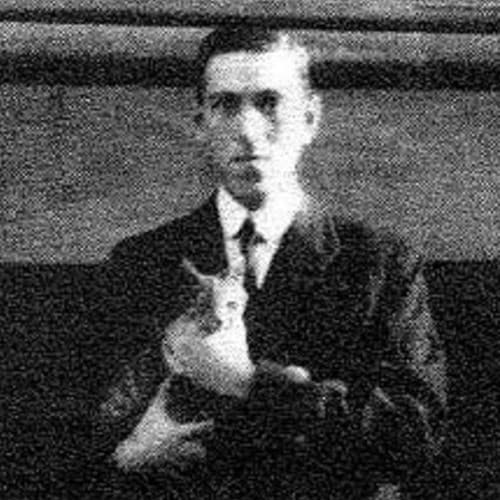
H.P. Lovecraft was an American writer known for his contributions to the genre of weird fiction and horror. His notable works include "The Call of Cthulhu," "The Case of Charles Dexter Ward," "The Shadow Over Innsmouth," "The Shunned House," "The Nameless City," and "Beyond The Wall Of Sleep," which explore themes of cosmic horror and the unknown. Lovecraft's influence on modern horror literature is significant, with many of his concepts and creatures becoming iconic in the genre.
Similar books
- A Head Full of Ghosts
Paul Tremblay
3.8 (46k) average on GoodreadsThrillerExplores psychological horror and the unreliable nature of reality, echoing Lovecraft's descent into madness.
- Harry Potter and the Sorcerer's Stone
J.K. Rowling
4.5 (7M) average on GoodreadsFantasyRescued from a miserable life under the stairs, an orphaned boy discovers he's a wizard destined for a magical school, where he uncovers a dangerous secret tied to the dark wizard who murdered his parents.
- The Hunger Games
Suzanne Collins
4.3 (6.4M) average on GoodreadsFantasyIn a future where children fight to the death on live television, Katniss Everdeen volunteers for the arena, turning a death sentence into a fight for survival and a spark of rebellion.
- 1984
George Orwell
4.2 (3.1M) average on GoodreadsPoliticsIn a future where surveillance and thought control are absolute, a man's search for truth clashes with the Party, showing that hope can be a form of rebellion.
- Divergent
Veronica Roth
4.2 (2.9M) average on GoodreadsFantasyIn a society divided by virtues, a sixteen-year-old's difference from the norm starts a rebellion that threatens her world.
- The Hobbit, or There and Back Again
J.R.R. Tolkien
4.3 (2.9M) average on GoodreadsFantasyA comfort-loving hobbit named Bilbo Baggins is whisked away by a mischievous wizard and a band of dwarves on an unexpected journey to reclaim stolen treasure from a fearsome dragon, discovering courage and a magical ring along the way.





Enjoyed the summary?
A summary gives you the shape of the book. The book itself has the detail, the examples and the voice.
Find Beyond The Wall Of Sleep on AmazonAs an Amazon Associate, BookBrief earns from qualifying purchases. How we're funded