

Synopsis
Covers the whole plot, including the ending.
- Difficulty
- Medium
- Pacing
- Moderate
- Mood
- Thought-provoking, serious, tense, realistic
Bifocal Plot Summary
Covers the whole plot, including the ending.
The Lockdown and the Arrest
The novel opens with a sudden lockdown at Northwood High School. Students are confined to their classrooms, unaware of the cause. Tensions rise as rumors spread. Eventually, it's revealed that a Muslim student, Saamir, has been arrested on suspicion of terrorist activities. This event immediately creates a deep rift within the student body, especially along racial and religious lines. Haroon, a Muslim student, feels a sense of injustice, while Jay, a white football player, and his friends are initially more concerned with the disruption to their school day.
Initial Reactions and Divisions
Following the arrest, the school atmosphere becomes charged with suspicion. Muslim students feel targeted, while many non-Muslim students, particularly some white students, begin to view their Muslim peers with suspicion. Haroon and his friends grapple with what Saamir's arrest means, fearing broader discrimination. Jay and his football teammates, on the other hand, struggle to understand the intensity of the reactions, often dismissing the concerns of the Muslim students or feeling unfairly accused of racism.
The Smoke Bomb Incident
Tensions boil over when a smoke bomb is detonated near the lockers of Muslim students. This act of vandalism is widely interpreted as a hate crime, further solidifying divisions. Muslim students feel even more threatened, while Jay and his friends find themselves under increased scrutiny, especially from the school administration. The incident makes it clear the conflict is no longer just about Saamir's arrest but has become a direct confrontation within the school, forcing everyone to choose sides or navigate a hostile environment.
Haroon's Perspective: Navigating Prejudice
Haroon, a diligent student, finds his daily life significantly impacted. He faces increased scrutiny, subtle discrimination, and hostility from some peers. He feels the burden of representing his community and struggles with the injustice of collective blame. His friendships within his Muslim peer group strengthen, but he also feels increasingly isolated from the broader school population. Haroon's perspective shows the emotional toll of prejudice and the difficulty of maintaining one's identity in the face of widespread suspicion.
Jay's Perspective: Loyalty and Confusion
Jay, a popular football player, initially dismisses the racial undertones, viewing it as an isolated incident. However, as the school fragments, he is caught between loyalty to his friends, some of whom express overtly racist views, and a growing unease about the injustice he witnesses. He struggles to understand why he and his friends are being labeled as racists, feeling misunderstood. Jay's journey is one of slow realization, as he begins to see the world beyond his immediate social circle and confront uncomfortable truths about prejudice.
The School's Response and Administration
The school administration, including Principal Thomas, struggles to contain the escalating tensions and address the underlying racism. They implement measures such as assemblies and increased security, but these often feel insufficient or are met with cynicism by students. Some teachers try to foster understanding, while others are overwhelmed or even contribute to the divisive atmosphere. The administration's attempts to mediate are complicated by ingrained prejudices and students' differing perceptions, showing the difficulty of institutional responses to social issues.
Friendships Tested and Broken
The crisis at Northwood High puts immense pressure on existing friendships. Haroon's non-Muslim friends either distance themselves or struggle to understand his experience, while his bonds with other Muslim students, like Ahmed and Omar, deepen. Jay's friendships with his football teammates are also tested, particularly as some of them express prejudiced views. He questions his allegiances and the values of those he once considered close. The events force both boys to re-evaluate who their true friends are and what loyalty means in the face of moral challenges.
The Role of Media and External Influences
The events at Northwood High School attract media attention, further complicating internal dynamics. News reports and community discussions, often fueled by fear, shape students' understanding and intensify existing prejudices. Haroon's community feels the sting of negative portrayals, while Jay and his friends feel unfairly judged by the outside world. The external narratives often oversimplify the complex situation, contributing to polarization and making it harder for students to find common ground.
Small Acts of Resistance and Allyship
Amidst the division, there are moments where individuals attempt to bridge gaps. Some teachers actively try to create safe spaces for discussion. A few non-Muslim students show solidarity with their Muslim peers, challenging prejudice. While these acts are often small, they represent glimmers of hope and show the possibility of allyship against hate. These moments highlight the individual choices students and staff make to either perpetuate or challenge racism in their environment.
Saamir's Fate and the Unresolved Questions
Throughout the novel, Saamir's legal situation remains largely unresolved, reflecting the ambiguity and lingering questions surrounding his arrest. The narrative doesn't definitively prove his guilt or innocence, leaving readers and characters to grapple with the possibility of racial profiling and the complexities of justice. His absence and the uncertainty of his fate serve as a constant reminder of the initial cause for the school's turmoil and broader societal issues. The lack of a clear resolution for Saamir shows the ongoing nature of such injustices.
Jay's Growing Awareness
As the story progresses, Jay's initial defensiveness gives way to a dawning awareness. He starts to notice the subtle and overt forms of prejudice directed at his Muslim peers, and the unfairness becomes increasingly apparent. Conversations with a thoughtful teacher, observations of Haroon's experiences, and the ugliness of some of his teammates' behavior force him to confront his own biases and the privilege he has taken for granted. His journey is a slow and uncomfortable process of learning to see the world through different perspectives.
Haroon's Resilience and Advocacy
Despite the challenges, Haroon shows resilience. He draws strength from his family, his faith, and his Muslim friends. He speaks out against injustice, even when it is difficult. He becomes a quiet but firm advocate for understanding and fairness, articulating the pain and frustration of his community. His experiences harden his resolve to fight against prejudice and to ensure his voice, and the voices of others like him, are heard, even if it means confronting uncomfortable truths.
The Aftermath and Lingering Divisions
By the end of the novel, the immediate crisis may have subsided, but the deep divisions and mistrust within Northwood High School are far from fully healed. While some understanding has been fostered, and individuals like Jay have grown, underlying issues of racism and prejudice persist. The events leave a lasting impact on the students and the school community, a reminder that addressing systemic issues requires ongoing effort and willingness to confront uncomfortable truths. The novel concludes with a sense of lingering tension, acknowledging that true reconciliation is a long process.
A Glimmer of Hope for Dialogue
While the ending is not a neat resolution, there are subtle indications that dialogue and understanding, however fragile, are possible. Jay's growth and his willingness to see beyond his own perspective suggest a potential for future bridge-building. Haroon's continued advocacy, combined with the efforts of some supportive adults, hints that the conversation will continue. The novel suggests that while the scars of prejudice run deep, acknowledging different perspectives is the first step towards a more just and empathetic society, even if the path is long.
Bifocal Characters
Haroon
Protagonist
A diligent Muslim student grappling with rising prejudice.
Haroon is a thoughtful, intelligent, and deeply principled Muslim student whose family immigrated from Afghanistan. He is devoted to his family and his studies, often finding solace in routine and academic achievement. He is observant of his faith and finds strength in his community. Initially quiet and reserved, the events at Northwood High force him to confront injustice head-on, making him more vocal and resilient. He carries the weight of the collective prejudice directed at his community, but also finds strength in advocating for fairness and understanding.
Relationships: Jay (Initially distant and unknowingly at odds, later a potential for understanding); Ahmed (Close friend and confidant); Omar (Friend and fellow Muslim student); His Family (Supportive and central to his identity)
Jay
Protagonist
A popular white football player who slowly confronts his biases.
Jay is a popular, athletic white student, a star football player, whose world is initially centered around his team, friends, and everyday school life. He is initially oblivious to the systemic racism around him, often dismissing the concerns of his Muslim peers or feeling unfairly targeted by accusations of prejudice. He struggles with loyalty to his friends, some of whom hold openly racist views. Through the events of the novel, he undergoes a slow but significant transformation, gradually opening his eyes to the realities of prejudice and developing a more nuanced understanding of the world.
Relationships: Haroon (Initially distant and unknowingly at odds, later a potential for understanding); Coach (Authoritative figure, mentor); His Football Teammates (Close friends, but some hold prejudiced views); Principal Thomas (Authority figure, sometimes seen as unfair)
Ahmed
Supporting
Haroon's close friend and fellow Muslim student.
Ahmed is one of Haroon's closest friends, a fellow Muslim student who shares many of Haroon's experiences and frustrations. He is often more outwardly vocal and angry about the injustice they face, acting as a sounding board and source of solidarity for Haroon. His presence reinforces the sense of community and shared struggle among the Muslim students. Ahmed's reactions highlight the anger and pain that can arise from being targeted by prejudice, and he often challenges the more passive or accepting responses of others.
Omar
Supporting
Another friend in Haroon's Muslim social circle.
Omar is part of Haroon's close-knit group of Muslim friends. He provides additional support and perspective within the group, contributing to the discussions about the discrimination they face. While perhaps less prominent than Ahmed, Omar's presence helps to illustrate the collective experience of the Muslim students and their shared efforts to navigate a hostile school environment. He represents another voice within the community, reinforcing the idea that the impact of the events is widespread among them.
Principal Thomas
Supporting
The school principal attempting to manage the crisis.
Principal Thomas is the figurehead of Northwood High School, tasked with maintaining order and addressing the escalating racial tensions. She attempts to implement various strategies, from assemblies to increased security, to manage the crisis. While she likely has good intentions, her actions are often perceived differently by various student groups. She struggles to fully grasp the depth of the students' pain and prejudice, and her efforts sometimes fall short, highlighting the institutional challenges in dealing with complex social issues.
Relationships: Haroon (Authority figure); Jay (Authority figure)
Coach
Supporting
Jay's football coach and a figure of authority.
The Coach is an important figure in Jay's life, embodying the values of the football team and, by extension, a segment of the school's culture. He emphasizes teamwork and discipline but may struggle to recognize or address the racial undertones of the school's crisis. His focus is often on the team's performance and reputation, which sometimes puts him at odds with the broader issues of fairness and justice. His character represents the challenge of leadership within a divided community.
Relationships: Jay (Mentor/Authority figure); Jay's Teammates (Authority figure)
Saamir
Supporting
The Muslim student whose arrest ignites the school's crisis.
Saamir is the Muslim student who is arrested by the police on suspicion of terrorist affiliations, triggering the entire conflict at Northwood High. He is largely an absent character, seen only briefly, but his arrest and ambiguous situation are the central catalyst for the school's fragmentation. His fate remains uncertain throughout the novel, symbolizing the broader questions of justice, racial profiling, and the impact of fear on a community. He represents the individual caught in the crosshairs of larger societal issues.
Relationships: Haroon (Fellow Muslim student, symbol of shared vulnerability); Jay (Unknown, but his arrest profoundly impacts Jay's world)
Mr. Henderson
Supporting
A teacher who attempts to foster understanding.
Mr. Henderson is a teacher at Northwood High who stands out for his efforts to promote dialogue and understanding among his students. He encourages critical thinking and challenges his students to look beyond their prejudices. He provides a more empathetic and thoughtful adult perspective in contrast to some of the other characters. He represents the potential for positive influence within the school, demonstrating how educators can play a crucial role in addressing and mitigating racial tensions.
Relationships: Haroon (Supportive teacher); Jay (Thought-provoking teacher)
Jesse
Supporting
One of Jay's football teammates with prejudiced views.
Jesse is one of Jay's close friends and football teammates. He often vocalizes prejudiced and insensitive remarks about the Muslim students, reflecting the more openly racist attitudes present within a segment of the student body. His character serves to highlight the difficult choices Jay faces regarding his friendships and to illustrate the pervasive nature of bigotry. Jesse's unwavering views challenge Jay to either conform or to develop his own moral compass.
Relationships: Jay (Close friend, but source of moral conflict); Other Teammates (Friend)
Bifocal Themes
Racism and Prejudice
The novel directly confronts racism and prejudice, particularly Islamophobia, in a Canadian high school. It explores how fear, misinformation, and existing biases can quickly escalate into open hostility and discrimination after a triggering event. This theme appears through the contrasting experiences of Haroon, who faces direct prejudice, and Jay, who initially struggles to recognize it. It also highlights how racism works within institutions and social groups, showing how easily a community can fracture along racial lines.
“It was as if the school had split in two, and one half was looking at the other half with suspicion and fear.”
Perspective and Empathy
A central theme is the importance of understanding different perspectives and developing empathy. The 'bifocal' narrative structure itself emphasizes this, showing the same events through the eyes of two different protagonists. The novel illustrates how a lack of perspective leads to misunderstanding, fear, and conflict. Jay's journey, in particular, highlights the struggle to move beyond one's own limited worldview and truly empathize with the experiences of marginalized others. It suggests that true reconciliation can only begin when individuals are willing to see beyond their own immediate experiences.
“What if you looked at the same thing but saw something completely different?”
Identity and Belonging
The characters, especially Haroon, grapple with identity and belonging in a community suddenly made hostile. Haroon's Muslim identity, which was previously private, becomes a target for scrutiny. He struggles to maintain his sense of self and cultural heritage in the face of external pressure to conform or be defined by stereotypes. Jay, too, grapples with his identity as a 'good kid' when confronted with accusations of racism, forcing him to question where he truly belongs.
“He felt like he was constantly explaining himself, or defending himself, just for being who he was.”
Justice and Injustice
The novel explores justice and injustice, particularly in the context of Saamir's arrest and the subsequent treatment of Muslim students. It raises questions about due process, racial profiling, and the fairness of a system that can target individuals based on ethnicity or religion. Haroon and his community feel the sting of collective blame and the injustice of being prejudged. Jay, initially oblivious, slowly begins to recognize the unfairness, challenging his previous assumptions about justice.
“It wasn't just about Saamir anymore. It was about all of them.”
Conformity vs. Moral Courage
The theme of conformity versus moral courage is central, particularly through Jay's internal conflict. He is torn between loyalty to his prejudiced friends and the growing realization that he must speak out against injustice. The novel shows how easy it is to conform to groupthink and how difficult, yet essential, it is to exercise moral courage in challenging biases. Haroon also shows courage by not backing down in the face of hostility, choosing to advocate for his community despite personal risk.
“Sometimes, the hardest thing to do was to stand alone.”
Plot Devices & Literary Techniques
Dual Narrative Perspective
The story is told from two alternating viewpoints.
The novel employs a dual narrative structure, alternating between the first-person perspectives of Haroon and Jay. This device is crucial to the 'bifocal' concept, allowing readers to experience the same events and escalating tensions from two vastly different cultural and social standpoints. It highlights how individual backgrounds shape perception and understanding, effectively demonstrating the chasm of misunderstanding that forms between the students. This structure forces readers to actively engage with both sides of the conflict, fostering empathy and critical thinking about prejudice and its impact.
Symbolism of the 'Bifocal' Title
The title represents seeing from two different viewpoints.
The title 'Bifocal' serves as a powerful symbol for the novel's core themes. A bifocal lens allows one to see both near and far, metaphorically representing the necessity of viewing a situation from multiple, often conflicting, perspectives to gain a complete understanding. It underscores the idea that a single viewpoint is inherently limited and can lead to misunderstanding and prejudice. The title challenges readers, and the characters within the story, to develop a 'bifocal' vision to truly comprehend the complexities of racism and human experience.
The Lockdown as a Catalyst
The initial lockdown and arrest trigger the entire conflict.
The sudden and unexpected school lockdown, followed by Saamir's arrest, acts as the primary catalyst for the entire plot. This event immediately shatters the superficial peace of Northwood High and exposes the underlying racial tensions that were previously simmering beneath the surface. The lockdown creates an immediate sense of fear, uncertainty, and confinement, mirroring the emotional and social confinement that the characters, particularly Haroon, experience. It forces the characters to confront uncomfortable truths and makes the school a microcosm of broader societal conflicts.
The Smoke Bomb Incident
An act of vandalism escalates tensions into overt hate.
The detonation of a smoke bomb near Muslim students' lockers serves as a significant plot device that escalates the conflict from simmering prejudice to overt hate crime. This incident makes the racism undeniable and forces the school community to confront the tangible consequences of their divisions. It pushes characters like Jay to question their allegiances and forces the administration to take more drastic, albeit sometimes ineffective, measures. The smoke bomb symbolizes the explosion of hatred and fear, making the abstract concept of prejudice into a very real and threatening experience for the targeted students.
Quiz
10 questions on the plot and the characters. Each answer comes with a short explanation.
Question 1
What is the main theme explored in the novel 'Bifocal'?
- The challenges of being a star athlete.
- The impact of racism and prejudice in a high school.
- The difficulties of immigrating to a new country.
- The pressures of academic excellence.
Show answer
B. The impact of racism and prejudice in a high school. The summary explicitly states that the novel is about racism and how it tears a high school apart, with two boys forced to choose sides.
Question 2
Who are the two main characters whose perspectives the story is told from?
- Two white students.
- A Muslim student and a white student.
- Haroon, whose grandparents emigrated from Afghanistan, and Jay, a white football star.
- Two students of Afghan descent.
Show answer
C. Haroon, whose grandparents emigrated from Afghanistan, and Jay, a white football star. The text clearly introduces Haroon, who is of Afghan descent, and Jay, who is white and a football star, as the narrators.
Question 3
What event triggers the major conflict and division within the high school?
- A football game where Jay's team loses.
- A dispute over academic grades.
- The arrest of a Muslim student on suspicion of terrorism.
- A disagreement between Haroon and Jay.
Show answer
C. The arrest of a Muslim student on suspicion of terrorism. The summary states, 'One day their high school is put on lockdown, and the police arrest a Muslim student on suspicion of terrorist affiliations,' which then causes the student body to fragment.
Question 4
What award did 'Bifocal' win a Bronze Medal for in 2007?
- Best Children's Novel
- YA Fiction
- International Literature
- Young Adult Non-Fiction
Show answer
B. YA Fiction The provided text mentions 'ForeWord Magazine's Book of the Year Awards Bronze Medal Winner (YA Fiction category), 2007.'
Question 5
Why might the Muslim student have been singled out for arrest, according to the text?
- He was known to be involved in criminal activity.
- He was the only student who fit a certain profile.
- He was suspected of terrorism, but the question is raised if it was due to his race.
- He had a prior record of disruptive behavior.
Show answer
C. He was suspected of terrorism, but the question is raised if it was due to his race. The text poses the question: 'He might be guilty. Or is he singled out because of his race?' This highlights the ambiguity and the racial undertones of the arrest.
Question 6
What specific incident of racial tension is mentioned as occurring after the arrest?
- A physical fight between Haroon and Jay.
- A smoke-bomb being set off near the Muslim students' lockers.
- A protest organized by the Muslim students.
- The football team forfeiting a game.
Show answer
B. A smoke-bomb being set off near the Muslim students' lockers. The summary details that 'a smoke-bomb is set off near their lockers' as an act of targeting the Muslim students.
Question 7
How does the novel approach the sensitive topic of racism?
- It simplifies the issues for a younger audience.
- It uses humor to address the seriousness of the topic.
- It delivers a serious, hard-hitting message without talking down to young people.
- It focuses only on the historical aspects of racism.
Show answer
C. It delivers a serious, hard-hitting message without talking down to young people. The text explicitly states that Ellis and Walters 'deliver a serious, hard-hitting book about racism that does not talk down to young people.'
Question 8
Which of the following is NOT listed as an award or recognition for 'Bifocal'?
- White Ravens' Outstanding New International Books for Children and Young Adults list
- ForeWord Magazine's Book of the Year Awards Bronze Medal Winner
- National Book Award
- CCBC's Best Books for Kids and Teens
Show answer
C. National Book Award The text mentions the White Ravens list, the ForeWord Magazine award, and CCBC's Best Books. The National Book Award is not mentioned.
Question 9
What does the text suggest about the initial relationship between Haroon and Jay?
- They were best friends from the start.
- They were rivals in sports.
- Their differences initially put them at odds.
- They had never met before the incident.
Show answer
C. Their differences initially put them at odds. The summary states, 'The entire student body fragments along racial lines and both Haroon and Jay find that their differences initially put them at odds.'
Question 10
The novel is described as 'ground-breaking'. What aspect of the novel contributes to this description?
- Its unique narrative structure told from two points of view.
- Its powerful exploration of racism and its impact on young people.
- Its combination of themes like terrorism, racism, and athletics.
- The collaboration of two bestselling authors.
Show answer
B. Its powerful exploration of racism and its impact on young people. While the two points of view and the collaboration of authors are mentioned, the description 'ground-breaking' is most strongly linked to the novel's 'powerful novel about racism' and its 'serious, hard-hitting book about racism that does not talk down to young people.' The exploration of these complex issues in a way that resonates with young adults is what makes it groundbreaking.
Bifocal FAQ
What is the book Bifocal about?
Bifocal is a young adult novel that explores themes of racism and prejudice in a high school setting. It follows two boys, Haroon and Jay, whose lives are impacted when a Muslim student is arrested on suspicion of terrorism, leading to racial divisions within the school.
Who are the main characters in Bifocal?
The main characters are Haroon, a serious student with Afghan heritage, and Jay, a white high school football star. Their differing backgrounds and perspectives are central to the story's exploration of racial tensions.
What major event triggers the conflict in Bifocal?
The central conflict is ignited when a Muslim student is arrested at their high school on suspicion of terrorist affiliations. This event causes the student body to fracture along racial lines.
What are the main themes of Bifocal?
The primary themes in Bifocal are racism, prejudice, stereotyping, and the consequences of fear and suspicion. The novel also touches on identity and the pressure to choose sides during times of conflict.
How is the story of Bifocal told?
Bifocal is told from two distinct points of view, alternating between Haroon and Jay. This dual perspective allows readers to understand the complexities of the situation from different angles.
Is Bifocal a difficult book to read?
Bifocal is described as a serious and hard-hitting novel that doesn't shy away from difficult topics. While it deals with challenging themes, it is written in a way that is accessible to young adults.
What awards has Bifocal received?
Bifocal has received recognition, including being named to the White Ravens' Outstanding New International Books for Children and Young Adults list in 2008 and winning a Bronze Medal at ForeWord Magazine's Book of the Year Awards in 2007 for YA Fiction.
Who are the authors of Bifocal?
Bifocal was written by two bestselling authors, Deborah Ellis and Eric Walters, who joined forces to create this powerful novel.
What age group is Bifocal intended for?
Bifocal is a young adult novel, suitable for readers who are interested in contemporary issues and thought-provoking stories about social challenges.
Does Bifocal offer solutions to racism?
While Bifocal powerfully illustrates the destructive nature of racism and prejudice, its strength lies in raising awareness and prompting discussion rather than offering simple solutions. It encourages readers to think critically about these issues.
About the author

Deborah Ellis is a Canadian author known for her young adult fiction, particularly her "Breadwinner" series. Her works, including "Bifocal" and "Mud City," often explore themes of social justice, war, and the resilience of young people in difficult circumstances. Ellis has received numerous awards for her impactful storytelling.
Similar books
- The Breadwinner
Deborah Ellis
4.0 (20k) average on GoodreadsChildren'sWhile also by Deborah Ellis and dealing with Afghan experiences, "The Breadwinner" focuses on the immediate impact of the Taliban regime on a young girl within Afghanistan. "Bifocal" shifts the lens to the diaspora experience, examining the challenges of integration and prejudice in a Western society. "Bifocal" is arguably more complex in its thematic exploration of identity negotiation in a multicultural context, whereas "The Breadwinner" focuses more on survival and resilience under extreme oppression.
- Harry Potter and the Sorcerer's Stone
J.K. Rowling
4.5 (7M) average on GoodreadsFantasyRescued from a miserable life under the stairs, an orphaned boy discovers he's a wizard destined for a magical school, where he uncovers a dangerous secret tied to the dark wizard who murdered his parents.
- The Hobbit, or There and Back Again
J.R.R. Tolkien
4.3 (2.9M) average on GoodreadsFantasyA comfort-loving hobbit named Bilbo Baggins is whisked away by a mischievous wizard and a band of dwarves on an unexpected journey to reclaim stolen treasure from a fearsome dragon, discovering courage and a magical ring along the way.
- Harry Potter and the Goblet of Fire
J.K. Rowling
4.6 (2.6M) average on GoodreadsFantasyA bewildered Harry Potter, underage and thrust into a deadly Triwizard Tournament, must brave dragons, mermaids, and a resurgent dark magic to survive a year that will forever alter the wizarding world.
- Harry Potter and the Order of the Phoenix
J.K. Rowling
4.5 (2.5M) average on GoodreadsFantasyIn a year of oppressive secrets and the threat of Voldemort, Harry Potter and Dumbledore's Army secretly train for war, shown through Jim Kay and Neil Packer's dark illustrations.
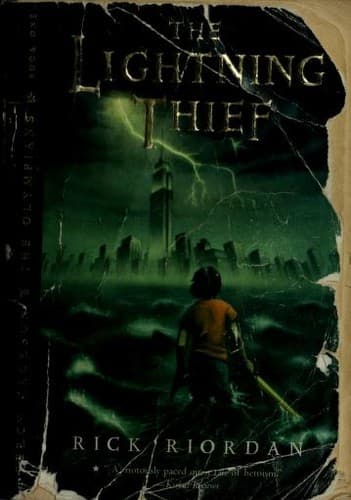
- The Lightning Thief
Rick Riordan
4.3 (2M) average on GoodreadsFantasyThrust into a world of mythological monsters and divine treachery, an ordinary boy discovers he's the son of Poseidon and must embark on a perilous quest across modern America to prevent an Olympian war.





Enjoyed the summary?
A summary gives you the shape of the book. The book itself has the detail, the examples and the voice.
Find Bifocal on AmazonAs an Amazon Associate, BookBrief earns from qualifying purchases. How we're funded