
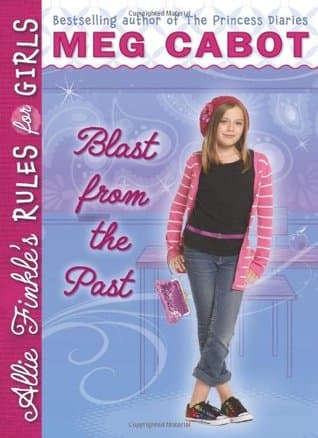
Synopsis
Covers the whole plot, including the ending.
- Difficulty
- Easy
- Pacing
- Moderate
- Mood
- Humorous, Relatable, Heartwarming, Reflective
- Read it if
- You enjoy lighthearted, character-driven stories about friendship, school life, and navigating social challenges.
- Skip it if
- You prefer complex plots, high stakes, or stories without a focus on pre-teen social dynamics.
Blast from the Past Plot Summary
Covers the whole plot, including the ending.
Field Trip Announcement
Allie Finkle, a fifth-grader at Pine Heights Elementary, is excited about a class field trip. It is to a historic one-room schoolhouse, and her teacher, Mrs. Hunter, encourages old-fashioned costumes, which Allie finds mortifying. Still, Allie is thrilled about riding a bus, something she rarely does since her new house is so close to school. However, her excitement quickly turns to dread when Mrs. Hunter announces a 'buddy' system for the trip. Pine Heights Elementary will pair with Walnut Knolls Elementary, Allie's old school, and each Room 209 student will be assigned a buddy from their former fourth-grade class. Allie immediately fears who her partner might be, knowing her uncomfortable history with old friends.
The Unwelcome Reunion
Allie's worst fears come true when Mrs. Hunter reveals the buddy assignments. Allie's partner for the historic schoolhouse field trip is Mary Kay, her ex-best friend from Walnut Knolls. The two had a major falling out right before Allie moved, a betrayal Allie has not forgotten or forgiven. The thought of spending an entire day sharing an old-timey desk and participating in antiquated activities with Mary Kay fills Allie with anger, anxiety, and a deep sense of injustice. She tries to protest the assignment, but Mrs. Hunter is firm, emphasizing the importance of cooperation and making new memories.
Costume Calamity and Bus Blues
Despite Allie's strong objections, her mom insists she wear a 'historical' dress for the field trip, a frilly, uncomfortable garment that makes Allie feel ridiculous. On the bus ride to the one-room schoolhouse, Allie tries to avoid Mary Kay, but their assigned seating forces them together. The journey has silent tension and occasional, uncomfortable glances. Allie's other friends, Erica and Cheyenne, are also on the bus, but they seem more amused by Allie's predicament than sympathetic. The bus ride sets the stage for a day Allie anticipates will be filled with misery and forced interactions with the girl she considers her betrayer.
Arrival at the Schoolhouse
Upon arriving at the historic one-room schoolhouse, students from Pine Heights and Walnut Knolls are greeted by an actress portraying a stern, old-fashioned schoolmarm. She immediately sets strict rules, emphasizing decorum, proper posture, and the importance of handwriting, all while dressed in authentic period clothing. Allie finds the whole experience cheesy and uncomfortable, especially with Mary Kay sitting beside her. The schoolmarm's insistence on replicating a historical classroom environment, complete with quill pens and slates, only increases Allie's irritation. She longs for the modern comforts and freedoms of her regular school day.
Recess and Reconciliation Attempts
During a designated 'recess' break, which involves old-fashioned games like hopscotch and jump rope, Mary Kay tries to approach Allie. She attempts to start a conversation, hinting at her regret over their past argument and expressing a desire to make amends. However, Allie, still deeply hurt by what she sees as Mary Kay's betrayal, gives her the cold shoulder. Allie avoids eye contact and offers only short responses, making it clear she is not interested in discussing their history or forgiving her former friend. Allie's stubbornness prevents any immediate breakthrough in their strained relationship, leaving Mary Kay visibly dejected.
The Spelling Bee
The schoolmarm announces a spelling bee, a common activity in historical one-room schoolhouses. To Allie's dismay, she and Mary Kay are paired together as a team, forcing them to collaborate. The pressure of the competition, combined with their unresolved issues, makes for a tense experience. Allie struggles with some of the older, more obscure words, but Mary Kay surprisingly knows many of them. Despite their reluctance, they manage to work together, whispering answers and offering silent cues to each other. This forced cooperation subtly begins to lessen Allie's hardened feelings, as she sees Mary Kay's competence and even a flicker of their old teamwork.
A Shared Memory
During the spelling bee, a funny incident occurs involving one of the teachers mispronouncing a word, which causes laughter among the students. Allie and Mary Kay share a brief, unguarded glance, and a small smile appears on Allie's face. This moment, coupled with their grudging teamwork, reminds Allie of a time when she and Mary Kay used to study for spelling tests together, making up silly rhymes and mnemonic devices. The shared memory reminds Allie of the positive aspects of their friendship, making her realize that not all their time together was bad. It is a small but significant crack in Allie's emotional wall.
The Apology
Later in the day, during a quiet moment, Mary Kay approaches Allie again. This time, instead of vague hints, she offers a direct and heartfelt apology for her actions before Allie moved. Mary Kay admits she was jealous and insecure, and that she deeply regretted how she behaved. She explains her perspective on the events, not to excuse herself, but to offer Allie a clearer understanding of what happened. Allie, softened by the day's events and Mary Kay's genuine remorse, listens intently. The sincerity of Mary Kay's apology starts to break down the last barriers Allie had built up, opening the door for reconciliation.
A Tentative Forgiveness
After listening to Mary Kay's apology and explanation, Allie takes a moment to process everything. She still feels the sting of the past, but she also recognizes Mary Kay's genuine regret and her willingness to admit her mistakes. Allie, known for her strong sense of justice but also her capacity for empathy, realizes that holding onto the grudge is not serving her anymore. She offers Mary Kay a tentative forgiveness, acknowledging that while things will not immediately go back to how they were, she is willing to try and move past the conflict. This marks a turning point in their relationship, signaling the potential for a renewed, albeit different, friendship.
Field Trip Reflections
As the field trip ends and the students prepare to board the bus back to Pine Heights, Allie reflects on the day. What started as a dreaded reunion with an ex-best friend turned into an unexpected opportunity for healing and understanding. She realizes that while the historic schoolhouse experience itself was a bit tiresome, the real lesson was about forgiveness and the complexities of friendship. Allie feels relief and peace, knowing that she and Mary Kay have taken the first steps towards mending their broken bond. The bus ride back is far less tense, with Allie and Mary Kay sharing a few more comfortable, if still somewhat awkward, conversations.
Blast from the Past Characters
Allie Finkle
Protagonist
A fifth-grade girl who values rules and justice, struggling with past friendships.
Allie is a spirited, rule-abiding (mostly), and often anxious fifth-grader. She has a strong sense of right and wrong, and when she feels wronged, she holds onto grudges fiercely. Allie is particular about her routine and comfort zones, finding changes and unexpected social situations (like old-fashioned costumes or confronting ex-friends) deeply unsettling. She is intelligent and observant, though sometimes prone to overthinking and dramatizing situations. Her move to a new school presented many challenges, and she's still navigating her new social landscape while trying to reconcile with her past.
Relationships: Mary Kay (Ex-best friend, later reconciled friend); Erica (New friend at Pine Heights); Cheyenne (New friend at Pine Heights); Mrs. Hunter (Fifth-grade teacher)
Mary Kay
Supporting/Antagonist (initially)
Allie's ex-best friend from Walnut Knolls, seeking forgiveness.
Mary Kay was Allie's best friend before Allie moved. She is depicted as having made a mistake that deeply hurt Allie, leading to their falling out. Initially, Mary Kay appears timid and tearful, reflecting her remorse. Throughout the field trip, she consistently attempts to reconnect with Allie, demonstrating a genuine desire to apologize and explain her actions. She is sensitive and, despite her past error, shows maturity in taking responsibility for her part in their friendship's demise. She still values her friendship with Allie and is determined to win her back.
Relationships: Allie Finkle (Ex-best friend, later reconciled friend)
Mrs. Hunter
Supporting
Allie's fifth-grade teacher at Pine Heights Elementary.
Mrs. Hunter is Allie's well-meaning and organized fifth-grade teacher. She is responsible for planning the field trip and implementing the 'buddy' system, unaware of the deep personal history between Allie and Mary Kay. She emphasizes cooperation, historical learning, and making the best of situations. While she can seem a bit oblivious to Allie's emotional turmoil, her intentions are always to create a positive and educational environment for her students. She represents the adult authority figure who inadvertently pushes Allie towards confronting her past.
Relationships: Allie Finkle (Student-teacher relationship)
Erica
Supporting
One of Allie's new friends at Pine Heights Elementary.
Erica is one of Allie's friends at her new school. She is generally supportive but also possesses a typical fifth-grader's curiosity and occasional amusement at her friends' predicaments. She doesn't fully understand the depth of Allie's history with Mary Kay but observes the unfolding drama with interest. Erica provides a sounding board for Allie and represents the new social circle Allie has built, distinct from her past.
Relationships: Allie Finkle (Friend)
Cheyenne
Supporting
Another of Allie's new friends at Pine Heights Elementary.
Cheyenne is also a friend of Allie's at Pine Heights. Similar to Erica, she is part of Allie's current support system. She is observant and sometimes offers practical, if not always sensitive, advice. Cheyenne adds to the dynamic of Allie's new friendships, contrasting with the complexities of her old ones. She is present during the field trip, witnessing Allie's struggles and eventual breakthrough with Mary Kay, but remains somewhat on the periphery of the main conflict.
Relationships: Allie Finkle (Friend)
Blast from the Past Themes
Forgiveness and Reconciliation
The main theme is Allie's journey to forgive Mary Kay for a past betrayal. Allie initially clings to her anger and hurt, believing Mary Kay is unforgivable. However, through forced proximity and Mary Kay's persistent apologies, Allie slowly softens. The shared experience of the field trip, especially the spelling bee (Scene 6), and Mary Kay's heartfelt confession (Scene 8), leads Allie to understand their past conflict and ultimately offer forgiveness (Scene 9). This theme shows the difficulty and eventual freedom found in letting go of grudges.
“Maybe it was okay to forgive someone, even if you weren't sure you could ever forget what they'd done.”
The Nature of Friendship
The book explores the complexities and changes in childhood friendships. It shows how friendships can break due to misunderstandings or mistakes, but also how they can be mended. Allie's initial resistance to Mary Kay reflects the pain of a broken bond, while her new friendships with Erica and Cheyenne show her ability to form new connections. The story suggests that true friendship requires honesty, empathy, and the willingness to work through conflict. The reconciliation between Allie and Mary Kay (Scenes 8 & 9) emphasizes that friendships can change and grow, even after significant challenges.
“Friendships were complicated. Even good ones. Maybe especially good ones.”
Dealing with the Past
Allie's reluctance to confront Mary Kay comes from her desire to leave her painful past at Walnut Knolls behind. The field trip, by forcing her to revisit an old connection, helps Allie process unresolved emotions. She realizes that ignoring the past does not make it disappear; sometimes, confronting it directly is necessary for emotional healing and moving forward. The 'blast from the past' is not just about the historic schoolhouse, but about Allie's own personal history catching up with her, forcing her to deal with what happened before she moved.
“You couldn't just pretend things hadn't happened. Sometimes you had to talk about them, even if it hurt.”
Growth and Maturity
Allie grows significantly throughout the story. Initially, she reacts with childish stubbornness and a rigid view of right and wrong. By the end, she shows a more mature understanding of human relationships, empathy, and the ability to see things from another's perspective. Her decision to forgive Mary Kay, despite her lingering hurt, shows her development from a girl who holds grudges to one who can offer grace. This growth is clear in her internal reflections, particularly after Mary Kay's apology (Scene 9).
“It was a lot harder to be mad at someone when they were actually saying they were sorry.”
Plot Devices & Literary Techniques
The 'Buddy' System
A forced pairing that drives the central conflict and reconciliation.
The 'buddy' system is the primary plot device that forces Allie and Mary Kay into uncomfortable proximity. Without this mandatory pairing for the field trip, Allie would have easily avoided Mary Kay, preventing any chance of reconciliation. It creates immediate tension and ensures that the two girls must interact, whether they want to or not. This device serves to directly confront Allie with her past and provides the necessary framework for their eventual dialogue and forgiveness.
The Historic One-Room Schoolhouse Setting
A unique, restrictive environment that emphasizes cooperation and historical context.
The setting of the historic one-room schoolhouse serves multiple purposes. Its 'old-timey' atmosphere and strict rules (Scene 4) create a shared, slightly absurd experience that Allie and Mary Kay must navigate together, providing common ground. The historical activities, like the spelling bee (Scene 6), force them to cooperate, even against their will, subtly breaking down their emotional barriers. The contrast between the past setting and their modern-day conflict highlights timeless themes of human interaction and learning.
The Costume
A source of initial discomfort and a symbol of Allie's reluctance to embrace the 'past'.
Allie's frilly, 'historical' costume (Scene 3) is a minor but significant plot device. It immediately puts Allie in a state of discomfort and embarrassment, reflecting her overall reluctance to engage with anything 'old-fashioned' or associated with her past, including her old friendship. The costume emphasizes her initial resistance to the field trip and its implicit demand to confront history. As the day progresses, her focus shifts from the costume to the more significant emotional challenges, indicating a change in her priorities.
Blast from the Past Quotes
“I can't believe it! My mom's back in town! And she's not just back, she's back to stay. And she's not just back to stay, she's back to stay and live with us. And she's not just back to stay and live with us, she's back to stay and live with us and be my mom again.”
“Being a teenager is like being a superhero, except instead of superpowers, you have hormones, and instead of a cool costume, you have a really bad haircut.”
“Sometimes you have to let go of the past to make room for the future, even if the past is really, really good.”
“It's hard to trust people when you've been let down so many times, even when they're family.”
“Just because something is different doesn't mean it's bad. Sometimes different is even better.”
“You can't force someone to be who you want them to be. They have to want it for themselves.”
“Being popular isn't about having a lot of friends. It's about having the right friends.”
“Sometimes the biggest adventures are the ones that happen right in your own backyard.”
“It's amazing how much you can learn about yourself when you're forced to deal with something completely unexpected.”
“Everybody makes mistakes. The important thing is what you do after you make them.”
“You don't have to be perfect to be loved. You just have to be real.”
“The past is like a boomerang. It always comes back around, whether you want it to or not.”
“It's okay to be sad, but it's not okay to stay sad forever.”
“Sometimes the people who are supposed to protect you are the ones who hurt you the most.”
Quiz
10 questions on the plot and the characters. Each answer comes with a short explanation.
Question 1
What is the main reason Allie is initially excited about the class field trip?
- She gets to dress up in an old-timey costume.
- The field trip is to a historic one-room schoolhouse.
- She gets to ride on a bus.
- She will be reunited with her old friends.
Show answer
C. She gets to ride on a bus. Allie lives close to school and has to walk every day, so she's excited about the rare opportunity to ride on a bus.
Question 2
What kind of location is the class field trip going to?
- A modern museum.
- A historic one-room schoolhouse.
- An old factory.
- A nature preserve.
Show answer
B. A historic one-room schoolhouse. The field trip destination is described as a 'historic one-room schoolhouse, built back before there was the Internet or even cell phones.'
Question 3
Who is assigned as Allie's 'buddy' for the field trip?
- Her current best friend.
- A new student from Pine Heights.
- Her ex-best friend Mary Kay.
- Her teacher, Mrs. Hunter.
Show answer
C. Her ex-best friend Mary Kay. Mrs. Hunter announces that Allie's buddy will be her 'ex-best friend Mary Kay, who betrayed Allie right before she moved!'
Question 4
What is Allie's initial reaction to the idea of dressing up in old-timey costumes for the field trip?
- She is enthusiastic and plans to wear one.
- She is indifferent to the idea.
- She expresses strong disapproval with 'GAH!'.
- She thinks it's a good idea for some of her friends, but not for her.
Show answer
C. She expresses strong disapproval with 'GAH!'. The text states, 'Allie's teacher is encouraging everyone to dress up in old timey costumes, which some of Allie's friends are actually doing. GAH!' indicating her strong negative reaction.
Question 5
From which school are the 'buddies' for the field trip coming?
- Pine Heights Elementary School
- Walnut Knolls Elementary School
- Another local middle school
- A neighboring town's elementary school
Show answer
B. Walnut Knolls Elementary School The buddies are from 'Allie's old 4th grade class at Walnut Knolls Elementary School, with whom Pine Heights Elementary is pairing up for the trip.'
Question 6
What specific complaint does Allie have about her assigned buddy, Mary Kay, at the end of the provided text?
- Mary Kay is too loud.
- Mary Kay is a 'big crybaby'.
- Mary Kay is still angry about their past.
- Mary Kay will try to take over their desk.
Show answer
B. Mary Kay is a 'big crybaby'. Allie concludes her thoughts on Mary Kay by saying she will have to spend the day 'sharing an old-timey desk with a big crybaby!'
Question 7
What is the primary conflict introduced in this excerpt regarding Allie's social life?
- Allie is worried about making new friends at Pine Heights.
- Allie is concerned about fitting in with her current friends.
- Allie must confront unresolved issues with a former best friend.
- Allie is upset about her friends dressing up in costumes.
Show answer
C. Allie must confront unresolved issues with a former best friend. The core conflict is the forced reunion with Mary Kay, her 'ex-best friend who betrayed Allie right before she moved!'
Question 8
What detail about the one-room schoolhouse indicates its historical period to Allie?
- It has old books and chalkboards.
- It lacks modern technology like the Internet or cell phones.
- It requires students to dress in old-timey costumes.
- It is located far from Allie's current school.
Show answer
B. It lacks modern technology like the Internet or cell phones. The description specifies the schoolhouse was 'built back before there was the Internet or even cell phones,' highlighting the lack of modern technology.
Question 9
How does Allie's living situation influence her excitement for the bus ride?
- She lives far from school and often takes the bus.
- She lives so close to school that she rarely gets to ride a bus.
- Her family doesn't own a car, so she always takes the bus.
- She dislikes walking and always prefers bus rides.
Show answer
B. She lives so close to school that she rarely gets to ride a bus. The text explicitly states, 'she's never gets to do, living so close to school that she actually has to walk there every day!'
Question 10
What does Allie mean when she exclaims 'GAH!' in response to her friends dressing up in old-timey costumes?
- She is excited about the costumes.
- She finds the idea embarrassing or distasteful.
- She is surprised by her friends' enthusiasm.
- She is simply acknowledging the fact.
Show answer
B. She finds the idea embarrassing or distasteful. 'GAH!' is an interjection often used to express annoyance, exasperation, or disgust, indicating Allie's negative feelings about the costume idea.
Blast from the Past FAQ
What is the main plot of 'Blast from the Past'?
Allie Finkle is excited for her class field trip to a historic one-room schoolhouse, mainly because she gets to ride a bus for the first time. However, her excitement turns to dread when her teacher, Mrs. Hunter, announces that each student will be paired with a 'buddy' from Allie's old 4th-grade class at Walnut Knolls Elementary, and Allie's buddy turns out to be her ex-best friend, Mary Kay.
Why is Allie so upset about Mary Kay being her buddy?
Allie considers Mary Kay her ex-best friend because Mary Kay 'betrayed' her right before Allie moved away from Walnut Knolls. This past incident has left Allie with strong negative feelings, making the prospect of spending an entire day with her unbearable, especially in an old-fashioned setting.
What kind of setting is the class field trip to?
The field trip is to a historic one-room schoolhouse, a place built before modern conveniences like the internet or cell phones existed. This setting emphasizes a simpler, old-timey era, which is further highlighted by the teacher's encouragement for students to wear period costumes.
How does Allie feel about the old-timey costumes for the field trip?
Allie is not enthusiastic about the old-timey costumes. While some of her friends are excited to dress up, Allie's reaction is a strong 'GAH!', indicating her disinterest or even disdain for the idea, preferring modern attire.
What is the significance of Allie riding a bus for the first time?
Allie lives so close to Pine Heights Elementary that she usually has to walk to school every day, making the bus ride a novel and exciting experience for her. This small detail highlights her perspective on new experiences and her initial enthusiasm for the trip before the Mary Kay revelation.
What was the specific 'betrayal' Mary Kay committed before Allie moved?
The synopsis doesn't explicitly detail the betrayal, only stating that Mary Kay 'betrayed Allie right before she moved.' This ambiguity sets up a central conflict, implying a significant past hurt that Allie has not forgiven or forgotten, fueling her current resentment.
How does the 'buddy system' amplify the conflict between Allie and Mary Kay?
The buddy system forces Allie and Mary Kay into close, unavoidable proximity for the entire day, including sharing an old-timey desk. This structured interaction prevents Allie from avoiding Mary Kay, directly confronting her with the unresolved issues from their past friendship and making the situation more intense.
Are there any other characters from Allie's old school mentioned or implied to be on the trip?
While only Mary Kay is specifically named as Allie's buddy, the text states that Pine Heights Elementary is 'pairing up' with Allie's old 4th grade class from Walnut Knolls Elementary. This implies that other former classmates of Allie's will also be present, potentially adding more layers to the social dynamics of the trip.
How does Allie's perception of Mary Kay as a 'big crybaby' reflect her own emotional state?
Allie's dismissive label of Mary Kay as a 'big crybaby' could be a projection of Allie's own unexpressed frustration or hurt from their past. By framing Mary Kay as overly emotional, Allie might be trying to invalidate Mary Kay's feelings or distance herself from her own vulnerability regarding the 'betrayal.'
What psychological impact might the forced proximity with Mary Kay have on Allie?
The forced proximity will likely trigger Allie's unresolved feelings of anger and hurt, potentially leading to anxiety, defensiveness, or a struggle to maintain her composure. It could also force her to confront her own role in the friendship's dissolution or reconsider her perspective on Mary Kay's actions.
How does Allie's focus on the bus ride and costumes distract her from the impending social conflict?
Initially, Allie's excitement about the bus ride and her disdain for the costumes occupy her thoughts, serving as a temporary distraction from deeper social anxieties. This focus on superficial details allows her to avoid contemplating potential social difficulties until the 'buddy' announcement forces her to confront them directly.
What does Allie's strong reaction ('GAH!') to the costumes reveal about her personality?
Allie's 'GAH!' suggests she is opinionated and perhaps a bit stubborn, preferring to stick to her own preferences rather than conform to expectations she finds silly or uncomfortable. It highlights her independent spirit and her tendency to express her feelings openly, even if it's a dismissive sound.
Is Allie's description of Mary Kay as a 'crybaby' necessarily accurate, or is it her biased perception?
Allie's description is likely a biased perception, colored by her past hurt and resentment. While Mary Kay might indeed be sensitive, Allie's label is more about discrediting Mary Kay and justifying her own anger than an objective assessment of Mary Kay's personality, setting up a potential for Allie to reconsider her view.
What themes are likely to be explored in 'Blast from the Past' given this setup?
The book will likely explore themes of forgiveness, the complexities of childhood friendships, overcoming past grievances, and the challenges of reconciliation. It will also delve into personal growth as Allie is forced to confront her feelings and potentially re-evaluate her understanding of her past with Mary Kay.
Could the historic schoolhouse setting symbolize anything for Allie and Mary Kay's relationship?
The old-timey schoolhouse, a place from the past, could symbolize the 'past' of their friendship that Allie is forced to revisit. It might represent the foundational elements of their relationship, or perhaps the outdated grievances that need to be addressed and moved beyond in a 'new' era of understanding.
How might the pairing with Mary Kay ultimately benefit Allie's character development?
This challenging pairing will likely push Allie out of her comfort zone, forcing her to confront her unresolved feelings and potentially learn empathy and forgiveness. It could lead to a deeper understanding of friendship dynamics, the importance of communication, and personal growth in managing difficult social situations.
Does the title 'Blast from the Past' refer solely to the field trip, or also to the reappearance of Mary Kay?
The title 'Blast from the Past' clearly refers to both elements. The historic schoolhouse is literally a 'blast from the past' in terms of setting, while Mary Kay's unexpected reappearance as Allie's buddy brings a 'blast from the past' in terms of their unresolved friendship history, creating a dual meaning.
About the author

Meg Cabot is an American author known for her engaging young adult and adult fiction. Her notable works include "Size 12 Is Not Fat," "Queen of Babble," "Princess in the Spotlight," "Missing You," "Princess in Waiting," and "Airhead," which often explore themes of romance and personal growth. Cabot has gained a significant following for her relatable characters and humorous storytelling.
Similar books
- Tales of a Fourth Grade Nothing
Judy Blume
4.1 (132k) average on GoodreadsChildren'sBlume's 'Tales of a Fourth Grade Nothing' excels in presenting sibling rivalry and peer interactions with a raw, authentic voice. Unlike 'Blast from the Past' which quickly moves towards resolution, Blume often allows conflicts to fester and develop, creating a more vivid and memorable depiction of childhood frustrations and the learning process that comes from them. Blume's characters often feel more deeply flawed and real, leading to a more profound understanding of their emotional journeys.
- Harry Potter and the Sorcerer's Stone
J.K. Rowling
4.5 (7M) average on GoodreadsFantasyRescued from a miserable life under the stairs, an orphaned boy discovers he's a wizard destined for a magical school, where he uncovers a dangerous secret tied to the dark wizard who murdered his parents.
- The Hobbit, or There and Back Again
J.R.R. Tolkien
4.3 (2.9M) average on GoodreadsFantasyA comfort-loving hobbit named Bilbo Baggins is whisked away by a mischievous wizard and a band of dwarves on an unexpected journey to reclaim stolen treasure from a fearsome dragon, discovering courage and a magical ring along the way.
- Harry Potter and the Goblet of Fire
J.K. Rowling
4.6 (2.6M) average on GoodreadsFantasyA bewildered Harry Potter, underage and thrust into a deadly Triwizard Tournament, must brave dragons, mermaids, and a resurgent dark magic to survive a year that will forever alter the wizarding world.
- Harry Potter and the Order of the Phoenix
J.K. Rowling
4.5 (2.5M) average on GoodreadsFantasyIn a year of oppressive secrets and the threat of Voldemort, Harry Potter and Dumbledore's Army secretly train for war, shown through Jim Kay and Neil Packer's dark illustrations.
- The Lightning Thief
Rick Riordan
4.3 (2M) average on GoodreadsFantasyThrust into a world of mythological monsters and divine treachery, an ordinary boy discovers he's the son of Poseidon and must embark on a perilous quest across modern America to prevent an Olympian war.





Enjoyed the summary?
A summary gives you the shape of the book. The book itself has the detail, the examples and the voice.
Find Blast from the Past on AmazonAs an Amazon Associate, BookBrief earns from qualifying purchases. How we're funded