

Synopsis
Covers the whole plot, including the ending.
- Difficulty
- Easy
- Pacing
- Moderate
- Mood
- Hopeful, Resilient, Heartwarming, Reflective
- Read it if
- You enjoy historical fiction set during WWII, stories about overcoming adversity, or books featuring strong young female protagonists.
- Skip it if
- You prefer fast-paced thrillers or stories without significant emotional challenges and themes of illness.
Blue Plot Summary
Covers the whole plot, including the ending.
A Father's Departure and New Responsibilities
In the spring of 1944, eleven-year-old Ann Fay Honeycutt lives in rural Hickory, North Carolina, with her mother and younger brother, Bobby. Their lives center on their farm and community. Ann Fay's father, a hardworking man, decides to join the U.S. Army to fight in World War II, which affects the family deeply. Before he leaves, he gives Ann Fay a blue handkerchief and asks her to be the 'man of the house' while he is gone. This new role means Ann Fay must help her mother with the farm, care for Bobby, and grow up quickly, all while worrying about her father at war.
Whispers of a New Threat: Polio
As Ann Fay gets used to her new tasks, another threat appears closer to home. Reports in newspapers speak of infantile paralysis, or polio, spreading in nearby communities. At first, the news seems far away, but the community of Hickory becomes more concerned. Ann Fay reads the newspaper daily, not just for war updates and news of her father, but also to follow the spread of the polio epidemic. The fear of this unseen enemy adds more worry to the already strained lives of the Honeycutt family and their neighbors.
Bobby's Sudden Illness
The distant threat of polio becomes real for Ann Fay when her younger brother, Bobby, suddenly gets sick. He has a high fever, a stiff neck, and muscle weakness, which are polio symptoms. Ann Fay and her mother are scared as Bobby's condition quickly worsens. The family doctor confirms their fears: Bobby has polio. This diagnosis changes Ann Fay's world, making the war at home very clear and challenging her ability to be the 'man of the house.'
The Miracle of Hickory Hospital
Because of the growing polio crisis, the town of Hickory shows great strength and community spirit. Many children are getting sick, and there are no local places to treat so many. The town decides to turn a former college dormitory into an emergency polio hospital. With a big community effort, volunteers work day and night, making the building a hospital in just three days. This 'Miracle of Hickory' offers some hope for families like the Honeycutts, providing special care for young polio patients, including Bobby.
Life at the Polio Hospital
Bobby goes to the new emergency polio hospital, a place filled with the sounds of sick children and busy, tired nurses. Ann Fay and her mother visit Bobby as often as they can, seeing the effects of the disease and the hard recovery process. Bobby, usually an active boy, is now weak and in pain, especially in his legs. During these visits, Ann Fay sees the treatments, like hot packs and physical therapy, and starts to understand the long road to recovery for polio patients. She feels helpless but also determined to support Bobby.
Ann Fay's Growing Friendship with Junie
During her hospital visits, Ann Fay meets Junie, a smart and often grumpy girl her age, also sick with polio. Junie's directness and first refusal of Ann Fay's friendship challenge Ann Fay. Despite Junie's tough outside, Ann Fay keeps trying, seeing their shared loneliness. Their friendship slowly grows through talks, stories, and Ann Fay's regular visits. Junie, who is more paralyzed, teaches Ann Fay about strength, acceptance, and finding happiness in hard times. This expands Ann Fay's understanding of empathy and how people deal with suffering.
A Difficult Decision for Bobby's Care
As Bobby's first serious phase passes, a decision is made about his long-term care. The Hickory emergency hospital is not set up for long rehabilitation, and Bobby needs special, intense physical therapy to get back strength and movement. The Honeycutts decide to send Bobby to a rehabilitation center in Warm Springs, Georgia, a place known for its polio treatment. This separation is hard for Ann Fay and her mother, but they know it is Bobby's best chance to get better. Ann Fay feels a renewed sense of duty, knowing she must stay strong for her mother and for Bobby, even when he is far away.
Junie's Decline and Ann Fay's Grief
While Bobby is away, Ann Fay keeps visiting Junie, and their friendship gets stronger. However, Junie's condition gets worse. Despite the doctors' efforts and Ann Fay's hopeful presence, Junie dies from polio problems. Her death is a shock and a big loss for Ann Fay, her first experience with such close sadness. Junie's death makes Ann Fay face the harsh reality and random nature of the disease. It also strengthens the love Ann Fay felt for Junie, leaving her with a desire to honor her friend's memory and appreciate life.
Bobby's Return and a New Normal
After several months, Bobby comes home from Warm Springs. He has made good progress, but he is not the same boy who left. He now uses crutches and braces to walk, and his physical limits are clear. Ann Fay and her mother welcome him, but the family must adjust to a new normal. Ann Fay's role as the 'man of the house' changes; it now includes helping Bobby with his daily exercises and supporting him emotionally as he deals with his changed body and future. The family learns to adapt, finding strength in their unity and their resolve to help Bobby live as full a life as possible.
A Father's Homecoming and Lingering Scars
Finally, the war ends, and Ann Fay's father returns home. His return is happy but also carries the unspoken difficulties each family member has faced. Ann Fay's father, though home, has emotional scars from war, while Ann Fay and her mother have dealt with the polio epidemic and Bobby's illness. The family must now heal together, recognizing the changes they have all gone through. Ann Fay, no longer just a child, has grown up a lot, and her father sees her strength. The blue handkerchief, a symbol of his trust, now shows her journey through hardship and her love for her family.
Principal Figures
Ann Fay Honeycutt
Protagonist
Eleven-year-old girl who steps up to lead her family during wartime and epidemic.
Ann Fay is an eleven-year-old girl living in rural North Carolina. When her father leaves for WWII, she takes on the immense responsibility of being the 'man of the house,' demonstrating a maturity beyond her years. She is diligent, resourceful, and deeply loyal to her family. Her journey is defined by her unwavering commitment to her mother and brother, Bobby, especially after he contracts polio. Ann Fay grapples with fear, grief, and the harsh realities of life, but ultimately finds inner strength and compassion. She learns to navigate complex emotions and unexpected friendships, particularly with Junie.
Relationships: Daddy (Beloved father, entrusts her with family responsibility); Mama (Supportive mother, shares burden of family care); Bobby (Younger brother, victim of polio, Ann Fay's primary concern); Junie (Friend made at the polio hospital, teaches Ann Fay about resilience and loss)
Bobby Honeycutt
Supporting
Ann Fay's younger brother, who contracts polio.
Bobby is Ann Fay's energetic and playful younger brother. His innocence and vitality make his contraction of polio particularly devastating for the family. He endures significant pain and undergoes extensive rehabilitation, first at the Hickory hospital and then in Warm Springs. Bobby's struggle with polio is a central catalyst for Ann Fay's growth and the family's resilience. Despite his physical limitations, he maintains a spirit of determination, inspiring those around him to adapt and find strength in the face of adversity.
Relationships: Ann Fay Honeycutt (Older sister, his primary caregiver and advocate); Mama (Devoted mother, cares for him during his illness); Daddy (Father, his illness is a significant concern for the family)
Mama Honeycutt
Supporting
Ann Fay's strong and devoted mother, who holds the family together.
Mama Honeycutt is the steadfast matriarch of the family, embodying quiet strength and unwavering devotion. With her husband away at war, she carries the burden of managing the farm and raising her children, a responsibility compounded by Bobby's polio diagnosis. She is a source of comfort and guidance for Ann Fay, sharing the weight of their challenges. Her resilience, practical nature, and deep love for her children are crucial in navigating the family through the war and the polio epidemic.
Relationships: Ann Fay Honeycutt (Daughter, relies on her for support and help); Bobby (Son, devotes herself to his care and recovery); Daddy (Husband, misses him while he's at war)
Daddy Honeycutt
Supporting
Ann Fay's father, who leaves to fight in World War II.
Ann Fay's father is a loving and responsible family man who makes the difficult decision to enlist in the military during WWII. He entrusts Ann Fay with the role of 'man of the house,' a gesture that profoundly shapes her character and sense of duty. Though absent for much of the story, his presence is felt through Ann Fay's longing, her determination to make him proud, and the blue handkerchief he gives her. His eventual return brings both relief and the challenge of reintegrating into a family irrevocably changed by the events of the war and the polio epidemic.
Relationships: Ann Fay Honeycutt (Daughter, trusts her with family responsibilities); Mama (Wife, partner in raising their children); Bobby (Son, his illness is a major concern for him from afar)
Junie
Supporting
A fellow polio patient at the Hickory hospital who becomes Ann Fay's friend.
Junie is a young girl, about Ann Fay's age, whom Ann Fay befriends at the Hickory polio hospital. She is more severely affected by polio than Bobby, experiencing significant paralysis. Junie is characterized by her sharp wit, occasional grumpiness, and profound resilience. Despite her physical suffering, she possesses a keen observational sense and a dry humor that challenges Ann Fay's initial perceptions. Junie's friendship is pivotal for Ann Fay, teaching her about acceptance, the harsh realities of the disease, and the importance of human connection in times of suffering. Her tragic death deeply impacts Ann Fay.
Relationships: Ann Fay Honeycutt (Friend, they share a deep bond at the hospital)
Doctor Johnson
Supporting
The local doctor who diagnoses Bobby and helps the community.
Doctor Johnson is the kind and dedicated local doctor who serves the Hickory community. He is the one who diagnoses Bobby with polio and provides medical guidance to the Honeycutt family. He represents the medical frontline during the polio epidemic, working tirelessly alongside nurses and volunteers at the emergency hospital. His compassion and expertise are crucial in managing the crisis and offering hope to the affected families. He is a figure of authority and reassurance in a time of widespread fear and uncertainty.
Relationships: Honeycutt family (Family doctor, provides medical care and guidance)
Miss Agnes
Supporting
A nurse at the Hickory polio hospital.
Miss Agnes is one of the nurses at the emergency polio hospital in Hickory. She is dedicated, hardworking, and provides crucial care to the young patients, including Bobby and Junie. She represents the many selfless healthcare workers who risked their own health to aid the afflicted children during the epidemic. Ann Fay observes Miss Agnes's compassionate yet firm approach, learning about the demanding nature of nursing and the importance of resilience in the face of widespread illness.
Relationships: Bobby (Nurse, cares for him at the hospital); Junie (Nurse, cares for her at the hospital); Ann Fay Honeycutt (Observes her work and dedication)
Mrs. Willis
Supporting
A neighbor and friend of the Honeycutt family.
Mrs. Willis is a kind and supportive neighbor and friend to the Honeycutt family. She represents the strong community spirit and mutual aid prevalent in rural areas during times of crisis. She offers practical help and emotional support to Mama and Ann Fay, especially after Bobby falls ill. Her presence underscores the theme of community resilience and the importance of leaning on one another during difficult times. She is a comforting and familiar face amidst the widespread fear and uncertainty.
Relationships: Honeycutt family (Neighbor and friend, offers support)
Themes & Insights
Resilience in the Face of Adversity
The book explores strength through the Honeycutt family and the Hickory community. Ann Fay, given the 'man of the house' role, adapts to her father's absence and then to Bobby's polio. The town's quick creation of an emergency hospital shows group strength. Characters like Junie, despite her severe paralysis, stay positive, showing individual power. The family's ability to adjust to Bobby's new life and their father's return, healing together, shows how people can endure and overcome hard challenges.
“It was like the whole town had come together to fight this thing, like we were all soldiers on the same battlefield.”
Family and Community Support
The strong bonds within the Honeycutt family and the larger Hickory community are central to the story. Ann Fay's love and duty to Bobby drive her actions, while Mama's strength holds them together. Beyond the immediate family, the 'Miracle of Hickory' shows how a community can come together in a crisis, with neighbors, doctors, and volunteers working for the common good. This group effort provides practical help and emotional comfort, showing the importance of sharing burdens and supporting each other in hard times, emphasizing that no one faces tragedy alone.
“We were a family, and we would face whatever came our way, together.”
Loss and Grief
The book deals with loss and sadness on many levels. Ann Fay experiences the loss of her father's daily presence due to war, the loss of Bobby's carefree childhood due to polio, and the death of her friend Junie. These events make Ann Fay deal with deep sadness and life's unfairness. The story shows how people cope with sadness, remember loved ones, and eventually learn to move forward, understanding that while loss leaves marks, it can also lead to deeper understanding and empathy.
“It wasn't just Bobby who was changed. We all were. And some things, once lost, could never truly be found again.”
Identity and Self-Discovery
Ann Fay's journey is about identity and finding herself. When her father leaves, she takes on a new role, forcing her to see herself as the 'man of the house.' This responsibility challenges her, showing her inner strength, resourcefulness, and ability to lead. Her experiences with Bobby's illness, her friendship with Junie, and seeing the community's response to the epidemic, all help her understand who she is and what she can do. By the end, she is a young woman shaped by hardship, with a clearer sense of her place in the world and her abilities.
“I was Ann Fay Honeycutt, and I was strong enough. I had to be.”
Plot Devices & Literary Techniques
The Blue Handkerchief
A symbolic object representing trust, responsibility, and enduring connection.
The blue handkerchief given to Ann Fay by her father before he leaves for war serves as a powerful symbol throughout the novel. It represents the trust he places in her to be the 'man of the house' and the immense responsibility she carries. It also symbolizes the enduring connection between Ann Fay and her father, providing a tangible link to him during his absence. When Ann Fay clutches it, she draws strength and remembers her promise, making it a physical manifestation of her resilience and loyalty.
The Polio Epidemic
A historical crisis serving as the central antagonist and catalyst for character development.
The 1944 polio epidemic is not just a backdrop but acts as the primary antagonist in the story, a relentless and indiscriminate force that challenges the characters. It serves as a powerful plot device by introducing conflict, fear, and tragedy, directly impacting Bobby and Junie. The epidemic forces Ann Fay to mature, the community to unite, and highlights the fragility of life. It also provides a historical context, grounding the fictional narrative in a real-world event that tested the strength of communities and families.
First-Person Narration (Ann Fay)
Provides an intimate and immediate perspective on the unfolding events.
The story is told from Ann Fay's first-person perspective, allowing readers direct access to her thoughts, fears, and emotional development. This narrative choice creates a deep sense of empathy and immediacy, as readers experience the challenges of war, illness, and grief through the eyes of an eleven-year-old girl. It enables a personal connection to her struggles and triumphs, making her journey of self-discovery more impactful and relatable. Her voice is authentic, capturing the innocence, resilience, and emerging maturity of a child facing overwhelming circumstances.
The 'Man of the House' Role
A defining responsibility that drives Ann Fay's character arc.
The role of 'man of the house' is a significant plot device that shapes Ann Fay's character and actions. Assigned to her by her father, it instills in her a strong sense of duty, responsibility, and the need for emotional fortitude. This role forces her to step up, make difficult decisions, and often suppress her own fears for the sake of her family. It is a constant internal and external pressure that pushes her to grow, demonstrating her resilience and ultimately defining her transformation from child to a capable young woman.
Blue Quotes
“Sometimes the hardest thing to do is to wait.”
“Blue is the color of sadness, but it's also the color of the sky on a clear day.”
“We don't get to choose our family, but we can choose how we love them.”
“Polio doesn't care who you are or where you come from.”
“Courage isn't about not being afraid. It's about doing what you have to do anyway.”
“Memories are like quilts—they keep us warm when we need it most.”
“Sometimes the smallest acts of kindness can change everything.”
“You can't run away from trouble, but you can learn to walk through it.”
“Hope is like a seed—it needs time to grow.”
“The world doesn't stop for your pain, but that doesn't mean you have to stop either.”
“Home isn't just a place; it's the people who make you feel safe.”
“Sometimes you have to be strong for others even when you don't feel strong yourself.”
“Fear can be a prison, but love is the key.”
“Every story has an ending, but that doesn't mean it's the end of your story.”
Quiz
10 questions on the plot and the characters. Each answer comes with a short explanation.
Question 1
What historical event prompts Ann Fay Honeycutt's father to leave home at the beginning of the book?
- The Great Depression
- World War II
- The Civil War
- The Korean War
Show answer
B. World War II Ann Fay's father leaves to fight in World War II, specifically against Hitler's forces, which sets the stage for her taking on the 'man of the house' role.
Question 2
What nickname is given to the emergency hospital built in Hickory, North Carolina, to treat polio patients?
- The Hickory Haven
- The Miracle of Hickory Hospital
- The Polio Pavilion
- The Emergency Ward
Show answer
B. The Miracle of Hickory Hospital Based on the real 1944 event, the emergency hospital is famously known as the 'Miracle of Hickory' Hospital, reflecting the community's rapid response to the polio epidemic.
Question 3
How does Ann Fay stay informed about the polio epidemic as it unfolds?
- By listening to the radio broadcasts
- By reading each issue of the newspaper
- By attending town hall meetings
- By talking to doctors at the hospital
Show answer
B. By reading each issue of the newspaper Ann Fay actively reads the newspaper to get the latest news on the polio epidemic, showing her engagement and concern as the crisis develops.
Question 4
What role does Ann Fay take on when her father leaves for the war?
- School teacher for her siblings
- Nurse at the local hospital
- 'Man of the house'
- Farmhand for neighbors
Show answer
C. 'Man of the house' Ann Fay accepts the responsibility of being the 'man of the house' to help her family while her father is away, demonstrating her initial step toward maturity and resilience.
Question 5
Which of the following best describes a central theme in 'Blue'?
- The importance of technological advancement in medicine
- The healing power of friendship and community support
- The inevitability of war and conflict
- The superiority of urban over rural life
Show answer
B. The healing power of friendship and community support Throughout the book, Ann Fay experiences growth through friendships and community efforts, such as the hospital construction, highlighting how connection helps overcome adversity.
Question 6
What significant challenge does Ann Fay face personally as the polio epidemic strikes?
- She loses her job at a factory
- She contracts polio herself
- She discovers how devastating polio can be through direct experience
- She is forced to move to a different town
Show answer
C. She discovers how devastating polio can be through direct experience Ann Fay learns firsthand about polio's devastating effects, which deepens her understanding and motivates her involvement in the community response.
Question 7
In what year is the polio epidemic set in 'Blue'?
- 1942
- 1944
- 1946
- 1950
Show answer
B. 1944 The story is based on the real 1944 polio epidemic in Hickory, North Carolina, aligning with the historical context of World War II.
Question 8
How does Ann Fay's character develop in response to the tragedies she encounters?
- She becomes withdrawn and fearful
- She discovers her resourcefulness and ability to move forward
- She decides to leave Hickory for good
- She rejects all offers of help from others
Show answer
B. She discovers her resourcefulness and ability to move forward Facing challenges like her father's absence and the polio epidemic, Ann Fay grows more resilient and resourceful, learning to persevere and support her community.
Question 9
What does Ann Fay explore regarding her relationships with others as the story progresses?
- Her desire to become a famous writer
- The depths of her faithfulness to loved ones, even unexpected ones
- Her plans to join the war effort overseas
- Her rivalry with siblings over household duties
Show answer
B. The depths of her faithfulness to loved ones, even unexpected ones Ann Fay's journey involves deepening her loyalty and love for those around her, including people she might not have initially cared for, reflecting her emotional growth.
Question 10
Why is the emergency hospital in Hickory considered a 'miracle' in the context of the book?
- It was built using advanced medical technology unavailable elsewhere
- It cured every polio patient instantly
- It was constructed by the community in just three days to combat the epidemic
- It was funded entirely by the federal government
Show answer
C. It was constructed by the community in just three days to combat the epidemic The 'Miracle of Hickory' refers to the rapid, community-driven construction of the hospital in three days, showcasing collective action in the face of crisis.
Blue FAQ
What is 'Blue' by Joyce Moyer Hostetter about?
'Blue' follows 13-year-old Ann Fay Honeycutt in 1944 Hickory, North Carolina, as she takes on the role of 'man of the house' while her father fights in World War II. When a devastating polio epidemic strikes her community, Ann Fay witnesses the town's rapid creation of an emergency hospital—the 'Miracle of Hickory'—and confronts the disease's personal impact, discovering resilience through friendship and unexpected love.
Why should I read 'Blue'?
This Parents' Choice Silver Honor Book offers a poignant, historically grounded story of courage during the 1944 polio epidemic, blending themes of family duty, community resilience, and personal growth. Through Ann Fay's journey, readers experience a child's perspective on war, disease, and the healing power of human connection in a well-researched setting.
What is the background/setting of 'Blue'?
Set in 1944 Hickory, North Carolina, during World War II and the real-life polio epidemic, the story unfolds against the backdrop of the 'Miracle of Hickory'—an emergency hospital built in just three days to treat polio patients. The historical context highlights rural American life, wartime sacrifices, and a community's response to a public health crisis.
What are the most memorable quotes from 'Blue'?
Key quotes include Ann Fay's reflection, 'I was the man of the house now,' emphasizing her wartime responsibility, and lines about the epidemic, such as 'Polio didn't care who you were,' underscoring the disease's indiscriminate nature. The novel also features hopeful moments about healing, like 'Friendship was a kind of medicine all its own.'
What writing style does Joyce Moyer Hostetter use in 'Blue'?
Hostetter employs a straightforward, first-person narrative from Ann Fay's perspective, using accessible language suitable for young readers while incorporating historical details. The style blends descriptive scenes of rural life with emotional depth, balancing the gravity of polio and war with moments of tenderness and growth.
What minor details add significant meaning in 'Blue'?
Details like Ann Fay reading the newspaper for epidemic updates highlight her growing awareness and fear, while small acts—such as her tending to family chores—symbolize her 'man of the house' role. The color blue, referenced in the title, often appears in descriptions of sadness and hope, tying to the novel's emotional themes.
What are some subtle foreshadowing moments in 'Blue'?
Early mentions of polio in newspapers foreshadow the epidemic's arrival, and Ann Fay's initial confidence in handling responsibilities hints at later challenges when polio strikes closer to home. Her father's absence due to war subtly parallels the community's fight against polio, both requiring resilience and sacrifice.
What unexpected character connections exist in 'Blue'?
Ann Fay forms an unlikely bond with a polio patient she initially resents, revealing how shared hardship fosters compassion. Her relationship with her younger brother also deepens as she protects him during the crisis, and community members—once strangers—unite through the emergency hospital, showing interconnectedness in adversity.
What are Ann Fay's unspoken motivations in 'Blue'?
Beneath her dutiful exterior, Ann Fay is driven by a deep fear of failing her family in her father's absence and a desire to prove her worth. Her involvement with polio patients stems from an unspoken need to find purpose beyond her own struggles, masking her vulnerability with acts of bravery.
What psychological complexities do characters exhibit in 'Blue'?
Ann Fay grapples with guilt over her limitations during the epidemic, while polio patients display a mix of despair and determination. Supporting characters, like hospital workers, show resilience masking their own fears, illustrating how trauma can foster both fragility and strength in a community under pressure.
What are the major emotional turning points in 'Blue'?
Key moments include Ann Fay's first encounter with a polio-stricken child, shaking her sense of security; her decision to help at the emergency hospital, marking a shift from fear to action; and her realization of loving someone she once disliked, symbolizing emotional growth. The resolution of her father's wartime fate also serves as a pivotal emotional climax.
How do relationship dynamics evolve in 'Blue'?
Ann Fay's relationship with her family deepens as she takes on more responsibility, while her friendships transform through shared trauma at the hospital. Initially distant from polio patients, she grows empathetic, and her bond with a particular individual evolves from resentment to love, reflecting the novel's theme of healing through connection.
Which parts of 'Blue' remain ambiguous or open-ended?
The novel leaves some outcomes of polio patients' recoveries uncertain, emphasizing the epidemic's lingering effects. Ann Fay's future beyond the story is open-ended, inviting readers to ponder how her experiences will shape her adulthood, and the broader impact of the war on her family is not fully resolved, reflecting historical realism.
What are controversial scenes or decisions in 'Blue'?
Some readers might debate Ann Fay's choice to take on adult responsibilities at a young age, questioning the pressure placed on children during crises. Scenes depicting the harsh realities of polio, including disability and death, can be intense for a children's book, sparking discussion about age-appropriate content in historical fiction.
'Blue' ending explained: how it ends & what it means
The novel concludes with Ann Fay reflecting on her growth through the polio epidemic and her father's return from war, symbolizing hope and renewal. It emphasizes that while challenges like polio and war leave scars, resilience and love enable moving forward, tying into the historical 'Miracle of Hickory' as a testament to community strength.
About the author

Joyce Moyer Hostetter is an author known for her works of fiction, particularly aimed at young readers. Her notable book, "Blue," explores themes of resilience and healing during the backdrop of World War II. Hostetter's writing often reflects her interest in historical events and their impact on personal lives.
Similar books
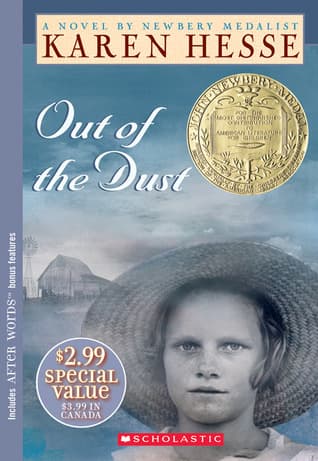
- Out of the Dust
Karen Hesse
3.8 (69k) average on GoodreadsChildren'sExplores a young girl's resilience and coming-of-age during a period of hardship and illness.
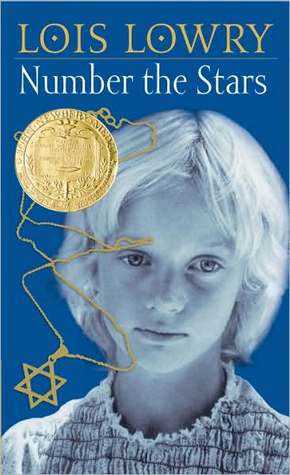
- Number the Stars
Lois Lowry
4.2 (448k) average on GoodreadsChildren'sA historical fiction novel set during WWII with a young female protagonist demonstrating courage.
- Harry Potter and the Sorcerer's Stone
J.K. Rowling
4.5 (7M) average on GoodreadsFantasyRescued from a miserable life under the stairs, an orphaned boy discovers he's a wizard destined for a magical school, where he uncovers a dangerous secret tied to the dark wizard who murdered his parents.
- The Hobbit, or There and Back Again
J.R.R. Tolkien
4.3 (2.9M) average on GoodreadsFantasyA comfort-loving hobbit named Bilbo Baggins is whisked away by a mischievous wizard and a band of dwarves on an unexpected journey to reclaim stolen treasure from a fearsome dragon, discovering courage and a magical ring along the way.
- Harry Potter and the Goblet of Fire
J.K. Rowling
4.6 (2.6M) average on GoodreadsFantasyA bewildered Harry Potter, underage and thrust into a deadly Triwizard Tournament, must brave dragons, mermaids, and a resurgent dark magic to survive a year that will forever alter the wizarding world.
- Harry Potter and the Order of the Phoenix
J.K. Rowling
4.5 (2.5M) average on GoodreadsFantasyIn a year of oppressive secrets and the threat of Voldemort, Harry Potter and Dumbledore's Army secretly train for war, shown through Jim Kay and Neil Packer's dark illustrations.




Enjoyed the summary?
A summary gives you the shape of the book. The book itself has the detail, the examples and the voice.
Find Blue on AmazonAs an Amazon Associate, BookBrief earns from qualifying purchases. How we're funded