
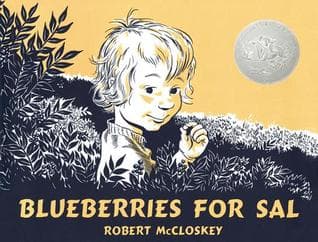
Synopsis
Covers the whole plot, including the ending.
- Difficulty
- Easy
- Pacing
- Slow
- Mood
- Nostalgic, Sweet, Gentle, Charming
- Read it if
- You enjoy classic, gentle children's stories about nature, family, and simple adventures. Perfect for a quiet read-aloud.
- Skip it if
- You prefer fast-paced stories with complex plots or high stakes.
Blueberries for Sal Plot Summary
Covers the whole plot, including the ending.
Sal and Mother Head to Blueberry Hill
Little Sal and her mother set off from their house to Blueberry Hill, each carrying an empty pail. Sal's mother plans to pick enough blueberries to can for the winter. Sal is more interested in eating the berries than putting them in her pail. As they walk, Sal continually drops berries into her own mouth, making a 'kuplink, kuplank, kuplunk' sound. Her mother reminds her to put some in the pail, but Sal's focus stays on the delicious taste of the fresh blueberries. They climb the hill, expecting many berries.
Mama Bear and Little Bear Begin Their Feast
Meanwhile, on the other side of Blueberry Hill, a Mama Bear and her Little Bear Cub are also beginning their day. Mama Bear wants to eat as many blueberries as possible to get fat for the long winter ahead, knowing she needs to store energy. Her Little Bear Cub, like Sal, wants to eat the berries directly from the bushes rather than follow his mother's example of gathering them. He copies his mother's movements, but his main goal is to fill his own tummy with the sweet fruit, making similar 'kuplink, kuplank, kuplunk' sounds.
Sal Wanders Away
Sal, still wanting to eat berries, wanders further from her mother. She finds a good spot with big, fat blueberries and sits down to enjoy them. Her mother, busy picking and dropping berries into her own pail, does not immediately notice Sal's absence. Sal continues her 'kuplink, kuplank, kuplunk' routine, moving from bush to bush, completely focused on her blueberry feast. The sounds of her mother's picking gradually fade as Sal explores new patches of berries, unaware of how far she is from her mother.
Little Bear Wanders Away
Just like Sal, the Little Bear Cub also begins to wander from his Mama Bear. He is drawn by the sounds of rustling bushes and the appeal of more blueberries. He follows the 'kuplink, kuplank, kuplunk' sounds, thinking they belong to his own mother. He moves through the dense blueberry bushes, his small paws making soft thuds, eagerly looking for the ripest berries. Mama Bear, like Sal's mother, is focused on her own picking and does not notice her cub's departure right away, continuing her efforts to prepare for winter.
A Mix-Up on Blueberry Hill
As Sal continues to eat berries, she hears a 'kuplink, kuplank, kuplunk' sound and, assuming it is her mother, follows it. However, it is actually Mama Bear she is following, who is also busy picking. On the other side of the hill, Little Bear also hears a 'kuplink, kuplank, kuplunk' and, thinking it is his mother, begins to follow Sal's mother. Both mothers, focused on their picking, initially mistake the wrong 'little one' for their own, only realizing the mix-up when they look down to see an unfamiliar child or cub.
Realization and Separation
Sal's mother, looking down at her pail, sees a small, furry head with beady eyes and realizes it is not Sal, but a Little Bear Cub. She gasps and quickly backs away. At the same time, Mama Bear, looking down, sees a small human girl with a small, empty pail. She too is startled and backs away with a woof. The two mothers, each confused and alarmed for a moment, quickly recognize they have the wrong 'child' and immediately move to find their own, causing a brief but intense moment of separation and realization on the hill.
Reunion of Sal and Her Mother
After the brief scare, Sal's mother quickly searches for her daughter. She calls out 'Sal!' and soon finds Sal, who is still busily eating blueberries. Sal's mother scoops her up, relieved to have found her. They share a moment of comfort and reassurance. Sal, despite her earlier wandering, is now happy to be back with her mother. The incident is a gentle reminder to stay close.
Reunion of Mama Bear and Little Bear
Similarly, Mama Bear, after her encounter with Sal, quickly finds her Little Bear Cub. Little Bear is still busy eating berries, unaware of the recent mix-up. Mama Bear nudges him gently, and they continue eating berries together. The reunion is quick and natural, showing the strong bond between the bear mother and cub. Both are now back to their main task of preparing for winter by eating as many blueberries as possible.
Heading Home with Full Pails
With the mix-up resolved and everyone reunited, Sal and her mother continue picking berries, this time staying closer together. Sal's pail is now fuller, and her mother's is nearly brimming. On the other side of the hill, Mama Bear and Little Bear also have full bellies and are ready to leave. They all go down the hill, each family satisfied with their day's work. Sal and her mother go home to can their blueberries, while Mama Bear and Little Bear go home to prepare for their long winter's nap. Both families achieved their goals on Blueberry Hill.
Principal Figures
Sal
Protagonist
A curious and berry-loving young girl
Sal is a young girl, the protagonist of the story, who accompanies her mother to Blueberry Hill to pick berries. She is characterized by her curiosity, her independent spirit, and her strong preference for eating blueberries directly from the bush rather than putting them in her pail. Her innocent wandering leads to the central mix-up of the plot. She is small, wears overalls, and is depicted with a distinctive bob haircut. Her actions drive the immediate conflict and resolution of the story.
Relationships: Sal's Mother (daughter and mother); Little Bear (brief, accidental encounter)
Sal's Mother
Supporting
A practical and loving mother focused on preparing for winter
Sal's mother is a responsible and loving parent, whose primary goal for the day is to pick and can enough blueberries for the winter. She is patient with Sal's tendency to eat the berries, though she gently encourages her to fill her pail. Her attentiveness is focused on the task at hand, which inadvertently allows Sal to wander. She is the first to realize the mix-up with Little Bear, reacting with a startle but quickly moving to find her own daughter. She represents the human desire for preparation and domesticity.
Relationships: Sal (mother and daughter); Little Bear (brief, mistaken encounter)
Mama Bear
Supporting
A dedicated mother bear preparing her cub for winter
Mama Bear is a large, protective mother bear who is also on Blueberry Hill with her cub. Her motivation is similar to Sal's mother: to eat and store enough fat for the upcoming winter hibernation. She is initially focused on her own berry consumption but keeps an eye on her cub. She is startled when she realizes she is being followed by Sal instead of Little Bear, reacting with a 'woof'. She quickly seeks out her own cub, demonstrating her strong maternal instincts and the natural parallel to Sal's mother.
Relationships: Little Bear (mother and cub); Sal (brief, mistaken encounter)
Little Bear
Supporting
A playful and hungry bear cub, mirroring Sal's actions
Little Bear is Mama Bear's cub, who shares many similarities with Sal. He is also more interested in eating blueberries than in following his mother's example of storing them for winter. His playful wandering and 'kuplink, kuplank, kuplunk' sounds lead him to mistakenly follow Sal's mother. He is depicted as innocent and driven by his appetite, mirroring Sal's youthful exuberance and contributing to the central plot device of mistaken identity. He is small and furry, with beady eyes.
Relationships: Mama Bear (cub and mother); Sal's Mother (brief, accidental encounter)
Themes & Insights
Nature and Instinct
The book shows the natural world and the instincts of both humans and animals. Sal's mother and Mama Bear are both driven by the instinct to prepare for winter – one by canning, the other by eating. The children, Sal and Little Bear, are driven by the simpler instinct to eat the delicious berries. Blueberry Hill shows nature's abundance and how different species interact with it. The bears' actions are natural and not threatening, showing a peaceful coexistence.
“Mama Bear ate berries with her Little Bear and Sal's mother ate berries with Sal. And they all had berries in their pails and in their stomachs and on their faces and everywhere.”
Parental Love and Protection
A main theme is the universal bond between a mother and her child, whether human or animal. Sal's mother and Mama Bear both show deep care and a protective instinct for their children. When the mix-up happens, their immediate reaction is alarm and an urgent need to find their own child. The relief both mothers feel upon reunion shows the strength of this bond. It emphasizes that despite differences in species, maternal love is the same.
“Sal's mother held Sal's hand and Sal held her mother's hand and they walked along together.”
Childhood Curiosity and Independence
Sal and Little Bear both show the curiosity and growing independence of young children and cubs. Their wandering from their mothers is not bad but driven by a desire to explore and satisfy their immediate desires (eating berries). This natural inclination leads to the central conflict, but it is presented as a normal part of growing up, not as misbehavior. Their innocent actions show the joy and sometimes slight danger that comes with youthful exploration.
“Sal went off to a little hill of her own and picked berries and put them in her own small pail.”
Parallel Journeys and Shared Experiences
The story's structure shows the similar experiences of the human and bear families. Both mothers and children go on similar missions on Blueberry Hill, driven by similar needs and desires. The 'kuplink, kuplank, kuplunk' sound of berries falling, the act of picking, and the children's tendency to eat rather than gather, all create a strong parallel. This device highlights the commonalities of life and nature's shared rhythms, despite the differences between species.
“And on the other side of Blueberry Hill lived a Mama Bear and her own Little Bear. Little Bear was eating berries and Mama Bear was eating berries.”
Plot Devices & Literary Techniques
Parallel Narrative
Two distinct stories unfold concurrently, mirroring each other
The book employs a parallel narrative structure, presenting the actions of Sal and her mother alongside those of Mama Bear and Little Bear. The story alternates between the two families, showing them engaged in similar activities (picking/eating blueberries) and making similar sounds ('kuplink, kuplank, kuplunk'). This device builds anticipation for their eventual accidental interaction and highlights the shared natural instincts between humans and animals. It underscores the theme of commonality in the natural world.
Onomatopoeia
The use of sound words to enhance sensory experience
The repeated use of 'kuplink, kuplank, kuplunk' is a prominent onomatopoeic device. This sound effect describes the blueberries falling into the pails (or mouths). It serves multiple purposes: it creates an auditory rhythm for the story, immerses the reader in the act of berry picking, and acts as a key identifier. Both Sal and Little Bear make this sound, inadvertently leading to the mistaken identity plot point, making it a crucial element for both atmosphere and plot progression.
Mistaken Identity
The mix-up of Sal and Little Bear by their respective mothers
The central conflict arises from the plot device of mistaken identity. Sal accidentally follows Mama Bear, and Little Bear accidentally follows Sal's mother. This mix-up is facilitated by the children's wandering and the mothers' focused attention on picking. It creates a moment of gentle suspense and humor, leading to the brief but memorable interaction between the species. This device allows for the exploration of parental bonds and the subtle humor of the situation without introducing genuine danger.
Symbolism of Blueberries
Blueberries represent sustenance, nature's bounty, and the cycle of life
Blueberries are more than just a plot element; they act as a central symbol. They represent nature's bounty, providing sustenance for both human and animal families. For Sal's mother, they symbolize preparation for winter (canning); for Mama Bear, they symbolize the necessary fat for hibernation. For the children, they symbolize immediate gratification and the simple joys of nature. Their abundance on Blueberry Hill drives the entire narrative, connecting all the characters and their motivations to the natural world and its cycles.
Blueberries for Sal Quotes
“Little Sal went with her mother to pick blueberries.”
“Sal's mother picked blueberries and put them in her pail.”
“Little Sal picked three blueberries and dropped them in her little pail.”
“Then she picked three more blueberries and ate them.”
“Then she picked up a tiny green grasshopper.”
“She heard a noise behind a big rock and she thought it was her mother.”
“But it was a bear.”
“Little Bear's mother picked blueberries and ate them.”
“Little Bear picked three blueberries and ate them.”
“Little Sal followed Little Bear's mother.”
“And Little Bear followed Sal's mother.”
“Sal's mother looked down and saw not Sal, but a small, black bear.”
“Little Sal and Little Bear came with their mothers to pick blueberries.”
“They walked along together, Sal and her mother and the three bears.”
Quiz
10 questions on the plot and the characters. Each answer comes with a short explanation.
Question 1
What is Sal and her mother picking blueberries for?
- To eat immediately for lunch
- To sell at the market
- To can for the winter
- To make blueberry pie
Show answer
C. To can for the winter The story explicitly states that Sal and her mother are picking blueberries 'to can for the winter,' highlighting their preparation for the colder months.
Question 2
What sound does Sal make when she drops blueberries into her pail?
- Plink, plonk, plunk!
- Kuplink, kuplank, kuplunk!
- Click, clack, clunk!
- Ker-plink, ker-plonk, ker-plunk!
Show answer
B. Kuplink, kuplank, kuplunk! The iconic onomatopoeia 'Kuplink, kuplank, kuplunk!' describes the sound of Sal's blueberries falling into her pail, a memorable detail from the book.
Question 3
Where does Sal wander to when she gets separated from her mother?
- To the top of the highest peak
- To the other side of Blueberry Hill
- Into a deep forest grove
- Down to a nearby stream
Show answer
B. To the other side of Blueberry Hill Sal wanders 'to the other side of Blueberry Hill,' which is where she encounters the mother bear and her cub.
Question 4
What is the primary motivation for both Sal's mother and the mother bear to pick blueberries?
- To enjoy a sunny day outdoors
- To gather food for the upcoming winter
- To teach their young how to forage
- To find the sweetest berries on the hill
Show answer
B. To gather food for the upcoming winter Both mothers are driven by the need to prepare for winter: Sal's mother to can them and the mother bear to eat them to get fat for hibernation.
Question 5
How does Sal's mother realize she is being followed by a bear cub instead of Sal?
- The cub makes a different sound than Sal
- She notices the cub's fur instead of Sal's clothes
- The cub tries to climb a tree
- The cub doesn't respond to her calling Sal's name
Show answer
B. She notices the cub's fur instead of Sal's clothes While the book doesn't explicitly state the moment of realization, the illustrations and narrative imply she notices the physical difference of the cub following her, specifically its 'big appetite' and general bear-like behavior, contrasting Sal's human actions.
Question 6
What happens when Sal tries to eat a blueberry from the mother bear's pail?
- The mother bear gently pushes her away
- The mother bear growls loudly at her
- The mother bear is too busy eating to notice
- The mother bear offers her more berries
Show answer
C. The mother bear is too busy eating to notice The mother bear is so engrossed in eating blueberries herself that she doesn't notice Sal trying to take one from her pail, highlighting the parallel between their foraging activities.
Question 7
What is the central theme explored by the parallel experiences of Sal and the bear cub?
- The importance of sharing food with others
- The dangers of wandering off alone in nature
- The universal bond and instinctive behaviors between mothers and their young
- The differences in diet between humans and animals
Show answer
C. The universal bond and instinctive behaviors between mothers and their young The story beautifully illustrates the parallel actions of both mothers and their young—foraging, getting lost, and ultimately finding their way back—emphasizing the universal nature of maternal care and childhood curiosity across species.
Question 8
How do Sal and the bear cub eventually get reunited with their correct mothers?
- They follow the scent of their mothers' blueberry pails
- Their mothers call out their names until they respond
- They each wander back towards the sounds of their respective mothers
- A kind stranger helps guide them back
Show answer
C. They each wander back towards the sounds of their respective mothers Both Sal and the bear cub eventually wander back towards the sounds and presence of their true mothers, guided by instinct and familiarity, leading to their safe reunions.
Question 9
What distinguishes Robert McCloskey's illustrations in 'Blueberries for Sal'?
- Vibrant, full-color paintings
- Detailed, realistic photographs
- Expressive line drawings with a single accent color (blue)
- Abstract, geometric shapes
Show answer
C. Expressive line drawings with a single accent color (blue) The book is celebrated for its 'expressive line drawings' (often in blue and white or sepia tones with blue accents) that perfectly capture the characters' emotions and the natural setting.
Question 10
Why is 'Blueberries for Sal' considered a Caldecott Honor Book?
- For its innovative storytelling techniques
- For its exceptional illustrations for children
- For its educational value about wildlife
- For its contribution to early literacy programs
Show answer
B. For its exceptional illustrations for children The Caldecott Medal and Honor are awarded annually by the Association for Library Service to Children (ALSC) to the artist of the most distinguished American picture book for children. 'Blueberries for Sal' was recognized for its outstanding illustrations.
Blueberries for Sal FAQ
What is Blueberries for Sal about?
Blueberries for Sal is about a little girl named Sal and her mother who go to Blueberry Hill to pick blueberries to can for the winter. Simultaneously, a mother bear and her cub are on the same hill, eating blueberries to prepare for hibernation. The story follows the humorous mix-up when Sal accidentally starts following the mother bear, and the bear cub starts following Sal's mother.
Why should I read Blueberries for Sal?
You should read Blueberries for Sal for its charming and simple narrative, its beautiful black-and-white illustrations that perfectly capture the wilderness and the characters' expressions, and its gentle humor. It's a timeless classic that teaches about nature, family, and the innocent adventures of childhood without ever feeling didactic.
What is the background/setting of Blueberries for Sal?
The story is set on Blueberry Hill, a wild, rocky landscape abundant with blueberry bushes, likely in coastal Maine, where author Robert McCloskey lived. The setting emphasizes the natural world, where humans and wildlife coexist, and the season is late summer or early autumn, as characters are preparing for winter.
What are the most memorable quotes?
The most memorable 'quotes' are the onomatopoeic sounds: 'Kuplink, kuplank, kuplunk!' when Sal drops berries into her pail, and 'Munch, crunch, munch' as the bears eat. These sounds are integral to the story's charm and rhythm, making the act of berry picking and eating vividly sensory for young readers.
What writing style does the author use?
Robert McCloskey uses a simple, repetitive, and evocative writing style, characteristic of classic children's literature. The narrative is straightforward, focusing on actions and sensory details like sounds ('kuplink') and tastes ('munch'). The text works in perfect harmony with his distinctive black-and-white illustrations, often letting the visuals tell much of the story.
What minor details add significant meaning?
The detail of Sal's mother carrying a large tin pail and Sal a small one, contrasted with the mother bear eating all the berries she finds and the cub eating 'just what he could hold,' subtly highlights the different motivations for gathering food – human preparation versus animal instinct for immediate sustenance.
What are some subtle foreshadowing moments?
The initial descriptions of both Sal and the bear cub wandering off from their mothers, driven by their love for blueberries, subtly foreshadow the eventual mix-up. Each child's independent exploration and focus on berries sets the stage for their mistaken identities later in the story.
What unexpected character connections exist?
The most unexpected connection is the parallel between Sal and the bear cub. They are both small, curious, and driven by a simple desire for blueberries, leading them to inadvertently swap mothers. This parallel emphasizes their shared innocence and connection to nature.
What are unspoken character motivations?
Sal's unspoken motivation is pure childhood curiosity and a love for berries, leading her to wander. The bear cub's motivation is similarly simple: an instinctual drive to eat and follow its mother. Both mothers are motivated by the need to gather food, one for canning and the other for hibernation, representing a universal maternal instinct.
What psychological complexities do characters exhibit?
While a children's book, the characters exhibit a basic psychological complexity of instinct versus learned behavior. Sal is learning to pick berries for a purpose (canning), while the bear cub acts purely on instinct (eating for survival). The mothers show protective instincts, quickly realizing something is amiss when they are not with their own offspring.
What are the major emotional turning points?
The major emotional turning points occur when Sal realizes she's following a mother bear instead of her own mother, and when Sal's mother realizes the small 'child' behind her is a bear cub. These moments of mistaken identity create a brief, gentle tension before the relief of everyone returning to their rightful families.
How do relationship dynamics evolve?
The primary relationship dynamics are between mother and child, which are briefly disrupted and then reaffirmed. Sal and her mother's bond is strengthened by the adventure, as is the mother bear and her cub's. The story highlights the deep, intuitive connection between a mother and her young, whether human or animal.
Which parts remain ambiguous or open-ended?
The story's ending is quite clear, with everyone safely reunited. However, the exact thoughts and feelings of the animals are left to the reader's imagination, as is the specific location of Blueberry Hill beyond its natural description. The ambiguity lies in the unspoken inner worlds of the animal characters.
What are controversial scenes or decisions?
For a children's book, there are no controversial scenes or decisions. The story is universally gentle and innocent. The 'danger' of Sal encountering a bear is depicted in a very mild, non-threatening way, focusing on the mix-up rather than any real peril, making it suitable for very young readers.
Blueberries for Sal ending explained: how it ends & what it means
The story ends with Sal and her mother safely back together, having filled their pails with blueberries, and the mother bear and her cub also reunited, having eaten their fill. They all go home, ready for winter. The ending signifies the restoration of order and the simple joy of family, nature, and successful preparation for the future, highlighting the parallel lives of humans and animals in harmony.
About the author

Robert McCloskey was an American author and illustrator known for his children's books. His notable works include "Make Way for Ducklings," "Blueberries for Sal," "Homer Price," and "One Morning in Maine," which often feature themes of nature and childhood adventures. McCloskey's storytelling and illustrations have made a lasting impact on children's literature.
Similar books
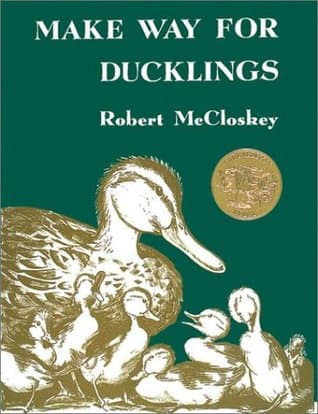
- Make Way for Ducklings
Robert McCloskey
4.2 (84k) average on GoodreadsChildren'sAnother classic McCloskey picture book about animals and a mother's care.
- Corduroy
Don Freeman
4.3 (194k) average on GoodreadsFantasyA beloved children's classic featuring a simple, heartwarming story and memorable characters.
- The Story of Ferdinand
Munro Leaf
4.4 (86k) average on GoodreadsChildren'sA gentle, classic tale with a distinct character and a quiet, charming narrative.
- Mike Mulligan and His Steam Shovel
Virginia Lee Burton
4.2 (50k) average on GoodreadsFantasyBurton's book celebrates human ingenuity, perseverance, and the value of hard work through a story of construction and community. McCloskey's, in contrast, focuses on the simpler, more intimate themes of childhood independence, natural cycles, and the immediate family unit, without the same emphasis on grand human achievement or problem-solving.
- Harry Potter and the Sorcerer's Stone
J.K. Rowling
4.5 (7M) average on GoodreadsFantasyRescued from a miserable life under the stairs, an orphaned boy discovers he's a wizard destined for a magical school, where he uncovers a dangerous secret tied to the dark wizard who murdered his parents.
- The Hobbit, or There and Back Again
J.R.R. Tolkien
4.3 (2.9M) average on GoodreadsFantasyA comfort-loving hobbit named Bilbo Baggins is whisked away by a mischievous wizard and a band of dwarves on an unexpected journey to reclaim stolen treasure from a fearsome dragon, discovering courage and a magical ring along the way.




Enjoyed the summary?
A summary gives you the shape of the book. The book itself has the detail, the examples and the voice.
Find Blueberries for Sal on AmazonAs an Amazon Associate, BookBrief earns from qualifying purchases. How we're funded