
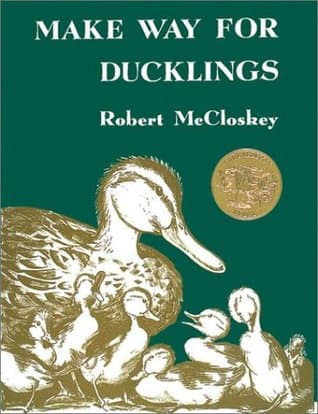
Synopsis
Covers the whole plot, including the ending.
- Difficulty
- Easy
- Pacing
- Moderate
- Mood
- Heartwarming, Gentle, Classic, Charming
- Read it if
- You enjoy classic children's stories about family, determination, and community kindness, or are looking for a gentle read-aloud.
- Skip it if
- You prefer complex plots, modern themes, or stories with human protagonists.
Make Way for Ducklings Plot Summary
Covers the whole plot, including the ending.
Mr. and Mrs. Mallard Search for a Home
Mr. and Mrs. Mallard fly over New England, looking for a good place to build a nest and raise ducklings. They see different places, including Boston's busy streets, but find them too loud or unsafe. They like the Public Garden, where they get peanuts from a kind man, but decide it has too many bicycles. They choose a small island in the Charles River, which is quiet and private, away from the city noise. This is where they will lay their eggs and raise their family.
The Ducklings Are Born
After settling on the island in the Charles River, Mrs. Mallard lays her eggs. She sits on them patiently, and soon, eight small ducklings hatch. Their names are Jack, Kack, Lack, Mack, Nack, Ouack, Pack, and Quack. Mr. and Mrs. Mallard teach their ducklings how to swim, dive, and find food. They practice these skills on their island, growing bigger and stronger under their parents' care, getting ready for their trip to the Public Garden.
Mr. Mallard Departs
When the ducklings are old enough and can swim and find food, Mr. Mallard says he will explore the rest of the river. He says goodbye to Mrs. Mallard and their eight ducklings, promising to meet them later at the Public Garden. Mrs. Mallard takes care of the ducklings alone, getting them ready for their move to the Public Garden, which she thinks will be a safer home with more food.
The Journey to the Road
Mrs. Mallard and her eight ducklings decide it is time to move to the Public Garden, as Mr. Mallard suggested. She leads them from their island in the Charles River to the bank. The ducklings, still small, have trouble keeping up with their mother. Their first challenge is climbing the steep bank and then crossing the busy road next to the river. This is their first time facing the dangers of the human world outside their quiet island.
Michael the Policeman
As Mrs. Mallard and her ducklings try to cross a busy street, they meet Michael, a kind policeman. Seeing their problem, Michael immediately stops all the cars, blowing his whistle and waving his arms. He then gently helps Mrs. Mallard and her eight ducklings safely across the busy street. Michael is friendly and understanding. He makes sure the family can continue their trip without harm and says he will watch out for them.
The Policemen Help Again
After crossing the first street with Michael's help, Mrs. Mallard and her ducklings keep going toward the Public Garden. They come to several more busy streets. Michael, keeping his word, has called his fellow policemen. At each crossing, a different policeman waits, ready to stop traffic and let the duck family pass safely. This organized effort by the Boston police shows the community's care for the ducklings, making their trip a little easier.
Arrival at the Public Garden
After their long trip through Boston's streets, guided by the helpful policemen, Mrs. Mallard and her eight ducklings finally get to the Public Garden. They are tired but glad to be there. They walk through the gate and go to the quiet pond, where they can finally rest and swim peacefully. The Public Garden, with its calm water and plenty of food, is the perfect new home for the duck family.
Reunion with Mr. Mallard
As Mrs. Mallard and the ducklings settle into their new home in the Public Garden pond, Mr. Mallard, as he promised, flies down to join them. He lands gently on the water, happy to be with his family again. The whole Mallard family is now together, safe in the beautiful Public Garden. They spend their days swimming, diving, and enjoying the people who visit the park, living happily in their Boston home.
Principal Figures
Mrs. Mallard
Protagonist
The careful and determined mother duck.
Mrs. Mallard is the diligent and protective mother of eight ducklings. She is practical and focused on finding a safe and suitable home for her family. Her determination is evident as she leads her ducklings through the perilous streets of Boston to reach the Public Garden. She is patient, teaching her ducklings essential survival skills, and resilient in the face of urban challenges. Her primary motivation is the well-being and safety of her offspring, making her a strong and admirable maternal figure.
Relationships: Mr. Mallard (Husband and co-parent); Jack, Kack, Lack, Mack, Nack, Ouack, Pack, Quack (Mother to her eight ducklings)
Mr. Mallard
Supporting
The exploratory and trusting father duck.
Mr. Mallard is the adventurous and somewhat less hands-on father of the ducklings. He participates in the initial search for a home but later departs to explore, trusting Mrs. Mallard to bring the ducklings to the Public Garden. He is confident in his wife's abilities and keeps his promise to reunite with them. His role is more to initiate the idea of the Public Garden as a home and to provide a comforting presence upon their arrival, showcasing a supportive, if less directly involved, paternal role.
Relationships: Mrs. Mallard (Wife and co-parent); Jack, Kack, Lack, Mack, Nack, Ouack, Pack, Quack (Father to his eight ducklings)
Jack, Kack, Lack, Mack, Nack, Ouack, Pack, Quack
Supporting
The eight ducklings following their mother.
These are the eight young ducklings, all named with rhyming sounds. They are curious, obedient, and somewhat vulnerable, relying entirely on their mother for guidance and protection. They learn to swim, dive, and find food under their parents' tutelage. Their small size and inexperience highlight the dangers of the city and the necessity of their mother's leadership. They represent innocence and the need for parental care, making their journey through Boston particularly endearing.
Relationships: Mrs. Mallard (Children to their mother); Mr. Mallard (Children to their father)
Michael
Supporting
The kind Boston policeman who helps the duck family.
Michael is the first policeman to encounter Mrs. Mallard and her ducklings trying to cross a busy street. He is portrayed as exceptionally kind, observant, and helpful. He immediately understands their predicament and takes decisive action to stop traffic, ensuring their safe passage. His actions demonstrate a compassionate human element in the bustling city, becoming a crucial ally for the duck family. He also coordinates with other officers, showcasing community support.
Relationships: Mrs. Mallard and ducklings (Protector/Helper); Other Boston policemen (Colleague)
Other Boston Policemen
Mentioned
The policemen who assist the ducklings at subsequent crossings.
These unnamed policemen are alerted by Michael and are stationed at various intersections along the ducklings' route to the Public Garden. They follow Michael's example, stopping traffic and ensuring the safe passage of Mrs. Mallard and her ducklings. Their collective effort underscores the theme of community kindness and demonstrates a unified human response to protect vulnerable creatures. They are extensions of Michael's initial act of kindness.
Relationships: Mrs. Mallard and ducklings (Protectors/Helpers); Michael (Colleague)
The Man with Peanuts
Mentioned
A kind man in the Public Garden who feeds the ducks.
This unnamed man is briefly mentioned when Mr. and Mrs. Mallard first consider the Public Garden as a home. He is seen feeding peanuts to the ducks, which initially attracts the Mallards to the location. He symbolizes the benevolent human presence in the Public Garden, providing sustenance and a welcoming atmosphere for the ducks. His presence helps solidify the Mallards' decision that the Public Garden would be a good home.
Relationships: Mr. and Mrs. Mallard (Feeder/Benefactor)
Themes & Insights
Parental Love and Protection
The main idea is Mrs. Mallard's strong love and protection of her eight ducklings. Every choice she makes, from picking a nest spot to leading them through the city, comes from her wish to keep her children safe. Her patience in teaching them to swim and dive, and her bravery in facing traffic, show how much a parent will do for their young. Her careful actions and the ducklings' complete trust in her clearly show this theme.
“Mrs. Mallard had to be careful, for she was all alone with eight ducklings, and she didn't want to lose one.”
Community and Kindness
The book shows the unexpected kindness and helpfulness in a busy city. The policemen, especially Michael, help the duck family stay safe by stopping traffic and working with others. This shows that even in a big city, people will help others, no matter who they are. The people in the Public Garden who feed the ducks also support this idea of humans and animals living together peacefully.
“Michael was a big, good-natured policeman, and he loved animals. 'Quack!' said Mrs. Mallard, 'Quack, quack, quack!' 'All right, Mrs. Mallard,' said Michael, 'you just wait right here and I'll stop the traffic for you.'”
The Urban vs. Natural World
The story looks at how the ducks' wild nature meets the city's man-made world. The Mallards first look for a natural, quiet place but find a good middle ground in the Public Garden, a city park. The journey shows the dangers of city things (cars, bikes) but also how humans can live alongside nature, making places where animals can do well. It's about balancing wild freedom and city life.
“This is no place for ducklings, with all those bikes and things.”
Finding Home and Belonging
A main idea is the search for a good home. Mr. and Mrs. Mallard carefully check many places before choosing the island. Then Mrs. Mallard takes a determined trip to reach the Public Garden, which becomes their perfect, lasting home. 'Home' is not just about shelter; it is about safety, community, and a place where the family can grow and feel secure. Their reunion and peaceful life in the Public Garden mean they found what they were looking for.
“This is a fine place to live, thought Mrs. Mallard, and she led her ducklings into the water.”
Plot Devices & Literary Techniques
Anthropomorphism
Giving human characteristics to animal characters.
The ducks are given human-like thoughts, concerns, and decision-making abilities. Mrs. Mallard 'thinks' about the safety of locations, 'decides' to move, and 'leads' her family with a clear purpose, much like a human mother. This device allows young readers to connect with the characters on an emotional level and understand their motivations, making the story's themes of parental love and perseverance more accessible and relatable despite the animal protagonists.
Journey/Quest Narrative
The plot is structured around a physical journey to a specific destination.
The entire second half of the book is a clear quest narrative, with Mrs. Mallard leading her ducklings on a perilous journey from their nesting island to the Public Garden. The goal is clear, the obstacles (traffic, busy streets) are distinct, and the helpers (policemen) appear at crucial moments. This structure provides a strong sense of progression, suspense, and resolution, making the story engaging as readers follow the family's determined path towards their new home.
Repetition and Rhyme (Names)
The use of rhyming names for the ducklings.
The names of the eight ducklings (Jack, Kack, Lack, Mack, Nack, Ouack, Pack, and Quack) are a memorable and charming example of repetition and simple rhyme. This device makes the many ducklings easy for young children to remember and distinguish, even if only by sound. It adds a playful and musical quality to the text, reinforcing the book's appeal as a read-aloud story and contributing to its gentle, rhythmic flow.
Illustrative Storytelling
The use of detailed illustrations to convey narrative and emotion.
McCloskey's iconic, sepia-toned illustrations are integral to the storytelling, often conveying as much information and emotion as the text itself. The detailed drawings of Boston landmarks, the expressions on the ducks' faces, and the dynamic scenes of traffic being stopped all contribute significantly to the narrative. The visuals are not merely decorative but actively advance the plot, establish setting, and highlight character emotions, making it a classic example of a picture book where images and text are inseparable.
Make Way for Ducklings Quotes
“Mr. and Mrs. Mallard were looking for a place to live.”
“But every time Mr. Mallard saw what looked like a nice place, Mrs. Mallard said it was no good.”
“There were certain to be foxes in the woods or turtles in the water, and she was not going to raise a family where there might be foxes or turtles.”
“So they flew on and on.”
“They looked for a place in the country, but they did not like it.”
“They looked for a place in the town, but they did not like that either.”
“They looked for a place in the city, and they liked that.”
“So they chose to live in the Public Garden because there was a nice pond with a little island on it.”
“The island was just right for ducks because it was away from foxes and turtles and it was away from people.”
“So they built a nest and Mrs. Mallard laid eight eggs in it.”
“Then she sat on the eggs to keep them warm.”
“She sat on the eggs and sat on the eggs.”
“At last the eggs hatched.”
“One duckling was named Jack, another Kack, another Lack, another Mack, another Nack, another Ouack, another Pack, and another Quack.”
“Mr. and Mrs. Mallard were bursting with pride.”
Quiz
10 questions on the plot and the characters. Each answer comes with a short explanation.
Question 1
What is the name of the mother duck in the story?
- Molly
- Mrs. Mallard
- Daisy
- Quackers
Show answer
B. Mrs. Mallard The mother duck is consistently referred to as Mrs. Mallard throughout the book, which is a common name for female mallard ducks.
Question 2
Where do Mr. and Mrs. Mallard initially look for a place to raise their ducklings?
- In a pond in the countryside
- On an island in the Public Garden lagoon
- Under a bridge in the city
- In a park fountain
Show answer
B. On an island in the Public Garden lagoon They fly over various places in Boston, including the Public Garden, and decide the island in the lagoon is a safe spot away from foxes and turtles.
Question 3
How many ducklings do Mr. and Mrs. Mallard have?
- Six
- Seven
- Eight
- Nine
Show answer
C. Eight Mrs. Mallard lays eight eggs, which hatch into eight ducklings: Jack, Kack, Lack, Mack, Nack, Ouack, Pack, and Quack.
Question 4
Why does Mr. Mallard leave Mrs. Mallard and the ducklings temporarily?
- To find more food for the family
- To explore the river up ahead and meet them later
- To escape from a predator
- To migrate south for the winter
Show answer
B. To explore the river up ahead and meet them later Mr. Mallard decides to fly up the river to see what the rest of it is like, planning to meet Mrs. Mallard and the ducklings in the Public Garden in a week.
Question 5
What mode of transportation do the ducklings use to cross a busy street in Boston?
- They fly over it
- They swim under it through a drain
- They are carried by a police officer
- They walk across with the help of police stopping traffic
Show answer
D. They walk across with the help of police stopping traffic Michael, a police officer, calls for backup to stop all traffic so Mrs. Mallard and her eight ducklings can safely walk across the street to the Public Garden.
Question 6
Which character helps the ducklings by feeding them peanuts?
- A fisherman on the river
- A man on a swan boat
- Michael the police officer
- A child in the park
Show answer
C. Michael the police officer Michael, the police officer at the intersection, not only helps them cross the street but also feeds them peanuts, showing his kindness and care.
Question 7
What is a key theme illustrated by the story's events in Boston?
- The importance of urban development over nature
- The challenges and cooperation in a city environment
- The superiority of country life compared to city life
- The dangers of technology and cars
Show answer
B. The challenges and cooperation in a city environment The story highlights how wildlife adapts to city life and how humans, like the police officers, can cooperate to ensure safety and harmony, blending nature and urban settings.
Question 8
In what order do the ducklings' names appear alphabetically?
- Jack, Kack, Lack, Mack, Nack, Ouack, Pack, Quack
- Kack, Lack, Mack, Nack, Ouack, Pack, Quack, Jack
- Quack, Pack, Ouack, Nack, Mack, Lack, Kack, Jack
- Lack, Mack, Nack, Ouack, Pack, Quack, Jack, Kack
Show answer
A. Jack, Kack, Lack, Mack, Nack, Ouack, Pack, Quack The ducklings are named in a rhyming, alphabetical sequence: Jack, Kack, Lack, Mack, Nack, Ouack, Pack, and Quack, which is a memorable detail from the book.
Question 9
What specific landmark in Boston do the ducklings pass on their way to the Public Garden?
- Fenway Park
- The State House
- Boston Common
- The Charles River
Show answer
B. The State House As they walk through the city, the ducklings pass the State House, a notable Boston landmark mentioned in the book, adding to the story's setting.
Question 10
How does the story conclude for the Mallard family?
- They decide to fly south for the winter
- They are captured and taken to a zoo
- They reunite in the Public Garden and decide to live there
- They return to their original island home
Show answer
C. They reunite in the Public Garden and decide to live there After their journey, Mr. Mallard rejoins Mrs. Mallard and the ducklings in the Public Garden, where they find the island safe and decide to make it their home, symbolizing family unity and a happy ending.
Make Way for Ducklings FAQ
What is 'Make Way for Ducklings' about?
The story follows Mr. and Mrs. Mallard, a pair of ducks searching for a safe place to raise their family in Boston. After hatching eight ducklings, they face the challenge of navigating the city's busy streets to reach the Public Garden, ultimately receiving help from a friendly police officer who stops traffic for them.
Why should I read 'Make Way for Ducklings'?
This Caldecott Medal-winning classic combines gentle humor, timeless themes of family and safety, and McCloskey's iconic sepia-toned illustrations. Its rhythmic, repetitive text makes it perfect for read-aloud sessions, while the depiction of urban wildlife resonates with both children and adults.
What is the background/setting of 'Make Way for Ducklings'?
The story is set in 1940s Boston, featuring real landmarks like the Public Garden, Beacon Hill, and the Charles River. McCloskey based it on actual duck families he observed in Boston, adding authentic details like the swan boats and the distinctive cobblestone streets.
What are the most memorable quotes?
Key quotes include Mrs. Mallard's repeated warning, 'Don't you worry. I know all about bringing up children,' and the policeman's iconic command, 'Hold up your traffic!' The ducklings' names—Jack, Kack, Lack, Mack, Nack, Ouack, Pack, and Quack—also create a memorable rhythmic chant.
What writing style does the author use?
McCloskey employs simple, repetitive language with a gentle cadence ideal for reading aloud. His prose is economical yet vivid, allowing the illustrations to carry much of the storytelling. The tone is warm and slightly humorous, emphasizing the ducks' perspective without anthropomorphizing them excessively.
What minor details add significant meaning?
The ducklings' rhyming names (Jack, Kack, Lack, etc.) subtly teach phonetic patterns, while the detailed illustrations of Boston landmarks like the State House and Louisburg Square ground the fantasy in reality. Mrs. Mallard's careful counting of her ducklings reinforces themes of vigilance and care.
What are some subtle foreshadowing moments?
Early scenes of Mr. and Mrs. Mallard avoiding bicycles and cars hint at later traffic dangers. Mrs. Mallard's insistence on a 'safe place' with 'no foxes or turtles' foreshadows the journey's perils, while the initial sighting of the Public Garden sets up the final destination.
What unexpected character connections exist?
The policeman, Michael, represents a bridge between human civilization and nature—his casual assistance contrasts with the ducks' wary view of humans. The swan boat in the Public Garden connects to Boston's real historic attractions, making the city itself a supporting character.
What are unspoken character motivations?
Mrs. Mallard's stubbornness about finding the perfect nest stems from deep protective instincts, while Mr. Mallard's willingness to explore reflects curiosity tempered by trust in his mate. The policeman's motivation to help likely springs from a sense of civic duty mixed with amusement.
What psychological complexities do characters exhibit?
Mrs. Mallard balances anxiety with competence, showing parental resilience. The ducklings display blind trust in following their mother, mirroring childhood dependence. Human characters like the policeman exhibit patience and empathy, subtly challenging stereotypes of urban indifference.
What are the major emotional turning points?
Key moments include the ducklings' hatching (joy), the family's tense river crossing (anxiety), and the policeman stopping traffic (relief and triumph). The reunion with Mr. Mallard at the Public Garden provides a satisfying emotional closure to the separation.
How do relationship dynamics evolve?
The Mallards' partnership shifts from mutual exploration to divided roles—Mr. Mallard scouts ahead while Mrs. Mallard nurtures. The ducks' relationship with humans evolves from fear to trust, culminating in the collaborative street crossing. The ducklings grow from helpless hatchlings to capable followers.
Which parts remain ambiguous or open-ended?
It's unclear why Mr. Mallard leaves for a week instead of staying with the family, or what long-term dangers might still exist in the Public Garden. The policeman's thoughts are never revealed, leaving his kindness somewhat mysterious. The ducks' future beyond the final scene is left to imagination.
What are controversial scenes or decisions?
Some modern readers question Mr. Mallard's absence during the ducklings' early days, interpreting it as gendered role division. The portrayal of traffic-stopping for animals might be seen as unrealistic or privileging wildlife over human convenience, though it's generally viewed as charming fantasy.
'Make Way for Ducklings' ending explained: how it ends & what it means
The story ends with the duck family safely settled in the Public Garden, eating peanuts from kindly visitors. This conclusion symbolizes harmony between nature and urban life, suggesting that community cooperation (like the policeman's help) can create safe spaces for all beings. The cyclical promise of 'more ducklings next year' hints at enduring family bonds.
About the author

Robert McCloskey was an American author and illustrator known for his children's books. His notable works include "Make Way for Ducklings," "Blueberries for Sal," "Homer Price," and "One Morning in Maine," which often feature themes of nature and childhood adventures. McCloskey's storytelling and illustrations have made a lasting impact on children's literature.
Similar books
- The Story of Ferdinand
Munro Leaf
4.4 (86k) average on GoodreadsChildren'sA classic picture book with simple prose and charming illustrations about an animal character.
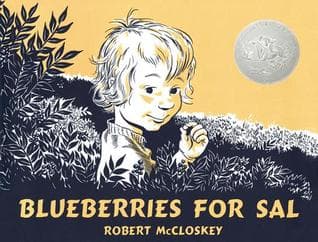
- Blueberries for Sal
Robert McCloskey
4.2 (69k) average on GoodreadsChildren'sAnother Caldecott Honor book by the same author, featuring simple, evocative storytelling and nature themes.
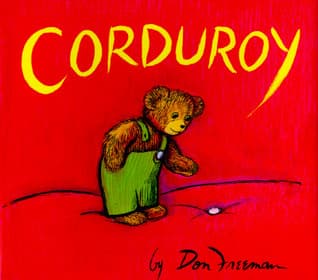
- Corduroy
Don Freeman
4.3 (194k) average on GoodreadsFantasyA beloved picture book about a toy's journey and a child's love, sharing a gentle, classic feel.
- Harry Potter and the Sorcerer's Stone
J.K. Rowling
4.5 (7M) average on GoodreadsFantasyRescued from a miserable life under the stairs, an orphaned boy discovers he's a wizard destined for a magical school, where he uncovers a dangerous secret tied to the dark wizard who murdered his parents.
- The Hobbit, or There and Back Again
J.R.R. Tolkien
4.3 (2.9M) average on GoodreadsFantasyA comfort-loving hobbit named Bilbo Baggins is whisked away by a mischievous wizard and a band of dwarves on an unexpected journey to reclaim stolen treasure from a fearsome dragon, discovering courage and a magical ring along the way.
- Harry Potter and the Goblet of Fire
J.K. Rowling
4.6 (2.6M) average on GoodreadsFantasyA bewildered Harry Potter, underage and thrust into a deadly Triwizard Tournament, must brave dragons, mermaids, and a resurgent dark magic to survive a year that will forever alter the wizarding world.



Enjoyed the summary?
A summary gives you the shape of the book. The book itself has the detail, the examples and the voice.
Find Make Way for Ducklings on AmazonAs an Amazon Associate, BookBrief earns from qualifying purchases. How we're funded