

Synopsis
Covers the whole plot, including the ending.
- Difficulty
- Medium
- Pacing
- Moderate
- Mood
- Dystopian, Philosophical, Thought-provoking, Bleak, Satirical
- Read it if
- You are fascinated by dystopian futures, enjoy philosophical critiques of society, and appreciate prescient warnings about the dangers of technological control and manufactured happiness. You don't mind a challenging read with complex themes.
- Skip it if
- You prefer lighthearted stories, are uncomfortable with bleak portrayals of humanity's future, or dislike narratives that heavily prioritize societal critique over character development.
Brave New World / Brave New World Revisited Plot Summary
Covers the whole plot, including the ending.
A Tour of the Hatchery and Conditioning Centre
The novel opens at the Central London Hatchery and Conditioning Centre. The Director of Hatcheries and Conditioning (D.H.C.) tours a group of students. He explains Bokanovsky's Process, which allows for mass production of identical humans (clones), and Podsnap's Technique for accelerating maturation. The students see fetuses being decanted and learn about the five castes: Alpha, Beta, Gamma, Delta, and Epsilon, each engineered and conditioned for specific roles. They observe hypnopaedic conditioning, where social lessons are whispered into children's ears during sleep, ensuring their conformity and contentment. This early exposure shows the dystopian society's principles of stability, community, and identity through scientific control.
Bernard Marx's Alienation and Helmholtz Watson's Discontent
Bernard Marx, an Alpha-Plus psychologist, is an anomaly in the World State. He is smaller than other Alphas due to a rumored alcohol mishap during his fetal development. This leads to social awkwardness and a feeling of being an outsider. He dislikes the casual promiscuity encouraged by the state and wants deeper emotional connections, often telling his friend, Helmholtz Watson, about his unhappiness. Helmholtz, an Alpha-Plus lecturer, is also discontent. His struggle comes from his intelligence and a feeling that his talents are not used enough. He finds the state's art and literature shallow and wants to create something meaningful. This desire often gets him in trouble for expressing unconventional ideas. Their friendship comes from a shared feeling of alienation.
Lenina Crowne's Invitation to the Savage Reservation
Lenina Crowne, a Beta-Minus, is a perfectly conditioned woman who embodies the World State's values: promiscuity, soma consumption, and superficial happiness. She likes Bernard Marx, despite his oddities, and agrees to go with him to the New Mexico Savage Reservation. Bernard, however, is more interested in escaping the World State's rules, even if temporarily, and seeing a different way of life. Lenina sees the trip as just a novelty. Their different reasons for visiting the Reservation show the gap between Bernard's desire for individuality and Lenina's ingrained conformity to the World State's expectations and conditioning.
Discovery on the Savage Reservation: Linda and John
At the New Mexico Savage Reservation, Bernard and Lenina are horrified by the primitive conditions and the traditional, religious rituals of the indigenous people. They find a woman named Linda and her son, John. To Bernard's surprise, Linda says she is a World State citizen accidentally left behind years ago after a visit with the Director. She explains how she gave birth to John, a scandalous act in the World State, and how they lived among the 'savages.' John, having grown up reading Shakespeare and observing the Reservation's customs, is an outsider in both worlds. Bernard realizes that Linda is the D.H.C.'s lost date, confirming his suspicions about the Director's past.
The Return to London and the D.H.C.'s Humiliation
Bernard sees a chance to avoid exile to Iceland by exposing the Director's past. He brings Linda and John back to London. Upon their return, Bernard confronts the D.H.C. in front of high-caste employees, including Mustapha Mond, the World Controller. Linda, frail and disoriented by the World State's cleanliness and soma, recognizes the D.H.C. as her former lover and John's father. John kneels before the D.H.C. and calls him 'father.' This public revelation of the D.H.C.'s unorthodoxy and 'savage' procreation is a catastrophic scandal. It leads to his immediate resignation and disappearance, saving Bernard from exile.
John the Savage's Initial Fascination and Disillusionment
John the Savage, with his Shakespearean sensibility, is at first captivated by the World State's technology and cleanliness. He becomes a celebrity, called 'The Savage,' with Bernard Marx enjoying the attention. However, John is increasingly disgusted by the casual promiscuity, the pervasive use of soma, and the lack of deep emotion or true art. He finds the World State's citizens childish and superficial. His romantic idealization of Lenina Crowne ends when she tries to seduce him in a way he sees as crude and objectifying. He lashes out violently. He struggles to reconcile his moral code and love for Shakespeare with the hedonistic, controlled reality of the World State.
Linda's Death and John's Rebellion
Linda, given an endless supply of soma, dies from an overdose in a hospital. John is devastated by her death, especially by the indifference of the nurses and the young children being conditioned to see death as a pleasant, trivial event. In grief and rage, John confronts a group of Delta workers receiving their soma ration. He sees it as a poison that keeps them enslaved. He throws the soma out the window, trying to 'free' them from their conditioning. This causes a riot, with the Deltas, used to their soma, attacking John. Bernard and Helmholtz arrive. Helmholtz joins John in the fight, while Bernard hesitates, showing his cowardice.
Mustapha Mond's Explanations and the Exiles
The police quickly stop the riot, spraying soma vapor to pacify the Deltas. John, Bernard, and Helmholtz are arrested and brought before Mustapha Mond, the World Controller. Mond debates with John, explaining that happiness and stability are prioritized over truth, art, and freedom in the World State. He says that 'unorthodoxy' like theirs is incompatible with societal harmony. He explains the suppression of science, religion, and deep emotional experiences in favor of universal contentment. As a result, Bernard and Helmholtz are exiled to islands, places where other intellectual dissidents can live freely. Helmholtz eagerly accepts this fate, while Bernard remains terrified.
John's Retreat to the Lighthouse
John, refusing exile or integration into the World State, seeks solitude. He finds an abandoned lighthouse on the outskirts of London and tries to live a self-sufficient life of penance. He cultivates a garden and whips himself for purification and atonement for his perceived sins and the World State's corruptions. His reclusive lifestyle is soon discovered by curious Alpha-Plus journalists and 'feelie' producers. They film him, and his self-flagellation becomes a popular spectacle. Crowds of voyeuristic World State citizens come to watch 'The Savage' perform his rituals, further invading his privacy and spiritual quest.
The Orgy-Porgy and John's Tragic End
The constant intrusion of crowds at the lighthouse drives John to the brink of madness. One day, a large crowd gathers, demanding to see 'The Savage.' Lenina Crowne is among them. The situation escalates into an 'Orgy-Porgy,' a frenzied communal ritual, fueled by soma and the excitement of the spectacle. Overwhelmed by the sensory overload, the chanting, and Lenina's presence, John is involuntarily swept into the orgy. The next morning, horrified by his actions and the failure of his attempt at purity, consumed by guilt and despair, John hangs himself from the arch of his lighthouse. He twists slowly in the air, a tragic symbol of his inability to reconcile himself with the 'Brave New World.'
Brave New World / Brave New World Revisited Characters
Bernard Marx
Protagonist/Supporting
An Alpha-Plus psychologist who feels alienated from the World State due to his physical and emotional differences.
Bernard Marx is an Alpha-Plus, but a rumored alcohol-in-bottle incident left him physically smaller than other Alphas. This physical difference makes him self-conscious and fuels his sense of alienation, leading him to question the World State's values. He longs for genuine emotional connection and individuality, often expressing discontent with the casual promiscuity and superficial happiness. However, he is also deeply insecure and cowardly, often seeking validation and exploiting situations for personal gain, such as his initial enjoyment of the fame brought by John the Savage. His desire for individuality is often overshadowed by his fear of social ostracization and punishment.
Relationships: Lenina Crowne (object of his romantic interest, but she represents everything he dislikes about the World State); Helmholtz Watson (friend and fellow outsider, though Helmholtz is more genuinely courageous); John the Savage (initially a means to gain social standing, later a source of genuine intellectual curiosity, but ultimately a victim of Bernard's cowardice); D.H.C. (his boss, whom he publicly humiliates)
Lenina Crowne
Supporting
A Beta-Minus who embodies the World State's ideal of promiscuous, soma-addicted contentment.
Lenina Crowne is a perfectly conditioned World State citizen. She is attractive, popular, and completely conforms to the state's expectations of promiscuity, soma consumption, and superficial happiness. She finds Bernard Marx's unorthodoxy intriguing but struggles to understand his desire for monogamy or deep emotional experiences. Her feelings for John are genuine but are expressed in the only way she knows how – through physical desire – which completely misunderstands and repulses John. She is a product of her conditioning, unable to comprehend alternative ways of living or feeling, making her a poignant symbol of the World State's success in eradicating individuality.
Relationships: Bernard Marx (casual sexual partner, and object of his unrequited deeper affection); Henry Foster (regular sexual partner); John the Savage (object of her genuine affection, but her attempts at intimacy are misunderstood and rejected by him)
John the Savage
Protagonist
A young man raised on the Savage Reservation, deeply influenced by Shakespeare, who represents a clash of values with the World State.
John is the son of Linda and the Director, born and raised on the New Mexico Savage Reservation. He grew up alienated from both the Reservation's indigenous culture and the World State's values, finding solace and understanding in a collected works of Shakespeare. He is highly moral, romantic, and deeply sensitive, valuing truth, beauty, and emotional depth. Upon arriving in the World State, he is initially fascinated but quickly becomes disgusted by its superficiality, promiscuity, and lack of genuine feeling. He attempts to live by his own ethical code but is ultimately overwhelmed and destroyed by the clash between his values and the World State's reality.
Relationships: Linda (his mother, whom he loves deeply despite her flaws); D.H.C. (his father, whom he publicly exposes); Lenina Crowne (object of his romantic idealization, which is shattered by her World State conditioning); Bernard Marx (initially a friend and a connection to the World State, but ultimately a disappointment); Helmholtz Watson (a kindred spirit who understands his intellectual and emotional struggles)
Mustapha Mond
Antagonist/Supporting
The Resident World Controller for Western Europe, who embodies the intellectual justification for the World State's existence.
Mustapha Mond is one of the ten World Controllers. He is highly intelligent, educated, and aware of the sacrifices made for the World State's stability and happiness. He possesses forbidden books (including Shakespeare and religious texts) and understands the human cost of the engineered society. He chose to become a Controller rather than be exiled for his scientific curiosity, sacrificing truth and freedom for the greater good of societal stability and universal contentment. He serves as the intellectual antagonist, calmly and logically defending the World State's principles against John's emotional arguments, revealing the cold, rational calculations behind the dystopian system.
Relationships: John the Savage (philosophical opponent and debater); Bernard Marx (authority figure who exiles Bernard); Helmholtz Watson (authority figure who exiles Helmholtz)
Helmholtz Watson
Supporting
An Alpha-Plus lecturer and writer who feels his intellectual and creative talents are stifled by the World State.
Helmholtz Watson is an Alpha-Plus, physically and intellectually superior, and a successful lecturer at the College of Emotional Engineering. Unlike Bernard, his discontent stems from his profound intellectual capacity and a yearning for deeper meaning and creative expression that the World State's superficial art and literature cannot satisfy. He finds the state-sanctioned entertainment shallow and yearns to write something truly powerful and meaningful. He is bolder and more genuinely rebellious than Bernard, readily embracing exile as an opportunity for true freedom and self-discovery. He forms a bond with John over their shared love for powerful language and their alienation.
Relationships: Bernard Marx (friend and fellow outsider, though Helmholtz is often frustrated by Bernard's cowardice); John the Savage (intellectual companion, sharing a bond over literature and a desire for deeper meaning)
Linda
Supporting
John's mother and a former World State citizen who was stranded on the Savage Reservation.
Linda is John's mother, a Beta-Minus who was accidentally left behind on the New Mexico Savage Reservation during a visit with the Director. She gave birth to John, a scandalous and deeply unorthodoxy act by World State standards. On the Reservation, she was ostracized and abused for her promiscuity and World State conditioning, unable to adapt to the primitive lifestyle. Upon her return to the World State, she is overwhelmed by the cleanliness and abundance of soma, which she consumes excessively, quickly deteriorating into a state of permanent drugged bliss, eventually dying from an overdose. She represents the tragic consequence of being caught between two vastly different worlds.
Relationships: John the Savage (her son, whom she loves but struggles to parent in the Reservation's environment); D.H.C. (her former lover and John's father)
The Director of Hatcheries and Conditioning (D.H.C.)
Supporting
The head of the Central London Hatchery and Conditioning Centre, whose past transgression is revealed.
The D.H.C., or Thomas, is a high-ranking official responsible for overseeing the scientific production and conditioning of new humans in the World State. He is a staunch advocate for the World State's principles of stability and conformity. He is a figure of authority and strict adherence to the rules, which makes his past transgression—having fathered a child (John) with Linda during a visit to the Savage Reservation—a monumental scandal. His public humiliation and forced resignation by Bernard Marx, orchestrated with John and Linda's reappearance, highlights the hypocrisy and fragility of even the highest echelons of the World State when faced with 'unorthodoxy.'
Relationships: Linda (his former lover); John the Savage (his illegitimate son); Bernard Marx (his subordinate, who ultimately orchestrates his downfall)
Henry Foster
Supporting
A typical Alpha, well-adjusted and conforming to the World State's ideals.
Henry Foster is a perfectly conditioned Alpha who embodies the ideal World State citizen. He is cheerful, efficient, and completely satisfied with his life and role in society. He adheres strictly to the World State's social norms, including casual promiscuity and the use of soma. He is a statistician and works at the Hatchery, demonstrating a detached, scientific view of human life and reproduction. His character serves as a foil to Bernard Marx, highlighting Bernard's eccentricities and discontent by presenting a stark contrast of unquestioning conformity and happiness within the World State.
Relationships: Lenina Crowne (one of her regular sexual partners)
Brave New World / Brave New World Revisited Themes
Identity and Individuality vs. Conformity
The novel explores the conflict between an individual's desire for self-expression and societal pressure to conform. The World State eradicates individuality through genetic engineering, hypnopaedia, and soma. This ensures everyone is happy in their role. Characters like Bernard Marx and Helmholtz Watson struggle with their identities, feeling isolated by their inability to conform. John the Savage, raised outside this system, represents the struggle for individual freedom and self-discovery against a society that demands uniformity. This leads to his tragic end. His love for Shakespeare shows a yearning for a rich, complex identity denied by the World State.
“'But I don't want comfort. I want God, I want poetry, I want real danger, I want freedom, I want goodness. I want sin.”
The Dangers of Technological Progress and Control
Huxley critiques unchecked scientific and technological advancement when applied to human life. The World State uses scientific methods – Bokanovsky's Process, hypnopaedia, conditioning, and soma – to control every aspect of human existence, from reproduction to emotional responses. This technological control eliminates disease, suffering, and war, but at the cost of freedom, art, and genuine human experience. The novel warns that a society prioritizing stability and happiness above all else, achieved through scientific manipulation, sacrifices humanity itself. The 'brave new world' is a sterile, emotionless prison disguised as a utopia.
“'We can't allow science to undo its own good work. That's why we have the Controller now.”
Happiness vs. Truth and Freedom
A central theme is the choice between guaranteed happiness and the pursuit of truth. Mustapha Mond argues that the World State has chosen happiness, eliminating suffering, passion, and difficult emotions by suppressing art, religion, and philosophy. John the Savage, who pursues truth, finds the World State's happiness shallow. He prefers the pain and complexity of genuine human experience to the chemically induced contentment of soma. The novel makes readers question if a life without struggle and deep emotion is truly 'happy' or fulfilling, and what such happiness costs.
“'But I like the inconveniences.' 'We don't,' said the Controller. 'We prefer to do things comfortably.”
Consumerism and Instant Gratification
The World State is built on consumerism and instant gratification. Citizens are conditioned from birth to crave new goods and to dispose of old ones, fueling the economy. Slogans like 'Ending is better than mending' promote a throwaway culture. Sexual promiscuity is encouraged, and delayed gratification is eradicated, with any discomfort or deep emotion immediately suppressed by soma. This constant pursuit of pleasure and material possessions, without meaningful relationships or intellectual pursuits, creates a superficial society where citizens are distracted and never challenged. This serves the state's economic and social stability.
“'Every one belongs to every one else.”
The Role of Literature and Art in Society
The novel shows the role of literature and art in expressing human emotions, challenging norms, and encouraging critical thought. In the World State, 'serious' art and literature, especially Shakespeare, are banned because they evoke strong emotions, celebrate individuality, and explore suffering and tragedy—all against the state's goal of universal contentment. John the Savage's connection to Shakespeare gives him a moral compass and a way to express his discontent. This allows him to articulate his rejection of the World State. Helmholtz Watson also wants meaningful creative expression beyond the trivial 'feelies' and propaganda. The suppression of art shows the World State's fear of real human complexity.
“'You've got to choose between happiness and what people used to call high art. We've sacrificed the high art.”
Plot Devices & Literary Techniques
Hypnopaedia (Sleep-Teaching)
A conditioning technique used to instill moral and social values during sleep.
Hypnopaedia is a key conditioning method where children listen to recorded lessons during their sleep, repeatedly absorbing moral and social principles of the World State. These lessons are ingrained into their subconscious, shaping their beliefs, attitudes, and caste-specific contentment. For example, children are taught to love their caste and hate other castes, and to embrace consumerism. This device ensures absolute conformity and prevents critical thought, making the citizens happy with their predestined roles and reinforcing the state's stability without conscious effort.
Soma
A powerful tranquilizer and hallucinogen used to control and pacify the population.
Soma is a ubiquitous, government-produced drug that provides instant, consequence-free happiness and suppresses any negative emotions, anxieties, or desires for rebellion. It acts as a tool of social control, ensuring that citizens remain docile, contented, and unquestioning. 'A gramme is better than a damn' is a common slogan, highlighting its role as an escape from reality. The World State encourages its widespread use, effectively drugging the population into submission and preventing any genuine emotional or intellectual introspection, thus maintaining stability.
Bokanovsky's Process
A method of mass-producing genetically identical human beings (clones).
Bokanovsky's Process is a fictional method of human reproduction where a single egg can be made to bud, producing up to ninety-six identical embryos. This allows for the mass production of uniform individuals, particularly for the lower castes (Gammas, Deltas, and Epsilons), who are then conditioned for repetitive, manual labor. This process epitomizes the World State's scientific control over human life and its prioritization of efficiency and stability over individuality, ensuring a constant supply of specialized workers perfectly suited for their societal roles.
The Savage Reservation
A remote, isolated area where traditional, 'primitive' human life is preserved, serving as a contrast to the World State.
The Savage Reservation functions as a stark contrast to the World State, showcasing a society where traditional family structures, religion, natural birth, and suffering still exist. It is a place of 'otherness,' where the 'savages' live unconditioned lives, experiencing love, pain, aging, and death. This device allows Huxley to introduce John, a character raised with a different set of values, enabling a direct confrontation between the World State's engineered happiness and the raw, complex reality of human nature. It highlights what the World State has sacrificed for its stability.
Shakespearean Allusions
John the Savage's extensive knowledge of Shakespeare, used to critique the World State.
John the Savage's deep familiarity with Shakespearean plays serves as a crucial literary device. His ability to quote Shakespeare provides him with a rich vocabulary to express complex emotions, moral dilemmas, and the beauty and tragedy of human experience—concepts entirely absent in the World State. The allusions highlight the stark contrast between the depth of human emotion and thought found in classic literature and the superficiality and emotional sterility of the World State. John's quotes often provide ironic commentary on the sterile 'brave new world' he encounters, ultimately underscoring his alienation and the loss of genuine humanity.
Brave New World / Brave New World Revisited Quotes
“Words can be like X-rays if you use them properly—they’ll go through anything. You read and you’re pierced.”
“But I don't want comfort. I want God, I want poetry, I want real danger, I want freedom, I want goodness. I want sin.”
“A really efficient totalitarian state would be one in which the all-powerful executive of political bosses and their army of managers control a population of slaves who do not have to be coerced, because they love their servitude.”
“Ending is better than mending. The more stitches, the less riches.”
“One believes things because one has been conditioned to believe them.”
“Civilization is sterilization.”
“The greater a man's talents, the greater his power to lead astray.”
“Happiness is never grand.”
“You can't make tragedies without social instability. The world's stable now.”
“The optimum population is modelled on the iceberg—eight-ninths below the water line, one-ninth above.”
“Everybody's happy nowadays.”
“The most important Manhattan Projects of the future will be vast government-sponsored inquiries into what the politicians and the participating scientists will call 'the problem of happiness'.”
“I ate civilization. It poisoned me; I was defiled. And then... I ate my own wickedness.”
“A love of nature keeps no factories busy.”
Quiz
10 questions on the plot and the characters. Each answer comes with a short explanation.
Question 1
In Brave New World, what is the name of the drug that citizens use to escape negative emotions?
- Soma
- Opium
- Psycho
- Euphoria
Show answer
A. Soma Soma is the government-distributed drug in Brave New World that induces happiness and suppresses negative emotions, symbolizing chemical control over society.
Question 2
What is the primary method of reproduction in the World State of Brave New World?
- Natural birth within families
- Artificial insemination and cloning
- In vitro fertilization and genetic engineering
- Adoption from lower castes
Show answer
C. In vitro fertilization and genetic engineering In Brave New World, humans are created through in vitro fertilization and genetically engineered in hatcheries to fit into predetermined castes, eliminating natural reproduction.
Question 3
Which character from Brave New World represents the 'Savage' and struggles with the World State's values?
- Bernard Marx
- John the Savage
- Mustapha Mond
- Lenina Crowne
Show answer
B. John the Savage John the Savage, raised outside the World State on a reservation, embodies traditional human values and conflicts with the society's engineered happiness and lack of freedom.
Question 4
In Brave New World Revisited, what does Huxley identify as a major threat that has accelerated since he wrote the original novel?
- Nuclear warfare
- Overpopulation
- Alien invasion
- Technological stagnation
Show answer
B. Overpopulation In Brave New World Revisited, Huxley argues that overpopulation has become a pressing issue, exacerbating social control and resource scarcity, aligning with his dystopian warnings.
Question 5
What is the motto of the World State in Brave New World?
- Strength through Unity
- Community, Identity, Stability
- Freedom and Happiness
- Progress at Any Cost
Show answer
B. Community, Identity, Stability The motto 'Community, Identity, Stability' reflects the World State's goals of social cohesion, predetermined roles, and control to maintain a stable, conflict-free society.
Question 6
How does Huxley in Brave New World Revisited compare the use of propaganda in the real world to his fictional society?
- He says propaganda is less effective in reality
- He argues modern propaganda is more subtle but equally manipulative
- He claims propaganda is only a problem in totalitarian states
- He dismisses propaganda as irrelevant in the atomic age
Show answer
B. He argues modern propaganda is more subtle but equally manipulative In Brave New World Revisited, Huxley notes that real-world propaganda, through media and advertising, has become sophisticated and pervasive, mirroring the psychological conditioning in his novel.
Question 7
Which caste in Brave New World is conditioned to perform manual labor and is considered the lowest?
- Alphas
- Betas
- Gammas
- Epsilons
Show answer
D. Epsilons Epsilons are the lowest caste, genetically engineered and conditioned for menial tasks, illustrating the society's rigid hierarchy and lack of social mobility.
Question 8
In Brave New World, what is the 'Feelies' and how does it relate to the society's control?
- A type of emotional therapy session
- A form of entertainment that stimulates senses to distract citizens
- A drug that enhances physical sensations
- A government surveillance system
Show answer
B. A form of entertainment that stimulates senses to distract citizens The 'Feelies' are movies that provide tactile and sensory experiences, serving as escapist entertainment to keep citizens pacified and diverted from critical thought.
Question 9
What key difference does Huxley highlight in Brave New World Revisited between his fictional dystopia and potential real-world threats?
- Real threats are more violent but less controlling
- Modern control might be achieved through consent and pleasure rather than force
- Technology has made dystopia impossible
- Overpopulation is the only real concern, unlike in the novel
Show answer
B. Modern control might be achieved through consent and pleasure rather than force Huxley warns that in the real world, tyranny could emerge through seductive means like consumerism and drugs, making people love their oppression, unlike the overt control in Brave New World.
Question 10
Which event in Brave New World leads to Bernard Marx and Helmholtz Watson being exiled?
- Their involvement in a rebellion against the World State
- Publicly criticizing the use of soma
- A riot at the Savage Reservation
- Their association with John the Savage and subversive behavior
Show answer
D. Their association with John the Savage and subversive behavior Bernard and Helmholtz are exiled to an island for their nonconformist actions and connection to John, who challenges societal norms, demonstrating the World State's intolerance of dissent.
Brave New World / Brave New World Revisited FAQ
What is 'Brave New World' about?
Set in a dystopian World State in 2540 AD, the novel depicts a society where humans are genetically engineered and psychologically conditioned for specific social roles. The story follows Bernard Marx and John 'the Savage' as they challenge this rigid system, exposing the costs of sacrificing individuality and emotion for stability and pleasure.
What is 'Brave New World Revisited' about?
Published 26 years after the novel, this non-fiction work analyzes how 1950s society was catching up to Huxley's predictions. Huxley examines real-world threats like overpopulation, propaganda techniques, subliminal persuasion, and drug use, warning that his fictional dystopia was becoming increasingly plausible.
Why should I read 'Brave New World' and 'Brave New World Revisited' together?
Reading both works provides a complete understanding of Huxley's vision. The novel presents the fictional dystopia, while the non-fiction sequel shows how actual social trends were validating his predictions about psychological manipulation, technological control, and the erosion of freedom.
What is the background/setting of 'Brave New World'?
The World State is a global society where citizens are bred in hatcheries and conditioned from birth to accept their predetermined castes (Alphas to Epsilons). Stability is maintained through soma (a pleasure drug), promiscuous sex, and the elimination of family, history, and personal attachments.
What are the most memorable quotes from 'Brave New World'?
Key quotes include 'Community, Identity, Stability' (the World State motto), 'Everybody's happy now' (showing enforced contentment), and John the Savage's declaration 'But I don't want comfort. I want God, I want poetry, I want real danger, I want freedom.' These capture the central conflict between control and humanity.
What writing style does Huxley use in 'Brave New World'?
Huxley employs a satirical, intellectually dense style blending scientific terminology with philosophical dialogue. The narrative shifts between clinical descriptions of the World State's mechanisms and emotional scenes with characters like John the Savage, creating stark contrasts between engineered society and raw human experience.
What minor details add significant meaning to 'Brave New World'?
The Solidarity Service ritual, where characters drink strawberry soma and chant, parodies religious communion while highlighting engineered spirituality. The Bokanovsky's Process (creating identical twins) symbolizes the eradication of individuality, and the feelies (multi-sensory movies) represent shallow, manufactured entertainment replacing art.
What are some subtle foreshadowing moments in 'Brave New World'?
Bernard's early discomfort with casual sex and soma use foreshadows his eventual rebellion. Mustapha Mond's hidden collection of forbidden literature hints at his conflicted role as Controller. Lenina's fixation on John initially seems like attraction but foreshadows her inability to understand genuine emotion.
What unexpected character connections exist in 'Brave New World'?
John the Savage is the son of Linda (a Beta who was stranded in the Savage Reservation) and the Director of Hatcheries, Thomas. This revelation publicly humiliates the Director and connects the civilized World State with the 'primitive' reservation through hidden human relationships.
How does 'Brave New World Revisited' connect to real historical events?
Huxley references 1950s advertising techniques, brainwashing reports from the Korean War, and early television propaganda as evidence that methods of psychological control were advancing faster than he anticipated in 1932. He specifically cites Nazi Germany and Soviet Russia as examples of dystopian elements becoming reality.
What are the unspoken motivations of Mustapha Mond?
As one of the ten World Controllers, Mond understands the costs of stability but chooses to maintain the system because he believes humanity cannot handle truth and freedom. His private collection of banned books reveals personal nostalgia for the old world, yet he suppresses this to preserve social order.
What psychological complexities does John the Savage exhibit?
John struggles with internal conflicts between his Shakespearean ideals of love and honor and his visceral reactions to World State decadence. His self-flagellation and eventual suicide demonstrate how someone raised with traditional morality cannot survive in a society that pathologizes intense emotion and spiritual yearning.
What are the major emotional turning points in 'Brave New World'?
Key emotional shifts include Bernard's humiliation after his failed rebellion, John's horrified reaction to the feelies and orgy-porgy, Linda's death scene where she's surrounded by soma-happy children, and John's final breakdown when he realizes he cannot escape either civilization or savagery.
How do relationship dynamics evolve between Bernard, Helmholtz, and John?
Initially, Bernard and Helmholtz bond over their dissatisfaction with World State superficiality. John's arrival intensifies this, but Bernard's vanity causes friction. Ultimately, Helmholtz and John develop genuine friendship through shared intellectual rebellion, while Bernard's cowardice isolates him, showing how character determines alliance more than circumstance.
Which parts of 'Brave New World' remain ambiguous or open-ended?
The fate of the World State after John's death is unclear—whether his protest causes lasting change or is merely absorbed. Huxley doesn't specify if Bernard and Helmholtz find meaning in their exile. The novel also leaves open whether true human connection is possible in such a controlled environment.
What are controversial scenes or decisions in 'Brave New World'?
John's violent rejection of Lenina's advances and his later self-whipping have been debated as either puritanical extremism or justified resistance to dehumanizing sexuality. Mustapha Mond's decision to exile rather than eliminate Bernard and Helmholtz raises questions about whether the World State allows any dissent.
'Brave New World' ending explained: how it ends & what it means
John hangs himself after being overwhelmed by reporters and his own guilt following an orgy. This tragic conclusion suggests that individuals who value deep emotion and spirituality cannot survive in a pleasure-obsessed, controlled society. The ending reinforces Huxley's warning about the cost of trading freedom for happiness.
How does 'Brave New World Revisited' change the interpretation of the novel?
Huxley's analysis in 'Revisited' shifts the novel from pure speculation to urgent social critique. By showing how 1950s advertising, drugs, and propaganda were creating 'brave new world' conditions, he frames the original story not as fantasy but as a plausible future requiring immediate ethical vigilance.
What does Huxley identify as the greatest threat in 'Brave New World Revisited'?
Huxley argues that subtle psychological manipulation through advertising, entertainment, and 'chemical persuasion' (drugs) poses a greater danger than overt brutality. He warns that people will willingly surrender freedom for comfort and distraction, making totalitarian control more insidious than in Orwell's '1984'.
About the author
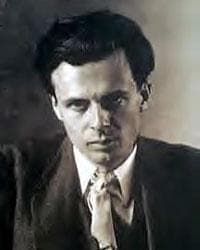
Aldous Leonard Huxley was an English writer and philosopher. His bibliography spans nearly 50 books, including novels and non-fiction works, as well as essays, narratives, and poems.
Similar books
- Nineteen Eighty-Four
George Orwell
4.2 (5.5M) average on GoodreadsFictionExplores a totalitarian government's control over its citizens and the suppression of individuality.
- Fahrenheit 451
Ray Bradbury
4.0 (1.7M) average on GoodreadsFantasyDepicts a future society where knowledge and independent thought are suppressed, leading to widespread conformity.
- The Handmaid's Tale
Margaret Atwood
4.1 (1.5M) average on GoodreadsFantasyPresents a dystopian society where women are stripped of their rights and forced into reproductive servitude.
- 1984
George Orwell
4.2 (3.1M) average on GoodreadsPoliticsIn a future where surveillance and thought control are absolute, a man's search for truth clashes with the Party, showing that hope can be a form of rebellion.
- Animal Farm
George Orwell
4.0 (2.7M) average on GoodreadsPoliticsA farm animals' rebellion against humans turns into a pig-led dictatorship, showing how power corrupts and revolutionary ideals are betrayed.
- Freakonomics: A Rogue Economist Explores the Hidden Side of Everything
Steven D. Levitt
4.0 (709k) average on GoodreadsBusinessThis book uses economic principles to reveal the surprising incentives behind everything from drug dealing and real estate to cheating teachers and the decline of crime.






Enjoyed the summary?
A summary gives you the shape of the book. The book itself has the detail, the examples and the voice.
Find Brave New World / Brave New World Revisited on AmazonAs an Amazon Associate, BookBrief earns from qualifying purchases. How we're funded