
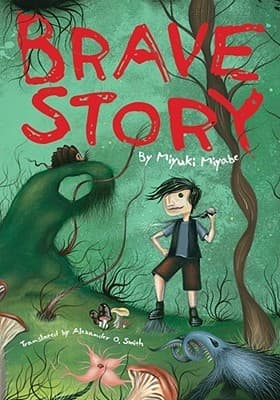
Synopsis
Covers the whole plot, including the ending.
- Difficulty
- Medium
- Pacing
- Moderate
- Mood
- Adventurous, hopeful, determined, fantastical, bittersweet
Brave Story Plot Summary
Covers the whole plot, including the ending.
A Life Unraveling
Eleven-year-old Wataru Mitani's normal life begins to fall apart. His parents, who have been distant, announce their separation. His father leaves to live with another woman. This news shatters Wataru's security. At the same time, a new student, Mitsuru Ashikawa, joins his class, drawing attention with his aloof manner and strange powers. Wataru feels a connection to Mitsuru, but also a growing rivalry. The trouble at home, combined with Mitsuru's presence, leaves Wataru lost and desperate to change his bleak reality. He overhears his father speak of a 'goddess' and a 'chance to redo everything,' sparking hope.
The Door to Vision
Desperate to escape his pain and find a solution, Wataru follows Mitsuru to an abandoned building, rumored to be haunted. There, he sees Mitsuru perform a ritual and enter a glowing door that appears from nowhere. Overcome by curiosity and a desperate hope this door might change his fate, Wataru follows Mitsuru through the portal. He finds himself in a strange land called Vision, a world with mythical creatures, magic, and different rules. He quickly learns that Vision is a place where one can seek the Goddess of Destiny to have a wish granted, if they complete a dangerous journey.
The Traveler's Test and the First Companion
Upon entering Vision, Wataru immediately faces a test from the gatekeeper, a wise old man. He must choose his 'occupation' for his journey, which sets his initial abilities. Wataru chooses 'Traveler,' showing his desire for self-discovery. He soon meets a young, lizard-like creature named Kee-Maa, from the 'Kee-Ma tribe,' who becomes his first companion. Kee-Maa, initially wary, agrees to help Wataru navigate Vision's lands. Together, they begin their quest to reach the Tower of Destiny, learning about the world's magic, its dangers, and the five gemstones needed to power the Demon's Bane, the key to the Goddess's favor.
The Land of the Water Tribe and the Gem of Charity
Wataru and Kee-Maa travel through Vision's regions, facing challenges. Their journey leads them to the Land of the Water Tribe, where they find a community struggling with a severe drought. Wataru, seeing their trouble, feels he must help, even if it delays his own quest. He learns about the 'Gem of Charity' and realizes charity is about selflessness and understanding. By helping the Water Tribe, putting their needs before his own, and showing empathy, Wataru earns the first gemstone. This experience deepens his understanding and strengthens his resolve.
Mitsuru's Shadow and the Gem of Bravery
Throughout his journey, Wataru often meets Mitsuru, who is also seeking the Goddess of Destiny. Mitsuru, always ahead and seemingly more powerful, treats Wataru with disdain and often blocks his progress. Wataru learns that Mitsuru also wants to change his own tragic past, making their rivalry more intense. In a dangerous situation with a beast or trap, Wataru must confront his fears. Despite being outmatched, he shows courage, not just in fighting, but in protecting Kee-Maa or other innocent beings. This selfless bravery, often against Mitsuru's harsher approach, earns him the 'Gem of Bravery.'
The Forest of Doubt and the Gem of Faith
The quest takes a toll on Wataru, physically and emotionally. He has moments of doubt about his success, his wish's worth, and even the Goddess's existence. They enter a mystical forest or similar environment that preys on insecurities, showing illusions and temptations. Wataru grapples with his past mistakes and the overwhelming challenges. During this time of introspection, he must find his inner strength and belief in himself. Overcoming these psychological trials, perhaps with trust in Kee-Maa or a guiding spirit, he earns the 'Gem of Faith,' solidifying his conviction.
The Trials of the Sky People and the Gem of Grace
Wataru and Kee-Maa venture into the Sky Lands, home to an ethereal race known for their ancient wisdom and traditions. Here, Wataru faces trials that test his understanding of beauty, harmony, and compassion. He might have to mediate a conflict, show mercy to an adversary, or understand a different perspective, requiring a gentle approach. The 'Gem of Grace' is about inner harmony, forgiveness, and acting with kindness even in difficult circumstances. His actions, showing growing maturity and a graceful understanding of others' problems, lead him to acquire the fourth gemstone.
The Dark Labyrinth and the Gem of Darkness and Light
The final gemstone, representing the balance of darkness and light, is in a challenging, often metaphorical place, perhaps a 'Dark Labyrinth' or 'Cave of Shadows.' This stage forces Wataru to confront his own inner darkness, his regrets, anger, and selfish desires. He must acknowledge these parts of himself without letting them consume him, understanding that true strength comes from integrating both his virtues and his flaws. This gem is about self-acceptance and realizing that light needs darkness. Through this self-reflection, Wataru earns the fifth and final gemstone, completing the Demon's Bane.
The Ascent to the Tower of Destiny
With all five gemstones collected, Wataru has the fully powered Demon's Bane. He and Kee-Maa make their final ascent to the Tower of Destiny, Vision's highest point, where the Goddess waits. However, Mitsuru is also heading to the Tower, having acquired his own powerful artifacts, or found a shortcut through his ruthlessness. The rivalry grows as they both push towards the summit, knowing only one can have their wish granted. The journey up the Tower has its own dangers, testing their physical and mental endurance to the limit, with the stakes higher than ever.
The Confrontation and the Goddess's Judgment
At the top of the Tower of Destiny, Wataru and Mitsuru finally confront each other, their paths ending in a dramatic showdown. Their conflicting ideas are clear. The Goddess of Destiny appears, majestic and impartial, ready to judge their worth and grant a single wish. She acknowledges their journeys but stresses that their wishes and the paths they took are important. The Goddess reveals the quest's true purpose: it's not just about collecting items, but about the personal growth along the way. Wataru's wish, born from selfless love, differs from Mitsuru's, driven by anger and revenge.
The Choice and the Sacrifice
When given the chance to make his wish, Wataru, after seeing Mitsuru's despair and understanding his pain, makes a selfless choice. Instead of wishing for his own family to reunite, he uses his wish to help Mitsuru, or to fix a basic flaw in Vision that caused Mitsuru's suffering. This act of ultimate charity and grace, surprising even the Goddess, shows Wataru's transformation. Mitsuru, seeing Wataru's compassion, is deeply affected. The Goddess acknowledges Wataru's growth and the purity of his heart, signaling a resolution beyond simple wish-fulfillment.
Return to the Real World
Having completed his quest and made his selfless choice, Wataru returns to his own world. He finds that his original wish for his parents to reunite has not come true as he imagined, but his perspective has shifted. He is no longer the lost, desperate boy who entered Vision. He carries the wisdom, courage, and compassion he gained, allowing him to face his family's challenges with new maturity and resilience. The world may not have changed for him, but he has changed for the world, now able to forge his own happy future with strength and acceptance. He also understands Mitsuru's future, knowing his sacrifice affected both their destinies.
Principal Figures
Wataru Mitani
Protagonist
An ordinary boy seeking to change his destiny.
Wataru is an eleven-year-old boy whose comfortable life is shattered by his parents' separation. Initially timid, naive, and somewhat self-centered in his desire to fix his own problems, he embarks on the perilous journey to Vision. He possesses an innate sense of justice and empathy, which are slowly revealed and strengthened through his trials. He learns to value friendship, courage, and selflessness over personal gain, evolving from a passive observer of his fate into an active shaper of his destiny. His growth is marked by his increasing willingness to help others, even his rival, and to confront his own fears.
Relationships: Kee-Maa (loyal companion and friend); Mitsuru Ashikawa (rival and eventual object of compassion); His parents (estranged family, source of initial quest); The Goddess of Destiny (ultimate arbiter of his quest)
Mitsuru Ashikawa
Antagonist
Wataru's mysterious and ruthless rival from the real world.
Mitsuru is a new transfer student in Wataru's class who is also a 'Traveler' in Vision. Driven by a much darker and more tragic past than Wataru's, he is ruthless, calculating, and seemingly devoid of empathy, willing to do whatever it takes to achieve his wish. He acts as Wataru's primary antagonist, constantly challenging and obstructing his path. However, beneath his harsh exterior lies deep pain and a desperate desire to undo a past mistake involving his younger sister. His methods are efficient but often cruel, highlighting a stark contrast to Wataru's burgeoning compassion. He serves as a dark mirror to Wataru, showing what Wataru could become if consumed by despair.
Relationships: Wataru Mitani (fierce rival); Kee-Maa (antagonistic); His younger sister (source of his quest's motivation)
Kee-Maa
Supporting
Wataru's loyal, lizard-like companion in Vision.
Kee-Maa is a small, lizard-like creature from the 'Kee-Ma tribe' in Vision. He becomes Wataru's first and most constant companion, acting as a guide, protector, and moral compass. Initially cautious and pragmatic, Kee-Maa gradually develops a deep loyalty and affection for Wataru. He often provides comic relief but also offers wise counsel and practical advice, drawing on his knowledge of Vision's customs and dangers. His unwavering support and belief in Wataru are crucial to the protagonist's emotional and spiritual development, reminding Wataru of the importance of friendship and trust. He is Wataru's anchor in the strange world of Vision.
Relationships: Wataru Mitani (loyal companion and best friend); Mitsuru Ashikawa (dislikes and fears him)
The Goddess of Destiny
Supporting
The ultimate arbiter of wishes in Vision.
The Goddess of Destiny resides at the Tower of Destiny and is the entity who grants a single wish to the Traveler who successfully completes the arduous quest and empowers the Demon's Bane with the five gemstones. She is depicted as ancient, powerful, and impartial, observing the journeys of Travelers without direct intervention but judging their worthiness based on their actions and the nature of their hearts. She represents fate, consequence, and the profound truth that true change comes from within. Her judgment is not simply about granting a wish but recognizing the transformation of the individual.
Relationships: Wataru Mitani (judge and granter of wishes); Mitsuru Ashikawa (judge and granter of wishes)
Wataru's Mother (Saori Mitani)
Supporting
Struggling with marital collapse and inspiring Wataru's quest.
Wataru's mother is initially depicted as overwhelmed and saddened by her husband's infidelity and their impending divorce. Her emotional distress and the breakdown of the family unit are the primary catalysts for Wataru's desperate desire to change his fate. She is a loving mother, though her own pain often makes her distant. Her struggle highlights the real-world problems that Wataru is trying to escape and fix, grounding his fantastical journey in relatable human sorrow. Wataru's ultimate wish is initially for her happiness and the family's reunion.
Relationships: Wataru Mitani (mother-son); Wataru's Father (estranged wife)
Wataru's Father (Kenji Mitani)
Supporting
The catalyst for Wataru's journey, leaving his family.
Wataru's father is the primary catalyst for the story's beginning. His infidelity and subsequent abandonment of the family shatter Wataru's world. He is the one Wataru overhears speaking of a 'goddess' and a 'chance to redo everything,' inadvertently planting the seed for Wataru's quest. While not a central figure in Vision, his actions cast a long shadow over Wataru's motivations. He represents the harsh realities and disappointments of the adult world that Wataru seeks to escape and rectify.
Relationships: Wataru Mitani (father-son (strained)); Wataru's Mother (estranged husband)
Auntie
Supporting
A kind and supportive figure in Wataru's real world.
Auntie is a kind and understanding relative who often checks in on Wataru and his mother after the father leaves. She provides a source of comfort and stability in Wataru's collapsing home life. Her presence reminds Wataru that even in difficult times, there are still people who care for him, offering a glimmer of hope and warmth in his bleak reality. She represents unconditional familial support and provides a contrast to the emotional turmoil Wataru experiences with his immediate family. She is a subtle but important anchor to his real world.
Relationships: Wataru Mitani (supportive aunt); Wataru's Mother (sister/sister-in-law and confidante)
The Gatekeeper
Supporting
The wise guardian of Vision's entrance.
The Gatekeeper is the first inhabitant of Vision that Wataru encounters. He is an ancient and wise figure who explains the rules of Vision, the nature of the quest for the Goddess of Destiny, and the significance of the Demon's Bane and the gemstones. He administers the initial 'Traveler's Test,' which helps define Wataru's path. He serves as an expository character, providing crucial information and setting the tone for Wataru's journey. His presence establishes the grand and mystical nature of Vision.
Relationships: Wataru Mitani (initial guide and mentor); Mitsuru Ashikawa (also guided him upon his entry)
Themes & Insights
The Nature of Destiny vs. Free Will
The central theme explores whether one's fate is set or if individuals can change their own lives. Wataru's initial quest is driven by a desire to 'redo everything' and alter his family's destiny. However, his journey through Vision teaches him that true change doesn't come from a magical wish to rewrite the past, but from personal growth, conscious choices, and taking responsibility for one's actions. The Goddess of Destiny grants wishes based on the Traveler's journey and transformation, implying that while there may be a 'destiny,' it is shaped by choices made along the way.
“True courage isn't about fighting monsters. It's about facing your own heart and choosing to do what's right, even when it's hard.”
Compassion and Selflessness
Wataru's journey is a lesson in empathy and putting others before oneself. Each gemstone he collects represents a virtue, with 'Charity' and 'Grace' relating to compassion. Initially driven by a selfish desire to fix his own problems, Wataru learns the value of helping others, even those who have wronged him or are his rivals. His ultimate act of compassion, sacrificing his own wish for Mitsuru's sake, shows the power of selflessness and demonstrates that true heroism lies in understanding and easing the suffering of others, rather than simply achieving personal goals.
“The greatest power isn't in what you can take, but in what you are willing to give.”
The Journey of Self-Discovery
Beyond the fantasy, 'Brave Story' is a coming-of-age story about Wataru's internal journey. The external quest for gemstones and the Tower of Destiny mirrors his internal struggle to understand himself, his emotions, and his place in the world. Each trial forces him to confront his fears, doubts, and weaknesses, while also revealing his hidden strengths. By the end, Wataru doesn't just return with a changed situation, but as a changed person, having gained maturity, resilience, and a deeper understanding of what truly matters. The quest is a metaphor for the challenges of growing up.
“You cannot change the world until you first change yourself.”
The Nature of Good and Evil
The story explores good and evil, particularly through the rivalry between Wataru and Mitsuru. Mitsuru is an antagonist, but his motivations come from deep pain and tragedy, blurring the lines of clear villainy. Wataru learns that even those who commit cruel acts can be driven by understandable suffering, and that 'evil' is often a product of despair and unaddressed trauma. The 'Gem of Darkness and Light' symbolizes the need to accept all aspects of oneself, and the realization that 'darkness' can be understood and perhaps healed through compassion.
“There are no truly evil people in this world; only those who have forgotten how to love.”
Plot Devices & Literary Techniques
The Portal to Vision
A magical gateway to another world.
The shimmering door that Wataru follows Mitsuru through serves as the primary portal fantasy device, transporting the protagonist from his mundane, troubled reality into the extraordinary, magical world of Vision. This device is crucial for initiating the adventure and establishing the contrasting realities. It symbolizes escape, hope, and the unknown, allowing Wataru to leave behind his problems temporarily and embark on a journey of self-discovery where the rules of his old world no longer apply, making profound transformation possible.
The Five Gemstones (Demon's Bane)
Symbolic artifacts representing virtues and power.
The five gemstones – Charity, Bravery, Faith, Grace, and the Power of Darkness and Light – are the central MacGuffin of Wataru's quest. They are physical representations of the virtues Wataru must cultivate and embody throughout his journey. Collecting them is not merely about acquisition but about personal growth and understanding each virtue. When united in the Demon's Bane, they unlock the power to make a wish, but their true significance lies in the internal transformation required to earn each one, making them a powerful symbol of Wataru's character development.
The Rival (Mitsuru Ashikawa)
A dark mirror and driving force for the protagonist.
Mitsuru serves as a foil and an antagonist, embodying Wataru's potential darker path if he were consumed by despair and anger. His presence provides constant external conflict, pushing Wataru to overcome obstacles and define his own moral code. Mitsuru's own tragic backstory adds depth to his character, making him more than a simple villain and allowing for a nuanced exploration of revenge versus compassion. He ultimately becomes a catalyst for Wataru's greatest act of selflessness, highlighting the protagonist's profound growth.
The Goddess's Wish
The ultimate goal, symbolizing the power to change fate.
The promise of a granted wish from the Goddess of Destiny is the ultimate goal that drives both Wataru and Mitsuru. This device provides a clear objective for their arduous journeys. However, its true purpose is revealed to be less about the wish itself and more about the transformation required to earn it. The Goddess's power to grant a wish symbolizes the profound desire for change and the hope that external forces can fix internal problems, but the narrative ultimately subverts this, showing that true power comes from within and the choices made along the way.
Quiz
10 questions on the plot and the characters. Each answer comes with a short explanation.
Question 1
What is the name of the protagonist in "Brave Story"?
- Kaito
- Wataru Mitani
- Ryuji
- Tatsuya
Show answer
B. Wataru Mitani The book explicitly states, "Young Wataru Mitani's life is a mess."
Question 2
What is the name of the magical world Wataru must navigate?
- Elysium
- Avalon
- Vision
- Narnia
Show answer
C. Vision The text mentions, "he must navigate the magical world of Vision."
Question 3
What is the ultimate destination Wataru seeks in the magical world?
- The Crystal Palace
- The Fountain of Youth
- The Dragon's Lair
- The Tower of Destiny
Show answer
D. The Tower of Destiny The synopsis states, "Wataru's ultimate destination is the Tower of Destiny."
Question 4
How many elusive gemstones must Wataru collect to possess the Demon's Bane?
- Three
- Four
- Five
- Seven
Show answer
C. Five The book mentions, "collected five elusive gemstones will he possess the Demon's Bane."
Question 5
Which of the following is NOT listed as a province of one of the gemstones?
- Charity
- Courage
- Faith
- Grace
Show answer
B. Courage The text lists Charity, bravery, faith, grace, and the power of darkness and light. Courage is not explicitly mentioned as a province.
Question 6
What is the name of the item that Wataru will possess once he has collected the gemstones and finished his journey?
- The Key of Fate
- The Demon's Bane
- The Staff of Power
- The Crystal of Destiny
Show answer
B. The Demon's Bane The synopsis states, "Only when he has finished his journey and collected five elusive gemstones will he possess the Demon's Bane."
Question 7
According to the book, what is Wataru desperately searching for?
- A way to become stronger
- A way to change his life
- A way to defeat his rival
- A way to find his parents
Show answer
B. A way to change his life The book states, "Desperately he searches for some way to change his life; a way to alter his fate."
Question 8
What complicates Wataru's journey in the magical world of Vision?
- A powerful sorceress
- A betrayal by a friend
- A merciless rival from the real world
- A curse placed upon him
Show answer
C. A merciless rival from the real world The synopsis mentions, "And to complicate matters, he must outwit a merciless rival from the real world."
Question 9
Who awaits Wataru at the Tower of Destiny?
- The King of Vision
- A wise old wizard
- A Goddess of fate
- His own guardian spirit
Show answer
C. A Goddess of fate The text states, "Wataru's ultimate destination is the Tower of Destiny where a Goddess of fate awaits."
Question 10
Besides the magical world of Vision, what other major disruption occurs in Wataru's life at the beginning of the story?
- His parents get divorced
- He discovers he has magical powers
- A new student at school upsets everything
- He is diagnosed with a serious illness
Show answer
C. A new student at school upsets everything The synopsis mentions, "His family has problems they never told him about, a new student at school upsets everything he knows about the world, and a girl's voice rings in his mind all hours of the night."
Brave Story FAQ
What is Brave Story about?
Brave Story is a fantasy novel about a young boy named Wataru Mitani whose life is in turmoil. To change his fate and solve his family's problems, he embarks on a perilous journey to the magical world of Vision to collect five gemstones that hold the power to alter his future.
Who is the main character in Brave Story?
The main character is Wataru Mitani, a young boy who feels his life is falling apart. He is the one who must travel to the world of Vision to find the Demon's Bane and change his destiny.
What is the world of Vision in Brave Story?
Vision is a magical realm that Wataru must enter to find the items needed to change his fate. It is populated by various creatures, both dangerous and helpful, and is a central part of his quest.
What is the Demon's Bane?
The Demon's Bane is the ultimate prize Wataru seeks in the Tower of Destiny. It is a powerful artifact, unlocked by collecting five elusive gemstones, that holds the key to changing his future.
What are the five gemstones Wataru needs to collect?
The five gemstones represent important virtues and forces: Charity, Bravery, Faith, Grace, and the Power of Darkness and Light. Each gemstone is crucial for Wataru to achieve his goal.
Is Brave Story a children's book or a young adult novel?
Brave Story is often categorized as both a children's and young adult fantasy novel. It deals with themes that resonate with younger readers while also exploring complex emotional journeys.
What are the main themes in Brave Story?
The main themes in Brave Story include courage, faith, the importance of family, overcoming adversity, and the struggle between good and evil. The journey emphasizes personal growth and the power of hope.
How does Wataru's journey in Vision relate to his real-world problems?
Wataru's quest in Vision is directly linked to his desire to fix his real-world problems, particularly those affecting his family. The magical journey is a metaphor and a literal path to gaining the power and insight needed to alter his life's circumstances.
Who is Wataru's rival in Brave Story?
Wataru has a rival from the real world who also plays a role in his journey. This rival adds an element of conflict and challenge that Wataru must overcome, both in Vision and in his everyday life.
What is the significance of the Tower of Destiny?
The Tower of Destiny is the ultimate destination in Wataru's quest. It is where he will confront the Goddess of Fate and, if successful, obtain the Demon's Bane to change his future.
Similar books
- A Wrinkle in Time
Madeleine L'Engle
4.0 (1.1M) average on GoodreadsFantasyBoth 'Brave Story' and 'A Wrinkle in Time' feature young protagonists embarking on perilous, dimension-spanning journeys to save their families. However, 'Brave Story' grounds its fantasy more deeply in the emotional trauma of its protagonist, Wataru, whose quest is driven by personal grief and a desire to alter his reality, whereas Meg Murry's journey is more about rescuing her father and confronting cosmic evil. While L'Engle explores themes of love, conformity, and individuality through a scientific/spiritual lens, Miyabe focuses more on the internal growth and moral choices of an individual facing personal adversity, making Wataru's journey feel more intimate and psychologically driven.
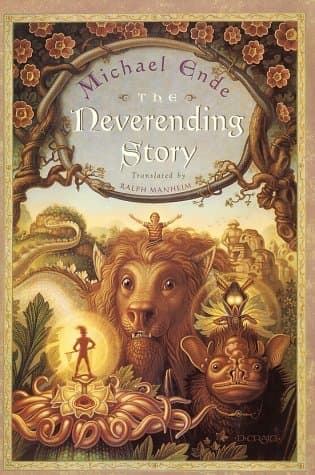
- The Neverending Story
Michael Ende
4.2 (162k) average on GoodreadsFantasy'Brave Story' shares with 'The Neverending Story' the concept of a young boy escaping into a fantasy world through a book (or, in Wataru's case, a portal), driven by a desire to escape his mundane, painful reality. Both protagonists, Bastian and Wataru, are initially passive observers who eventually become active participants, shaping the destiny of the fantasy world and, in turn, their own. However, Ende's narrative leans heavily into metafiction and the power of imagination itself, with Bastian literally writing himself into the story. Miyabe's approach is more grounded in a traditional hero's journey, with Wataru's agency stemming from his choices and actions within Vision, rather than his ability to reshape it with thought. 'Brave Story' also offers a more direct and less allegorical exploration of personal responsibility and the consequences of wishes.
- Harry Potter and the Sorcerer's Stone
J.K. Rowling
4.5 (7M) average on GoodreadsFantasyRescued from a miserable life under the stairs, an orphaned boy discovers he's a wizard destined for a magical school, where he uncovers a dangerous secret tied to the dark wizard who murdered his parents.
- The Hunger Games
Suzanne Collins
4.3 (6.4M) average on GoodreadsFantasyIn a future where children fight to the death on live television, Katniss Everdeen volunteers for the arena, turning a death sentence into a fight for survival and a spark of rebellion.
- 1984
George Orwell
4.2 (3.1M) average on GoodreadsPoliticsIn a future where surveillance and thought control are absolute, a man's search for truth clashes with the Party, showing that hope can be a form of rebellion.
- Divergent
Veronica Roth
4.2 (2.9M) average on GoodreadsFantasyIn a society divided by virtues, a sixteen-year-old's difference from the norm starts a rebellion that threatens her world.





Enjoyed the summary?
A summary gives you the shape of the book. The book itself has the detail, the examples and the voice.
Find Brave Story on AmazonAs an Amazon Associate, BookBrief earns from qualifying purchases. How we're funded