
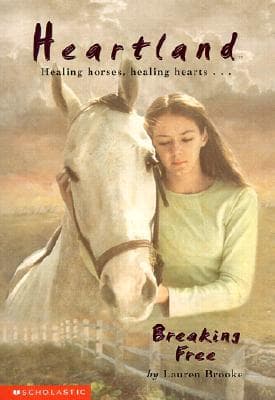
Synopsis
Covers the whole plot, including the ending.
- Difficulty
- Easy
- Pacing
- Moderate
- Mood
- Heartfelt, hopeful, poignant, determined
Breaking Free Plot Summary
Covers the whole plot, including the ending.
A Fading Legacy
Sixteen-year-old Amy Fleming tries to keep Heartland, a horse rehabilitation center, running after her mother, Marion, dies. Amy feels overwhelmed by the responsibilities. She feels pressure to live up to her mother's legacy and methods. Her horse, Pegasus, is very sick, suffering from a mystery illness that no one can diagnose, and his condition worsens. Amy feels alone and burdened. She tries to use her mother's gentle techniques to heal the horses, but she lacks confidence and experience. Her older sister, Lou, is away in New York. This leaves Amy to handle the farm and its struggling finances alone, increasing her despair and the threat of losing everything.
Ty's Arrival
Ty Borden, a rebellious teenager with a criminal record, is assigned to Heartland for community service. He arrives defiant and uninterested in the work. Amy immediately dislikes him, seeing him as disruptive and an unwelcome addition to her fragile world. Their first interactions are full of tension and arguments, as Ty challenges Amy's authority and methods. He has little experience with horses and even less patience, making him seem wrong for the delicate work of healing abused animals. This further frustrates Amy, who feels she has enough problems without managing an unwilling helper.
A Horse in Distress
A new horse, Spartan, comes to Heartland. Spartan is a magnificent but deeply traumatized horse. He shows extreme fear and aggression because of past abuse. Amy, following her mother's philosophy, tries to work with him using gentle, empathetic methods. But Spartan resists all her attempts to connect. Amy feels frustrated and discouraged by her inability to reach him. She feels the weight of her mother's past success with similar cases. This struggle with Spartan makes Amy doubt herself and wonder if she has the 'gift' her mother had with horses.
Lou's Return
Amy's older sister, Lou Fleming, returns home from her job in New York. She first intends to help sort out the farm's finances. Lou, who is practical and business-oriented, is shocked by the state of Heartland and Amy's emotional distress. Her pragmatic approach immediately conflicts with Amy's more intuitive, horse-focused methods and her attachment to her mother's way of doing things. Lou sees the farm as a business that needs big changes. She suggests things Amy sees as disrespectful to their mother's legacy and the spirit of Heartland. This creates a rift between the sisters, adding more stress to Amy's already overwhelming situation.
A Glimmer of Connection
Ty initially resists and acts abrasive, but he starts to show an unexpected natural ability with horses. He watches Amy's methods and, in his own way, begins to use them, especially with Spartan. One day, when Amy is at her limit, Ty quietly approaches the agitated Spartan. Using patience and a calm, firm presence, he makes a small breakthrough. This surprises Amy, making her see Ty differently. A grudging respect starts to form between them. It also shows Amy's blind spot; her grief and strict adherence to her mother's methods prevent her from seeing other ways to heal.
Pegasus's Decline
Pegasus, Amy's horse and the last link to her mother, continues to get worse quickly. His illness remains undiagnosed, and all treatments fail. Amy spends many hours by his side. Her anxiety and fear grow each day. The thought of losing Pegasus is unbearable. It would mean losing another piece of her mother and the last bit of her childhood innocence. This despair makes Amy unable to focus on other parts of Heartland. She clings even more tightly to her mother's traditions, believing they are the only way to save him, even though they are not working.
A Difficult Decision
Pegasus weakens to the point of no return. The veterinarian gently suggests euthanasia to spare him more suffering. This shatters Amy, who sees it as betraying her mother's legacy and a failure on her part. She fiercely resists the idea, convinced her mother would have found a way to save him. The internal conflict is huge: her love for Pegasus demands an end to his pain, but her grief and loyalty to her mother's memory make her fight for his life, even if it is useless. Lou and Ty see her anguish and try to support her. But the decision is Amy's, forcing her to face the harsh realities of life and death.
Letting Go
After a very emotional struggle, Amy finally decides to let Pegasus go. With tears, she says goodbye to her horse, knowing that this act of compassion is the truest expression of love. This moment changes Amy. It is her first independent decision, made from her own heart, not from following her mother's methods. Though painful, it begins her process of acceptance and healing, allowing her to start dealing with her grief instead of suppressing it. Letting go, though devastating, is a step towards her emotional freedom.
A New Approach to Spartan
Amy is no longer strictly bound to her mother's exact methods. She approaches Spartan with a new outlook. She combines her mother's gentle empathy with her own growing intuition and the lessons she learned from watching Ty. Instead of forcing a connection, she lets Spartan set the pace, creating trust and patience. This change in approach, born from her grief and growth, finally allows her to break through Spartan's defenses. A deep, quiet understanding begins to form between them. This shows that her own unique path, while honoring her mother, is just as valid and effective.
Heartland's Future
The shared experience of grief and healing brings Amy and Lou closer. Lou begins to understand Amy's emotional attachment to Heartland. Amy starts to appreciate Lou's practical insights. They begin to talk more openly about the farm's future, finding common ground. Amy, no longer only defined by her mother's legacy, starts to see Heartland not just as a continuation of what was, but as a place that can grow under her own guidance. She embraces the idea of making her own mark, blending tradition with innovation. This sets the stage for a future where Heartland thrives under her leadership.
Ty's Place
Ty proves his worth and develops a real connection with the horses, especially Spartan. He finds his place at Heartland. His initial resistance gives way to quiet dedication. His rough exterior softens, especially when he interacts with Amy. The unspoken understanding and mutual respect that have grown between them solidify his role, not just as a helper, but as an important part of the Heartland family. He becomes a steady presence for Amy, offering support and a different perspective. This shows that even unlikely individuals can find healing and purpose at the farm.
Breaking Free
By the end of the book, Amy has truly 'broken free.' She has moved past the paralyzing grief and the pressure to be exactly like her mother. She understands that honoring her mother's legacy does not mean copying it, but building upon it with her own strengths and intuition. She finds her own voice and her own way of connecting with horses, forging a unique path for Heartland. With Lou and Ty's support, and the connection she builds with Spartan, Amy confidently steps into her role as Heartland's leader. She is ready to face its future with courage, compassion, and a new sense of self.
Principal Figures
Amy Fleming
Protagonist
A grieving teenager striving to uphold her mother's legacy at Heartland.
Amy is a sixteen-year-old girl struggling with immense grief after the sudden death of her mother, Marion. She is deeply empathetic towards horses, possessing a natural 'horse sense' similar to her mother's, but initially lacks the confidence to fully embrace it. She feels an overwhelming pressure to maintain Heartland exactly as her mother would have, leading to self-doubt and a rigid adherence to past methods. Her journey is about finding her own identity and leadership style, independent of her mother's shadow. She is resilient but emotionally vulnerable, and her love for Pegasus is a central anchor to her grief.
Relationships: Marion Fleming (Deceased mother, mentor, source of pressure and grief); Lou Fleming (Older sister, initially conflicting but ultimately supportive); Ty Borden (Initially antagonistic, evolving into a trusted friend and partner); Pegasus (Beloved horse, last tangible link to her mother); Spartan (Traumatized horse, a catalyst for Amy's personal growth)
Ty Borden
Supporting
A troubled youth assigned to Heartland, who finds purpose and connection.
Ty is a seventeen-year-old boy with a troubled past, assigned to Heartland for community service after a run-in with the law. He is initially rebellious, cynical, and guarded, hiding his vulnerability behind a tough exterior. He has little experience with horses but possesses an innate ability to connect with them, often through a quiet, observant patience. Despite his initial clashes with Amy, he gradually becomes a loyal and supportive presence, offering a different perspective and practical help. His time at Heartland allows him to heal some of his own emotional wounds and find a sense of belonging.
Relationships: Amy Fleming (Initially antagonistic, evolving into a trusted friend and partner); Spartan (Horse he forms a strong bond with)
Lou Fleming
Supporting
Amy's pragmatic older sister, who struggles to balance business with heart.
Lou is Amy's older sister, a successful and pragmatic businesswoman who returns from New York to help manage Heartland's financial crisis. She is organized, goal-oriented, and initially views the farm strictly through a business lens, often clashing with Amy's emotional and intuitive approach. While well-meaning, her practical solutions can seem insensitive to Amy's grief and the spiritual essence of Heartland. Her journey involves learning to appreciate the intangible value of the farm and her sister's unique gifts, eventually finding a way to support Heartland both financially and emotionally.
Relationships: Amy Fleming (Younger sister, initially conflicting but ultimately supportive); Marion Fleming (Deceased mother, source of shared grief and family legacy)
Marion Fleming
Supporting (deceased)
Amy's deceased mother, the founder of Heartland and a legendary horse whisperer.
Marion is Amy's mother, whose presence is felt throughout the entire story despite her death. She was the founder of Heartland and renowned for her extraordinary ability to heal traumatized horses with gentle, empathetic methods, often referred to as a 'horse whisperer.' Her legacy is both an inspiration and a heavy burden for Amy, who strives to emulate her. Marion represents the ideal that Amy feels she must live up to, and her philosophy forms the foundational principles of Heartland. Her death is the catalyst for Amy's personal journey of grief and self-discovery.
Relationships: Amy Fleming (Daughter, mentee (posthumously)); Lou Fleming (Daughter, source of shared family history)
Pegasus
Supporting
Amy's beloved, ailing horse, a symbol of her grief and connection to her mother.
Pegasus is Amy's personal horse, a beautiful and gentle animal who is gravely ill at the beginning of the story. He represents Amy's last tangible link to her mother and her childhood innocence. His declining health mirrors Amy's emotional state and the struggle she faces in letting go of the past. His eventual euthanasia becomes a pivotal moment for Amy, forcing her to confront the reality of loss and make a difficult, independent decision that signifies her first step towards healing and breaking free from the past.
Relationships: Amy Fleming (Owner, deep emotional bond)
Spartan
Supporting
A traumatized horse whose healing journey parallels Amy's own.
Spartan is a beautiful but severely abused and traumatized horse who arrives at Heartland. He is initially aggressive, fearful, and resistant to human contact, representing the ultimate challenge for Amy's healing abilities. His journey towards trust and recovery mirrors Amy's own struggle to overcome her grief and find her unique methods. The breakthrough Amy eventually achieves with Spartan signifies her growth and her ability to connect with horses on her own terms, proving her capability as a horse whisperer in her own right, separate from her mother's shadow.
Relationships: Amy Fleming (Healer, deep bond); Ty Borden (Forms a connection with)
Grandpa Jack
Supporting
The stoic but loving patriarch of the Fleming family.
Grandpa Jack is Amy and Lou's grandfather, a quiet and observant man who provides a steady, grounding presence at Heartland. He is a man of few words but deep wisdom, offering subtle support and guidance to his granddaughters. He understands the farm's history and the challenges they face, often serving as a silent anchor amidst the emotional turmoil. He represents the enduring strength of the family and the land, and his quiet wisdom helps both Amy and Lou navigate their grief and find their way forward.
Relationships: Amy Fleming (Granddaughter, source of quiet support); Lou Fleming (Granddaughter, source of quiet support); Marion Fleming (Daughter, shared grief)
Themes & Insights
Grief and Loss
The novel explores grief, especially through Amy's loss of her mother. It covers the initial shock, sadness, the pressure to uphold a legacy, and the difficulty of letting go. Amy's inability to move on from her mother's methods and her clinging to Pegasus show her unprocessed grief. The story illustrates how grief can paralyze and isolate. But it also shows how, through acceptance and support, it can lead to personal growth and a new understanding of life and death.
“Every day felt like a struggle against a tide of sadness, a constant reminder that the one person who understood her best was gone.”
Finding Your Own Identity
A main theme is Amy's journey to find her own identity separate from her mother's. At first, she is defined by her mother's legacy, trying to be just like her. The pressure to live up to this ideal stifles her own intuition and confidence. Through her struggles with Pegasus and Spartan, and her interactions with Ty and Lou, Amy learns to trust her own instincts. She develops her own approach to horse healing and farm management. This theme shows that honoring a legacy means building on it with one's own strengths and individuality, not just copying it.
“She realized that honoring her mother wasn't about being her, but about finding her own way to carry on the spirit of Heartland.”
Healing and Trust
Heartland itself embodies healing and trust, for both horses and people. Traumatized horses like Spartan learn to trust humans again through patience and empathy. This mirrors Amy's own healing from grief and learning to trust herself. Ty, with his troubled past, also finds healing and belonging at Heartland, slowly letting down his guard. The theme suggests that healing is a two-way process; offering compassion to others (both human and animal) can help one's own recovery.
“Heartland wasn't just a place for horses to heal; it was a place where broken spirits, human and animal, could learn to trust again.”
Family and Support
The relationships between Amy, Lou, and Grandpa Jack highlight the importance of family, even with conflict and grief. Despite initial disagreements and Lou's absence, the sisters learn to support each other. They bridge their different perspectives to work toward a common goal. Grandpa Jack provides a stable, loving presence, offering quiet wisdom. Ty, an outsider who becomes part of the 'Heartland family,' reinforces the idea that family extends beyond blood. It includes those who share a purpose and offer support during hard times.
“They were sisters, bound by blood and by the legacy of Heartland, and even through their arguments, a deep love held them together.”
Plot Devices & Literary Techniques
The Ailing Horse (Pegasus)
A dying horse symbolizing Amy's grief and the past.
Pegasus, Amy's beloved horse, serves as a powerful symbol of her grief and her inability to let go of her mother and the past. His mysterious illness and steady decline mirror Amy's own emotional paralysis and the fading of her childhood. His eventual euthanasia is the central turning point in Amy's journey, forcing her to confront loss directly and make an independent, painful decision. This act of letting go of Pegasus allows Amy to begin healing and break free from the overwhelming burden of her mother's legacy, signifying her first step towards self-acceptance and moving forward.
The Traumatized Horse (Spartan)
A wild horse whose healing journey parallels Amy's own.
Spartan, the severely abused and untrusting horse, acts as a direct parallel to Amy's internal struggles. His resistance to healing and his fear reflect Amy's own guardedness and her difficulty in processing her grief and trusting her own abilities. As Amy struggles to connect with Spartan using her mother's methods, and then eventually finds her own unique way, Spartan's gradual progress towards trust directly mirrors Amy's personal growth and her discovery of her own identity as a horse healer. His healing is a tangible manifestation of Amy's own emotional breakthrough.
The Mentor's Legacy (Marion Fleming)
A posthumous influence shaping the protagonist's journey.
Marion Fleming, Amy's deceased mother, serves as a posthumous mentor whose legacy profoundly influences Amy. Her 'horse whispering' methods and the spirit of Heartland are the foundation of Amy's world. However, this legacy also becomes a burden, as Amy feels immense pressure to live up to Marion's reputation, stifling her own unique talents. The plot device of the mentor's legacy forces Amy to confront whether she can ever be 'good enough' and ultimately propels her to find her own path, honoring her mother's spirit while forging her own identity rather than simply replicating her.
The Outsider (Ty Borden)
A catalyst for change and an unexpected source of support.
Ty Borden, the rebellious and initially unwelcome youth, functions as a crucial outsider character. His presence disrupts Amy's isolated grief and challenges her rigid adherence to her mother's ways. Despite their initial conflict, Ty offers a different perspective, often through blunt observations and unexpected connections with the horses. He becomes a catalyst for Amy's growth, pushing her to consider new approaches and providing a steady, if gruff, source of support. His own journey of healing and finding a place at Heartland highlights the farm's transformative power and reinforces the theme of finding family in unexpected places.
Quiz
10 questions on the plot and the characters. Each answer comes with a short explanation.
Question 1
What is the name of the horse farm where the story is set?
- Heartland
- Pegasus
- Virginia Hills
- The Stable
Show answer
A. Heartland The text explicitly states, 'Heartland is a horse farm nestled in the hills of Virginia.'
Question 2
What is special about Heartland?
- It's the largest horse farm in Virginia.
- It's a place where abused horses learn to trust again.
- It has a famous race track.
- It is owned by Amy's mother.
Show answer
B. It's a place where abused horses learn to trust again. The book description mentions, 'it's a place where the scars of the past can be healed, a place where frightened and abused horses learn to trust again.'
Question 3
Who is Pegasus to Amy?
- Her best friend.
- Her father's horse.
- All she has left of her past.
- A horse she recently rescued.
Show answer
C. All she has left of her past. The text states, 'Pegasus is all Amy has left of her past.'
Question 4
What problem is Amy facing with Pegasus?
- He is aggressive and unmanageable.
- He is being sold to another farm.
- He is steadily growing weaker.
- He has run away from Heartland.
Show answer
C. He is steadily growing weaker. The description clearly says, 'Pegasus is all Amy has left of her past, but he's steadily growing weaker.'
Question 5
What is Amy trying to emulate by caring for Pegasus and Heartland?
- The advice of her father.
- Her mother's way of doing things.
- The training methods of famous equestrians.
- The legacy of the farm's founder.
Show answer
B. Her mother's way of doing things. The text mentions, 'She's trying to do just what her mother would have done.'
Question 6
What is the overarching theme of Amy's struggle?
- Learning to train difficult horses.
- Overcoming financial difficulties at the farm.
- Letting go of the past to find her own path.
- Dealing with the loss of her mother.
Show answer
C. Letting go of the past to find her own path. The final sentence summarizes the theme: 'It will take all Amy's courage to let go of her mother's legacy, but it is the only way she will break free and find her own.'
Question 7
What does the phrase 'everything is beginning to unravel' suggest about Amy's situation?
- Her efforts are starting to succeed.
- She is becoming overwhelmed and things are falling apart.
- She is discovering new solutions.
- She is making significant progress.
Show answer
B. She is becoming overwhelmed and things are falling apart. The idiom 'unravel' signifies that a situation is becoming disorganized, complicated, or is failing.
Question 8
The description suggests that Amy's mother's legacy is something she needs to 'let go of'. What does this imply about the legacy?
- It is a burden that is preventing Amy's growth.
- It is a source of great strength and inspiration.
- It is a set of valuable teachings that Amy must preserve.
- It is a collection of unfinished projects Amy must complete.
Show answer
A. It is a burden that is preventing Amy's growth. The phrase 'let go of her mother's legacy, but it is the only way she will break free' implies that the legacy, while perhaps well-intentioned, is holding Amy back from finding her own identity and path.
Question 9
Based on the provided text, what is the primary conflict Amy is facing?
- Man vs. Nature (e.g., a natural disaster affecting the farm).
- Man vs. Society (e.g., pressure from the community).
- Man vs. Self (e.g., internal struggle with grief and identity).
- Man vs. Man (e.g., conflict with another character).
Show answer
C. Man vs. Self (e.g., internal struggle with grief and identity). Amy's central struggle is internal: dealing with the loss of her mother, the pressure of living up to her mother's legacy, and the need to find her own way forward. This is a classic Man vs. Self conflict.
Question 10
The phrase 'break free' in the context of the book's ending implies:
- Amy physically escapes from the farm.
- Amy achieves financial independence.
- Amy achieves emotional and personal liberation.
- Amy rescues a wild horse.
Show answer
C. Amy achieves emotional and personal liberation. Given the themes of overcoming the past, letting go of legacy, and finding her own way, 'break free' refers to achieving personal autonomy and emotional freedom, rather than a literal escape or specific achievement.
Breaking Free FAQ
What is the book 'Breaking Free' about?
'Breaking Free' by Lauren Brooke is a young adult novel about Amy, a teenage girl struggling to keep her family's horse farm, Heartland, afloat after her mother's death. She must also care for her ailing horse, Pegasus, and learn to forge her own path beyond her mother's legacy.
Who is the main character in 'Breaking Free'?
The main character is Amy, a young woman who inherits the responsibility of running Heartland, a special farm for healing abused horses. She is dealing with grief and the pressure of living up to her mother's memory.
What is Heartland in the book 'Breaking Free'?
Heartland is a horse farm located in Virginia. It's a sanctuary for frightened and abused horses, helping them to heal and learn to trust again. It's also Amy's home and her mother's legacy.
What challenges does Amy face in 'Breaking Free'?
Amy faces numerous challenges, including the potential loss of her family's farm, the declining health of her beloved horse Pegasus, and the emotional struggle of letting go of her mother's expectations to find her own identity.
What does 'Breaking Free' mean in the context of the book?
Breaking Free refers to Amy's journey of overcoming her grief and the weight of her mother's legacy. It's about her finding the courage to make her own choices and discover her own path, rather than just following in her mother's footsteps.
Is 'Breaking Free' part of a series?
Yes, 'Breaking Free' is part of the 'Heartland' series by Lauren Brooke, which follows the lives and experiences of the characters at the Heartland farm.
What themes are explored in 'Breaking Free'?
The book explores themes of grief, healing, self-discovery, the human-animal bond, and the courage it takes to step out of the shadow of a loved one's legacy.
What age group is 'Breaking Free' for?
'Breaking Free' is considered a young adult (YA) novel, suitable for teenagers and young adults who enjoy stories about horses, personal growth, and overcoming adversity.
Similar books
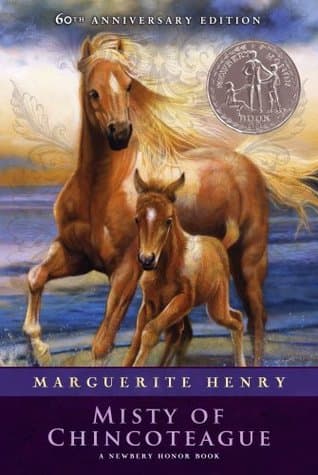
- Misty of Chincoteague
Marguerite Henry
4.0 (41k) average on GoodreadsChildren's"Breaking Free" shares Marguerite Henry's focus on the deep bond between a child and a horse, particularly one that is wild or in need of special care. Both books celebrate the spirit of horses and the transformative power of human-animal connection. However, Henry's work, like Misty, often features a more singular, epic journey of taming or understanding a specific, iconic horse, whereas Brooke's Heartland series, including "Breaking Free," deals with a continuous stream of horses and ongoing ranch management challenges, offering a broader, more episodic view of equestrian life. Henry's prose also tends to be more lyrical and descriptive, while Brooke's is more straightforward and contemporary, catering to modern YA sensibilities.
- The Black Stallion
Walter Farley
4.2 (69k) average on GoodreadsChildren'sBoth "Breaking Free" and Walter Farley's The Black Stallion series captivate readers with tales of extraordinary horses and the young people who form indelible bonds with them. Farley's Black Stallion often emphasizes the raw power and untamed majesty of the horse, focusing on racing and the thrill of competition, alongside the almost mystical connection between Alec and the Black. "Breaking Free," conversely, places a greater emphasis on the rehabilitative aspect of horse care, dealing with trauma and healing rather than just speed and prowess. While both series feature dramatic stakes, Farley's often lean into more fantastical or larger-than-life scenarios, whereas Brooke's narratives, while engaging, tend to be more grounded in the day-to-day realities of running a horse ranch.
- Harry Potter and the Sorcerer's Stone
J.K. Rowling
4.5 (7M) average on GoodreadsFantasyRescued from a miserable life under the stairs, an orphaned boy discovers he's a wizard destined for a magical school, where he uncovers a dangerous secret tied to the dark wizard who murdered his parents.
- The Hobbit, or There and Back Again
J.R.R. Tolkien
4.3 (2.9M) average on GoodreadsFantasyA comfort-loving hobbit named Bilbo Baggins is whisked away by a mischievous wizard and a band of dwarves on an unexpected journey to reclaim stolen treasure from a fearsome dragon, discovering courage and a magical ring along the way.
- Harry Potter and the Goblet of Fire
J.K. Rowling
4.6 (2.6M) average on GoodreadsFantasyA bewildered Harry Potter, underage and thrust into a deadly Triwizard Tournament, must brave dragons, mermaids, and a resurgent dark magic to survive a year that will forever alter the wizarding world.
- Harry Potter and the Order of the Phoenix
J.K. Rowling
4.5 (2.5M) average on GoodreadsFantasyIn a year of oppressive secrets and the threat of Voldemort, Harry Potter and Dumbledore's Army secretly train for war, shown through Jim Kay and Neil Packer's dark illustrations.





Enjoyed the summary?
A summary gives you the shape of the book. The book itself has the detail, the examples and the voice.
Find Breaking Free on AmazonAs an Amazon Associate, BookBrief earns from qualifying purchases. How we're funded