
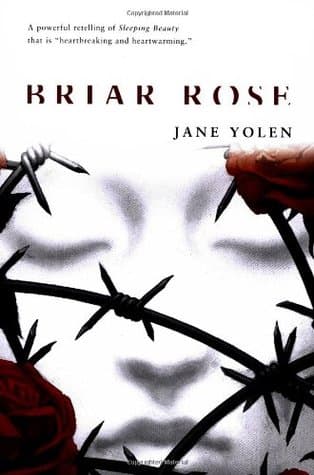
Synopsis
Covers the whole plot, including the ending.
- Difficulty
- Medium
- Pacing
- Moderate
- Mood
- Somber, Hopeful, Historical, Reflective
- Read it if
- You enjoy retellings that deeply explore historical trauma and the power of storytelling.
- Skip it if
- You are looking for a lighthearted fantasy without mature themes.
Briar Rose Plot Summary
Covers the whole plot, including the ending.
Gemma's Last Wish
Rebecca is at her grandmother Gemma's bedside as she dies. For years, Gemma told Rebecca and her sisters a version of the Sleeping Beauty fairy tale where she was 'Briar Rose.' As Gemma dies, she asks Rebecca to 'find the castle' and 'wake the princess,' hinting that her fairy tale is a hidden truth. This wish makes Rebecca determined to find the real meaning behind Gemma's lifelong obsession with Briar Rose and the disturbing details she included in the story.
The Hunt for Answers
After Gemma's funeral, Rebecca looks into her grandmother's past, starting with the clues Gemma left. She finds old photos, letters, and documents, but nothing directly connects Gemma to a 'castle' or 'princess.' Rebecca talks about Gemma's stories with her parents and aunts, who know about Gemma's focus on Briar Rose but see it as a way to cope with unspoken trauma. Rebecca focuses on the hints Gemma sometimes gave about Europe and a feeling of displacement, suggesting her grandmother's life before America held the answer.
A Lead in Poland
Rebecca's research uncovers a key piece of information: Gemma, whose real name was Becca, was a Jewish refugee from Poland. This discovery shifts Rebecca's focus from a literal fairy-tale castle to the realities of World War II. She learns that Gemma came to America after the war, having lost her entire family. This deeply troubles Rebecca, as it suggests the atrocities her grandmother must have endured, explaining her quiet nature and the symbolic language of her 'Briar Rose' tale. Rebecca realizes the 'sleeping' princess might represent the hidden memories of trauma.
Journey to Chelmno
Driven to understand Gemma's past and fulfill her promise, Rebecca travels to Poland. Her journey is guided by historical records and Gemma's fragmented memories. She learns about Chelmno, a Nazi extermination camp, which Gemma had symbolically called the 'castle' where the 'princess' slept. Rebecca's arrival in Poland is a direct confrontation with history, as she visits memorials and historical sites, grappling with the scale of the tragedy that affected her family. She begins to understand that Gemma's fairy tale was a way to process unimaginable horror.
Meeting Josef Potocki
In Poland, Rebecca seeks out local historians and survivors. She meets Josef Potocki, an elderly Polish man who was a partisan during World War II and lived near Chelmno. Josef, at first hesitant, recognizes a photograph of young Gemma (Becca) and slowly shares his memories. He says he knew Becca during the war and saw the horrors of the Chelmno camp. His testimony is important, as he fills in the missing pieces of Gemma's fragmented story, confirming the 'castle' as the camp and the 'sleeping' as the victims.
The Chelmno Forest
Josef Potocki takes Rebecca to the site of the former Chelmno extermination camp, now mostly overgrown. He describes the gas vans, the mass graves, and the brutality. He explains how he and his fellow partisans tried to help, often with little success. Josef recounts the day he found Becca (Gemma) among the dead, barely alive, having survived the gas. He and his group rescued her, nursed her back to health, and helped her escape. This account confirms the brutality Gemma endured and the 'sleeping' princess's near-death experience.
The Rescue and Recovery
Josef explains that after rescuing Becca from Chelmno, they brought her to their hidden camp in the forest. She was in a catatonic state, deeply traumatized. The partisans, especially a kind woman named Magda, nursed her back to physical health, but her mind remained 'asleep' to the horrors she had seen. It was during this recovery that the 'Briar Rose' story likely began to form in Becca's mind as a way to protect herself psychologically, replacing the unbearable reality with a fairy-tale metaphor. This period marks the start of Gemma's long and difficult healing journey.
Magda, the Fairy Godmother
Josef clarifies that Magda, the woman who cared for Becca, became a key figure in her recovery. Magda, a strong and compassionate partisan, took on the role of protector and nurturer, fitting the 'fairy godmother' in Gemma's story. Magda helped Becca regain some sense of herself, teaching her to find strength and hope amid the devastation. Josef says that Magda's kindness and dedication helped 'wake' Becca from her psychological sleep, allowing her to process some of her trauma and begin a new life.
Gemma's Escape and New Life
Josef further explains that after the war, with the help of the partisans, Becca left Poland. She eventually found passage to America, where she took the name Gemma to symbolize a new beginning, leaving her traumatic past behind, but never forgetting it. She built a new life, married, and had children, but the 'Briar Rose' story remained her personal, coded narrative of survival. Rebecca understands that Gemma's insistence on telling the story was not just for entertainment but a deep need to remember her past without explicitly reliving its horrors for her family.
Waking the Princess
With Josef's full account, Rebecca finally understands Gemma's dying wish: 'find the castle' meant uncovering the truth of Chelmno, and 'wake the princess' meant bringing Gemma's story of survival and the memory of the victims back into the light. By taking this journey, Rebecca has not only fulfilled her promise but has also 'woken' the sleeping princess within herself — understanding and accepting her family's history. She feels a deep connection to Gemma and the countless victims, realizing that remembering is a powerful act of healing.
Bearing Witness and Moving Forward
Rebecca returns home, changed by her journey. She shares the full, difficult truth of Gemma's past with her family, who are shocked but grateful for Rebecca's determination. The fairy tale, once a whimsical story, now holds a profound and tragic meaning. Rebecca understands that while the past cannot be undone, it must be remembered. She feels a responsibility to ensure Gemma's story, and the stories of all those lost in the Holocaust, are not forgotten. Her journey has brought not only grief but also a deeper appreciation for strength, love, and the lasting power of memory.
Principal Figures
Rebecca
Protagonist
A determined granddaughter seeking the truth of her grandmother's past.
Rebecca is a young woman deeply devoted to her grandmother, Gemma. She is intelligent, persistent, and driven by a strong sense of familial duty and curiosity. Initially, she views Gemma's Briar Rose stories as charming but unusual fairy tales. However, Gemma's dying wish transforms Rebecca into a meticulous investigator, willing to travel across continents to uncover the truth. She is empathetic and sensitive, absorbing the profound pain of her grandmother's history.
Relationships: Gemma (Beloved grandmother, source of mystery and inspiration); Josef Potocki (Key informant, witness to Gemma's past, guide)
Gemma (Becca)
Central Figure (posthumous)
Rebecca's grandmother, a Holocaust survivor who used a fairy tale to mask and preserve her trauma.
Gemma, whose real name was Becca, is a Holocaust survivor from Poland. She is a loving grandmother who, throughout her life, told a unique version of the Sleeping Beauty story, casting herself as 'Briar Rose.' This fairy tale was her intricate and deeply personal coping mechanism, a way to process the unspeakable horrors of Chelmno without explicitly reliving them. She is resilient and resourceful, having survived unimaginable atrocities, but her past leaves her guarded and subtly haunted.
Relationships: Rebecca (Granddaughter, entrusted with her legacy); Josef Potocki (Rescuer and witness from her past); Magda (Caregiver and 'fairy godmother' during her recovery)
Josef Potocki
Supporting
An elderly Polish partisan who witnessed Gemma's past and reveals the truth.
Josef Potocki is an elderly Polish man who was a partisan during World War II. He is a survivor in his own right, bearing the scars of war and the Holocaust. Initially cautious, he gradually opens up to Rebecca, sharing his painful memories of Chelmno and his role in rescuing young Becca. Josef is a testament to resilience, courage, and the enduring power of memory. He carries the burden of history but finds a measure of peace in sharing Becca's story.
Relationships: Rebecca (Confidant and recipient of his testimony); Gemma (Becca) (Rescuer and witness to her trauma)
Magda
Mentioned
A kind partisan who nursed young Becca back to health, embodying the 'fairy godmother'.
Magda is a compassionate and strong partisan woman who, after Josef and his group rescued Becca from Chelmno, took on the primary role of nursing the traumatized girl back to health. She represents the 'fairy godmother' figure in Gemma's coded fairy tale, symbolizing kindness, care, and the power of human connection in the face of immense suffering. Though never met directly by Rebecca, her actions are vital to Becca's survival and recovery.
Relationships: Gemma (Becca) (Caregiver and protector during recovery)
Rebecca's Parents (Mother and Father)
Supporting
Gemma's children, aware of her past but hesitant to confront its full horror.
Rebecca's parents are Gemma's children, who love their mother deeply but have largely avoided delving into the specifics of her past. They are aware of Gemma's Briar Rose stories and her mysterious background as a refugee, but they have chosen to interpret her fairy tale as a harmless eccentricity or a way to cope, rather than a direct account of trauma. They are supportive of Rebecca but are initially skeptical and cautious about her quest, fearing the pain it might uncover.
Relationships: Gemma (Daughter/Son of Gemma); Rebecca (Parents of Rebecca, initially cautious of her quest)
Rebecca's Sisters
Mentioned
Gemma's other granddaughters, who enjoyed her stories but don't share Rebecca's drive to uncover the truth.
Rebecca's sisters are mentioned as also having enjoyed Gemma's Briar Rose stories. Unlike Rebecca, they do not feel the same compelling urge to investigate the deeper meaning behind the tales or their grandmother's past. They represent a more conventional, less inquisitive response to family history, content with the surface-level narrative rather than seeking out the painful truths hidden beneath.
Relationships: Gemma (Granddaughters of Gemma); Rebecca (Sisters of Rebecca)
Themes & Insights
The Power of Storytelling as Survival
The novel shows how storytelling, especially fairy tales, can be a way to cope with trauma. Gemma turns the horrors of the Holocaust into the metaphor of 'Briar Rose,' allowing her to share her experience in a coded way with her family, protecting them from the direct brutality while keeping the memory alive. This theme is central to Gemma's character and her lifelong narrative, leading to Rebecca's understanding that the fairy tale was not a lie, but a deep truth told through metaphor.
“It was the only way she could tell it, I think. Not as a story, but as a dream, a fairy tale. So that the horror would be softened.”
Memory and Remembrance
The novel explores memory: individual, family, and collective. Rebecca's search is an act of remembrance, ensuring that Gemma's personal history, and by extension, the history of the Holocaust, is not forgotten. The fragmented nature of Gemma's memories, her children's suppression, and Rebecca's investigation all highlight the struggle to preserve and pass on painful truths across generations. The story emphasizes the need to remember history, even when it is difficult, to honor the victims and learn from the past.
“You promised to find the castle,” Gemma had whispered, her voice barely a breath. “And wake the princess.”
The Search for Truth and Identity
Rebecca's journey is a search for truth — the truth behind Gemma's stories and her family's origins. This search for truth is tied to her own identity, as understanding her grandmother's past helps Rebecca understand her own heritage and place in the world. The shift from a whimsical fairy tale to the grim reality of the Holocaust forces Rebecca to confront the darker parts of human history and her connection to it, ultimately strengthening her sense of self and purpose.
“I wanted to know the truth, not just the fairy tale. And the truth, I was learning, was far more terrible and beautiful than any story.”
The Enduring Nature of Love and Resilience
Despite the horror, the novel shows the lasting power of love and human strength. Gemma's survival, her ability to build a new life, and her love for her family show her strength. The kindness of Josef and Magda, who risked their lives to save and care for Becca, shows the capacity for compassion even in the darkest times. Rebecca's love for Gemma drives her determination, bringing healing and understanding to her family.
“They thought they had killed us all. But we survived. We always survive.”
The Innocence of Childhood vs. The Brutality of Reality
The novel contrasts the innocent world of childhood fairy tales with the realities of the Holocaust. Gemma's 'Briar Rose' story, at first a comforting childhood narrative, is revealed to be a veiled account of suffering. This contrast shows how children are shielded from harsh truths, but also how those truths eventually appear, forcing a confrontation with the darker parts of history. Rebecca's move from childhood belief to adult understanding reflects this tension.
“The fairy tale was like a beautiful, fragile glass, holding a terrible, burning fire inside.”
Plot Devices & Literary Techniques
The Framing Device (Fairy Tale within a Reality)
Gemma's 'Briar Rose' story frames the historical narrative.
The entire novel is framed by Gemma's unique retelling of 'Briar Rose.' This fairy tale serves as a protective layer, allowing Gemma to speak of her trauma without directly confronting its horror. For Rebecca, it's the initial mystery that drives her quest. As the story unfolds, the elements of the fairy tale—the sleeping princess, the briar thicket, the castle—are systematically revealed to be powerful metaphors for the gas chambers, the trauma-induced catatonia, and the extermination camp itself. This device allows for a gradual uncovering of truth, mirroring the process of memory retrieval.
Symbolism (Briar Rose, The Castle, Sleeping)
Key elements of the fairy tale symbolize aspects of the Holocaust.
The novel heavily relies on symbolism to convey the unspeakable. 'Briar Rose' is Gemma herself, a survivor who was once 'asleep' to the world due to trauma. The 'castle' is the Chelmno extermination camp, a place of death and imprisonment. The 'briar thicket' represents the impenetrable defenses of denial and the passage of time that obscured the truth. 'Sleeping' symbolizes not just the victims of the gas chambers, but also Gemma's catatonic state and the world's collective amnesia regarding the Holocaust. These symbols allow the narrative to explore profound themes without explicit, graphic detail.
Intergenerational Trauma
The lasting psychological impact of trauma passed down through generations.
While not a single plot device, intergenerational trauma is a driving force in the narrative. Gemma's trauma, though unarticulated, subtly affects her children (Rebecca's parents) who avoid the painful truth. It is Rebecca, the third generation, who feels compelled to confront and understand this inherited burden. Her quest is a direct consequence of the lingering, unspoken pain that has permeated her family, illustrating how unresolved historical trauma can manifest in subsequent generations, driving them to seek closure and understanding.
The Quest Narrative
Rebecca's journey to uncover her grandmother's past.
The novel employs a classic quest narrative structure. Rebecca embarks on a physical and emotional journey, driven by a specific goal (fulfilling Gemma's dying wish). Her quest involves overcoming obstacles (lack of information, family reluctance, the emotional weight of history) and encountering a wise guide (Josef Potocki). The resolution of the quest brings not a magical reward, but a profound truth and a deepened understanding of her identity and heritage, transforming Rebecca in the process.
Briar Rose Quotes
“The past is a story we tell ourselves. But the future is a story we live.”
“There are some things you carry with you, no matter how hard you try to leave them behind.”
“Every fairy tale has a dark side. Every princess has her dragons.”
“Love is not a spell. It is a choice. A choice you make every day.”
“Sometimes the greatest magic is simply remembering.”
“The sleeping beauty awoke, but the world around her had not changed. It had only grown older, and sadder.”
“Silence can be a kind of prison, too.”
“It is harder to forget than to remember.”
“The monsters are real, but they are not always under the bed. Sometimes they are in the history books.”
“A story is a way of holding the past in your hands.”
“Even a curse can be a kind of protection.”
“We are all woven into the stories of others, whether we know it or not.”
“The thorns are part of the rose. You cannot have one without the other.”
Quiz
10 questions on the plot and the characters. Each answer comes with a short explanation.
Question 1
What is the name of Rebecca's grandmother who tells her the stories of Briar Rose?
- Rosemary
- Gemma
- Briar
- Aurora
Show answer
B. Gemma Rebecca's grandmother, who claims to be Briar Rose, is named Gemma.
Question 2
What promise does Rebecca make to her dying grandmother that initiates her journey?
- To find a new home for her grandmother's cat.
- To visit her grandmother's birthplace in Poland.
- To uncover the truth behind her grandmother's claim of being Briar Rose.
- To marry a prince, just like in the fairy tale.
Show answer
C. To uncover the truth behind her grandmother's claim of being Briar Rose. Rebecca promises Gemma that she will investigate the astonishing claim, 'I am Briar Rose,' after her grandmother's death.
Question 3
What historical event does Gemma's 'Briar Rose' story ultimately allude to?
- World War I
- The Holocaust
- The Great Depression
- The Cold War
Show answer
B. The Holocaust The 'unspeakable brutality and horror' that Rebecca uncovers is linked to the Holocaust, specifically the Chelmno extermination camp.
Question 4
What is the primary motivation for Rebecca's journey to Europe?
- To pursue her own academic research on fairy tales.
- To fulfill her grandmother's dying wish and understand her past.
- To escape personal problems in America.
- To find a long-lost family treasure.
Show answer
B. To fulfill her grandmother's dying wish and understand her past. Rebecca's journey is driven by her promise to Gemma to uncover the truth of her past and the Briar Rose story.
Question 5
Who is Josef Potocki in relation to Gemma's past?
- He was a fellow prisoner at the camp.
- He was the leader of the resistance who helped her escape.
- He was the man who rescued her from the death camp.
- He was a guard at the camp who showed her kindness.
Show answer
C. He was the man who rescued her from the death camp. Josef Potocki is the man who finds and rescues Gemma from the mass grave at Chelmno, bringing her back to life, much like the prince awakening Briar Rose.
Question 6
How does Gemma's retelling of the Sleeping Beauty fairy tale differ from the traditional version, particularly concerning the 'sleep'?
- Her sleep is caused by a magical potion.
- Her sleep is a metaphor for the state of unconsciousness and near-death in the gas chambers.
- She falls asleep after being pricked by a poisoned apple.
- The sleep lasts only for a few hours, not a hundred years.
Show answer
B. Her sleep is a metaphor for the state of unconsciousness and near-death in the gas chambers. Gemma's 'sleep' is a powerful metaphor for the moment she falls unconscious in the gas chamber at Chelmno, before being miraculously rescued.
Question 7
What specific location in Poland does Rebecca visit to trace her grandmother's past?
- Auschwitz-Birkenau
- Warsaw Ghetto
- Chelmno extermination camp
- Treblinka
Show answer
C. Chelmno extermination camp Rebecca's investigation leads her to the Chelmno extermination camp, where Gemma experienced the horrors of the Holocaust.
Question 8
How does the author use the fairy tale framework to process and convey the trauma of the Holocaust?
- By completely ignoring the dark aspects of the fairy tale.
- By directly comparing the evil witch to specific Nazi officials.
- By using metaphors and allegories, such as the 'sleep' and the 'thorns,' to represent the unspeakable horrors and isolation.
- By making the fairy tale characters literal survivors of the camps.
Show answer
C. By using metaphors and allegories, such as the 'sleep' and the 'thorns,' to represent the unspeakable horrors and isolation. Yolen uses the fairy tale elements as a symbolic language; the 'sleep' represents the near-death experience in the gas chamber, and the 'thorns' represent the barriers of memory and trauma.
Question 9
What is the significance of the 'kiss' in Gemma's version of Briar Rose?
- It is a literal kiss from a prince that wakes her up.
- It symbolizes the moment Josef Potocki breathes air into her lungs, reviving her from the mass grave.
- It represents the moment she falls in love with Josef.
- It is a forgotten detail that Rebecca never uncovers.
Show answer
B. It symbolizes the moment Josef Potocki breathes air into her lungs, reviving her from the mass grave. The 'kiss' is not a romantic gesture but a life-giving act: Josef Potocki's effort to revive Gemma by breathing into her lungs after finding her among the dead.
Question 10
How does Rebecca's understanding of her own Jewish identity evolve throughout her journey?
- She completely rejects her Jewish heritage after learning about the horrors.
- She becomes more connected to her heritage through understanding her grandmother's past and the collective Jewish experience.
- Her identity remains unchanged, as the events are too distant to affect her.
- She converts to a different religion.
Show answer
B. She becomes more connected to her heritage through understanding her grandmother's past and the collective Jewish experience. Rebecca's journey is also one of self-discovery, deepening her connection to her Jewish roots and understanding the resilience and suffering of her people through Gemma's story.
Briar Rose FAQ
What is the core premise of 'Briar Rose' by Jane Yolen?
The novel retells the Sleeping Beauty fairy tale through the lens of the Holocaust. It follows Rebecca, a young woman who, after her grandmother Gemma's death, embarks on a quest to uncover the truth behind Gemma's lifelong claim: 'I am Briar Rose,' which hints at a hidden past connected to the atrocities of World War II.
Who are the main characters in the story?
The primary protagonists are Rebecca, a young Jewish woman investigating her grandmother's past, and Gemma, Rebecca's grandmother whose fragmented memories and fairy tale allusions mask the horrors she endured. Josef, a survivor who helps Rebecca piece together Gemma's history, is also a crucial character.
How does the fairy tale of Sleeping Beauty intertwine with the historical narrative?
Gemma uses elements of the Sleeping Beauty story as a metaphorical framework to cope with and recount her experiences in Chełmno extermination camp. The 'sleeping curse' represents the gas that rendered victims unconscious, the 'thorns' symbolize the barbed wire and isolation, and the 'prince' becomes a figure of rescue and memory.
What promise does Rebecca make to Gemma, and how does it drive the plot?
Rebecca promises her dying grandmother Gemma that she will find the 'prince' and uncover the full truth of her story. This promise propels Rebecca on a journey from America to Poland, where she seeks out survivors and historical records to reconstruct Gemma's past as a Holocaust victim.
What is the significance of the setting in Chełmno, Poland?
Chełmno was one of the first Nazi extermination camps, primarily using gas vans. Its inclusion grounds Gemma's fantastical narrative in grim historical reality, providing a specific and harrowing backdrop for her experiences and emphasizing the immense scale of the Holocaust's brutality.
How does the 'prince' figure manifest in Gemma's real-life experiences?
In Gemma's fragmented memories, the 'prince' is a U.S. soldier named Josef who rescued her from the camp after liberation. He literally 'woke her up' from the trauma and helped her begin to heal, fulfilling the fairy tale's role of breaking the curse.
What role do the 'thorns' play in the narrative beyond the literal barbed wire?
The 'thorns' represent the psychological barriers and the collective amnesia surrounding the Holocaust, making it difficult for survivors like Gemma to speak and for others to fully comprehend. They also symbolize the dangers Rebecca faces in confronting such a painful history.
Are there any other fairy tale allusions beyond Sleeping Beauty?
While Sleeping Beauty is central, elements of other tales like Hansel and Gretel (the 'witch' figures representing the Nazis, the 'forest' as a place of danger) or even Cinderella (the lost identity, the transformation) can be subtly interpreted, reflecting the universal nature of trauma expressed through folklore.
How does the book address the concept of intergenerational trauma?
The novel vividly portrays intergenerational trauma through Rebecca's quest. Gemma's unspoken pain and fragmented stories deeply affect Rebecca, who feels compelled to understand her grandmother's past, demonstrating how the effects of the Holocaust ripple through generations, influencing identity and family dynamics.
What psychological function does the Sleeping Beauty metaphor serve for Gemma?
For Gemma, the Sleeping Beauty metaphor acts as a coping mechanism, a way to process unimaginable horror by framing it within a familiar, albeit dark, narrative. It allows her to externalize and distance herself from the trauma, making it speakable in a way that direct recounting might not have been possible.
How does Rebecca's own identity evolve through her investigation?
Rebecca's identity shifts profoundly as she uncovers Gemma's past. Initially driven by curiosity and love, she grapples with the weight of her Jewish heritage and the historical trauma, ultimately deepening her understanding of herself, her family, and her connection to history.
What is the psychological impact of memory and forgetting in the novel?
The novel explores how memory can be fragmented and unreliable, especially after trauma, yet crucial for healing. Forgetting, or the inability to fully remember, creates a void that Rebecca seeks to fill, highlighting the psychological imperative to confront and acknowledge the past, even when painful.
Is the ending of 'Briar Rose' ultimately hopeful or tragic?
The ending is a complex blend of both. While Rebecca uncovers the tragic brutality of Gemma's past, the act of remembrance and the connection forged with Josef offer a sense of closure, redemption, and the enduring power of love and hope to persist even after immense suffering.
How does the book challenge traditional fairy tale conventions?
It subverts the traditional happy ending by grounding the fairy tale in the grim reality of the Holocaust, showing that 'happily ever after' is complicated and earned through immense suffering and remembrance. It redefines heroism and true love in the context of survival and bearing witness.
What is the author's message about the importance of storytelling?
Jane Yolen emphasizes that storytelling, whether through fairy tales or historical accounts, is vital for preserving memory and understanding the human experience. It allows us to process trauma, transmit history across generations, and find meaning in both beauty and horror, ensuring that the past is not forgotten.
How does the book address the concept of evil and human cruelty?
The novel confronts human cruelty directly through the depiction of the Holocaust and the atrocities committed in Chełmno. However, it balances this with moments of human kindness and resilience, suggesting that while immense evil exists, so too does the capacity for compassion and the will to survive.
Could Gemma's 'Briar Rose' story be considered a form of magical realism?
While rooted in historical realism, Gemma's narrative style, blending fantastical fairy tale elements with horrific reality, does lean into magical realism. The way her mind processes and presents her trauma through a magical lens blurs the lines between literal truth and metaphorical truth, making her story uniquely compelling.
What is the significance of the title, 'Briar Rose'?
The title directly refers to the Grimm Brothers' version of Sleeping Beauty, which is the specific fairy tale Gemma uses. It symbolizes her 'sleep' (the trauma and gas) and the 'thorns' (the camp's barriers and her psychological defenses), and ultimately her awakening through rescue and remembrance.
About the author
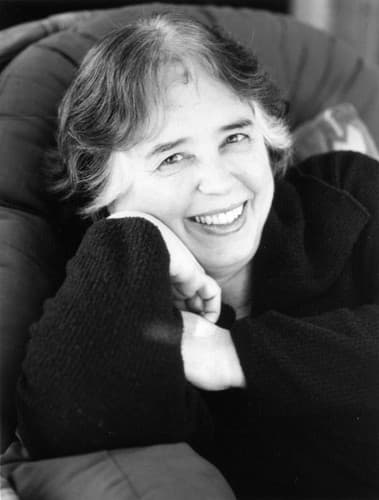
Jane Yolen is an American author known for her contributions to children's literature and fantasy fiction. Her notable works include "Owl Moon," a picture book that explores the beauty of nature, "Sword of the Rightful King," a retelling of the Arthurian legend, "Mapping the Bones," a novel inspired by the Holocaust, and "Briar Rose," a modern take on the Sleeping Beauty tale.
Similar books
- The Book Thief
Markus Zusak
4.4 (1.8M) average on GoodreadsHistorical FictionExplores the Holocaust through a unique narrative lens and focuses on the resilience of the human spirit.
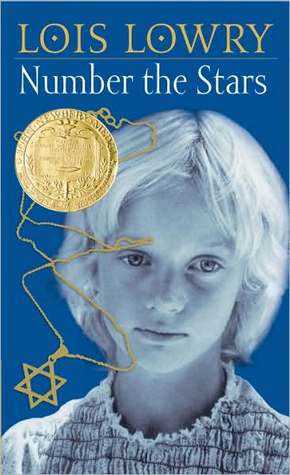
- Number the Stars
Lois Lowry
4.2 (448k) average on GoodreadsChildren'sA historical fiction for young adults set during WWII, dealing with themes of bravery and survival.
- The Boy in the Striped Pajamas
John Boyne
4.2 (518k) average on GoodreadsChildren'sBoyne's novel presents the Holocaust through the innocent, naive eyes of a German child, Bruno, focusing on the absurdity and horror of the situation through his limited understanding. In contrast, Yolen's Briar Rose employs a sophisticated dual narrative and fairy tale allegory, allowing for a deeper exploration of memory, trauma, and the necessity of remembering from a survivor's perspective, rather than an outsider's naivety. Yolen's approach is more about processing historical horror through symbolic narrative, while Boyne's is about exposing its absurdity through a child's lens.
- Harry Potter and the Sorcerer's Stone
J.K. Rowling
4.5 (7M) average on GoodreadsFantasyRescued from a miserable life under the stairs, an orphaned boy discovers he's a wizard destined for a magical school, where he uncovers a dangerous secret tied to the dark wizard who murdered his parents.
- The Hunger Games
Suzanne Collins
4.3 (6.4M) average on GoodreadsFantasyIn a future where children fight to the death on live television, Katniss Everdeen volunteers for the arena, turning a death sentence into a fight for survival and a spark of rebellion.
- 1984
George Orwell
4.2 (3.1M) average on GoodreadsPoliticsIn a future where surveillance and thought control are absolute, a man's search for truth clashes with the Party, showing that hope can be a form of rebellion.





Enjoyed the summary?
A summary gives you the shape of the book. The book itself has the detail, the examples and the voice.
Find Briar Rose on AmazonAs an Amazon Associate, BookBrief earns from qualifying purchases. How we're funded