

Synopsis
Covers the whole plot, including the ending.
- Difficulty
- Easy
- Pacing
- Moderate
- Mood
- Somber, Naive, Tragic, Thought-provoking
- Read it if
- You're looking for a poignant, heartbreaking story about innocence lost and the devastating impact of war, told from a child's limited perspective.
- Skip it if
- You prefer books with explicit depictions of historical events or find stories ending in tragedy too difficult to read.
The Boy in the Striped Pajamas Plot Summary
Covers the whole plot, including the ending.
Bruno's Life in Berlin and the Unexpected Move
Bruno, a nine-year-old boy, lives a comfortable life in a large Berlin house with his parents, twelve-year-old sister Gretel, and servants. He likes exploring with his three friends and sees his house as full of secret places. One day, he finds their maid, Maria, packing his things. The family is moving because his father, a high-ranking Nazi officer, has been promoted to Commandant and assigned a new post far from Berlin. Bruno is upset, not wanting to leave his friends and familiar home. He struggles to understand why they are moving, which his parents explain vaguely as a new opportunity for his father.
Arrival at 'Out-With' and Initial Disappointment
The family arrives at their new home, which Bruno calls 'Out-With' because he mishears 'Auschwitz.' The new house is much smaller and isolated than their Berlin residence. It stands alone on a bare plot of land with no other houses or children nearby. From his bedroom window, Bruno sees a long fence and, beyond it, what he thinks is a farm. He observes many men and boys, all wearing striped pajamas, living a strange existence. He is disappointed and lonely, feeling isolated and bored in this unwelcoming place, a contrast to his life in Berlin.
The 'Farm' and Gretel's Explanations
Bruno tells his sister, Gretel, about his confusion regarding the people in 'striped pajamas.' Gretel, two years older and more aware of the war, dismisses Bruno's 'farm' idea, suggesting it might be a camp for soldiers, though she does not fully understand its true nature. They watch the people beyond the fence, noticing their uniform appearance and the children. Gretel is concerned about the lack of other girls. Their conversation shows their innocence and limited understanding of the concentration camp, which their parents hide from them. Their talks about the 'farm' are full of childish assumptions and a growing sense of unease.
Bruno's Father's Authority and Maria's Past
Bruno tries to talk about his unhappiness with his father, who, despite being stern, tries to explain his duty. His father makes it clear that Bruno's opinions on their new home do not matter and that this is an important post for him. Later, Bruno speaks with Maria, the family's maid, who gently tells him not to complain too much. Maria reveals that Bruno's father was very kind to her during a difficult time, offering her work and support after her mother's death. This adds complexity to Bruno's view of his father, showing a side beyond his military persona and highlighting Maria's loyalty.
Lieutenant Kotler's Presence and Pavel's Kindness
Lieutenant Kotler, a young, handsome, and arrogant soldier, visits the house often, flirting with Gretel and being overly familiar with Bruno's mother. Bruno dislikes Kotler's bullying and how he treats the Jewish prisoners who work at the house, especially Pavel, an elderly man who peels vegetables and serves dinner. Pavel, once a doctor, helps Bruno when he falls from a tire swing, cleaning his knee. This act of kindness from Pavel, a prisoner, contrasts with Kotler's harshness and makes an impression on Bruno, further complicating his simple understanding of the people 'on the other side' of the fence.
Bruno's Exploration and Meeting Shmuel
Driven by boredom and a desire for exploration, Bruno walks along the fence, though he is forbidden to go too far. After walking a long time, he meets a boy sitting on the other side. The boy, named Shmuel, is nine years old, like Bruno, and also has a birthday on April 15th. Shmuel wears the same striped pajamas as all the other people on his side of the fence. Bruno is happy to find a friend and immediately asks Shmuel about his life, unaware of Shmuel's grim situation. Their conversation starts their secret friendship.
The Secret Friendship Develops
Bruno and Shmuel begin meeting almost every day at the same spot along the fence. Bruno brings Shmuel food, as Shmuel is always hungry, and they talk for hours. Shmuel shares details about his life before the camp, including being taken from his home in Krakow, the crowded train journey, and the loss of his grandfather. Bruno, still naive, struggles to understand the horrors Shmuel describes, often comparing Shmuel's experiences to his own, much more privileged, life. Their conversations mix childish innocence and the contrast of their realities, with Bruno often failing to grasp the severity of Shmuel's suffering, but their friendship grows.
Shmuel in Bruno's House and Bruno's Betrayal
One day, Bruno finds Shmuel in his kitchen, polishing glasses. Lieutenant Kotler had brought him to the house because his hands were small enough for the task. Bruno, excited to see his friend, offers Shmuel some chicken. Kotler enters and finds Shmuel eating, accusing him of stealing. Shmuel, scared, says Bruno gave him the food. When Kotler asks Bruno, Bruno, fearing Kotler, denies knowing Shmuel and says he has never seen him before. Shmuel is severely beaten. Bruno is filled with guilt, and when he sees Shmuel a few days later, Shmuel's face is bruised. Bruno apologizes, and Shmuel forgives him, strengthening their bond despite Bruno's momentary betrayal.
Mother's Discontent and the Family's Future
Bruno's mother becomes increasingly unhappy at 'Out-With.' She drinks sherry often and openly says she wants to return to Berlin, especially after Pavel was severely beaten by Lieutenant Kotler. Her unhappiness leads to a heated discussion with Bruno's father. They decide that Bruno, Gretel, and their mother will return to Berlin, while his father will stay at 'Out-With' for his duties. Bruno is sad about leaving Shmuel but also excited to return to his old life and friends. The decision is made, and preparations for their departure begin.
The Final Adventure: Searching for Shmuel's Father
The day before his scheduled departure, Bruno meets Shmuel at the fence. Shmuel is upset because his father went missing after being taken for a 'march' and has not returned. Bruno, wanting one last adventure with his friend and to make amends for his earlier betrayal, offers to help Shmuel search for his father. Shmuel arranges for Bruno to get a pair of striped pajamas. Bruno digs a hole under the fence and slips into the camp. He is shocked by the desolate and terrifying reality inside, a contrast to his imagined 'farm,' but he is determined to help his friend.
Inside the Camp and the Final March
Inside the camp, Bruno is overwhelmed by the squalor, the emaciated people, and the sadness. He quickly realizes this is not the 'farm' he imagined. He and Shmuel search for Shmuel's father but find no trace. As they search, soldiers round up a large group of prisoners, including Bruno and Shmuel, for a 'march.' The boys are herded into a dark, crowded building. Bruno, scared but holding Shmuel's hand, reassures his friend. The doors are sealed. Bruno's last thought is how much he loves Shmuel before the sounds of the gas chambers begin, sealing their fate.
The Aftermath and Discovery
Back at the house, Bruno's absence is noticed. His family frantically searches for him. His mother and Gretel stay at 'Out-With' for months, hoping. One year later, Bruno's father returns to the spot where Bruno's clothes were found by the fence. He notices the loose bottom of the fence and realizes what happened to his son. The horrifying truth dawns on him: Bruno crawled under the fence and died in the gas chambers, like the thousands of Jews he was responsible for. His father is consumed by grief and guilt, understanding the ultimate result of his actions and his family's closeness to the atrocities.
The Boy in the Striped Pajamas Characters
Bruno
Protagonist
A naive nine-year-old boy, son of the Commandant of Auschwitz.
Bruno is a curious, imaginative, and somewhat self-centered nine-year-old boy. He loves exploring and reading adventure stories. He is initially frustrated by the move from Berlin to 'Out-With' and struggles to understand the world around him, particularly the 'farm' beyond the fence. His innocence shields him from the horrific reality of the concentration camp, which he misinterprets as a strange, unhappy place. He values friendship and loyalty, ultimately leading him to make the fatal decision to help Shmuel. His naivety serves as the central point of view for the reader, highlighting the incomprehensibility of the Holocaust.
Relationships: Shmuel (Best friend); Gretel (Older sister); Father (Respectful but slightly fearful son); Mother (Affectionate son)
Shmuel
Supporting
A Jewish boy of Bruno's age, imprisoned in Auschwitz.
Shmuel is a nine-year-old Jewish boy from Poland who is imprisoned in Auschwitz. He is quiet, wise beyond his years due to his traumatic experiences, and constantly hungry and fearful. He forms an unlikely friendship with Bruno, sharing his stories of loss and suffering with a quiet dignity. Despite his circumstances, he remains hopeful and values Bruno's companionship. He represents the innocent victims of the Holocaust and serves as Bruno's window into the true nature of 'Out-With.' His vulnerability and quiet resilience are central to the story's emotional impact.
Relationships: Bruno (Best friend); Father (Loving son (who he loses))
Father (Ralf)
Antagonist
Bruno and Gretel's father, the Commandant of Auschwitz.
Bruno's father is a high-ranking Nazi officer, proud of his military career and deeply committed to his duties as the Commandant of Auschwitz. He is stern, authoritative, and emotionally distant from his children, particularly regarding his work. While he shows a softer side in his past kindness to Maria, he is ultimately responsible for unimaginable atrocities. He genuinely loves his family but places his loyalty to the Nazi regime above all else, rationalizing his actions as necessary for the Fatherland. His eventual realization of Bruno's fate brings him immense grief and a horrifying understanding of the consequences of his work.
Relationships: Bruno (Strict but loving father); Gretel (Distant father); Mother (Husband (strained relationship)); Maria (Benevolent employer)
Mother (Elsa)
Supporting
Bruno and Gretel's mother, increasingly unhappy at Auschwitz.
Bruno's mother is initially portrayed as a fashionable, somewhat detached woman, accustomed to her comfortable life in Berlin. She becomes increasingly unhappy and withdrawn at 'Out-With,' resorting to drinking sherry and expressing her profound dissatisfaction with their new life. While she is not directly involved in the camp's operations, she is aware of the general nature of her husband's work and the atrocities happening nearby, which deeply disturbs her. She tries to shield her children from the truth but struggles with her own conscience and the isolation of their situation. Her eventual decision to take the children back to Berlin highlights her desperation for escape.
Relationships: Bruno (Loving mother); Gretel (Loving mother); Father (Wife (strained relationship)); Lieutenant Kotler (Ambiguous, possibly flirtatious relationship)
Gretel
Supporting
Bruno's older sister, often referred to as 'A Hopeless Case.'
Gretel is Bruno's twelve-year-old sister, who Bruno often finds annoying and refers to as a 'Hopeless Case.' She is more aware of the world than Bruno but still largely innocent of the true nature of Auschwitz. She initially collects dolls but later becomes obsessed with maps and current events, developing a crush on Lieutenant Kotler and adopting increasingly nationalistic views. Her character shows the subtle indoctrination of young people during the Nazi regime. She is also lonely at 'Out-With' but tries to assert her intellectual superiority over Bruno.
Relationships: Bruno (Annoying younger brother); Lieutenant Kotler (Infatuated with him)
Lieutenant Kotler
Antagonist
A cruel and arrogant Nazi soldier stationed at Auschwitz.
Lieutenant Kotler is a young, handsome, and arrogant Nazi soldier who is frequently at Bruno's house. He is cruel, particularly towards the Jewish prisoners and Pavel, and displays a sense of entitlement and superiority. He flirts with Bruno's mother and is disliked by Bruno. His treatment of Shmuel and Pavel highlights the brutality and dehumanization inherent in the Nazi regime. His character embodies the casual cruelty and unquestioning obedience of many Nazi soldiers, making him a menacing figure in Bruno's limited world.
Relationships: Bruno (Disliked by Bruno); Gretel (Object of Gretel's crush); Mother (Flirtatious with her); Pavel (Cruel to him)
Maria
Supporting
The family's maid, loyal due to the Commandant's past kindness.
Maria is the family's maid, who has been with them since before the move to 'Out-With.' She is quiet, observant, and loyal, primarily because Bruno's father had shown her immense kindness and support during a difficult time in her life. She is aware of the atrocities happening at the camp but suppresses her feelings, recognizing her powerless position. She offers Bruno gentle advice and represents the silent witnesses to the regime's horrors, caught between her gratitude and her moral conscience.
Relationships: Bruno (Caring towards him); Father (Loyal to him due to past kindness)
Pavel
Supporting
An elderly Jewish prisoner who works in Bruno's house, formerly a doctor.
Pavel is an elderly Jewish prisoner from the camp who is assigned to work in Bruno's house, peeling vegetables and serving meals. He was formerly a doctor, a fact revealed when he kindly bandages Bruno's knee after a fall. He is frail, quiet, and constantly fearful, often subjected to Lieutenant Kotler's abuse. Pavel represents the dehumanized victims of the Holocaust and serves as an early, subtle indicator to Bruno of the suffering within the camp. His gentle nature and past profession highlight the tragic loss of human potential under the regime.
Relationships: Bruno (Kind to him); Lieutenant Kotler (Victim of his cruelty)
Grandmother
Mentioned
Bruno's outspoken and artistic grandmother.
Bruno's grandmother is a lively, artistic woman who loves to sing and put on plays with the children. She is outspoken and critical of her son's (Bruno's father's) Nazi uniform and his new role, viewing it as a disgrace. Her disapproval highlights the moral objections some Germans had to the regime. She is mentioned frequently in Bruno's memories and serves as a contrast to the family's new, somber life.
Relationships: Bruno (Affectionate grandmother); Father (Disapproving mother)
The Boy in the Striped Pajamas Themes
Innocence and Naivety
The novel is told from Bruno's point of view, a nine-year-old boy who does not understand the real nature of 'Out-With' (Auschwitz). His innocence prevents him from seeing the horrors around him; he sees the camp as a 'farm' and the prisoners' uniforms as 'striped pajamas.' This lack of understanding lets the reader experience the tragedy through a lens of deep misunderstanding, making the final revelation more devastating. For example, Bruno's inability to understand Shmuel's hunger or his father's disappearance shows how children were kept from, or simply could not grasp, the atrocities.
“What exactly was the difference? he wondered. And who decided which people wore the striped pyjamas and which people wore the uniforms?”
The Horrors of the Holocaust
Though told through a child's eyes, the book quietly shows the atrocities of the Holocaust. Shmuel's constant hunger and fear, the prisoners' thin appearance, Pavel's past as a doctor compared to his current servitude, and Lieutenant Kotler's casual cruelty all paint a grim picture. The 'fence' itself is a symbol of segregation and imprisonment. Bruno's death in the gas chamber is a stark climax that fully exposes the brutal reality that his innocence had hidden from him, bringing the horror directly to the perpetrator's family.
“He looked down at the hand and it was a tiny hand and the five fingers were like five skinny sausages. He hadn’t noticed before that Shmuel was so thin.”
Friendship and Human Connection
Despite the physical barrier of the fence and large societal divisions, Bruno and Shmuel form a deep, unlikely friendship. Their bond goes beyond their different worlds, giving both boys comfort and company in their loneliness. Bruno's desire for a friend and Shmuel's need for human kindness drive their secret meetings. This theme shows the lasting power of human connection, even in the most inhumane situations, and suggests that true friendship knows no boundaries of race, religion, or social status. This ultimately leads to a shared fate that emphasizes their deep connection.
“Despite the fact that one of them was wearing a uniform and the other was wearing a pair of striped pyjamas, they were in fact almost identical.”
Obedience vs. Morality
The novel explores the conflict between following orders and following one's moral compass. Bruno's father follows orders, putting his duty to the Nazi regime over the ethical implications of his actions. Characters like Maria, who is thankful to the Commandant but uncomfortable with their situation, and Bruno's grandmother, who openly disapproves of her son's uniform, show different levels of moral conscience. The story questions how easily people can become involved in evil when they choose obedience over questioning and empathy, leading to the tragic consequences for the Commandant's own family.
“He was a man to watch and be wary of. And Bruno was right to be wary of him.”
The Loss of Innocence
While Bruno remains innocent until the end, the novel ultimately shows a loss of innocence, for the individual and for humanity. Bruno's final moments in the gas chamber represent the brutal shattering of his sheltered world and the horrifying reality of what happened to children like Shmuel. His death is not just a personal tragedy but symbolizes the millions of innocent lives lost and the world's collective loss of innocence during the Holocaust. Even Gretel's change from dolls to maps and propaganda hints at a more subtle, ideological loss of innocence.
“He looked at Shmuel and felt that he had never had a friend like him. 'You're my best friend, Shmuel,' he said. 'My best friend.'”
Plot Devices & Literary Techniques
Third-Person Limited Omniscient (Bruno's Perspective)
The story is told almost exclusively through Bruno's naive eyes.
The novel uses a third-person limited omniscient narrator, but the perspective is almost entirely confined to Bruno's thoughts, feelings, and limited understanding. This device is crucial for creating dramatic irony, as the reader, possessing adult knowledge of the Holocaust, understands the true nature of 'Out-With' and the 'striped pajamas' while Bruno does not. This narrative choice heightens the tragedy, making Bruno's gradual, albeit incomplete, realization of the horrors more impactful and emphasizing the incomprehensibility of such events through the lens of childhood innocence.
Euphemisms and Mispronunciations
Bruno's misinterpretations of key terms related to the Holocaust.
Bruno frequently mishears or misunderstands crucial terms, most notably 'Auschwitz' as 'Out-With' and 'Führer' as 'Fury.' He also refers to the concentration camp prisoners' uniforms as 'striped pajamas.' These euphemisms and mispronunciations serve multiple functions: they highlight Bruno's extreme innocence and the shielded environment he lives in, create a chilling contrast between his perception and the horrific reality, and force the reader to confront the true meaning behind the softened language, underscoring the insidious nature of the regime's attempts to sanitize its atrocities.
The Fence
A physical and symbolic barrier separating two worlds.
The fence serves as the central symbolic and physical barrier in the novel. Physically, it separates Bruno's relatively comfortable, albeit lonely, life from Shmuel's horrific imprisonment. Symbolically, it represents the divide between perpetrator and victim, innocence and experience, knowledge and ignorance, and ultimately, life and death. The fence is the meeting point for Bruno and Shmuel, but it also tragically becomes the point of no return for Bruno when he crosses it, blurring the lines and leading to his devastating fate. It embodies the segregation and dehumanization at the heart of the Holocaust.
Dramatic Irony
The audience knows more than the protagonist.
Dramatic irony is a pervasive device throughout the novel. The reader, generally aware of the historical context of the Holocaust, understands the grim reality of 'Out-With' and the fate of its inhabitants, while Bruno remains blissfully ignorant. This creates a constant tension and foreboding. For example, when Bruno describes the 'farm' or the 'game' Shmuel plays, the reader's knowledge of the gas chambers and forced labor camps makes these innocent descriptions deeply unsettling and tragic, building towards the inevitable and devastating climax where Bruno's ignorance leads to his own demise.
Symbolism of Striped Pajamas
The uniform of the prisoners, representing dehumanization and shared suffering.
The 'striped pajamas' are a potent symbol in the novel. To Bruno, they are simply another type of clothing, perhaps a strange uniform. To the reader, they represent the dehumanization, loss of identity, and shared suffering of the Jewish prisoners in the concentration camps. When Bruno dons a pair of these pajamas, he symbolically sheds his privileged identity and fully merges with the victims, highlighting the arbitrary nature of the fence and the shared humanity of all people, ultimately leading to his shared fate with Shmuel and the others.
The Boy in the Striped Pajamas Quotes
“We're not supposed to be friends, you and me. We're meant to be enemies.”
“Sitting around in their pajamas all day long. That's not a job at all.”
“He looked at the ground and realized that he couldn't tell which were his feet and which were Shmuel's.”
“The thing about exploring is that you have to know whether the thing you've found is worth finding.”
“You're my best friend, Shmuel. My best friend for life.”
“I think I might have made a mistake in coming here.”
“They're not people at all. They're Jews.”
“The fence is there for a reason. It's to keep us apart.”
“I don't know which one is which. They all look the same.”
“He had never seen anyone look so sad.”
“Out-With is a terrible place. I don't think I'll ever get used to it.”
“We're like twins, you and me.”
“Sometimes I think you're the only person who understands me.”
“The soldiers are here to protect us, Bruno. They're good men.”
Quiz
10 questions on the plot and the characters. Each answer comes with a short explanation.
Question 1
What is Bruno's father's occupation that causes the family to move from Berlin?
- A university professor
- A high-ranking Nazi officer
- A military doctor
- A government diplomat
Show answer
B. A high-ranking Nazi officer Bruno's father is a Commandant in the Nazi regime, which is why the family relocates to 'Out-With' (Auschwitz) where he oversees the concentration camp.
Question 2
What does Bruno initially call the concentration camp he sees from his window?
- The farm
- The prison
- The factory
- The village
Show answer
A. The farm Due to his innocence and lack of understanding, Bruno misinterprets the camp as a farm where people wear striped pajamas and work.
Question 3
What is the name of the boy Bruno befriends on the other side of the fence?
- Samuel
- Shmuel
- Simon
- Stefan
Show answer
B. Shmuel Shmuel is a Jewish boy imprisoned in the concentration camp, and he becomes Bruno's only friend at 'Out-With,' highlighting the theme of friendship across divides.
Question 4
Why does Bruno's family move from Berlin to 'Out-With'?
- For a vacation in the countryside
- Because their house was destroyed in the war
- Due to Bruno's father's promotion and new assignment
- To escape the bombing in Berlin
Show answer
C. Due to Bruno's father's promotion and new assignment Bruno's father is promoted to Commandant and assigned to oversee the Auschwitz concentration camp, referred to as 'Out-With' by Bruno, forcing the family to relocate.
Question 5
What does Bruno bring to Shmuel during their meetings at the fence?
- Books and toys
- Food from his home
- Clothes to keep warm
- Letters from Berlin
Show answer
B. Food from his home Bruno often brings food, such as bread and cheese, to share with Shmuel, who is starving in the camp, showing Bruno's kindness and the stark contrast in their lives.
Question 6
How does Bruno's perspective differ from the reality of the concentration camp?
- He believes it is a summer camp for children
- He thinks the people are wearing pajamas for comfort
- He assumes it is a military training ground
- He views it as a school for disadvantaged youth
Show answer
B. He thinks the people are wearing pajamas for comfort Bruno's innocence leads him to misinterpret the prisoners' striped uniforms as pajamas, and he doesn't understand the horrors of the Holocaust, emphasizing the theme of childhood naivety.
Question 7
What event leads to Bruno deciding to help Shmuel find his father?
- Shmuel tells Bruno that his father has gone missing in the camp
- Bruno's father orders a search for missing prisoners
- Bruno overhears his parents arguing about the camp
- Shmuel gives Bruno a map of the camp
Show answer
A. Shmuel tells Bruno that his father has gone missing in the camp Shmuel confides in Bruno that his father has disappeared, prompting Bruno to offer to help search for him, which sets in motion the tragic climax of the story.
Question 8
What is the significance of the fence in the story?
- It represents the physical and ideological divide between Bruno's world and Shmuel's
- It is a safety barrier to protect Bruno's family from wild animals
- It symbolizes Bruno's isolation from his friends in Berlin
- It marks the boundary of a restricted military zone
Show answer
A. It represents the physical and ideological divide between Bruno's world and Shmuel's The fence physically separates Bruno, a German boy, from Shmuel, a Jewish prisoner, highlighting themes of prejudice, innocence, and the arbitrary nature of such divisions during the Holocaust.
Question 9
How does Bruno disguise himself to enter the camp with Shmuel?
- He wears a Nazi uniform borrowed from his father
- He puts on a pair of striped pajamas similar to Shmuel's
- He covers himself with a blanket to blend in
- He shaves his head to look like the prisoners
Show answer
B. He puts on a pair of striped pajamas similar to Shmuel's Bruno changes into striped pajamas to look like Shmuel and the other prisoners, which allows him to crawl under the fence but ultimately leads to his tragic fate in the gas chamber.
Question 10
What is the ultimate fate of Bruno and Shmuel?
- They escape together and return to Berlin
- Bruno is rescued by his father just in time
- They are both killed in a gas chamber during a march
- Shmuel is freed, but Bruno remains at the camp
Show answer
C. They are both killed in a gas chamber during a march In a tragic irony, Bruno and Shmuel are herded into a gas chamber during a march and perish together, underscoring the brutal reality of the Holocaust and the consequences of ignorance and prejudice.
The Boy in the Striped Pajamas FAQ
What is 'The Boy in the Striped Pajamas' about?
The novel follows nine-year-old Bruno, the son of a Nazi commandant, who moves with his family to a remote house near Auschwitz during World War II. Bored and lonely, Bruno befriends Shmuel, a Jewish boy imprisoned on the other side of the camp's fence, leading to a tragic and heartbreaking conclusion that reveals the brutal reality of the Holocaust through innocent eyes.
Why should I read 'The Boy in the Striped Pajamas'?
This book offers a unique, child's-eye perspective on the Holocaust, making the historical atrocities accessible and emotionally resonant for readers of all ages. It explores themes of innocence, friendship, and the devastating consequences of prejudice, serving as a powerful reminder of humanity's capacity for both cruelty and compassion.
What is the background/setting of 'The Boy in the Striped Pajamas'?
Set during World War II, the story takes place primarily at 'Out-With' (Bruno's mispronunciation of Auschwitz), a Nazi concentration camp in Poland. Bruno's family lives in a commandant's house just outside the camp, with the fence separating their privileged world from the prisoners' suffering, creating a stark contrast that drives the narrative.
What are the most memorable quotes?
Key quotes include Bruno's innocent observation, 'They're not people at all... They're Jews,' highlighting his indoctrination, and Shmuel's poignant line, 'I'm a person,' asserting his humanity. The repeated phrase, 'We're not supposed to be friends, you and me,' underscores the forbidden nature of their bond amid societal divisions.
What writing style does the author use?
John Boyne employs a simple, childlike narrative voice from Bruno's perspective, using limited vocabulary and misunderstandings (e.g., 'Out-With' for Auschwitz) to convey innocence. This stylistic choice contrasts sharply with the dark subject matter, amplifying the emotional impact and highlighting the horror through understatement.
What minor details add significant meaning?
Bruno's mispronunciations, like 'Fury' for Führer and 'Out-With' for Auschwitz, subtly show his lack of understanding of the Nazi regime's evil. The striped pajamas, which Bruno initially sees as sleepwear, become a symbol of dehumanization when he realizes they are prison uniforms, emphasizing the story's tragic irony.
What are some subtle foreshadowing moments?
Early on, Bruno's father dismisses the camp's prisoners as 'not people at all,' foreshadowing the dehumanization that leads to the finale. Bruno's repeated curiosity about the 'farm' and the people in striped pajamas hints at his eventual crossing of the fence, with his innocent digging under it prefiguring the tragic escape attempt.
What unexpected character connections exist?
Bruno's father, Commandant Ralf, is directly responsible for Shmuel's imprisonment, creating a dramatic irony as Bruno befriends his father's victim. Lieutenant Kotler's cruelty toward Shmuel contrasts with Bruno's kindness, and Bruno's sister Gretel's transformation into a Nazi supporter mirrors the indoctrination Bruno resists, deepening the family's moral conflicts.
What are unspoken character motivations?
Bruno's mother, Elsa, silently opposes the Nazi regime but remains complicit out of fear and duty, her growing distress hinting at internal guilt. Shmuel's willingness to trust Bruno stems from a desperate need for human connection in the camp's isolation, while Bruno's father is driven by ambition and ideology, masking his moral compromises with authority.
What psychological complexities do characters exhibit?
Bruno embodies childhood innocence clashing with indoctrination, as he questions Nazi propaganda despite his upbringing. Shmuel shows resilience and trauma, balancing hope with the harsh reality of captivity. Commandant Ralf displays cognitive dissonance, loving his family while perpetuating genocide, revealing the psychological toll of compartmentalizing evil.
What are the major emotional turning points?
Bruno's first meeting with Shmuel at the fence marks a shift from loneliness to forbidden friendship. The moment Bruno puts on the striped pajamas to help Shmuel find his father symbolizes his loss of innocence and direct confrontation with the camp's horrors. The tragic ending, where both boys are killed in a gas chamber, serves as the devastating climax that shatters the family's illusions.
How do relationship dynamics evolve?
Bruno and Shmuel's friendship grows from curiosity to deep loyalty, defying societal barriers. Bruno's relationship with his father deteriorates as he questions the camp's purpose, while his mother becomes increasingly alienated, leading to her breakdown. Gretel's embrace of Nazi ideology creates a rift with Bruno, highlighting how war fractures family bonds.
Which parts remain ambiguous or open-ended?
The exact fate of Bruno's family after his death is left unclear, with the novel ending on their realization of his disappearance. Shmuel's father's fate is never confirmed, leaving readers to infer his likely death in the camp. The broader moral implications of Bruno's innocence versus complicity are debated, as the story avoids explicit judgment on characters like Commandant Ralf.
What are controversial scenes or decisions?
Bruno's naive decision to cross the fence and enter the camp is controversial, as some critics argue it oversimplifies the Holocaust's horrors. The portrayal of Shmuel as relatively unharmed until the end has been debated for potentially sanitizing camp conditions. The use of a German child's perspective to explore genocide raises questions about narrative focus and historical accuracy.
'The Boy in the Striped Pajamas' ending explained: how it ends & what it means
The novel ends with Bruno putting on striped pajamas, sneaking into the camp to help Shmuel find his father, and both boys being herded into a gas chamber where they die holding hands. This tragic conclusion symbolizes the ultimate cost of prejudice and the innocence destroyed by hatred, forcing Bruno's family to confront the horrors they enabled, with the fence serving as a metaphor for the divides that lead to such tragedies.
About the author

John Boyne is an Irish novelist. He is the author of fourteen novels for adults, six novels for younger readers, two novellas and one collection of short stories. His novels are published in over 50 languages. His 2006 novel The Boy in the Striped Pyjamas was adapted into a 2008 film of the same name.
Similar books
- Milkweed
Jerry Spinelli
4.0 (25k) average on GoodreadsChildren'sAnother story about a child's perspective on the Holocaust, focusing on survival and identity.
- The Book Thief
Markus Zusak
4.4 (1.8M) average on GoodreadsHistorical FictionHistorical fiction set during WWII, narrated uniquely and exploring themes of humanity, loss, and childhood.
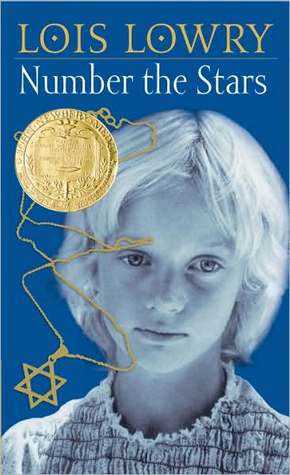
- Number the Stars
Lois Lowry
4.2 (448k) average on GoodreadsChildren'sA children's historical fiction novel about a young girl's bravery during the Holocaust, focusing on rescue and friendship.
- The Diary of a Young Girl
Anne Frank
4.2 (2.7M) average on GoodreadsBiographyAnne Frank's diary is a primary source, offering authentic, first-hand accounts of Jewish persecution during the Holocaust. It provides a historically accurate and deeply personal insight into the daily realities of hiding and fear. In contrast, Boyne's novel is a fictionalized account that sacrifices historical accuracy for narrative simplicity, potentially misleading readers about the true nature of the Holocaust.
- Harry Potter and the Sorcerer's Stone
J.K. Rowling
4.5 (7M) average on GoodreadsFantasyRescued from a miserable life under the stairs, an orphaned boy discovers he's a wizard destined for a magical school, where he uncovers a dangerous secret tied to the dark wizard who murdered his parents.
- The Hobbit, or There and Back Again
J.R.R. Tolkien
4.3 (2.9M) average on GoodreadsFantasyA comfort-loving hobbit named Bilbo Baggins is whisked away by a mischievous wizard and a band of dwarves on an unexpected journey to reclaim stolen treasure from a fearsome dragon, discovering courage and a magical ring along the way.





Enjoyed the summary?
A summary gives you the shape of the book. The book itself has the detail, the examples and the voice.
Find The Boy in the Striped Pajamas on AmazonAs an Amazon Associate, BookBrief earns from qualifying purchases. How we're funded