

Core Idea
- Difficulty
- Medium
Key Takeaways from Broken Hearts
The Weight of Unspoken Departures
Sudden announcements of life-altering decisions can leave emotional devastation in their wake.
Zeke's sudden departure, a 'late night confession and announcement,' shows how quickly life-altering decisions can affect those left behind. Ava's 'sad and confused' reaction illustrates how news delivered without warning can disrupt emotional stability. This situation isn't just about the departure; it's about how it was delivered. A confession, not a shared decision, suggests a lack of thought for Ava's feelings. The story implies a broken trust, leaving Ava to deal with an unexpected future and a past that now feels different because of this sudden news. This takeaway suggests that even well-meaning life changes, if poorly communicated, can cause significant emotional harm.
“Ava finds herself sad and confused because of Zeke’s late night confession and announcement that he was leaving to join the military.”
In the book: Zeke's 'late night confession and announcement' about joining the military, causing Ava's sadness and confusion.
Try this: When facing major life changes, prioritize open, honest, and timely communication with those deeply affected. Provide context and space for shared processing, rather than presenting decisions as faits accomplis, to mitigate emotional fallout.
Intergenerational Interference in Relationships
Parental involvement, particularly from a father, can exacerbate existing marital tensions.
The relationship between John, Helen, and Helen's father, Mr. Mathias, highlights a common problem in adult relationships: too much parental involvement. While the book doesn't detail Mr. Mathias's 'involvement,' its link to John and Helen's 'relationship problems' suggests he interferes negatively. This often looks like unwanted advice, taking sides, or direct intervention, which weakens the couple's independence and their ability to solve problems themselves. Such interference can create power imbalances, cause resentment, and stop a couple from developing the strength needed to handle challenges. The book suggests that while family support is good, boundaries are important for a marriage to last, showing how outside pressures can worsen internal conflicts.
“In the meantime John and Helen are having relationship problems and Helen’s father, Mr. Mathias, is involved.”
In the book: Mr. Mathias's 'involvement' in John and Helen's 'relationship problems'.
Try this: Couples should establish clear boundaries with extended family regarding their relationship issues. When seeking advice, it's best to consult neutral parties or professionals, and to prioritize internal communication to resolve conflicts without external interference.
The Ripple Effect of Irresponsibility
A lack of personal accountability can create significant burdens and distress for others.
Abe's 'total lack of responsibility' directly causes 'problems for Bliss,' showing a basic truth of human interaction: what a person does, or doesn't do, affects those around them. This isn't just about small issues; 'total lack' suggests a widespread failure by Abe that creates serious difficulties for Bliss. This often means the responsible person (Bliss) has to fix things, handle crises, or suffer the results of someone else's carelessness. The book criticizes this trait, portraying it as something that damages relationships, eroding trust and fairness. It shows how failing to meet one's duties, whether personal, financial, or emotional, can unfairly burden others, causing stress and resentment. This takeaway emphasizes how important accountability is for healthy relationships and functioning social structures.
“Abe’s total lack of responsibility creates problems for Bliss.”
In the book: Abe's 'total lack of responsibility creates problems for Bliss'.
Try this: Cultivate personal accountability by taking ownership of tasks and commitments. If a partner is consistently irresponsible, open communication is crucial to address the imbalance and establish clear expectations, potentially seeking external support if patterns persist.
Preemptive Rejection and Emotional Wounds
Being explicitly told not to hope can be as painful as a direct breakup, if not more so.
Jed's deliberate trip to the Troyer farm to reject Ava before she even had a chance to hope is a particularly harsh way to communicate, making Ava 'frustrated and confused.' This wasn't just a casual talk; it was an intentional act to stop any potential hopes Ava might have, with the explicit statement that 'it would be of no use to Ava for her to think about Jed coming calling for her.' While it might seem like 'clarity,' it takes away Ava's chance to discover her feelings naturally. The pain comes from Jed assuming Ava's intentions and deciding to close a door Ava might not have even known was open. This scenario shows how trying to 'be clear' can sometimes cause deeper pain, especially when it dismisses another person's potential feelings. It speaks to the hurt of having a possible future, however new, shut down before it could begin.
“Ava’s frustration and confusion increase when Jed makes a special trip to the Troyer farm to inform Ava that he has an English girlfriend and that it would be of no use to Ava for her to think about Jed coming calling for her.”
In the book: Jed's 'special trip' to inform Ava he has an 'English girlfriend' and that she shouldn't 'think about Jed coming calling for her'.
Try this: When navigating romantic interests, focus on clear, kind communication about your own feelings and commitments. Avoid making assumptions about others' intentions or delivering preemptive rejections that can cause unnecessary pain and confusion.
The Formation of Character through Manual Labor and Mentorship
Early life experiences in demanding physical work and guided apprenticeship shape resilience and skill.
Roger Rheinheimer's early life, spent 'working an eighty acre farm' and learning 'woodworking skills from Elmer Schlabach, his Amish mentor,' shows how much hands-on work and traditional apprenticeships shape a person. Describing 'hand-mixing the concrete' and 'hand-nailing the shingles' points to a strict, detailed work ethic learned early on. This kind of practical learning, guided by a mentor, builds not only skills but also patience, persistence, and an appreciation for craftsmanship that modern, often academic, upbringings sometimes miss. The 'old-fashioned tradition' emphasizes learning a skill completely, from start to finish, which leads to full mastery. This takeaway suggests that truly engaging with physical work, especially with an experienced mentor, is valuable for developing a strong work ethic and a sense of achievement, influencing lifelong interests like Roger's continued enjoyment of 'wood crafting skills.'
“While he was still in high school, Roger learned woodworking skills from Elmer Schlabach, his Amish mentor. They built houses in the old-fashioned tradition, from hand-mixing the concrete for the foundations to hand-nailing the shingles.”
In the book: Roger working an 'eighty acre farm,' learning woodworking from 'Elmer Schlabach, his Amish mentor,' and building houses 'in the old-fashioned tradition' by hand.
Try this: Seek out opportunities for hands-on learning and mentorship, especially in practical trades or crafts. Embrace the discipline and satisfaction that comes from mastering a skill through diligent, physical effort, recognizing its long-term benefits for personal development.
The Power of a Literary Awakening
Discovering a passion for creative writing can redefine one's academic and professional trajectory.
Roger Rheinheimer's path from a 'Behavioral Psychology' degree to a 'regular contributing writer to the college newspaper' after one 'Creative Writing class' shows how powerful finding a true passion can be. The moment he 'loved' the class and then published 'My Brother' was a major shift in his intellectual and creative focus. It suggests that the most important educational experiences sometimes come not from a planned path but from unexpected detours that spark a deep interest. This idea challenges the thought that careers are linear, showing how one course or experience can reveal hidden talents and guide someone toward a more satisfying creative path. It emphasizes the importance of exploring different subjects in education, as it can lead to a 'literary awakening' that shapes future efforts and provides purpose.
“Roger earned an undergraduate degree in Behavioral Psychology from a small private college in the Shenandoah Valley, took a Creative Writing class, loved it, and published a short story called My Brother.”
In the book: Roger's experience: taking a 'Creative Writing class,' 'loved it,' published 'My Brother,' and became a 'regular contributing writer' to the college newspaper despite his primary degree in Behavioral Psychology.
Try this: Be open to exploring diverse subjects and creative outlets, even if they seem outside your primary field of study or work. A single class or project can reveal a hidden passion that dramatically alters your life's direction and brings profound satisfaction.
The Author's Connection to Rural Americana
A writer's upbringing in a specific cultural and geographical context deeply informs their narrative voice and themes.
Roger Rheinheimer's background, especially growing up in 'northern Indiana' with a father who was 'the only doctor for a small town of 1200' and served 'Amish patients,' suggests his stories are deeply connected to rural America and its specific culture. The mention of a 'hitching rail' speaks volumes about how different ways of life and traditions existed side-by-side in his early environment. This background provides many experiences, observations, and values that likely fill his writing, giving it an authentic voice and perspective. It implies that his stories, including 'Amish Snow,' are not just made up but reflect a lived reality, with the details of small-town life, community connections, and interactions between different cultural groups. This personal connection to his subject is a major strength, allowing him to write stories that feel true and specific.
“Roger Rheinheimer spent the first eighteen years of his life in northern Indiana. His father was the only doctor for a small town of 1200, and had a hitching rail on a side street by his office for the Amish patients.”
In the book: Roger's 'first eighteen years' in 'northern Indiana,' his father being 'the only doctor' in a 'small town of 1200' with a 'hitching rail' for 'Amish patients'.
Try this: Aspiring writers should draw heavily on their unique personal histories and cultural backgrounds. Authentic experiences provide a wellspring of detail, character, and thematic depth that can make narratives more compelling and resonant for readers.
The Evolution of a Writer: From Short Stories to Novels
A literary career often progresses from shorter forms to more extensive narrative structures, building on foundational skills.
Roger Rheinheimer's journey from publishing 'My Brother' and writing for the 'college newspaper' to having 'two novels in print and ebook, Amish Snow and Yield Spread: a novel,' illustrates a common and natural progression in a writer's career. This suggests that mastering shorter forms, which require conciseness, plot development, and character insight in a small space, provides a key base for writing longer, more complex novels. Regularly writing for a newspaper further sharpens discipline, clarity, and the ability to meet deadlines. This path shows that consistent writing, gradually increasing in scope and ambition, is essential for building the skill and confidence needed for larger projects. It demonstrates that significant literary achievements often come from a series of smaller, foundational successes and continuous practice.
“Roger earned an undergraduate degree... published a short story called My Brother. He was a regular contributing writer to the college newspaper. Roger has two novels in print and ebook, Amish Snow and Yield Spread: a novel.”
In the book: Roger's early short story publication and newspaper contributions, followed by the release of two novels: 'Amish Snow' and 'Yield Spread: a novel'.
Try this: For aspiring writers, start with shorter forms like short stories, essays, or articles to hone your craft and build a portfolio. Gradually challenge yourself with longer projects, using the skills developed in shorter forms as a stepping stone to more extensive narratives.
The Interplay of Personal Interests and Creative Output
Diverse hobbies and life experiences can unexpectedly enrich a writer's thematic palette and creative expression.
The details about both Roger Rheinheimer and Crystal Linn show how their personal interests connect with their writing. Roger's continued enjoyment of 'wood crafting skills, making acoustic guitars and furniture,' suggests he values precision, form, and creating beauty—qualities that can subtly influence the structure and detail of his stories. Similarly, Crystal Linn's enjoyment of 'reading mysteries, writing poetry and sailing' points to a varied engagement with storytelling, language, and nature. Reading mysteries can improve plot construction and suspense, while poetry refines language and imagery, and sailing offers metaphors of journey, challenge, and perspective. This takeaway emphasizes that a rich and varied personal life, with different hobbies and experiences, is not a distraction but a vital source of inspiration and unique viewpoints for a writer, allowing them to add depth, authenticity, and distinct style to their work.
“To this day, Roger enjoys using his wood crafting skills, making acoustic guitars and furniture. Crystal Linn... enjoys reading mysteries, writing poetry and sailing with friends and family.”
In the book: Roger's enjoyment of 'wood crafting skills, making acoustic guitars and furniture'; Crystal Linn's enjoyment of 'reading mysteries, writing poetry and sailing'.
Try this: Actively pursue diverse hobbies and interests outside of your primary creative field. These seemingly unrelated activities can provide fresh perspectives, unique insights, and unexpected metaphors that enrich your creative work and prevent burnout.
Collaborative Authorship and Shared Vision
The presence of a co-author signifies a shared creative endeavor, potentially blending distinct voices and strengths.
The inclusion of Crystal Linn's detailed biography, describing her as an 'award-winning poet' and 'free-lance writer' who teaches 'creative writing classes,' strongly suggests she contributed to the book, even if not explicitly named as a co-author for 'Broken Hearts.' Her skills in poetry and teaching imply she may have influenced the story's language, structure, or themes. Collaborative authorship, or even significant editing from a writer of her caliber, can bring a richer, more varied perspective to a single work. It allows for combining different stylistic strengths and thematic interests, potentially improving the book's overall quality and reach. This takeaway highlights the value of shared creative vision and the benefits that can come when talented people combine their expertise in a literary project, making the story richer than what a single author might achieve.
“Crystal Linn is a free-lance writer and award-winning poet who teaches a variety of creative writing classes. Her third book, Poetry for Friends, is scheduled to be released in the spring of 2012. She lives in the greater Seattle area where she enjoys reading mysteries, writing poetry and sailing with friends and family.”
In the book: Detailed biography of Crystal Linn, an 'award-winning poet' and 'free-lance writer' who teaches 'creative writing classes,' implying a significant role in the book's development or co-authorship.
Try this: Consider the benefits of creative collaboration, especially for complex projects. Partnering with individuals who possess complementary skills and perspectives can lead to a richer, more nuanced final product than a solo effort, fostering innovation and shared growth.
Quiz
10 questions on the main ideas. Each answer comes with a short explanation.
Question 1
What is the main reason for Ava's sadness and confusion at the beginning of the book?
- John and Helen's relationship problems.
- Mr. Mathias's involvement in John and Helen's relationship.
- Zeke's confession and announcement that he is leaving for the military.
- Abe's lack of responsibility.
Show answer
C. Zeke's confession and announcement that he is leaving for the military. Ava is sad and confused because Zeke has confessed his feelings and announced he is leaving to join the military.
Question 2
Who is experiencing relationship problems?
- Ava and Zeke
- John and Helen
- Abe and Bliss
- Ava and Jed
Show answer
B. John and Helen John and Helen are having relationship problems.
Question 3
What problem does Abe's lack of responsibility create?
- It causes problems for Ava.
- It causes problems for Zeke.
- It causes problems for John.
- It causes problems for Bliss.
Show answer
D. It causes problems for Bliss. Abe's total lack of responsibility creates problems for Bliss.
Question 4
Why does Jed make a special trip to the Troyer farm to see Ava?
- To ask Ava to marry him.
- To inform her that he has an English girlfriend and she should not expect him.
- To ask for her help with a problem.
- To apologize for his past behavior.
Show answer
B. To inform her that he has an English girlfriend and she should not expect him. Jed visits Ava to tell her he has an English girlfriend and that it's pointless for her to wait for him.
Question 5
What did Roger Rheinheimer's father do for a living in the small town?
- He was a farmer.
- He was a teacher.
- He was the only doctor.
- He was a carpenter.
Show answer
C. He was the only doctor. Roger's father was the only doctor for a small town of 1200 people.
Question 6
What skill did Roger Rheinheimer learn from his Amish mentor, Elmer Schlabach?
- Farming techniques
- Woodworking
- Writing short stories
- Playing musical instruments
Show answer
B. Woodworking Roger learned woodworking skills from Elmer Schlabach.
Question 7
What did Roger and his older brother do on their father's eighty-acre farm?
- They grew only corn and soybeans.
- They raised cattle and grew crops.
- They focused solely on raising chickens.
- They built a small furniture shop.
Show answer
B. They raised cattle and grew crops. Roger and his older brother worked the eighty-acre farm, raising cattle and growing crops.
Question 8
What was the title of the short story Roger Rheinheimer published while in college?
- Amish Snow
- My Brother
- Yield Spread
- The Doctor's Son
Show answer
B. My Brother Roger published a short story titled 'My Brother' while in college.
Question 9
Which of the following is NOT listed as a current activity of Crystal Linn?
- Writing poetry
- Sailing with friends and family
- Teaching creative writing classes
- Working as a doctor in northern Indiana
Show answer
D. Working as a doctor in northern Indiana Crystal Linn lives in the greater Seattle area and enjoys reading mysteries, writing poetry, and sailing. She also teaches creative writing classes. The description of the doctor in northern Indiana refers to Roger Rheinheimer's father.
Question 10
What is scheduled to be released in the spring of 2012, according to the provided text?
- Roger Rheinheimer's novel 'Yield Spread'
- Crystal Linn's book 'Poetry for Friends'
- A new woodworking project by Roger Rheinheimer
- A collection of short stories by Roger Rheinheimer
Show answer
B. Crystal Linn's book 'Poetry for Friends' Crystal Linn's third book, 'Poetry for Friends,' is scheduled to be released in the spring of 2012.
Broken Hearts FAQ
What is the main plot of "Broken Hearts"?
"Broken Hearts" follows Ava as she navigates heartbreak and confusion after Zeke announces he's joining the military. The story also weaves in the relationship troubles of John and Helen, and the complications arising from Abe's irresponsibility.
Who are the main characters in "Broken Hearts"?
The primary characters include Ava, who is dealing with romantic turmoil, Zeke, who is leaving for the military, John and Helen, a couple facing relationship issues, and Abe, whose lack of responsibility causes problems.
What challenges does Ava face in the book?
Ava experiences sadness and confusion due to Zeke's departure and later, Jed's announcement that he has an English girlfriend, dashing any hopes she might have had for a relationship with him.
Are there subplots in "Broken Hearts"?
Yes, the book includes subplots such as the relationship problems between John and Helen, with Helen's father, Mr. Mathias, playing a role. Abe's irresponsibility also creates its own set of problems for a character named Bliss.
What is the author Roger Rheinheimer's background?
Roger Rheinheimer grew up in northern Indiana, working on his father's farm and learning woodworking from an Amish mentor. He has a degree in Behavioral Psychology and enjoys crafting guitars and furniture.
What other books has Roger Rheinheimer written?
Roger Rheinheimer is also the author of the novels "Amish Snow" and "Yield Spread: a novel."
Is "Broken Hearts" a romance novel?
While "Broken Hearts" deals with romantic relationships and the emotional turmoil that comes with them, it also incorporates elements of drama and character development that go beyond a simple romance genre.
What themes are explored in "Broken Hearts"?
The book explores themes of heartbreak, confusion, responsibility (and lack thereof), family dynamics, and the challenges of relationships, particularly within a community that may have traditional values.
Similar books
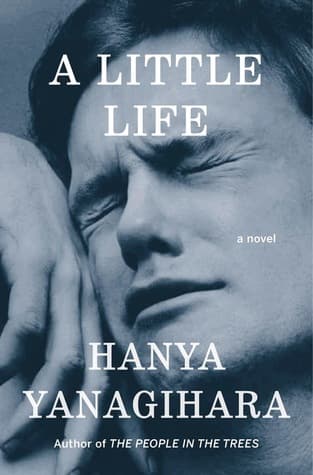
- A Little Life
Hanya Yanagihara
4.3 (212k) average on GoodreadsLiterary Fiction"Broken Hearts" shares Yanagihara's commitment to exploring profound suffering and the enduring impact of trauma. Both novels delve deep into the psychological landscape of characters enduring immense pain, offering an unvarnished look at human resilience and fragility. However, Rheinheimer's scope is broader, encompassing multiple perspectives on grief rather than focusing on the singular, prolonged torment of one individual, as seen in "A Little Life." While Yanagihara pushes the boundaries of reader endurance with relentless tragedy, Rheinheimer, while intense, offers slightly more varied emotional textures and pathways to understanding, even if not always to full resolution.
- The Year of Magical Thinking
Joan Didion
3.9 (142k) average on GoodreadsPsychologyDidion's memoir is a deeply personal and intellectual examination of grief, particularly the sudden loss of a spouse. "Broken Hearts" echoes Didion's analytical yet deeply felt approach to processing loss, particularly in its focus on the cognitive dissonance and surreal nature of early bereavement. However, Rheinheimer expands this personal lens into a fictional ensemble, allowing for a multifaceted exploration of different types of loss (child, parent, partner) and varied coping mechanisms. While Didion offers a precise, almost clinical dissection of her own experience, Rheinheimer provides a broader, more empathetic, and often more narrative-driven look at the universal aspects of heartbreak through fictionalized accounts.
- The Diary of a Young Girl
Anne Frank
4.2 (2.7M) average on GoodreadsBiographyDuring the Nazi occupation, a teenage girl's diary, written from a secret annex, shares observations on humanity, hope, and the wait for freedom.
- Twisted 1. Twisted love
Ana Huang
3.7 (1.7M) average on GoodreadsA quiet billionaire with a difficult past finds his guarded heart opening to the woman he must protect, but their growing passion uncovers dangerous secrets and a shared, traumatic history.
- Eat, Pray, Love
Elizabeth Gilbert
3.6 (1.5M) average on GoodreadsLifestyleA heartbroken writer leaves her conventional life for a year-long global search for pleasure in Italy, spiritual devotion in India, and unexpected love and balance in Bali.
- Night
Elie Wiesel
4.3 (970k) average on GoodreadsBiographyIn the darkness of Auschwitz and Buchenwald, a teenage Elie Wiesel faces the extermination of his family, the loss of his faith, and the lasting scars of humanity's deepest cruelty.





Enjoyed the summary?
A summary gives you the shape of the book. The book itself has the detail, the examples and the voice.
Find Broken Hearts on AmazonAs an Amazon Associate, BookBrief earns from qualifying purchases. How we're funded