
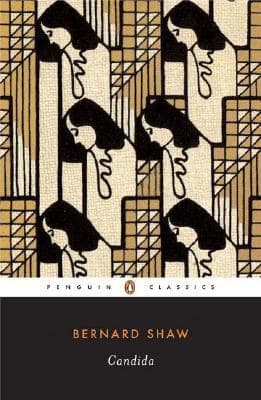
Synopsis
Covers the whole plot, including the ending.
- Difficulty
- Medium
- Pacing
- Moderate
- Mood
- Witty, Thought-provoking, Humorous, Romantic, Satirical
- Read it if
- You enjoy classic plays that cleverly subvert romantic tropes, feature sharp dialogue, and explore complex relationships with humor and wit.
- Skip it if
- You prefer fast-paced action or straightforward romantic narratives without philosophical undertones.
Candida Plot Summary
Covers the whole plot, including the ending.
The Vicarage Office
The play starts in the study of Reverend James Mavor Morell, a popular and articulate socialist clergyman in London. His secretary, Miss Garnett (Proserpine), handles his mail while he dictates sermons. Morell is a man of strong beliefs and loves his wife, Candida. Their peaceful home life and Morell's public success are clear. But the arrival of Eugene Marchbanks, a sensitive and intense young poet of eighteen, breaks this calm. Marchbanks, who has been staying with the Morells, declares his deep love for Candida, believing she is stuck in a boring marriage and that Morell does not truly appreciate her artistic and spiritual sides. Morell is amused at first, then increasingly bothered by Eugene's intensity and strange view of his marriage.
Eugene's Declaration
Eugene Marchbanks, despite his youth and delicate looks, is firm in his feelings for Candida and his view of her true nature. He dismisses Morell's practical and public love as not enough, arguing that Morell takes Candida for granted and does not see her poetic, spiritual essence. Eugene believes he alone understands Candida's need for protection from the harsh world and the 'ordinary' nature of her marriage. Morell, initially condescending toward Eugene's idealism, becomes truly angry at the young man's boldness and his challenge to his home life and his wife's affection. Their argument shows their different views on love, marriage, and women's roles.
Candida's Return
Candida Morell returns home from shopping, bringing a warm, comforting presence to the vicarage. She is charming, warm, and practical, easily managing her home and her husband's public image. Morell, still upset by Eugene's accusations, tries to tell Candida about Eugene's odd behavior and declarations. However, Candida, calm and confident, dismisses his worries, treating Eugene's infatuation as a harmless poetic fancy. She reassures Morell of her love, but her casual dismissal of Eugene's intensity increases Morell's worries, making him question if he truly understands his wife as deeply as he thinks.
Morell's Insecurity
Morell feels insecure, a new experience for him. Eugene's constant claims that Morell is blind to Candida's true inner self begin to erode the vicar's confidence. He starts to examine his relationship with Candida, wondering if his public role and busy life have indeed overshadowed a deeper, more poetic connection that Eugene says he offers. This internal struggle shows in his talks with his father-in-law, Burgess, and even his secretary, Proserpine, all of whom see Candida's practical devotion but not the 'poetic' ideal Eugene champions. Morell's pride and his image as a strong, confident man are severely tested by Eugene's unusual challenge.
The Supper Table Exchange
The tension rises during supper. Eugene, confident in his perceived understanding of Candida, openly criticizes Morell's sermons and his practical approach to life. He extends his disapproval to Burgess, Candida's father, a self-serving and materialistic businessman, whom he sees as representing the 'ordinary' world from which he believes Candida needs saving. Candida, always the peacemaker and household manager, skillfully handles these conflicts, defending both her husband and her father while also indulging Eugene's poetic side. Her ability to keep harmony, even amid such provocations, highlights her central role in the home and her unique influence over all the men in her life.
The Challenge Accepted
Morell, unable to tolerate Eugene's presence and the constant undermining of his marriage, finally confronts Candida directly. He demands that she choose between him and Eugene, believing her affections are being swayed by the younger man's romantic words. Morell, despite his public eloquence, struggles to express his deep love and reliance on Candida, feeling that his practical contributions to their shared life are being undervalued. He is genuinely hurt and confused by Candida's seemingly neutral treatment of Eugene, seeing it as a sign of wavering loyalty. This moment marks a turning point, forcing Candida to acknowledge the emotional trouble she has unintentionally caused.
Candida's Revelation
Candida, facing the ultimatum, takes control. She reveals that her love for Morell is not based on his strength, but on his weakness and his need for her. She explains that Morell, despite his public strength and eloquence, is actually the 'weaker' of the two, relying on her to manage his life, home, and public image. Eugene, who had romanticized Candida as a fragile, poetic being needing protection, is shocked by this. He realizes his idealized vision of Candida is false and that she is far more grounded and powerful than he imagined. Morell is equally shocked, forced to face his own dependence and vulnerability.
The Auction of Candida
Candida, calm and commanding, states she will go with the man who needs her most. She asks both Morell and Eugene to make their case. Morell, humbled by her earlier revelation, admits his deep dependence on her – his need for her to run his home, manage his affairs, and be the foundation of his life. Eugene, however, having lost his romantic illusions, realizes Candida does not need him in the way he had imagined. He understands her strength lies in her independence and her ability to nurture, rather than in needing protection. This unexpected turn changes the nature of their respective 'needs'.
Eugene's Departure
After Candida's statement, Eugene, with a new understanding of love and reality, leaves quietly and with dignity. He realizes that his romantic idealization of Candida was a self-serving fantasy and that her true strength and love come from her practical devotion to Morell. He has learned a valuable, though painful, lesson about the complexities of human relationships and the difference between poetic ideals and real love. His departure is not one of defeat, but of enlightenment, suggesting he has matured. He leaves with a deep and 'secret' knowledge, implying a greater understanding of life's truths that goes beyond surface romance.
The Morells Reunited
With Eugene gone, Morell and Candida are alone. Their relationship has been tested and, through Candida's honesty, is now stronger and more real. Morell now understands his dependence on Candida, not as a weakness to hide, but as an essential part of their bond. Candida's love is shown to be a nurturing, practical force that supports Morell's public success and personal well-being. The crisis has removed illusions, allowing them to see each other more clearly and appreciate each other more. Their reunion reaffirms their marriage, now based on a more profound and realistic understanding of their mutual needs and strengths.
Principal Figures
Candida Morell
Protagonist
The intelligent, pragmatic, and deeply nurturing wife of Reverend Morell.
Candida is the central figure around whom the entire play revolves. She is a woman of immense charm, warmth, and self-possession, possessing a keen wit and practical intelligence. She effortlessly manages her household, her husband's public life, and the emotional needs of those around her. Far from being a fragile romantic ideal, Candida is grounded and capable, providing the stable foundation for her husband's career and domestic peace. She values honesty and directness, and her love is expressed through nurturing and managing, rather than through grand romantic gestures. She sees through pretenses and ultimately makes a choice based on a deep understanding of human need.
Relationships: Reverend James Mavor Morell (Wife, manager of his home and life; deeply devoted but also sees his vulnerabilities.); Eugene Marchbanks (Object of his romantic idealization; she treats him with maternal affection and gentle correction.); Mr. Burgess (Daughter; she manages his materialistic tendencies with patience and humor.)
Reverend James Mavor Morell
Protagonist
A popular, eloquent Christian Socialist clergyman, initially self-assured but deeply dependent on his wife.
Morell is a charismatic and successful public speaker, admired for his socialist ideals and his powerful sermons. He is a man of strong convictions and believes himself to be a pillar of strength and independence. However, beneath his confident exterior lies a profound, unacknowledged dependence on his wife, Candida, who manages every aspect of his domestic and emotional life. Eugene Marchbanks' challenge forces Morell to confront his own vulnerabilities and the extent to which he relies on Candida, shaking his self-perception to its core. He loves Candida deeply but initially struggles to articulate it beyond the practical aspects of their shared life.
Relationships: Candida Morell (Husband; deeply loves and relies on her, initially unaware of the depth of his dependence.); Eugene Marchbanks (Rival for Candida's affection; initially condescending, then threatened and ultimately humbled by him.); Miss Garnett (Proserpine) (Employer; she is his efficient but secretly admiring secretary.)
Eugene Marchbanks
Protagonist/Catalyst
An eighteen-year-old, intensely poetic and sensitive aristocrat, deeply infatuated with Candida.
Eugene is a physically delicate but emotionally intense young man from an aristocratic background. He is a poet, filled with romantic ideals and a profound disdain for the 'commonplace' and materialistic aspects of society. He believes he alone understands Candida's true, poetic soul and seeks to rescue her from what he perceives as the mundane reality of her marriage to Morell. Eugene's raw honesty and uncompromising idealism act as a catalyst, exposing the hidden dynamics of the Morells' marriage. He represents unbridled romanticism and artistic sensitivity, but ultimately learns a painful lesson about the difference between ideal love and practical devotion.
Relationships: Candida Morell (Object of his passionate, idealized love; he believes he is her true spiritual companion.); Reverend James Mavor Morell (Rival; he openly challenges Morell's worthiness as Candida's husband.)
Mr. Burgess
Supporting
Candida's father, a materialistic and opportunistic businessman.
Mr. Burgess is a caricature of the self-serving, capitalist businessman. He is Candida's father and Morell's father-in-law, a man more concerned with profit and social climbing than with genuine human connection. He initially disapproves of Morell's socialist ideals but tolerates him due to Candida's influence. Burgess provides comic relief but also serves as a foil to Morell's idealism and Eugene's romanticism, embodying the very 'commonplace' world that Eugene despises. He is largely oblivious to the emotional turmoil around him, focused instead on practical matters and personal gain.
Relationships: Candida Morell (Daughter; she manages his boorishness with patience.); Reverend James Mavor Morell (Son-in-law; he disapproves of Morell's socialism but respects his popularity.)
Miss Garnett (Proserpine)
Supporting
Reverend Morell's efficient, sharp-witted secretary, secretly enamored with him.
Proserpine, or 'Prossy', is Morell's capable and often sarcastic secretary. She is highly efficient and devoted to her work, but beneath her seemingly detached professional demeanor, she harbors a secret admiration, perhaps even love, for Morell. She is quick-witted and often exchanges barbs with Burgess and Eugene, acting as a voice of practical reason and sometimes thinly veiled jealousy. Her presence highlights Morell's attractiveness and the impact he has on those around him, while also adding a layer of subtle romantic tension to the vicarage atmosphere.
Relationships: Reverend James Mavor Morell (Employer; she is his efficient secretary, secretly infatuated with him.); Candida Morell (Her employer's wife; she is respectful but perhaps subtly jealous of her position.)
Lexy Mill
Supporting
Morell's earnest, somewhat naive curate.
Lexy Mill is Morell's curate, a young clergyman who idolizes Morell and diligently assists him in his work. He is earnest, well-meaning, and eager to please, though sometimes a bit dull-witted compared to the other characters. Lexy represents the conventional, dutiful side of the church, and his admiration for Morell further emphasizes Morell's public persona and influence. He is largely a background character, serving to highlight the bustling activity of the vicarage and Morell's respected position within the community.
Relationships: Reverend James Mavor Morell (Curate; he deeply admires and assists Morell.)
Themes & Insights
The Nature of Love and Marriage
The play questions traditional ideas of love and marriage, comparing romantic idealism with practical devotion. Eugene Marchbanks' 'love' for Candida comes from an idealized, poetic view, seeing her as a delicate muse to protect. Morell's love, first shown as strong and practical, is revealed by Candida to be a deep, almost childlike dependence. Candida ultimately defines love not as being with the stronger person, but with the 'weaker' and more needy partner, challenging traditional gender roles and romantic expectations. The play suggests that true, lasting love is built on a realistic understanding of mutual needs and vulnerabilities, rather than on surface passion or strength. This is most clear in Candida's 'auction' where she chooses Morell not for his public strength, but for his private dependence on her.
“Ah, James, how little you understand me, to talk of your strength and my weakness! I am your wife, James, not your mother.”
Idealism vs. Realism
Candida looks at the conflict between idealistic views and the realities of human relationships. Eugene Marchbanks represents pure, unadulterated idealism, believing in a world ruled by poetic truth and spiritual purity, and is shocked by the ordinary and practical. Morell, an idealist in his socialist preaching, is shown as a realist in his home life, valuing order and practical contributions. Candida, however, is the ultimate realist, seeing people as they are, with their flaws and needs, and making her choices based on a grounded understanding of human nature. The play suggests that uncontrolled idealism, while noble, can be blind to the complex truths of real life, and that true wisdom involves accepting reality.
“I am not a child, James. I am a woman, with a woman's heart and a woman's needs.”
Gender Roles and Female Agency
Shaw's play challenges the male-dominated ideas of its time by showing Candida as a woman of great strength, intelligence, and control, despite her seemingly traditional role at home. Both Morell and Eugene project their own desires and ideals onto her, seeing her either as a supportive wife or a poetic muse. However, Candida ultimately shows herself to be the true manager and emotional anchor of her household, the 'stronger' one who supports the 'weaker' Morell. Her choice to stay with Morell is not submission, but a conscious decision based on her own understanding of love and responsibility, demonstrating her control over her own life and challenging the traditional image of a submissive wife.
“I give myself to the weaker of the two.”
The Public vs. Private Self
The play subtly examines the difference between a person's public image and their private self. Morell is a powerful, articulate public figure, a respected socialist clergyman, but in his private life, he is very dependent on Candida and prone to insecurity. Eugene, publicly an awkward and sensitive poet, privately holds a fierce conviction and challenges the established order. Candida, too, maintains a calm, managing exterior, but underneath is a deep understanding of human nature and a quiet strength. The play suggests that true character and the complexities of relationships are often hidden, and that a public image can hide deeper truths.
“You are a clergyman, James, and you are a man. And when you are a clergyman, you are an angel; but when you are a man, you are a child.”
Plot Devices & Literary Techniques
The Romantic Triangle
A classic love triangle used to expose the true nature of relationships.
The central dramatic device is the love triangle between Candida, Morell, and Eugene Marchbanks. However, Shaw subverts the traditional expectations of this device. Instead of a simple choice based on passion or societal pressure, the triangle becomes a crucible for examining the deeper, often unacknowledged, dynamics of love, marriage, and personal dependence. Eugene's idealized infatuation acts as a catalyst, forcing Morell to confront his own insecurities and Candida to articulate the true, practical nature of her devotion, leading to a resolution that defies conventional romantic outcomes.
Subversion of Courtly Love
The play parodies romantic ideals by revealing the practicalities beneath them.
Shaw deliberately parodies the literary tradition of courtly love, where a knight (Eugene) idealizes a noble lady (Candida) and seeks to rescue her from a perceived mundane existence. Eugene Marchbanks embodies the courtly lover, showering Candida with poetic declarations and seeing her as a muse. However, Candida herself, far from being a passive damsel, is a pragmatic and powerful woman who ultimately disabuses Eugene of his romantic illusions. The play critiques the superficiality of such idealized love, suggesting that genuine affection is far more complex and grounded in reality than poetic fantasy.
The 'Auction' or 'Choice' Scene
A climactic moment where Candida makes a surprising, revelatory decision.
The dramatic climax occurs when Candida, exasperated by the men's posturing, demands that both Morell and Eugene state their claim to her, declaring she will go with 'the weaker of the two.' This scene is a pivotal plot device, as it forces both men to drop their pretenses and articulate their true needs and vulnerabilities. Candida's unexpected choice, based on a deep understanding of Morell's dependence on her, completely redefines the power dynamics and the nature of love presented in the play, leading to Eugene's enlightenment and the Morells' renewed understanding of their bond.
Dramatic Irony
The audience often understands character motivations or truths before the characters themselves.
Dramatic irony is frequently employed, particularly regarding Morell's self-perception and Candida's true role. The audience quickly perceives Morell's reliance on Candida, even as he prides himself on his strength, and understands Eugene's romantic naivete long before he does. This creates a sense of anticipation and allows Shaw to highlight the characters' blind spots and the societal conventions they embody. Candida herself is often the source of this irony, as her calm demeanor masks a profound insight that eventually disarms both her husband and her young admirer.
Candida Quotes
“Ah, Candida, if only you would marry a clever man!”
“Do you think a woman's heart is a weathercock to be veered about by every breath of wind?”
“I am not a child, I am a poet.”
“When you are as old as I am, you will know that the only way out of it all is to make up your mind and stick to it.”
“I want to be loved for my weaknesses, not for my strengths.”
“You are a brute, James. A brute.”
“There is no love sincerer than the love of food.”
“You have a wife who is not a child, but a woman.”
“It is not for you to understand, James. It is for me to live.”
“I am not a man of sentiment.”
“You are a man of words, James. I am a woman of deeds.”
“The greatest joy in life is to be loved for yourself, without conditions, without expectations.”
“I am a woman, and I have my pride.”
“You have found your romance, James, not in the books, but in me.”
Quiz
10 questions on the plot and the characters. Each answer comes with a short explanation.
Question 1
What is the profession of Candida's husband, James Mavor Morell?
- A poet
- A socialist clergyman
- A wealthy businessman
- A university professor
Show answer
B. A socialist clergyman James Mavor Morell is a well-known and respected socialist clergyman, a central figure in his community.
Question 2
Who is Eugene Marchbanks?
- Candida's brother
- Morell's church deacon
- A shy, aristocratic young poet in love with Candida
- A political rival of Morell's
Show answer
C. A shy, aristocratic young poet in love with Candida Eugene Marchbanks is the young, sensitive, and aristocratic poet who confesses his love for Candida, believing she is misunderstood by her husband.
Question 3
What does Marchbanks accuse Morell of regarding Candida?
- Neglecting her in favor of his work
- Treating her as a possession and not understanding her true self
- Being unfaithful to her
- Not providing her with enough financial security
Show answer
B. Treating her as a possession and not understanding her true self Marchbanks' central argument is that Morell takes Candida for granted and doesn't see her as a woman with her own soul and needs, but rather as a domestic convenience or an extension of his own image.
Question 4
What is the 'choice' Candida presents to Morell and Marchbanks at the climax of the play?
- She asks them to write a poem about her, and she will choose the winner.
- She asks them to bid for her love, offering 'all you have to offer'.
- She asks them to debate the merits of socialism versus poetry.
- She asks them to leave her alone so she can decide her future independently.
Show answer
B. She asks them to bid for her love, offering 'all you have to offer'. Candida's climactic declaration is that she will go with 'the weaker of the two', and she asks them to 'bid for her', demanding 'all you have to offer'. This challenges their assumptions about her and their own strengths.
Question 5
What does Morell offer as his 'all' when bidding for Candida?
- His fame and public adoration
- His strength, protection, and the comfortable home he provides
- His intellectual companionship and shared ideals
- His willingness to give up his career for her
Show answer
B. His strength, protection, and the comfortable home he provides Morell offers his 'strength' and the 'shelter' and 'home' he provides, highlighting his traditional role as protector and provider.
Question 6
What does Marchbanks offer as his 'all' when bidding for Candida?
- His wealth and aristocratic connections
- His passionate, idealized love and his need for her care
- His promise to write poems exclusively about her
- His willingness to challenge Morell publicly for her affection
Show answer
B. His passionate, idealized love and his need for her care Marchbanks, in his bid, offers his 'weakness' and his 'loneliness', his desperate need for her nurturing and understanding, revealing the depth of his idealized, dependent love.
Question 7
Why does Candida ultimately choose to stay with Morell?
- Because he is the stronger and more dominant man.
- Because she realizes Morell is the 'weaker' one who needs her more.
- Because she is obligated by social convention to remain with her husband.
- Because Marchbanks decides to leave on his own accord.
Show answer
B. Because she realizes Morell is the 'weaker' one who needs her more. Candida's choice is based on her realization that Morell, despite his public strength, is utterly dependent on her domestic and emotional support, making him 'the weaker' and the one who needs her more.
Question 8
What is the 'secret in the poet's heart' that Marchbanks takes with him when he leaves?
- The knowledge that Candida secretly loves him.
- The understanding that Candida chose Morell out of pity.
- The realization that his idealized love for Candida was a delusion, and true love requires no support.
- The plan to return and win Candida back in the future.
Show answer
C. The realization that his idealized love for Candida was a delusion, and true love requires no support. Marchbanks leaves with the profound realization that love, particularly the kind of idealized love he sought, is a self-sufficient state and does not require the physical presence or domestic comfort of the beloved. He understands that 'no man needs the love of a woman, but only her pity'.
Question 9
How does Candida subvert traditional expectations of the 'New Woman' or romantic heroine in the play?
- By rejecting both men and pursuing an independent career.
- By choosing the 'weaker' man, asserting her own agency and domestic power.
- By eloping with the younger, more passionate man.
- By revealing herself to be an intellectual equal to her husband.
Show answer
B. By choosing the 'weaker' man, asserting her own agency and domestic power. Instead of seeking independence outside the home or choosing the more 'romantic' option, Candida asserts her power within the domestic sphere, choosing the man who needs her most, thereby redefining strength and love in her own terms.
Question 10
What theme does the play primarily parody or critique regarding romantic relationships?
- The importance of financial stability in marriage.
- The idealized, often unrealistic notions of courtly love and romantic heroism.
- The struggles of interfaith marriages.
- The impact of social class on marital compatibility.
Show answer
B. The idealized, often unrealistic notions of courtly love and romantic heroism. Shaw explicitly parodies courtly love, with Marchbanks embodying the traditional romantic hero who puts his lady on a pedestal, only for Candida to reveal the reality of domestic partnership and the true nature of 'strength' and 'weakness'.
Candida FAQ
What is the central conflict of 'Candida' and who are the main characters involved?
The central conflict revolves around Candida Morell's choice between her energetic, socialist clergyman husband, James Mavor Morell, and the sensitive, idealistic young poet, Eugene Marchbanks. The play explores the nature of love, marriage, and societal expectations through this romantic triangle, ultimately challenging conventional notions of domestic bliss.
How does George Bernard Shaw parody courtly love in 'Candida'?
Shaw parodies courtly love primarily through Eugene Marchbanks, who idealizes Candida as a goddess-like figure, dedicating his poetry and suffering to her perceived divine purity. This contrasts sharply with Candida's practical, maternal love for both men, highlighting the absurdity of Eugene's romanticized, detached adoration versus the messy reality of human relationships.
What role does Reverend James Mavor Morell's socialist preaching play in the story?
Morell's socialism is central to his public persona and initial perception of himself as a powerful, benevolent figure, beloved by his congregation. However, his fervent public life often overshadows his domestic understanding, making him initially blind to Candida's deeper needs and the true nature of her support, which Eugene highlights.
What is the significance of Candida's final choice between Morell and Marchbanks?
Candida's choice is not a conventional romantic one but a pragmatic decision based on who needs her more, declaring she belongs to 'the weaker of the two.' She chooses Morell, recognizing his dependence on her to maintain his public image and emotional stability, while Marchbanks, despite his youth, is deemed capable of standing on his own.
Who are the supporting characters and what functions do they serve?
Proserpine Garnett is Morell's cynical secretary, providing comic relief and a grounded perspective on the romantic drama. Reverend Alexander Mill is Morell's uncritical curate, representing the conventional, less insightful aspects of the church. Mr. Burgess, Candida's father, is a materialistic businessman, highlighting the contrast between the Morells' idealism and practical concerns.
What specific classical allusions are present in the play, and how do they enrich the themes?
Eugene frequently compares Candida to classical goddesses like Venus or the Virgin Mary, elevating her to an unattainable ideal. Morell, in his oratorical style, sometimes evokes figures of classical rhetoric. These allusions underscore Eugene's romantic idealism and Morell's public grandiosity, contrasting with Candida's down-to-earth practicality.
How does the 'fervor of a religious revival' manifest in the play beyond Morell's sermons?
The 'fervor' isn't just in Morell's public preaching but also in Eugene's almost religious devotion to Candida, bordering on idolatry. There's a shared intensity and idealism among the characters, particularly Eugene and Morell, in their respective passions—be it social reform or poetic inspiration—reflecting a zeal that transcends mere sentiment.
Are there any subtle hints about Candida's true feelings for Marchbanks before her final declaration?
Candida treats Marchbanks with a blend of maternal affection, amusement, and a subtle understanding of his artistic soul, often defending him from Morell's dismissiveness. Her willingness to engage with his poetic sensibilities and her gentle teasing suggest a deeper appreciation for his spirit, even if not romantic love, preparing the audience for her complex decision.
How does the play subtly critique the traditional 'strong man' archetype through Morell?
Morell, despite his robust public image as a powerful orator and social reformer, is revealed to be deeply dependent on Candida for emotional support, domestic management, and even his sense of self-worth. Shaw exposes his vulnerability and 'weakness' beneath the facade of strength, challenging the idea that a man's power is solely external or independent.
What is the psychological impact of Eugene Marchbanks's extreme sensitivity and poetic nature on his interactions?
Eugene's extreme sensitivity makes him acutely perceptive to the emotional undercurrents of the Morell household, allowing him to see Candida's true burden and Morell's hidden weaknesses. However, it also makes him vulnerable, prone to dramatic outbursts, and somewhat detached from the practical realities of love and marriage, leading to his idealistic suffering.
How does Candida demonstrate a deeper psychological understanding of both men than they have of themselves?
Candida possesses a profound emotional intelligence, seeing through Morell's public bravado to his deep-seated need for her, and recognizing Eugene's artistic strength despite his outward fragility. She understands their true 'weaknesses' and 'strengths' better than they do, which informs her final decision and her role as the emotional anchor of her household.
What psychological need does Candida fulfill for Morell, beyond domestic comfort?
Candida fulfills Morell's need for unconditional adoration, emotional stability, and the practical support that allows him to maintain his demanding public life. She is his unspoken backbone, the silent force that makes his public strength possible, absorbing his anxieties and managing the mundane so he can focus on his ideals.
In what ways does 'Candida' function as a critique of Ibsen's domestic dramas?
Shaw directly parodies Ibsen's domestic dramas, particularly 'A Doll's House,' by presenting a seemingly conventional domestic triangle but subverting expectations. Unlike Nora, who leaves, Candida chooses to stay, but on her own terms, redefining the 'ideal' wife not as an independent escapee but as a powerful, essential force within the domestic sphere, making a conscious, empowered choice.
Is Candida's final choice truly an act of empowerment, or is it a resignation to traditional gender roles?
Candida's choice is highly debatable. While some view it as an empowered decision to choose the 'weaker' man and assert her vital role, others might interpret it as a subtle reinforcement of her maternal, nurturing role within traditional gender expectations. Shaw leaves it ambiguous, allowing the audience to question the nature of 'strength' and 'weakness' in relationships.
How does the play challenge the audience's expectations of a romantic resolution?
The play subverts typical romantic resolutions by having the 'heroine' choose the husband she already has, not the passionate young suitor. Furthermore, her choice is based on need rather than romantic love, and the 'winner' is declared 'weaker,' forcing the audience to reconsider conventional notions of romantic triumph and the dynamics of love and dependency.
What is the 'secret in the poet's heart' that Eugene refers to at the end, and what does it signify?
The 'secret' is Eugene's realization that true strength and poetry lie not in possessing an idealized woman, but in the independent spirit, the ability to stand alone, and the pain of unrequited love that fuels his art. It signifies his maturation from a dependent romantic to a self-sufficient artist, understanding that his inspiration comes from within, not from external adoration.
Does Shaw portray any character as truly 'right' or 'wrong' in their perspectives on love and marriage?
Shaw deliberately avoids portraying any character as definitively 'right' or 'wrong.' Instead, he presents the complexities of each character's perspective—Morell's idealism, Eugene's romanticism, and Candida's practicality—to highlight the multifaceted nature of love and marriage. The play encourages the audience to question conventional wisdom rather than settle for simple answers.
How does the play's ending, with Eugene leaving, contribute to its overall message?
Eugene's departure signifies his growth and the play's rejection of simplistic romantic solutions. It suggests that true love and fulfillment aren't about acquiring a partner but about self-discovery and understanding one's own needs. His leaving allows both Morell and Candida to face the reality of their relationship without external interference, cementing Candida's active choice.
About the author
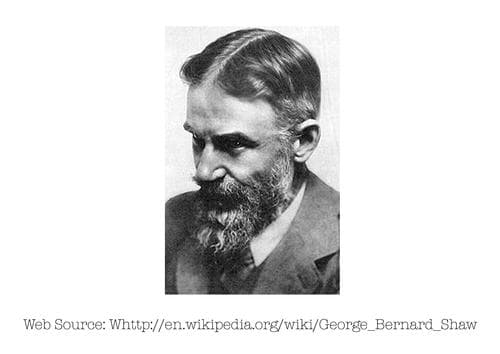
George Bernard Shaw, known at his insistence as Bernard Shaw, was an Irish playwright, critic, polemicist and political activist. His influence on Western theatre, culture and politics extended from the 1880s to his death and beyond. He wrote more than sixty plays, including major works such as Man and Superman (1902), Pygmalion (1913) and Saint Joan (1923). With a range incorporating both contemporary satire and historical allegory, Shaw became the leading dramatist of his generation, and in 1925 was awarded the Nobel Prize in Literature.
Similar books
- A Doll's House
Henrik Ibsen
3.7 (106k) average on GoodreadsFictionExplores domestic drama and a wife's role within marriage, though with a different outcome.
- The Importance of Being Earnest
Oscar Wilde
4.2 (302k) average on GoodreadsHistoryOffers a similar blend of witty dialogue, social satire, and romantic entanglements within a drawing-room comedy setting.
- The Hunger Games
Suzanne Collins
4.3 (6.4M) average on GoodreadsFantasyIn a future where children fight to the death on live television, Katniss Everdeen volunteers for the arena, turning a death sentence into a fight for survival and a spark of rebellion.
- The Great Gatsby
F. Scott Fitzgerald
3.9 (3.8M) average on GoodreadsHistorical FictionIn the opulent Roaring Twenties, a mysterious millionaire's lavish parties hide his desperate, tragic pursuit of a lost love, exposing the emptiness within the American Dream.
- The Fault in Our Stars
John Green
4.2 (3.6M) average on GoodreadsYoung AdultA girl with a terminal illness finds her story rewritten when a charming boy with a similar past enters her life at a cancer support group, leading to a star-crossed romance.
- Pride and Prejudice
Jane Austen
4.3 (3M) average on GoodreadsHistorical FictionIn a society focused on status and money, Elizabeth Bennet navigates love and pride, challenging Mr. Darcy and social expectations to find true affection.





Enjoyed the summary?
A summary gives you the shape of the book. The book itself has the detail, the examples and the voice.
Find Candida on AmazonAs an Amazon Associate, BookBrief earns from qualifying purchases. How we're funded