

Core Idea
- Difficulty
- Medium
- Read it if
- You are fascinated by the lives of powerful historical figures, the intricacies of 18th-century European courts, and the moral ambiguities of leadership, especially concerning gender and empire.
- Skip it if
- You prefer a more critical or revisionist take on Catherine's reign, are seeking a book focused primarily on social history, or find detailed biographical narratives with extensive political intrigue less engaging.
Key Takeaways from Catherine the Great
The Calculated Ascent
Catherine's strategic transformation from German princess to Russian empress.
Catherine's rise to power was not a matter of birthright but of careful planning and constant self-reinvention. Born Sophie of Anhalt-Zerbst, a minor German princess, she understood early that her survival and influence depended on her ability to integrate into the Russian court. This involved not just learning the language and converting to Orthodoxy, but also creating a persona that resonated with the Russian elite and the nation's spirit. She studied Russian history, adopted Russian customs, and strategically gained favor with key figures, all while enduring a loveless marriage to the erratic Grand Duke Peter. Her transformation was a masterclass in political maneuvering, showing that identity, especially for a ruler, can be a constructed and effective tool.
“She came to embody Russia and as the country moved from war to war and conquest to conquest it was Catherine who became great.”
In the book: Troyat details her rigorous study of Russian language and Orthodox faith upon her arrival, her cultivation of intellectual pursuits to gain favor, and her careful observation of court politics under Empress Elizabeth.
Try this: In any new environment, immerse yourself fully in its culture and understand its unwritten rules. Strategic adaptation and genuine effort to connect with the local identity can be more powerful than inherited status.
Related ideas: political-strategy, identity-formation, court-intrigue
Power Through Seduction
Catherine skillfully leveraged her sexuality and charm to secure and maintain power.
Catherine the Great used her sexuality not just for personal pleasure but as a tool of political power. In a court dominated by men and where women's influence was often indirect, Catherine used her charm and allure. Her many lovers, from Sergei Saltykov to Grigory Potemkin, were not just partners; they were often powerful allies, military commanders, or key advisors whose loyalty she gained through intimacy and generous rewards. This created a network of devoted individuals who owed their positions and fortunes to her, solidifying her control and providing a crucial balance to potential rivals. Her relationships were transactional in the most effective sense, ensuring both her emotional and political needs were met.
“Men were instruments of pleasure.”
In the book: Troyat extensively documents her many relationships, highlighting how figures like Grigory Orlov and later Potemkin became indispensable to her reign, receiving vast estates, titles, and military commands.
Try this: Understand the full spectrum of influence available to you. Personal connections, when cultivated with intention and mutual benefit, can be powerful tools in achieving your goals, transcending conventional power structures.
Related ideas: gender-and-power, political-patronage, courtly-love
The Enlightenment Paradox
Catherine embraced progressive ideas while maintaining absolute autocratic rule.
Catherine famously wrote to Enlightenment thinkers like Voltaire and Diderot, presenting herself as an enlightened monarch dedicated to reason and progress. She supported reforms in education, law, and administration, and even drafted a 'Nakaz' (Instruction) for a new law code inspired by Montesquieu. However, this intellectual front coexisted with her commitment to absolute power. While she admired the ideals of liberty and equality, she never seriously considered giving up her autocratic control or changing the serfdom system that supported the Russian economy and nobility's power. This paradox shows the selective adoption of foreign ideas, where intellectual prestige was valued, but practical reforms were implemented only if they strengthened the state and her own authority, not if they challenged the existing social hierarchy.
“Her phenomenal devotion to politics and work.”
In the book: Troyat contrasts her ambitious legislative projects and intellectual exchanges with her brutal suppression of Pugachev's Rebellion and the continued, even worsening, conditions for serfs under her rule.
Try this: Be wary of leaders who espouse progressive ideals but whose actions contradict those values. True reform requires a willingness to dismantle existing power structures, not just intellectual window dressing.
Related ideas: enlightened-absolutism, political-hypocrisy, autocracy
The Burden of the Crown
Despite her power, Catherine faced constant pressure, loneliness, and the threat of overthrow.
Even as empress, Catherine's life was not secure. The Russian court was full of intrigue, assassinations, and coups. Having taken the throne through a coup herself, she was aware of how fragile her position was. This constant threat led to a perpetual state of vigilance, deep-seated paranoia, and profound loneliness despite being surrounded by flatterers and lovers. Her tireless work ethic was not just ambition but a necessity, a way to maintain control and project an image of strength. The burden of leadership, especially in such a volatile environment, meant sacrificing personal peace for political survival, highlighting the isolating nature of ultimate power.
“The Russian court - with all its intrigues - brilliantly to life.”
In the book: Troyat details the numerous plots and conspiracies she had to navigate, the constant need to reward loyalists, and the lingering threat from figures like Ivan VI and her own son, Paul.
Try this: Understand that positions of power often come with immense stress and isolation. Develop strong support systems and self-care strategies to mitigate the psychological toll of leadership.
Related ideas: leadership-stress, political-fragility, court-politics
Russia's Expansionist Vision
Catherine aggressively pursued territorial expansion, fulfilling Russia's imperial ambitions.
Catherine the Great's reign was defined by an aggressive and successful foreign policy that greatly expanded the Russian Empire. Driven by a vision of Russia as a dominant European power, she engaged in multiple wars against the Ottoman Empire, gaining access to the Black Sea and annexing Crimea. She also played a role in the partitions of Poland, acquiring significant new territories in the west. These conquests were not merely opportunistic; they were part of a grand strategic design to consolidate Russia's borders, increase its geopolitical influence, and secure vital trade routes. Her military victories and diplomatic skill cemented her legacy as a 'Great' empress, but at a cost of immense human suffering and regional instability.
“as the country moved from war to war and conquest to conquest it was Catherine who became great.”
In the book: Troyat dedicates significant portions to her military campaigns, particularly the Russo-Turkish Wars, and the diplomatic maneuvers surrounding the partitions of Poland, detailing the territorial gains.
Try this: Analyze historical leaders' foreign policy decisions not just by their outcomes, but by their underlying motivations and long-term consequences, considering the human cost of empire-building.
Related ideas: imperialism, geopolitics, military-strategy
The Cult of Personality
Catherine masterfully crafted her public image to legitimize and glorify her rule.
Understanding the power of perception, Catherine carefully created a public image that bolstered her legitimacy and glorified her reign. She presented herself as a philosopher-queen, a patron of the arts, and a benevolent mother to her people. Her letters with Enlightenment figures, her grand building projects, and her carefully staged 'Potemkin villages' during her tour of Crimea were all part of a sophisticated propaganda machine. This cult of personality was important for a ruler who had seized power through a coup and lacked direct dynastic legitimacy. By shaping public opinion and historical narrative, she ensured her place among the great rulers, projecting an image of competence and wisdom that overshadowed any questions about her right to rule.
“She was proof of that.”
In the book: Troyat describes her elaborate state visits, her commissioning of portraits and statues, and her active role in shaping the historical accounts of her reign and the events leading to it.
Try this: Recognize that leadership often involves a degree of image management. Be discerning about the narratives presented by those in power and seek out diverse sources to form your own conclusions.
Related ideas: propaganda, public-relations, legitimacy
The Plight of the Serfs
Catherine's reign saw the worsening of serfdom, a dark stain on her 'enlightened' image.
Despite her engagement with Enlightenment ideals, Catherine's reign was bad for Russia's serfs. Far from improving their situation, she deepened their bondage, giving landowners even greater control over their lives, labor, and even their ability to be sold. This was a pragmatic concession to the nobility, whose support was essential for her rule, but it contradicted any pretense of enlightened governance. The brutal suppression of Pugachev's Rebellion, a massive serf uprising, further solidified the oppressive system. This stark contrast between her intellectual pursuits and the reality for the majority of her subjects highlights the hypocrisy in her 'enlightened despotism' and is a reminder that historical progress is often uneven and comes at a great cost to the most vulnerable.
“the serfs were condemned to ever-worsening conditions.”
In the book: Troyat details the increasing legal rights granted to landowners over their serfs, the prohibition of serf complaints against their masters, and the violent suppression of Pugachev's rebellion, which underscored the regime's stance.
Try this: When evaluating historical figures or contemporary leaders, always scrutinize their policies' impact on the most marginalized populations, rather than just their stated intentions or intellectual affiliations.
Related ideas: serfdom, social-inequality, class-struggle
Gender and Leadership
Catherine defied gender norms, proving a woman could wield power with unparalleled authority.
In an era dominated by male rulers, Catherine the Great broke gender expectations for leadership. She not only took the throne but wielded power with an iron will, strategic skill, and military ambition traditionally associated with male monarchs. Her personal life, marked by many lovers, was often used by critics to undermine her, yet she never allowed it to compromise her political authority. Instead, she used her relationships and her intellect to command respect and loyalty. Her reign showed that effective leadership is not about gender, but about skill, determination, and the ability to navigate complex political situations, proving that a woman could be as, if not more, formidable than any man on the European stage.
“The future belonged to men - and sometimes a man could have the outward appearance of a woman. She was proof of that.”
In the book: Troyat's narrative consistently portrays her as the dominant figure in her relationships and her court, making all key decisions, often outmaneuvering male advisors and generals.
Try this: Challenge traditional notions of leadership and competence based on gender. Focus on an individual's capabilities, track record, and strategic thinking rather than preconceived biases.
Related ideas: female-leadership, gender-roles, power-dynamics
The Weight of Legacy
Catherine's historical image is a complex tapestry of brilliance and brutality.
Catherine the Great's legacy is complex, defying simple categorization. She was an intellectual who corresponded with the greatest minds of her age, a patron of the arts, and a reformer who expanded Russia's territory and influence greatly. Yet, she was also an autocratic ruler who deepened serfdom, suppressed dissent, and maintained power through cunning and, at times, brutality. Troyat's biography captures this multifaceted nature, refusing to shy away from her less savory aspects while acknowledging her achievements. Her reign is a reminder that historical figures are rarely simple heroes or villains, but products of their time, driven by a mix of ambition, ideology, and pragmatism, leaving behind a legacy that continues to be debated and reinterpreted.
“This literary tour de force paints an enthralling picture of Catherine, her seductions, her coaxings and her phenomenal devotion to politics and work.”
In the book: Troyat balances her contributions to Russian culture and education with her repressive social policies and the violent means by which she consolidated and maintained her power.
Try this: Approach historical figures with nuance, recognizing their contradictions and the context in which they operated. Avoid simplistic judgments and appreciate the complexities of their impact.
Related ideas: historical-legacy, moral-ambiguity, historical-interpretation
Catherine the Great Quotes
“Power, like a lady, must be courted.”
“I will not reign over slaves. I will reign over free men.”
“A great ruler must be a great actor.”
“It is better to have an enemy who declares himself than a friend who betrays you.”
“The only way to be a good ruler is to be a good student.”
“I came to Russia a poor princess, and I will leave it a great empress.”
“My greatest glory is that I have given Russia a sense of its own strength.”
“The human heart is a labyrinth where one can easily get lost.”
“One must be severe with oneself to be lenient with others.”
“I write because I must think, and thinking is a necessity for a ruler.”
“The best way to keep a secret is to pretend you never knew it.”
“Love, like power, is a force that can consume or elevate.”
“My happiness lies in the happiness of my people.”
“History will judge me, and I trust its verdict.”
Quiz
10 questions on the main ideas. Each answer comes with a short explanation.
Question 1
Which German principality was Catherine (née Sophie of Anhalt-Zerbst) born into?
- Prussia
- Saxony
- Anhalt-Zerbst
- Mecklenburg-Schwerin
Show answer
C. Anhalt-Zerbst Catherine was born Sophie of Anhalt-Zerbst, a small German principality, before her marriage into the Russian imperial family.
Question 2
What was Catherine's primary motivation, as depicted by Troyat, for her 'phenomenal devotion to politics and work'?
- To secure a loving family for herself
- To embody Russia and achieve greatness for the country and herself
- To escape the boredom of court life
- To gain personal wealth and luxury
Show answer
B. To embody Russia and achieve greatness for the country and herself Troyat emphasizes Catherine's drive to embody Russia and achieve greatness, using her political acumen and work ethic to expand the empire and solidify her own power.
Question 3
How did Catherine's reign generally impact the conditions of the Russian serfs?
- Their conditions significantly improved due to her Enlightenment ideals.
- Their conditions remained largely unchanged.
- They were condemned to ever-worsening conditions despite her reforms.
- Abolition of serfdom was initiated, though not completed.
Show answer
C. They were condemned to ever-worsening conditions despite her reforms. The book explicitly states that while Catherine pursued conquests and rewarded her favorites, the serfs 'were condemned to ever-worsening conditions.'
Question 4
The biography suggests that Catherine viewed men primarily as:
- Political allies and intellectual companions.
- Instruments of pleasure and tools to serve her throne.
- Equal partners in governance.
- Threats to her power that needed to be neutralized.
Show answer
B. Instruments of pleasure and tools to serve her throne. The text states, 'Men were instruments of pleasure. Those who served her throne, or her bed, were well rewarded,' indicating her pragmatic and often instrumental view of men.
Question 5
Which of the following best describes Troyat's portrayal of the Russian court under Catherine?
- A rigid and predictable environment.
- A dull and uninspiring place.
- Brilliantly brought to life with all its intrigues.
- A place of genuine intellectual and artistic freedom.
Show answer
C. Brilliantly brought to life with all its intrigues. The description highlights how the book 'brings the Russian court - with all its intrigues - brilliantly to life,' indicating a vibrant and complex portrayal.
Question 6
The phrase 'sometimes a man could have the outward appearance of a woman. She was proof of that' refers to Catherine's:
- Tendency to dress in masculine attire for hunting.
- Ability to exert power and dominance typically associated with men in that era.
- Physical strength and athletic prowess.
- Adoption of male pseudonyms for her literary works.
Show answer
B. Ability to exert power and dominance typically associated with men in that era. This phrase suggests Catherine's exceptional ability to wield power and authority, transcending traditional gender roles and embodying a 'man's' strength and ambition despite being a woman.
Question 7
Troyat's biography is described as a 'literary tour de force' primarily because it:
- Focuses exclusively on Catherine's military campaigns.
- Paints an enthralling picture of Catherine, her seductions, coaxings, and devotion to politics, while also depicting the court intrigues.
- Provides a purely academic and dry account of her reign.
- Is written entirely from Catherine's personal diary entries.
Show answer
B. Paints an enthralling picture of Catherine, her seductions, coaxings, and devotion to politics, while also depicting the court intrigues. The description highlights the book's comprehensive and engaging portrayal of Catherine's multifaceted life, combining personal aspects with political ambition and court dynamics.
Question 8
What is a key argument Troyat presents regarding Catherine's identity in relation to Russia?
- She always felt an outsider, never truly Russian.
- Despite her German birth, she came to embody Russia.
- Her German heritage was a constant source of political weakness.
- She sought to replace Russian culture with German traditions.
Show answer
B. Despite her German birth, she came to embody Russia. The summary states, 'Born a little German princess without a drop of Russian blood in her veins she came to embody Russia,' highlighting her successful assimilation and identification with her adopted country.
Question 9
The statement 'The weak had to perish' reflects a harsh pragmatism often attributed to Catherine. How does this align with her treatment of those who served her throne or bed?
- It contradicts her generosity towards her favorites, as she would protect them regardless of their weakness.
- It suggests that those who failed to serve her effectively or lost her favor could face severe consequences, reinforcing her instrumental view of people.
- It refers exclusively to her enemies on the battlefield, not to her personal or court relationships.
- It implies a democratic ideal where only the most capable were allowed to participate in government.
Show answer
B. It suggests that those who failed to serve her effectively or lost her favor could face severe consequences, reinforcing her instrumental view of people. The phrase 'The weak had to perish' underscores a ruthless aspect of Catherine's character. Combined with her rewarding of those who served her well, it implies that those who faltered or lost her utility would face a harsh fate, reflecting her pragmatic and demanding nature.
Question 10
Given the description, what is one practical application of reading Troyat's biography of Catherine the Great?
- To learn specific military strategies used in 18th-century Russian warfare.
- To understand the complexities of leadership, power dynamics, and personal ambition within a historical context.
- To gain expertise in 18th-century Russian agricultural practices.
- To acquire a detailed guide on interior design of Russian palaces.
Show answer
B. To understand the complexities of leadership, power dynamics, and personal ambition within a historical context. The biography focuses on Catherine's character, her political drive, her relationships, and the intrigues of the court, making it valuable for understanding broad themes of leadership, power, and human ambition rather than technical specifics.
Catherine the Great FAQ
What is the main focus of Henri Troyat's biography of Catherine the Great?
Troyat's biography provides a comprehensive look at Catherine's life, from her humble beginnings as a German princess to her powerful reign as Empress of Russia. It explores her political acumen, personal relationships, and the dramatic transformation of Russia under her rule.
Does Henri Troyat's book delve into Catherine the Great's personal life and relationships?
Yes, the book extensively covers Catherine's personal life, including her numerous romantic liaisons and how these relationships intertwined with her political ambitions and the intrigues of the Russian court. It portrays her use of men as instruments of both pleasure and power.
What is 'enlightened absolutism' as it relates to Catherine the Great?
Enlightened absolutism refers to a form of absolute monarchy in the 18th century where rulers embraced some of the ideas of the Enlightenment, such as reason, progress, and individual rights, while still retaining absolute power. Catherine the Great is often seen as an example of an enlightened absolutist, despite the contradictions in her rule, such as the worsening conditions for serfs.
How did Catherine the Great, a German princess, come to embody Russia?
Catherine achieved this through a combination of shrewd political maneuvering, a deep study of Russian culture and language, and her unwavering dedication to strengthening the Russian state. She embraced Orthodoxy and actively worked to project an image of a truly Russian ruler, despite her foreign birth.
How does Troyat's portrayal of Catherine the Great differ from other biographies?
Troyat's work is known for its vivid literary style and its focus on the psychological depth of Catherine, presenting her as a complex figure driven by ambition, intellect, and a formidable will. It often highlights the dramatic and sometimes ruthless aspects of her personality and reign, bringing the court's intrigues to life.
Does the book cover the impact of Catherine's reign on the Russian serfs?
Yes, the biography addresses the paradox of Catherine's 'enlightened' rule, noting how while she pursued reforms, the condition of the serfs dramatically worsened during her reign. It highlights the growing divide between the privileged elite and the vast majority of the Russian population.
What role did the Russian court play in Catherine the Great's life and reign?
The Russian court was central to Catherine's life, serving as the primary arena for her political maneuvers, personal relationships, and power struggles. Troyat vividly depicts the court as a hotbed of intrigue, ambition, and shifting loyalties, all of which Catherine skillfully navigated.
Is this book suitable for readers interested in Russian history and biography?
Absolutely, Troyat's 'Catherine the Great' is considered a classic in historical biography, offering an enthralling and detailed account of one of Russia's most iconic rulers. It's an excellent choice for anyone interested in 18th-century European history, Russian imperial politics, and the lives of powerful women.
About the author
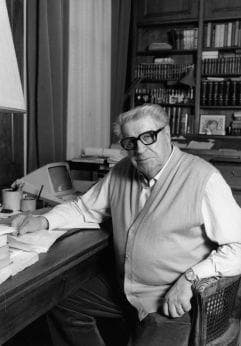
Henri Troyat was a French author known for his works in non-fiction and historical biography. He is particularly recognized for his book "Catherine the Great," which explores the life and reign of the Russian empress. Troyat's writing often delves into the lives of significant historical figures, blending narrative and analysis.
Similar books
- The Diary of a Young Girl
Anne Frank
4.2 (2.7M) average on GoodreadsBiographyDuring the Nazi occupation, a teenage girl's diary, written from a secret annex, shares observations on humanity, hope, and the wait for freedom.
- Eat, Pray, Love
Elizabeth Gilbert
3.6 (1.5M) average on GoodreadsLifestyleA heartbroken writer leaves her conventional life for a year-long global search for pleasure in Italy, spiritual devotion in India, and unexpected love and balance in Bali.
- Night
Elie Wiesel
4.3 (970k) average on GoodreadsBiographyIn the darkness of Auschwitz and Buchenwald, a teenage Elie Wiesel faces the extermination of his family, the loss of his faith, and the lasting scars of humanity's deepest cruelty.
- Steve Jobs
Walter Isaacson
4.1 (957k) average on GoodreadsBusinessSteve Jobs was a visionary who fused creativity and technology to revolutionize six industries and shape our digital world.
- The Glass Castle
Jeannette Walls
4.3 (903k) average on GoodreadsBiographyJeannette Walls's memoir describes her unusual childhood with brilliant, free-spirited parents whose poverty-stricken life shaped her independence and love despite family problems.
- Bossypants
Tina Fey
4.0 (848k) average on GoodreadsBiographyFrom a 'vicious nerd' with stress dreams to the comedic force behind Liz Lemon and 'Weekend Update,' Tina Fey chronicles her journey to proving that 'you're no one until someone calls you bossy.'






Enjoyed the summary?
A summary gives you the shape of the book. The book itself has the detail, the examples and the voice.
Find Catherine the Great on AmazonAs an Amazon Associate, BookBrief earns from qualifying purchases. How we're funded