

Synopsis
Covers the whole plot, including the ending.
- Difficulty
- Medium
- Pacing
- Moderate
- Mood
- Somber, Thought-provoking, Suspenseful, Emotional
- Read it if
- You enjoy thought-provoking legal dramas with strong ethical dilemmas, explore themes of faith, forgiveness, and the death penalty, and appreciate a story with a significant twist.
- Skip it if
- You prefer lighthearted reads, are uncomfortable with detailed discussions of capital punishment, or dislike stories that challenge your perceptions of good and evil.
Change of Heart Plot Summary
Covers the whole plot, including the ending.
The Brutal Murders and Shay Bourne's Confession
The story begins with June Nealon dealing with the murder of her five-year-old daughter, Elizabeth, and her husband, Kurt. They were found killed in their New Hampshire home. The main suspect, Shay Bourne, a drifter who had been working on their property, is quickly arrested. Shay, a man with a difficult past and a history of violence, confesses to the murders, saying an unknown force drove him. June's other daughter, eleven-year-old Claire, is very traumatized but lives. June's world is completely broken, and she is overcome by grief and a strong desire for justice for her lost family. The community is shocked, and Shay's trial is about to begin.
Shay's Trial and Unexpected Spiritual Claims
Shay Bourne is assigned Maggie Nealon, Kurt's sister and June's sister-in-law, as his public defender. Maggie, a cynical and practical lawyer, at first focuses on a standard defense. However, Shay starts making increasingly strange and deep spiritual claims, saying he is a vessel for God and can perform miracles. During the trial, Shay's calm manner and unusual statements puzzle both the court and Maggie. He talks about forgiveness and love, ideas that seem out of place for a confessed murderer. Maggie feels torn between her professional duty to defend Shay and her personal loyalty to June, who sees Shay as completely evil.
The Miracle of the Stigmata and its Impact
While in prison, Shay Bourne starts to show stigmata — wounds like those of Christ's crucifixion appear on his hands, feet, and side. This causes a huge media stir and gets the attention of religious groups and the public. Many people, including a growing number of followers, start to believe that Shay is a divine figure, a modern-day Christ, or at least a prophet. This greatly complicates his legal case, as it changes public opinion and adds a spiritual aspect to what was initially a simple murder trial. Maggie struggles with this new situation, as the stigmata makes it hard to present Shay as just a mentally disturbed person.
Father Michael's Investigation and Doubts
The Catholic Church, worried about the growing group around Shay Bourne, assigns Father Michael Wright, a former priest who left the priesthood after a personal tragedy, to investigate Shay's claims of divinity and the truth of his stigmata. Michael, cynical and without faith, approaches the task expecting to disprove Shay's claims. However, as he spends more time with Shay, he sees Shay's constant calmness, his deep spiritual insights, and the unexplainable nature of the stigmata. Michael finds his own long-lost faith being challenged and reawakened, leading him on a personal journey of self-discovery and spiritual rethinking.
Claire's Illness and Shay's Offer
June's surviving daughter, Claire, starts to suffer from a rare and severe congenital heart defect that quickly gets worse, requiring a heart transplant. Her condition becomes critical, and she is put on a waiting list, with her chances of survival decreasing. At this terrible time, Shay Bourne, from his prison cell, makes a surprising offer: he says he can heal Claire, but only if June Nealon, the mother of his victims, publicly forgives him for the murders. This proposal puts June in a painful moral dilemma, making her choose between her strong desire for revenge and her desperate hope to save her beloved daughter's life.
June's Agonizing Decision
June is conflicted by Shay's offer. Forgiving the man she believes murdered her husband and other daughter is an impossible act, a betrayal of their memory. Yet, the thought of losing Claire is unbearable. She talks with Maggie, who, despite her own mixed feelings, advises June on the legal and ethical sides. June also speaks with Father Michael, looking for spiritual advice, but finds no easy answers. The media frenzy around Shay grows, with public opinion split on whether June should accept his offer. June's internal struggle is huge, a fight between her deepest hatred and her deep motherly love, ending in her eventual, reluctant decision to consider Shay's terms.
The Execution and the 'Miracle'
Despite the appeals and the controversy around his spiritual claims, Shay Bourne is sentenced to death and executed. On the same day and at the same time as Shay's execution, a suitable donor heart miraculously becomes available for Claire. The transplant is done successfully, saving Claire's life. This incredible timing strengthens the belief among Shay's followers that he performed a final, ultimate miracle, sacrificing himself for Claire's salvation. June, though relieved for Claire, is left with a deep sense of uncertainty, unsure whether to credit Claire's survival to divine intervention, a medical wonder, or a harsh twist of fate.
The Unveiling of the Truth
Driven by her professional duty and a lingering sense of unease, Maggie Nealon keeps investigating the original murders. Through careful research and re-examining evidence, she finds the shocking truth: Kurt Nealon, June's husband, was the actual killer of Elizabeth, driven by a deep mental illness and delusions. Shay Bourne, who was working on their property, discovered the crime and, in a deep act of self-sacrifice, confessed to protect June and Claire from the devastating knowledge that Kurt was the killer. He also arranged the heart donation, using his unique blood type and rare heart condition to ensure his heart would match Claire's upon his execution, thus performing a very real, though unusual, 'miracle'.
June's Revelation and Aftermath
Maggie presents her findings to June, who is completely devastated by the revelation that her beloved husband was a murderer and that Shay, the man she hated, was a selfless savior. The truth shatters her view of her family, her grief, and her understanding of justice. June has to re-evaluate everything she believed, facing the complexities of good and evil, and the true meaning of sacrifice and forgiveness. The ending leaves June with a deep, though painful, understanding of the events, and a path toward real healing, not from revenge, but from understanding and accepting the complicated truths of human nature and divine love.
Principal Figures
June Nealon
Protagonist
A grieving mother seeking justice, forced to confront forgiveness.
June Nealon is a mother whose life is shattered by the brutal murders of her young daughter, Elizabeth, and husband, Kurt. Initially consumed by an intense desire for vengeance against Shay Bourne, the confessed killer, June's character arc is defined by her agonizing struggle with forgiveness when her surviving daughter, Claire, falls critically ill. She is a woman driven by profound love for her children and an equally profound hatred for the man she believes destroyed her family. Her journey forces her to question the nature of justice, faith, and the true meaning of sacrifice.
Relationships: Kurt Nealon (Husband, secretly the murderer); Elizabeth Nealon (Murdered daughter); Claire Nealon (Surviving daughter, recipient of Shay's heart); Shay Bourne (Perceived murderer, ultimate savior); Maggie Nealon (Sister-in-law and Shay's attorney)
Shay Bourne
Antagonist/Redeemer
A confessed murderer who claims divine powers, ultimately revealed as a selfless savior.
Shay Bourne is a drifter with a troubled past who confesses to the murders of Elizabeth and Kurt Nealon. Throughout his trial and imprisonment, he exhibits an unsettling calm and begins to make claims of being a vessel for God, manifesting stigmata and performing minor miracles. His offer to heal Claire in exchange for June's forgiveness is the central moral dilemma of the story. Shay is ultimately revealed to be a profoundly selfless individual who sacrificed his life and reputation to protect June and Claire from a more terrible truth, using his own body as the means for Claire's survival.
Relationships: June Nealon (Recipient of his ultimate sacrifice); Maggie Nealon (His defense attorney); Father Michael Wright (His spiritual investigator); Claire Nealon (Recipient of his heart and 'miracle')
Maggie Nealon
Supporting
Shay's pragmatic defense attorney and June's sister-in-law, who uncovers the truth.
Maggie Nealon is a public defender assigned to Shay Bourne's case. She is also June's sister-in-law and Kurt's sister, creating a deep personal conflict of interest. Maggie is initially cynical and focused on the legal aspects, struggling to reconcile her professional duty with her personal feelings of loyalty to June and her deceased brother. Her intelligence and persistence lead her to meticulously investigate the original crime, ultimately uncovering the shocking truth about Kurt and Shay's true role. She is the voice of reason and the instrument of revelation in the narrative.
Relationships: June Nealon (Sister-in-law, client's victim's mother); Kurt Nealon (Brother, true murderer); Shay Bourne (Client, later revealed as a selfless actor)
Father Michael Wright
Supporting
A defrocked priest investigating Shay's claims, grappling with his own lost faith.
Father Michael Wright is a former priest, defrocked after a personal tragedy involving his son, who is tasked by the Catholic Church to investigate Shay Bourne's claims of divinity and the authenticity of his stigmata. Michael is deeply cynical and disillusioned with faith, approaching the investigation with a desire to expose Shay as a fraud. However, his interactions with Shay and the inexplicable events surrounding him force Michael to confront his own spiritual doubts and re-evaluate his understanding of faith, miracles, and the divine. He serves as a spiritual counterpoint and a seeker of truth in the mystical aspects of the story.
Relationships: Shay Bourne (Subject of his investigation, spiritual guide); June Nealon (Confidante, seeking spiritual guidance)
Claire Nealon
Supporting
June's surviving daughter, whose critical illness becomes the catalyst for Shay's 'miracle'.
Claire Nealon is June's eleven-year-old daughter and the only survivor of the initial attack. She is deeply traumatized by the loss of her father and sister. Her subsequent diagnosis with a severe and rare heart condition becomes the central medical crisis of the plot, forcing June to make an impossible choice. Claire's life hangs in the balance, and her need for a heart transplant is the direct motivation for Shay Bourne's ultimate sacrifice. She represents innocence, vulnerability, and the preciousness of life that drives June's every decision.
Relationships: June Nealon (Mother); Elizabeth Nealon (Deceased sister); Kurt Nealon (Father); Shay Bourne (Donor of her new heart)
Kurt Nealon
Mentioned/Antagonist
June's deceased husband, whose true nature is revealed at the story's climax.
Kurt Nealon is June's beloved husband and the father of Elizabeth and Claire. He is initially presented as a victim, murdered alongside his daughter Elizabeth. However, through Maggie's investigation, he is ultimately revealed to be the true murderer of Elizabeth, driven by a severe, undiagnosed mental illness. His death at Shay's hands was a consequence of Shay discovering his crime. Kurt's hidden darkness and the subsequent revelation of his actions are the ultimate plot twist, shattering June's perception of her past and forcing a re-evaluation of all the events.
Relationships: June Nealon (Wife); Elizabeth Nealon (Daughter, his victim); Claire Nealon (Daughter); Shay Bourne (His killer, in self-defense/discovery of crime)
Father Robert Thomas
Supporting
The head of the diocese who assigns Father Michael to investigate Shay.
Father Robert Thomas is a senior figure in the Catholic Church who, concerned by the public spectacle and potential heresy surrounding Shay Bourne, assigns Father Michael Wright to conduct an official investigation. He represents the institutional church's cautious approach to claims of miracles and divine intervention, seeking to maintain order and doctrine amidst the chaos of public opinion. He is a pragmatic and measured character, providing a framework for Michael's spiritual journey.
Relationships: Father Michael Wright (His subordinate, whom he tasks with the investigation)
Judge
Mentioned
Presiding over Shay Bourne's murder trial.
The unnamed judge presides over Shay Bourne's murder trial. This character represents the legal system and its struggle to deal with the extraordinary circumstances of Shay's spiritual claims and the media frenzy surrounding him. The judge maintains order in the courtroom and makes rulings based on legal precedent, attempting to separate the factual evidence from the religious and emotional arguments. The judge's decisions ultimately lead to Shay's conviction and death sentence.
Themes & Insights
Justice vs. Forgiveness
This theme looks at the conflict between wanting punishment for terrible crimes and forgiving the person who did them. June Nealon at first wants only justice for her murdered family, wanting Shay Bourne to pay the highest price. However, Shay's offer to save Claire if June forgives him puts June in a painful moral problem, making her question if justice is always the most important thing, especially when weighed against her child's life. The novel suggests that real 'justice' can be much more complex and tied to understanding and sacrifice than simple punishment.
“Would you give up your vengeance against someone you hate if it meant saving someone you love? Would you want your dreams to come true if it meant granting your enemy's dying wish?”
Faith and Skepticism
The book explores faith, miracles, and the struggle between belief and doubt. Father Michael, a priest who left the church, shows skepticism, trying to disprove Shay Bourne's claims of divinity and stigmata. Yet, Shay's constant calmness and the strange events around him challenge Michael's cynicism, making him rethink his lost faith. The novel presents different kinds of faith — blind belief, intellectual questioning, and ultimate faith in people's ability for good — making the reader think about where miracles truly come from and what they mean, whether divine or human.
“Sometimes, the only way to believe in God is to understand that he works through the people he's put on this earth.”
Sacrifice and Redemption
Shay Bourne's character shows sacrifice and redemption. At first seen as a terrible murderer, his actions are finally shown to be a deep act of self-sacrifice, taking the blame for someone else's crime and arranging his own death to save Claire. His 'miracle' is not supernatural, but a deeply human act of giving his own heart. This challenges the usual idea of redemption, suggesting it can be found not just through regret, but through selfless love and giving oneself completely, even for those who hate you.
“The greatest love a man can have for his friends is to give his life for them.”
The Nature of Truth
The story constantly asks what is true and how easily people accept or reject it based on their biases and desires. June believes the 'truth' is that Shay murdered her family, while the public deals with the 'truth' of his divine claims. Maggie's persistent investigation slowly uncovers layers of lies and assumptions, revealing a much more complex and devastating truth about Kurt's actions and Shay's reasons. The story shows how easily appearances can trick people and how painful the actual truth can be, forcing characters to rethink their entire understanding of past events.
“The truth is a terrible thing, but it's the only thing that sets you free.”
Maternal Love and Grief
June Nealon's journey is deeply rooted in her strong motherly love for her daughters and her overwhelming grief for Elizabeth. Her love for Claire is so deep that it makes her consider the unthinkable act of forgiving her family's murderer. Her grief is raw and consuming, shaping her initial desire for revenge. The novel explores the depths of a mother's pain and how far she will go to protect her child, showing how love and loss can both destroy and, in a complex way, heal.
“There is no pain like the pain of losing a child. It is a wound that never truly heals.”
Plot Devices & Literary Techniques
The Unreliable Narrator / Multiple Perspectives
The story is told through the shifting viewpoints of June, Maggie, and Father Michael, initially obscuring the full truth.
The novel employs multiple first-person narrators: June Nealon, Maggie Nealon, and Father Michael Wright. Each character offers a distinct perspective on Shay Bourne, the murders, and the spiritual claims, but none initially possess the complete picture. June is blinded by grief and hatred, Maggie by her legal pragmatism and family ties, and Michael by his skepticism. This narrative structure keeps the reader constantly questioning the 'truth' and allows for the gradual, piecemeal revelation of the full story, culminating in Maggie's discovery that recontextualizes everything that came before. It highlights how personal biases and limited information can shape perception.
The Red Herring / Misdirection
Shay Bourne's confession and spiritual claims serve to mislead the audience about the true murderer.
Shay Bourne's immediate confession to the murders of Elizabeth and Kurt, coupled with his subsequent claims of being a divine figure and the manifestation of stigmata, act as a significant red herring. These elements intensely focus the reader's attention on Shay as either a deranged killer or a miracle worker, diverting suspicion away from the true perpetrator, Kurt Nealon. This misdirection is crucial to the plot's ultimate twist, ensuring that the revelation of Kurt's guilt is genuinely shocking and forces a re-evaluation of Shay's character and motivations.
The 'Miracle' as a Plot Catalyst
Shay's spiritual claims and the subsequent 'miracle' of Claire's heart transplant drive the central conflict and moral dilemma.
Shay Bourne's alleged ability to perform miracles, particularly his offer to heal Claire, serves as the primary catalyst for the story's central moral dilemma. It forces June to confront an impossible choice, and it draws Father Michael into an investigation that challenges his faith. The 'miracle' itself – Claire receiving a donor heart at the exact moment of Shay's execution – is initially presented as a divine act, but is later revealed to be a carefully orchestrated human sacrifice. This device allows the novel to explore themes of faith, sacrifice, and the definition of a miracle, whether divine or profoundly human.
The Courtroom Drama
The legal proceedings against Shay Bourne provide a structured framework for exploring justice, truth, and morality.
The legal trial of Shay Bourne provides a significant structural framework for a large portion of the novel. It allows for the presentation of evidence, the cross-examination of witnesses, and the exploration of legal arguments surrounding Shay's guilt and his spiritual claims. The courtroom setting becomes a battleground for competing truths and moral stances, with Maggie Nealon navigating the complexities of the law, June seeking justice, and Shay presenting his unusual defense. The trial serves to heighten the tension and provides a public forum for the unfolding drama and the public's reaction to Shay's alleged divinity.
Change of Heart Quotes
“Sometimes the heart sees what is invisible to the eye.”
“Forgiveness is not about forgetting. It is about letting go of another person's throat.”
“What if the person you thought you knew best turns out to be someone you never really knew at all?”
“The heart has its reasons which reason knows nothing of.”
“Redemption is not a prize you win, but a gift you accept.”
“We are all broken, that's how the light gets in.”
“The measure of a life is not its duration, but its donation.”
“Faith is the bird that feels the light and sings when the dawn is still dark.”
“To err is human; to forgive, divine.”
“The soul always knows what to do to heal itself. The challenge is to silence the mind.”
“Love is not love which alters when it alteration finds.”
“The only way out is through.”
“In the end, we will remember not the words of our enemies, but the silence of our friends.”
“Peace is not the absence of conflict, but the ability to cope with it.”
Quiz
10 questions on the plot and the characters. Each answer comes with a short explanation.
Question 1
What tragic event sets the main plot of 'Change of Heart' in motion?
- June Nealon's husband leaves her for another woman
- June Nealon loses her child in a violent crime
- Shay Bourne loses his job and becomes homeless
- Claire Nealon is diagnosed with a terminal illness
Show answer
B. June Nealon loses her child in a violent crime The central tragedy is the loss of June Nealon's child, which leaves her heartbroken and seeking justice, setting up the conflict with Shay Bourne who is connected to this crime.
Question 2
What is Shay Bourne's dying wish that creates the central moral dilemma?
- To be buried next to his mother
- To donate his heart to Claire Nealon
- To receive a pardon from the governor
- To meet June Nealon face-to-face
Show answer
B. To donate his heart to Claire Nealon Shay Bourne wants to donate his heart to June's surviving daughter Claire, creating the central conflict between vengeance and salvation that drives the novel.
Question 3
How old is Claire Nealon when Shay Bourne offers to donate his heart to her?
- 7 years old
- 9 years old
- 11 years old
- 13 years old
Show answer
C. 11 years old The book specifically states Claire is eleven years old, making the decision about accepting a heart from her sister's killer even more emotionally complex.
Question 4
What is June Nealon's primary emotional state throughout most of the novel?
- Hopeful anticipation for the future
- Angry and vengeful about her loss
- Indifferent and detached from life
- Joyful about new opportunities
Show answer
B. Angry and vengeful about her loss June is consumed by rage and a desire for vengeance after losing her child, which creates the central conflict when she must consider Shay's offer to save Claire.
Question 5
What literary device does Picoult use to explore different perspectives in the novel?
- Multiple first-person narrators
- Third-person omniscient narration only
- Epistolary format with letters only
- Stream of consciousness from one character
Show answer
A. Multiple first-person narrators Picoult employs multiple first-person narrators including June, Shay, and other characters, allowing readers to understand different perspectives on justice, redemption, and morality.
Question 6
Which theme is NOT central to 'Change of Heart'?
- The nature of justice and vengeance
- Redemption and salvation
- Corporate greed and corruption
- Maternal love and sacrifice
Show answer
C. Corporate greed and corruption While justice, redemption, and maternal love are central themes, corporate greed is not a focus of this character-driven novel about personal morality and forgiveness.
Question 7
What makes Shay Bourne's offer particularly controversial in the context of the legal system?
- He wants to donate an organ while awaiting execution
- He demands payment for his organ donation
- He wants to donate to someone in another country
- He refuses legal representation for his case
Show answer
A. He wants to donate an organ while awaiting execution Shay's situation as a death row inmate wanting to donate an organ raises complex legal and ethical questions about prisoners' rights and medical ethics.
Question 8
What symbolic significance does the heart have in the novel's exploration of its themes?
- It represents only biological function with no symbolic meaning
- It symbolizes the conflict between emotional vengeance and physical salvation
- It represents financial wealth and inheritance
- It symbolizes political power and influence
Show answer
B. It symbolizes the conflict between emotional vengeance and physical salvation The heart serves as a powerful symbol throughout the novel, representing both the literal organ needed to save Claire and the metaphorical 'change of heart' characters experience regarding forgiveness and redemption.
Question 9
How does the novel challenge traditional notions of justice?
- By suggesting vengeance is always the appropriate response to crime
- By presenting capital punishment as universally justified
- By exploring whether redemption can coexist with legal punishment
- By arguing that victims should have no say in sentencing
Show answer
C. By exploring whether redemption can coexist with legal punishment The novel deeply examines whether someone condemned by the legal system can still achieve spiritual redemption, and whether society's desire for punishment should override opportunities for salvation and healing.
Question 10
What is the ultimate question Picoult poses about belief and truth through the characters' journeys?
- Whether scientific facts are more important than personal beliefs
- Whether our deeply held convictions might be wrong when faced with new circumstances
- Whether religious doctrine should override legal judgments
- Whether truth is entirely subjective with no objective reality
Show answer
B. Whether our deeply held convictions might be wrong when faced with new circumstances Through June's journey from vengeance to potential forgiveness and Shay's quest for redemption, Picoult challenges characters and readers to examine whether long-held beliefs about justice, guilt, and morality might need reevaluation when faced with complex human realities.
Change of Heart FAQ
What is 'Change of Heart' about?
'Change of Heart' follows June Nealon, a mother grieving the murders of her husband and daughter, and Shay Bourne, the death row inmate convicted of killing them. When Shay claims he wants to donate his heart to June's surviving daughter Claire, who needs a transplant, the novel explores themes of redemption, forgiveness, and justice through their intertwined fates.
Why should I read 'Change of Heart'?
You should read 'Change of Heart' for its profound exploration of moral dilemmas like forgiveness versus vengeance, its complex character psychology, and Picoult's signature multi-perspective storytelling that challenges readers to question their own beliefs about justice and redemption.
What is the background/setting of 'Change of Heart'?
The novel is set primarily in a New Hampshire prison where Shay Bourne is on death row, with flashbacks to June Nealon's suburban life before the murders. The prison setting creates a tense atmosphere that contrasts with the spiritual themes of sacrifice and salvation.
What are the most memorable quotes from 'Change of Heart'?
Key quotes include Shay's declaration 'I want to give my heart to Claire' which drives the plot, and June's reflection 'Grief is a house where the chairs have forgotten your shape' that captures her emotional devastation. These lines encapsulate the novel's central conflicts about loss and redemption.
What writing style does Jodi Picoult use in 'Change of Heart'?
Picoult employs her characteristic multi-perspective narrative, alternating between June, Shay, their lawyer Michael, and a spiritual advisor. This creates a Rashomon effect where readers see the same events through different moral lenses, enhanced by legal and religious research woven into the plot.
What minor details add significant meaning to 'Change of Heart'?
Shay's woodworking hobby in prison—where he creates miniature furniture—subtly parallels his desire to rebuild what he destroyed. The recurring motif of water and baptism imagery throughout the novel foreshadows the spiritual transformation central to the story.
What are some subtle foreshadowing moments in 'Change of Heart'?
Early mentions of Claire's heart condition hint at the eventual transplant dilemma. Shay's unexplained knowledge about June's deceased daughter's secrets suggests a deeper connection that isn't fully revealed until the spiritual elements of the plot unfold.
What unexpected character connections exist in 'Change of Heart'?
The spiritual advisor Lucius DuFresne connects to both Shay's past and June's present in surprising ways. Michael, the lawyer, develops personal ties to both families that complicate his professional role, blurring the lines between legal defense and personal investment.
What are June Nealon's unspoken character motivations?
Beneath her quest for justice, June is motivated by guilt over surviving when her family didn't, and a desperate need to protect Claire that sometimes conflicts with her desire for vengeance. Her anger masks profound vulnerability about failing as a protector.
What psychological complexities does Shay Bourne exhibit?
Shay displays contradictory traits: violent criminal versus potential messianic figure, selfish manipulator versus selfless donor. His traumatic childhood and possible cognitive limitations create ambiguity about his true nature and capacity for redemption.
What are the major emotional turning points in 'Change of Heart'?
Key turning points include June's first prison visit where she confronts Shay, Claire's deteriorating health forcing urgent decisions, and the courtroom scenes where characters must publicly choose between forgiveness and retribution. Each forces characters to confront their deepest emotions.
How do the relationship dynamics between June and Shay evolve?
They move from absolute hatred (victim/murderer) to complex interdependence as June wrestles with Shay's offer. Their interactions shift through stages of confrontation, reluctant dialogue, and ultimately a painful connection forged through shared focus on Claire's survival.
Which parts of 'Change of Heart' remain ambiguous or open-ended?
The novel leaves ambiguous whether Shay's transformation is genuine redemption or manipulation, and whether the possible miracles surrounding him are divine intervention or coincidence. The ultimate impact of his sacrifice on June's healing is also open to interpretation.
What are the controversial scenes or decisions in 'Change of Heart'?
Most controversial is whether June should accept a heart from her daughter's murderer. Shay's legal team using religious freedom arguments for the donation, and the ethical questions about using an inmate's organs create moral complexity that divides characters and readers.
'Change of Heart' ending explained: how it ends & what it means
Without spoiling specifics, the ending involves a profound sacrifice that forces characters to choose between justice and mercy. It suggests that redemption may come through unexpected channels, and that healing sometimes requires releasing vengeance, leaving readers to ponder whether the resolution represents tragedy or grace.
What spiritual elements create debate in 'Change of Heart'?
The novel's incorporation of possible miracles—including stigmata and unexplained knowledge—sparks debate about whether Shay represents a Christ figure or a manipulative criminal. Different characters interpret these events through their own religious or skeptical lenses, mirroring reader debates.
How does the legal system portrayal affect the story's themes?
Picoult contrasts rigid legal justice with fluid spiritual mercy through courtroom battles over Shay's donation rights. This highlights the tension between society's need for punishment and individuals' capacity for forgiveness, asking whether institutions can accommodate redemption.
About the author

Jodi Picoult is an American author known for her thought-provoking fiction that often explores complex moral dilemmas. Her notable works include My Sister's Keeper, Nineteen Minutes, Small Great Things, Plain Truth, Leaving Time, and The Tenth Circle. Picoult's writing frequently delves into themes of family, justice, and the human experience.
Similar books
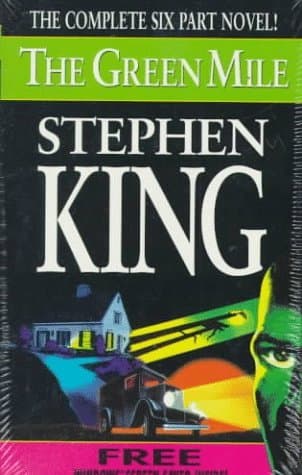
- The Green Mile
Stephen King
4.5 (249k) average on GoodreadsThrillerExplores supernatural elements within a death row setting and moral ambiguities surrounding justice.
- My Sister's Keeper
Jodi Picoult
4.1 (1.1M) average on GoodreadsYoung AdultFeatures complex family dynamics, medical ethics, and a legal battle with a devastating emotional core.
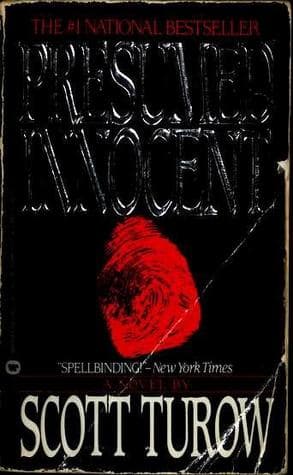
- Presumed Innocent
Scott Turow
4.1 (107k) average on GoodreadsThriller"Presumed Innocent" is a seminal legal thriller focusing on the intricacies of the justice system and human fallibility. While both books explore legal ethics and the potential for wrongful conviction, Turow's work is strictly grounded in human actions and legal procedure, lacking the spiritual and miraculous dimensions that are central to Picoult's "Change of Heart." Turow's novel offers a purely secular examination of justice, whereas Picoult integrates profound theological questions.
- The Firm
John Grisham
4.1 (43k) average on GoodreadsThrillerGrisham's "The Firm" exemplifies the legal thriller genre with its focus on high-stakes legal conspiracies and procedural drama. Like Picoult, Grisham explores moral compromises within the legal profession, but his narratives are typically fast-paced and action-oriented, and firmly rooted in the tangible world of law and crime. "Change of Heart," by contrast, transcends the purely legal realm by introducing elements of faith, miracles, and existential spiritual questioning, offering a more philosophical and less purely procedural engagement with justice.
- Eat, Pray, Love
Elizabeth Gilbert
3.6 (1.5M) average on GoodreadsLifestyleA heartbroken writer leaves her conventional life for a year-long global search for pleasure in Italy, spiritual devotion in India, and unexpected love and balance in Bali.
- Educated
Tara Westover
4.5 (796k) average on GoodreadsBiographyRaised in the Idaho mountains by fundamentalist survivalists, a young woman forges her own path to education, battling fierce family loyalty and personal demons to discover a world beyond her isolated upbringing.




Enjoyed the summary?
A summary gives you the shape of the book. The book itself has the detail, the examples and the voice.
Find Change of Heart on AmazonAs an Amazon Associate, BookBrief earns from qualifying purchases. How we're funded