
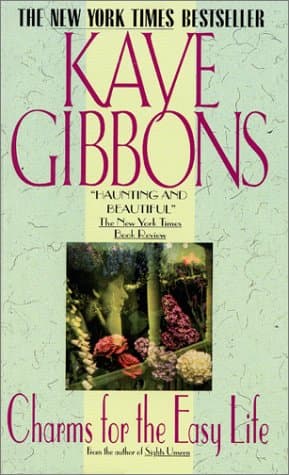
Synopsis
Covers the whole plot, including the ending.
- Difficulty
- Easy
- Pacing
- Moderate
- Mood
- Heartwarming, Reflective, Quaint, Resilient
- Read it if
- You enjoy character-driven historical fiction with strong female leads, Southern charm, and a focus on family dynamics and folk wisdom.
- Skip it if
- You prefer fast-paced plots, clear-cut happy endings, or stories with significant male perspectives.
Charms for the Easy Life Plot Summary
Covers the whole plot, including the ending.
Margaret's Childhood and Charlie Kate's Reign
The story begins with Margaret, the narrator, remembering her childhood in the rural South during the early 20th century, specifically the years around World War II. She lives with her strong grandmother, Charlie Kate, a self-taught midwife and healer, and her beautiful but often impractical mother, Sophia. Charlie Kate runs their home with her strong will, practical wisdom, and unusual methods, earning respect and fear in the community. Margaret describes their daily lives, which center on Charlie Kate's medical practice. This often involves delivering babies and treating illnesses with herbal remedies and common sense. Sophia, though loving, cares more about how things look and finding a husband, often disagreeing with Charlie Kate's strict practicality. Margaret, a quiet and watchful child, finds comfort in books and studies, often feeling caught between her two strong female relatives.
Sophia's Marriages and Disappointments
Sophia, despite Charlie Kate's doubts about men, wants a traditional married life. She marries several times in the novel, each marriage bringing hope followed by disappointment. Her first husband, a young soldier, dies in the war, leaving her a widow. Later, she marries a charming but unreliable man who leaves her with money and emotional problems. Each time, a heartbroken Sophia returns to Charlie Kate's home, where she is welcomed without judgment, though often with a quiet 'I told you so' from her mother. These experiences strengthen Charlie Kate's belief that women should be self-sufficient and that men are unreliable. This further shapes Margaret's ideas about relationships and independence.
Charlie Kate's Healing Practice and Community Role
Charlie Kate's reputation as a healer goes far beyond her immediate area. People from all backgrounds, both black and white, come to her for everything from childbirth to setting broken bones, treating infections, and even for advice on marital problems. She charges what she thinks is fair, often accepting payment in goods or services from those who cannot pay cash. Her methods are unusual, combining folk remedies, medical books, and a good understanding of human nature. She is firm in her decisions and demands respect, often giving her diagnoses and instructions with a blunt honesty that can be intimidating but always works. Margaret often goes with her grandmother, watching her work and learning about medicine and people.
Margaret's Education and Aspirations
Despite the rural setting and what was expected of women at the time, Charlie Kate encourages Margaret to get an education. Charlie Kate, though not formally educated herself, values knowledge deeply and teaches Margaret to love learning. Margaret is a very good student, reading many books and doing well in her studies. She dreams of going to college, which is very unusual for a young woman in her situation. Charlie Kate quietly supports these goals, understanding that education offers Margaret a way to independence and a life beyond the traditional roles available to women. Margaret's studies become a quiet act of rebellion against social norms and a way to build her own identity, separate from her grandmother's strong influence and her mother's romantic troubles.
The Arrival of the Boarders and New Perspectives
During World War II, with many soldiers and defense workers arriving, Charlie Kate decides to take in boarders to help with money and to provide needed housing. This brings a varied group of people into their home, including soldiers, factory workers, and temporary residents. The presence of men in the house, even as temporary guests, creates new interactions. Sophia, always hopeful, flirts and socializes, while Charlie Kate keeps her strict household rules. Margaret watches these interactions, learning more about people, relationships, and the outside world. The boarders provide a background for many of Charlie Kate's more funny and touching observations about life and the faults of men and women.
Challenges to Charlie Kate's Authority
As times change, Charlie Kate's traditional methods and independent practice face questions. Doctors from the medical system sometimes question her lack of formal training and her unusual remedies. She strongly defends her effectiveness and her right to serve the community, often outsmarting those who challenge her. One important event involves a local doctor trying to discredit her, but Charlie Kate's long-standing reputation and the community's trust win out. These conflicts show Charlie Kate's strong belief in her abilities and her resistance to conforming, reinforcing her role as a strong, self-reliant woman in a world that often tried to reduce such independence.
Sophia's Final Hope and Charlie Kate's Acceptance
Later in the story, Sophia meets and falls in love with a kind, steady man who truly cares for her and accepts her. This relationship is different from Sophia's past, unlucky romances. For the first time, Charlie Kate, who has always been careful about men and Sophia's romantic pursuits, seems to truly approve. She recognizes the man's good character and his sincere affection for Sophia. This moment shows a softening in Charlie Kate, a rare sign of acceptance and perhaps even hope for Sophia's happiness. It suggests that even the most practical person can see the value of true companionship. Sophia finally finds the stable, loving partnership she has always wanted.
Margaret's Departure for College
With Charlie Kate's quiet support and her own hard work, Margaret gets into college. Her leaving for higher education is an important moment, showing her move into adulthood and her pursuit of a life beyond her rural upbringing. It is a bittersweet moment for the family, as Margaret is the intellectual heir to Charlie Kate's wisdom, though through academic studies. Her leaving means breaking the traditional cycle and fulfilling Charlie Kate's unspoken wish for Margaret to have opportunities she never had. It also shows the lasting impact of Charlie Kate's unusual parenting, which valued education and independence over traditional female roles.
Charlie Kate's Legacy and Margaret's Reflection
As Margaret grows up and becomes a doctor herself, she continues to think about Charlie Kate's influence. She realizes that the 'charms for the easy life' were not magic spells but Charlie Kate's practical wisdom, strong independence, and commitment to self-reliance. Charlie Kate taught her to observe, to think carefully, and to value skill over superficiality. Margaret understands that her grandmother's strength and unusual way of life were the true gifts, preparing her for a world that required resilience. The novel ends with Margaret, now an adult and successful woman, carrying on Charlie Kate's legacy in her own way, showing the spirit of a woman who shaped her family and an entire community.
Charms for the Easy Life Characters
Charlie Kate Birch
Protagonist/Matriarch
Formidable, self-taught midwife and healer, matriarch of the Birch family.
Charlie Kate is the unwavering center of the Birch family, a self-taught healer and midwife whose wisdom and blunt honesty define the household. She is fiercely independent, pragmatic, and deeply skeptical of men, believing women must rely on themselves. Her medical practice, combining folk remedies with astute observation, makes her an indispensable figure in her rural community, earning both respect and fear. She is unyielding in her beliefs and actions, yet possesses a deep, unspoken love for her daughter, Sophia, and granddaughter, Margaret, whom she encourages to pursue an education and forge her own path. She embodies strength and self-sufficiency in a time when women had limited options.
Relationships: Sophia Birch (Daughter, often a source of exasperation but deeply loved.); Margaret Birch (Granddaughter, whom she mentors and deeply loves, encouraging her education and independence.)
Margaret Birch
Protagonist/Narrator
Charlie Kate's intelligent granddaughter and the story's observer and chronicler.
Margaret is the quiet, observant narrator of the story, recounting her childhood under the powerful influence of her grandmother, Charlie Kate. She is intelligent, bookish, and keenly analytical, often feeling caught between her grandmother's practicality and her mother's romanticism. Margaret is a diligent student, encouraged by Charlie Kate to pursue an education, which ultimately leads her to become a doctor herself. Her narrative provides an intimate look at the lives of these unconventional women and the social dynamics of their rural Southern community. She learns profound lessons about resilience, independence, and the complexities of human relationships from her family.
Relationships: Charlie Kate Birch (Grandmother and primary mentor, whose wisdom profoundly shapes her.); Sophia Birch (Mother, whose romantic disappointments teach her about vulnerability and different paths in life.)
Sophia Birch
Supporting
Margaret's beautiful, romantic mother, who often clashes with Charlie Kate's pragmatism.
Sophia is Margaret's beautiful, charming, and often impractical mother. In contrast to Charlie Kate's stern realism, Sophia yearns for romance and a traditional married life, leading her through several ill-fated marriages and heartbreaks. Despite her disappointments, she retains a hopeful, if sometimes naive, spirit. She loves Margaret deeply but struggles to provide the same grounded stability as Charlie Kate. Her romantic pursuits and frequent returns home after failed relationships serve as a foil to Charlie Kate's self-sufficiency, highlighting the different paths and societal pressures faced by women of her era. She eventually finds a stable, loving partner, fulfilling her long-held desire.
Relationships: Charlie Kate Birch (Mother, with whom she has a complex relationship of love, frustration, and dependence.); Margaret Birch (Daughter, whom she loves but often relies on Charlie Kate to raise.); Various Husbands (Romantic partners, mostly unreliable, until her final, stable marriage.)
Mr. Birch (Margaret's Father)
Mentioned
Sophia's first husband and Margaret's biological father, who dies early in the war.
Margaret's biological father is only briefly mentioned as Sophia's first husband, a young soldier who dies early in World War II. His death leaves Sophia a young widow and Margaret without a father figure, solidifying the all-female household dynamic under Charlie Kate. His absence is a foundational element, reinforcing Charlie Kate's cynicism about the fragility of men's presence in women's lives and the necessity for women to be self-reliant.
Relationships: Sophia Birch (First husband.); Margaret Birch (Father.)
Mr. Dillard
Supporting
A kind, stable man who eventually marries Sophia.
Mr. Dillard is Sophia's final husband, a kind, steady, and reliable man who genuinely cares for her. Unlike Sophia's previous, often charming but ultimately unreliable partners, Mr. Dillard offers her the stability and affection she has always sought. His character represents a positive male presence, one that even Charlie Kate eventually approves of. His marriage to Sophia brings a sense of peace and resolution to Sophia's romantic journey, providing a stable home life for her in later years.
Relationships: Sophia Birch (Husband, providing lasting stability.); Charlie Kate Birch (Son-in-law, eventually gaining her approval.)
The Boarders
Supporting/Mentioned
Various individuals who rent rooms in the Birch household during World War II.
During World War II, Charlie Kate takes in various boarders, including soldiers and factory workers, to supplement the family's income. These temporary residents bring the outside world into the Birch household, exposing Margaret to a wider range of personalities and life experiences. They serve as a backdrop for many of Charlie Kate's observations about humanity and provide opportunities for Sophia's social interactions. While individual boarders are not deeply characterized, their collective presence highlights the changing times and the family's adaptation to external circumstances.
Relationships: Birch Family (Temporary tenants, bringing external influences.)
Dr. Tate
Mentioned
A local medical doctor who occasionally clashes with Charlie Kate.
Dr. Tate is a formally trained medical doctor in the community who occasionally questions Charlie Kate's unconventional medical practices and lack of formal accreditation. He represents the established medical authority that views Charlie Kate's folk healing with skepticism, if not outright disdain. Despite his challenges, Charlie Kate's efficacy and the community's trust in her often leave him frustrated but unable to truly undermine her. He serves to highlight the tension between traditional and modern medicine, and Charlie Kate's steadfast defense of her methods.
Relationships: Charlie Kate Birch (Professional rival, representing formal medicine.)
Mrs. Jenkins
Supporting
A local woman who frequently seeks Charlie Kate's medical advice.
Mrs. Jenkins is a recurring character from the local community who frequently seeks Charlie Kate's medical advice for various ailments, often exaggerating her symptoms. She embodies the type of local resident who relies implicitly on Charlie Kate's healing abilities and common sense. Her interactions with Charlie Kate often provide moments of humor and illustrate the deep trust the community places in the self-taught healer, despite her blunt manner. She represents the everyday people Charlie Kate serves.
Relationships: Charlie Kate Birch (Patient and admirer.)
Charms for the Easy Life Themes
Female Strength and Self-Reliance
The novel shows the strength and independence of women, especially at a time when their choices were few. Charlie Kate shows this through her self-taught medical practice, her financial independence, and her belief that women should not depend on men for their well-being. Sophia's repeated disappointments with men, and her eventual finding of a stable partner, further show the difficulties of women relying on others. Margaret's journey to become a doctor, with Charlie Kate's support, shows how she breaks traditional molds and seeks self-sufficiency through education and a career. The Birch women show that true 'charms for the easy life' come from within.
“A woman's only true charm for an easy life is a strong back, a clear head, and the good sense to stand on her own two feet.”
The Power of Unconventional Wisdom
The book celebrates wisdom gained through experience and careful observation, not formal schooling. Charlie Kate, though uneducated in a formal sense, is the most knowledgeable and respected healer in her community. She often does better than or outsmarts formally trained doctors. Her 'charms' are not magic but practical advice, herbal remedies, and a good understanding of people. This idea also appears in Margaret's curiosity, which Charlie Kate encourages, showing that real learning happens outside traditional academic settings. The novel suggests that real insight and good solutions often come from unexpected places, questioning social norms and existing power structures.
“There's more to knowing than what's written in books, child. You got to learn to see with your own eyes and hear with your own ears.”
Mother-Daughter Relationships and Legacies
The complex and changing relationships between Charlie Kate, Sophia, and Margaret are the emotional center of the novel. Charlie Kate's strict love and practical guidance shape both Sophia and Margaret, though each daughter responds differently. Sophia, looking for romance, often struggles with her mother's practical nature, while Margaret takes in Charlie Kate's lessons on independence and education. The novel explores how mothers pass down not just genes but also values, ways of coping, and life philosophies, even when those legacies are at first resisted. Margaret ultimately continues Charlie Kate's spirit of healing and self-reliance, though in a modern way, showing the lasting power of a mother's influence across generations.
“She taught me to look at people, to really see them, and to trust my own judgment, no matter what anyone else said.”
The Role of Community and Healing
The novel clearly shows a close-knit rural community and Charlie Kate's central place in it as a healer and trusted friend. Her home is a gathering place for those seeking medical help, advice, or simply someone to listen. The community relies on her not just for physical problems but also for guidance on life's challenges, showing how her 'healing' practice helps in many ways. The exchanges between Charlie Kate and her patients, often involving trading goods or services, show the connections and support systems in place. This idea highlights how individual contributions help the whole community and the deep trust given to those who offer real care and solutions.
“Folks came from miles around, black and white, rich and poor, because they knew Charlie Kate would fix what ailed them, body or spirit.”
Plot Devices & Literary Techniques
First-Person Retrospective Narration
Margaret recounts her childhood from an adult perspective, providing insight and reflection.
The entire novel is narrated by Margaret as an adult looking back on her childhood and young adulthood. This allows for a mature, reflective tone, offering insights into the characters and events that a younger Margaret might not have understood at the time. The retrospective lens provides foreshadowing, thematic depth, and a sense of the enduring impact of Charlie Kate's legacy. Margaret's voice is intelligent and observant, allowing the reader to experience the story through her thoughtful, analytical perspective, enriched by the passage of time and her own professional journey as a doctor.
Folk Wisdom and Remedies
Charlie Kate's traditional healing methods and practical advice as a source of 'charms'.
Charlie Kate's medical practice is rooted in a blend of folk wisdom, herbal remedies, and astute common sense, often contrasting with formal medical science. These 'charms' are not supernatural but represent practical solutions to everyday problems, from treating physical ailments to navigating social complexities. The detailed descriptions of her methods and the community's reliance on them highlight the value of traditional knowledge and local expertise, especially in underserved rural areas. This device reinforces the theme of unconventional wisdom and Charlie Kate's pragmatic approach to life.
Character Foils
Sophia and Charlie Kate act as contrasting figures, highlighting different paths for women.
Sophia and Charlie Kate serve as character foils, representing two distinct approaches to life and womanhood. Charlie Kate is pragmatic, independent, and skeptical of men, embodying self-reliance. Sophia is romantic, dependent on men for happiness, and focused on appearances. Their contrasting personalities and life choices illuminate the societal pressures and limited options for women during the time period, as well as the different ways women sought fulfillment. Margaret, caught between them, learns from both, ultimately forging her own path that incorporates elements of each, but leaning heavily on Charlie Kate's foundational strength.
Symbolism of the Home
The Birch household as a sanctuary and center of female strength.
The Birch household, an all-female domain, symbolizes a sanctuary of strength, independence, and unconventional living. It is a place where women make their own rules, where Charlie Kate exercises her authority without male interference, and where Sophia can always return for solace. During the war, it also becomes a temporary refuge for various boarders, extending its symbolic role as a place of healing and sustenance. The house represents the enduring power of female bonds and self-sufficiency against the backdrop of a male-dominated world, providing a physical manifestation of the 'charms' that allow the women to navigate life's challenges.
Charms for the Easy Life Quotes
“I was born in a time when women were supposed to be quiet, but my grandmother was loud, and she taught me to be the same.”
“There is no such thing as an easy life, only easy charms to get through the hard parts.”
“A woman who knows how to heal herself is a woman who knows how to live.”
“We are all just stories in the end. Make sure yours is worth telling.”
“Love is not a charm you can buy; it's a risk you take every day.”
“Sometimes the hardest part of healing is knowing when to let go.”
“In this world, you have to be your own best advocate, because no one else will do it for you.”
“The past is a ghost that haunts, but the future is a promise we make to ourselves.”
“A good charm is nothing more than a little hope wrapped in a lot of faith.”
“You can't change the world, but you can change how you live in it.”
“Every birth is a miracle, and every death is a lesson.”
“Strength isn't about never falling; it's about getting up one more time than you fall.”
“The heart has its own reasons, and sometimes they are the only ones that matter.”
“We are all connected by the stories we share and the silences we keep.”
Quiz
10 questions on the plot and the characters. Each answer comes with a short explanation.
Question 1
What is Charlie Kate's primary role in the Birch family?
- A schoolteacher who educates local children
- A self-taught healer who treats physical and emotional ailments
- A farmer who manages the family's land
- A seamstress who makes clothes for the community
Show answer
B. A self-taught healer who treats physical and emotional ailments Charlie Kate is described as a 'self-taught healer who can cure everything from boils to broken bones to broken hearts,' serving as the family's matriarch and primary caregiver in their North Carolina community.
Question 2
Where is the Birch family's home located?
- The urban neighborhoods of New York City
- The backwoods of North Carolina
- The plains of Texas
- The mountains of Virginia
Show answer
B. The backwoods of North Carolina The book specifies that the Birches live 'in the lush, green backwoods of North Carolina,' setting the rural, isolated environment central to their story.
Question 3
What makes the Birch family 'unique among women of their time'?
- They are wealthy landowners in a poor region
- They live without men and lead gloriously offbeat lives
- They travel extensively across the country
- They are famous writers publishing bestsellers
Show answer
B. They live without men and lead gloriously offbeat lives The book highlights that the Birch family is 'a family without men' who 'live gloriously offbeat lives,' making them distinctive in their historical era, likely the early to mid-20th century, when such independence was uncommon for women.
Question 4
What are Sophia and Margaret described as possessing to ward off negative experiences?
- Magical spells and incantations
- Powerful charms
- Vast inheritances of money
- Political influence in their community
Show answer
B. Powerful charms The book states that Sophia and Margaret 'possess powerful charms to ward off loneliness, despair, and the human misery,' referring metaphorically to their resilience, wisdom, and unique personalities rather than literal magic.
Question 5
How is Charlie Kate's love described in the book?
- Gentle and nurturing
- Muscular and stalwart
- Romantic and fleeting
- Distant and reserved
Show answer
B. Muscular and stalwart Charlie Kate's love is characterized as 'muscular love' and she is called 'the most stalwart Birch,' emphasizing her strong, unwavering, and protective nature as the family's matriarch.
Question 6
What era is the Birch family's story set in, as hinted by the book's description?
- A prosperous and joyful era
- A sad and singular era
- A futuristic and technological era
- A medieval and feudal era
Show answer
B. A sad and singular era The book describes the setting as 'a sad and singular era,' likely referring to the early 20th century, a time of economic hardship and social constraints, especially for women, which contrasts with the Birches' unique lifestyle.
Question 7
Which of the following best describes Margaret's personality?
- Radiant and headstrong
- Shy and brilliant
- Outgoing and charismatic
- Rebellious and careless
Show answer
B. Shy and brilliant Margaret is specifically described as 'shy and brilliant,' highlighting her intellectual depth and reserved nature compared to her mother Sophia, who is 'radiant and headstrong.'
Question 8
What does the title 'Charms for the Easy Life' metaphorically refer to in the context of the book?
- Literal magical objects that guarantee wealth
- The family's strategies for coping with hardship and finding joy
- A collection of recipes for easy cooking
- Political tactics to gain power in their community
Show answer
B. The family's strategies for coping with hardship and finding joy The 'charms' are metaphorical, representing the Birches' resilience, wisdom, love, and unconventional approaches to life that help them navigate challenges and create an 'easy life' despite their difficult era.
Question 9
How does Charlie Kate's healing ability extend beyond physical ailments?
- She only treats physical injuries like broken bones
- She cures everything from boils to broken bones to broken hearts
- She specializes in infectious diseases
- She focuses solely on herbal remedies for common colds
Show answer
B. She cures everything from boils to broken bones to broken hearts Charlie Kate's healing is comprehensive; she addresses both physical issues (e.g., boils, broken bones) and emotional ones (e.g., broken hearts), showcasing her role as a holistic caregiver in her community.
Question 10
What overarching theme is highlighted by the Birch family's independence from men?
- The importance of traditional gender roles in historical settings
- Female resilience and self-sufficiency in a patriarchal era
- The necessity of marriage for social acceptance
- The decline of rural communities in the 20th century
Show answer
B. Female resilience and self-sufficiency in a patriarchal era The Birches' life 'without men' and their 'gloriously offbeat lives' underscore themes of female empowerment, resilience, and the ability to thrive independently despite societal norms of their time, making them a symbol of strength and nonconformity.
Charms for the Easy Life FAQ
What is 'Charms for the Easy Life' about?
The novel follows three generations of the Birch women—Charlie Kate, her daughter Sophia, and granddaughter Margaret—as they navigate life in rural North Carolina during the early-to-mid 20th century. Without men in their household, they rely on Charlie Kate's unconventional healing practices, Sophia's spirited independence, and Margaret's intellectual curiosity to create a self-sufficient and emotionally rich family unit. The story explores their relationships, struggles, and the 'charms' they use to protect themselves from loneliness and hardship.
Why should I read 'Charms for the Easy Life'?
This book offers a poignant and uplifting portrayal of female resilience, family bonds, and non-traditional wisdom in a historical setting. Readers who enjoy character-driven stories about strong women, Southern literature, or explorations of alternative healing and spirituality will find it particularly engaging. Kaye Gibbons' lyrical prose and the Birch family's unique dynamic make it a memorable and heartwarming read.
What is the background/setting of 'Charms for the Easy Life'?
The story is set in the lush, rural backwoods of North Carolina, spanning from the early 1900s through the mid-20th century. This historical backdrop includes the Great Depression and World War II, which subtly influence the characters' lives and challenges. The isolated, natural environment emphasizes the Birch family's self-reliance and connection to folk healing traditions.
What are the most memorable quotes?
Notable quotes include Charlie Kate's wisdom like 'I can cure everything from boils to broken bones to broken hearts,' which encapsulates her role as a healer. Margaret reflects on their family dynamic with 'We were unique among women of our time,' highlighting their nonconformity. Another key line is 'We possess powerful charms to ward off loneliness and despair,' underscoring the novel's central theme of emotional resilience.
What writing style does the author use?
Kaye Gibbons employs a lyrical, first-person narrative from Margaret's perspective, blending vivid Southern dialect with introspective reflection. The prose is rich in sensory details, evoking the rural North Carolina setting, and balances humor with emotional depth. Gibbons' style is often described as 'luminous' and 'passionate,' capturing the eccentricities and warmth of the Birch family.
What minor details add significant meaning?
Small details like Charlie Kate's collection of herbs and folk remedies symbolize her role as a community healer and matriarch. Margaret's love for reading and education contrasts with their rural isolation, hinting at her future aspirations. The absence of men in their household is subtly reinforced through everyday routines, emphasizing their self-sufficiency and the novel's feminist themes.
What are some subtle foreshadowing moments?
Early mentions of Charlie Kate's aging and physical struggles foreshadow her eventual decline and the shifting family dynamics. Margaret's curiosity about the outside world and academic pursuits hints at her eventual departure from the backwoods. Instances where Sophia's headstrong nature leads to conflicts subtly predict her personal growth and reconciliation with her mother.
What unexpected character connections exist?
The Birch women's relationships with their rural community reveal unexpected bonds, such as Charlie Kate's role as an unofficial doctor for neighbors, which builds a network of mutual support. Margaret's connection to a local teacher who encourages her education provides a mentor figure outside the family. These ties highlight how their 'charms' extend beyond the household, creating a broader sense of belonging.
What are unspoken character motivations?
Charlie Kate's fierce independence and healing work stem from a desire to protect her family and assert control in a male-dominated world. Sophia's rebelliousness is driven by a need to carve her own identity separate from her mother's shadow. Margaret's shyness masks a deep yearning for intellectual fulfillment and a life beyond their isolated existence, motivating her academic pursuits.
What psychological complexities do characters exhibit?
Charlie Kate embodies a mix of stubbornness and deep love, using her 'muscular' affection to shield her family while struggling with vulnerability. Sophia's radiant exterior hides insecurities about living up to her mother's legacy, leading to moments of defiance and tenderness. Margaret's brilliance is coupled with social anxiety, reflecting the tension between her intellectual curiosity and the comfort of family traditions.
What are the major emotional turning points?
Key emotional moments include Sophia's conflicts with Charlie Kate over independence, which force both to reassess their relationship. Margaret's decision to pursue education outside their community marks a bittersweet transition into adulthood. The gradual acknowledgment of Charlie Kate's mortality brings the family closer, emphasizing the enduring power of their love and 'charms' against despair.
How do relationship dynamics evolve?
Initially, Charlie Kate dominates as the matriarch and healer, with Sophia rebelling against her authority and Margaret observing quietly. Over time, Sophia gains confidence and reconciles with her mother, while Margaret's growth allows her to contribute more actively to family decisions. Their dynamics shift from hierarchical to more collaborative, strengthening their bond through shared hardships and joys.
Which parts remain ambiguous or open-ended?
The novel leaves some aspects open, such as the exact nature of the 'charms'—whether they are literal folk magic or metaphorical expressions of love and resilience. Margaret's future beyond the story is hinted at but not fully resolved, allowing readers to imagine her path. The impact of historical events like WWII on their lives is referenced but not deeply explored, leaving room for interpretation.
What are controversial scenes or decisions?
Charlie Kate's unlicensed medical practices could be seen as controversial, challenging traditional authority and gender roles in healthcare. Sophia's rebellious choices, such as defying social norms, may spark debate about balancing independence with family loyalty. Some readers might question the idealization of their isolated lifestyle versus the realities of rural poverty and limited opportunities.
'Charms for the Easy Life' ending explained: how it ends & what it means
The novel concludes with the Birch family reflecting on their journey, emphasizing the enduring strength of their bonds despite changes and challenges. Margaret's narrative suggests a continuation of their legacy, with the 'charms' passed down as tools for resilience. The ending underscores themes of female empowerment, the value of non-traditional wisdom, and the idea that an 'easy life' is found through love and self-reliance, not material ease.
Similar books
- Ellen Foster
Kaye Gibbons
3.8 (28k) average on GoodreadsLiterary FictionShares Gibbons' signature Southern voice, strong female protagonist, and themes of resilience.
- The Secret Life of Bees
Sue Monk Kidd
4.1 (1.1M) average on GoodreadsHistorical FictionFeatures a young girl's coming-of-age in a household of unconventional Southern women, exploring themes of healing and community.
- Divine Secrets of the Ya-Ya Sisterhood
Rebecca Wells
3.8 (523k) average on GoodreadsHistorical FictionFocuses on the complex relationships between Southern women across generations, with a blend of humor and poignancy.
- To Kill a Mockingbird
Harper Lee
4.3 (4.5M) average on GoodreadsHistorical FictionIn the 1930s Jim Crow South, Harper Lee writes about racial injustice, moral growth, and the quiet courage of a lawyer father, Atticus Finch, as seen through his young daughter's eyes.
- The Great Gatsby
F. Scott Fitzgerald
3.9 (3.8M) average on GoodreadsHistorical FictionIn the opulent Roaring Twenties, a mysterious millionaire's lavish parties hide his desperate, tragic pursuit of a lost love, exposing the emptiness within the American Dream.
- Pride and Prejudice
Jane Austen
4.3 (3M) average on GoodreadsHistorical FictionIn a society focused on status and money, Elizabeth Bennet navigates love and pride, challenging Mr. Darcy and social expectations to find true affection.




Enjoyed the summary?
A summary gives you the shape of the book. The book itself has the detail, the examples and the voice.
Find Charms for the Easy Life on AmazonAs an Amazon Associate, BookBrief earns from qualifying purchases. How we're funded