
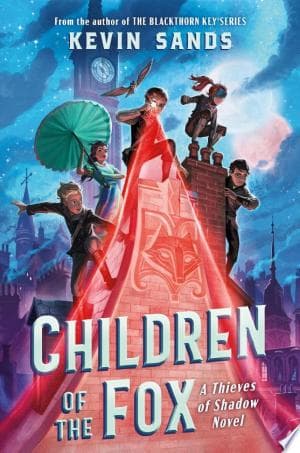
Core Idea
- Difficulty
- Medium
- Read it if
- You enjoy intricate heist narratives, stories about found families overcoming impossible odds, and plots where cleverness triumphs over brute force or magic.
- Skip it if
- You prefer straightforward action over elaborate planning and misdirection, or are looking for a book with minimal magical elements.
Key Takeaways from Children of the Fox
The Power of the Ensemble
No single talent is enough; true success demands diverse skills and collaboration.
The book shows how an impossible task becomes possible when a team of specialized individuals combines their unique talents. Callan's cons, Meriel's acrobatics and knife skills, Gareth's research, Lachlan's acquisition abilities, and Foxtail's climbing are all critical. None could succeed alone. The story emphasizes that the synergy from their combined efforts, despite initial distrust, drives their success. It supports the idea that complex problems need multi-faceted solutions, and sometimes the best path involves using the strengths of others, even from unexpected backgrounds.
“Though their shadowy backgrounds mean that they've never trusted anyone but themselves, the five must learn to rely on each other in order to get the job done.”
In the book: The initial formation of the crew, where each member is individually scouted for a specific, seemingly niche skill, and how these skills are then woven together in the planning and execution of the heist.
Try this: When facing a daunting project, identify the specific skill sets required. Instead of trying to master everything yourself, seek out collaborators who excel in those areas. Foster an environment where diverse talents are valued and integrated, understanding that collective intelligence often surpasses individual genius.
Related ideas: teamwork-synergy, diverse-skill-sets, collaborative-problem-solving
The Illusion of Control
In a world of magic and deception, what you believe to be your plan might just be someone else's.
This takeaway explores deception, especially when magic is involved. The book shows how the protagonists, who are con artists themselves, are constantly almost conned. It highlights the danger of magic, not just its power, but its ability to manipulate perception and create illusions. This theme makes readers question what is real and who is in control, showing that even the most cunning people can be pawns in a larger game. A master manipulator's brilliance lies in making victims believe they are in charge until their downfall.
“It can turn on you at any moment, and make you think you're the one running the con game, when in reality you're the one being fooled.”
In the book: Callan's recurring internal warnings about the unpredictable nature of magic and the constant suspicion that they might be walking into a trap, culminating in revelations about the true orchestrator of the heist.
Try this: Always question assumptions and look beyond the surface. In any high-stakes situation, consider the possibility that you might be operating within someone else's framework. Develop critical thinking skills to identify potential manipulations and hidden agendas, especially when information seems too perfect or convenient.
Related ideas: deception-magic, perception-manipulation, master-con-artistry
The Value of the Unconventional
Often, the most effective solutions come from those operating outside traditional norms.
The book argues that 'unusual talents' and 'shadowy backgrounds' can be powerful assets. The protagonists, with histories that would typically brand them as outcasts or criminals, are precisely the individuals capable of pulling off an 'impossible crime.' This story challenges the idea that only those with 'proper' training can achieve greatness. Instead, it suggests that resourcefulness, adaptability, and specialized, often self-taught skills honed in society's margins can offer unique perspectives and capabilities that many adults lack. It celebrates the underdog and the effectiveness of thinking unconventionally.
“Five young criminals are hired to steal a heavily guarded treasure from the most powerful sorcerer in the city. There's Callan the con artist, Meriel the expert at acrobatics (and knives!), Gareth the researcher, Lachlan who can obtain anything, and Foxtail, whose mysterious eyeless mask doesn't hinder her ability to climb walls like a spider.”
In the book: The very premise of the story: 'countless adults have already tried and failed,' leading to the recruitment of a group of young, unconventional criminals who possess skills deemed invaluable for this specific, illicit task.
Try this: Don't dismiss unconventional approaches or individuals with non-traditional backgrounds. When facing a problem where standard solutions have failed, actively seek out fresh perspectives from those who operate differently. Recognize that 'street smarts' and specialized, often self-taught, skills can be just as valuable, if not more so, than formal qualifications.
Related ideas: unconventional-skills, outsider-advantage, resourcefulness
Trust as the Ultimate Heist
Building genuine trust among strangers is the most challenging, and rewarding, part of any high-stakes operation.
Beyond the physical act of stealing, the real 'heist' in this story is the gradual building of trust among independent and suspicious individuals. Each character has a past that makes them wary of others, yet their mission forces them into reluctant interdependence. The story explores the delicate balance of revealing vulnerabilities, proving loyalty, and overcoming personal biases to form a cohesive unit. This process is full of tension and betrayal, showing that trust is earned through shared risk and demonstrated reliability. The external heist's success ultimately depends on the internal success of building this fragile, yet powerful, bond.
“Though their shadowy backgrounds mean that they've never trusted anyone but themselves, the five must learn to rely on each other in order to get the job done.”
In the book: The initial interactions between the crew members, marked by suspicion and secrecy, gradually evolving into moments of genuine concern and reliance on one another during moments of crisis.
Try this: In any collaborative endeavor, prioritize building trust. Understand that trust is a process, not an event, and requires consistent effort, transparency, and a willingness to be vulnerable. Invest in team-building activities that foster shared experiences and demonstrate mutual reliance, especially when working with individuals who may have reservations or past negative experiences.
Related ideas: team-trust, interpersonal-dynamics, vulnerability-in-teams
The Allure and Peril of Magic
Magic offers immense power but comes with unpredictable dangers and moral ambiguities.
The book treats magic not just as fantasy, but as a force with serious implications. It is a double-edged sword: offering great capabilities, like the sorcerer's power to guard treasure, but also carrying risks. The story explores the idea that magic is not always controllable or predictable, even by those who wield it. It also raises questions about the ethical use of such power and the potential for corruption or unintended consequences. This constant tension between magic's usefulness and its dangers adds depth, reminding us that extraordinary power often requires extraordinary caution and responsibility, and can easily be misused or turn against its wielder.
“As Callan has been warned most of his life, it's best to stay away from magic. It can turn on you at any moment...”
In the book: The formidable defenses of the sorcerer's lair, which rely heavily on magic, and the specific warnings Callan receives about magic's treacherous nature, which are later proven true.
Try this: When encountering powerful new technologies or methodologies, approach them with a healthy dose of skepticism and caution. Thoroughly understand their potential risks and ethical implications, not just their benefits. Establish safeguards and contingency plans, recognizing that even the most advanced tools can have unforeseen drawbacks or be exploited for malicious purposes.
Related ideas: magic-ethics, power-corruption, unforeseen-consequences
The Importance of Specificity
Success in complex operations hinges on meticulous research and precise execution of every detail.
The heist's success comes not just from flashy skills, but from careful attention to detail and strategic use of information. Gareth's research is as important as Meriel's acrobatics. This shows that even in a magical world, thorough preparation, intelligence gathering, and the ability to acquire specific, often obscure items are essential. The book implies that while improvisation is necessary, it is built on meticulous planning and understanding every part of the target. A single overlooked detail, a piece of misinformation, or an inability to get a critical component could unravel the entire operation. It is a masterclass in operational planning.
“Gareth the researcher, Lachlan who can obtain anything...”
In the book: The detailed planning sequences, where Gareth's research uncovers critical weaknesses or information, and Lachlan's ability to 'obtain anything' fills specific logistical gaps in the plan.
Try this: For any significant project, dedicate ample time to research and planning. Break down the objective into granular details and identify every required resource, piece of information, and potential obstacle. Don't underestimate the power of thorough preparation; the more specific and detailed your plan, the higher your chances of success and adaptability when unforeseen circumstances arise.
Related ideas: meticulous-planning, intelligence-gathering, detail-orientation
Motivation's Double Edge
While strong motivation drives action, it can also blind individuals to greater dangers.
The initial lure for the young criminals is the promise of great wealth, a strong motivator that pushes them to undertake a risky endeavor. This shows how strong desires, whether for money, freedom, or recognition, can drive individuals to achieve extraordinary feats. However, the story also suggests that such powerful motivations can narrow one's focus, making them overlook potential traps, betrayals, or true costs. The 'more money than they've ever dreamed of' acts as a powerful beacon, but it also blinds the crew from fully scrutinizing their employer or the deeper implications of their mission. It is a reminder to always evaluate the 'why' behind your actions and consider if the reward truly outweighs the hidden risks.
“Lured by the promise of more money than they've ever dreamed of, five young criminals are hired to steal a heavily guarded treasure...”
In the book: The initial recruitment of the crew, where the promise of wealth is the primary hook, and the subsequent moments where their focus on the prize might distract them from the underlying machinations.
Try this: Be aware of how strong motivations can influence your decision-making. While ambition is valuable, regularly step back to assess whether your pursuit of a goal is causing you to overlook critical information or potential pitfalls. Ensure your motivations align with your long-term values and are not merely short-sighted desires that could lead to greater problems.
Related ideas: motivation-bias, risk-assessment, hidden-costs
The Art of Misdirection
The most effective cons are those where the mark believes they are in control or even running the show.
This takeaway emphasizes the sophisticated deception in the story. It is not just about simple lies, but about orchestrating a scenario where the targets (the main characters) actively participate in their own manipulation. The true genius of a master con artist is creating an elaborate stage where victims feel empowered, making choices they believe are their own, while unknowingly advancing the manipulator's agenda. This requires deep psychological insight, understanding motivations, and a meticulous construction of false realities. The book provides a thrilling example of how perception can be expertly managed to control outcomes, even when dealing with other expert deceivers.
“...make you think you're the one running the con game, when in reality you're the one being fooled.”
In the book: The ultimate reveal of the true mastermind and their elaborate scheme, which leverages the crew's skills and motivations against them, making them unwitting pawns in a larger plot.
Try this: Be acutely aware of your environment and the narratives presented to you. Develop critical observation skills to discern whether you are truly making independent choices or if your actions are being subtly guided by external forces. In negotiations or complex interactions, always consider the possibility that the other party is attempting to steer your decisions by creating a specific perception or framing the situation in a particular way.
Related ideas: psychological-manipulation, strategic-deception, narrative-control
Friendship Forged in Fire
Adversity and shared danger are powerful catalysts for forming deep, unexpected bonds.
Despite their individualistic tendencies and initial distrust, the extreme pressures and life-threatening situations faced by the crew force them to shed their facades and genuinely connect. The book shows how shared adversity can quickly form powerful bonds, turning wary strangers into a cohesive, caring unit. These relationships, built not on common interests but on mutual survival and reliance, often prove stronger than those formed under less stressful circumstances. It is a poignant reminder that true camaraderie often emerges when individuals face overwhelming odds together, revealing their true characters and vulnerabilities to one another.
“Though their shadowy backgrounds mean that they've never trusted anyone but themselves, the five must learn to rely on each other in order to get the job done.”
In the book: Moments of peril where crew members actively save each other, make sacrifices, or show genuine concern for one another's well-being, moving beyond their initial self-preservation instincts.
Try this: Embrace challenging collaborative experiences as opportunities to build stronger relationships. Understand that working through difficulties together can forge deeper connections and trust within a team than easy successes. Be open to vulnerability and mutual support when facing shared obstacles, as these moments can transform colleagues into genuine allies.
Related ideas: adversity-bonding, shared-experience, team-resilience
The Unseen Vulnerabilities of Power
Even the most powerful sorcerers and secure fortresses have exploitable weaknesses.
The premise of stealing from the 'most powerful sorcerer in the city' sets up a seemingly impossible challenge, yet the story reveals that even great power is not absolute. No defense is impenetrable, and no individual, no matter how formidable, is without a flaw. The heist's success depends on the crew's ability to identify and exploit these unseen vulnerabilities—whether magical loopholes, human oversights, or psychological blind spots. This takeaway suggests that understanding an opponent's strengths also reveals their weaknesses. It is a strategic lesson that even against overwhelming odds, a meticulous and creative approach can uncover the chinks in the armor, making the seemingly impossible achievable.
“They are hired to steal a heavily guarded treasure from the most powerful sorcerer in the city.”
In the book: Gareth's research into the sorcerer's defenses and routines, which uncovers the specific points of entry or magical weaknesses that the crew ultimately exploits.
Try this: When facing a seemingly invincible challenge or competitor, avoid being intimidated by their apparent strength. Instead, dedicate effort to understanding their system, processes, and even their personal characteristics. Look for small, overlooked details or assumptions that could represent a critical vulnerability. Even the most robust systems often have a single point of failure if approached creatively.
Related ideas: strategic-vulnerability, weakness-exploitation, asymmetric-warfare
Children of the Fox Quotes
“The greatest trick the devil ever pulled was convincing the world he didn't exist. The second greatest was convincing people that money was worth more than a full belly.”
“Hope is a dangerous thing. It can keep you going when you should give up, and it can break your heart when it finally dies.”
“A good lie is like a well-made trap. It looks inviting, offers a reward, and snaps shut when you least expect it.”
“The world doesn't care if you're fair. It cares if you're strong enough to take what you need.”
“Sometimes the smartest thing you can do is pretend to be stupid.”
“Trust is a blade. It can protect you, or it can cut you deeper than any enemy.”
“Fear is a good servant, but a terrible master.”
“Every lock has a key, and if you can't find it, you make one.”
“The difference between a fool and a hero is often just a matter of luck, and who tells the story.”
“You can't steal what's already been stolen from you.”
“A secret shared is a secret no longer, but a burden lightened.”
“The city has a thousand eyes and a thousand ears, and most of them belong to people who wish you ill.”
“Sometimes the best way to hide something is to put it in plain sight.”
“Even the smallest spark can set a forest ablaze.”
Quiz
10 questions on the main ideas. Each answer comes with a short explanation.
Question 1
Which character is described as an expert in acrobatics and knives?
- Callan
- Meriel
- Gareth
- Foxtail
Show answer
B. Meriel The book description explicitly states that Meriel is 'the expert at acrobatics (and knives!)'.
Question 2
What is the primary motivation for the five young criminals to accept the heist job?
- To gain fame and recognition.
- To prove their individual skills to each other.
- The promise of more money than they've ever dreamed of.
- To challenge the most powerful sorcerer in the city.
Show answer
C. The promise of more money than they've ever dreamed of. The synopsis clearly states they are 'Lured by the promise of more money than they've ever dreamed of'.
Question 3
Which character wears a mysterious eyeless mask and can climb walls like a spider?
- Lachlan
- Callan
- Foxtail
- Meriel
Show answer
C. Foxtail Foxtail is described as having a 'mysterious eyeless mask' and the ability to 'climb walls like a spider'.
Question 4
What kind of treasure are the children tasked with stealing?
- A heavily guarded treasure from the most powerful sorcerer in the city.
- Ancient artifacts from a forgotten temple.
- A royal jewel from the king's vault.
- A magical weapon from a rival guild.
Show answer
A. A heavily guarded treasure from the most powerful sorcerer in the city. The core of the plot involves stealing 'a heavily guarded treasure from the most powerful sorcerer in the city'.
Question 5
What past experience or background trait do all five children share that makes them distrustful?
- They were all raised in rival criminal gangs.
- Their shadowy backgrounds mean they've never trusted anyone but themselves.
- They each suffered betrayal by previous partners.
- They are all orphans who grew up alone.
Show answer
B. Their shadowy backgrounds mean they've never trusted anyone but themselves. The description highlights that 'their shadowy backgrounds mean that they've never trusted anyone but themselves'.
Question 6
Who is the 'con artist' among the group?
- Meriel
- Gareth
- Callan
- Lachlan
Show answer
C. Callan Callan is specifically identified as 'the con artist' in the character list.
Question 7
What warning has Callan received most of his life regarding magic?
- Magic is a tool that should only be used for good.
- Magic can turn on you at any moment, and make you think you're the one running the con game, when in reality you're the one being fooled.
- Magic is only for the most powerful sorcerers.
- Magic requires a great personal sacrifice.
Show answer
B. Magic can turn on you at any moment, and make you think you're the one running the con game, when in reality you're the one being fooled. The text directly quotes, 'as Callan has been warned most of his life, it's best to stay away from magic. It can turn on you at any moment, and make you think you're the one running the con game, when in reality you're the one being fooled.'
Question 8
How does the book's premise compare to 'Ocean's Eleven' and 'The False Prince'?
- It features a group of children solving a mystery.
- It combines a thrilling heist story with elements of trickery and betrayal.
- It focuses on a single protagonist's journey of self-discovery.
- It involves political intrigue and royal succession.
Show answer
B. It combines a thrilling heist story with elements of trickery and betrayal. The comparison 'Ocean's Eleven meets The False Prince' is used to describe a 'thrilling heist story for young readers, in which five kids with unusual talents are brought together to commit an impossible crime,' implying elements of ensemble heists, trickery, and potential deception.
Question 9
What challenge must the five children overcome despite their individual talents and shadowy pasts?
- They must learn to master new magical abilities.
- They must learn to rely on each other in order to get the job done.
- They must outsmart a rival group of adult thieves.
- They must hide their true identities from each other.
Show answer
B. They must learn to rely on each other in order to get the job done. Despite their individual skills and distrustful natures, the synopsis states, 'the five must learn to rely on each other in order to get the job done.'
Question 10
What is the ultimate risk or consequence mentioned if the children succeed in their heist?
- They might be imprisoned for life.
- They might become targets for other criminals.
- Success could be deadly.
- They might lose their unique talents.
Show answer
C. Success could be deadly. The introduction states, 'Failure is unacceptable ... but success could be deadly,' highlighting the high stakes involved.
Children of the Fox FAQ
What is 'Children of the Fox' about?
'Children of the Fox' is a thrilling heist story for young readers, where five kids with unique talents are brought together to steal a heavily guarded treasure from a powerful sorcerer. It's a tale of betrayal, trickery, and the unexpected bonds of friendship.
Who are the main characters in the book?
The main characters are a diverse group of young criminals: Callan the con artist, Meriel the acrobat and knife expert, Gareth the researcher, Lachlan who can procure anything, and Foxtail, a mysterious climber. Each brings a unique skill set to the heist.
Does magic play a role in 'Children of the Fox'?
Yes, magic is a central element in the story. The kids are tasked with stealing from a powerful sorcerer, and Callan has been warned about the unpredictable and deceptive nature of magic, suggesting it can turn on those who try to wield or outsmart it.
How is 'Children of the Fox' different from 'The False Prince'?
While both involve young protagonists in intricate schemes, 'Children of the Fox' focuses on a group heist against a magical adversary, emphasizing collaboration and the dangers of magic. 'The False Prince' centers on a single protagonist's deception and identity within a royal court.
Is 'Children of the Fox' part of a series?
While written by the bestselling author of the Blackthorn Key series, 'Children of the Fox' is presented as a standalone adventure, bringing together a new cast of characters for a unique heist story.
What age group is 'Children of the Fox' suitable for?
The book is described as a heist story for young readers, suggesting it is appropriate for middle grade audiences. It features adventure, mystery, and themes of friendship and trust.
Does the team succeed in their heist?
The story poses the question of whether the friends can pull off the legendary heist against insurmountable odds. Readers will need to dive into the book to discover if their luck holds out and if they can overcome the challenges posed by magic and their own shadowy pasts.
What makes the characters' talents 'unusual'?
The characters' talents are unusual because they are highly specialized and often unconventional, ranging from a con artist's wit and an acrobat's agility to a researcher's knowledge and a procurement expert's ability to obtain anything, all crucial for a seemingly impossible crime.
Similar books
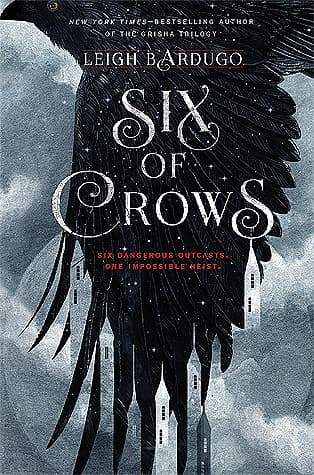
- Six of Crows
Leigh Bardugo
4.4 (316k) average on GoodreadsFantasyFeatures a diverse ensemble cast executing a complex, high-stakes heist with unique individual skills.
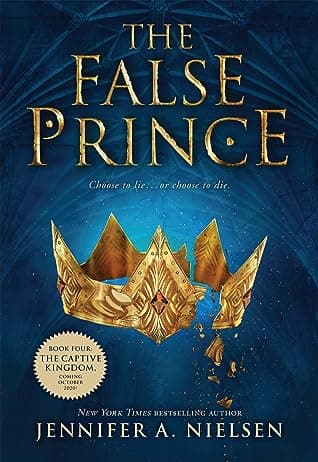
- The False Prince
Jennifer A. Nielsen
4.2 (76k) average on GoodreadsFantasyInvolves young protagonists using wit, deception, and unconventional methods to navigate political intrigue and danger.
- The Diary of a Young Girl
Anne Frank
4.2 (2.7M) average on GoodreadsBiographyDuring the Nazi occupation, a teenage girl's diary, written from a secret annex, shares observations on humanity, hope, and the wait for freedom.
- Twisted 1. Twisted love
Ana Huang
3.7 (1.7M) average on GoodreadsA quiet billionaire with a difficult past finds his guarded heart opening to the woman he must protect, but their growing passion uncovers dangerous secrets and a shared, traumatic history.
- Eat, Pray, Love
Elizabeth Gilbert
3.6 (1.5M) average on GoodreadsLifestyleA heartbroken writer leaves her conventional life for a year-long global search for pleasure in Italy, spiritual devotion in India, and unexpected love and balance in Bali.
- Night
Elie Wiesel
4.3 (970k) average on GoodreadsBiographyIn the darkness of Auschwitz and Buchenwald, a teenage Elie Wiesel faces the extermination of his family, the loss of his faith, and the lasting scars of humanity's deepest cruelty.




Enjoyed the summary?
A summary gives you the shape of the book. The book itself has the detail, the examples and the voice.
Find Children of the Fox on AmazonAs an Amazon Associate, BookBrief earns from qualifying purchases. How we're funded