
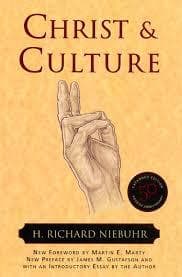
Core Idea
- Difficulty
- Hard
- Read it if
- You are a theologian, pastor, or serious Christian layperson grappling with how faith intersects with modern society, or if you are interested in a classic, foundational text on Christian ethics and cultural engagement.
- Skip it if
- You are looking for a light read, a prescriptive 'how-to' guide for cultural engagement, or an introduction to Christian theology; this book is dense and academic.
Key Takeaways from Christ and Culture
Fivefold Typology
Niebuhr's framework for understanding Christian engagement with culture.
Niebuhr presents centuries of Christian thought as five distinct types. Each shows a basic approach to the tension between divine revelation and human civilization: Christ Against Culture, Christ Of Culture, Christ Above Culture, Christ and Culture In Paradox, and Christ The Transformer of Culture. This typology is a strong analytical tool. It lets readers identify their own, and their traditions', implicit stance. It shows that the 'problem' of Christ and culture is a spectrum of responses, each with its own theological reason and historical examples. Understanding these types is important for self-reflection and for managing the demands of faith in a secular age. It helps prevent simple or uncritical engagement with either Christ or culture.
“The problem of Christ and culture, as it appears in the history of Christianity, is the problem of the relation of the church to the world, of the Christian to society, of the believer to the civilization in which he lives.”
In the book: Niebuhr dedicates a chapter to each type, illustrating them with historical figures and movements, such as Tertullian for 'Christ Against Culture' and Thomas Aquinas for 'Christ Above Culture,' demonstrating how these ideal types have manifested throughout Christian history.
Try this: Identify which of Niebuhr's five types best describes your personal approach to faith and culture. Reflect on the strengths and weaknesses of this approach and consider whether a different type might be more appropriate for specific contexts or challenges you face. Engage in dialogue with others, using this framework to understand their perspectives.
Related ideas: theological-typology, church-world-relation, cultural-engagement
The 'Christ Against Culture' Stance
Radical separation from worldly values for purity.
This type rejects culture, seeing it as fallen, corrupt, or against Christian truth. Followers believe that true faith requires complete withdrawal from or opposition to dominant cultural norms, institutions, and values. The goal is to keep Christian faith and community pure, free from the world's temptations. While this stance offers clarity and a strong identity, it risks isolation, irrelevance, and a failure to engage with the world's suffering. It is a hard position to keep in a globally connected society, often leading to sectarianism or a monastic lifestyle. Niebuhr shows that this is a consistent theological choice that puts divine commands above all human constructs.
“What indeed has Athens to do with Jerusalem? What concord is there between the Academy and the Church?”
In the book: Niebuhr highlights figures like Tertullian, the early Anabaptists, and certain monastic orders as historical examples. Tertullian's famous rhetorical question encapsulates the core sentiment of this type, rejecting the wisdom of philosophy in favor of divine revelation.
Try this: Examine areas in your life where you might feel a tension between 'worldly' expectations and your faith. Consider if a 'Christ Against Culture' impulse is at play. While complete withdrawal might be impractical, identify specific cultural elements you believe are genuinely harmful and develop strategies for healthy distance or principled opposition.
Related ideas: separatist-christianity, anabaptism, asceticism
The 'Christ Of Culture' Stance
Harmonizing Christ with the best of human culture.
The 'Christ Of Culture' type tries to integrate Christ with prevailing cultural values. It often sees Christ as the highest expression of humanity's achievements and ideals. This approach emphasizes human goodness and culture's potential to reflect divine truth. It often leads to a comfortable coexistence, where Christian ethics align with societal norms. While it promotes accessibility and relevance, its danger is syncretism—the potential to dilute or distort Christ's radical claims by making him too agreeable to cultural trends, losing the Gospel's prophetic edge. Niebuhr warns that this approach can mistakenly elevate cultural values to the status of divine truth.
“The culture itself becomes the vehicle for the expression of Christ, who is understood as the fulfiller of human aspirations and ideals.”
In the book: Niebuhr points to certain forms of liberal Protestantism in the 19th and early 20th centuries, where Christ was often portrayed as the great moral teacher whose ethics perfectly aligned with democratic values and social progress. He also references figures like Abelard, who sought to integrate Christian theology with philosophical reason.
Try this: Reflect on how your faith tradition or personal beliefs might have absorbed or aligned with contemporary cultural values. Are there instances where the distinction between Christian values and societal norms has blurred? Critically evaluate whether Christ's unique message is being preserved or subtly compromised in the name of cultural relevance.
Related ideas: liberal-theology, syncretism, cultural-accommodation
The 'Christ Above Culture' Stance
Dualism: Grace perfects nature, but distinct.
This 'synthesist' approach, seen in Thomas Aquinas, views Christ and culture as distinct but related. Grace perfects nature. Culture, though flawed by sin, has its own legitimate sphere and natural goodness. Christ brings a higher truth and redemptive power that elevates and completes what is good in culture, but does not remove it. There is a hierarchical relationship: Christ is superior, but culture is not rejected. This view allows active engagement with culture—in arts, philosophy, politics—with the understanding that these human efforts can be sanctified and directed towards higher ends. The challenge here is keeping proper balance, avoiding both rejection and absorption of culture, and making sure that 'above' does not become 'apart' or 'irrelevant.'
“Grace does not destroy nature but perfects it.”
In the book: Niebuhr extensively uses Thomas Aquinas as the prime example, detailing how Thomistic thought integrated Aristotelian philosophy into Christian theology, demonstrating how natural reason (culture) could serve and be elevated by revelation (Christ). Catholic social teaching often reflects this synthesist approach.
Try this: Consider how you can engage with cultural activities (e.g., art, science, politics) not as purely secular pursuits, but as arenas where grace can perfect nature. How can you bring a Christian perspective to these areas, elevating their purpose without dismissing their inherent value or reducing them solely to evangelistic tools?
Related ideas: thomism, natural-law, grace-nature-relation
The 'Christ and Culture In Paradox' Stance
Living with unresolvable tension and divine demands.
This type, influenced by Lutheran theology, accepts the tension between Christ's demands and the realities of a fallen world. It acknowledges the need to live in culture (e.g., participating in government, work, family). But it sees these cultural spheres as ambiguous, marked by sin, and never fully redeemable in this life. Christians live as justified sinners, called to obey both God's law and civil law. This often involves tragic dilemmas. This leads to a sense of responsibility and often a somber realism about human efforts. The risk is quietism or resignation, where tension becomes an excuse for inaction rather than a spur to ethical struggle and repentance.
“The Christian lives in a tension which can never be resolved in this life, always under two lords, Christ and the world, and yet never serving two lords.”
In the book: Martin Luther and Søren Kierkegaard are Niebuhr's primary examples. Luther's doctrine of the 'Two Kingdoms' (spiritual and temporal) illustrates this paradox, where Christians are simultaneously subjects of both, called to obey civil authority while maintaining ultimate allegiance to Christ, even when those demands conflict.
Try this: Identify areas in your life where you experience genuine ethical dilemmas that seem to have no easy 'Christian' answer. Instead of seeking a simplistic solution, lean into the paradox. How can you act responsibly in a fallen world, acknowledging the ambiguities, while still striving for faithfulness to Christ? Embrace repentance and humility in your engagement.
Related ideas: two-kingdoms-doctrine, lutheran-theology, ethical-dilemma
The 'Christ The Transformer of Culture' Stance
Conversionist: Redeeming and transforming culture from within.
This type, which Niebuhr seems to value most, sees Christ as the redeemer of culture itself, not just individuals. While acknowledging human and cultural fallenness, it hopes for cultural renewal and transformation through Christ's power. Followers believe in actively engaging with and working within cultural structures to redirect them towards God's purposes. This is a conversionist model. It sees culture as able to be converted and remade, not just rejected, accommodated, or endured. It requires sustained, creative, and hopeful effort, but risks utopianism or overestimating human capacity for transformation without constant divine grace.
“Christ is seen as the converter of man in his culture and society, and so as the redeemer of the culture itself.”
In the book: Niebuhr cites Augustine (particularly his later thought), John Calvin, and aspects of the Social Gospel movement as examples. Augustine's vision of the 'City of God' influencing the 'City of Man' provides a theological foundation for this transformative engagement, seeking to bring earthly cities more in line with divine justice.
Try this: Identify a specific cultural sphere (e.g., education, media, business, local community) where you can actively work towards positive, Christ-centered change. How can you contribute to the redemption and transformation of that sphere, not by imposing, but by embodying and advocating for values that align with the Kingdom of God?
Related ideas: cultural-redemption, calvinism, social-gospel
No Single 'Correct' Approach
Niebuhr's typology is descriptive, not prescriptive.
Niebuhr does not explicitly endorse one type as correct for all times and places. While his presentation shows a preference for the 'Christ the Transformer of Culture' type, he says each approach has historical validity and theological integrity. The typology's value is its ability to show how Christians have responded to cultural challenges. It makes readers understand the historical context and theological reasons for each. This prevents easy judgments and encourages a more sophisticated understanding of Christian ethics. It acknowledges that different circumstances might need different emphases, though some positions are stronger than others in their capacity for sustained engagement.
“The purpose of this study is not to solve the problem of Christ and culture but to clarify the main types of solutions which have appeared in Christian history.”
In the book: Niebuhr's careful and empathetic portrayal of each type, even those he might personally disagree with, demonstrates his commitment to presenting the historical reality of Christian responses without imposing a singular solution. His explicit statement in the introduction reinforces this descriptive rather than prescriptive intent.
Try this: Avoid the temptation to quickly label one type as 'wrong' and another as 'right.' Instead, use the typology to understand the historical and theological roots of different Christian communities' approaches. Recognize that your own context might genuinely require a different emphasis than someone else's, fostering humility and ecumenical understanding.
Related ideas: ethical-pluralism, historical-theology, contextual-ethics
The Enduring Problem of Loyalty
The ultimate conflict between Christ's demands and cultural allegiances.
Underlying all five types is the basic theological problem: the question of ultimate loyalty. Niebuhr argues that the tension between Christ and culture is a spiritual conflict over who or what holds ultimate authority in a person's life. Is it the values of the prevailing culture, or the demands of Christ? This question makes Christians confront the idols of their age and discern where their true allegiance lies. This is not a one-time decision but a continuous process of re-evaluation and commitment, especially in a materialistic and pluralistic society where cultural allegiances can be subtle and pervasive. Niebuhr's work consistently brings us back to this core, existential challenge.
“The issue is always whether Christ or the culture is the ultimate authority, the final object of loyalty.”
In the book: Throughout the book, Niebuhr implicitly and explicitly frames the 'Christ and Culture' problem as a problem of 'double loyalty.' He shows how each type attempts to resolve or manage this inherent conflict, and how some, like 'Christ of Culture,' risk losing the distinctiveness of Christian loyalty altogether.
Try this: Regularly examine your own life for areas where your primary loyalty might inadvertently be to cultural norms (e.g., consumerism, success, comfort) rather than to Christ. Actively seek ways to re-center your ultimate allegiance on Christ, even if it means challenging prevailing cultural expectations or making difficult sacrifices.
Related ideas: ultimate-allegiance, idolatry, christian-ethics
The 'Monotheistic' vs. 'Polytheistic' Challenge
The challenge of maintaining singular loyalty to Christ in a pluralistic world.
Niebuhr shows the modern challenge for Christians in a 'polytheistic' culture—one that offers many allegiances, values, and sources of meaning. Christianity demands singular loyalty to Christ. Culture often presents itself as a collection of competing 'gods' (e.g., nationalism, consumerism, scientific progress, personal autonomy). The 'Christ of Culture' type risks falling to this polytheism. The 'Christ Against Culture' type tries to flee it. Niebuhr asks readers to acknowledge these competing loyalties and to choose Christ as the singular, ultimate authority, even while engaging with culture's diverse aspects. This constant discernment is important for Christian witness.
“The culture itself becomes a god, or a pantheon of gods, for those who seek to find in it their ultimate meaning and value.”
In the book: Niebuhr's analysis of the 'Christ of Culture' type frequently touches upon how cultural ideals can be subtly deified, becoming ends in themselves rather than means to a higher purpose. The very existence of different 'gods' within culture necessitates a clear choice of loyalty.
Try this: Identify the 'gods' or ultimate values promoted by the specific cultural contexts you inhabit (e.g., your workplace, social media, entertainment). How do these compete with or challenge your singular devotion to Christ? Develop practices of discernment and critical engagement to ensure your loyalty remains undivided.
Related ideas: cultural-idolatry, pluralism, ultimate-concern
The Dynamic and Historical Nature of Response
Christian engagement with culture is an ongoing, evolving process.
Niebuhr's work is a dynamic framework, not a static blueprint. He emphasizes that the 'problem' of Christ and culture cannot be solved once and for all. Rather, it is an ongoing challenge that needs constant re-evaluation, fresh theological reflection, and new ethical decisions in every changing historical and cultural context. Each generation of Christians must deal with the tension again. They must discern how to be faithful to Christ while living within their specific cultural realities. This historical awareness prevents dogmatism and encourages humility. It recognizes that past solutions, while helpful, may not be directly transferable. It calls for an active, engaged faith that is rooted in tradition and responsive to contemporary challenges.
“The relation of Christ and culture is a continuing problem, never finally solved, always demanding fresh thought and new decisions in changing historical situations.”
In the book: The entire book is a historical survey, showing how the 'problem' has been addressed differently across various eras and by different Christian traditions. Niebuhr's introduction to the 50th-anniversary edition (if included) and the foreword by Martin E. Marty underscore the book's enduring relevance precisely because the problem remains dynamic.
Try this: Instead of seeking a permanent 'answer' to the Christ and culture dilemma, cultivate a mindset of ongoing discernment and adaptation. Stay informed about contemporary cultural shifts and engage in theological reflection with your community to collectively determine how to best embody Christ's call in your current context. Be prepared to adjust your approach as circumstances evolve.
Related ideas: historical-theology, contextual-theology, christian-discipleship
Christ and Culture Quotes
“Christ against culture.”
“Christ of culture.”
“Christ above culture.”
“Christ and culture in paradox.”
“Christ the transformer of culture.”
“The fundamental question is not whether Christians shall have dealings with the cultural society, but how they shall conduct themselves in it.”
“Culture is the artificial, secondary environment which man superimposes on the natural.”
“The Christian lives in the tension between obedience to God and responsibility to the neighbor.”
“Faith is not a substitute for cultural work; it is the motivation and direction of that work.”
“The church is that community where the story of Jesus is told, remembered, and enacted.”
“Conversion means turning from culture to Christ, but also turning back to culture with Christ.”
“The problem of Christ and culture is a permanent one for Christians.”
“In the Christ-against-culture pattern, the Christian is a resident alien.”
“The synthesis of Christ above culture seeks to preserve both the sovereignty of God and the integrity of cultural achievements.”
Quiz
10 questions on the main ideas. Each answer comes with a short explanation.
Question 1
What is the central problem that H. Richard Niebuhr addresses in 'Christ and Culture'?
- The historical accuracy of the Gospels
- The relationship between Christian faith and secular society
- The theological differences between Protestant and Catholic traditions
- The economic implications of Christian ethics
Show answer
B. The relationship between Christian faith and secular society Niebuhr's book focuses on the perennial tension between loyalty to Christ and engagement with human culture, exploring how Christians should navigate this relationship in a materialistic age.
Question 2
Which of the following is NOT one of Niebuhr's five typologies for the relationship between Christ and culture?
- Christ against Culture
- Christ of Culture
- Christ above Culture
- Christ within Culture
Show answer
D. Christ within Culture Niebuhr's five typologies are: Christ against Culture, Christ of Culture, Christ above Culture, Christ and Culture in Paradox, and Christ the Transformer of Culture. 'Christ within Culture' is not one of them; it is sometimes confused with 'Christ of Culture' or other models.
Question 3
According to Niebuhr, which typology is exemplified by Tertullian and monastic movements?
- Christ against Culture
- Christ of Culture
- Christ above Culture
- Christ the Transformer of Culture
Show answer
A. Christ against Culture Niebuhr identifies Tertullian and monastic traditions as representatives of the 'Christ against Culture' typology, which emphasizes separation from worldly society to maintain purity in faith.
Question 4
In the 'Christ of Culture' typology, how does Niebuhr describe the view of culture?
- Culture is inherently evil and must be rejected
- Culture is a neutral arena where Christ operates independently
- Culture is essentially aligned with Christ's teachings
- Culture is a tool to be transformed by Christ
Show answer
C. Culture is essentially aligned with Christ's teachings The 'Christ of Culture' typology sees culture as fundamentally good and in harmony with Christian values, often identifying societal norms with Christ's message, as exemplified by liberal theology.
Question 5
Which typology does Niebuhr associate with Thomas Aquinas and the synthesis of faith and reason?
- Christ against Culture
- Christ of Culture
- Christ above Culture
- Christ and Culture in Paradox
Show answer
C. Christ above Culture Niebuhr links Thomas Aquinas to the 'Christ above Culture' typology, which posits that Christ fulfills and elevates culture through a hierarchical synthesis, integrating faith with human reason and societal structures.
Question 6
What is a key characteristic of the 'Christ and Culture in Paradox' typology?
- It advocates for complete withdrawal from cultural engagement
- It sees an irreconcilable tension between divine grace and human sin in culture
- It promotes cultural transformation through Christian activism
- It identifies Christ as the embodiment of cultural ideals
Show answer
B. It sees an irreconcilable tension between divine grace and human sin in culture This typology, associated with figures like Martin Luther, emphasizes the paradoxical coexistence of God's grace and human sinfulness in culture, leading to a stance of critical engagement without full synthesis.
Question 7
According to Niebuhr, which typology is most aligned with Augustine's 'City of God'?
- Christ against Culture
- Christ of Culture
- Christ above Culture
- Christ the Transformer of Culture
Show answer
D. Christ the Transformer of Culture Niebuhr places Augustine in the 'Christ the Transformer of Culture' category, as seen in 'City of God,' where grace works to redeem and transform earthly society, though not fully in this age.
Question 8
How does Niebuhr's framework help Christians in a materialistic age, as highlighted in the book's description?
- By providing a single correct answer to cultural engagement
- By offering historical examples to avoid cultural pitfalls
- By mapping diverse ways to be true to Christ amidst cultural pressures
- By advocating for economic reforms based on Christian principles
Show answer
C. By mapping diverse ways to be true to Christ amidst cultural pressures Niebuhr's typologies serve as a diagnostic tool, helping Christians understand and navigate the challenge of faithfulness to Christ in a materialistic society by exploring various historical and theological responses.
Question 9
What critique does Niebuhr level against the 'Christ of Culture' typology?
- It is too pessimistic about human potential
- It risks diluting Christ's uniqueness by conforming to cultural norms
- It ignores the role of the church in society
- It overemphasizes personal salvation over social justice
Show answer
B. It risks diluting Christ's uniqueness by conforming to cultural norms Niebuhr argues that 'Christ of Culture' can compromise the distinctiveness of Christ's message by too closely identifying it with prevailing cultural values, potentially leading to a loss of prophetic critique.
Question 10
In the context of the 50th-anniversary edition, what role do Martin E. Marty and James Gustafson play?
- They co-authored new chapters updating Niebuhr's theories
- They provide critical essays refuting Niebuhr's typologies
- They contribute forewords and introductions that contextualize the book for new generations
- They translated the book into multiple languages for wider distribution
Show answer
C. They contribute forewords and introductions that contextualize the book for new generations Martin E. Marty's foreword and James Gustafson's preface, along with a new introduction by Niebuhr, help frame the book's enduring relevance and challenge to contemporary readers in a materialistic age.
Christ and Culture FAQ
What is 'Christ and Culture' by H. Richard Niebuhr about?
'Christ and Culture' explores the complex relationship between Christian faith and secular society, presenting five typologies that describe how Christians have historically engaged with culture. It examines the tension between remaining faithful to Christ while living in a materialistic world, offering a framework for understanding different Christian approaches to cultural engagement.
What are the five typologies in 'Christ and Culture'?
Niebuhr identifies five patterns: Christ against Culture (rejection), Christ of Culture (accommodation), Christ above Culture (synthesis), Christ and Culture in Paradox (dualistic tension), and Christ the Transformer of Culture (conversionist). These represent different historical Christian approaches to engaging with secular society while maintaining faith.
How does 'Christ and Culture' differ from other Christian ethics books?
Unlike many Christian ethics books that prescribe specific moral positions, 'Christ and Culture' provides a descriptive typological framework that categorizes historical approaches without advocating for one particular model. Its enduring influence comes from this neutral analytical structure that helps Christians understand their own cultural engagement patterns.
Does 'Christ and Culture' still work for modern Christians?
Yes, the book remains highly relevant as it provides timeless frameworks for navigating faith in contemporary society. The 50th-anniversary edition specifically addresses its application to new generations facing similar challenges of materialism and secularization, with updated commentary from prominent theologians.
What is the 'Christ against Culture' typology?
This typology describes Christians who see fundamental opposition between Christ and secular culture, advocating separation from worldly society. Followers of this approach typically emphasize purity, rejection of cultural compromises, and creation of alternative Christian communities distinct from mainstream culture.
How different is Niebuhr's approach from his brother Reinhold Niebuhr's theology?
While Reinhold Niebuhr focused more on political theology and Christian realism regarding power and sin, H. Richard Niebuhr in 'Christ and Culture' emphasizes cultural engagement patterns and historical typologies. Both brothers addressed Christianity's relationship with society but from different methodological angles and with different focal points.
What practical guidance does 'Christ and Culture' offer Christians today?
The book helps Christians identify their own cultural engagement patterns and understand alternative approaches, enabling more intentional faith practice in secular environments. By recognizing these historical typologies, readers can make more conscious decisions about how to live out their faith in contemporary materialistic society.
What is the 'Christ the Transformer of Culture' model?
This typology presents Christians who believe Christ transforms culture from within rather than rejecting or accommodating to it. Followers engage actively with society to redeem and reform cultural institutions, seeing God's work as ongoing transformation rather than simple opposition or separation from worldly systems.
Does the 50th-anniversary edition add significant value?
Yes, it includes valuable new material: a foreword by historian Martin E. Marty contextualizing the book's enduring importance, an introduction by Niebuhr never before published, and a preface by James Gustafson connecting the work to contemporary Christian ethics. These additions bridge the original text to current generational challenges.
How does 'Christ and Culture' address materialism specifically?
The book examines how different Christian approaches respond to materialistic values in culture, from complete rejection to transformative engagement. It provides frameworks for Christians to navigate consumerism and secular priorities while maintaining spiritual integrity, making it particularly relevant for modern materialistic societies.
Similar books
- The Politics of Jesus
John Howard Yoder
4.1 (3k) average on GoodreadsPoliticsYoder's The Politics of Jesus offers a significant counterpoint to Niebuhr. While Niebuhr's 'Christ Against Culture' stance is one of five options, Yoder argues for a more radical, nonviolent, and distinctly counter-cultural discipleship as the normative Christian political stance, essentially advocating for a robust 'Christ Against Culture' position rooted in the life and teachings of Jesus. Yoder critiques Niebuhr's tendency to legitimize various forms of engagement, suggesting that such broad acceptance can dilute the radical demands of the Gospel. Yoder is more prescriptive, emphasizing a specific ethical path derived from Jesus's example, whereas Niebuhr offers a more descriptive and analytical framework of possibilities.
- Eat, Pray, Love
Elizabeth Gilbert
3.6 (1.5M) average on GoodreadsLifestyleA heartbroken writer leaves her conventional life for a year-long global search for pleasure in Italy, spiritual devotion in India, and unexpected love and balance in Bali.
- Educated
Tara Westover
4.5 (796k) average on GoodreadsBiographyRaised in the Idaho mountains by fundamentalist survivalists, a young woman forges her own path to education, battling fierce family loyalty and personal demons to discover a world beyond her isolated upbringing.
- The Poisonwood Bible
Barbara Kingsolver
4.1 (659k) average on GoodreadsLiterary FictionA zealous missionary's rigid faith clashes with the Belgian Congo's wilderness and people, unraveling his family through the eyes of his five unforgettable women.
- Siddhartha
Hermann Hesse
4.0 (583k) average on GoodreadsHistorical FictionSiddhartha leaves a life of privilege and piety, embracing asceticism, wealth, and love to find enlightenment not in dogma, but in the whispers of a river and the unity of all existence.
- The Five People You Meet in Heaven
Mitch Albom
3.9 (578k) average on GoodreadsFantasyAn amusement park mechanic, Eddie, dies saving a child and awakens in an afterlife where five souls, some familiar, some strangers, reveal the meaning of his ordinary life.






Enjoyed the summary?
A summary gives you the shape of the book. The book itself has the detail, the examples and the voice.
Find Christ and Culture on AmazonAs an Amazon Associate, BookBrief earns from qualifying purchases. How we're funded