

Synopsis
Covers the whole plot, including the ending.
- Difficulty
- Medium
- Pacing
- Moderate
- Mood
- Mysterious, Intriguing, Dark, Thought-provoking
- Read it if
- You love intricate world-building, a blend of fantasy and spy thriller, and a protagonist who wins with intellect rather than brute force. Perfect for fans of complex mysteries set in unique, post-apocalyptic magical societies.
- Skip it if
- You prefer traditional high fantasy with clear magic systems, or if you dislike political intrigue and morally gray characters.
City of Stairs Plot Summary
Covers the whole plot, including the ending.
A Diplomat's Arrival and a Scholar's Murder
Shara Thivani, a Saypuri diplomat and secret spy, arrives in Bulikov, the capital of the Continent. She is with her large, quiet secretary, Sigrud. Her official job is to watch Saypuri interests, but she is really there to investigate the murder of Professor Vanya, a Saypuri scholar studying the Continent's forbidden history. Vanya was killed in his hotel room under strange conditions, with signs of a powerful, non-human force. The Saypuri government, which conquered the Continent centuries ago after the 'Divinity's Ruin'—the death of their gods—is very worried about any signs of divine influence. This makes Vanya's death a politically sensitive event. Shara soon realizes that local officials, especially Minister of Culture Efrem Pangyui, are making her investigation difficult, suggesting deeper secrets in the city.
Uncovering Divine Residue and Forbidden Knowledge
Shara starts her investigation by looking at Vanya's research and the crime scene. She learns that Vanya was studying the 'miracles' left by the dead gods, which still subtly change reality in Bulikov, despite Saypuri efforts to remove them. Her questions lead her to Saypuri military commander General Mulaghesh, who, despite her rough manner, helps and offers insight into the Continent's past and the Saypuri occupation. Shara also meets Turyin Mulaghesh (General Mulaghesh's niece), a former student of Vanya and a Continent-born woman, who helps Shara find the city's hidden historical sites. They find that Vanya was close to uncovering a secret about the Divinity's Ruin and the remaining divine power, a truth the Saypuri government has tried to hide.
The Hunt for the Divine Artifacts
As Shara investigates further, she learns that Vanya was looking for specific divine artifacts, possibly linked to the gods' deaths. Her search takes her to places marked by divine influence, including the 'Stairs,' a huge, seemingly endless staircase that defies natural laws, and the 'Bridge of the Divine Blade.' During her search, Shara and Sigrud face more danger. Shadowy figures attack them, showing that someone is trying to stop them from finding the truth. Sigrud, with his combat skills, is helpful in these fights, protecting Shara from assassins. They discover that a group within the Continentals, possibly led by Pangyui, is also looking for these artifacts, hoping to bring back their gods or use their power for a new uprising against Saypur.
The Reveal of the Living God
Through her investigation and Vanya's notes, Shara makes a discovery: one of the Continent's gods, the Lord of the Stairs, is not truly dead but dormant, trapped within the colossal Stairs that dominate Bulikov. Vanya had been working on a way to awaken or interact with him. This explains the strange events and the powerful forces at play. Shara realizes that the Divinity's Ruin was not a full destruction but a planned suppression, and that the Saypuri government has been living a lie, fearing the gods' return. Vanya's murder was likely an attempt to keep this ancient god from being disturbed or awakened, either by Saypuri hardliners or by Continentals hoping to control him.
Pangyui's Plan and the Continental Cult
Shara confronts Efrem Pangyui, who reveals he is a strong Continental nationalist. He leads a secret cult dedicated to bringing back the gods. He believes that by awakening the Lord of the Stairs and other dormant divine beings, they can restore the Continent and overthrow Saypuri rule. Pangyui admits to planning Vanya's murder because the scholar was close to understanding the true nature of the Lord of the Stairs and might have accidentally revealed Pangyui's plans or even awakened the god too soon. Pangyui has been collecting the scattered divine artifacts, not just for their power, but as keys to unlock the dormant divine beings. He sees Shara as a threat to his plans for a new divine uprising.
Sigrud's Past and Personal Stakes
As the conflict grows, Sigrud's past comes to light. He is from Saypur, but from a remote, 'primitive' area that was destroyed by one of the Continent's gods during the old wars. His family and village were wiped out, leaving him with a deep hatred and fear of divine power. This personal tragedy drives his loyalty to Shara and his efficiency in dealing with anything related to the gods. He sees the gods as destructive forces that must stay dead. His experiences give him a unique, harsh view of the conflict, and he is set on preventing any return of divine power, even if it means extreme actions. His past drives his actions and makes him a strong, if mysterious, ally.
The Confrontation at the Stairs
Pangyui begins a ritual to fully awaken the Lord of the Stairs, believing this will give him control over the god's power and start a Continental revolution. Shara, Sigrud, and General Mulaghesh, who has joined their cause after realizing Pangyui's extreme beliefs, race to the Stairs to stop him. The Stairs are a wonder of divine engineering, constantly shifting and defying physics, making the climb dangerous. They meet Pangyui's followers, who are fanatically dedicated to the resurrection, leading to intense battles within the surreal Stairs. Shara knows that if Pangyui succeeds, the results for both Saypur and the Continent would be terrible, sending the world back into divine warfare.
The Awakening and the Divine's Choice
Pangyui's ritual partly works, and the Lord of the Stairs begins to awaken, appearing as a huge, non-physical being of great power. The god is not fully under Pangyui's control, and its reawakening threatens to break reality. Shara realizes that killing the god is not an option, nor is letting Pangyui control it. She understands that the gods, in their original form, were not just destructive but also beings of creation and order, though on a frightening scale. She tries to talk to the awakened god, trying to understand its nature and purpose, while Sigrud fights off Pangyui's remaining followers and tries to control the god's influence. The god's mind is vast and alien, struggling to understand the changed world.
The Second Divinity's Ruin
Realizing that the Lord of the Stairs, if fully awakened, would lead to another devastating divine war, Shara makes a difficult choice. Instead of letting the god rampage or be controlled, she finds a way to put it back into dormancy, or 're-kill' it in a controlled way. She uses her diplomatic skills, Vanya's research, and a desperate appeal to the god's nature, convincing it to withdraw from the world. Sigrud, despite his hatred, helps, understanding the greater good. This act is a second 'Divinity's Ruin,' but one made by humans, not by another god. Pangyui is defeated, his plans ruined, and the Lord of the Stairs returns to its sleep, but not without leaving a lasting impression on Shara.
Aftermath and a New Beginning
Afterward, Shara skillfully manages the political situation, making sure the full truth of the Lord of the Stairs' awakening stays hidden from both Saypur and the Continentals. She portrays Pangyui as a lone extremist and keeps the story that the gods are dead. General Mulaghesh, impressed by Shara's actions, becomes a reluctant ally in this cover-up. Shara then uses her new influence to support more self-rule for Bulikov and the Continent, pushing for a fairer relationship with Saypur. She arranges for Turyin to lead efforts to responsibly manage the remaining divine sites, making them part of Bulikov's future instead of suppressing them. Shara and Sigrud, having faced a god, leave Bulikov, changed by their experiences, with a quiet understanding of the fragile peace they have made.
City of Stairs Characters
Shara Thivani
Protagonist
A brilliant Saypuri diplomat and secret spy investigating a divine murder in Bulikov.
Shara is the highly intelligent, cunning, and resourceful protagonist of the story. Officially a junior diplomat, she is in fact one of Saypur's most effective spies, specializing in covert operations and historical analysis. She possesses a sharp mind, a talent for deduction, and an ability to navigate complex political landscapes. Despite her calm exterior, she is driven by a deep sense of duty to Saypur and a desire to understand the truth, even if it contradicts her government's established narratives. Her journey forces her to confront the limitations of her own worldview and the true cost of her nation's victory over the Continent. She is not a fighter but relies on her intellect and the brute force of Sigrud.
Relationships: Sigrud (Loyal, indispensable bodyguard and confidant); General Mulaghesh (Initially antagonistic superior, later a grudging ally); Efrem Pangyui (Antagonist, a Continental nationalist and cult leader); Vanya (Murdered scholar whose research Shara continues)
Sigrud
Supporting
Shara's enigmatic, incredibly strong, and taciturn bodyguard.
Sigrud is Shara's hulking, silent, and immensely capable secretary/bodyguard. He is a man of few words but devastating action, possessing superhuman strength and resilience, a result of his background from a remote, 'primitive' Saypuri region. His past is deeply tragic, as his village and family were destroyed by a Continental god, imbuing him with a profound hatred and fear of divine power. This personal history fuels his unwavering commitment to keeping the gods dead and protecting Shara, whom he views as the only one capable of achieving this. He is fiercely loyal and pragmatic, often resorting to brutal efficiency to achieve objectives, and serves as Shara's primary physical protector and moral compass in moments of extreme danger.
Relationships: Shara Thivani (His charge, whom he is fiercely loyal to and protects); General Mulaghesh (Mutual respect as formidable warriors)
General Mulaghesh
Supporting
A gruff, pragmatic Saypuri general stationed in Bulikov, overseeing the occupation.
General Mulaghesh is a seasoned Saypuri military officer, cynical and world-weary, yet possessing a deep sense of duty and a surprising moral compass. She initially views Shara as a naive diplomat but gradually comes to respect her intelligence and determination. Mulaghesh has spent years overseeing the Saypuri occupation of Bulikov and has a pragmatic understanding of the city's complexities and the lingering resentment of its people. She is fiercely loyal to Saypur but is not blindly obedient, especially when confronted with evidence of corruption or existential threats. Her experience and knowledge of the Continent's suppressed history make her an invaluable, albeit reluctant, ally to Shara.
Relationships: Shara Thivani (Initially skeptical superior, later a reluctant ally); Turyin Mulaghesh (Her niece, with whom she has a strained but protective relationship)
Efrem Pangyui
Antagonist
The Saypuri-appointed Minister of Culture for Bulikov, secretly leading a cult to resurrect the gods.
Efrem Pangyui is the primary antagonist, a seemingly compliant Continental official serving the Saypuri government. However, he is secretly a fervent nationalist and the leader of a cult dedicated to resurrecting the Continent's gods. He is intelligent, charismatic, and deeply resentful of Saypuri rule, believing that only the return of the divine can restore his people's dignity and power. Pangyui is ruthless in his pursuit of this goal, willing to commit murder and manipulate others to achieve it. He views the gods not as destructive forces but as rightful rulers, whose return will usher in a new golden age for the Continent. His fanaticism makes him a dangerous and formidable opponent for Shara.
Relationships: Shara Thivani (Primary adversary, trying to stop his plans); Vanya (Victim of his schemes)
Vanya
Mentioned
A Saypuri historian whose murder triggers Shara's investigation.
Professor Vanya was a renowned Saypuri scholar and historian specializing in the Continent's suppressed history and the 'miracles' left behind by theileged the gods. His groundbreaking, controversial research led him to discover the truth about the Lord of the Stairs and the potential for the gods' return. His murder at the beginning of the story is the catalyst for Shara's arrival in Bulikov and her subsequent investigation. Although deceased, Vanya's notes, theories, and the implications of his discoveries guide Shara throughout her mission, effectively making him a posthumous mentor figure. His work represents the dangerous pursuit of forbidden knowledge that challenges established power structures.
Relationships: Shara Thivani (His work is central to her investigation); Efrem Pangyui (His murderer)
Turyin Mulaghesh
Supporting
General Mulaghesh's niece, a young Continental woman assisting Shara.
Turyin is a young, intelligent Continental woman who was a former student or associate of Professor Vanya. She is General Mulaghesh's niece, which provides her with a unique, if sometimes strained, connection to both the Saypuri occupation and the Continental resistance. Turyin is deeply knowledgeable about Bulikov's hidden history and the remnants of divine influence, having shared Vanya's passion for uncovering the truth. She is initially cautious but becomes a valuable guide and informant for Shara, helping her navigate the city's complex social and historical landscape. She represents the younger generation of Continentals struggling to reconcile their past with their present.
Relationships: Shara Thivani (Ally and informant); General Mulaghesh (Aunt, with whom she has a complex family relationship); Vanya (Mentor and former associate)
The Lord of the Stairs
Antagonist
A dormant, ancient god of Bulikov, trapped within the city's impossible Stairs.
The Lord of the Stairs is one of the six gods of the Continent, specifically associated with the city of Bulikov and the impossible, reality-bending Stairs that defy physical laws. Unlike the other gods, he was not fully killed during the Divinity's Ruin but merely rendered dormant, trapped within his own creation. He is an entity of immense, alien power, capable of warping space and time. His presence subtly affects Bulikov, creating 'miracles' that the Saypuris constantly try to suppress. When partially awakened, he is not inherently malicious but represents an overwhelming, indifferent force that could easily destroy humanity if fully unleashed. He embodies the raw, untamed power of the divine, a force beyond human comprehension or control.
Relationships: Shara Thivani (Antagonist, but also a figure she attempts to understand and negotiate with); Efrem Pangyui (His would-be resurrecter and controller)
The Other Five Gods
Mentioned
The other five deities of the Continent, believed to be dead.
These are the five other gods of the Continent, alongside the Lord of the Stairs, who were supposedly killed during the Divinity's Ruin centuries ago. Each god was associated with a specific city or aspect of the world and wielded immense, reality-bending power, which they used to conquer and brutalize other nations, including Saypur. Their deaths marked the end of the Continental empire and the beginning of Saypuri dominance. Their legacy, however, continues to haunt the Continent, with their 'miracles' still subtly shaping the landscape and their memory fueling the resentment of the subjugated people. They represent the past power and cruelty of the Continent, and the fear of their return drives much of Saypuri policy.
City of Stairs Themes
History, Memory, and Truth
The novel explores how history is written, hidden, and remembered, especially after conquest. Saypur has erased the Continent's divine history, banning books and destroying monuments, creating a widespread forgetting. Shara's investigation makes her question the official Saypuri story, showing that 'truth' often serves power. The remaining 'miracles' of the gods are physical reminders of a hidden past, proving that history, even when erased, leaves lasting marks. The story asks who controls history and what happens when inconvenient truths reappear, especially when they challenge current power.
“History is a weapon, Shara. And it can be a very dangerous one.”
Colonialism and Resistance
The book's main conflict comes from Saypur's conquest of the Continent. Saypur rules Bulikov as an occupying power, forcing its culture, language, and laws while suppressing Continental identity and history. The Continentals, in turn, live under resentful rule, with figures like Pangyui representing extreme resistance, wanting to violently overthrow their oppressors by bringing back their old power. The story explores this relationship, showing the conquerors' arrogance and the conquered's desperation, and the ethical problems both sides face after colonialism.
“We are a conquered people, diplomat. We do not forget.”
The Nature of Divinity and Power
The novel questions common ideas about gods, showing them not as kind beings but as forces of nature, capable of great creation and terrible destruction, often uncaring about human suffering. The Saypuri see them as monsters, while Pangyui's cult sees them as saviors. Shara's journey makes her deal with the true nature of their power—a power that warps reality, yet also has a strange, alien intelligence. The book asks if divine power can ever be controlled or if humanity is meant to be crushed by it, and explores the terrifying effects of bringing such forces back into the world.
“A god is a power, Shara. Not a being. And powers are meant to be used.”
Identity and Self-Discovery
Shara's personal journey connects with her investigation. As she learns the truth about the gods and Saypur's history, her identity as a loyal Saypuri citizen is challenged. She must reconcile the atrocities done by the Continentals with the suppression by her own people. Sigrud's past shows how his identity was shaped by divine destruction, forming his entire view of the world. The Continentals, without their history and gods, try to redefine their group identity. The novel suggests that true identity, for both individuals and nations, means facing and accepting the full, often uncomfortable, truth of one's past.
“You think you know your country, Shara. But you only know the story they let you hear.”
Plot Devices & Literary Techniques
The Divinity's Ruin
A historical event that serves as the foundational backstory for the world.
The Divinity's Ruin is the cataclysmic event centuries before the story's start, where Saypur claims to have killed the Continent's six gods. This event cemented Saypuri dominance and is the cornerstone of their national identity and their control over the Continent. It acts as a powerful MacGuffin, as the entire Saypuri government is built on the premise that the gods are dead and gone. Shara's investigation challenges this foundational myth, revealing that the 'Ruin' was not a complete eradication, making the event a source of both historical mystery and present danger.
Divine 'Miracles' and Scars
Physical remnants of divine power that subtly warp reality in Bulikov.
These are the lingering effects of the gods' presence and power, even after the Divinity's Ruin. They manifest as impossible architectural features (like the Stairs that defy gravity), reality-bending phenomena, and subtle distortions in nature. The Saypuris actively try to 'un-miracle' them, but they persist, serving as constant, undeniable reminders of the gods' existence and power. These 'miracles' are not just environmental details; they are crucial plot points, guiding Shara's investigation, revealing the gods' true nature, and providing the setting for many of the book's most fantastical and dangerous scenes.
The Suppressed History
The deliberate erasure of Continental history by the Saypuri government.
The Saypuri government has systematically suppressed and censored all records of the Continent's divine past, banning books, demolishing monuments, and rewriting history. This acts as a major source of conflict and mystery. Shara's mission is to uncover this hidden history, which is not merely academic but directly impacts the present political stability and the potential resurgence of divine power. The suppression highlights the theme of history as a weapon and the dangers of ignorance, as the truths hidden away prove to be far more complex and dangerous than the official narrative suggests.
The 'Secretary' as a Combat Role
Sigrud's role as a bodyguard is disguised by a mundane title.
Sigrud's official title as Shara's 'secretary' is a deliberate misdirection. While he performs some administrative tasks, his primary and almost exclusive function is that of a highly skilled, incredibly powerful bodyguard and enforcer. This device highlights the dangerous nature of Shara's true mission and the need for covert protection in a politically volatile environment. It also creates a stark contrast between his unassuming title and his formidable, often brutal, capabilities, adding to his enigmatic character and surprising impact on the narrative.
City of Stairs Quotes
“History is a funny thing. The more you study it, the more you realize that every generation has its own version of the truth.”
“The gods are dead, but their shadows linger. And sometimes, those shadows are more dangerous than the gods themselves.”
“Fear is a powerful motivator. It can make you do things you never thought you were capable of, both good and bad.”
“Every secret has a cost. And the bigger the secret, the higher the price.”
“You can't erase the past, but you can choose how you live with it.”
“Justice isn't about vengeance. It's about balance.”
“Power corrupts, but the lack of power corrupts absolutely.”
“It's easy to destroy. Much harder to build.”
“Sometimes, the greatest strength is knowing when to ask for help.”
“The world isn't black and white. It's shades of gray, and sometimes, those shades are very, very dark.”
“Memory is a fickle thing. It can betray you, or it can save you.”
“Progress is not inevitable. It must be fought for, every single day.”
“The greatest lies are often the ones we tell ourselves.”
“There are always other ways to solve a problem. You just have to be brave enough to look for them.”
Quiz
10 questions on the plot and the characters. Each answer comes with a short explanation.
Question 1
What is Shara Thivani's official role when she arrives in Bulikov?
- A senior diplomat leading a trade negotiation.
- A junior diplomat sent by Bulikov's oppressors.
- A cultural attaché studying Bulikov's history.
- An anthropologist researching the city's unique architecture.
Show answer
B. A junior diplomat sent by Bulikov's oppressors. The book explicitly states that Shara arrives officially as an unassuming young woman and junior diplomat, though her true mission is espionage.
Question 2
What is the primary reason Shara Thivani is unofficially dispatched to Bulikov?
- To retrieve ancient artifacts stolen by Bulikov.
- To negotiate new treaties with the Bulikov leadership.
- To solve a murder.
- To assess the remaining divine powers in the city.
Show answer
C. To solve a murder. Shara, an accomplished spy, is sent to Bulikov specifically to investigate and solve a murder, which quickly leads her into deeper conspiracies.
Question 3
Who is Sigrud, and what is his role in relation to Shara?
- He is a local guide hired by Shara upon her arrival.
- He is Shara's terrifying 'secretary' and bodyguard.
- He is a rival spy from another nation, also investigating the murder.
- He is a historian providing Shara with information about Bulikov.
Show answer
B. He is Shara's terrifying 'secretary' and bodyguard. Sigrud is introduced as Shara's 'terrifying secretary,' serving as her formidable and loyal companion/bodyguard throughout her mission.
Question 4
What historical event led to Bulikov's current subjugated state?
- A civil war amongst Bulikov's noble houses.
- The accidental destruction of a major divine artifact.
- The killing of its divine protectors, or gods.
- An economic collapse triggered by foreign sanctions.
Show answer
C. The killing of its divine protectors, or gods. The synopsis explicitly states that Bulikov's divine protectors were killed, leading to its downfall and subjugation.
Question 5
How does Bulikov's past supremacy visually manifest in the city's present-day landscape?
- Through its perfectly preserved ancient temples and palaces.
- As a surreal landscape, forever altered by thousands of miracles worked by its guardians.
- In the form of holographic projections of its former gods appearing nightly.
- By the continued presence of its divine protectors, albeit in a weakened state.
Show answer
B. As a surreal landscape, forever altered by thousands of miracles worked by its guardians. The city itself is a 'haunting reminder' of its past, described as a 'surreal landscape' due to the miracles its gods once performed upon it.
Question 6
What is a central theme explored through Bulikov's history and Shara's investigation?
- The inevitable triumph of good over evil.
- The futility of resisting fate and divine will.
- The impact of buried histories and the potential for past evils to resurface.
- The idea that technology will always surpass magic.
Show answer
C. The impact of buried histories and the potential for past evils to resurface. The book's description emphasizes 'buried histories' and Shara's suspicion that Bulikov's cruel reign 'may not yet be over,' pointing to the theme of the past's lingering influence and potential return.
Question 7
What genre combination best describes 'City of Stairs' according to the provided information?
- Historical Fiction and Romance.
- Fantasy, Mystery, and Science Fiction.
- Thriller and Political Drama.
- Dystopian and Young Adult.
Show answer
B. Fantasy, Mystery, and Science Fiction. The genre information explicitly lists 'Fantasy, Mystery, Science Fiction' for the book, and the description supports these elements with 'dead gods,' 'spy novel,' and 'stunningly original work of fantasy.'
Question 8
Why has Bulikov's history been 'censored and erased' after the death of its gods?
- To prevent its former oppressors from seeking revenge.
- To allow its new rulers to maintain control and suppress the memory of its former power.
- As a self-imposed act of penance for its past atrocities.
- Due to a catastrophic data loss event that wiped all records.
Show answer
B. To allow its new rulers to maintain control and suppress the memory of its former power. The text states its history has been 'censored and erased' and its citizens 'subjugated,' implying that its oppressors are actively suppressing the memory of Bulikov's former power to maintain their control.
Question 9
What crucial suspicion does Shara develop during her investigation in Bulikov?
- That Sigrud is secretly working against her.
- That the beings who ruled Bulikov may not be as dead as they seem.
- That her own country is responsible for the murder she's investigating.
- That the city's surreal landscape is a natural phenomenon, not divine intervention.
Show answer
B. That the beings who ruled Bulikov may not be as dead as they seem. As Shara pursues the killer, she 'starts to suspect that the beings who ruled this terrible place may not be as dead as they seem,' which is a key plot driver.
Question 10
How is the city of Bulikov characterized in its period of global conquest?
- As a benevolent empire spreading enlightenment.
- As a neutral power focused on trade and diplomacy.
- As a tyrannical force that enslaved and brutalized millions.
- As a technologically advanced civilization that avoided conflict.
Show answer
C. As a tyrannical force that enslaved and brutalized millions. The synopsis clearly states that Bulikov 'once wielded the powers of the gods to conquer the world, enslaving and brutalizing millions,' painting a picture of a cruel and oppressive regime.
City of Stairs FAQ
What is 'City of Stairs' about?
'City of Stairs' follows Shara Thivani, a junior diplomat and secret spy from the Saypuri dominion, as she investigates the murder of Professor Varma in Bulikov. Bulikov was once a mighty city ruled by powerful gods, or 'Divinities,' who conquered the world, but their powers were 'killed' in a cataclysmic event known as the Blink. Shara's investigation uncovers deep conspiracies, the lingering influence of the supposedly dead Divinities, and the true, brutal history of Bulikov's past reign.
Why should I read 'City of Stairs'?
You should read 'City of Stairs' for its unique blend of fantasy, mystery, and spy thriller elements, set in a meticulously crafted world where the remnants of divine power warp the very landscape. The book offers a compelling narrative driven by Shara's sharp intellect and Sigrud's formidable presence, exploring themes of colonialism, historical revisionism, and the nature of power. Its intricate plot and original world-building make it a standout read.
What is the background/setting of 'City of Stairs'?
The story is set primarily in Bulikov, a city that was once the heart of a powerful empire ruled by six Divinities, whose miracles reshaped reality. After the Blink, a devastating event orchestrated by the Saypuri, the Divinities were believed dead, and Bulikov was subjugated. The city itself is a surreal, broken landscape filled with impossible architecture and lingering divine artifacts, constantly reminding its inhabitants of a lost, brutal glory.
What are the most memorable quotes?
While specific quotes vary by reader, a memorable sentiment often revolves around the idea that 'history is written by the victors,' but in Bulikov, history is also written on the very stones of the city. Another key idea is Sigrud's stoic philosophy, often expressed through his actions, emphasizing the grim necessity of facing harsh truths and the weight of past atrocities.
What writing style does the author use?
Robert Jackson Bennett employs a rich, descriptive prose style that vividly brings Bulikov's impossible architecture and war-torn history to life. He balances intricate world-building with fast-paced mystery, maintaining a tone that is both intellectually engaging and action-packed. The dialogue is sharp, particularly Shara's witty observations and Sigrud's terse, impactful statements.
What minor details add significant meaning?
The subtle details of the city's architecture, like stairs leading nowhere or buildings defying physics, are not just aesthetic but are direct results of divine miracles, providing clues to the Divinities' nature and the history of the Blink. The constant mention of 'Saypuri' as the conquerors, despite Shara being one, highlights the complex colonial power dynamics and the internal conflict within the occupying force.
What are some subtle foreshadowing moments?
Early descriptions of Bulikov's impossible structures hint at the lingering influence of the Divinities, suggesting they are not truly 'dead' but merely dormant or transformed. Professor Varma's research into the Divinities and his seemingly insane theories about their survival subtly lay the groundwork for the revelations Shara uncovers about the true nature of the Blink and the Divinities' fate.
What unexpected character connections exist?
One significant unexpected connection is Shara's past relationship with Governor Turyin Mulaghesh, who was her mentor and superior, revealing a deeper personal history and trust between them than initially presented. Also, the revelation that the Saypuri themselves exploited and manipulated certain aspects of divinity, rather than simply destroying it, creates an unexpected link between the conquerors and the conquered's power source.
What are unspoken character motivations?
Shara's unspoken motivation extends beyond simply solving a murder; she is driven by a deep-seated desire to understand and rectify historical injustices, both those inflicted by Bulikov and those perpetuated by Saypur's subsequent rule. Sigrud's stoicism often masks a profound sense of duty and a quiet, almost paternalistic protectiveness towards Shara, stemming from his own tragic past and moral code.
What psychological complexities do characters exhibit?
Shara grapples with the psychological burden of being an 'other' – a Saypuri in Bulikov, but also a spy operating under a facade. She experiences moral ambiguity, forced to make difficult choices that blur the lines between justice and political expediency. Mulaghesh, too, displays the complexities of a former warrior haunted by her past actions during the Blink, struggling with guilt and the weight of leadership.
What are the major emotional turning points?
A major emotional turning point is when Shara uncovers the true, horrific nature of the Divinities' original power and the sacrifices required to sustain it, forcing her to re-evaluate her understanding of good and evil. Another is the moment Sigrud reveals more of his personal history and motivations, solidifying his bond with Shara and adding emotional depth to his otherwise unyielding character.
How do relationship dynamics evolve?
The relationship between Shara and Sigrud evolves from a strictly professional, handler-bodyguard dynamic to one of deep mutual respect and trust, bordering on familial. Shara's relationship with Mulaghesh, initially strained by their past and Mulaghesh's gruff exterior, transforms into one of renewed understanding and strategic alliance as they confront the shared threats within Bulikov.
Which parts remain ambiguous or open-ended?
While the immediate threat is resolved, the long-term implications of Shara's actions on the relationship between Saypur and Bulikov remain open-ended. The true extent of humanity's ability to harness or replace divine power, and the ethical considerations of doing so, are also left for further contemplation, hinting at future conflicts and developments in the series.
What are controversial scenes or decisions?
A controversial decision is Shara's choice to manipulate and sacrifice certain individuals, including those who may not be entirely evil, for the greater good of preventing a larger catastrophe. The book also presents the controversial historical reality of the Divinities' brutal rule and the Saypuri's equally brutal 'Blink,' forcing readers to grapple with the cyclical nature of oppression and the justification of violence.
'City of Stairs' ending explained: how it ends & what it means
The ending sees Shara successfully thwarting the conspiracy to revive the Divinities in their original, destructive form. She exposes the truth behind the Divinities' power and the horrific sacrifices they demanded, revealing that the Blink was not just an act of war but a necessary severing of a parasitic relationship. Shara's actions lead to a new, albeit fragile, power dynamic in Bulikov, where the Saypuri are forced to acknowledge the city's true history and the potential for a different future, free from divine tyranny but still burdened by human choices. It signifies the end of one era of divine influence and the beginning of a more self-determined, though challenging, future for Bulikov.
About the author

Robert Jackson Bennett is an American author known for his works of speculative fiction. His notable books include "City of Stairs," which explores themes of power and divinity in a richly built world, and "Foundryside," a tale of magic and technology set in a vibrant city. Bennett's writing often blends elements of mystery, fantasy, and adventure.
Similar books
- Foundryside
Robert Jackson Bennett
4.2 (19k) average on GoodreadsFantasyShares the author's distinctive world-building and magic systems based on altering reality.
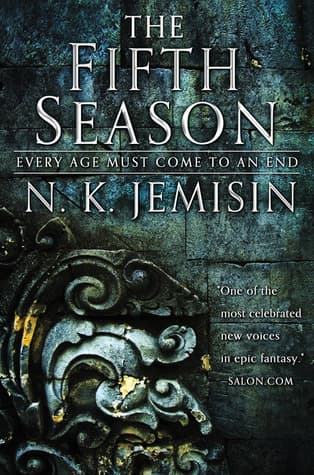
- The Fifth Season
N.K. Jemisin
Both novels explore the aftermath of cataclysmic events and the nature of power and oppression. City of Stairs focuses more on detective work, political maneuvering, and the uncovering of historical truths within a post-colonial context, while Jemisin's work delves deeper into systemic oppression, geological repercussions, and the deeply personal impact of a broken world.
- Harry Potter and the Sorcerer's Stone
J.K. Rowling
4.5 (7M) average on GoodreadsFantasyRescued from a miserable life under the stairs, an orphaned boy discovers he's a wizard destined for a magical school, where he uncovers a dangerous secret tied to the dark wizard who murdered his parents.
- The Hunger Games
Suzanne Collins
4.3 (6.4M) average on GoodreadsFantasyIn a future where children fight to the death on live television, Katniss Everdeen volunteers for the arena, turning a death sentence into a fight for survival and a spark of rebellion.
- 1984
George Orwell
4.2 (3.1M) average on GoodreadsPoliticsIn a future where surveillance and thought control are absolute, a man's search for truth clashes with the Party, showing that hope can be a form of rebellion.
- Divergent
Veronica Roth
4.2 (2.9M) average on GoodreadsFantasyIn a society divided by virtues, a sixteen-year-old's difference from the norm starts a rebellion that threatens her world.





Enjoyed the summary?
A summary gives you the shape of the book. The book itself has the detail, the examples and the voice.
Find City of Stairs on AmazonAs an Amazon Associate, BookBrief earns from qualifying purchases. How we're funded