
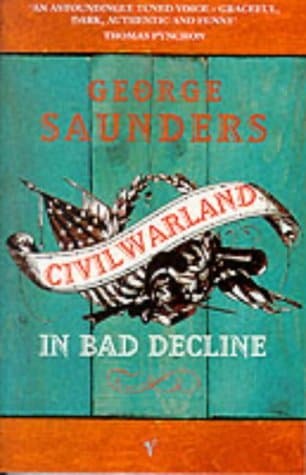
Synopsis
Covers the whole plot, including the ending.
- Difficulty
- Medium
- Pacing
- Moderate
- Mood
- Darkly Humorous, Absurdist, Bleak, Satirical, Thought-Provoking
- Read it if
- You appreciate dark humor and satire exploring the absurdities and struggles of modern life, with a touch of the surreal and dystopian.
- Skip it if
- You prefer straightforward narratives, optimistic outlooks, or stories without significant moral ambiguity and bleak settings.
CivilWarLand in Bad Decline Plot Summary
Covers the whole plot, including the ending.
CivilWarLand in Bad Decline: Introduction to the Park
The story opens with the unnamed narrator, a history buff and re-enactor, working at CivilWarLand, a dilapidated historical theme park. The park is in severe decline, plagued by vandalism, drug use, and a general lack of maintenance. The narrator worries about his family—his wife, his son, and especially his daughter, Cindy, who has a mysterious illness that causes her to lose consciousness. He is also burdened by the memory of his brother, who died under ambiguous circumstances. His job involves portraying a Civil War soldier, but he is increasingly distracted by the park's problems and his personal anxieties, including a menacing gang of youths who frequent the park and the indifference of his superiors, Mr. A. and Mr. B.
CivilWarLand in Bad Decline: The Vandalism and the Ghost
Vandalism at CivilWarLand intensifies. Historical artifacts are defaced and park property is destroyed. The narrator is put in charge of security, a role he is ill-equipped for. He tries to deter the vandals, but his efforts are largely futile. A 'ghost' begins to appear, causing further disruption and scaring visitors. This 'ghost' is an elderly, mentally unstable homeless man who has taken refuge in the park. The narrator, under pressure from Mr. A. and Mr. B., is tasked with removing the man. He approaches this task with reluctance and desperation to protect his job and family.
CivilWarLand in Bad Decline: The Confrontation and its Aftermath
The narrator confronts the homeless man, who is gentle but confused. He tries to reason with him, but the man is disoriented. Later, while trying to protect the park from the vandals, the narrator shoots and kills one of them, a young boy. The incident is a tragic accident, but it plunges the narrator into a deeper moral crisis. He is haunted by the boy's death and the implications for his own conscience and his family's future. The park's management attempts to cover up the incident, further highlighting the moral decay of their enterprise. The narrator's mental state deteriorates as he grapples with his actions.
CivilWarLand in Bad Decline: The Park's Demise and Personal Ruin
The park's decline accelerates after the shooting. Visitors abandon CivilWarLand, and the remaining staff are demoralized. The narrator's family life also crumbles; his daughter's illness worsens, and his relationship with his wife becomes strained. He is eventually fired from his job, leaving him without income and further exacerbating his family's precarious situation. The weight of his actions at the park, combined with his family's suffering, pushes him to the brink. He reflects on his brother's death and the cyclical nature of misfortune, seeing his own life as a series of bad decisions and uncontrollable events, mirroring the decay of the park itself.
The 400-Pound CEO: Ted and the Ethics of Cruelty
Ted, a timid and overweight man, works for a company run by an obese and tyrannical CEO. The corporate culture is one of extreme cruelty and humiliation, where employees are forced to participate in bizarre and degrading rituals to maintain their employment. Ted, desperate to provide for his family, endures these abuses, including being publicly ridiculed and forced to consume excessive amounts of food. He rationalizes his compliance by focusing on his family's needs, but his self-esteem is constantly eroded. The story highlights the dehumanizing effects of corporate power and the lengths individuals will go to for survival in a harsh economic climate, questioning the ethics of such environments.
The 400-Pound CEO: A Glimmer of Resistance
Despite the constant humiliation, Ted experiences a brief moment of internal resistance when he sees the CEO's vulnerability. He considers standing up for himself or others but ultimately succumbs to the pressure, fearing the loss of his job. The story ends with Ted continuing his miserable existence, a stark portrayal of the powerlessness of the individual against an oppressive system. His momentary defiance is quickly extinguished, showing how deeply ingrained the culture of fear and obedience has become. The narrative comments on the erosion of personal dignity in the pursuit of economic stability.
Bounty: Setting the Stage in a Post-Environmental Collapse World
The novella 'Bounty' introduces a dystopian future where environmental collapse has led to a society divided into genetically 'perfect' 'Stupids' and 'Flaws'—people with genetic defects. The 'Stupids' live in a protected enclave, while 'Flaws' are forced to live in a dangerous, polluted wasteland. The protagonist, a 'Flaw' named Bounty, is part of a community constantly on the run from the 'Stupids' who hunt them for sport and to maintain their perceived genetic purity. Bounty's family consists of her parents and her sister, who is pregnant. Their existence is one of constant fear, scarcity, and the struggle to maintain their humanity in a world that deems them subhuman.
Bounty: The Hunt and the Escape
Bounty and her family are targeted by 'Stupid' hunters. During a harrowing chase, Bounty's sister is captured. Bounty and her parents manage to escape, but the loss of her sister deeply affects them. This event shows the brutality of their world and the constant threat they live under. The family's journey is fraught with danger, as they navigate the desolate landscape, encountering other desperate 'Flaws' and the ever-present threat of the 'Stupids'. Bounty's parents try to protect her, but the harsh realities of their existence force her to mature quickly and confront the violence around her.
Bounty: The Enclave and the Truth
Bounty, driven by a desire for revenge and a need to understand her oppressors, infiltrates a 'Stupid' enclave. What she finds there is not the idealized society she imagined but a sterile, joyless existence. The 'Stupids' are emotionally stunted, obsessed with superficial perfection, and ironically, seem just as miserable as the 'Flaws' they persecute. She learns that their genetic 'purity' has come at the cost of their humanity and capacity for genuine emotion. This revelation complicates her understanding of good and evil, showing that neither side is truly 'better' than the other, just different forms of brokenness.
Bounty: A Glimmer of Hope and a Moral Compromise
Bounty returns to her 'Flaw' community, sharing her observations about the 'Stupids'. Her experiences have changed her, making her question the simple binaries of their world. She brings back not just information but a nuanced perspective, realizing that the 'Stupids' are also victims of their own system. The novella ends with Bounty facing a difficult choice: whether to continue the cycle of violence or to seek a different path, one that acknowledges the shared humanity and suffering of both 'Flaws' and 'Stupids'. The future remains uncertain, but Bounty's journey offers a fragile hope for understanding and perhaps, a different kind of survival.
Principal Figures
The Narrator (CivilWarLand)
Protagonist
A Civil War re-enactor struggling with his job, family, and a decaying theme park.
The unnamed narrator of 'CivilWarLand in Bad Decline' is a well-meaning but ultimately ineffective man. He is a history enthusiast who genuinely believes in the educational value of CivilWarLand, but he is constantly overwhelmed by its decay and the harsh realities of his life. His primary motivation is to protect and provide for his sick daughter, Cindy, and his family. He is burdened by guilt over his brother's death and a sense of powerlessness in the face of his circumstances. He is prone to introspection and moral agonizing, but often lacks the agency to change his fate.
Relationships: Cindy (Daughter) (deeply loving and protective, driven by her illness); Wife (strained, but he is dedicated to providing for her); Brother (haunted by his death and the circumstances surrounding it); Mr. A. and Mr. B. (subservient and fearful of his bosses, who exploit him)
Cindy (CivilWarLand)
Supporting
The narrator's critically ill daughter, whose suffering motivates his actions.
Cindy is the narrator's young daughter, suffering from a debilitating and mysterious illness that causes her to lose consciousness. She is a symbol of innocence and vulnerability in a harsh world. Her condition is the primary driver of the narrator's actions and anxieties, as he desperately tries to earn money for her treatment and ensure her well-being. She represents the stakes of his struggle, making his moral compromises all the more poignant. Her suffering highlights the systemic failures that impact ordinary families.
Relationships: The Narrator (daughter to father, he is fiercely protective and loving)
Ted (The 400-Pound CEO)
Protagonist
A meek employee who endures extreme corporate humiliation to keep his job.
Ted is a kind-hearted but meek and overweight man who works for a tyrannical CEO. He is deeply insecure and constantly struggles with his self-worth. His primary motivation is to provide for his family, which forces him to endure degrading corporate rituals. He represents the everyman caught in the dehumanizing machinery of a ruthless capitalist system. Despite his compliance, he harbors a quiet internal struggle and a longing for dignity, occasionally demonstrating fleeting moments of moral clarity.
Relationships: Wife/Family (devoted, his primary reason for enduring hardship); The 400-Pound CEO (fearful and subservient, a victim of the CEO's cruelty)
The 400-Pound CEO
Antagonist
An obese, tyrannical corporate leader who subjects his employees to cruel and demeaning rituals.
The CEO is a monstrous figure, both physically and morally. He is morbidly obese and wields absolute power over his employees, whom he delights in humiliating. He embodies unchecked corporate power and the grotesque excesses of a system that values profit and control over human dignity. His cruelty is a reflection of a deeply sick and broken society. Despite his power, he is also shown to be isolated and perhaps even miserable, suggesting that his tyranny stems from his own internal void.
Relationships: Ted (abusive boss to subservient employee)
Bounty (Bounty)
Protagonist
A 'Flaw' living in a post-apocalyptic world, hunted by 'Stupids'.
Bounty is a young 'Flaw' girl, resilient and resourceful, living in a desolate, post-environmental collapse world. She is fiercely protective of her family and community. Initially driven by fear and a desire for revenge against the 'Stupids' who persecute her people, her journey leads her to a more nuanced understanding of the world. She embodies the struggle for survival, identity, and humanity in a dystopian future. She is observant and intelligent, capable of adapting to extreme circumstances.
Relationships: Parents (loving and protective, relies on them for guidance); Sister (close bond, her capture fuels Bounty's journey); Stupids (initially antagonist, later becomes a subject of complex understanding)
The 'Stupids' (Bounty)
Antagonists/Supporting
Genetically 'perfect' people who hunt 'Flaws' in a dystopian future.
The 'Stupids' are the genetically engineered 'perfect' humans who inhabit protected enclaves and persecute the 'Flaws'. They represent the ultimate outcome of a society obsessed with genetic purity and control. While initially presented as clear antagonists, Bounty's infiltration reveals them to be sterile, emotionally stunted, and profoundly unhappy. They are victims of their own engineered perfection, lacking genuine connection and joy. They are a cautionary tale about the dangers of eugenics and social stratification.
Relationships: Bounty (hunters to hunted, later subjects of Bounty's observation)
The Homeless Man (CivilWarLand)
Supporting
A mentally unstable man living in CivilWarLand, mistaken for a ghost.
This elderly, disoriented man takes refuge in the decaying theme park, inadvertently becoming the 'ghost' that frightens visitors. He is a symbol of society's discarded and vulnerable, a person for whom the system has no place. His presence highlights the narrator's moral dilemma, as he is tasked with removing him. He is harmless but his existence disrupts the park's already tenuous order, forcing the narrator to confront his own capacity for cruelty.
Relationships: The Narrator (victim of the narrator's desperate actions)
Mr. A. and Mr. B. (CivilWarLand)
Supporting
The indifferent, profit-driven managers of CivilWarLand.
Mr. A. and Mr. B. are the park's managers, characterized by their detached professionalism and lack of empathy. They are solely concerned with profit and reputation, ignoring the park's decay and the human cost of their decisions. They represent the corporate indifference that allows exploitation and moral compromise to flourish. They manipulate the narrator, pressuring him into increasingly unethical actions while maintaining plausible deniability. They are symbols of the dehumanizing forces at play in a capitalist society.
Relationships: The Narrator (manipulative bosses to a desperate employee)
Themes & Insights
The Dehumanizing Effects of Capitalism and Corporate Culture
Saunders explores how the pursuit of profit and corporate efficiency can strip individuals of their dignity and humanity. In 'CivilWarLand in Bad Decline,' the narrator makes morally compromising decisions, ultimately leading to violence, all to protect a job in a failing, exploitative theme park. In 'The 400-Pound CEO,' Ted endures extreme humiliation and degradation to maintain his employment, highlighting how economic insecurity forces individuals into subservience. The 'Stupids' in 'Bounty,' despite their 'perfection,' live sterile, joyless lives, suggesting that even a seemingly utopian capitalist outcome can be devoid of true human connection. This theme permeates the collection, showing the destructive power of systems that prioritize capital over people.
“What I liked about my job was the sense of history, the sense of being part of something larger than myself. What I didn't like was that it was a total fucking disaster.”
Moral Compromise and Guilt
Many of Saunders' characters are forced into morally questionable acts due to their circumstances, leading to profound guilt. The narrator in 'CivilWarLand' grapples with the decision to remove the homeless man and, more tragically, with the accidental killing of a vandal. His internal monologue is filled with self-recrimination and a desperate attempt to justify his actions, which ultimately spirals into despair. Ted in 'The 400-Pound CEO' feels a constant internal conflict between his desire for dignity and his need to provide for his family, leading to self-loathing. These narratives explore the psychological toll of compromising one's values and the lasting burden of guilt.
“I was a man who had killed a boy. I was a man who had done a bad thing. And I was a man who was going to pay for it.”
The Decay of Society and Institutions
Saunders depicts worlds in various states of decline, reflecting a broader societal decay. CivilWarLand itself is a symbol of this, a historical park falling apart due to neglect, vandalism, and corporate indifference. The dystopian future of 'Bounty' shows a world ravaged by environmental collapse and social stratification, where humanity has split into oppressors and oppressed. The corporate environment in 'The 400-Pound CEO' is a microcosm of decay, where ethical standards have eroded in favor of cruelty and power. This theme suggests a pessimistic view of humanity's trajectory, where systems and values are consistently breaking down.
“Our world was a mess, but at least it was our mess.”
The Struggle for Dignity and Identity
In the face of overwhelming adversity and dehumanizing forces, characters often struggle to maintain a sense of self-worth and identity. The narrator in 'CivilWarLand' tries to cling to his historical knowledge and family values even as his life crumbles. Ted, despite his humiliations, harbors a desire for respect and a brief spark of defiance against his corporate tormentors. Bounty and the 'Flaws' in 'Bounty' fight to retain their humanity and community in a world that labels them as subhuman. This theme highlights the resilience of the human spirit, even when confronted with systems designed to erase individual worth.
“It was not a good day to be a man. It was not a good day to be a human.”
Plot Devices & Literary Techniques
Dystopian Setting
Creates a bleak, exaggerated world to highlight societal flaws.
Saunders frequently uses dystopian or near-dystopian settings to amplify and satirize contemporary societal issues. 'CivilWarLand in Bad Decline' presents a theme park as a microcosm of a decaying society, while 'Bounty' directly constructs a future devastated by environmental disaster and extreme social stratification. These settings allow Saunders to explore themes of corporate greed, social inequality, and the dehumanizing effects of power in an exaggerated, yet disturbingly plausible, manner. The fantastical elements serve to make the underlying critiques of real-world problems more stark and impactful, pushing readers to consider the logical extremes of current trends.
First-Person Narrative
Provides intimate access to the characters' internal struggles and moral dilemmas.
The use of first-person narration in many of Saunders' stories, particularly 'CivilWarLand in Bad Decline' and 'The 400-Pound CEO,' provides immediate and intimate access to the protagonists' thoughts, anxieties, and moral struggles. This allows readers to deeply empathize with their predicaments and understand the complex internal justifications for their actions. The often rambling, stream-of-consciousness style of the narrators reflects their mental states and the chaos of their environments. This device is crucial for conveying the emotional weight of their moral compromises and the psychological toll of their oppressive circumstances, fostering a strong connection between reader and character.
Satire and Dark Humor
Uses absurdity and irony to critique societal norms and power structures.
Saunders employs a distinctive blend of satire and dark humor to underscore the absurdities and cruelties of modern life. The decaying CivilWarLand, the grotesque rituals of 'The 400-Pound CEO,' and the ironically named 'Stupids' in 'Bounty' are all examples of this. The humor often arises from the juxtaposition of mundane, bureaucratic language with horrific or tragic events, creating a sense of uncomfortable laughter. This device prevents the stories from becoming purely depressing, instead offering a critical lens that highlights the ridiculousness of the systems and behaviors being critiqued, forcing readers to confront uncomfortable truths through a veil of dark comedy.
Symbolism
Uses objects, places, and characters to represent larger ideas.
Symbolism is prevalent throughout Saunders' work. CivilWarLand itself symbolizes the decay of historical memory, cultural values, and institutional integrity. Cindy's illness in 'CivilWarLand' represents the innocent suffering caused by systemic neglect and the narrator's personal anxieties. The 400-pound CEO symbolizes unchecked corporate power and gluttony. In 'Bounty,' the 'Flaws' and 'Stupids' are symbolic of societal divisions based on arbitrary criteria, while the polluted wasteland represents environmental degradation. These symbols enrich the narratives, providing deeper layers of meaning and reinforcing the overarching themes of the collection.
CivilWarLand in Bad Decline Quotes
“The place was a dump. I mean, not just a dump, but a dump with aspirations.”
“There are people who can do good in this world, and then there are people who are just in the way.”
“My job was to make the past seem more compelling than the present, which was easy, since the present sucked.”
“We were all just trying to get by, which meant we were all just trying to screw each other over.”
“Sometimes you just have to do what's right, even if it means losing everything.”
“The trick was to pretend you believed in something, anything, just to get through the day.”
“He had that look, the one that said, 'I'm a good guy, really, just misunderstood by a world that expects too much.'”
“We kept moving forward, because what else were we going to do? Stand still and let it all catch up?”
“The future was just the present, but with more rust and fewer options.”
“Every day was a negotiation between what you wanted and what you could actually get.”
“He had a way of looking at you that made you feel like you were the only thing wrong with the world, and he was the only one who noticed.”
“The past was a weapon they used against us, a way to remind us how much we'd failed.”
“We were all just ghosts haunting a future that had already happened.”
“There's a certain kind of freedom in knowing you've got nothing left to lose.”
Quiz
10 questions on the plot and the characters. Each answer comes with a short explanation.
Question 1
In 'CivilWarLand in Bad Decline,' what is the protagonist's primary job at the historical theme park?
- Playing a Confederate general in reenactments
- Cleaning up after the park's visitors and maintaining exhibits
- Working as a cashier in the gift shop
- Operating the mechanical rides
Show answer
B. Cleaning up after the park's visitors and maintaining exhibits The protagonist is a low-level employee responsible for the upkeep of the park, often cleaning up vomit and dealing with vandalism, not a performer or a cashier.
Question 2
What is the name of the main character in the story 'The 400-Pound CEO'?
- Tim
- Jeffrey
- Calvin
- Arthur
Show answer
C. Calvin The protagonist of 'The 400-Pound CEO' is Calvin, a morbidly obese and morally conflicted executive.
Question 3
In 'Bounty,' the novella, what is the primary purpose of the 'Historical Re-enactment Village' where the characters live?
- To educate visitors about pre-Collapse history
- To provide a controlled environment for the 'Flawed' to live and be observed
- To serve as a training ground for future leaders
- To produce goods for the 'Perfect' society
Show answer
B. To provide a controlled environment for the 'Flawed' to live and be observed The village in 'Bounty' is a place where the 'Flawed' are kept and monitored for the entertainment and study of the 'Perfect,' who live outside its walls.
Question 4
Which of the following themes is most prevalent across multiple stories in 'CivilWarLand in Bad Decline'?
- The triumph of the human spirit over adversity
- The dehumanizing effects of capitalism and bureaucracy
- The beauty of nature and the simple life
- The importance of traditional family values
Show answer
B. The dehumanizing effects of capitalism and bureaucracy Many stories, like the title story and 'The 400-Pound CEO,' depict characters struggling within absurd, profit-driven systems that erode their dignity and well-being.
Question 5
In 'The Wavemaker Falters,' what is the protagonist's specific job at the aquatic theme park?
- Training the dolphins for shows
- Operating the artificial wave machine for surfing demonstrations
- Selling concessions to visitors
- Maintaining the filtration systems for the pools
Show answer
B. Operating the artificial wave machine for surfing demonstrations The protagonist, a former champion surfer, is now the 'wavemaker,' responsible for operating the machine that creates artificial waves.
Question 6
What unusual 'therapy' is offered to the characters in 'The Falls' to help them cope with their anxieties?
- Group meditation sessions by the river
- Guided tours of historical monuments
- A ritualistic 'launching' of their fears down the falls
- Individual counseling with a licensed therapist
Show answer
C. A ritualistic 'launching' of their fears down the falls In 'The Falls,' the characters engage in a bizarre ritual where they write their fears on paper and launch them, sometimes with animals attached, down the falls.
Question 7
In 'Bounty,' what is the primary characteristic that differentiates the 'Perfect' from the 'Flawed'?
- Their physical strength and athletic ability
- Their genetic purity and lack of visible defects
- Their intellectual superiority and artistic talent
- Their moral righteousness and spiritual enlightenment
Show answer
B. Their genetic purity and lack of visible defects The 'Perfect' are defined by their genetic engineering and lack of any physical or mental 'flaws,' setting them apart from the 'Flawed' who exhibit various imperfections.
Question 8
The story 'Downtrodden Abbey' features a character who works as a 'moral hygienist.' What is their main responsibility?
- Enforcing religious doctrine among the populace
- Censoring media and public discourse for offensive content
- Evaluating and 'correcting' individuals deemed to have moral failings
- Providing spiritual guidance and counseling
Show answer
C. Evaluating and 'correcting' individuals deemed to have moral failings The moral hygienist's job is to assess and 'cleanse' individuals of their perceived moral impurities, reflecting a society obsessed with control and conformity.
Question 9
In 'The End of FIRPO in the World,' what is FIRPO's primary motivation for his unusual behavior and beliefs?
- A desire for fame and recognition
- A profound sense of isolation and a distorted understanding of reality
- A calculated effort to manipulate those around him for personal gain
- A religious conviction that he is performing a divine duty
Show answer
B. A profound sense of isolation and a distorted understanding of reality FIRPO's actions stem from a deep, almost delusional isolation and a unique, often nonsensical, internal logic that separates him from conventional understanding.
Question 10
Consider the overall tone and narrative style across the collection. Which literary device is most consistently employed by Saunders to achieve his distinctive effect?
- Gothic imagery and supernatural elements
- Stream of consciousness and internal monologue
- Satire and dark humor combined with poignant human observation
- Extensive use of lyrical prose and poetic language
Show answer
C. Satire and dark humor combined with poignant human observation Saunders' hallmark style involves sharp, often absurd satire and dark humor to critique societal flaws, while simultaneously revealing the deep, often painful, humanity of his struggling characters.
CivilWarLand in Bad Decline FAQ
What is the overarching theme connecting the stories and novella in 'CivilWarLand in Bad Decline'?
The book explores the struggles of ordinary people trying to maintain their dignity and provide for their families in a series of absurd, often dystopian, American landscapes. Characters frequently work in failing, ethically compromised businesses, highlighting the dehumanizing effects of late capitalism and the erosion of genuine human connection.
Who is the protagonist of the titular story, 'CivilWarLand in Bad Decline,' and what is his main conflict?
The protagonist is a historical re-enactor and park employee at CivilWarLand, a failing theme park. His main conflict involves dealing with increasingly violent teenage delinquents, known as 'troublers,' who are terrorizing the park, while also trying to protect his family and maintain his job amidst the park's imminent collapse.
In 'The 400-Pound CEO,' what is the protagonist's unusual business and his core dilemma?
Jeffrey is the CEO of a company that humanely disposes of unwanted animals, primarily geese and gophers, through a process involving gas. His core dilemma is his profound empathy for the animals he must kill, coupled with his desire to be perceived as a competent and respected businessman, despite his deep-seated insecurities and moral conflicts.
What kind of world do the characters inhabit in the novella 'Bounty,' and what is the protagonist's role?
'Bounty' depicts a post-apocalyptic, highly stratified world where 'Flaweds' (people with genetic defects) are hunted for sport and entertainment. The protagonist, a Flawed woman named Connie, works in a 'Historical Re-creation' facility where Flaweds perform degrading acts for 'Normals,' and she eventually attempts a dangerous escape.
How does the story 'Isabelle' connect to themes of corporate exploitation and personal sacrifice?
In 'Isabelle,' a man recounts his relationship with a woman who works in a grotesque, dehumanizing factory that processes human waste into a useful product. The story highlights the extreme lengths people go to for employment, the moral compromises they make, and the quiet despair of living in a system that values profit over human dignity.
Are there any subtle recurring motifs or symbols across different stories?
Yes, recurring motifs include the decay of once-grand attractions (CivilWarLand, theme parks), the omnipresence of corporate jargon and euphemisms masking cruel realities, and the persistent image of animals suffering or being exploited. These elements underscore the pervasive sense of a world in decline, both morally and physically.
In 'The 400-Pound CEO,' what is the significance of Jeffrey's repeated internal monologues and self-doubt?
Jeffrey's internal monologues reveal a deep chasm between his self-perception and how he believes others perceive him, highlighting his profound insecurity and loneliness. They also serve as a coping mechanism, a way for him to rationalize his actions and maintain a fragile sense of self-worth in a job that constantly challenges his morality.
How does the narrative structure of 'CivilWarLand in Bad Decline' (first-person, confessional) impact the reader's understanding of the protagonist?
The first-person, confessional style creates a sense of intimacy and immediacy, allowing the reader direct access to the protagonist's anxieties, rationalizations, and moral dilemmas. This perspective fosters empathy, even when the character makes questionable choices, as we understand the pressures and fears driving their actions.
What psychological toll do the 'troublers' take on the protagonist in 'CivilWarLand in Bad Decline,' beyond physical threats?
Beyond physical threats, the 'troublers' erode the protagonist's sense of control, safety, and purpose. Their senseless violence and disregard for the park's historical significance represent a breakdown of order and meaning, forcing him to confront his own powerlessness and the futility of his efforts to maintain a semblance of normalcy.
In 'Bounty,' how does Connie's internal monologue about 'Normals' and 'Flaweds' reflect a deeper societal critique?
Connie's internal monologue reveals the ingrained prejudice and dehumanization within her society, where 'Normals' are seen as inherently superior and 'Flaweds' as disposable entertainment. Her narrative exposes how power structures create and reinforce artificial divisions, justifying cruelty and exploitation through manufactured otherness.
Does the book offer any hope for its characters, or is it purely a bleak commentary on human nature and society?
While often bleak, the book contains glimmers of hope in the characters' persistent, if sometimes misguided, attempts to connect, protect loved ones, or find meaning. For example, the protagonist in 'CivilWarLand' tries to save his family, and Connie in 'Bounty' strives for freedom, suggesting a resilience of the human spirit even in dire circumstances.
How do the various forms of 'entertainment' depicted in the book (theme parks, historical re-enactments, 'Flawed' shows) function as social commentary?
These forms of entertainment serve as a biting social commentary on consumerism, voyeurism, and the commodification of suffering. They highlight how society distracts itself, sanitizes history, and justifies cruelty by packaging it as spectacle, ultimately revealing a profound moral bankruptcy.
What is the significance of the recurring theme of animals in the collection, particularly in 'The 400-Pound CEO' and 'Bounty'?
Animals often serve as symbols of innocence, vulnerability, and the natural world being encroached upon by human industry and cruelty. In 'The 400-Pound CEO,' Jeffrey's empathy for the animals he kills underscores his own humanity, while in 'Bounty,' the comparison of Flaweds to animals hunted for sport emphasizes their dehumanization.
How does Saunders use humor, specifically dark humor or satire, to convey his messages?
Saunders uses dark humor and satire to underscore the absurdity and tragic irony of his characters' situations. The juxtaposition of mundane corporate jargon with horrific realities, or the characters' earnest attempts at dignity in undignified circumstances, creates a darkly comedic effect that makes the social critique more potent and memorable.
What is the role of memory and nostalgia in stories like 'CivilWarLand in Bad Decline' and 'Isabelle'?
Memory and nostalgia often function as a contrast to the present decay. In 'CivilWarLand,' the park's historical theme is corrupted by modern violence, while in 'Isabelle,' the narrator's memories of their relationship are tinged with the bleak reality of their present circumstances. This highlights the loss of idealism and the grimness of contemporary life.
In 'The Wavemaker Falters,' what does the protagonist's obsession with the 'Wavemaker' reveal about his psychological state?
The protagonist's obsession with the Wavemaker, a device that creates artificial waves, reveals his profound guilt and neurosis following an accident. He fixates on controlling the machine as a way to control his own chaotic internal world and atone for his past actions, highlighting his inability to escape his psychological burden.
How do the protagonists in 'CivilWarLand in Bad Decline' and 'Bounty' both demonstrate a form of moral compromise for survival?
In 'CivilWarLand,' the protagonist initially tries to uphold park rules but eventually resorts to violence and deception to protect his family and job. In 'Bounty,' Connie endures degrading treatment and participates in the system as a 'Flawed' performer to survive, both illustrating how extreme circumstances force individuals into morally ambiguous choices for self-preservation.
What is the significance of the frequently bureaucratic and corporate language used by characters, even in personal contexts?
The pervasive bureaucratic and corporate language signifies the infiltration of corporate culture into every aspect of life, even personal thought and relationships. It reflects a world where human interactions are commodified and feelings are processed through a depersonalized, efficiency-driven lens, further dehumanizing the characters.
Are there connections between the corporate entities described in different stories, suggesting a broader, unified dystopian world?
While not explicitly stated as a unified universe, the consistent portrayal of exploitative, absurd, and decaying corporate entities across stories creates a strong thematic link. This suggests a broader, shared dystopian vision of America where profit motives and bureaucratic inefficiencies lead to widespread human suffering and environmental degradation.
About the author
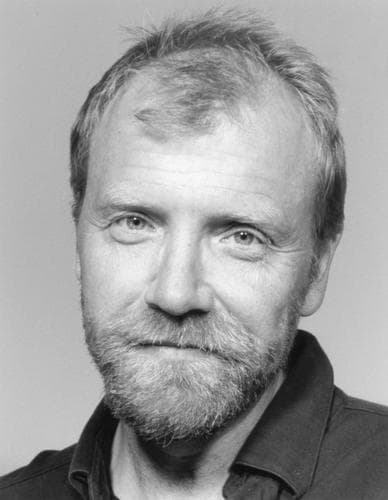
George Saunders is an American writer of short stories, essays, novellas, children's books, and novels. His writing has appeared in The New Yorker, Harper's, McSweeney's, and GQ. He also contributed a weekly column, American Psyche, to The Guardian's weekend magazine between 2006 and 2008.
Similar books
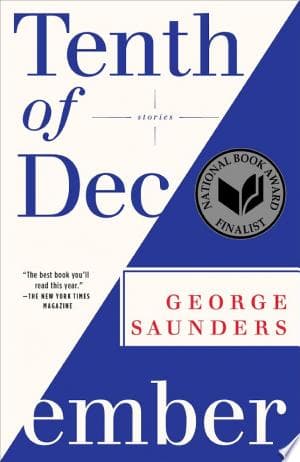
- Tenth of December
George Saunders
4.0 (62k) average on GoodreadsLiterary FictionShares Saunders' unique voice, blend of humor and pathos, and focus on ordinary people in extraordinary circumstances.
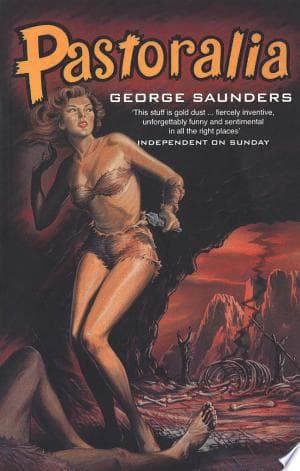
- Pastoralia
George Saunders
4.1 (18k) average on GoodreadsLiterary FictionExplores similar themes of economic struggle, absurd employment, and the dehumanizing aspects of modern society.
- Neuromancer
William Gibson
3.9 (262k) average on GoodreadsFantasyWhile both authors utilize speculative elements, Gibson's Neuromancer is a seminal work of cyberpunk, characterized by complex world-building and a focus on technological frontiers and their impact on society. Saunders's science fiction in CivilWarLand is typically confined to the immediate, often decaying, environments that directly impact his characters, serving as a backdrop for social commentary rather than an exploration of technological mechanics or grand speculative futures.
- The Old Man and the Sea
Ernest Hemingway
3.8 (831k) average on GoodreadsLiterary FictionA Cuban fisherman's long struggle with a giant marlin becomes a story of endurance and dignity, now retold for young adults with illustrations, phonetic guides, and writing prompts in Traditional Chinese.
- One Hundred Years of Solitude
Gabriel García Márquez
4.1 (753k) average on GoodreadsLiterary FictionThrough the multi-generational story of the Buendía family, a mythical town deals with the repeating patterns of time, love, and solitude, as the extraordinary mixes with the ordinary.
- The Goldfinch
Donna Tartt
3.9 (720k) average on GoodreadsLiterary FictionHaunted by a tragic explosion and clutching a stolen Dutch masterpiece, a young orphan navigates the opulent drawing rooms of New York and the gritty underbelly of the art world, desperately seeking connection and redemption amidst a life spiraling into crime and obsession.



Enjoyed the summary?
A summary gives you the shape of the book. The book itself has the detail, the examples and the voice.
Find CivilWarLand in Bad Decline on AmazonAs an Amazon Associate, BookBrief earns from qualifying purchases. How we're funded