

Synopsis
Covers the whole plot, including the ending.
- Difficulty
- Medium
- Pacing
- Moderate
- Mood
- Heartbreaking, Hopeful, Emotional, Lyrical
- Read it if
- You enjoy poignant stories of family secrets, grief, and sisterhood, told in beautiful verse.
- Skip it if
- You prefer traditional prose or lighthearted stories without heavy themes of loss and betrayal.
Clap When You Land Plot Summary
Covers the whole plot, including the ending.
The Crash
Camino Rios, seventeen, in the Dominican Republic, waits for her father, Papi, who visits every summer from New York City. She goes to the airport with her aunt, Tía Caridad, but instead of Papi, they find crying people and news of a plane crash. In New York City, Yahaira Rios, also seventeen, is called to her principal's office where her mother, Mami, delivers the news: Papi's plane, Flight 157, has crashed, killing everyone. Both girls deal with the immediate shock and grief, their worlds shattering as the reality of their father's death sets in, ending their routines and expectations.
Unveiling Secrets
As Yahaira grieves Papi, she notices her mother's odd behavior and a hidden envelope with a second passport. It shows a different photo of Papi, with a young girl. Overwhelmed, Yahaira tells her girlfriend, Dre, who helps her piece together the truth: Papi had another family in the Dominican Republic. Yahaira's grief mixes with a deep sense of betrayal and anger, realizing his frequent 'business trips' were visits to his other daughter and life. This discovery complicates her mourning, forcing her to confront a hidden part of her seemingly perfect father.
Camino's Vulnerability
In the Dominican Republic, Camino's grief is made worse by money worries. Papi was her main financial support, and his death puts her future, especially her dream of studying medicine, at risk. She also becomes aware of El Cero, an older man who preys on young girls in the community. With Papi gone, Camino feels more exposed and vulnerable, especially after El Cero makes an unwanted advance. Tía Caridad tries to protect her, but Camino realizes she must find a way to secure her future and safety.
The Funeral and Its Aftermath
A large memorial service is held in New York for the victims of Flight 157, attended by Yahaira and her mother. The event is a sad public display of grief, yet for Yahaira, it is also a public front, as she deals privately with the knowledge of Papi's secret. Later, needing answers and to claim Papi's remains, Yahaira and her mother travel to the Dominican Republic. This journey is full of tension and unspoken truths, as Yahaira knows she is about to meet the other family, while her mother is still reeling from the betrayal and the public exposure of Papi's double life.
First Encounter
Yahaira, her mother, and Camino, with Tía Caridad, all meet at the memorial near the plane crash site. Here, the two sisters, Camino and Yahaira, see each other for the first time. The meeting is emotional, a silent acknowledgment of their shared father and the devastating secret he kept. There is a mix of curiosity, resentment, and a strange familiarity between them. The moment is awkward and painful, as they stand amidst the wreckage and grief, forced to confront the living proof of Papi's deception and their unexpected family bond.
Navigating Shared Grief and Resentment
Camino and Yahaira begin to interact cautiously, first through glances and then conversations. They find similarities in their personalities and experiences with Papi, but also differences in their lives and expectations. Their mothers, however, remain hostile towards each other, their grief made worse by anger and betrayal. This animosity makes it hard for the girls to connect openly, forcing them to build their budding sisterhood in secret or in brief moments, all while processing their individual and collective grief for their father.
El Cero's Threat Escalates
El Cero's unwanted attention towards Camino worsens from unsettling glances to direct, threatening advances. He follows her, makes inappropriate comments, and tries to touch her, making Camino feel unsafe in her community. His presence darkens her life, increasing her vulnerability now that Papi is not there to protect her. Camino is scared but determined not to let him ruin her dreams, realizing she needs to find a way to escape him and secure her future away from the island.
Yahaira's Support and a Shared Dream
As the sisters spend more time together, Yahaira learns about Camino's dreams of studying medicine and her difficult situation with El Cero. Seeing Camino's intelligence and potential, Yahaira offers to help her come to New York. This offer becomes hope for Camino, a chance to escape her circumstances and pursue her dreams. Through their talks, they also share stories and memories of Papi, starting to form a more complete, though complex, picture of their father, finding comfort and connection in their shared experiences.
Confronting El Cero
When El Cero's harassment of Camino reaches a peak, Tía Caridad, who has always been protective, steps in with fierce determination. Yahaira, seeing the threat, also stands up for her sister, showing a new protective instinct. Together, they confront El Cero, making it clear that Camino is not alone and will not be an easy target. This confrontation is a key moment, asserting Camino's safety and strengthening the bond between the three women, showing El Cero that Camino now has strong support.
Forgiveness and a New Beginning
After much tension, the mothers, Yahaira's Mami and Tía Caridad, begin a slow, painful process of reconciliation. They understand that their daughters' bond is more important than their individual resentments. With the help of the extended family, arrangements are made for Camino to move to New York. The sisters share an emotional farewell with Tía Caridad, who has been Camino's support. Camino leaves the Dominican Republic, carrying her grief, her dreams, and the promise of a new life with her newfound sister, marking a bittersweet end to one chapter and a hopeful start to another.
Life in New York
Camino arrives in New York and begins to adjust to her new life with Yahaira and her mother. The transition is challenging, with cultural differences and the lingering absence of Papi. However, with Yahaira's support, Camino enrolls in school and starts her academic goals. The sisters learn to live together, navigating their shared history and forming a deeper bond. Yahaira's mother, still dealing with her own pain, slowly opens her heart to Camino, recognizing her as family and a part of Papi's legacy, solidifying their new, unconventional family unit.
Clap When You Land Characters
Camino Rios
Protagonist
A resilient Dominican girl dreaming of becoming a doctor.
Camino is a sharp, observant, and resilient seventeen-year-old living in the Dominican Republic. She is deeply connected to her community and especially to her aunt, Tía Caridad, who is a traditional healer. Camino dreams of becoming a doctor, a path encouraged and financially supported by her father, Papi. She is intelligent and compassionate, often helping Tía Caridad with her healing practices. Her world is shattered by Papi's death, which not only brings immense grief but also exposes her to financial precarity and the predatory advances of El Cero.
Relationships: Papi (Beloved father, source of financial and emotional support); Tía Caridad (Loving and protective aunt, surrogate mother); Yahaira Rios (Initially unknown half-sister, then a supportive ally and family); El Cero (Predator and source of fear)
Yahaira Rios
Protagonist
A talented New York City musician grappling with her father's secrets.
Yahaira is a seventeen-year-old from New York City, a gifted bass player with a strong sense of justice and a deep love for her father, Papi. Her life seems perfect, with a loving family and a supportive girlfriend, Dre. Papi's death shatters her world, but the subsequent discovery of his secret life in the Dominican Republic, including another daughter, deeply wounds her, turning her grief into anger and betrayal. Yahaira is fiercely loyal and protective, especially once she meets Camino, and she struggles with the idealized image of her father versus the reality of his deception.
Relationships: Papi (Beloved, then resented father due to his secrets); Mami (Yahaira's mother) (Loving, but also a source of tension due to her grief and anger); Dre (Supportive girlfriend, confidante); Camino Rios (Initially unknown half-sister, then a cherished family member)
Papi (Juan Carlos Rios)
Central Figure (Deceased)
The deceased father whose secret life connects and divides his two families.
Papi is the catalyst for the entire story, though he is deceased from the first chapter. He led a double life, maintaining two families across two countries. To Camino, he was her loving, supportive father who promised her a future in medicine. To Yahaira, he was a hero, a doting dad who encouraged her musical talents. His death exposes his deception, forcing both his daughters and their mothers to confront the complexities of his love and betrayal. His character is revealed through the memories and perspectives of those he left behind, showing him as both flawed and deeply loved.
Relationships: Camino Rios (Daughter, primary financial support); Yahaira Rios (Daughter, musical inspiration); Mami (Yahaira's mother) (Wife, betrayed partner); Tía Caridad (Sister-in-law, caregiver for his Dominican daughter)
Tía Caridad
Supporting
Camino's aunt and a traditional healer, her protector and confidante.
Tía Caridad is Camino's aunt, Papi's sister-in-law, and her primary caregiver in the Dominican Republic. She is a respected traditional healer (curandera) in her community, known for her wisdom and strong spirit. Tía Caridad is fiercely protective of Camino, especially after Papi's death leaves Camino vulnerable to El Cero's advances. She harbors resentment towards Papi for his deception but ultimately prioritizes Camino's well-being and helps facilitate her move to New York, demonstrating her deep love and unwavering support for her niece.
Relationships: Camino Rios (Niece, surrogate daughter); Papi (Brother-in-law, source of family conflict); Yahaira Rios (Nieces (by Papi), initially a stranger, then family); Mami (Yahaira's mother) (Initially antagonistic, then reconciled)
Mami (Yahaira's Mother)
Supporting
Yahaira's mother, a woman devastated by her husband's death and betrayal.
Yahaira's mother is a strong, proud woman who believed she had a perfect life with Papi. His death shatters her, but the subsequent revelation of his double life and other family in the Dominican Republic plunges her into a deep emotional crisis of betrayal, anger, and humiliation. She struggles immensely to reconcile the man she loved with the man who deceived her. Her initial interactions with Camino and Tía Caridad are fraught with hostility, but she eventually begins to heal and accept Camino as part of her family, demonstrating her capacity for forgiveness and love.
Relationships: Papi (Husband, source of love and betrayal); Yahaira Rios (Daughter, shared grief and support); Tía Caridad (Initially antagonistic, then reconciled); Camino Rios (Initially resented, then accepted as family)
Dre
Supporting
Yahaira's supportive and understanding girlfriend.
Dre is Yahaira's girlfriend and a steadfast source of emotional support and wisdom. She is calm, observant, and deeply empathetic, providing a safe space for Yahaira to process her grief, anger, and confusion after Papi's death and the discovery of his secret. Dre encourages Yahaira to confront the truth and helps her navigate the complexities of her emotions and family dynamics. Her unwavering presence and practical advice are crucial for Yahaira's healing process, demonstrating the strength and importance of their relationship.
Relationships: Yahaira Rios (Girlfriend, confidante, emotional anchor)
El Cero
Antagonist
A predatory older man who targets vulnerable young girls in Camino's community.
El Cero is a local older man in Camino's Dominican community who has a reputation for preying on young, vulnerable girls. He is manipulative, intimidating, and a constant source of fear for Camino, especially after Papi's death removes her primary protector. He represents the dangers and societal pressures Camino faces in her community, highlighting her precarious situation and the urgent need for her to escape. His presence underscores the themes of vulnerability and the importance of protection and agency for young women.
Relationships: Camino Rios (Target of his predatory attention, source of fear)
Clap When You Land Themes
Grief and Loss
The novel explores grief after Papi's sudden death. Both Camino and Yahaira experience shock, sadness, and confusion, but their situations shape their mourning. Camino's grief is tied to money worries and vulnerability (e.g., facing El Cero's advances), while Yahaira's is complicated by betrayal and anger after discovering Papi's double life. The book shows that grief is not linear and can be made worse by unresolved issues, forcing characters to confront the complexities of the person they lost. The memorial services and the journey to the crash site also show communal and individual expressions of loss.
“Grief is a house / with no doors or windows. / It swallows you whole. / It is the ocean after a storm. / It is a plane crash.”
Secrets and Betrayal
Papi's double life is the central secret, causing deep feelings of betrayal for both his daughters and his wife. Yahaira struggles with the shattering of her idealized image of her father, feeling his love was a lie (e.g., finding the second passport). Camino, while not directly betrayed by the secret of a second family, feels betrayed by the uncertainty of her future once Papi's support is gone. The book explores how hidden truths damage relationships and identity, and the difficult process of reconciling love with deception. The tension between the mothers shows the deep wound of betrayal.
“How can a man / be a hero / and a liar / at the same time?”
Sisterhood and Found Family
Despite the painful circumstances of their meeting, Camino and Yahaira form a strong sisterly bond that goes beyond Papi's betrayal. Their connection is built on shared grief, a mutual desire to understand their father, and a growing appreciation for each other's strengths. Initially strangers, they become each other's support system, with Yahaira offering Camino a path to a better future and Camino offering Yahaira a deeper understanding of their father's life. This theme shows that family can be redefined and chosen, and that strong connections can emerge from unexpected places, healing past wounds.
“We are two halves / of a whole, / split by an ocean, / brought back together / by a plane crash.”
Identity and Belonging
Both Camino and Yahaira deal with their identities, shaped by their different upbringings and the sudden changes in their lives. Camino's identity is tied to her Dominican roots and her dreams for a medical career, but Papi's death and El Cero's threats challenge her sense of safety and belonging. Yahaira, a New Yorker, questions her identity as 'Papi's girl' after discovering his secrets, feeling disoriented. Their journey of meeting and integrating their lives makes them reconsider who they are, where they belong, and how they define family, finding a new sense of self through their shared sisterhood.
“How do you mourn a man / you thought you knew?”
Vulnerability and Protection
The novel highlights the vulnerability of young women, especially Camino, who lives in a community where predatory figures like El Cero exist. Papi's death leaves Camino exposed and without her main protector, forcing her to confront dangers alone. This theme shows the importance of community, family, and self-advocacy in protecting one's well-being. Yahaira's eventual protectiveness towards Camino, and Tía Caridad's strong support, demonstrate how collective action and family bonds can offer protection against external threats and exploitation.
“Some men / are born with a hunger / for what isn't theirs.”
Plot Devices & Literary Techniques
Dual Narrative (Verse Novel)
Alternating first-person perspectives in free verse.
The novel is told through alternating first-person perspectives of Camino and Yahaira, each chapter written in free verse. This device allows readers intimate access to the distinct emotional landscapes and internal monologues of both sisters. The verse format enhances the emotional impact, making the girls' grief, anger, and eventual connection feel immediate and raw. It also allows for concise, poetic language that captures complex feelings and imagery, effectively contrasting their separate lives and then intertwining them as the plot unfolds, mirroring their eventual convergence.
Symbolism of the Ocean/Water
Represents separation, connection, cleansing, and danger.
The ocean serves as a powerful and recurring symbol throughout the novel. Initially, it represents the vast distance and separation between Camino and Yahaira, and between Papi's two lives. The plane crash itself occurs over water, making the ocean a site of tragedy and loss. However, it also symbolizes connection, as both girls are drawn to it, and later, the ocean becomes a space for reflection and healing. For Camino, it represents both the beauty of her home and the unknown dangers (like El Cero) that lurk beneath the surface, while for Yahaira, it symbolizes the journey to discover her other family.
The Second Passport
A tangible object revealing Papi's secret life.
The discovery of Papi's second passport, with a different picture and details, is the concrete plot device that shatters Yahaira's world and reveals Papi's hidden family. It serves as irrefutable evidence of his deception, moving the plot from grief to investigation and betrayal. This physical object acts as a powerful catalyst, propelling Yahaira to seek answers and ultimately leading to the sisters' meeting. It represents the tangible manifestation of a secret that can no longer be contained, forcing a confrontation with the truth.
Music (Yahaira's Bass)
A metaphor for Yahaira's identity, expression, and connection to Papi.
Yahaira's bass guitar is more than just an instrument; it's deeply intertwined with her identity and her relationship with Papi, who encouraged her musical talent. When Papi dies, Yahaira struggles to play, symbolizing her shattered world and her inability to express herself amidst her grief and anger. As she begins to heal and connect with Camino, her ability to play returns, representing her process of finding her voice again and reconciling with Papi's complex legacy. Music becomes a powerful outlet for her emotions and a way to honor parts of her father's memory.
Clap When You Land Quotes
“The hardest part of saying goodbye to someone is that you don't actually get to say goodbye. You just have to live with the fact that they're gone.”
“There are some things that, once broken, can't ever be put back together the same way. And maybe that's okay. Maybe they're stronger, different, better for having been broken.”
“We are not meant to be alone. We are meant to find our people, our tribe, the ones who see us for who we are and love us anyway.”
“A secret is a knot, and the tighter you pull it, the more it chokes you.”
“You can't choose your family, but you can choose how you let them affect you.”
“Sometimes the most honest thing you can do is just admit you don't know.”
“Grief is a tricky thing. It doesn't always come when you expect it, and it doesn't always leave when you want it to.”
“Home isn't always a place. Sometimes it's a person. Sometimes it's a feeling.”
“There's a difference between forgiving and forgetting. You can forgive someone without ever forgetting what they did.”
“When you're a girl, you learn quickly that your body isn't always your own.”
“Sometimes the truth is a jagged thing, and it cuts everyone who touches it.”
“We were two halves of a whole, just separated by an ocean, by a secret, by a lie.”
“It's a strange thing, to mourn someone you thought you knew, only to realize you didn't know them at all.”
“The world doesn't stop just because your heart breaks.”
Quiz
10 questions on the plot and the characters. Each answer comes with a short explanation.
Question 1
What is Camino Rios's primary reason for looking forward to the summers?
- Her best friend comes to visit her.
- She gets a break from school.
- Her father visits her from New York City.
- She travels to New York City to see her father.
Show answer
C. Her father visits her from New York City. The synopsis states that Camino lives for the summers when her father visits her in the Dominican Republic.
Question 2
How does Yahaira Rios first learn about her father's death?
- She sees it on the news.
- Her mother tells her in the principal's office.
- A friend calls her with the news.
- She reads about it online.
Show answer
B. Her mother tells her in the principal's office. The synopsis explicitly states, 'Yahaira Rios is called to the principal's office, where her mother is waiting to tell her that her father...has died in a plane crash.'
Question 3
What significant secret of Papi's is uncovered after his death?
- He had a secret gambling addiction.
- He had a second family, with another daughter, in a different country.
- He was planning to leave his family and move to another country.
- He was involved in illegal activities.
Show answer
B. He had a second family, with another daughter, in a different country. The synopsis mentions 'Papi's secrets' and later, 'when it seems like they've lost everything of their father, they learn of each other,' referring to Camino and Yahaira discovering they are sisters.
Question 4
What literary form does 'Clap When You Land' primarily use?
- A traditional prose novel with alternating chapters.
- A graphic novel with illustrations.
- A dual narrative novel in verse.
- An epistolary novel told through letters.
Show answer
C. A dual narrative novel in verse. The synopsis describes the book as 'a dual narrative novel in verse'.
Question 5
What is the primary emotional challenge Camino and Yahaira face after learning about each other?
- Deciding who gets to inherit Papi's belongings.
- Grappling with what this new sister means to them and keeping their dreams alive.
- Deciding which country they will both live in.
- Dealing with Papi's legal debts.
Show answer
B. Grappling with what this new sister means to them and keeping their dreams alive. The synopsis states: 'And now, Camino and Yahaira are both left to grapple with what this new sister means to them, and what it will now take to keep their dreams alive.'
Question 6
What aspect of Papi's character is highlighted by the revelation of his secret?
- His unwavering honesty.
- His ability to maintain separate lives and relationships across an ocean.
- His dedication to only one family.
- His financial transparency.
Show answer
B. His ability to maintain separate lives and relationships across an ocean. The synopsis mentions 'the love he divided across an ocean,' directly referring to his two families in different locations.
Question 7
Which of the following emotions is NOT explicitly mentioned as a theme explored in the novel?
- Grief
- Love
- Revenge
- Forgiveness
Show answer
C. Revenge The synopsis mentions 'brings with both grief and love,' 'the devastation of loss,' 'the difficulty of forgiveness,' and 'the bittersweet bonds,' but not revenge.
Question 8
What specific event triggers the unfolding of Papi's secrets and the sisters' discovery of each other?
- Papi winning the lottery.
- Papi's sudden disappearance.
- Papi's death in a plane crash.
- Papi's decision to retire and move.
Show answer
C. Papi's death in a plane crash. The entire premise of the story is set in motion by Papi's death in a plane crash, which leads to the discovery of his hidden life.
Question 9
The phrase 'separated by distance - and Papi's secrets' implies what about the two girls' initial relationship?
- They were close friends before Papi's death.
- They were aware of each other but chose not to interact.
- They were unaware of each other's existence due to Papi's deception.
- They were rivals competing for Papi's attention.
Show answer
C. They were unaware of each other's existence due to Papi's deception. The phrase indicates that Papi's secrets kept them apart, meaning they didn't know about each other. The synopsis later confirms they 'learn of each other' after his death.
Question 10
What overarching theme is suggested by the phrase 'the bittersweet bonds that shape our lives' in the context of the novel?
- All family relationships are inherently difficult and lead to sadness.
- New relationships, even those born from tragedy and deception, can bring both pain and profound connection.
- It's always better to keep family secrets to avoid conflict.
- Bitterness is the dominant emotion in all familial bonds.
Show answer
B. New relationships, even those born from tragedy and deception, can bring both pain and profound connection. The 'bittersweet bonds' refer to the complex relationship between Camino and Yahaira, born from their father's betrayal but ultimately leading to a sisterly connection, encompassing both the pain of the past and the potential for future love and support.
Clap When You Land FAQ
What is the central conflict that drives the plot of 'Clap When You Land'?
The central conflict arises from the death of Papi, which tragically reveals his secret second family in the Dominican Republic. This forces his two daughters, Yahaira in New York City and Camino in the DR, to confront not only their shared grief but also the painful truth of their father's deception and each other's existence.
How do Yahaira and Camino initially react to the news of their father's death?
Yahaira is called to the principal's office in NYC, where her mother delivers the devastating news, leaving her in shock and disbelief. Camino, in the Dominican Republic, witnesses the chaotic scene at the airport and the collective grief before hearing the official confirmation, plunging her into immediate despair and fear for her future.
Who is Tía Solana and what role does she play in Camino's life?
Tía Solana is Camino's aunt and the primary guardian figure in her life in the Dominican Republic. She is a healer and a strong, protective presence who provides Camino with emotional support, guidance, and a sense of stability, especially after Papi's death, advocating for her and her inheritance.
What is the significance of the title 'Clap When You Land'?
The title refers to a common tradition on flights, especially to the Dominican Republic, where passengers applaud upon a successful landing. This act of celebration becomes deeply ironic and poignant in the story, as Papi's plane never lands, signifying the abrupt end of a life and the shattering of two families.
How do Yahaira and Camino eventually meet, and what is their initial interaction like?
Yahaira travels to the Dominican Republic with her mother to arrange Papi's funeral and settle affairs. They meet at Papi's wake, an emotionally charged encounter where initial shock, anger, and curiosity clash, as both girls grapple with the reality of their shared connection and their father's betrayal.
What specific 'hidden detail' reveals Papi's long-standing deception to Yahaira?
Yahaira discovers a second passport and a birth certificate for Camino with her father's name, hidden among his belongings. This tangible evidence confirms her mother's accusations and solidifies the painful truth of Papi's double life, making his betrayal undeniable.
What is the significance of the character El Cero in Camino's life, and how does he represent a 'hidden danger'?
El Cero is a much older, predatory man who has been harassing Camino and attempting to exploit her vulnerability, particularly after Papi's death. He represents the hidden dangers and lack of protection Camino faces in her community without her father's presence, highlighting themes of gender inequality and exploitation.
How does the novel subtly hint at the class differences between Yahaira and Camino's lives?
The novel subtly shows this through their environments and opportunities. Yahaira lives in a more affluent part of New York City, attends a competitive school, and has access to resources like therapy. Camino, however, lives in a more modest setting in the DR, fears for her ability to afford medical school, and faces daily struggles for financial security.
What role does Yahaira's girlfriend, Dre, play in her emotional processing of Papi's death and the revelation of Camino?
Dre provides Yahaira with crucial emotional support and an understanding ear throughout her grieving process and the shock of discovering Camino. She is a steady, loving presence who helps Yahaira navigate her complex feelings of betrayal, grief, and budding sisterhood, offering a safe space for vulnerability.
How does Camino's dream of becoming a doctor reflect her psychological coping mechanisms and desires?
Camino's dream of becoming a doctor is a powerful coping mechanism, representing her desire for agency, stability, and the ability to heal both herself and her community. It's a way for her to escape her current circumstances and honor Papi's investment in her future, providing a tangible goal amidst her emotional turmoil.
Discuss the psychological impact of Papi's betrayal on both Yahaira and Camino.
Papi's betrayal shatters Yahaira's idealized image of her father, leading to profound feelings of anger, confusion, and a questioning of her entire past. For Camino, it brings a mix of relief (that her father truly loved her) and pain (that he kept her a secret), alongside deep grief and fear for her future security, fundamentally altering their sense of trust and identity.
How do the sisters' different relationships with their mothers influence their individual grieving processes?
Yahaira's mother, Mami, is initially consumed by her own grief and anger, creating distance, though they eventually find solace together. Camino's relationship with Tía Solana is one of deep reliance and shared responsibility, providing a different kind of emotional anchor as they navigate their loss together, with Tía acting as a fierce protector.
In what ways can Papi's actions be interpreted as both selfish and loving?
Papi's actions are selfish in that he knowingly created a life of deception, causing immense pain and confusion for both families. However, they can also be seen as loving in his genuine efforts to provide for and nurture both daughters, reflecting a complex desire to be a father to each, even if it meant living a divided life.
Does the novel suggest that forgiveness is necessary for healing, especially regarding Papi's deception?
The novel explores the difficulty of forgiveness, suggesting it's a complex and ongoing process rather than a simple endpoint. While both girls grapple with anger, the narrative implies that understanding and acceptance of Papi's flawed humanity, alongside building a relationship with each other, is more crucial for their personal healing than fully absolving him.
How does the dual narrative structure contribute to the reader's understanding of the themes?
The dual narrative, written in verse, offers intimate access to both Yahaira's and Camino's distinct perspectives, allowing readers to experience their individual grief, anger, and growth simultaneously. This structure highlights the commonalities and differences in their experiences, emphasizing the universal nature of loss and the unique impact of Papi's secrets, while building empathy for each girl.
What message does the ending of the novel convey about the nature of family and sisterhood?
The ending conveys that family extends beyond traditional definitions and that sisterhood, even when born from pain, can be a powerful source of strength and healing. Despite Papi's betrayal, Camino and Yahaira choose to embrace their connection, suggesting that shared experiences and mutual support can forge new, resilient bonds, offering hope for their futures.
How does the novel explore the concept of home for both Yahaira and Camino?
For Yahaira, home is initially New York City, but Papi's death destabilizes her sense of belonging, making her question her family's foundation. Camino deeply identifies with the Dominican Republic, but her dream of leaving for medical school suggests a complex relationship with her homeland. Ultimately, they find a new sense of home in their shared sisterhood.
What is the significance of the ocean as a recurring motif in the novel?
The ocean serves as a powerful motif, representing both the physical distance separating the sisters and the emotional chasm created by Papi's secrets. It is also a source of comfort and escape for Camino, and a symbol of the unknown and the vastness of their shared, yet separate, lives. Ultimately, it becomes a bridge when they connect.
About the author

Elizabeth Acevedo is an author known for her contributions to contemporary young adult literature. Her notable works include "The Poet X," which explores themes of identity and self-expression through poetry, and "Clap When You Land," a novel that delves into family and grief. Acevedo's writing often reflects her Dominican heritage and the experiences of young people navigating complex emotions.
Similar books
- The Poet X
Elizabeth Acevedo
4.4 (62k) average on GoodreadsYoung AdultAnother powerful novel in verse by the same author, exploring family, identity, and voice.
- The Hate U Give
Angie Thomas
4.5 (504k) average on GoodreadsYoung AdultWhile both novels tackle significant social issues and feature strong female protagonists, The Hate U Give utilizes traditional prose to explore systemic racism and activism, offering a more extensive narrative arc within a singular setting, whereas Clap When You Land uses verse to explore grief and identity across two distinct cultural landscapes.
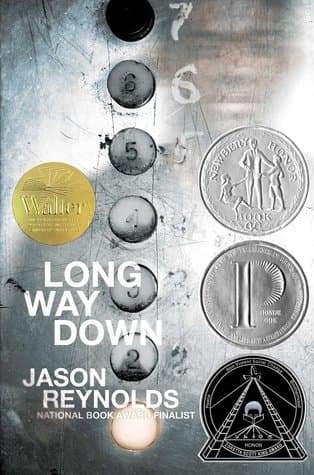
- Long Way Down
Jason Reynolds
4.3 (58k) average on GoodreadsYoung AdultBoth are verse novels, but Long Way Down focuses on a very tight timeframe (60 seconds) and a singular moral dilemma through one protagonist's internal monologue. Clap When You Land has a broader scope, spanning several months and two protagonists, exploring cross-cultural dynamics and a more extended emotional journey of healing and discovery.
- Harry Potter and the Sorcerer's Stone
J.K. Rowling
4.5 (7M) average on GoodreadsFantasyRescued from a miserable life under the stairs, an orphaned boy discovers he's a wizard destined for a magical school, where he uncovers a dangerous secret tied to the dark wizard who murdered his parents.
- The Hunger Games
Suzanne Collins
4.3 (6.4M) average on GoodreadsFantasyIn a future where children fight to the death on live television, Katniss Everdeen volunteers for the arena, turning a death sentence into a fight for survival and a spark of rebellion.
- To Kill a Mockingbird
Harper Lee
4.3 (4.5M) average on GoodreadsHistorical FictionIn the 1930s Jim Crow South, Harper Lee writes about racial injustice, moral growth, and the quiet courage of a lawyer father, Atticus Finch, as seen through his young daughter's eyes.





Enjoyed the summary?
A summary gives you the shape of the book. The book itself has the detail, the examples and the voice.
Find Clap When You Land on AmazonAs an Amazon Associate, BookBrief earns from qualifying purchases. How we're funded