
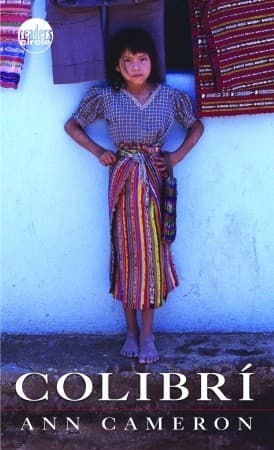
Synopsis
Covers the whole plot, including the ending.
- Difficulty
- Medium
- Pacing
- Moderate
- Mood
- Hopeful, Poignant, Resilient, Reflective
- Read it if
- You enjoy historical fiction for young adults, stories of resilience and self-discovery, or narratives about children overcoming adversity and finding their way home.
- Skip it if
- You prefer fast-paced thrillers or stories without elements of childhood trauma and separation.
Colibri Plot Summary
Covers the whole plot, including the ending.
The Kidnapping and Life with Uncle
Tzunún, a four-year-old Guatemalan girl, is playing in her family's courtyard when a man, who will become known to her as Uncle, takes her. He renames her Rosa and tells her her parents are gone and he will care for her. Uncle is a former soldier, a beggar, and a street performer who uses his missing arm to get sympathy. He makes Rosa help him, teaching her to beg and perform simple acts. They live a life of constant movement, sleeping in doorways, parks, and sometimes in cheap hotels when they earn enough. Rosa's memories of her past are fragmented, with images of a blue butterfly and a song her mother sang, but she accepts Uncle's story as her reality.
The Traveling Life and Uncle's Control
As Rosa grows, she becomes good at begging, often more successful than Uncle because of her youth and perceived innocence. Uncle, while seeming to care, is manipulative and controlling. He often reminds Rosa that she owes him everything, making up stories about his tireless search for her parents and his sacrifices. He discourages her from making friends or staying in one place too long, fearing she might reveal their true situation or escape. Rosa learns to read people, to tell who might be generous, and to navigate street life, always watched by Uncle. She wants stability and a sense of belonging, but Uncle's hold is strong.
The Encounter with the American Tourists
One day, while begging in Antigua, Rosa meets American tourists. One kind woman is moved by Rosa's performance. The woman gives Rosa a lot of money and a small, carved wooden colibrí (hummingbird), which brings back a faint memory for Rosa. This interaction makes Rosa doubt Uncle's stories and her identity. The tourists' generosity, along with the bird, makes Rosa question her life. She begins to secretly save small amounts of money, an early act of independence and a plan for a future without Uncle.
The Growing Discontent and Plans for Escape
Rosa's unhappiness with her life with Uncle grows. She dislikes his demands, his lies, and how he uses her. The colibrí from the American tourist becomes a symbol of her lost past and a hopeful future. She watches other children, especially those with families and homes, and longs for a different life. Rosa begins to plan her escape, saving money and watching Uncle's habits. She knows the dangers of being alone but believes the risk is worth the freedom. Her determination strengthens, fueled by the desire to find her true identity and family.
The Escape from Uncle
The chance to escape comes when Uncle is distracted or unable to act. Rosa carefully chooses her moment, perhaps while Uncle is drinking or deeply asleep. She gathers her few things, including the colibrí and her hidden money, and slips away in the night or early morning. The act is terrifying but exciting. She knows Uncle will look for her, and the fear of being caught is constant. Rosa's first days of freedom are marked by extreme caution, hunger, and loneliness, but also by a strong sense of liberation. She is now on her own, facing the world with only her wits and the hope of finding her past.
Life on Her Own and Seeking Refuge
After her escape, Rosa struggles to survive. She begs, searches for discarded food, and sleeps in unsafe places. Her independence is hard-won, but her vulnerability is immense. She eventually finds herself in a small village, where she meets a kind woman named Doña Elena and her family. Do༚ Elena, seeing Rosa's situation and gentle nature, offers her shelter and food for help with chores. This temporary home gives Rosa stability, a sense of community, and a look at what normal family life could be like. She slowly begins to trust again, revealing parts of her past, though still cautious about Uncle.
Uncovering Memories and the Blue Butterfly
In the comfort and safety of Do༚ Elena's home, Rosa's fragmented memories become clearer. The image of the blue butterfly, a recurring thought, becomes sharper. She remembers details about her former home, her mother's face, and the sound of her name, Tzunún. Do༚ Elena, noticing Rosa's distress and vivid memories, encourages her to share what she remembers. The colibrí carving she carries is another key, linking to her mother's nickname for her. These resurfacing memories are both painful and hopeful, giving Rosa concrete clues to use in her search for her true family. She feels an urgency to act on these new insights.
The Search for Her Family
Guided by her increasingly clear memories of her home and the blue butterfly, Rosa decides she must actively search for her family. Do༚ Elena, though sad to see her go, supports her decision and helps her with what little she has. Rosa travels, asking questions, describing her memories of a house with a specific courtyard, a garden, and the blue butterfly. She learns to trust her instincts and to tell genuine help from danger. Her journey is hard, with disappointments and false leads, but her resolve is strong. The colibrí stays with her, a symbol of her identity.
The Clue of the Blue Butterfly
Rosa's search eventually leads her to a neighborhood in Guatemala City, guided by the image of the blue butterfly. She learns that a family in the area was known for their beautiful gardens and many butterflies, especially blue ones. She starts asking about a family who lost a young daughter years ago. The details she gives – her age when taken, the specific features of the house, and the nickname 'Colibrí' – resonate with some older residents. This clue narrows her search, filling her with renewed hope and fear as she gets closer to her past.
The Reunion
Following the blue butterfly and stories of the lost girl, Rosa arrives at a house that feels familiar. Hesitantly, she approaches and knocks. An older woman opens the door. Rosa says her original name, Tzunún, and shows the carved colibrí. The woman's eyes widen, and tears fall. She recognizes her daughter, her 'Colibrí,' from the nickname and the resemblance. The reunion is overwhelming, full of joy, relief, and the pain of lost years. Rosa is finally home, embraced by her mother and the family she thought she had lost forever. The blue butterfly, a symbol of her past, now represents her return.
Colibri Characters
Tzunún / Rosa / Colibrí
Protagonist
A young girl kidnapped and renamed, who embarks on a journey to find her true identity and family.
Tzunún, affectionately nicknamed Colibrí by her mother, is a resilient and intelligent girl. Kidnapped at age four and renamed Rosa by her captor, Uncle, she is forced to live a life of begging and constant movement. Despite her traumatic upbringing, she retains an innate curiosity, a strong sense of self, and a deep yearning for belonging. She is observant, quick-witted, and possesses an inner strength that allows her to survive and eventually break free. The fragmented memories of her past, particularly the blue butterfly and the colibrí, serve as guiding forces.
Relationships: Uncle (Captor, manipulator, pseudo-guardian); Doña Elena (Kind benefactor, temporary guardian); Tzunún's Mother (Biological mother, source of early love and memory)
Uncle
Antagonist
The one-armed ex-soldier and beggar who kidnaps Tzunún and raises her as Rosa.
Uncle is a complex and manipulative character. A former soldier with a missing arm, he uses his disability to evoke sympathy and facilitate his begging. He is cunning, selfish, and deeply controlling, constantly reminding Rosa of her supposed debt to him and fabricating stories about his efforts to find her parents. While he provides basic sustenance, his 'care' is rooted in exploitation. He fears losing Rosa because she is his most effective tool for begging. He represents the harsh realities and moral ambiguities of the street, embodying the forces that keep Rosa from her true identity.
Relationships: Tzunún / Rosa (Captor and captive, exploiter and exploited)
Doña Elena
Supporting
A kind and empathetic woman who offers refuge and support to Rosa after her escape.
Doña Elena is a compassionate and maternal figure who provides a safe haven for Rosa after she escapes from Uncle. She lives in a small village and offers Rosa food, shelter, and a sense of family in exchange for help with chores. Doña Elena is observant and empathetic, recognizing Rosa's trauma and encouraging her to share her memories. She offers guidance and emotional support, helping Rosa to process her past and solidify her resolve to find her true family. She represents the kindness and community that exists even in difficult circumstances.
Relationships: Tzunún / Rosa (Benefactor, temporary guardian, friend)
Tzunún's Mother
Supporting
Rosa's biological mother, whose love and memories guide Tzunún's journey.
Tzunún's mother is a loving and gentle presence, primarily existing in Rosa's fragmented memories and subconscious. She is the source of the nickname 'Colibrí' and the tender songs and images that haunt Rosa's mind. Her memory represents the lost innocence and belonging that Rosa yearns for. When she finally reunites with Rosa, she embodies the enduring power of maternal love and the pain of years of separation. Her character is a symbol of the home and identity that Rosa strives to reclaim.
Relationships: Tzunún / Rosa (Biological mother and daughter)
American Tourist (kind woman)
Mentioned
A compassionate tourist who gives Rosa a colibrí carving, sparking her journey of self-discovery.
This unnamed American tourist plays a pivotal, albeit brief, role in Rosa's story. Her act of kindness, giving Rosa a significant amount of money and the colibrí carving, serves as a catalyst for Rosa's awakening. The carving, in particular, triggers dormant memories and reinforces Rosa's sense that there is more to her past than Uncle has told her. She represents the outside world's potential for both generosity and for providing clues to Rosa's true identity.
Relationships: Tzunún / Rosa (Brief encounter, catalyst for change)
Colibri Themes
Identity and Self-Discovery
The main theme is Tzunún's quest to reclaim her identity after being kidnapped and renamed. Fragmented memories, the nickname 'Colibrí,' and the blue butterfly are vital clues. Her journey is not just about finding her family, but about understanding who she is beyond the 'Rosa' identity Uncle created. Escaping Uncle is the first step in asserting her true self, ending with the reunion where she embraces her birth name.
“She was Rosa, yes, but deep inside, a tiny hummingbird fluttered, whispering another name, another life.”
Resilience and Survival
Tzunún's life with Uncle is marked by hardship, constant movement, hunger, and emotional manipulation. Yet, she shows resilience. She learns to beg effectively, to read people, and to navigate dangerous situations. Her ability to hold onto hope, to secretly save money, and to plan her escape shows her strong spirit. Even after escaping, she faces new challenges, but her will to survive and find her truth never fails, highlighting the strength of the human spirit in adversity.
“Hunger was a familiar companion, but fear was a shadow she learned to outrun.”
The Power of Memory
Despite being kidnapped young, Tzunún's earliest memories, though fragmented, are important to her journey. The blue butterfly, the colibrí nickname, and echoes of her mother's song are not just nostalgic fragments but vital clues. These memories act as an internal compass, guiding her search and providing the emotional drive to break free from Uncle's control. The story shows how deeply ingrained early experiences are and their power to shape destiny and lead one back to their origins.
“A blue butterfly, a flash of color in her mind, always leading her somewhere she couldn't quite grasp.”
Family and Belonging
At its heart, 'Colibri' is a story about the human need for family and belonging. Tzunún is robbed of her family young, and her life with Uncle lacks genuine familial love. Her longing for a true home, for loving parents, drives her entire quest. Do༚ Elena's temporary care offers a glimpse of what a loving family feels like. The reunion with her biological mother fulfills this deep need, affirming the irreplaceable bond of family and the sense of completeness that comes with belonging.
“She longed for a place where her name was spoken with love, not just for a purpose.”
Plot Devices & Literary Techniques
The Colibrí Carving
A small wooden hummingbird carving that serves as a tangible link to Tzunún's past.
The colibrí carving, given to Rosa by an American tourist, is a powerful symbol and plot device. It directly connects to her mother's nickname for her, 'Colibrí,' serving as the first concrete piece of evidence that her past is different from what Uncle claims. It acts as a memory trigger, helping her recall fragments of her early life. More than just a memento, it becomes a talisman of hope and a physical representation of her true identity, which she carries throughout her arduous journey, strengthening her resolve to find her family.
The Blue Butterfly Motif
A recurring image in Tzunún's fragmented memories that guides her search for home.
The blue butterfly is a recurring visual motif that functions as a symbolic memory trigger and a guiding clue for Tzunún. It appears in her earliest, most fragmented recollections of her home and garden. As her memories become clearer, the butterfly helps her pinpoint specific details about her original house and neighborhood in Guatemala City. It represents the beauty and fragility of her lost childhood, but also the persistent thread of memory that ultimately leads her back to her origins, becoming a beacon of hope and a signpost on her journey.
Uncle's Manipulative Storytelling
Uncle's fabricated narrative about Rosa's past and his role as her savior.
Uncle's constant storytelling about his 'heroic' efforts to find Rosa's parents and his 'sacrifices' in raising her is a key plot device. This manipulation serves to control Rosa, instill guilt, and prevent her from questioning her circumstances. It creates a false reality that Rosa internalizes for years. The gradual unraveling of this narrative, as Rosa's own memories resurface and she encounters external kindness, is crucial to her developing self-awareness and her eventual decision to escape. It highlights the power of narrative, both to imprison and to liberate.
Colibri Quotes
“Every morning I wake up and I know I have to be brave.”
“The city was like a giant, hungry mouth, always wanting more.”
“My mother always said that even a tiny bird can carry a big message.”
“We were like seeds blown by the wind, landing wherever we could.”
“Sometimes the only way to keep warm was to remember a sunny day.”
“A secret is like a heavy stone. You carry it, and it makes you tired.”
“The library was a different kind of street, a street of stories.”
“To read was to fly, to go to places you couldn't reach with your feet.”
“He taught me that even the smallest things can be beautiful, if you look closely.”
“My name is Rosa, and I am not nobody.”
“Hope is a small bird that sings in the dark.”
“Sometimes you have to pretend to be strong until you are strong.”
“The past is like a shadow. It follows you, but it doesn't have to define you.”
“Every person has a story, and every story matters.”
Quiz
10 questions on the plot and the characters. Each answer comes with a short explanation.
Question 1
What is the original name given to the protagonist by her mother?
- Rosa
- Tzunún
- Mariposa
- Sol
Show answer
B. Tzunún The protagonist's mother nicknamed her Colibrí, but her given name was Tzunún.
Question 2
What does 'Colibrí' mean in Spanish, which is also the protagonist's nickname?
- Butterfly
- Hummingbird
- Flower
- Star
Show answer
B. Hummingbird Colibrí is the Spanish word for 'hummingbird,' which was the nickname Tzunún's mother gave her.
Question 3
At what age was Colibrí kidnapped from her parents?
- Two
- Three
- Four
- Five
Show answer
C. Four The book states that Colibrí was kidnapped at age four from her parents in Guatemala City.
Question 4
Who is the person who kidnapped Colibrí and renamed her Rosa?
- Her father
- An ex-soldier known as Uncle
- A kind stranger
- Her grandmother
Show answer
B. An ex-soldier known as Uncle Colibrí was kidnapped by 'Uncle,' an ex-soldier and wandering beggar, who then renamed her Rosa.
Question 5
Where was Colibrí kidnapped from?
- A small village in the mountains
- Guatemala City
- A marketplace in El Salvador
- Her home in a rural area
Show answer
B. Guatemala City The narrative specifies that Colibrí was kidnapped from her parents in Guatemala City.
Question 6
What is the primary mode of life Colibrí (as Rosa) experiences after her kidnapping?
- Living in a stable home with a new family
- Attending school in a distant city
- Traveling as a wandering beggar with Uncle
- Working on a farm in the countryside
Show answer
C. Traveling as a wandering beggar with Uncle After her kidnapping, Rosa travels with Uncle, who is described as a 'wandering beggar,' indicating a life of constant movement and begging.
Question 7
What reason did Uncle give Rosa for not finding her parents?
- He claimed they had moved to another country.
- He told her he looked for them but never found them.
- He said they had died in an accident.
- He explained they no longer wanted her.
Show answer
B. He told her he looked for them but never found them. The text states that 'Uncle told Rosa that he looked for her parents, but never found them.'
Question 8
The story is set in which Central American country?
- Mexico
- El Salvador
- Honduras
- Guatemala
Show answer
D. Guatemala The setting is explicitly mentioned as Guatemala City, indicating the story takes place in Guatemala.
Question 9
What is the central theme introduced by the protagonist's two names (Tzunún/Colibrí and Rosa)?
- The importance of nature in a child's life.
- The contrast between urban and rural living.
- Loss of identity and the search for one's true self.
- The challenges of learning new languages.
Show answer
C. Loss of identity and the search for one's true self. Having two distinct names, one from her family and one imposed by her kidnapper, immediately introduces the theme of a lost past and a new, imposed identity, highlighting the search for her true self.
Question 10
Which of the following literary genres best describes 'Colibrí' based on the provided synopsis?
- Fantasy Adventure
- Science Fiction Dystopian
- Children's Historical Fiction
- Mystery Thriller
Show answer
C. Children's Historical Fiction The book description explicitly states 'Children's, Historical Fiction, Young Adult,' making 'Children's Historical Fiction' the most accurate genre choice among the options.
Colibri FAQ
What is the central premise of 'Colibrí'?
The central premise of 'Colibrí' revolves around a young Guatemalan girl, Tzunún (renamed Rosa by her abductor), who was kidnapped at age four. She travels with her 'Uncle,' an ex-soldier and beggar, living a transient life while harboring fragmented memories of her past and a longing to understand her true identity and find her birth parents.
Who is Tzunún and what is the significance of her original name?
Tzunún is the protagonist's original name, given to her by her parents in Guatemala City, and her mother nicknamed her Colibrí, meaning 'hummingbird.' This name symbolizes her true identity, her heritage, and the vibrant, free spirit she seeks to reclaim, contrasting sharply with the name Rosa imposed upon her by Uncle.
Who is 'Uncle' and what is his relationship with Rosa?
'Uncle' is the man who kidnapped Tzunún at age four and renamed her Rosa. He presents himself as her guardian, an ex-soldier and beggar, but his relationship with Rosa is built on deception and manipulation, controlling her life while preventing her from discovering her true past.
What kind of life does Rosa lead with Uncle?
Rosa leads a nomadic and impoverished life with Uncle, constantly moving between different towns and cities in Guatemala. They beg for food and money, sleep in various makeshift shelters, and Rosa is often responsible for contributing to their survival through begging, all while Uncle maintains a tight control over her.
What are the earliest clues Rosa has about her past before Uncle?
Rosa has fragmented, dream-like memories of a different life: a mother with long black hair, a father, a house with a kitchen, and the distinct feeling of being loved and cared for. These vivid but incomplete recollections are crucial in fueling her internal quest for truth, despite Uncle's efforts to suppress them.
How does the 'Colibrí' nickname connect to Tzunún's true identity?
The 'Colibrí' nickname is a powerful symbol of Tzunún's true identity and past. It's a loving term from her mother, embodying her origins and the vibrant, free spirit she inherently possesses. Remembering this name, even vaguely, becomes a key step in her journey to piece together her fragmented history and reclaim herself.
Are there any subtle indications that Uncle is not truly searching for Rosa's parents?
Yes, Uncle's excuses for not finding her parents often feel vague and unconvincing, and he actively discourages Rosa from asking questions or pursuing her own inquiries. His constant movement and avoidance of settled communities also subtly indicate a desire to evade discovery rather than facilitate a reunion, keeping Rosa isolated.
What role do the stories Uncle tells play in his manipulation of Rosa?
Uncle's stories are a primary tool for manipulation, designed to control Rosa's perception of her past and her place in the world. He crafts narratives that depict him as a benevolent protector and her parents as absent or unreachable, thus justifying her dependence on him and suppressing her own memories or desires for freedom.
How does Rosa's internal conflict between her two identities – Tzunún and Rosa – manifest?
Rosa's internal conflict manifests as a constant battle between the life she lives with Uncle and the faint, yearning memories of her true identity as Tzunún. She experiences moments of longing and confusion, feeling a disconnect from the name Rosa, while the imagery of Colibrí represents a hidden, authentic self she desperately seeks to understand and embrace.
What psychological impact does Uncle's gaslighting have on Rosa?
Uncle's gaslighting, by consistently denying or twisting Rosa's memories and experiences, creates profound psychological confusion and self-doubt in her. It makes her question her own sanity and perception of reality, reinforcing her dependence on his narrative and making it harder for her to trust her own instincts or memories.
How does Rosa's resilience manifest despite her difficult circumstances?
Rosa's resilience is evident in her persistent hope, her sharp observational skills, and her unwavering internal drive to understand her past. Despite the poverty and emotional manipulation, she retains a core sense of self and an innate curiosity that allows her to piece together clues and resist complete subjugation, even subtly.
Is Uncle a purely evil character, or is there any nuance to his portrayal?
While Uncle is undeniably a perpetrator of great harm, the book offers glimpses of nuance in his portrayal, suggesting he might be a product of his own traumatic past as an ex-soldier. His actions are reprehensible, but the narrative occasionally hints at his own brokenness and the complex factors that led him to such desperate and cruel choices, without excusing them.
What themes does 'Colibrí' explore beyond the immediate plot of kidnapping?
'Colibrí' explores profound themes of identity, memory, resilience, and the search for truth. It delves into the psychological impact of trauma and gaslighting, the enduring power of family bonds, and the importance of reclaiming one's heritage, all set against the backdrop of Guatemalan culture and history.
How does the setting of Guatemala contribute to the story's depth?
The setting of Guatemala deeply enriches the story, providing a vibrant cultural backdrop and historical context. It allows for exploration of indigenous heritage, the impact of civil unrest (implied through Uncle's past), and the diverse landscapes and communities that Rosa travels through, grounding her journey in a specific and evocative reality.
What message does the author convey about the power of memory in 'Colibrí'?
The author conveys a powerful message about the enduring and redemptive power of memory. Even fragmented and suppressed, Rosa's memories serve as a vital lifeline to her true self and past, ultimately guiding her towards discovery and healing. They highlight how personal history shapes identity and can resist attempts at erasure.
How does the ending of 'Colibrí' provide closure while also leaving room for reflection?
The ending of 'Colibrí' provides a significant degree of closure by bringing Rosa closer to her true identity and potentially reuniting her with her past. However, it also leaves room for reflection on the long-term impact of her experiences and the journey she still has ahead, suggesting that healing and understanding are ongoing processes, not instantaneous fixes.
Similar books
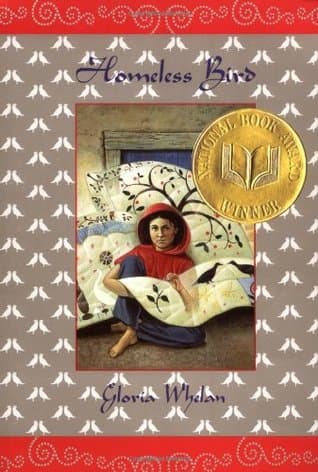
- Homeless Bird
Gloria Whelan
4.0 (12k) average on GoodreadsChildren'sFeatures a young girl facing adversity and cultural challenges in a different country.
- Island of the Blue Dolphins
Scott O'Dell
3.8 (292k) average on GoodreadsChildren'sShowcases a resilient young protagonist surviving on her own and searching for connection.
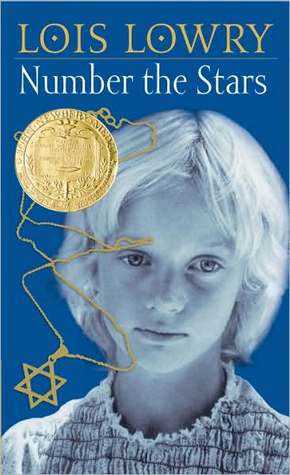
- Number the Stars
Lois Lowry
4.2 (448k) average on GoodreadsChildren'sLowry's novel also features a child protagonist in a dangerous historical setting (WWII Denmark) but focuses more on collective heroism and external threats. Colibri emphasizes individual psychological resilience and the internal struggle against trauma and a specific abuser, rather than a broader societal conflict.
- Harry Potter and the Sorcerer's Stone
J.K. Rowling
4.5 (7M) average on GoodreadsFantasyRescued from a miserable life under the stairs, an orphaned boy discovers he's a wizard destined for a magical school, where he uncovers a dangerous secret tied to the dark wizard who murdered his parents.
- The Hobbit, or There and Back Again
J.R.R. Tolkien
4.3 (2.9M) average on GoodreadsFantasyA comfort-loving hobbit named Bilbo Baggins is whisked away by a mischievous wizard and a band of dwarves on an unexpected journey to reclaim stolen treasure from a fearsome dragon, discovering courage and a magical ring along the way.
- Harry Potter and the Goblet of Fire
J.K. Rowling
4.6 (2.6M) average on GoodreadsFantasyA bewildered Harry Potter, underage and thrust into a deadly Triwizard Tournament, must brave dragons, mermaids, and a resurgent dark magic to survive a year that will forever alter the wizarding world.




Enjoyed the summary?
A summary gives you the shape of the book. The book itself has the detail, the examples and the voice.
Find Colibri on AmazonAs an Amazon Associate, BookBrief earns from qualifying purchases. How we're funded