
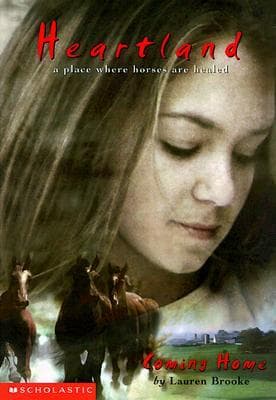
Synopsis
Covers the whole plot, including the ending.
- Difficulty
- Easy
- Pacing
- Moderate
- Mood
- Heartwarming, Hopeful, Emotional, Gentle
- Read it if
- You enjoy heartwarming stories about healing, horses, and the power of community, with a touch of romance.
- Skip it if
- You prefer complex plots, dark themes, or stories without animals.
Coming Home Plot Summary
Covers the whole plot, including the ending.
A Tragic Accident
The story begins with Amy Fleming dealing with the sudden death of her mother, Marion, in a car accident. Marion was driving to rescue an abused horse named Spartan when the accident happened. Amy, still in shock, finds comfort in Spartan, who was injured but lived. Her older sister, Lou, returns from New York, practical and worried about Heartland's money. Lou immediately argues with Amy and Jack, their grandfather, about the ranch's future, suggesting they sell it. Amy, however, wants to continue her mother's work of healing horses, believing it is the only way to honor Marion's memory and cope with her grief.
Lou's Business Proposal
Lou, a successful businesswoman, tries to use her corporate organization skills at Heartland. She makes detailed spreadsheets, budgets, and marketing plans, which annoys Amy and Jack, who are used to Marion's intuitive and kind approach to horses. Lou believes that making the ranch professional is the only way to save it from financial ruin, but her methods often ignore the emotional core of Heartland's purpose. She even considers selling some horses to save money, a suggestion that deeply upsets Amy, who sees each horse as needing individual care.
Healing Spartan
Amy focuses on healing Spartan, the horse her mother was trying to save when she died. Spartan is traumatized and avoids human contact. Amy spends many hours with him, using her mother's gentle methods and her own growing intuition. She talks to him, grooms him, and slowly gains his trust. Through Spartan's recovery, Amy begins to understand her mother's special gift with horses and feels a deep connection to Marion. This process is not just about healing Spartan; it is also about Amy finding her own path and dealing with her grief.
Ty's Arrival
Ty Borden, a troubled young man with a criminal past, arrives at Heartland as part of his probation. He is initially surly and distant, resisting the ranch's open and healing atmosphere. Amy immediately distrusts him, especially after a misunderstanding involving Spartan. Ty's past experiences have made him cynical and guarded, but he shows a surprising talent for working with horses, particularly the difficult ones. His presence brings a new dynamic to the ranch, challenging Amy's views and making her confront her own biases.
Clash of Ideologies
Lou, trying to make Heartland profitable, decides to advertise for paying clients who need their horses healed. This decision creates tension with Amy and Jack, who believe that Heartland should help any horse in need, regardless of the owner's ability to pay. They worry that focusing on profit will compromise Marion's legacy. Lou, however, sees it as a necessary step to keep the ranch going, arguing that without financial stability, they cannot help any horses.
Val Stanton's Interference
Val Stanton, owner of a rival, more traditional show-jumping stable, constantly interferes with Heartland. She represents the opposite of Marion's philosophy, valuing prestige and competition over compassion. Val tries to steal Heartland's clients and spread rumors about the ranch's methods. She even tries to buy Heartland, seeing it as a good piece of land. Val's opposition highlights the unique nature of Heartland's work and strengthens the family's resolve to protect their mother's legacy.
A Difficult Client
A client brings a difficult, aggressive horse to Heartland, and Amy is tasked with healing it. This is her first major challenge without her mother's direct help, and she feels immense pressure. She struggles with the horse's resistance and doubts her own abilities. Ty, despite their early problems, offers unexpected advice and support, observing the horse's behavior from a different view. This experience forces Amy to trust her instincts and develop her own way of working with horses, moving beyond just copying her mother.
Ty's Past Revealed
Amy gradually learns more about Ty's difficult past, including his time in juvenile detention and why he is so guarded. She discovers that he was unfairly judged and wants to prove himself. This information softens Amy's initial dislike for him, and she begins to see him as more than just a troubled kid. Their shared love for horses, and Ty's surprisingly gentle way with them, begins to bridge the gap between them, creating an early understanding and respect.
The Threat of Foreclosure
Heartland's financial problems worsen, leading to the threat of foreclosure. Lou's efforts to bring in money have not been enough, and the family faces losing the ranch. This crisis forces Lou, Amy, and Jack to put aside their differences and work together. They realize that their individual strengths are needed to save Heartland. The impending loss of their home and Marion's legacy acts as a strong force for their unity.
A Community Rallies
As news of Heartland's financial troubles spreads, the local community, many of whom Marion had helped with their horses, gathers to support the ranch. Volunteers offer their time, and donations start to come in. This outpouring of support shows the deep impact Marion had on the lives of both people and animals. It also gives Amy, Lou, and Jack renewed hope and purpose, showing them that Heartland is more than just a business; it is a vital part of the community.
Amy's Horse Whisperer Gift
Through her work with Spartan and other difficult horses, Amy fully accepts her natural gift for understanding horses. She develops her own style, combining her mother's gentle methods with her own intuition and empathy. She realizes that she does not need to be exactly like her mother but can honor Marion's legacy by being herself. This acceptance of her gift marks a significant step in her journey of healing and self-discovery, solidifying her role as the new heart of Heartland.
A New Beginning for Heartland
With Lou's business skills, Amy's healing abilities, Jack's steady presence, and the community's support, Heartland is saved from foreclosure. The family reaches a new understanding, recognizing the value of both practicality and passion. They decide to continue Marion's work, but with a more sustainable model that includes Lou's business skills while keeping the compassionate core. The ending marks a new beginning for Heartland, with Amy stepping into her role as the lead horse whisperer, carrying on her mother's legacy.
Coming Home Characters
Amy Fleming
Protagonist
A grieving teenager who discovers her own gift for healing horses.
Amy is a compassionate and intuitive teenager deeply affected by the sudden death of her mother, Marion. Initially struggling with grief and self-doubt, she finds solace and purpose in continuing her mother's work at Heartland. She possesses an innate connection with horses, mirroring her mother's legendary 'horse whispering' abilities. Amy is stubborn, determined, and deeply empathetic, often prioritizing the well-being of the horses above practical concerns, which sometimes puts her at odds with her sister, Lou.
Relationships: Marion Fleming (Deceased mother, mentor, inspiration); Lou Fleming (Older sister, often at odds due to differing approaches to Heartland); Jack Bartlett (Grandfather, steadying presence, mentor); Ty Borden (Initially antagonistic stable hand, later a close friend and confidant)
Lou Fleming
Supporting
Amy's pragmatic older sister, determined to save Heartland through business sense.
Lou is Amy's older sister, a driven and successful businesswoman from New York. After Marion's death, she returns to Heartland with a pragmatic, results-oriented mindset, clashing with Amy and Jack over the ranch's future. She is fiercely protective of her family and wants to ensure Heartland's survival, even if it means making tough, unpopular decisions. Despite her initial focus on financial stability, she eventually comes to appreciate the emotional and spiritual value of Heartland's mission.
Relationships: Amy Fleming (Younger sister, often clashes over ranch management); Marion Fleming (Deceased mother, whose legacy Lou feels obligated to protect); Jack Bartlett (Grandfather, often exasperated by Lou's business plans)
Jack Bartlett
Supporting
Amy and Lou's gruff but loving grandfather, the steadfast patriarch of Heartland.
Jack is the wise, steadfast patriarch of the Fleming family and Marion's father. He is a man of few words but deep wisdom, grounded in the traditions of ranch life. He is a constant source of support for Amy, offering quiet guidance and encouragement as she navigates her grief and discovers her gift. Jack often acts as a mediator between the clashing personalities of Amy and Lou, providing a calm and experienced perspective on both horse care and family dynamics. He embodies the enduring spirit of Heartland.
Relationships: Amy Fleming (Granddaughter, protégé, he guides her in her horse whispering); Lou Fleming (Granddaughter, often clashes with her over business decisions); Marion Fleming (Deceased daughter, whose memory he fiercely protects)
Ty Borden
Supporting
A troubled stable hand who finds redemption and a connection with horses at Heartland.
Ty is a young man with a troubled past, sent to Heartland as part of his probation. He is initially sullen, guarded, and resistant to forming connections, having been let down by others in his life. Despite his rough exterior, Ty possesses a natural talent and quiet empathy for horses, especially those who are difficult or misunderstood. He often provides a unique perspective on the horses' behavior, becoming an unexpected source of support and friendship for Amy.
Relationships: Amy Fleming (Initially antagonistic, later a close friend and confidant); Jack Bartlett (Employer and mentor, who sees Ty's potential)
Marion Fleming
Mentioned
The deceased mother of Amy and Lou, whose legacy of horse whispering defines Heartland.
Marion is the deceased mother of Amy and Lou, and the original 'horse whisperer' of Heartland. Although she dies at the beginning of the story, her presence is felt throughout the book. She established Heartland as a refuge for abused and neglected horses, using her unique, gentle methods to heal them. Her philosophy of compassion and understanding forms the spiritual foundation of the ranch and guides Amy's journey. She is remembered as a kind, intuitive, and deeply empathetic woman.
Relationships: Amy Fleming (Daughter, to whom she passed her gift); Lou Fleming (Daughter, whose pragmatic approach contrasts with Marion's); Jack Bartlett (Father, who deeply mourns her loss)
Spartan
Supporting
A traumatized horse whose healing mirrors Amy's own journey of grief and discovery.
Spartan is a beautiful but deeply traumatized horse, whom Marion was on her way to rescue when she had her fatal accident. He is initially wild, fearful, and resistant to human contact, embodying the raw pain and loss that Amy feels. Spartan becomes Amy's primary focus, and his gradual healing under her care parallels Amy's own process of grieving and discovering her unique gift for horse whispering. He represents the core mission of Heartland and the profound connection between humans and animals.
Relationships: Amy Fleming (His primary healer and companion, with whom he forms a deep bond); Marion Fleming (The horse she died trying to save)
Val Stanton
Antagonist
The owner of a rival stable who embodies the conventional, competitive equestrian world.
Val Stanton is the owner of a prestigious, show-jumping stable and a rival to Heartland. She represents the antithesis of Marion's philosophy, prioritizing competition, prestige, and financial gain over the welfare and emotional needs of horses. Val is often critical of Heartland's 'unconventional' methods and attempts to undermine the ranch through rumors and business tactics. Her character highlights the contrast between the compassionate approach of Heartland and the more commercial, traditional equestrian world.
Relationships: Amy Fleming (Rival, whose methods Val disdains); Lou Fleming (Business rival)
Coming Home Themes
Grief and Healing
The main theme is Amy's journey through the grief of losing her mother and how she copes by continuing Marion's work. Healing the traumatized horses at Heartland, especially Spartan, becomes a symbol for Amy's own emotional recovery. The ranch itself is a place of healing, not just for animals but for the people who work there, offering purpose and connection after loss. The story emphasizes that healing is a process, not an event, and that finding purpose can help with sorrow, as seen when Amy dedicates herself to Spartan's recovery.
“Heartland was more than just a place; it was a feeling, a belief that every horse, no matter how broken, deserved a second chance.”
Family and Legacy
The novel explores the complexities of family relationships after a tragedy. Amy and Lou, though sisters, cope with their mother's death differently and have different ideas for Heartland's future. Their conflicts highlight the tension between preserving a legacy and adapting it for survival. Jack acts as the grounding force, connecting them to Marion's past. Ultimately, the family must learn to work together, combining their individual strengths to protect their shared heritage and continue Marion's work, showing that a legacy is not just inherited but actively lived and changed.
“Marion's spirit lived in every stall, every horse, every sunrise over the pastures. It was up to them to keep that spirit alive.”
The Power of Compassion and Intuition
Heartland's core philosophy, from Marion, is based on compassion, understanding, and intuition rather than force or traditional training. Amy discovers her own ability to connect with horses on an emotional level. This theme is contrasted with Lou's more practical, business-focused approach and the competitive world of Val Stanton's stable. The story supports the idea that empathy and a deep understanding of an animal's needs can achieve more lasting healing than traditional methods.
“You don't break a horse, Amy. You earn its trust, one gentle breath at a time.”
Finding Your Own Path
While Amy wants to continue her mother's work, a key part of her journey is realizing she does not have to be exactly like Marion. She must find her own way of connecting with horses and managing Heartland. This theme is clear in her early struggles to copy her mother's methods and her later development of her own intuitive style. It also applies to Lou, who must find a way to use her business skills without losing the ranch's heart. The story suggests that honoring a legacy means adapting it and making it your own, rather than just repeating the past.
“Your mother had a gift, Amy. But you have your own. Don't be afraid to use it.”
Plot Devices & Literary Techniques
The Mentor's Legacy
The enduring influence of a deceased character on the protagonist's journey.
Marion Fleming, though deceased, serves as a powerful mentor figure. Her philosophy, methods, and spirit guide Amy's actions and decisions throughout the story. Amy constantly refers to her mother's teachings and tries to emulate her, which helps her develop her own horse whispering abilities. This device allows Marion to remain a central, driving force in the narrative, even in her absence, shaping Amy's character development and the direction of Heartland.
The Outsider/Underdog
A character or entity that is initially underestimated or viewed with suspicion.
Heartland itself, with its unconventional healing methods, is often seen as an underdog in the equestrian world, especially in contrast to Val Stanton's prestigious stable. Ty Borden also embodies this device; he arrives as a troubled youth on probation, an outsider in the close-knit family, and is initially met with distrust. This device allows for character growth, as both Heartland and Ty prove their worth and unique value against societal expectations and prejudices.
Symbolic Animal Healing
The healing of an animal mirrors the emotional journey of a human character.
Spartan, the traumatized horse Marion was trying to save, is a prime example of symbolic animal healing. His journey from fear and aggression to trust and recovery directly parallels Amy's own process of grieving her mother and finding her purpose. As Amy works with Spartan, she not only heals him but also heals herself, developing confidence in her abilities and coming to terms with her loss. This device provides a tangible, emotional representation of the internal struggles and triumphs of the human characters.
The Threat of Foreclosure
A looming financial crisis that forces characters to unite and confront their challenges.
The constant financial struggles of Heartland and the eventual threat of foreclosure serve as a powerful external conflict. This device creates urgency and forces the disparate personalities of Amy, Lou, and Jack to set aside their differences and work together towards a common goal. It highlights Lou's pragmatic nature while also demonstrating the emotional cost of losing Marion's legacy, ultimately strengthening the family's bond and their resolve to save the ranch.
Coming Home Quotes
“The wind carried the scent of pine and something wilder, something untamed, and it filled her with a yearning she couldn't quite name.”
“He had eyes that saw too much, a mouth that said too little, and a way of moving that was all raw, unpolished grace.”
“Sometimes the hardest journeys lead you to the most unexpected destinations.”
“The past wasn't a cage, but a foundation. What you built on it was up to you.”
“She found solace in the rhythm of the ranch, a steady beat that had been missing from her life for too long.”
“Love wasn't about perfection; it was about accepting the cracks and finding the beauty in the mended places.”
“He saw beyond the city girl facade, straight to the wild heart she'd tried so hard to hide.”
“The silence between them wasn't empty; it was full of unspoken words, shared glances, and a growing understanding.”
“Home wasn't a place on a map; it was a feeling, a person, a sense of finally belonging.”
“He taught her that strength wasn't about never falling, but about getting back up, every single time.”
“Sometimes, you had to break free from what you thought you wanted to find what you truly needed.”
“The mountains stood sentinel, ancient and wise, mirroring the steadfastness she found in his gaze.”
“Every sunrise brought a new chance to rewrite her story, right here, with him, under this vast, open sky.”
Quiz
10 questions on the plot and the characters. Each answer comes with a short explanation.
Question 1
What tragic event fundamentally changes Amy Fleming's life and the future of Heartland at the beginning of the series?
- A severe economic downturn forces them to sell horses.
- Her mother, Marion Fleming, dies in a car accident while rescuing a horse.
- A fire destroys the main barn and several horses.
- Her father decides to sell Heartland and move away.
Show answer
B. Her mother, Marion Fleming, dies in a car accident while rescuing a horse. Amy's mother, Marion, dies in a car accident while trying to rescue a horse, leaving Amy to carry on her legacy at Heartland.
Question 2
Which character initially returns to Heartland to help Amy and Lou after Marion's death, despite having been estranged from the family?
- Ty Borden
- Jack Bartlett
- Scott Cardinal
- Tim Fleming
Show answer
B. Jack Bartlett Jack Bartlett, Amy and Lou's grandfather, returns to Heartland to provide support and stability after Marion's death, having been estranged from the family for some time.
Question 3
What is the primary mission of Heartland, as established by Marion and continued by Amy?
- To breed champion racehorses.
- To provide a refuge and rehabilitation for abused and abandoned horses.
- To offer riding lessons to the local community.
- To host equestrian competitions and events.
Show answer
B. To provide a refuge and rehabilitation for abused and abandoned horses. Heartland is dedicated to healing and rehabilitating horses that have suffered abuse or abandonment, a mission Amy takes on after her mother's passing.
Question 4
What is the name of the troubled horse that Amy and Marion were trying to save when Marion had her fatal accident?
- Spartan
- Phoenix
- Storm
- Spirit
Show answer
A. Spartan Spartan is the horse that Marion and Amy were attempting to rescue when the accident occurred. Spartan later becomes a significant horse in Amy's life.
Question 5
How does Amy's older sister, Lou Fleming, initially react to the idea of continuing Heartland's work, especially with its financial struggles?
- She immediately embraces it and offers her full support.
- She wants to sell Heartland and return to her corporate life.
- She suggests expanding Heartland into a large commercial stable.
- She proposes turning it into a dude ranch for tourists.
Show answer
B. She wants to sell Heartland and return to her corporate life. Lou, initially focused on her corporate career, sees Heartland as a financial burden and initially wants to sell it, clashing with Amy's desire to keep it running.
Question 6
What is the key theme explored through Amy's connection with the horses at Heartland, particularly after her mother's death?
- The importance of strict obedience training.
- The power of empathy, healing, and non-verbal communication.
- The competitive nature of equestrian sports.
- The financial benefits of horse ownership.
Show answer
B. The power of empathy, healing, and non-verbal communication. A central theme is Amy's unique ability to connect with and heal troubled horses through empathy, patience, and understanding, mirroring her own healing process.
Question 7
Ty Borden, a troubled youth, comes to Heartland as part of what kind of program?
- A veterinary internship.
- A community service program.
- A professional farrier apprenticeship.
- A riding instructor certification course.
Show answer
B. A community service program. Ty is sent to Heartland to complete community service hours after getting into trouble, leading him to develop a strong connection with the Flemings and the horses.
Question 8
Which specific technique or approach does Marion, and subsequently Amy, primarily use to rehabilitate the traumatized horses at Heartland?
- Aggressive dominance training to establish leadership.
- Natural horsemanship, focusing on trust and understanding horse behavior.
- Heavy sedation and isolation for extended periods.
- Constant exposure to loud noises to desensitize them.
Show answer
B. Natural horsemanship, focusing on trust and understanding horse behavior. Heartland's philosophy, passed from Marion to Amy, is rooted in natural horsemanship, building trust and communication with horses rather than using force.
Question 9
What is the underlying emotional struggle Amy faces in 'Coming Home' as she tries to uphold her mother's legacy?
- Her desire to leave Heartland and pursue a different career.
- Her fear of failure and the pressure of living up to her mother's reputation.
- Her resentment towards her mother for leaving her with Heartland.
- Her struggle to connect with any of the horses after Marion's death.
Show answer
B. Her fear of failure and the pressure of living up to her mother's reputation. Amy grapples with immense grief and the daunting pressure of filling her mother's shoes, constantly questioning if she has the same 'gift' and can truly save the horses.
Question 10
What significant financial challenge does Lou attempt to address shortly after returning to Heartland, which causes tension with Amy?
- The cost of building a new, larger arena.
- The overwhelming debt and lack of income from Heartland.
- The expense of purchasing new, high-value breeding stock.
- The legal fees from a lawsuit against Heartland.
Show answer
B. The overwhelming debt and lack of income from Heartland. Lou, with her business background, is immediately concerned by Heartland's dire financial situation and significant debt, leading her to implement drastic, often unpopular, measures to save it.
Coming Home FAQ
What is the central premise of 'Coming Home' and Amy Fleming's initial struggle?
'Coming Home' introduces Amy Fleming shortly after the tragic death of her mother, Marion Fleming, who ran Heartland. Amy must grapple with her grief while simultaneously taking on the immense responsibility of continuing her mother's work as a horse whisperer and maintaining Heartland, a sanctuary for abused and abandoned horses, despite her youth and inexperience.
Who is Ty Borden and what is his role at Heartland when Amy first meets him?
Ty Borden is a troubled youth who is sent to Heartland as part of his probation. He initially arrives with a tough exterior and a reluctance to engage, but under Marion's guidance (and later Amy's), he begins to work with the horses and becomes an indispensable stable hand, forming a close bond with Amy and the animals.
How does Lou Fleming, Amy's older sister, react to the changes at Heartland and her mother's death?
Lou Fleming, Amy's older sister, returns home from her corporate job in New York after Marion's death. She initially wants to sell Heartland due to financial pressures and her perception of it as an unsustainable business, clashing frequently with Amy over the future of the ranch and their mother's legacy, though she eventually softens.
What is the significance of Spartan, the horse, in the first book?
Spartan is a beautiful but severely traumatized horse that Marion Fleming was attempting to heal when she died. He represents the core of Heartland's mission and becomes one of Amy's first major tests as she tries to finish her mother's work with him, symbolizing her ability to carry on the legacy.
Who is Jack Bartlett and what vital role does he play in supporting Amy?
Jack Bartlett is Amy and Lou's gruff but loving grandfather, Marion's father. He is a bedrock of support for Amy, offering wisdom, practical advice, and emotional stability as she navigates her grief and new responsibilities at Heartland. He consistently encourages Amy to trust her instincts with the horses.
What subtle hints are given about Marion Fleming's unique connection to horses beyond typical training methods?
The book subtly implies Marion had an almost intuitive or spiritual connection with horses, often described as 'whispering' to them. Her methods are shown to be gentle, empathetic, and centered on understanding the horse's perspective rather than force, which Amy struggles to replicate but eventually grasps, suggesting a inherited gift.
Are there any foreshadowing elements regarding Ty's past or future contributions to Heartland?
Yes, Ty's initial defensiveness and reluctance to talk about his past hint at a troubled background that makes him uniquely empathetic to abused animals. His immediate, albeit grudging, competence with horses and his protective instincts towards Amy subtly foreshadow his integral role in Heartland's future, not just as a worker but as family.
What is the implied significance of the 'Heartland' name beyond just a ranch?
The name 'Heartland' isn't just a location; it symbolizes a place of emotional healing and refuge, not only for the horses but also for the people who live and work there. It represents the emotional core of the family and the values of compassion and second chances that Marion instilled, which Amy strives to uphold.
How does Amy's grief manifest psychologically, beyond simple sadness?
Amy's grief is complex, manifesting as a deep sense of responsibility and a fear of failure to live up to her mother's legacy, alongside profound sadness. She often feels isolated, burdened by secrets she keeps from Lou, and experiences moments of self-doubt that challenge her ability to heal horses, mirroring her own emotional wounds.
What psychological factors contribute to Lou's initial desire to sell Heartland?
Lou's desire to sell Heartland stems from a combination of practical concerns about financial viability and deeper psychological factors, including a feeling of being an outsider to the 'horse world,' a need for control in the face of chaos, and perhaps an unresolved sense of being less valued than Amy for her non-horse-related talents.
How does Ty's past trauma influence his interactions with the abused horses?
Ty's own experience with a troubled past and a lack of trust in adults makes him uniquely attuned to the fear and defensiveness of abused horses. He understands their need for patience and gentleness, often mirroring his own slow process of opening up, which fosters a profound, unspoken empathy between him and the animals.
Discuss the psychological impact of Amy having to 'grow up' so quickly after her mother's death.
Amy is forced into premature adulthood, carrying the weight of Heartland's future and her mother's legacy. This rapid shift causes immense pressure, leading to moments of anxiety, self-doubt, and a struggle to balance her personal grief with the professional demands, often sacrificing her own emotional processing for the sake of the horses.
Is Amy's ability to 'whisper' to horses an innate gift or a learned skill?
This is debatable, but the book suggests a blend. While Amy clearly inherits a natural empathy and intuition from her mother, much of her 'whispering' ability is shown to be a learned skill, developed through observation, practice, and a deep commitment to understanding horse behavior. She consciously strives to emulate Marion's methods.
To what extent is 'Coming Home' a romance novel versus a coming-of-age story?
'Coming Home' is primarily a coming-of-age story for Amy, focusing on her grief, self-discovery, and acceptance of responsibility. While there are clear romantic undertones and the beginning of a significant relationship with Ty, the emotional core of the narrative revolves around Amy's personal growth and her bond with Heartland.
What is the primary message or theme about healing in the novel?
The primary message about healing is that it's a mutual process, often found through connection and empathy. Both horses and humans at Heartland heal each other; by helping the abused animals, Amy and Ty find their own paths to recovery from loss and trauma, emphasizing that compassion is a powerful restorative force.
How does the book portray the conflict between tradition (Heartland's methods) and modernity (Lou's business approach)?
The book portrays this conflict through Lou's desire for financial efficiency and Amy's commitment to her mother's unconventional, time-consuming methods. It highlights the tension between practical economic survival and the deeply personal, almost spiritual, values that define Heartland, suggesting a need for eventual compromise or understanding.
Similar books
- The Horse Whisperer
Nicholas Evans
3.8 (51k) average on GoodreadsRomanceFocuses on the healing power of horses and a gifted individual working with them.
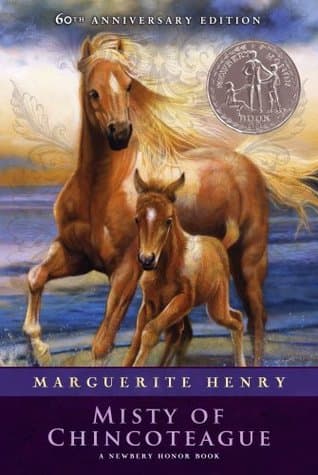
- Misty of Chincoteague
Marguerite Henry
4.0 (41k) average on GoodreadsChildren'sClassic story centered around a deep bond between children and horses.
- Black Beauty
Anna Sewell
4.0 (239k) average on GoodreadsChildren'sSewell's 'Black Beauty' (1877) shares with 'Coming Home' a focus on the welfare and understanding of horses, often advocating for gentler treatment. However, 'Black Beauty' is told from the horse's perspective, offering a direct critique of human cruelty and advocating for animal rights through a moralistic narrative. 'Coming Home,' while also promoting compassionate horsemanship, focuses more on the human protagonist's journey of healing and self-discovery through her interactions with horses, rather than exclusively on the horse's plight, making it a more character-driven romance with animal elements.
- The Hunger Games
Suzanne Collins
4.3 (6.4M) average on GoodreadsFantasyIn a future where children fight to the death on live television, Katniss Everdeen volunteers for the arena, turning a death sentence into a fight for survival and a spark of rebellion.
- The Great Gatsby
F. Scott Fitzgerald
3.9 (3.8M) average on GoodreadsHistorical FictionIn the opulent Roaring Twenties, a mysterious millionaire's lavish parties hide his desperate, tragic pursuit of a lost love, exposing the emptiness within the American Dream.
- The Fault in Our Stars
John Green
4.2 (3.6M) average on GoodreadsYoung AdultA girl with a terminal illness finds her story rewritten when a charming boy with a similar past enters her life at a cancer support group, leading to a star-crossed romance.





Enjoyed the summary?
A summary gives you the shape of the book. The book itself has the detail, the examples and the voice.
Find Coming Home on AmazonAs an Amazon Associate, BookBrief earns from qualifying purchases. How we're funded