

Core Idea
- Difficulty
- Medium
- Read it if
- You are an artist, art historian, or anyone interested in the philosophical underpinnings of abstract art, the relationship between spirituality and creativity, or Kandinsky's personal manifesto on the purpose of art.
- Skip it if
- You prefer practical art instruction, are solely interested in representational art, or find philosophical discussions on spirituality and art too abstract or esoteric.
Key Takeaways from Concerning the Spiritual in Art
The Spiritual Awakening in Art
Art must transcend material reality to express inner spiritual truths.
Kandinsky says real art does not just copy the outside world. It is a deep expression of the artist's inner spirit and the general 'spiritual atmosphere' of their time. He wants art to move away from materialism, which he calls a 'nightmare of the purely material,' towards a spiritual rebirth. This spiritual awakening is important for art to meet its highest goal: to improve humanity and help it understand itself better. Just as music does not need to show real objects, painting should also be free from showing things as they look. This lets it show abstract, emotional, and spiritual realities directly to the viewer's soul. This freedom allows art to connect on a basic, universal level, using the 'inner necessity' that drives both making and experiencing art.
“Every work of art is the child of its age and, in many cases, the mother of our emotions.”
In the book: Kandinsky likens the spiritual evolution of humanity to a 'large, upward-pointing triangle,' with the artist at its apex, guiding the masses. He criticizes the 'art for art's sake' movement as a product of spiritual emptiness and a misunderstanding of art's true function.
Try this: Artists should cultivate introspection and sensitivity to the 'inner necessity' that compels them to create. Viewers should approach art with an open mind, seeking emotional and spiritual resonance rather than mere recognition of depicted objects. Engage with art that challenges your perception of reality.
Related ideas: spiritual-revolution, inner-necessity, abstract-expression
The Principle of Inner Necessity
Authentic art arises from an irresistible internal drive, not external imitation.
The 'principle of inner necessity' is the main idea of Kandinsky's art theory. It means that every art element – color, shape, line – must come from an inner drive, a spiritual feeling within the artist. It should not come from a wish to just copy what is real. This inner necessity has three parts: it shows the artist's personal feelings, the feelings of their time, and the feelings of universal, lasting art. When an artist creates from this deep, real place, their work has a truth and power that goes beyond just skill. This principle makes art a spiritual act, turning the artist into a channel for universal truths. It asks artists to listen to their 'inner voice' and to not give in to the shallow demands of their time. Instead, they should aim for a deeper, more meaningful message.
“The artist must have something to say, for mastery is not an end in itself.”
In the book: Kandinsky argues that 'beautiful' is that which arises from inner spiritual necessity. He contrasts this with artists who paint 'for the sake of painting,' lacking a deeper message, which he considers 'art for art's sake' and spiritually bankrupt.
Try this: Artists should constantly question their motivations and ensure their creative choices are driven by genuine internal impulse. Patrons should seek art that resonates deeply, feeling the 'spiritual vibration' rather than judging solely on realistic portrayal or popular trends. Practice mindfulness to connect with your own inner voice.
Related ideas: inner-necessity, spiritual-vibration, authentic-expression
The Psychology of Color
Colors possess inherent spiritual vibrations and psychological effects, independent of representation.
Kandinsky's careful look at color psychology is new. He states that colors are not just things we see, but direct paths to the human soul. He explains the spiritual and emotional qualities of each color: yellow is earthly, strong, and sometimes wild; blue is heavenly, deep, and calm; red is lively, powerful, and passionate; green is calm, peaceful, and content; white is the quiet before creation, black the quiet after. These natural 'feelings' of color, when artists combine and arrange them, make a deep symphony. This symphony connects directly with the viewer's inner self, without needing thought. This understanding lets artists make works that create specific emotional and spiritual states, going beyond just showing things.
“Color is a power which directly influences the soul. Color is the keyboard, the eyes are the hammers, the soul is the piano with many strings. The artist is the hand that plays, touching one key or another, to cause vibrations in the soul.”
In the book: He contrasts yellow (earthly, aggressive) with blue (heavenly, peaceful). He also discusses the 'coldness' or 'warmth' of colors, and their movement towards or away from the viewer, such as yellow appearing to 'leap out' and blue to 'recede'.
Try this: Artists should study and experiment with the emotional impact of colors, using them intentionally to evoke specific feelings rather than merely depicting objects. When observing art, try to feel the intrinsic 'vibration' of colors before identifying what they represent. Consider the colors you surround yourself with and their psychological impact.
Related ideas: color-psychology, spiritual-vibration, synesthesia
Form as Inner Sound
Geometrical forms carry spiritual weight and contribute to a painting's overall 'inner sound'.
Beyond color, Kandinsky looks at the spiritual meaning of shape. He says that shapes, whether geometric or natural, are not just empty spaces. They are active parts of a painting's 'inner sound.' A sharp corner, a curved line, a square, or a circle all have distinct spiritual feelings and psychological effects. How these shapes interact, how they are placed, and how they relate to colors make a complex visual harmony or clash that speaks directly to the soul. He stresses that artists must pick shapes not for how accurately they show things, but for how well they express inner meaning. This freedom of shape from showing reality allows for a direct, abstract language that can show the deepest spiritual messages, much like musical notes forming a tune.
“The artist is not a slave of form, but its master.”
In the book: Kandinsky discusses the 'inner sound' of a triangle (sharp, aggressive), a square (calm, stable), and a circle (eternal, spiritual). He also notes how lines can create a sense of movement or stillness.
Try this: Artists should experiment with pure forms, understanding their inherent emotional and spiritual qualities before integrating them into compositions. Viewers should observe the structural elements of abstract art, noticing how lines and shapes evoke feelings or a sense of balance/tension. Pay attention to the 'geometry' of your surroundings and its subtle impact on your mood.
Related ideas: form-language, inner-sound, geometric-abstraction
The Artist as Prophet
The artist has a sacred duty to lead humanity towards spiritual enlightenment.
Kandinsky sees the artist as a spiritual guide, someone who understands the deeper trends of the time and leads humanity to a higher awareness. He believes the artist, at the 'top of the triangle' of spiritual growth, has a special sensitivity to the 'inner necessity.' They also have a duty to show these insights through their art. This is not a passive role but an active, almost messianic one. The artist's works become lights in a spiritually dark, materialistic world. This view demands deep self-awareness, bravery, and a firm dedication to truth, even if people do not understand or make fun of them. The artist must avoid the temptations of money and popularity, staying true to their inner vision.
“Every artist, as a child of his time, must say what is his own, and not what is expected of him.”
In the book: He likens the artist's role to that of a 'prophet,' guiding the 'spiritual pyramid' upwards. He criticizes artists who succumb to materialism or 'art for art's sake,' seeing them as failing in their spiritual duty.
Try this: Artists should embrace their role as cultural and spiritual leaders, creating work that challenges and inspires rather than merely entertains. Viewers should seek out art that offers new perspectives and encourages introspection, supporting artists who dare to break conventions. Cultivate a sense of purpose and responsibility in your own creative endeavors.
Related ideas: artist-as-prophet, spiritual-leadership, cultural-guide
The 'Great Spiritual Triangle'
Humanity's spiritual evolution progresses upwards, guided by artists and thinkers.
Kandinsky shows humanity's spiritual progress as a 'great spiritual triangle.' The wide base is the general public, and the narrow top is where new artists and thinkers are. This structure shows his belief that spiritual growth is not the same for everyone. It is led by a few who are sensitive enough to see the 'coming spiritual time.' As these people create and express new truths, they slowly bring the rest of humanity up. This expands the spiritual understanding of more people. This idea shows that spiritual awakening happens in cycles. Times of materialism and spiritual slowness are eventually overcome by the efforts of those at the front. It is a strong statement about how one person's vision can change what everyone thinks.
“The life of the spirit may be graphically represented as a large acute-angled triangle, divided horizontally into unequal sections, with the narrowest and sharpest of these at the top.”
In the book: Kandinsky uses the metaphor of the 'great spiritual triangle' to illustrate the progression of spiritual understanding, with artists and avant-garde thinkers at its apex, pulling the base (the masses) upwards.
Try this: Recognize that societal change often begins with a few visionary individuals. Support and engage with unconventional ideas and art that push boundaries. Aspire to be at the 'apex' in your own field, contributing to progress rather than merely following trends. Seek out and champion new ideas.
Related ideas: spiritual-evolution, cultural-progress, avant-garde
The Dangers of Materialism
Materialism stifles spiritual growth and leads to 'art for art's sake,' devoid of meaning.
Kandinsky strongly criticizes the materialism of his time. He sees it as a spiritual 'nightmare' that harms both art and people. He says that when art only focuses on showing the outside world or making money, it loses its soul. It becomes a shallow exercise in 'art for art's sake.' This materialist way of thinking takes away art's deep ability to connect with inner life and improve the spirit. It traps artists in a cycle of copying and showing off skill, stopping them from showing deeper truths. This criticism is not just about art styles. It is about the direction of human civilization. He thinks a society too focused on material things will become spiritually poor. He sees this as a 'dark' period that needs to be overcome.
“The nightmare of the purely material, which has turned the life of the universe into an evil, useless game, is not yet past.”
In the book: Kandinsky criticizes 'art for art's sake' as a symptom of spiritual decline, where artists focus on technique without inner content. He also mentions the 'dark period' of materialism that humanity is struggling through.
Try this: As artists, resist the pressure to create solely for commercial gain or superficial trends. As viewers, question art that seems to lack deeper meaning or spiritual resonance. Reflect on areas in your own life where materialism might be hindering your personal or spiritual growth. Prioritize purpose over profit.
Related ideas: materialism, art-for-arts-sake, spiritual-stagnation
The Language of Abstract Art
Abstract art speaks directly to the soul through pure color and form, bypassing the intellect.
For Kandinsky, abstract art is not just a style choice. It is a necessary step forward, the purest way to show spiritual truths. By separating art from the need to show outside objects, abstract shapes and colors can connect directly with the viewer's soul, like music. This direct connection skips the mental filters that often hide deeper meaning in art that shows real things. How the spiritual feelings of colors and the inner sounds of shapes work together creates a deep connection. This awakens emotions and spiritual understanding without needing a story or recognizable images. This directness makes abstract art a strong tool for spiritual discovery. It allows the artist to build a completely new reality that exists only in the realm of the spirit.
“The true work of art is born from the 'inner necessity' and works on the soul directly.”
In the book: Kandinsky explicitly states that abstract art, like music, can directly influence the soul without relying on the depiction of objects. He envisions a 'new language' that can express inner realities.
Try this: Approach abstract art with an open mind and a willingness to feel rather than simply understand. Allow yourself to be moved by the colors, lines, and forms without searching for a literal interpretation. Experiment with creating abstract work to express non-verbal emotions or ideas. Embrace the non-literal.
Related ideas: abstract-language, non-objectivism, direct-communication
The Synesthetic Experience
Art should evoke a multi-sensory experience, blurring the lines between sight and sound.
Kandinsky's comparison of color to a piano keyboard shows his belief that art should be experienced in a way that mixes senses. He felt that colors and shapes had an 'inner sound' that the soul could 'hear.' This created a multi-sensory feeling like music. This blending of senses lets art connect on a deeper, more complete level. It uses not just the eyes but the whole inner self. He imagined paintings as 'visual music,' works where colors and shapes create harmonies and clashes that directly bring out emotional and spiritual states. This idea questions the usual way of separating senses in art. It suggests a more complete and absorbing experience where what is seen can literally 'vibrate' inside the viewer.
“Color is the keyboard, the eyes are the hammers, the soul is the piano with many strings. The artist is the hand that plays, touching one key or another, to cause vibrations in the soul.”
In the book: His 'color is the keyboard' quote is the most direct evidence. He also describes how certain colors 'resonate' or 'vibrate' in the soul, and how forms can have 'inner sounds,' linking visual and auditory sensations.
Try this: When viewing art, try to perceive the 'sound' or 'feeling' of colors and forms. As an artist, consider how your visual choices might evoke sensations beyond sight, such as temperature, texture, or even sound. Explore cross-sensory experiences in your daily life, noticing how music affects your visual perception or how colors influence your mood.
Related ideas: synesthesia, visual-music, multi-sensory-art
Concerning the Spiritual in Art Quotes
“The artist must train not only his eye but also his soul.”
“Color is a power which directly influences the soul.”
“The more abstract is form, the more clear and direct its appeal.”
“Every work of art is the child of its time, often it is the mother of our emotions.”
“The artist must have something to say, for mastery over form is not his goal but rather the adapting of form to its inner meaning.”
“The life of the spirit may be fairly represented in diagram as a large acute-angled triangle divided horizontally into unequal parts.”
“The observer must learn to look at the picture as a graphic representation of a mood and not as a representation of objects.”
“The harmony of the soul and the senses is a condition of art.”
“Form alone, even though abstract and geometrical, has a power of inner suggestion.”
“The artist is not a 'Sunday child' for whom everything immediately succeeds. He has no right to live without duty.”
“The spiritual life, to which art belongs and of which she is one of the mightiest agents, is a complicated but definite and easily definable movement forwards and upwards.”
“The artist must be blind to 'recognized' and 'unrecognized' form, deaf to the teachings and desires of his time.”
“The work of art is born of the artist in a mysterious and secret way. From him it gains life and being.”
Quiz
10 questions on the main ideas. Each answer comes with a short explanation.
Question 1
According to Kandinsky in 'Concerning the Spiritual in Art,' what should artists express through their work, similar to how musicians create music?
- The material world and physical reality
- Their own inner lives in abstract, non-material terms
- Historical events and cultural traditions
- Technical mastery of traditional painting techniques
Show answer
B. Their own inner lives in abstract, non-material terms In the first part 'About General Aesthetic,' Kandinsky calls for a spiritual revolution where artists express their inner lives abstractly, freeing art from dependence on the material world, much like music operates independently of physical reality.
Question 2
What are the two main parts of Kandinsky's book 'Concerning the Spiritual in Art'?
- Theory and Practice
- History and Future
- About General Aesthetic and About Painting
- Spirituality and Materialism
Show answer
C. About General Aesthetic and About Painting The book is structured into two parts: 'About General Aesthetic,' which discusses the spiritual revolution in art, and 'About Painting,' which covers the psychology of colors, form, and artist responsibilities.
Question 3
Which of the following is NOT included as additional material in the English translation of 'Concerning the Spiritual in Art'?
- An Introduction by translator Michael T. H. Sadler
- A new Preface by Richard Stratton
- Nine woodcuts by Kandinsky at chapter headings
- A detailed biography of Kandinsky's early life
Show answer
D. A detailed biography of Kandinsky's early life The book includes an Introduction by Sadler, a Preface by Stratton, and nine woodcuts by Kandinsky, but it does not contain a detailed biography of his early life; Stratton's Preface discusses his career more broadly.
Question 4
In the second part 'About Painting,' what specific topics does Kandinsky discuss?
- The history of abstract art and its key figures
- The psychology of colors, the language of form and color, and artist responsibilities
- Technical instructions for creating nonobjective paintings
- Critiques of other modern artists' works
Show answer
B. The psychology of colors, the language of form and color, and artist responsibilities Kandinsky delves into the psychological effects of colors, how form and color communicate, and the ethical duties of artists, focusing on the expressive potential beyond mere representation.
Question 5
What movement does Kandinsky's book help pioneer by advocating for art free from material reality?
- Impressionism
- Cubism
- Nonobjectivism or abstract art
- Realism
Show answer
C. Nonobjectivism or abstract art Kandinsky's theory promotes nonobjectivism, where art does not depict recognizable objects from the material world, instead focusing on spiritual and emotional expression through abstraction.
Question 6
How does Kandinsky compare artists to musicians in his argument for spiritual art?
- Both rely on technical precision and structured compositions
- Both should not depend on the material world for their creative expression
- Both use color and sound interchangeably
- Both require extensive training in classical traditions
Show answer
B. Both should not depend on the material world for their creative expression Kandinsky argues that just as music creates emotional impact without representing physical objects, art should also transcend material reality to express inner spiritual truths.
Question 7
What is the primary goal of the spiritual revolution Kandinsky calls for in painting?
- To make art more accessible to the general public
- To allow artists to depict religious themes more accurately
- To free art from traditional bonds to material reality and enable abstract expression
- To increase the commercial value of artworks
Show answer
C. To free art from traditional bonds to material reality and enable abstract expression Kandinsky advocates for a shift away from representational art toward abstraction, where artists can convey spiritual and emotional content without being tied to physical forms.
Question 8
According to Kandinsky, what role does the psychology of colors play in nonobjective art?
- It determines the marketability of artworks based on color trends
- It helps artists mimic natural light and shadows realistically
- It allows colors to communicate emotions and spiritual ideas directly to the viewer
- It restricts color use to traditional symbolic meanings
Show answer
C. It allows colors to communicate emotions and spiritual ideas directly to the viewer Kandinsky explores how different colors evoke specific psychological responses, enabling artists to use color as a language to convey inner experiences without representational forms.
Question 9
Why is 'Concerning the Spiritual in Art' considered a key document in modern art history?
- It provides a comprehensive history of 20th-century art movements
- It was the first book to criticize traditional art techniques
- It crystallizes ideas influencing many modern artists and advocates for abstraction's spiritual role
- It focuses solely on Kandinsky's personal painting techniques
Show answer
C. It crystallizes ideas influencing many modern artists and advocates for abstraction's spiritual role The book articulates a theoretical foundation for abstract art, impacting artists by promoting spirituality over materialism, and it remains influential for its philosophical depth and practical insights.
Question 10
In practical terms, how does Kandinsky suggest artists apply his theories to their work?
- By copying masterpieces from the Renaissance to learn form
- By focusing on the responsibilities of the artist to use form and color as a spiritual language
- By avoiding color entirely to emphasize line and shape
- By creating art that is easily understandable to all viewers
Show answer
B. By focusing on the responsibilities of the artist to use form and color as a spiritual language Kandinsky emphasizes that artists have a responsibility to harness the expressive power of form and color to communicate inner truths, guiding practical creation toward spiritual abstraction rather than literal representation.
Concerning the Spiritual in Art FAQ
What is 'Concerning the Spiritual in Art' about?
It's Wassily Kandinsky's pioneering 1911 treatise arguing that art should transcend material reality to express inner spiritual truths through abstraction, similar to how music operates. The book outlines his theory of painting, psychology of colors, and calls for a spiritual revolution in art.
What does Kandinsky mean by 'spiritual' in art?
Kandinsky refers to the inner emotional and psychological essence that art should express, moving beyond literal representation. He believed colors and forms have inherent spiritual vibrations that can communicate directly with the viewer's soul, independent of material subjects.
How is Kandinsky's approach different from traditional art?
Traditional art typically represents material reality, while Kandinsky advocated for nonobjective abstraction that expresses inner experiences. He argued artists should be like composers—using visual elements like colors and forms as their 'notes' rather than depicting physical objects.
Does Kandinsky's theory still work for contemporary artists?
Yes, Kandinsky's ideas remain foundational for abstract art and continue to influence artists exploring emotional expression through non-representational forms. His concepts about color psychology and spiritual expression are still studied in art education worldwide.
What is nonobjectivism in art?
Nonobjectivism is the creation of art that doesn't represent recognizable objects from the physical world, instead using abstract forms, colors, and lines to convey emotions or ideas. Kandinsky's book was instrumental in developing and explaining this approach.
How different is Kandinsky's philosophy from other modern artists like Picasso?
While Picasso's Cubism still referenced physical reality through fragmented forms, Kandinsky advocated for complete abstraction without material references. Picasso worked with recognizable subjects, whereas Kandinsky sought purely spiritual expression through non-representational elements.
What practical guidance does Kandinsky give about using color?
Kandinsky analyzes colors' psychological effects—yellow as aggressive and earthly, blue as spiritual and calm—and suggests artists use these inherent properties to create emotional resonance. He provides specific observations about how colors interact and affect viewers spiritually.
Why is this book important for art students today?
It provides the philosophical foundation for abstract art and helps students understand how visual elements can communicate beyond representation. The text remains essential reading for grasping 20th-century art movements and developing personal artistic expression.
What responsibilities does Kandinsky assign to artists?
Kandinsky believed artists have a duty to develop their inner spiritual lives and express this through their work, acting as prophets who guide society toward greater spiritual awareness through abstract visual language rather than material depiction.
How does music influence Kandinsky's art theory?
Kandinsky saw music as the ideal art form because it communicates emotions without material references. He wanted visual art to achieve similar direct spiritual communication through abstract combinations of colors and forms, which he called 'visual music.'
About the author
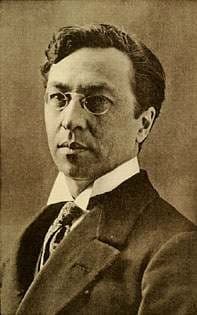
Wassily Kandinsky was a Russian painter and art theorist, known for his pioneering work in abstract art. His influential book, "Concerning the Spiritual in Art," explores the relationship between art and spirituality, emphasizing the emotional power of color and form. Kandinsky's ideas have significantly impacted modern art and continue to be studied in art theory.
Similar books
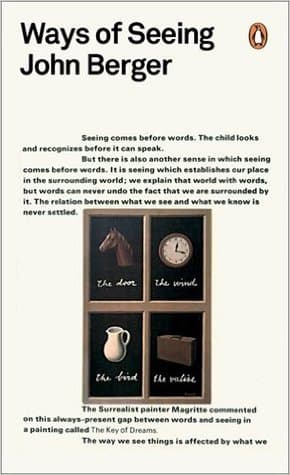
- Ways of Seeing
John Berger
3.9 (251k) average on GoodreadsHistoryBerger's 'Ways of Seeing' (1972) offers a Marxist-influenced critique of art and its consumption, focusing on how images are used to maintain power structures and class distinctions. This stands in stark contrast to Kandinsky's almost utopian vision of art as a spiritual liberator. Kandinsky is concerned with the intrinsic spiritual quality of art and the artist's role as prophet, while Berger dissects the social, political, and economic contexts that shape how art is produced and perceived, often demystifying the very 'spirituality' Kandinsky champions by revealing its ideological underpinnings.
- Eat, Pray, Love
Elizabeth Gilbert
3.6 (1.5M) average on GoodreadsLifestyleA heartbroken writer leaves her conventional life for a year-long global search for pleasure in Italy, spiritual devotion in India, and unexpected love and balance in Bali.
- Educated
Tara Westover
4.5 (796k) average on GoodreadsBiographyRaised in the Idaho mountains by fundamentalist survivalists, a young woman forges her own path to education, battling fierce family loyalty and personal demons to discover a world beyond her isolated upbringing.
- The Poisonwood Bible
Barbara Kingsolver
4.1 (659k) average on GoodreadsLiterary FictionA zealous missionary's rigid faith clashes with the Belgian Congo's wilderness and people, unraveling his family through the eyes of his five unforgettable women.
- Siddhartha
Hermann Hesse
4.0 (583k) average on GoodreadsHistorical FictionSiddhartha leaves a life of privilege and piety, embracing asceticism, wealth, and love to find enlightenment not in dogma, but in the whispers of a river and the unity of all existence.
- The Five People You Meet in Heaven
Mitch Albom
3.9 (578k) average on GoodreadsFantasyAn amusement park mechanic, Eddie, dies saving a child and awakens in an afterlife where five souls, some familiar, some strangers, reveal the meaning of his ordinary life.





Enjoyed the summary?
A summary gives you the shape of the book. The book itself has the detail, the examples and the voice.
Find Concerning the Spiritual in Art on AmazonAs an Amazon Associate, BookBrief earns from qualifying purchases. How we're funded