

Synopsis
Covers the whole plot, including the ending.
- Difficulty
- Medium
- Pacing
- Moderate
- Mood
- Atmospheric, Reflective, Subversive, Thought-provoking, Darkly Humorous
- Read it if
- You enjoy fairy tale retellings that delve into the psychological and societal complexities of the 'villains' and question traditional narratives, set against a rich historical backdrop.
- Skip it if
- You prefer straightforward fairy tales, dislike ambiguous morality, or are not interested in historical fiction with a slower, more reflective pace.
Confessions of an Ugly Stepsister Plot Summary
Covers the whole plot, including the ending.
Arrival in Haarlem
The story opens with Iris, her mother Margarethe, and her simple-minded stepsister Ruth arriving in Haarlem, Netherlands. They fled England due to accusations of witchcraft. They have no money and struggle to find work or shelter. Margarethe, a practical and often harsh woman, quickly sees their desperate situation. Iris, observant and intelligent, navigates their poverty, often taking on responsibilities beyond her years. They eventually find a meager existence on the city's outskirts, where Margarethe tries to sell Ruth's 'healing' touch, a dangerous act in their superstitious new home. This initial struggle shows the family's uncertain position and Iris's developing sense of injustice.
Meeting the Schoonmakers
Through luck, Margarethe secures a position as a housekeeper for the wealthy Schoonmaker family. The household includes the widowed Master Cornelis Schoonmaker, his beautiful but withdrawn daughter Clara, and his eccentric sister, Hendrickje. Iris and Ruth come along, living in the servants' quarters. This move offers stability and access to a world of luxury and art. However, the transition has challenges, as they must adapt to the rigid social structures and expectations of their new environment. The mysterious nature of the Schoonmaker family begins to unfold before Iris.
Clara's Isolation
Clara Schoonmaker is a girl of ethereal beauty but great isolation. She spends her days by the hearth, seemingly obsessed with ashes and fire, and rarely speaks. Master Schoonmaker and Hendrickje treat her with reverence and fear, believing her beauty is a curse or a gift to be protected. Iris observes Clara with awe and pity, noting her detachment from the world. This seclusion prevents Clara from developing social skills or a sense of self beyond her appearance, making her a passive figure whose fate is largely determined by others. Iris, in contrast, must be active and resourceful.
The Master's New Wife
Margarethe, ambitious and shrewd, sees a chance to improve their status. She begins to manipulate Master Schoonmaker, playing on his loneliness and his need for a strong hand in the household. Her practical skills and forceful personality gradually win him over. Despite Iris's discomfort with her mother's actions, Margarethe convinces Schoonmaker to marry her. This union makes Iris and Ruth stepsisters to Clara, giving them higher social standing but also entangling them more deeply in the secrets of the Schoonmaker family. The dynamic between the three girls, especially the two 'ugly' stepsisters and the beautiful Clara, is now set.
Iris's Education and Aspirations
Living in the Schoonmaker household, Iris gains access to books and a more refined environment. Driven by curiosity and a desire for knowledge, she secretly teaches herself to read and reads any literature she can find, particularly philosophical texts and the works of Descartes. She also develops an interest in painting and art, drawn to Haarlem's art scene and the work of local artists like Caspar. Iris's intellectual growth contrasts with Clara's passive existence and Ruth's simplicity. She begins to question beauty, truth, and perception, moving beyond survival to ponder deeper philosophical questions, which will shape her understanding of the world and her place within it.
The Orange Prince and Caspar
Rumors circulate about a visit from the Prince of Orange to Haarlem, sparking excitement and ambition within the Schoonmaker household, especially for Margarethe, who sees a chance for Clara to make an advantageous match. A talented but struggling painter named Caspar (a fictionalized Vermeer) becomes enamored with Clara's unique beauty. He seeks permission to paint her portrait, believing her face holds a truth he wishes to capture. Iris develops a complex relationship with Caspar, admiring his artistic vision and finding in him a kindred spirit who sees beyond appearances. Caspar's interest in Clara further raises her perceived value, while also highlighting her objectification.
The Ball and the Lost Slipper
A grand ball is held, possibly in honor of the Prince's visit, and Clara, dressed exquisitely by Margarethe, makes a stunning appearance. Her beauty captivates everyone, including a representative of the Prince of Orange. During the festivities, Clara's slipper, with a unique design, is mysteriously lost. This event, whether accidental or planned, becomes a moment when the Prince's emissary or a nobleman from his court begins a search for the maiden whose foot fits the lost slipper. This mirrors the classic Cinderella narrative, but Iris, observing, sees the artifice and the power dynamics at play, understanding that Clara's fate is being shaped by external forces rather than her own will.
The Search for the Foot
Following the ball, the search for the slipper's owner begins, filling Haarlem with anticipation and desperate hopes. Various girls try to fit their feet into the exquisite, tiny slipper, but none succeed. Within the Schoonmaker household, Margarethe is frantic, determined that one of her daughters will be chosen. She tries to force Ruth's foot into the slipper, even using painful measures, but fails. Iris, though pressured, refuses to participate. Tension builds as the emissary approaches their home. The reality of Clara's unique foot size, and her inherent 'fit' for the role being imposed upon her, becomes undeniable. This highlights the arbitrary nature of such a 'destiny'.
Clara's Betrothal
The emissary arrives at the Schoonmaker home, and Clara, with her naturally small and perfectly shaped foot, effortlessly fits into the lost slipper. This confirms her identity as the maiden sought by the Prince. Margarethe is triumphant, and Clara is betrothed to the Prince of Orange, or at least a high-ranking nobleman in his retinue, destined for a life of royalty and prestige. However, Clara herself remains detached and unemotional, her beauty having paved her path without her active participation or desire. Iris observes this with growing unease, recognizing that Clara's supposed 'happily ever after' is less about personal happiness and more about fulfilling a societal role dictated by her appearance.
The Truth of Clara's Past
Driven by her analytical mind and unease about Clara, Iris begins to piece together information. She learns about the mysterious circumstances of Clara's birth and the death of her mother. Through conversations with Hendrickje and old servants, and her own deductions, Iris uncovers the dark truth: Clara is not Master Schoonmaker's biological daughter but was adopted or taken in under suspicious circumstances. Her unusual beauty and detachment relate to a deeper, unsettling origin, possibly involving magic or a psychological trauma. This revelation shatters the illusion of Clara's perfect destiny and reveals the deceit and manipulation that have governed her life.
The Painter's Vision
Throughout these events, Caspar, the painter, continues to work on Clara's portrait. Unlike others who are captivated by her external beauty, Caspar tries to capture her inner essence, her profound otherworldliness, and the melancholy that seems to cling to her. He struggles to convey the 'truth' of Clara on canvas, wrestling with the limitations of paint and perception. His artistic journey parallels Iris's intellectual one, both trying to understand Clara beyond her surface. The finished portrait is not just a likeness but an interpretation, revealing a depth and mystery that most people overlook, hinting at the secrets Iris has uncovered. It shows that true beauty, or truth, lies beyond the superficial.
Iris's Choice and Departure
As Clara prepares for her royal marriage, Iris makes a choice for herself. She rejects the path of superficiality and societal advancement her mother pursued. Having gained an education and a deeper understanding of human nature and the world's complexities, Iris decides to forge her own intellectual and independent path. She bids farewell to Clara, recognizing that their destinies, though connected, are different. Iris leaves the Schoonmaker household, possibly with Caspar or to pursue her own studies, embracing a life of thought and observation rather than one dictated by beauty or social status. Her departure means her liberation from the fairytale narrative.
Clara's Fate
Clara, beautiful and silent, proceeds with her marriage to the Prince or nobleman. Her 'happily ever after' is a gilded cage, a life of luxury and social prominence but without genuine emotion or self-determination. She remains an object of admiration, a symbol of beauty, but never truly a person with agency. The novel implies that her detachment and her mysterious origins continue to define her existence, preventing her from forming deep connections or experiencing true personal fulfillment. Her story concludes not with joy, but with a sense of melancholic inevitability, showing the burdens and isolation that can accompany extraordinary beauty when not paired with inner life.
Ruth's Simple Life
Ruth, Iris's simple-minded stepsister, remains largely unaffected by the ambitions and manipulations around her. Her gentle nature and lack of intellectual complexity shield her from the pressures that weigh on Iris and Clara. She finds contentment in simple tasks and small comforts, perhaps even developing a quiet connection with one of the servants or a local boy. Her fate contrasts with both Clara's gilded cage and Iris's intellectual striving, suggesting that happiness can be found outside the pursuit of beauty, wealth, or power. Ruth's story offers a quiet counterpoint, highlighting the value of an unburdened and unassuming existence.
Iris's Confessions
The novel concludes with Iris, now an older woman, reflecting on her past and the events that shaped her and her stepsisters. She is the 'ugly stepsister' who, through her intelligence and observation, has come to understand the true nature of beauty, power, and perception. Her 'confessions' are not of guilt, but of insight, revealing the subjective and often cruel realities behind the traditional fairytale. She questions the societal narratives that elevate superficial beauty and condemn those who lack it, offering a revisionist perspective on the Cinderella story. Iris's narrative voice is one of wisdom and nuanced understanding, having seen through the illusions to the underlying truths.
Confessions of an Ugly Stepsister Characters
Iris
Protagonist
The observant and intelligent 'ugly stepsister' who narrates the story.
Iris is the sharp-witted and pragmatic daughter of Margarethe, and the primary narrator. Unlike her beautiful stepsister Clara or her simple stepsister Ruth, Iris is described as plain, which allows her to be an objective observer of the events around her. She is highly intelligent, curious, and introspective, teaching herself to read and developing a keen interest in philosophy and art. Her 'ugliness' grants her a unique perspective, free from the burdens and expectations placed upon those deemed beautiful. She is deeply empathetic but also fiercely independent, seeking truth and understanding over social acceptance or superficial gain.
Relationships: Margarethe (Daughter, often at odds with her mother's ambition and harshness.); Ruth (Stepsister, protective and caring towards her simple-minded sibling.); Clara (Stepsister, a complex mix of pity, fascination, and ultimately, understanding.); Caspar (Friend and intellectual confidant, sharing an appreciation for truth and art.)
Margarethe
Supporting/Antagonist
Iris's ambitious and manipulative mother, who becomes Clara's stepmother.
Margarethe is Iris's mother, a formidable woman driven by a fierce desire for survival and social advancement. She is pragmatic, shrewd, and often harsh, willing to manipulate situations and people to secure a better life for herself and her daughters. Her ambition leads her to marry Master Schoonmaker, making her the stepmother to Clara. She embodies the societal pressures of the time, believing that a good marriage and social status are the ultimate goals. While her actions are often self-serving, they stem from a deep-seated fear of poverty and a desire to protect her family, albeit in a misguided way.
Relationships: Iris (Mother, often critical and demanding, but also providing for her.); Ruth (Mother, protective but also exploiting Ruth's perceived 'gifts'.); Master Schoonmaker (Husband, a marriage of convenience and ambition.); Clara (Stepmother, sees Clara as a means to further her social standing.)
Clara Schoonmaker
Supporting/Protagonist of the 'fairytale'
The unnaturally beautiful and detached stepsister, destined to be 'Cinderella'.
Clara is the epitome of ethereal beauty, but she is also profoundly withdrawn and passive. She spends her days by the hearth, seemingly disconnected from the world, and rarely speaks. Her beauty is both her greatest asset and her greatest burden, making her an object of fascination, reverence, and manipulation. She is less a character with agency and more a symbol, a canvas upon which others project their desires and fears. Her origins are mysterious, hinting at a deeper, perhaps supernatural, reason for her detachment. She embodies the traditional fairytale princess, but with a tragic undercurrent of isolation and lack of self.
Relationships: Iris (Stepsister, an object of Iris's observation and pity.); Margarethe (Stepmother, used by Margarethe for social climbing.); Master Schoonmaker (Father figure, who keeps her secluded.); Caspar (Muse for his painting, seen by him as a profound mystery.)
Ruth
Supporting
Iris's simple-minded, gentle stepsister with a naive innocence.
Ruth is Iris's stepsister (from Margarethe's previous marriage, making them biological sisters, but the novel often refers to her as a stepsister to Clara). She is simple-minded and possesses a childlike innocence, often unaware of the complexities and harsh realities around her. She has a gentle nature and a perceived 'healing touch' that Margarethe tries to exploit. Ruth represents a contrast to both Iris's intellect and Clara's beauty, finding contentment in simple pleasures and remaining largely untouched by the societal pressures that consume the others. Her character highlights the different ways individuals navigate the world.
Relationships: Iris (Sister, Iris is protective and caring towards her.); Margarethe (Daughter, Margarethe tries to use her for her own ends.)
Master Cornelis Schoonmaker
Supporting
The wealthy, melancholic widower who marries Margarethe.
Master Schoonmaker is a wealthy merchant in Haarlem, a melancholic widower who lives in a grand house with his daughter Clara and sister Hendrickje. He is often depicted as somewhat passive and easily influenced, particularly by Margarethe's strong will. He holds a deep, almost reverent, regard for Clara's beauty, believing it to be a fragile and dangerous gift that must be protected. His sadness and loneliness make him vulnerable to Margarethe's advances, and he ultimately provides the means for Iris and her family to rise in status, albeit at the cost of his own peace.
Relationships: Margarethe (Husband, a marriage of convenience for Margarethe.); Clara (Father, overly protective and reverent of her beauty.); Hendrickje (Brother, relies on her for household management and moral support.)
Hendrickje
Supporting
Master Schoonmaker's eccentric and observant sister.
Hendrickje is Master Schoonmaker's sister, an eccentric and often sharp-tongued woman who lives in the household. She is a keen observer of human nature and possesses a certain worldly wisdom, often seeing through Margarethe's machinations. She is protective of Clara in her own way and provides a counterpoint to Margarethe's ambition, often offering Iris subtle guidance or insights. Her character adds a touch of dry wit and a grounded perspective to the often-fantastical events of the story, representing a voice of reason and tradition within the chaotic household.
Relationships: Master Schoonmaker (Sister, a confidante and household manager.); Clara (Aunt, protective and understanding of Clara's unusual nature.); Iris (A source of information and subtle guidance.)
Caspar
Supporting
A struggling but visionary painter in Haarlem.
Caspar is a talented but impoverished painter in Haarlem, a fictionalized representation of Johannes Vermeer. He is driven by a desire to capture truth and light in his art, seeing beyond superficial appearances. He becomes fascinated by Clara's unique beauty, believing she embodies a profound mystery he wishes to portray. Caspar represents the artistic and intellectual spirit of Haarlem, and he forms a bond with Iris, recognizing her intelligence and shared appreciation for deeper truths. He serves as a catalyst for Iris's intellectual development and offers an alternative perspective on beauty and value, one that transcends mere physical attraction.
Relationships: Clara (Muse, captivated by her unique beauty.); Iris (Friend and intellectual kindred spirit.)
The Prince of Orange (or his Emissary)
Mentioned/Catalyst
The powerful figure whose search for the slipper's owner drives the 'Cinderella' plot.
The Prince of Orange, or more specifically, his emissary, serves as the catalyst for the traditional Cinderella narrative in the story. He represents the ultimate symbol of power, wealth, and destiny in the fairytale. His search for the maiden whose foot fits the lost slipper is the external force that propels Clara into her predetermined 'happily ever after'. The Prince himself is less a character and more a distant, powerful entity, highlighting how Clara's fate is shaped by external forces and societal expectations rather than her own desires or actions. He embodies the superficiality of status and the arbitrary nature of 'fortune'.
Relationships: Clara (Future husband, a marriage based on a 'fairytale' premise.)
Confessions of an Ugly Stepsister Themes
The Nature of Beauty
The novel explores the subjective and often deceptive nature of beauty. Clara's ethereal beauty is a burden, isolating her and making her an object rather than an individual. Iris, considered 'ugly,' is free to develop her intellect and agency, seeing beyond appearances. The story questions whether beauty is a blessing or a curse, and how society defines and values it. Caspar the painter's quest to capture Clara's 'truth' on canvas, rather than just her likeness, shows that true beauty is deeper than the surface. The contrast between Clara's external perfection and her internal emptiness highlights this theme.
“Beauty is a burden, or it is a gift, depending on the soul that bears it.”
Perception vs. Reality
A central theme is the difference between how things appear and how they truly are. The 'fairytale' narrative of Cinderella is deconstructed, revealing the harsh realities, manipulations, and tragic undercurrents. Clara's 'happily ever after' is a gilded cage. Iris, through her keen observation and intellectual curiosity, constantly challenges accepted perceptions, uncovering the truth behind Clara's origins, Margarethe's motives, and the societal illusions of grandeur. The novel shows how easily people are swayed by appearances and how difficult it is to discern genuine truth.
“What is real? What is seen, or what is known?”
Agency and Free Will
The story examines how much individuals can control their own destinies. Clara, despite her elevated status, lacks agency; her life is dictated by her beauty and the ambitions of others. Margarethe, driven by her own will, manipulates circumstances but is still confined by societal expectations. Iris, by contrast, actively seeks knowledge and chooses an independent path, rejecting the predetermined roles society offers. Her journey is one of asserting her own will against circumstance, showing that true freedom comes not from external fortune, but from internal choice and intellectual liberation. The contrast between Clara's passive acceptance and Iris's active pursuit of knowledge is key.
“Some are born to be painted, some to paint. Others to simply watch the paint dry.”
The Power of Storytelling and Myth
Maguire reworks the familiar Cinderella myth, using it to explore how stories shape our understanding of the world and ourselves. The novel questions the simple 'good vs. evil' narratives of fairytales, showing the complexities and moral ambiguities of its characters. By presenting the 'ugly stepsister' as the intelligent narrator, the book challenges the reader to look beyond established myths and consider alternative perspectives. It demonstrates how powerful narratives, like the Cinderella story, can both inspire and constrain, shaping destinies and perceptions, and how challenging these narratives can reveal deeper truths about human nature.
“Every story has two sides, and the truth often lies somewhere in between.”
Plot Devices & Literary Techniques
First-Person Narration (Unreliable)
The story is told from Iris's subjective perspective, offering her 'confessions'.
The entire novel is narrated by Iris in the first person, providing an intimate and subjective account of events. As the 'ugly stepsister,' her perspective is inherently critical and observant, allowing the author to deconstruct the traditional Cinderella narrative. While she strives for truth, her confessions are filtered through her own experiences, biases, and later, her philosophical musings, making her a subtly unreliable narrator. This device forces the reader to question assumptions and to see the fairytale from a fundamentally different, often cynical, viewpoint, highlighting the internal journey of understanding and self-discovery.
Historical Setting (17th Century Haarlem)
The story is set against the backdrop of Golden Age Netherlands, influencing themes and characters.
The specific historical setting of 17th-century Haarlem, Netherlands, during its Golden Age, is more than just a backdrop; it's integral to the novel's themes. This era was characterized by scientific advancements (Descartes), flourishing art (Vermeer, Rembrandt), burgeoning merchant classes, and a lingering undercurrent of superstition and religious fervor. This setting allows Maguire to explore the tension between reason and magic, art and commerce, and the rigid social structures of the time. The emphasis on painting and light, particularly through the character of Caspar, grounds the fantastical elements in a tangible, historical reality, enriching the narrative with cultural depth.
Fairytale Retelling/Deconstruction
The novel reinterprets the Cinderella story from a marginalized perspective.
The most prominent plot device is the retelling and deconstruction of the classic Cinderella fairytale. By shifting the perspective to the 'ugly stepsister' (Iris), the novel subverts reader expectations and challenges the simplistic morality of the original. It exposes the darker, more complex realities behind the 'happily ever after,' revealing the manipulation, social pressures, and personal costs involved. This device allows Maguire to explore themes of beauty, class, agency, and truth, using the familiar framework to ask profound questions about human nature and societal values, ultimately offering a more nuanced and often melancholic version of the beloved myth.
Symbolism of Ashes and Fire
Clara's obsession with ashes and fire symbolizes her isolation and origins.
Clara's consistent presence by the hearth, her fascination with ashes and fire, serves as a powerful symbol. It directly links her to the 'Cinderella' archetype, but also suggests her detachment and perhaps a deeper, more elemental connection to something ancient or mystical. Ashes can represent both death and rebirth, destruction and transformation, hinting at her mysterious origins and passive nature. Fire can symbolize both warmth and destruction, beauty and danger. This recurring motif underscores Clara's enigmatic character, her isolation, and the hidden truths surrounding her existence, making her more than just a pretty face.
Confessions of an Ugly Stepsister Quotes
“Perhaps there is no such thing as a natural death, only a death whose cause has not yet been discovered.”
“The world is not a stage, but a puppet show. And we are all puppets.”
“Beauty, it appeared, was not a thing to be admired but a thing to be feared, for it brought with it the envy and malice of others.”
“To be born a woman is to be born into a world of limits, of expectations, of a thousand small deaths before the final one.”
“Love is a kind of blindness, a willful refusal to see the faults of the beloved.”
“There are some stories that are so old, so ingrained, that they become more real than reality itself.”
“It is not the glass slipper that makes the princess, but the foot that fits it.”
“Sometimes the greatest kindness is to let someone believe their own lies.”
“We are all born with a certain amount of madness. We use it to survive.”
“The world is full of people who want to tell you who you are. Don't let them.”
“Memory is a mischievous servant; it tells you what it wants to, not what you need to hear.”
“There is a kind of hunger that no food can satisfy, a hunger for something lost, or something never found.”
“To be a monster is to be misunderstood. And to be misunderstood is to be alone.”
“Fairy tales are more than true: not because they tell us that dragons exist, but because they tell us that dragons can be beaten.”
Quiz
10 questions on the plot and the characters. Each answer comes with a short explanation.
Question 1
What is the primary setting for the majority of 'Confessions of an Ugly Stepsister'?
- The bustling streets of Amsterdam
- The quiet countryside of England
- Seventeenth-century Haarlem, Holland
- A fairytale kingdom in a magical land
Show answer
C. Seventeenth-century Haarlem, Holland The book is explicitly set against the backdrop of seventeenth-century Holland, specifically mentioning Haarlem.
Question 2
Who is the main protagonist and narrator of the story?
- Clara
- Ruth
- Iris
- Margarethe
Show answer
C. Iris The synopsis clearly states, 'Confessions of an Ugly Stepsister tells the story of Iris, an unlikely heroine.'
Question 3
What is the relationship between Iris and Clara?
- They are childhood friends who grow apart.
- They are stepsisters, with Clara being the 'Cinderella' figure.
- Iris is Clara's maid, and Clara is her mistress.
- They are rivals in the local art scene.
Show answer
B. They are stepsisters, with Clara being the 'Cinderella' figure. The title 'Confessions of an Ugly Stepsister' and the description 'Iris's path quickly becomes intertwined with that of Clara, the mysterious and unnaturally beautiful girl destined to become her sister' clearly indicate their stepsister relationship.
Question 4
What is Iris's mother's name?
- Clara
- Margarethe
- Ruth
- Jacoba
Show answer
B. Margarethe Iris's mother is Margarethe, a rather harsh and ambitious woman who pushes her daughters into their new life.
Question 5
What is the primary trade of Iris's family before they move to the Van den Meer household?
- Baking and selling pastries
- Washing and mending clothes
- Selling flowers in the marketplace
- Painting portraits for the wealthy
Show answer
B. Washing and mending clothes Iris and her mother, Margarethe, work as laundresses in Haarlem before their circumstances change and they enter the Van den Meer's service.
Question 6
What artistic element plays a significant role in the novel's themes and plot, particularly concerning Clara?
- Sculpture
- Music composition
- Painting, particularly by Johannes Vermeer
- Theatrical performance
Show answer
C. Painting, particularly by Johannes Vermeer The novel is heavily influenced by the art and life of Johannes Vermeer, with Clara often being seen as a muse or subject for his work, and the themes of beauty, perception, and artifice are central.
Question 7
What is the name of Iris's other stepsister, the 'ugly' one alongside Iris?
- Clara
- Ruth
- Hanna
- Kaspar
Show answer
. This is a trick question. Iris herself is one of the 'ugly stepsisters,' and the other daughter of Margarethe is Ruth, who is often depicted as plain or simple. The term 'ugly stepsister' refers to Iris and Ruth in contrast to Clara.
Question 8
Which historical figure, a renowned painter, is a significant character in the story?
- Rembrandt van Rijn
- Johannes Vermeer
- Frans Hals
- Jan Steen
Show answer
B. Johannes Vermeer Johannes Vermeer is a central figure in the novel, serving as a painter in Haarlem whose life and art intersect with the characters, particularly Clara.
Question 9
What is the true nature of Clara's beauty, as explored in the novel?
- It is a natural, effortless gift that brings her happiness.
- It is a curse that isolates her and makes her vulnerable to manipulation.
- It is a magical enchantment bestowed upon her by a fairy godmother.
- It is a result of meticulous self-care and expensive cosmetics.
Show answer
B. It is a curse that isolates her and makes her vulnerable to manipulation. The novel deconstructs the fairytale notion of beauty, portraying Clara's 'unnaturally beautiful' appearance as a burden that makes her an object of fascination, often isolating her and making her susceptible to the desires and projections of others, rather than a source of joy or power for herself.
Question 10
What ultimately happens to Iris's younger sister, Ruth?
- She marries a wealthy merchant and lives a comfortable life.
- She becomes a famous artist in her own right.
- She suffers from a mental decline and is eventually institutionalized.
- She runs away to sea and is never heard from again.
Show answer
C. She suffers from a mental decline and is eventually institutionalized. Ruth's story is one of tragedy; she gradually descends into madness, exacerbated by her circumstances and inability to cope, leading to her being confined.
Confessions of an Ugly Stepsister FAQ
What is the central premise of 'Confessions of an Ugly Stepsister' by Gregory Maguire?
The novel re-imagines the classic Cinderella fairy tale from the perspective of one of the 'ugly stepsisters,' Iris. It explores the lives of the stepsisters, Iris and Clara, in 17th-century Holland, delving into themes of beauty, perception, and social status, and questioning the traditional narrative of good versus evil.
Who is Iris and what is her role in the story?
Iris is the narrator and the 'ugly stepsister' figure, a plain but observant and intelligent girl. She arrives in Haarlem with her mother, Margarethe, and becomes entangled with the wealthy Schoonmaker family, eventually becoming Clara's stepsister and a keen observer of the household's secrets and machinations.
Who is Clara and how does she differ from the traditional Cinderella?
Clara is the equivalent of Cinderella, a mysteriously beautiful and somewhat passive girl who is often found by the hearth. Unlike the proactive Cinderella, Clara is often depicted as withdrawn and almost doll-like, her beauty being both a blessing and a burden that isolates her from genuine human connection.
What is the setting of the novel and how does it influence the plot?
The story is set in 17th-century Haarlem, Holland, a period known for its flourishing art scene, merchant wealth, and the Tulip Mania. This historical backdrop influences the plot through the characters' involvement in art (especially the painter Master Schoonmaker), economic speculation, and the rigid social hierarchies of the time, all of which shape the characters' destinies.
What is the significance of the 'ugly' in the title 'Confessions of an Ugly Stepsister'?
The 'ugly' refers not just to physical appearance, but to the societal judgment and ostracization faced by those deemed unattractive or unconventional. Iris's 'ugliness' is contrasted with Clara's striking beauty, forcing the reader to question the superficiality of beauty and the true nature of inner worth and moral character.
What role does Margarethe, Iris's mother, play in the story?
Margarethe is Iris's pragmatic and often harsh mother, driven by a desire for security and a better life. She orchestrates the family's integration into the Schoonmaker household and pushes Iris to conform, embodying the societal pressures and ambitions of the era, even if it means sacrificing her daughter's happiness.
How does Maguire subvert the traditional fairy godmother trope in this novel?
Maguire subverts the fairy godmother trope by making the 'magic' more ambiguous and often tied to human manipulation and perception rather than supernatural intervention. Characters like Master Schoonmaker or even Iris herself, through her observations and actions, become catalysts for change, but without the overt benevolence of a fairy godmother.
What is the significance of the glass slipper in Maguire's retelling?
The glass slipper in this version is not a magical item but a tangible, almost mundane object, perhaps a symbol of fragility or a social status marker. Its role in identifying Clara is more a consequence of circumstance and the machinations of others rather than an enchanted device, grounding the fairy tale in a more realistic context.
How does the motif of art and painting contribute to the novel's themes?
Art and painting are central, with Master Schoonmaker being a prominent painter. The motif highlights themes of perception, illusion, and the creation of beauty. It questions whether beauty is inherent or constructed, and how appearances can be manipulated or idealized, mirroring the way characters like Clara are 'painted' into societal roles.
What psychological impact does Clara's extreme beauty have on her?
Clara's extreme beauty psychologically isolates her, making her an object of admiration and desire but rarely a subject of genuine connection. She becomes passive and withdrawn, almost a living doll, as her identity is solely defined by her appearance, preventing her from developing a strong sense of self or agency.
How does Iris's 'ugliness' shape her character and worldview?
Iris's 'ugliness' forces her to develop sharp observational skills, intelligence, and a deep understanding of human nature, as she cannot rely on superficial charm. It makes her an outsider, providing a unique, critical perspective on the vanity and hypocrisy of the world around her, fostering her introspection and resilience.
What is the nature of the relationship between Iris and Clara?
The relationship between Iris and Clara is complex and evolves from initial curiosity to a strained co-existence, marked by both rivalry and a strange form of protective empathy from Iris. While they are stepsisters, their bond is not one of traditional affection but rather a shared destiny under difficult circumstances, with Iris often observing Clara with a mix of pity and fascination.
Does the novel offer a clear 'happily ever after' ending, and why or why not?
No, the novel does not offer a clear 'happily ever after' in the traditional fairy tale sense. Instead, it concludes with a more ambiguous and realistic resolution for its characters, reflecting the complexities of life and the enduring consequences of their choices. It suggests that happiness is multifaceted and often comes with sacrifice or compromise.
How does the novel explore the theme of social class and mobility in 17th-century Holland?
The novel vividly portrays the rigid social stratification of 17th-century Holland, where wealth, family name, and appearance dictate one's standing. Iris and Margarethe's journey from poverty to entanglement with the wealthy Schoonmakers highlights the difficulties and compromises involved in attempting social mobility, often through marriage or strategic alliances.
What is the significance of the character of Jacob van den Broek?
Jacob van den Broek represents the common man and a potential romantic interest for Iris, offering a stark contrast to the aristocratic world of the Schoonmakers. He symbolizes a more grounded, authentic path for Iris, free from the artifice and ambition that pervades her stepsister's life, and his presence underscores Iris's yearning for genuine connection.
How does Maguire use the concept of 'confession' in the title?
The 'confession' in the title refers to Iris's role as the narrator, offering her subjective, intimate, and often critical perspective on the events and characters. It implies a telling of hidden truths and personal insights, challenging the accepted narrative of the Cinderella story and revealing the moral ambiguities often omitted from fairy tales.
Are there elements of magical realism in the story, or is it purely historical fiction?
While rooted in historical fiction, the novel subtly incorporates elements that lean towards magical realism, particularly concerning Clara's almost ethereal beauty and the way it seems to exert an unnatural influence. However, these elements are often ambiguous, allowing for both supernatural and psychological interpretations, blurring the lines between magic and perception.
About the author

Gregory Maguire is an American author known for his works of fiction that often reimagine classic tales. He is best known for "Wicked: The Life and Times of the Wicked Witch of the West," which explores the backstory of the Wicked Witch from "The Wizard of Oz." Other notable works include "Confessions of an Ugly Stepsister," "A Lion Among Men," "Out of Oz," and "Lost."
Similar books
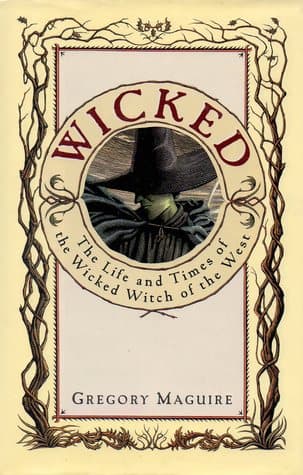
- Wicked: The Life and Times of the Wicked Witch of the West
Gregory Maguire
3.5 (573k) average on GoodreadsFantasyAnother Maguire novel that re-examines a classic 'villain' with depth and a unique perspective.
- The Mists of Avalon
Marion Zimmer Bradley
4.1 (192k) average on GoodreadsFantasyA sprawling fantasy retelling of a classic legend from the perspective of its female characters.
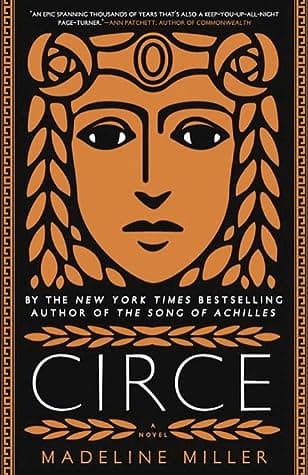
- Circe
Madeline Miller
4.3 (343k) average on GoodreadsFantasyA mythological figure re-imagined with psychological depth and a focus on her personal journey.
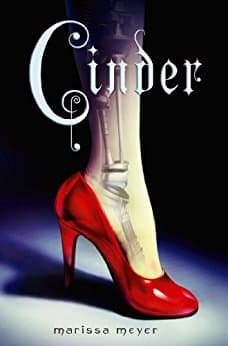
- Cinder
Marissa Meyer
4.1 (683k) average on GoodreadsFantasy'Cinder' is another Cinderella retelling, but it takes a vastly different approach by transplanting the story into a futuristic, dystopian, sci-fi setting. While both novels explore themes of identity and societal prejudice, Meyer's 'Cinder' is a fast-paced, plot-driven adventure with a clear heroic arc and a more optimistic tone, appealing to a younger, more mainstream YA audience. Maguire's 'Confessions' is a literary, character-driven historical fiction that prioritizes psychological realism and social commentary over traditional fantasy tropes and a clear-cut happy ending.
- The Bloody Chamber and Other Stories
Angela Carter
4.0 (39k) average on GoodreadsFantasyAngela Carter's collection of feminist fairy tale retellings, particularly stories like 'The Company of Wolves' (a Red Riding Hood variant), shares Maguire's commitment to subverting traditional narratives and exploring the darker, more sensual, and often violent undertones of these tales. Both authors use rich, evocative language and focus on female experience and agency. However, Carter's work often pushes further into the gothic and overtly erotic, using symbolism and allegory with a more visceral impact, whereas Maguire's 'Confessions' maintains a more grounded historical realism, even while deconstructing the myth.
- Harry Potter and the Sorcerer's Stone
J.K. Rowling
4.5 (7M) average on GoodreadsFantasyRescued from a miserable life under the stairs, an orphaned boy discovers he's a wizard destined for a magical school, where he uncovers a dangerous secret tied to the dark wizard who murdered his parents.



Enjoyed the summary?
A summary gives you the shape of the book. The book itself has the detail, the examples and the voice.
Find Confessions of an Ugly Stepsister on AmazonAs an Amazon Associate, BookBrief earns from qualifying purchases. How we're funded