

Synopsis
Covers the whole plot, including the ending.
- Difficulty
- Medium
- Pacing
- Slow
- Mood
- Introspective, Melancholy, Realistic, Thought-provoking
- Read it if
- You enjoy intricate character studies, morally ambiguous relationships, and sharp, intellectual dialogue.
- Skip it if
- You prefer fast-paced plots, clear resolutions, or characters with strong moral compasses.
Conversations with Friends Plot Summary
Covers the whole plot, including the ending.
A Performance and a Proposal
Frances, a twenty-one-year-old college student, and her best friend and ex-girlfriend, Bobbi, perform their spoken-word poetry in Dublin. After a gig, Melissa Helney, an older, accomplished photographer and writer, approaches them. She admires their work and suggests writing an article about them. Bobbi, charismatic and outgoing, is enthusiastic. Frances, more reserved, views the encounter with suspicion and intrigue. Melissa invites them to her home, introducing them to a new social circle.
First Encounters at Melissa's House
Frances and Bobbi visit Melissa's elegant home, where they meet Melissa's husband, Nick Conway, a handsome but melancholic actor. Bobbi is drawn to Melissa, engaging in lively conversation. Frances observes Nick, sensing a mutual, unspoken awkwardness. Their initial interactions are polite but have subtext. Frances feels an unexpected pull towards Nick, despite her intellectual dislike for what he represents: patriarchal norms and conventional success. This first meeting establishes the dynamic between the four characters.
The Start of an Affair
After their initial meetings, Frances and Nick begin exchanging emails. They discuss mundane topics at first, then become more intimate. Their conversations lead to a secret rendezvous, and they begin a clandestine sexual affair. Frances is surprised by her intense feelings for Nick, a married man significantly older than her. She struggles to reconcile this new desire with her worldview and her commitment to Bobbi. The affair is passionate, secret, and emotionally complex, as they navigate its ethical implications.
Bobbi's Suspicions and Melissa's Knowledge
As Frances spends more time with Nick, she becomes secretive. Bobbi grows suspicious. Bobbi confronts Frances, expressing concern and hurt over Frances's emotional distance. Meanwhile, Melissa, without directly addressing the affair, drops subtle hints and makes pointed remarks. These suggest she is aware of the illicit relationship between Frances and Nick. This creates a tense atmosphere, with unspoken truths hanging in the air, complicating the web of relationships.
The French Holiday
The four characters take a holiday together at Melissa's family villa in France. The close quarters intensify emotional dynamics. Frances and Nick's affair continues, often in secret, but the emotional strain and desire for closeness become more pronounced. Bobbi and Melissa also share intimate moments, blurring the lines of their relationships. The holiday becomes a test for their intertwined desires, jealousies, and vulnerabilities, bringing suppressed emotions to the surface and challenging their individual boundaries.
Frances's Health Crisis
Throughout the story, Frances experiences increasingly debilitating abdominal pain. She often dismisses it or attributes it to stress. During a particularly severe episode, she seeks medical attention. After tests, Frances is diagnosed with endometriosis, a chronic and painful condition. This diagnosis forces her to confront her body and its vulnerabilities, shattering her intellectual detachment. She must acknowledge a physical reality she had long ignored. The illness adds another layer of complexity to her turbulent emotional life.
The Affair's Exposure and Fallout
The unspoken truth breaks. Melissa confronts Nick about his affair with Frances. This confrontation strains Melissa and Nick's marriage, and they decide to separate for a period. Frances feels guilt, relief, and uncertainty about the future. The exposure of the affair forces all four characters to re-evaluate their relationships and the consequences of their actions. This leads to a period of emotional upheaval and introspection for everyone involved.
Frances and Bobbi's Reconciliation
Following the fallout from the affair, Frances and Bobbi's friendship is severely tested. Bobbi expresses hurt and anger over Frances's secrecy and emotional withdrawal. They have difficult but necessary conversations, slowly working through the betrayals and misunderstandings. Despite the pain, their deep affection and history allow them to begin reconciling. This reaffirms the importance of their bond, even as its nature has shifted and matured.
Nick's Return and Frances's Ambivalence
After some time apart, Nick returns to Melissa, attempting to reconcile their marriage. This leaves Frances feeling adrift and confused. She still has strong feelings for Nick but understands the complexities of his commitment to his wife and the reality of their situation. Frances struggles with the pain of losing Nick and the realization that their affair was likely unsustainable. She is forced to confront the limitations of their relationship and the emotional cost of her choices.
A Phone Call and Uncertain Future
Towards the end of the novel, Frances receives a phone call from Nick. He is back with Melissa but still reaching out to her. Their conversation is tentative and emotionally charged. Their physical relationship is over, but the emotional connection between them remains. The novel concludes with ambiguity, suggesting that Frances's journey of self-discovery and emotional growth is ongoing. She navigates her feelings for Nick, her evolving friendship with Bobbi, and her own identity as she moves forward, embracing the uncertainties of life and love.
Conversations with Friends Characters
Frances
Protagonist
A cynical, intelligent, and emotionally guarded college student and aspiring writer.
Frances is a twenty-one-year-old university student, aspiring writer, and spoken-word poet. She is highly intelligent, observant, and often cynical, using her intellect as a shield against emotional vulnerability. She holds strong, often socialist, political views and initially dismisses conventional relationships and societal norms. Despite her cool exterior, Frances secretly yearns for connection and struggles with self-worth, which she often masks with sarcasm and intellectual superiority. Her physical health, specifically endometriosis, also plays a significant role in her journey, forcing her to confront her own body and its limitations.
Relationships: Bobbi (Best friend and ex-girlfriend; a complex, loving, and sometimes contentious bond.); Nick (Lover; a secret, passionate, and emotionally intense affair.); Melissa (Acquaintance; initially admired, then a source of jealousy and discomfort.); Dennis (Father; a strained relationship marked by his alcoholism and their shared financial struggles.)
Bobbi
Supporting
Frances's charismatic best friend and ex-girlfriend, confident and socially adept.
Bobbi is Frances's best friend and former lover, a highly charismatic, confident, and socially adept young woman. She is outgoing, direct, and possesses a natural charm that draws people to her, including Melissa. Bobbi is often the more pragmatic and assertive of the two, pushing Frances to engage with the world. She is deeply loyal to Frances but also capable of expressing her hurt and frustration when Frances withdraws. Her relationship with Frances is central to the novel, serving as a constant touchstone for Frances's emotional development.
Relationships: Frances (Best friend and ex-girlfriend; a complex, loving, and sometimes contentious bond.); Melissa (Close friend and object of admiration; an intimate and intellectual connection.)
Nick Conway
Supporting
Melissa's husband and Frances's lover, a handsome but melancholic actor.
Nick Conway is Melissa's husband and a handsome, somewhat melancholic actor. He is significantly older than Frances and initially appears reserved and detached. Beneath his quiet exterior, Nick is sensitive, kind, and intelligent, but also harbors a sense of unfulfilled potential and emotional vulnerability. He is drawn to Frances's sharp intellect and honesty, finding a connection with her that is missing in his marriage. His affair with Frances is born out of a desire for intimacy and escapism, but he is ultimately bound by his commitments and the complexities of his life with Melissa.
Relationships: Melissa (Wife; a complicated marriage marked by love, routine, and unspoken tensions.); Frances (Lover; a secret, passionate, and emotionally intense affair.)
Melissa Helney
Supporting
A successful photographer and writer, Nick's wife, who draws Frances and Bobbi into her world.
Melissa Helney is a successful and sophisticated photographer and writer, married to Nick. She is confident, worldly, and initially appears to be a generous mentor figure to Frances and Bobbi. Melissa is perceptive and observant, often seeming to understand more than she lets on. She embodies a certain level of adult success and conventionality that Frances initially disdains. Despite her composure, Melissa is also vulnerable, struggling with the complexities of her marriage and her own desires. Her role is to introduce Frances and Bobbi to a new social stratum and to act as a catalyst for the central affair.
Relationships: Nick (Husband; a complicated marriage marked by love, routine, and unspoken tensions.); Bobbi (Close friend and object of admiration; an intimate and intellectual connection.); Frances (Acquaintance; initially admired, then a source of jealousy and discomfort.)
Dennis
Supporting
Frances's alcoholic and financially unstable father.
Dennis is Frances's father, an alcoholic who struggles with financial stability. Their relationship is strained, marked by his emotional distance and Frances's resentment of his past behavior and current struggles. Despite his flaws, there are moments where Frances seeks his approval or feels a sense of familial obligation. His character serves to highlight Frances's own anxieties about money, dependency, and the complexities of familial love.
Relationships: Frances (Daughter; a strained, complex, and often distant relationship.)
Phillip
Mentioned
Melissa's agent and a brief romantic interest for Bobbi.
Phillip is Melissa's literary agent, a character who briefly interacts with the group. He is portrayed as charming and successful. Bobbi has a brief romantic encounter with him, which adds another layer to the complex romantic entanglements within the story, though his role is minor.
Relationships: Bobbi (Brief romantic interest.)
Conversations with Friends Themes
The Complexity of Love and Desire
The novel explores the multifaceted nature of love, moving beyond conventional romance to include friendship, intellectual connection, and illicit affairs. Frances's love for Bobbi is deep, though not always romantic. Her affair with Nick challenges her ideals about monogamy and societal norms. The characters navigate jealousy, loyalty, and the reality of desire, showing that love is rarely simple. For example, Frances's conflict between her socialist ideals and her attraction to Nick, a symbol of the establishment, highlights this theme.
“I felt a huge, painful tenderness for him. I knew he was not a good person, but he was a person, and I felt I had to be loyal to him.”
Vulnerability and Emotional Honesty
Frances initially uses intellect and cynicism as a shield against vulnerability, struggling with emotional honesty. Her affair with Nick and her endometriosis diagnosis force her to confront her body and feelings, breaking down her intellectual defenses. The novel suggests that true connection requires vulnerability, even when painful. The contrast between Frances's guardedness and Bobbi's more direct emotional expression, or Nick's quiet melancholy, shows the difficulty and necessity of genuine emotional communication.
“I felt a familiar pressure building up inside me, the pressure to be someone in particular.”
Class and Privilege
The contrast between Frances and Bobbi's modest student lives and Melissa and Nick's affluent world highlights class and privilege. Frances, with her socialist leanings, is aware of the material differences, initially disliking Melissa and Nick's lifestyle. However, she is also drawn to the comfort and opportunities their world offers, creating an internal conflict. The novel subtly critiques the ease with which the privileged navigate life, while also showing that emotional complexities exist regardless of wealth.
“Private property, Frances believes, is a cultural evil--and Nick, a bored actor who never quite lived up to his potential, looks like patriarchy made flesh.”
The Body and Illness
Frances's struggle with endometriosis is a significant theme. It forces her to confront her own physical vulnerability. Her illness challenges her intellectual detachment and her tendency to live solely 'in her head.' The pain and uncertainty of her condition ground her in a physical reality she can no longer ignore. This theme explores the disconnect between mind and body, and how physical suffering can impact one's identity and relationships, making her more present and less analytical about her experiences.
“I had spent so long trying to make my body into a machine, to make it function without my having to think about it, that I had forgotten what it was for.”
Communication and Miscommunication
The novel is largely driven by the nuances of communication, both spoken and unspoken. Characters often misinterpret intentions, use sarcasm to deflect emotion, or engage in passive-aggressive exchanges. Frances, in particular, struggles with direct communication, preferring to express herself through writing or internal monologue. The gaps in communication, the things left unsaid, and the subtle cues exchanged between characters are crucial to developing the intricate web of relationships and the emotional tension.
“I found it difficult to say anything that was purely true, without any intention behind it.”
Plot Devices & Literary Techniques
Epistolary Elements (Emails and Texts)
The use of written correspondence to reveal inner thoughts and advance plot.
Frances and Nick's initial flirtation and deepening intimacy are largely conducted through emails and text messages. This device allows for a more direct glimpse into their individual thoughts and desires, often revealing a vulnerability that is not present in their face-to-face interactions. It also serves to highlight the clandestine nature of their affair, as these private communications contrast with their public personas and interactions within the group. The emails facilitate a rapid development of their emotional connection, bypassing some of the awkwardness of verbal communication.
First-Person Narration (Frances)
The story is told exclusively from Frances's perspective.
The entire novel is narrated through Frances's first-person perspective, giving readers direct access to her internal monologues, observations, and intellectual analyses of events and people. This device allows for a deep exploration of her cynical worldview, her emotional struggles, and her intellectual justifications for her actions. However, it also means that other characters' motivations and feelings are often filtered through Frances's biased lens, creating a sense of ambiguity and forcing the reader to interpret events alongside her, sometimes questioning her reliability.
Social Commentary through Dialogue
Characters' conversations serve to explore societal norms, politics, and relationships.
Dialogue in 'Conversations with Friends' is not merely functional; it is a primary vehicle for exploring themes of class, gender, politics, and the nature of relationships. The characters, particularly Frances and Bobbi, engage in intellectual discussions and witty banter that reveal their personalities, their ideological stances, and their emotional states. These conversations often expose the power dynamics at play and the characters' attempts to define themselves and their relationships within broader societal contexts, blurring the line between casual talk and profound philosophical inquiry.
The Love Triangle (and Quadrangle)
A complex web of romantic and platonic relationships drives much of the conflict.
While initially appearing as a love triangle between Frances, Nick, and Melissa, the dynamic quickly evolves into a quadrangle with the inclusion of Bobbi and her own intimate connections with both Frances and Melissa. This intricate web of relationships creates constant tension, jealousy, and emotional entanglement. It allows the author to explore the fluidity of sexuality, the boundaries of friendship, and the challenges of loyalty and betrayal. The shifting alliances and desires among the four characters are the central engine of the plot, forcing each individual to confront their own desires and moral boundaries.
Conversations with Friends Quotes
“I could never really believe that other people were as interesting as me.”
“It was a new sensation for me, to feel like I was the one being pursued.”
“I felt a familiar, almost comforting sense of having done something wrong.”
“Maybe it was a bad idea to be honest, but I couldn’t stop myself.”
“The feeling of being watched, even if it was just by a friend, always made me feel more real.”
“I was trying to articulate something that felt very big and very simple at the same time.”
“He didn't make me feel any less lonely, but he made the loneliness feel less pointless.”
“It was hard to explain how much I liked being liked.”
“I wondered if that was what love was, just a lot of questions you never got answers to.”
“I felt like I was perpetually trying to catch up with my own life.”
“Privacy was the only thing I had left, or the illusion of it.”
“I had a kind of intellectual crush on her, which was more painful than any physical one.”
“Everything changed and nothing changed.”
“I was still afraid of everything, but I was less afraid of being afraid.”
“I had never been in a relationship that felt so utterly without a future.”
Quiz
10 questions on the plot and the characters. Each answer comes with a short explanation.
Question 1
What is the primary artistic activity that Frances and Bobbi perform together in Dublin at the beginning of the novel?
- Stand-up comedy
- Spoken-word poetry
- Acoustic music
- Improv theatre
Show answer
B. Spoken-word poetry Frances and Bobbi are introduced performing spoken-word poetry, which is how they meet Melissa.
Question 2
Who is the journalist who discovers Frances and Bobbi's talent and draws them into her social circle?
- Evelyn
- Sarah
- Melissa
- Joanna
Show answer
C. Melissa Melissa is the journalist who becomes entangled with Frances and Bobbi, and is married to Nick.
Question 3
What is Nick's profession?
- A writer
- A university lecturer
- An actor
- A musician
Show answer
C. An actor Nick is described as a 'bored actor who never quite lived up to his potential' in the synopsis.
Question 4
Frances initially views Nick as representing which societal concept?
- Individual freedom
- Social equality
- Patriarchy made flesh
- Artistic expression
Show answer
C. Patriarchy made flesh Frances, with her intellectual and socialist leanings, initially sees Nick as 'patriarchy made flesh' due to his perceived role and status.
Question 5
What is Frances's initial intellectual stance on 'private property'?
- It is a necessary evil.
- It is a cultural evil.
- It is a sign of success.
- It is irrelevant to personal happiness.
Show answer
B. It is a cultural evil. The synopsis states, 'Private property, Frances believes, is a cultural evil,' highlighting her socialist perspective.
Question 6
What is the nature of the past relationship between Frances and Bobbi?
- They were only friends and artistic collaborators.
- They were sisters.
- They were lovers at school.
- They were distant relatives.
Show answer
C. They were lovers at school. The synopsis clearly states, 'Lovers at school, the two young women now perform spoken-word poetry together.'
Question 7
As Frances's relationships resist her control, what new way of living does she begin to experience?
- A detached, purely intellectual existence.
- A painful and disorienting way of living from moment to moment.
- A disciplined and highly structured routine.
- A return to her childhood innocence.
Show answer
B. A painful and disorienting way of living from moment to moment. The synopsis explains, 'Frances's intellectual certainties begin to yield to something new: a painful and disorienting way of living from moment to moment,' as she confronts her vulnerabilities.
Question 8
Which of Frances's relationships is NOT explicitly mentioned as resisting her control?
- With Nick
- With her difficult and unhappy father
- With Bobbi
- With her university tutor
Show answer
D. With her university tutor The synopsis specifically lists Nick, her father, and Bobbi as relationships that increasingly resist her control. A university tutor is not mentioned.
Question 9
What does Frances become 'desperate to reconcile herself to' as her intellectual certainties begin to yield?
- The demands of her academic career.
- The desires and vulnerabilities of her body.
- The expectations of society.
- The need for financial independence.
Show answer
B. The desires and vulnerabilities of her body. The text states, 'Desperate to reconcile herself to the desires and vulnerabilities of her body, Frances's intellectual certainties begin to yield...', marking a shift in her focus.
Question 10
What phrase is used to describe the writing style of 'Conversations with Friends'?
- Flowery and verbose
- Simplistic and direct
- Gem-like precision and probing intelligence
- Humorous and lighthearted
Show answer
C. Gem-like precision and probing intelligence The final sentence of the synopsis describes the novel as 'Written with gem-like precision and probing intelligence.'
Conversations with Friends FAQ
What is the central premise of 'Conversations with Friends'?
The novel explores the complex entanglements between two college students, Frances and Bobbi, who are ex-lovers and spoken-word poets, and an older, married couple, Melissa and Nick. Frances, the protagonist, finds herself drawn into an unexpected affair with Nick, leading to a re-evaluation of her relationships and her own identity.
Who are the four main characters and how are they initially connected?
The main characters are Frances, a cynical and observant student; Bobbi, her charismatic best friend and ex-girlfriend; Melissa, an older journalist who discovers their poetry; and Nick, Melissa's handsome but aloof actor husband. Their initial connection forms when Melissa invites Frances and Bobbi into her social circle after seeing them perform.
What is Frances's relationship with Bobbi like at the beginning of the book?
Frances and Bobbi are best friends and former romantic partners who continue to perform spoken-word poetry together. While their romantic relationship has ended, there's an intense emotional and intellectual bond, as well as a lingering co-dependency and unspoken tension that defines much of their interactions.
How does Frances's affair with Nick begin, despite her initial disdain for him?
Frances initially views Nick as 'patriarchy made flesh' and dismisses his privileged background. However, a flirtation develops, fueled by their shared sense of alienation and intellectual curiosity. Their affair begins with subtle messages and secret meetings, evolving into a deep and unexpected intimacy.
What major life event does Frances experience towards the end of the novel, and how does it impact her?
Frances is diagnosed with endometriosis, a chronic and painful gynecological condition. This diagnosis forces her to confront her own physical vulnerability and mortality, challenging her intellectual detachment and pushing her to accept the realities of her body and its limitations.
What is the significance of Frances's poetry and writing throughout the story?
Frances's poetry and writing serve as an outlet for her complex inner world and a means of processing her experiences. It's also her primary way of connecting with Bobbi, and it's through her performances that she initially gains Melissa's attention, setting the entire plot in motion.
How does Frances's relationship with her father reflect her views on money and social class?
Frances's father is an alcoholic who struggles financially, often asking her for money. This dynamic reinforces Frances's socialist ideals and her disdain for wealth and private property, even as she herself navigates the privileges and constraints of her own upbringing and social circles.
Are there any subtle indications of Frances's medical condition prior to her diagnosis?
Yes, the narrative includes several subtle mentions of Frances experiencing unexplained abdominal pain and discomfort throughout the book. These seemingly minor details foreshadow her eventual endometriosis diagnosis, highlighting her tendency to intellectualize or ignore her physical symptoms.
How does the novel use email and text messages to reveal character and advance the plot?
Email and text messages are crucial to the narrative, particularly for Frances and Nick's affair. They allow for a more private, unfiltered exchange of thoughts and feelings than their face-to-face interactions, revealing hidden desires, vulnerabilities, and unspoken truths that drive their intimacy.
Analyze Frances's emotional detachment and self-sabotaging tendencies.
Frances often uses intellectualism and cynicism as a defense mechanism, keeping others at arm's length and avoiding direct emotional confrontation. Her self-sabotaging behavior, such as withholding information or pushing people away, stems from a deep fear of vulnerability and a belief that she is undeserving of happiness or stable relationships.
How does Bobbi's personality influence Frances, and what psychological effect does she have?
Bobbi is charismatic, confident, and articulate, serving as both Frances's intellectual equal and a source of deep insecurity. Frances often defers to Bobbi's opinions and feels a strong magnetic pull towards her, suggesting a co-dependent dynamic where Bobbi's approval significantly impacts Frances's self-worth and decision-making.
What psychological role does Nick play in Frances's development?
Nick acts as a catalyst for Frances's emotional awakening. His quiet vulnerability and genuine affection challenge her intellectual defenses, forcing her to confront her own capacity for intimacy, desire, and pain. Their affair pushes her out of her comfort zone and into a more embodied, less intellectualized existence.
How does Frances's physical pain from endometriosis affect her psychological state and relationships?
The onset of Frances's endometriosis symptoms and subsequent diagnosis strip away her intellectual facade, forcing her to acknowledge her physical body and its suffering. This pain makes her more vulnerable and dependent, ultimately breaking down some of her emotional barriers and making her more receptive to genuine connection, particularly with Nick and Bobbi.
Is the ending of the novel optimistic or pessimistic for Frances?
The ending is ambiguously optimistic. While Frances is still in pain and her relationships remain complicated, there's a sense of growth and a newfound acceptance of her vulnerabilities. Her final conversation with Nick, and the possibility of reconciliation with Bobbi, suggest a tentative hope for more honest and emotionally engaged living, rather than a definitive happy resolution.
What is the novel's stance on monogamy versus polyamory or open relationships?
The novel doesn't explicitly endorse one lifestyle over the other but rather explores the complexities and emotional fallout of non-monogamous relationships. It highlights the pain, jealousy, and confusion that can arise, even when partners attempt to be open, suggesting that human emotions often resist neat categorization or intellectual frameworks.
How does 'Conversations with Friends' critique or comment on modern intellectualism and social theories?
The novel subtly critiques Frances's tendency to use intellectual theories (like socialism or anti-patriarchy) as a shield against genuine emotional engagement. It suggests that while these ideas can be insightful, they can also become performative or hinder authentic connection when not integrated with lived experience and emotional vulnerability.
What does the title 'Conversations with Friends' signify, given the often unspoken or manipulative nature of the characters' interactions?
The title is ironic, highlighting the gap between the characters' intellectual discussions and their often fraught, indirect, and emotionally dishonest interactions. While they converse frequently, true, open communication about their feelings and desires is often absent, underscoring the complexities and failures within their 'friendships' and relationships.
What is the significance of the final phone call between Frances and Nick?
The final phone call is a moment of profound vulnerability and honesty for both Frances and Nick. Frances, having faced her illness, admits her feelings directly and asks Nick to 'come get me.' This raw plea signifies a breakthrough in her emotional maturity, moving past her intellectual defenses towards genuine desire and dependence, leaving their future open but hopeful.
About the author

Sally Rooney is an Irish author known for her contemporary fiction that explores complex relationships and social dynamics. Her notable works include "Normal People," which follows the intricate bond between two young adults, and "Conversations with Friends," a story about two college students and their interactions with an older couple. Rooney's writing has garnered significant attention and recognition in literary circles.
Similar books
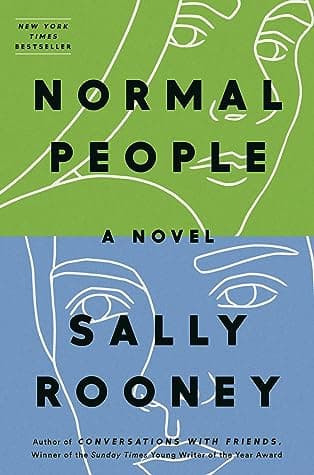
- Normal People
Sally Rooney
3.9 (405k) average on GoodreadsLiterary FictionExplores complex relationships, social dynamics, and internal monologues with similar prose.
- A Little Life
Hanya Yanagihara
4.3 (212k) average on GoodreadsLiterary FictionDelves deeply into the psychology of characters and their intense, often painful relationships.
- My Brilliant Friend
Elena Ferrante
4.0 (201k) average on GoodreadsLiterary FictionWhile both explore intense female friendships, Rooney's work is more insular and focused on intellectual and performative interpersonal dynamics within a small group. Ferrante's novels are more expansive, epic, and driven by broader societal and historical contexts, with less overt philosophical introspection from characters.
- My Year of Rest and Relaxation
Ottessa Moshfegh
3.7 (81k) average on GoodreadsLiterary FictionBoth feature detached female protagonists navigating mental health and complex relationships. However, Rooney's Frances, despite her anxieties, remains deeply enmeshed and engaged in her relationships, whereas Moshfegh's protagonist actively seeks extreme disengagement and isolation. Rooney's novel maintains a greater degree of relational realism.
- The Old Man and the Sea
Ernest Hemingway
3.8 (831k) average on GoodreadsLiterary FictionA Cuban fisherman's long struggle with a giant marlin becomes a story of endurance and dignity, now retold for young adults with illustrations, phonetic guides, and writing prompts in Traditional Chinese.
- One Hundred Years of Solitude
Gabriel García Márquez
4.1 (753k) average on GoodreadsLiterary FictionThrough the multi-generational story of the Buendía family, a mythical town deals with the repeating patterns of time, love, and solitude, as the extraordinary mixes with the ordinary.




Enjoyed the summary?
A summary gives you the shape of the book. The book itself has the detail, the examples and the voice.
Find Conversations with Friends on AmazonAs an Amazon Associate, BookBrief earns from qualifying purchases. How we're funded