
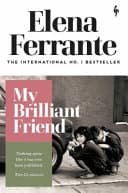
Synopsis
Covers the whole plot, including the ending.
- Difficulty
- Medium
- Pacing
- Moderate
- Mood
- Atmospheric, Intense, Reflective, Nostalgic
- Read it if
- You love character-driven stories about complex female friendships, exploring themes of class, intellect, and the constraints of society in post-war Italy.
- Skip it if
- You prefer fast-paced plots with clear resolutions, or are not interested in detailed psychological exploration and social commentary.
My Brilliant Friend Plot Summary
Covers the whole plot, including the ending.
Lila's Disappearance and Elena's Childhood Memories
The story starts with an older Elena Greco getting a call from Lila's son, Rino. He tells her his mother has disappeared, just as she always said she would. Elena, calm but a bit resentful, decides to write down everything about their long, complicated friendship. She begins with their childhood in a poor, violent neighborhood outside Naples in the 1950s. She remembers their first meeting as two fierce, smart girls, drawn to each other by a shared intensity and competitive spirit. She also recalls their first act of defiance against the local bully, Don Achille.
The Doll Incident and the Fascination with Don Achille
Elena remembers an important childhood event. She and Lila, about six years old, throw each other's dolls into the dark cellar of Don Achille, the feared loan shark. When they try to get them back, Don Achille is unhelpful. The two girls, scared but determined, decide to confront him at his apartment. This brave act, though it doesn't get their dolls back, strengthens their bond and their shared courage in a world where children are expected to be quiet, especially around powerful men like Don Achille.
School Days and Intellectual Rivalry
When they start primary school, Elena and Lila are very bright students. Lila, especially, shows an amazing, natural intelligence, often understanding things instantly that Elena works hard to learn. Their teacher, Maestra Oliviero, sees their potential and encourages their studies, but also notices their competitive nature. Lila's family, the Cerullos, are shoemakers and have money problems, making more education hard. Elena's father, a porter, is a bit more open to it, but both girls face big challenges in continuing their studies after elementary school.
The End of Primary School and Divergent Paths
After primary school, Lila's parents, Fernando and Nunzia Cerullo, do not let her continue school. They need her to work in the family shoemaking business. This decision upsets Lila, who wants to learn. Elena's parents, at first unsure, are convinced by Maestra Oliviero and the local priest, Don Gennaro, to let Elena go to middle school. This difference in their paths changes their friendship. Elena feels guilty and driven by Lila's lost chance, and Lila becomes more resentful and quiet, focusing her intelligence on other things.
Lila's Artistic Endeavors and Early Adolescence
While Elena is in middle school, Lila, even without formal education, keeps learning a lot on her own. She reads books and watches the world around her. She secretly designs new shoes, showing her intelligence and artistic skill, hoping to improve her family's struggling shoemaking business. Meanwhile, both girls become teenagers and notice the boys in the neighborhood. Lila attracts several young men, especially Marcello Solara, from the powerful Solara family who own the local bar and lend money, and Stefano Carracci, the son of the recently dead Don Achille.
The Solara Brothers and Neighborhood Tensions
The Solara family, Silvio Solara and his sons Marcello and Michele, have a lot of power in the neighborhood. Marcello Solara becomes obsessed with Lila, pursuing her even though she clearly isn't interested. His aggressive pursuit causes constant stress for Lila and her family, who are afraid of angering the powerful Solaras. This time shows the violence and male control in their community. Young women like Lila have little power against powerful men's desires, and punishment is a big worry for anyone who defies them.
Stefano Carracci's Courtship and Lila's Shoemaking Dream
Stefano Carracci, Don Achille's son, seems like a better match for Lila than Marcello Solara. Stefano, though still part of the neighborhood's social order, appears more respectable and ambitious. He is truly impressed by Lila's shoe designs and suggests a partnership: he will invest in the Cerullo shoemaking business, make Lila's designs, and marry her. This offer gives Lila a possible way out of her current hard life and poverty, and a chance to make her creative vision real. She agrees to the engagement despite still having feelings for Nino Sarratore.
Elena's Academic Success and First Love
While Lila gets ready for her wedding, Elena studies hard in high school. She often feels proud of her school success and guilty about Lila's missed chances. She starts making friends outside the neighborhood, especially with Gino and later Antonio, and has her first tentative romantic relationships. Elena also admires Nino Sarratore, a very smart boy from a troubled family. They talk about literature and philosophy. Her academic success lets her imagine a different future, far from the neighborhood.
The Wedding and the Fateful Gift
Lila's wedding to Stefano Carracci is a big event, important for the neighborhood, showing a possible rise in status for the Cerullo family. Elena attends, watching the complex family dynamics and power shifts. However, the celebration is ruined when Marcello Solara arrives. He is openly wearing the shoes Lila designed, which were meant to be the special symbol of her family's new business with Stefano. This act of defiance and betrayal, arranged by Stefano who sold the designs to the Solaras for peace, deeply shames Lila and destroys her hopes. It leaves her with strong disappointment and anger on her wedding day.
Principal Figures
Elena Greco (Lenù)
Protagonist
Narrator and lifelong friend of Lila, constantly seeking to define herself against Lila's brilliance.
Elena is the narrator of the story, recounting her life from childhood into old age. She is intelligent, diligent, and often insecure, driven by a deep desire to escape the poverty and limitations of her neighborhood through education. Her identity is inextricably linked to Lila; she constantly measures herself against Lila's raw genius, both inspired and intimidated by her. Elena is observant and introspective, using her writing as a means to understand herself and her complex relationship with her 'brilliant friend.' She strives for intellectual and social advancement, often feeling like an outsider in both her old neighborhood and the more educated circles she enters.
Relationships: Lila Cerullo (Best friend, rival, intellectual muse, object of fascination); Maestra Oliviero (Influential primary school teacher); Nino Sarratore (Intellectual crush, later lover); Piero Greco (Father, porter at the city hall); Immacolata Greco (Mother, homemaker)
Raffaella Cerullo (Lila)
Protagonist
Elena's brilliant and enigmatic best friend, whose fierce intelligence and rebellious spirit define her.
Lila is the titular 'brilliant friend,' possessing an extraordinary, intuitive intelligence, fierce will, and magnetic personality. She is rebellious, defiant, and unafraid to challenge authority, often with explosive consequences. Despite being denied formal education beyond primary school, Lila's intellect continues to develop, manifesting in her innovative shoe designs and keen observations of human nature. She is complex and contradictory: capable of great loyalty and deep resentment, inspiring both admiration and fear. Lila's presence profoundly shapes Elena's life, serving as both a benchmark and a constant source of fascination.
Relationships: Elena Greco (Best friend, rival, confidante); Fernando Cerullo (Father, shoemaker); Nunzia Cerullo (Mother, homemaker); Rino Cerullo (Older brother, shoemaker); Stefano Carracci (Husband); Marcello Solara (Unwanted suitor)
Maestra Oliviero
Supporting
The primary school teacher who recognizes and champions Elena and Lila's intelligence.
Maestra Oliviero is Elena and Lila's primary school teacher, a stern but perceptive woman who immediately recognizes the exceptional intelligence of both girls. She becomes a pivotal figure in their young lives, encouraging their academic pursuits and advocating for Elena to continue her education when her parents are hesitant. She sees the potential for a different future for them, pushing them beyond the limited expectations of their neighborhood. Her belief in them provides a crucial foundation for Elena's academic journey and highlights the societal barriers Lila faces.
Relationships: Elena Greco (Teacher and mentor); Lila Cerullo (Teacher and advocate)
Don Achille Carracci
Supporting
The feared loan shark and powerful figure in the neighborhood, whose death creates a power vacuum.
Don Achille is a menacing and powerful figure in the neighborhood, known as a loan shark and a man to be feared. His presence looms large over Elena and Lila's early childhood, particularly after the incident with their dolls. His eventual murder, though not explicitly detailed in this first novel, marks a significant turning point in the community's power dynamics, allowing other families, notably the Solaras and his own children, to rise in influence. He represents the raw, often violent, power structures that govern the lives of the residents.
Relationships: Elena Greco (Feared adult figure in childhood); Lila Cerullo (Feared adult figure in childhood); Stefano Carracci (Son)
Stefano Carracci
Supporting
Don Achille's son, who marries Lila and initially promises her a better life.
Stefano Carracci is the son of the deceased Don Achille. He is initially presented as a more respectable and ambitious young man than his father, seeking to legitimize the family's business through a grocery store. He is captivated by Lila's beauty and intelligence, and proposes marriage, offering to invest in her innovative shoe designs. His courtship seems to offer Lila a way out of her family's poverty and a chance to realize her creative ambitions. However, his betrayal on their wedding day, by selling Lila's designs to the Solaras for peace, reveals his underlying compromises and compromises Lila's future.
Relationships: Lila Cerullo (Husband); Don Achille Carracci (Father); Pinuccia Carracci (Sister)
Marcello Solara
Supporting
A powerful and aggressive young man from the feared Solara family, obsessed with Lila.
Marcello Solara is one of the sons of Silvio Solara, who, along with his brother Michele, represents the new generation of powerful, often violent, figures in the neighborhood. He develops an intense and unwanted obsession with Lila, pursuing her relentlessly and aggressively. His presence is a constant source of tension and fear for Lila and her family, as defying the Solaras carries severe consequences. Marcello embodies the patriarchal control and underlying threat of violence that women like Lila face in their community, symbolizing the forces that seek to limit her freedom and agency.
Relationships: Lila Cerullo (Unwanted suitor); Michele Solara (Brother); Silvio Solara (Father)
Nino Sarratore
Supporting
An intelligent and intellectually curious boy, Elena's first intellectual crush.
Nino Sarratore is the son of Donato Sarratore, the train conductor. He is highly intelligent, well-read, and articulate, standing out from many of the other boys in the neighborhood. Elena develops an intellectual crush on him, drawn to his sophisticated conversation and shared love of books. He represents a potential connection to the world of ideas and culture that Elena yearns for. His family life is troubled, particularly due to his father's infidelity, which makes Nino somewhat aloof and cynical. He briefly sparks a romantic interest in Lila as well, adding another layer to the complex relationships.
Relationships: Elena Greco (Intellectual crush, later lover); Lila Cerullo (Brief romantic interest); Donato Sarratore (Father)
Rino Cerullo
Supporting
Lila's older brother, who works in the family shoemaking business.
Rino is Lila's older brother, a hardworking but somewhat volatile young man who works in the family shoemaking business. He is protective of Lila in his own way but also subject to the neighborhood's prevailing attitudes and power structures. He is initially wary of Stefano Carracci but eventually supports the marriage, seeing it as a way to elevate the family's status. Rino is the one who calls Elena at the beginning of the book to inform her of Lila's disappearance, initiating Elena's narrative journey. He represents the traditional, working-class male role within the rione.
Relationships: Lila Cerullo (Brother); Fernando Cerullo (Father); Nunzia Cerullo (Mother)
Fernando Cerullo
Supporting
Lila's father, a shoemaker who is stern and traditional.
Fernando Cerullo is Lila's father and the owner of the struggling shoemaking shop. He is a stern, traditional man who believes in the importance of work and is deeply rooted in the values of the neighborhood. He refuses to allow Lila to continue her education beyond primary school, seeing it as an unnecessary expense and a distraction from her duties to the family business. His decision profoundly impacts Lila's life and fuels her resentment. He is intimidated by the powerful families like the Solaras, which influences his decisions regarding Lila's suitors.
Relationships: Lila Cerullo (Father); Nunzia Cerullo (Wife); Rino Cerullo (Son)
Themes & Insights
Friendship and Rivalry
The main theme is the complex, often conflicting, friendship between Elena and Lila. Their bond has intense loyalty, mutual respect, and strong rivalry. Elena constantly compares herself to Lila's natural brilliance, feeling both inspired and overshadowed. Their competition pushes both to achieve more, but also creates deep insecurities and resentments. The friendship shapes their individual identities, choices, and views of the world. For example, Elena's choice to get an education is greatly influenced by Lila not being able to, creating a feeling of guilt and responsibility.
“My friendship with Lila was still the dominant chord of my days. If she was not there, I felt a void. If she was there, I felt a burden.”
Social Class and Upward Mobility
The novel clearly shows the harsh realities of poverty and the strict class system in post-war Naples. Both Elena and Lila try to leave their poor neighborhood, but their paths differ greatly because of their families' money situations and different opportunities. Elena seeks to improve her social standing through education, a hard and often lonely way. Lila tries to do it through marriage and business ventures within the existing social structure. The difficulties of families like the Cerullos and Grecos show the limited choices and the constant fight against money problems, as seen when Lila's parents make her leave school to work.
“The neighborhood was a place where, if you were born there, you died there.”
Education and Intellect
Education is shown as a strong, though difficult, way to escape the neighborhood's limitations. Lila's natural, intuitive genius is compared to Elena's hardworking academic success. Lila's denial of more schooling despite her intelligence is a central sadness, showing the problems faced by smart girls from poor backgrounds. Elena's continued education, with Maestra Oliviero's help, allows her to imagine a life beyond the neighborhood, helping her grow intellectually and understand the world better. The girls' shared love for books and learning forms an important, though sometimes competitive, part of their bond.
“Lila was capable of anything, she was a true genius, and I was just good at studying.”
Violence and Patriarchy
The neighborhood has a culture of casual violence, both at home and in public, and a widespread patriarchy. Women and girls are often controlled by men, with limited power. The Solara family, with Marcello's aggressive pursuit of Lila, shows this male control and the threat of violence that underlies social interactions. Lila's resistance to these forces, though often met with harsh results, shows her strong spirit. The violence is not always physical; it is also economic and social, limiting chances and enforcing traditional gender roles, as seen when Lila is forced to leave school.
“It was a neighborhood where tenderness was a form of violence.”
Identity and Self-Discovery
Both Elena and Lila struggle with who they are and who they want to be, often in relation to each other. Elena's journey is about defining herself separate from Lila, using Lila as both a mirror and a rival to understand her own desires and abilities. Lila's identity is more unstable, always changing between rebellion, ambition, and disappointment. The act of writing the story itself is Elena's attempt to build her own identity by carefully recalling her past and understanding Lila's effect on her life. Their search for identity is connected to their efforts to rise above their backgrounds.
“I was always trying to find a form for myself, a shape that I was sure Lila would never take.”
Plot Devices & Literary Techniques
First-Person Retrospective Narration
Elena Greco recounts her life and Lila's from a distant future perspective.
The entire novel is narrated by an elderly Elena Greco, looking back on her childhood and young adulthood. This narrative choice allows for a subjective, deeply personal account, filtered through memory, emotion, and the wisdom of hindsight. Elena's perspective is colored by her lifelong fascination with Lila, her own insecurities, and her attempts to make sense of their complex bond. The retrospective view also allows for foreshadowing and reflection on the long-term consequences of past events, providing a nuanced understanding of the characters' motivations and the unfolding drama.
The Disappearance of Lila
The inciting incident that prompts Elena to write the story.
Lila's deliberate disappearance at the beginning of the novel serves as the primary catalyst for Elena to begin writing their shared history. It frames the entire narrative as Elena's attempt to 'retaliate' against Lila's final, defiant act of self-erasure. This plot device creates a sense of mystery and urgency, compelling the reader (and Elena) to understand the trajectory of Lila's life and the nature of their friendship. It also imbues the entire story with a melancholic, reflective tone, as Elena knows the ultimate fate of her friend, even as she recounts their past.
The Neighborhood (Rione)
A character in itself, shaping the lives and destinies of its inhabitants.
The poor, violent neighborhood on the outskirts of Naples functions almost as a character in the novel. It is a suffocating, inescapable environment that dictates the social norms, opportunities, and limitations for its residents. The rione's rigid social hierarchies, pervasive violence, and lack of opportunities profoundly shape the lives of Elena and Lila. It represents both their shared origin and the powerful force they constantly struggle against. The physical space of the rione, with its specific streets, buildings, and families, is meticulously detailed, making it a tangible and influential presence in the story.
The Shoes
A recurring symbol of creativity, ambition, and betrayal.
Shoes serve as a significant symbol throughout the novel. Initially, Lila's innovative shoe designs represent her untapped genius, her desire for creative expression, and her ambition to elevate her family's status. They are a tangible manifestation of her intelligence and a potential pathway out of poverty. However, the symbolic weight of the shoes shifts dramatically when Stefano Carracci's betrayal at the wedding involves selling Lila's designs to the Solaras. This act transforms the shoes from a symbol of hope and creativity into one of humiliation and the crushing of dreams, highlighting the limitations placed on Lila's agency.
My Brilliant Friend Quotes
“I am not afraid of the dark, but of the light that comes after it.”
“We were twelve years old, but we walked along the hot streets of the neighborhood, amid the dust and flies that the occasional old trucks stirred up as they passed, like two old ladies taking the measure of lives of disappointment, fenced in by domestic duties.”
“I was not capable of imitating her, but I was capable of studying her.”
“She wanted to become, but she didn't know what.”
“The beauty of things is in their impermanence.”
“I felt that I was losing her, that she was going away, and that I would never be able to follow her.”
“We were a single thing, and that thing was called Lila and Lenù.”
“She was like a wild animal that had been tamed, but only partially.”
“I wanted to be like her, but I also wanted to be better than her.”
“The neighborhood was our world, and we thought it would never change.”
“She had a mind that was always working, always calculating.”
“We were two girls who wanted to escape, but we didn't know where to go.”
“Her beauty was a weapon, and she knew how to use it.”
“I learned that words could be as dangerous as actions.”
Quiz
10 questions on the plot and the characters. Each answer comes with a short explanation.
Question 1
What is the name of the poor neighborhood in Naples where Elena and Lila grow up?
- Rione Sanità
- Rione Luzzatti
- Rione Terra
- The neighborhood is never given a specific name
Show answer
D. The neighborhood is never given a specific name Ferrante deliberately leaves the neighborhood unnamed, emphasizing its universality as a representation of post-war poverty in Naples while keeping the focus on the characters' experiences.
Question 2
What traumatic childhood event causes Lila to be pulled out of school by her father?
- She gets into a physical fight with a classmate
- She is thrown out a window by her father during an argument
- She fails her year-end exams
- She runs away from home for several days
Show answer
B. She is thrown out a window by her father during an argument In a violent outburst, Lila's father throws her out a window after she insists on continuing her education. This event marks a turning point, forcing her to leave school and work in the family shoe repair shop.
Question 3
What is the name of the wealthy family that lives in the new apartment building, representing social mobility in the neighborhood?
- The Carracci family
- The Sarratore family
- The Greco family
- The Esposito family
Show answer
B. The Sarratore family The Sarratore family moves into the new building, symbolizing emerging prosperity. Nino Sarratore becomes an important figure for both girls, representing intellectual and romantic aspirations.
Question 4
Why does Elena decide to continue her education beyond elementary school, unlike most girls in her neighborhood?
- Her parents insist she become a teacher
- She wins a scholarship that covers her expenses
- She is inspired and challenged by Lila's intelligence
- A teacher personally offers to tutor her for free
Show answer
C. She is inspired and challenged by Lila's intelligence Elena's academic motivation is deeply tied to her friendship with Lila. Seeing Lila's brilliance despite being forced to leave school drives Elena to succeed academically, partly to prove herself to Lila.
Question 5
What significant object do Elena and Lila retrieve from Don Achille's cellar as children, which becomes symbolic of their bond?
- A gold necklace
- A pair of dolls named Tina and Nu
- A hidden diary
- A box of stolen money
Show answer
B. A pair of dolls named Tina and Nu The dolls Tina and Nu, retrieved from the feared loan shark Don Achille's cellar, represent the girls' childhood innocence and their shared secret adventures. Later, Lila's symbolic disposal of the dolls marks a rupture in their friendship.
Question 6
Which character's violent death marks a turning point in the neighborhood's dynamics and the girls' understanding of their world?
- Don Achille Carracci
- Enzo Scanno
- Alfonso Carracci
- Giuseppe Peluso
Show answer
A. Don Achille Carracci The murder of Don Achille Carracci, the neighborhood loan shark and feared figure, exposes the violent underworld of Naples and shatters the girls' childhood perceptions of safety and order.
Question 7
What literary work does Lila write in secret as a teenager that profoundly impresses Elena?
- A novel about their neighborhood
- A collection of political essays
- A story called 'The Blue Fairy'
- A series of love poems to Nino Sarratore
Show answer
C. A story called 'The Blue Fairy' Lila's story 'The Blue Fairy' demonstrates her extraordinary creative talent despite her lack of formal education. Elena's awe at this work deepens her complex feelings of admiration and jealousy toward her friend.
Question 8
How does the Solarara family's shoe business attempt to change the economic prospects of the neighborhood?
- By opening a factory that employs local women
- By designing and producing innovative shoes
- By importing cheap shoes from other countries
- By partnering with a French fashion house
Show answer
B. By designing and producing innovative shoes The Solarara family, including Lila's father and brother, attempts to rise from poverty by designing original shoes. Lila contributes sketches and ideas, showing her untapped potential in a patriarchal system that limits her opportunities.
Question 9
At the end of the first novel, what dramatic decision does Lila make regarding her marriage to Stefano Carracci?
- She publicly humiliates him at their wedding reception
- She refuses to sign the marriage certificate
- She leaves him immediately after the ceremony
- She announces she is in love with someone else
Show answer
A. She publicly humiliates him at their wedding reception During her wedding reception, Lila realizes Stefano has betrayed her by forming a business alliance with the Solarara family's rivals. In defiance, she rejects him publicly, signaling her refusal to be controlled and setting up central conflicts for subsequent books.
Question 10
What historical period and transformation in Italy serves as the backdrop for Elena and Lila's childhood?
- The Renaissance artistic revival
- The Fascist era under Mussolini
- Post-World War II economic miracle
- The unification of Italy in the 19th century
Show answer
C. Post-World War II economic miracle The novel begins in the 1950s during Italy's 'economic miracle,' a period of rapid industrialization and urbanization. This transformation creates tensions between traditional neighborhood life and new opportunities, directly affecting the characters' choices and conflicts.
My Brilliant Friend FAQ
What is 'My Brilliant Friend' about?
The novel follows the lifelong friendship between Elena Greco and Lila Cerullo, two girls growing up in a poor Neapolitan neighborhood in the 1950s. It chronicles their complex bond through childhood, adolescence, and early adulthood as they navigate poverty, education, family pressures, and the changing social landscape of post-war Italy.
Why should I read 'My Brilliant Friend'?
It offers a profound exploration of female friendship with all its intimacy, rivalry, and complexity, set against the vivid backdrop of mid-20th century Naples. Ferrante's unflinching portrayal of class, gender, and personal ambition makes it both a deeply personal story and a sweeping social chronicle.
What is the background/setting of 'My Brilliant Friend'?
The story begins in the 1950s in a poor, working-class neighborhood on the outskirts of Naples, Italy. This setting is crucial as it shapes the characters' lives through poverty, limited opportunities, and the violent local culture, while also reflecting Italy's post-war transformation.
What are the most memorable quotes?
Key quotes include Lila's childhood declaration 'I'm not afraid of anything' which establishes her fierce character, and Elena's reflection 'I was I, I was this and that, I was the daughter of, the friend of, the student of' capturing her struggle for identity. Another is 'We were twelve years old but we walked along the hot streets of the neighborhood, amid the dust and flies' evoking their constrained world.
What writing style does the author use?
Elena Ferrante employs a first-person narrative from Elena's perspective, with a raw, intimate, and psychologically penetrating style. The prose is detailed and observational, blending personal reflection with vivid descriptions of the Neapolitan setting and its social dynamics.
What minor details add significant meaning?
The recurring motif of the lost doll, Tina, symbolizes the fragility of childhood and the girls' bond. The detailed descriptions of the neighborhood's smells, sounds, and violence ground the story in a specific reality, while Lila's handmade shoes represent her creativity and constrained aspirations.
What are some subtle foreshadowing moments?
Early scenes of Lila's intense focus and intelligence, like her learning to read before Elena, foreshadow her later intellectual brilliance and frustration. The Solara brothers' aggressive behavior toward the girls hints at the ongoing threat of male violence that shapes their lives.
What unexpected character connections exist?
The complex ties between the Cerullo and Greco families, and their connections to local figures like the Solaras, create a web of loyalty and betrayal. Lila's marriage to Stefano Carracci, who is linked to the Solaras, unexpectedly binds her to the neighborhood's corrupt power structures.
What are unspoken character motivations?
Elena's academic drive is partly fueled by a deep-seated need to prove herself equal to Lila, while Lila's resistance to formal education stems from a desire to assert control in a world that limits her. Their friendship is underpinned by unspoken competition and mutual dependence.
What psychological complexities do characters exhibit?
Lila exhibits a blend of fierce independence and self-destructive tendencies, often masking vulnerability with defiance. Elena grapples with impostor syndrome and identity confusion, constantly measuring herself against Lila while seeking validation through academic success.
What are the major emotional turning points?
Key moments include Lila's decision to leave school, which creates a rift in their paths; Elena's first romantic experiences and academic achievements that highlight their diverging lives; and Lila's turbulent marriage to Stefano, which tests their friendship and ideals.
How do relationship dynamics evolve?
The friendship shifts from childhood solidarity to adolescent rivalry and complexity, as Elena pursues education and Lila enters the adult world of work and marriage. Their bond is strained by jealousy, differing choices, and external pressures, yet remains a central force in their lives.
Which parts remain ambiguous or open-ended?
The true nature of Lila's feelings about Elena's successes is often ambiguous, as is the extent of her inner turmoil. The novel's ending, with Lila's disappearance and Elena's reflection on their friendship, leaves questions about destiny and the lasting impact of their bond.
What are controversial scenes or decisions?
Lila's decision to marry Stefano for financial security, despite his ties to the violent Solaras, sparks debate about agency versus necessity. The girls' exposure to and navigation of systemic violence and gender oppression also raises questions about complicity and resistance.
'My Brilliant Friend' ending explained: how it ends & what it means
The novel ends with Lila's sudden disappearance from Naples, prompting Elena to write their story. This reflects themes of memory, loss, and the elusive nature of identity, suggesting that their friendship, though fractured, fundamentally shapes who they are and how they understand their past.
Similar books
- A Tree Grows in Brooklyn
Betty Smith
4.3 (388k) average on GoodreadsHistorical FictionExplores the harsh realities of growing up in poverty with a focus on a young girl's intellectual awakening and resilience.
- The God of Small Things
Arundhati Roy
3.9 (244k) average on GoodreadsLiterary FictionFeatures an intense, complex sibling relationship set against a backdrop of social and political change in a specific cultural context.
- Pachinko
Min Jin Lee
4.3 (208k) average on GoodreadsLiterary FictionA multi-generational saga about family, resilience, and the struggle for identity and belonging amidst historical upheaval.
- Housekeeping
Marilynne Robinson
3.8 (44k) average on GoodreadsLiterary FictionBoth explore complex female relationships and societal unconventionality. However, Housekeeping is more lyrical, introspective, and focuses on internal landscapes and poetic beauty, while My Brilliant Friend is grittier, more externally driven, and focuses on the often-brutal realities and emotional turbulence between protagonists.
- The Kite Runner
Khaled Hosseini
4.3 (2.4M) average on GoodreadsHistorical FictionBoth are historical fiction centered on complex friendships and the impact of historical events. The Kite Runner focuses on male friendship and uses historical upheaval (Afghanistan) as a direct plot driver for national identity. Ferrante's work, conversely, focuses on female friendship, with history acting more as a pervasive, shaping atmosphere rather than a series of discrete events, primarily impacting personal destinies in a specific Neapolitan context.
- The Old Man and the Sea
Ernest Hemingway
3.8 (831k) average on GoodreadsLiterary FictionA Cuban fisherman's long struggle with a giant marlin becomes a story of endurance and dignity, now retold for young adults with illustrations, phonetic guides, and writing prompts in Traditional Chinese.




Enjoyed the summary?
A summary gives you the shape of the book. The book itself has the detail, the examples and the voice.
Find My Brilliant Friend on AmazonAs an Amazon Associate, BookBrief earns from qualifying purchases. How we're funded