
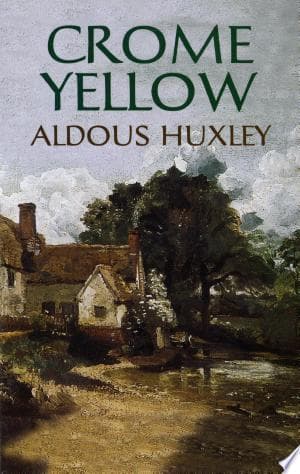
Synopsis
Covers the whole plot, including the ending.
- Difficulty
- Medium
- Pacing
- Slow
- Mood
- Witty, Satirical, Reflective, Intellectual, Humorous
- Read it if
- You enjoy witty social satire, intellectual discussions, and character-driven stories set in early 20th-century English country houses.
- Skip it if
- You prefer fast-paced plots, strong character arcs, or clear narrative resolutions.
Crome Yellow Plot Summary
Covers the whole plot, including the ending.
Arrival at Crome
Denis Stone, a sensitive and shy young poet, appears on a train, consumed by his unrequited love for Anne and his worries about his own artistic worth. He is going to Crome Yellow, the country house of Henry Wimbush, a careful amateur historian, and his wife Priscilla, who likes spiritualism and social maneuvering. When he arrives, Denis is immediately struck by Anne's beauty and the varied mix of guests, including the cynical Mr. Scogan, the flirtatious Mary Bracegirdle, and the naive Gombauld. Denis feels his usual social awkwardness and artistic inadequacy, setting up his inner struggles during his stay.
Mr. Wimbush's Historical Obsessions
Henry Wimbush, the host of Crome Yellow, often changes conversations to give long, dull accounts of the estate's complex and often strange history. He tells stories of odd ancestors, their scandalous love affairs, their peculiar science experiments, and their architectural mistakes, often linking them to the house itself. He tells these stories with a serious, almost academic detachment, to the guests' amusement or boredom. These historical diversions are a repeated theme, sharply contrasting with the immediate, often silly, concerns of the present party-goers and showing Wimbush's escape into the past.
Denis's Poetic Struggles and Unrequited Love
During his time at Crome, Denis is consumed by his desire for Anne. He constantly tries to write poems to show his feelings and impress her, but he struggles with self-doubt and writer's block. He often goes to his room to write, only to tear up his efforts in frustration. When he does manage to show a poem, it often fails to impress or is misunderstood. Anne, meanwhile, seems unaware of his feelings, treating him more as a friend or a source of mild amusement. Denis's romantic efforts are clumsy and indirect, further hurting his chances, and he finds himself always on the edge of her attention, watching her with other men, especially the more confident Gombauld.
Mr. Scogan's Cynical Observations and Prophecies
Mr. Scogan, a sharp and opinionated guest, acts as a self-appointed intellectual guide, giving long speeches on society and humanity's future. He often explains his theories of a logical, tech-driven future where feelings are suppressed, and people are categorized and controlled for efficiency. He predicts a scientifically managed society, without art, individuality, or passion, driven only by logic and usefulness. His statements, though often satirical, are deeply cynical and disturbing, serving as a strong contrast to the romantic and artistic views of Denis and others. He enjoys intellectual debates and often challenges the usual views of his fellow guests.
Mary Bracegirdle's Pursuit of Experience
Mary Bracegirdle, a determined and curious young woman, arrives at Crome with a clear goal: to gain experience. Having read Freud, she approaches relationships and sex with a detached, almost scientific curiosity. She engages in a series of planned flirtations and observations, especially with Denis, whom she finds a suitable, if somewhat unwilling, subject for her romance experiments. She tries to seduce him, not out of deep feeling, but from a desire to understand and experience the psychological and physical parts of love. Her approach is logical and analytical, contrasting with Denis's more emotional and idealized view of love, and she often openly shares her thoughts on sex and psychology.
Jenny Mullion's Artistic Sensitivity
Jenny Mullion is a quiet, modest young woman who spends much of her time observing the other guests at Crome. Her shyness makes her seem reserved, but underneath, she has a keen artistic eye and sharp wit. She secretly draws satirical caricatures of the other party-goers, capturing their essence and flaws with notable accuracy and often a touch of harsh humor. These drawings are her main way of expressing herself, allowing her to comment on the social dynamics and individual quirks she finds both amusing and sometimes frustrating. Her art provides a silent, yet strong, commentary on the superficiality and self-absorption she sees around her.
Priscilla Wimbush and the Occult
Priscilla Wimbush, Henry's wife, is deeply interested in spiritualism and the occult. She often consults a medium, Madame Sesostris, and tries to talk with spirits, especially that of her dead child. Her beliefs are sincere, if a little strange, and she often tries to involve the other guests in her spiritual efforts, to the amusement of some and the polite tolerance of others. She sees signs and omens in everyday events and believes a spiritual realm influences human events. Her spiritual pursuits add another layer of oddness to the Crome household, contrasting with Henry's historical obsessions and Scogan's scientific logic.
The Village Fête and Denis's Disappointment
The Crome party attends a local village fair, an event that brings together the rural community and the more sophisticated guests. Denis sees this as a chance to spend time with Anne and perhaps finally tell her his feelings. He tries to talk to her and join in the fair's activities with her. However, Anne stays distant and preoccupied, showing more interest in the general fun or other guests. Denis's attempts at romantic connection are met with polite indifference, leaving him feeling even more sad and convinced his feelings are useless. The lively atmosphere of the fair only highlights his inner sadness and sense of isolation.
The Oracle and the Future
Mr. Scogan, with his usual mix of cynicism and cleverness, creates a fake oracle, a talking tube he calls the 'Little Friend,' to entertain the guests. He uses this device to give cryptic, often disturbing, pronouncements. When Denis asks the oracle about his future, the 'Little Friend' gives a particularly harsh and personal message, essentially telling him he is destined for mediocrity, that his poetic hopes are pointless, and that his romantic hopes are misplaced. This experience deeply affects Denis, confirming his existing self-doubts and pushing him further into despair, making him question his life's purpose and art.
Denis's Departure
Feeling completely defeated by Anne's indifference, the 'Little Friend's' bleak prediction, and his inability to make any real artistic progress, Denis reaches his limit. The intellectual debates, the social posing, and the general silliness of the Crome house party have become unbearable for his sensitive nature. He feels a deep sense of disappointment and failure. He decides suddenly to leave Crome Yellow, packing his bags quickly and making his excuses to his hosts. His departure is a retreat from a world he feels has rejected his romantic ideals and artistic goals, seeking comfort in solitude away from the satirical gaze of his fellow guests.
Crome Yellow Characters
Denis Stone
Protagonist
A sensitive, aspiring poet prone to self-doubt and unrequited love.
Denis is a young, earnest poet, deeply insecure about his artistic talent and social standing. He is an idealist, viewing love and art with a romantic sensibility, often struggling to reconcile his inner world with the often cynical and superficial reality around him. His greatest desire is to win Anne's affection and to achieve recognition as a serious poet. He is highly introspective, prone to anxiety, and easily overwhelmed by social situations. His shyness and inability to express himself directly often lead to misunderstandings and missed opportunities.
Relationships: Anne Wimbush (Unrequited love interest, object of his poetic inspiration); Mary Bracegirdle (Subject of her psychological experimentation, brief flirtation); Mr. Scogan (Recipient of cynical advice and prophecies)
Anne Wimbush
Supporting
The beautiful, aloof object of Denis's affection.
Anne is the niece of Henry and Priscilla Wimbush, a beautiful and independent young woman who is the object of Denis's intense, unrequited love. She is charming and intelligent but often appears detached and somewhat indifferent to Denis's affections. She is pragmatic and enjoys the company of others, but she doesn't seem to share Denis's romantic idealism. Her interactions with Denis are polite but lack the emotional depth he craves, leaving him constantly frustrated. She represents the unattainable ideal for Denis, a symbol of his romantic aspirations that remain unfulfilled.
Relationships: Denis Stone (Object of his unrequited love); Gombauld (Flirtation/potential romantic interest)
Mr. Scogan
Supporting
A cynical intellectual who predicts a bleak, rationalized future for humanity.
Mr. Scogan is a sharp-witted, highly opinionated intellectual and a prominent voice of cynicism at Crome. He is a self-proclaimed rationalist, constantly expounding his theories on the future of society, which he envisions as a highly organized, emotionless, and scientifically controlled entity. He delights in intellectual debate and often challenges the romantic or artistic sensibilities of others, particularly Denis. Scogan serves as a satirical mouthpiece for Huxley's own observations on the dangers of unchecked scientific rationalism and the potential dehumanization of modern society. He is a detached observer of human folly, offering a bleak, yet often prescient, commentary.
Relationships: Denis Stone (Intellectual sparring partner, dispenser of harsh truths); Henry Wimbush (Fellow intellectual, but with different historical/future fixations)
Mary Bracegirdle
Supporting
A modern, intellectually curious woman determined to gain sexual and emotional experience.
Mary is an intelligent and assertive young woman, influenced by Freudian psychology, who approaches relationships and personal experience with a detached, almost scientific curiosity. She is determined to broaden her understanding of life, particularly in the realm of sex and emotions, and views Denis as a suitable subject for her 'experiments.' She is direct, often provocative, and unafraid to express her progressive views. Her pragmatic and analytical approach to love contrasts sharply with Denis's romantic idealism, making her both an intriguing and unsettling figure for him. She represents the 'new woman' of the era, challenging traditional gender roles and expectations.
Relationships: Denis Stone (Object of her psychological and romantic experimentation); Gombauld (Brief flirtation)
Henry Wimbush
Supporting
The eccentric, history-obsessed owner of Crome Yellow.
Henry Wimbush is the host of Crome Yellow, a mild-mannered and somewhat absent-minded man whose primary passion is the detailed, often obscure, history of his estate and his ancestors. He is a meticulous amateur historian, endlessly fascinated by the past, which he recounts in lengthy, pedantic monologues. He seems largely oblivious to the emotional dramas unfolding around him, preferring to retreat into his historical research. His obsession with the past serves as a form of escapism, and his character satirizes the academic pedantry and the tendency to romanticize or intellectualize history at the expense of present realities.
Relationships: Priscilla Wimbush (Husband, but with differing intellectual interests); Anne Wimbush (Uncle)
Priscilla Wimbush
Supporting
Henry's wife, deeply interested in spiritualism and the occult.
Priscilla Wimbush is Henry's wife and the mistress of Crome Yellow. She is deeply invested in spiritualism, mediums, and the occult, often seeking to communicate with spirits and interpreting everyday events as mystical signs. She is a well-meaning but somewhat flighty hostess, concerned with social appearances and the well-being of her guests, though her spiritual pursuits often take precedence. Her character adds another layer of eccentricity to the Crome household, representing the popular fascination with spiritualism during the era and serving as a contrast to her husband's historical rationalism and Scogan's scientific materialism.
Relationships: Henry Wimbush (Wife, but with differing intellectual interests); Anne Wimbush (Aunt)
Jenny Mullion
Supporting
A shy, observant artist who secretly draws satirical caricatures of the guests.
Jenny Mullion is a quiet and unassuming young woman who observes the other guests with a keen, often critical eye. Her shyness prevents her from participating actively in conversations, but she expresses her insights and frustrations through her secret caricatures. These drawings are witty, often biting, and reveal a sharp intelligence beneath her demure exterior. She represents the quiet artist, creating her work in secret and offering a silent commentary on the social dynamics and individual eccentricities of the house party. Her art serves as a form of rebellion and self-expression in a world where she feels she has little voice.
Relationships: All guests (Observes and caricatures them)
Gombauld
Supporting
A confident artist who attracts Anne's attention.
Gombauld is a confident and somewhat arrogant artist who arrives at Crome Yellow. Unlike Denis, he is self-assured and possesses a certain charisma that attracts the attention of Anne. He is portrayed as a more successful rival to Denis in the romantic sphere, effortlessly engaging Anne in conversation and flirtation. His presence further exacerbates Denis's insecurities and feelings of inadequacy, both as a lover and as an artist. Gombauld embodies the kind of confident, socially adept individual that Denis struggles to be.
Relationships: Anne Wimbush (Romantic interest/flirtation); Denis Stone (Romantic rival)
Crome Yellow Themes
The Futility of Idealism in a Cynical World
The novel shows how romantic and artistic idealism, seen in Denis Stone, struggles and fails when it meets the cynicism, practicality, and intellectual detachment of the modern world. Denis's attempts to show his love for Anne through poetry are ignored, and his artistic hopes are mocked by figures like Mr. Scogan. The Crome Yellow house party, full of self-absorbed intellectuals and social experimenters, offers little comfort or approval for his sensitive soul, leading to his deep disappointment and retreat. His idealism is shown to be unprepared for the harsh realities of human nature and society.
“'Oh, why doesn't one's own heart speak out, instead of hiding behind a mask of conventions?”
The Conflict Between Art and Life
Huxley explores the tension between pursuing art and the demands or distractions of real life. Denis, as a poet, constantly tries to turn his feelings and observations into meaningful verse, often finding his creative process hindered by his romantic worries, self-doubt, and the superficiality of his surroundings. The novel suggests that an artist's sensitivity, while key for creation, can also make them vulnerable and ineffective socially. The other characters, with their intellectual debates and casual flirtations, often seem to downplay or misunderstand Denis's artistic efforts, highlighting the artist's isolation.
“'But poetry, after all, isn't a profession. It's a way of living.”
The Superficiality of Intellectualism and Social Pretense
The Crome Yellow house party is a small version of intellectual and social posing. Characters like Mr. Scogan give long, often self-serving, intellectual speeches, while others like Mary Bracegirdle approach human relationships with detached, almost scientific curiosity. Conversations often focus on abstract ideas rather than real human connection, and emotions are often intellectualized or satirized. The novel criticizes the tendency of the educated class to engage in clever but ultimately empty talk, using wit and theory to avoid real feeling or to show social dominance. This creates a superficial atmosphere that Denis finds stifling.
“'The world is full of people who are forever talking, but never saying anything.”
The Modern Condition: Disillusionment and Alienation
The novel captures a sense of modern disappointment, especially among the younger generation, with old values and systems. Denis's struggles reflect a wider feeling of separation in a world that is becoming more logical, cynical, and less open to romance and idealism. The characters at Crome, though physically together, often seem emotionally disconnected, each following their own unique interests or intellectual plans. The coming sense of a future without passion, as Scogan predicts, adds to this feeling of unease and a loss of meaning, leaving people like Denis feeling alone and lost.
“'The future, as I see it, will be a world of well-fed, healthy, and psychologically balanced individuals, but without the slightest notion of what it means to be human.”
Plot Devices & Literary Techniques
The House Party Setting
A confined social environment for character interaction and satirical observation.
The country house party at Crome Yellow serves as a classic literary device, creating a confined, artificial environment where a diverse group of characters are forced into close proximity. This setting allows Huxley to bring together various archetypes representing different intellectual and social trends of the era, facilitating sharp dialogue, satirical observations, and the clashing of ideologies. The isolation of the house from the outside world intensifies the internal dramas and intellectual debates, making it a perfect stage for the protagonist's emotional journey and the author's social commentary. It highlights the artificiality of their interactions.
Mr. Wimbush's Historical Digressions
Long, pedantic historical narratives that provide ironic counterpoint and thematic depth.
Henry Wimbush's frequent and lengthy recitations of Crome's past serve as a recurring narrative device. These historical digressions, often irrelevant to the immediate plot, provide a rich, often absurd, background to the house. They function as an ironic counterpoint to the present-day follies of the guests, highlighting the cyclical nature of human eccentricity and the contrast between the romanticized past and the cynical present. They also allow Huxley to subtly inject commentary on historical scholarship, the passage of time, and the enduring peculiarities of human nature, while also serving as a humorous interruption to the main action.
The 'Little Friend' Oracle
A mock oracle delivering harsh, personalized prophecies.
The 'Little Friend,' devised by Mr. Scogan, is a satirical plot device used to deliver a direct and devastating blow to Denis's self-esteem and aspirations. This mock oracle, a talking tube, serves as a mouthpiece for the novel's overarching cynical view of Denis's future. It functions as an externalization of Denis's deepest fears and the harsh realities of the world he inhabits. By delivering a personalized prophecy of mediocrity and failure, it acts as a catalyst for Denis's final disillusionment and his decision to leave Crome, effectively bringing his arc to a crisis point.
Jenny Mullion's Caricatures
Hidden satirical drawings that offer a silent, artistic commentary on the characters.
Jenny Mullion's secret caricatures of the other guests are a subtle but effective plot device. These drawings, created in secret, serve as a visual, artistic commentary on the characters' foibles, vanities, and eccentricities, often revealing a sharper insight than the spoken words. They highlight Jenny's role as a keen observer and provide an alternative, non-verbal form of satire within the narrative. The fact that they are hidden underscores Jenny's shyness but also her artistic integrity, allowing her to express truths that she cannot voice directly in the social setting.
Crome Yellow Quotes
“The secret of happiness, you see, is never to have to work.”
“It's always the man who doesn't know what to do with his life that wants to make the world a better place.”
“The world is an oyster, but you don't crack it with a pickaxe, you open it with a penknife.”
“That's the worst of women, they're so terribly subjective.”
“All civilization is based on a series of elaborate conventions.”
“Art is a disease. It's a disease of the imagination.”
“One must have a system, a philosophy, a point of view.”
“The great defect of the world is that it is not a work of art.”
“To be intelligent is to be unhappy, for it is to be aware.”
“The higher the culture, the lower the birth-rate.”
“Life is a game, and the only way to win is to play it.”
“One must always be a little mad to be happy.”
“The past is a foreign country; they do things differently there.”
“Youth is a wonderful thing; what a crime to waste it on children.”
Quiz
10 questions on the plot and the characters. Each answer comes with a short explanation.
Question 1
What is the primary artistic pursuit of the protagonist, Denis Stone, throughout his stay at Crome?
- Painting landscapes
- Composing music
- Writing poetry
- Sculpting busts
Show answer
C. Writing poetry Denis Stone is consistently portrayed as a sensitive poet, struggling with his craft and his unrequited love for Anne.
Question 2
Which character is known for their self-appointed role as the historian of Crome and frequently recounts its past?
- Mr. Scogan
- Henry Wimbush
- Gombauld
- Carden
Show answer
B. Henry Wimbush Henry Wimbush, the owner of Crome, delights in sharing the convoluted and often embellished history of his estate with his guests.
Question 3
What is the name of the woman Denis Stone is infatuated with?
- Mary Bracegirdle
- Jenny Mullion
- Anne
- Priscilla Wimbush
Show answer
C. Anne Denis's unrequited love for Anne is a central plot point, driving much of his melancholic introspection.
Question 4
Which character is often associated with prophesying the apocalypse and discussing the future of humanity in a rather bleak manner?
- Mr. Barbecue-Smith
- Mr. Scogan
- Gombauld
- Denis Stone
Show answer
B. Mr. Scogan Mr. Scogan frequently delivers monologues about the decline of civilization and the impending doom, often with a scientific or philosophical bent.
Question 5
What significant event occurs with Mary Bracegirdle during her stay at Crome Yellow?
- She publishes a novel.
- She loses her virginity.
- She decides to become a nun.
- She inherits a fortune.
Show answer
B. She loses her virginity. Mary Bracegirdle's loss of virginity, often discussed with a detached, almost scientific curiosity, is a notable event in the novel.
Question 6
What is the primary satirical target of Aldous Huxley in 'Crome Yellow'?
- The industrial revolution
- Victorian morality
- The intellectual fads and fashions of the post-WWI era
- Rural agricultural practices
Show answer
C. The intellectual fads and fashions of the post-WWI era The novel specifically targets the various intellectual and artistic movements, and the often pretentious discussions, prevalent among the English intelligentsia of the 1920s.
Question 7
Which character experiences a trance-like state and delivers 'inspirational aphorisms'?
- Denis Stone
- Jenny Mullion
- Carden
- Henry Wimbush
Show answer
B. Jenny Mullion Jenny Mullion, who is generally quiet and observant, occasionally enters a trance and speaks profound, often unsettling, aphorisms.
Question 8
What is the name of the 'little wizened man' who attempts to establish a 'Rational State' with a system of 'gastronomical' and 'erotic' rewards?
- Mr. Scogan
- Gombauld
- Barbecue-Smith
- Carden
Show answer
A. Mr. Scogan Mr. Scogan, with his often cynical and futuristic visions, proposes the idea of a 'Rational State' where human behavior is meticulously controlled and incentivized.
Question 9
What is the primary reason Denis's love for Anne is ultimately unfulfilled?
- Anne is already married to another man.
- Denis is too shy and self-absorbed to express his feelings effectively, and Anne does not reciprocate them.
- Anne leaves Crome suddenly without saying goodbye.
- Denis discovers Anne has a secret past.
Show answer
B. Denis is too shy and self-absorbed to express his feelings effectively, and Anne does not reciprocate them. Denis's internal struggles, his inability to act on his feelings, and Anne's general disinterest in his poetic melancholia prevent their relationship from developing.
Question 10
How does the novel conclude for Denis Stone?
- He successfully publishes his poetry and wins Anne's affection.
- He decides to stay at Crome indefinitely to write a novel.
- He receives a telegram from his aunt, compelling him to leave Crome, effectively ending his stay and his romantic hopes.
- He engages in a philosophical debate with Mr. Scogan and wins.
Show answer
C. He receives a telegram from his aunt, compelling him to leave Crome, effectively ending his stay and his romantic hopes. Denis's departure from Crome, prompted by his aunt's telegram, marks a rather anticlimactic end to his romantic and artistic aspirations during the house party.
Crome Yellow FAQ
What is the central premise of 'Crome Yellow' and who is the main character?
'Crome Yellow' centers on a house party at the titular country estate, where a diverse group of intellectuals and eccentrics gather. The protagonist is Denis Stone, a shy, aspiring poet who is deeply self-conscious and struggles with unrequited love for Anne.
Who are some of the key guests at Crome, and what are their defining characteristics?
Key guests include Henry Wimbush, the host and an obsessive historian of Crome; Priscilla Wimbush, his wife, who dabbles in spiritualism; Anne, the object of Denis's affection; Mary Bracegirdle, a Freudian enthusiast; and Mr. Scogan, the cynical intellectual who prophesies the future.
What role does Henry Wimbush's historical obsession play in the narrative?
Henry Wimbush's meticulous and often tedious recounting of Crome's history serves as a recurring satirical device, highlighting the characters' disinterest in the past while providing a comedic counterpoint to their modern preoccupations. His stories, though lengthy, occasionally offer glimpses into the house's eccentric former inhabitants.
How does the theme of unrequited love manifest for Denis Stone?
Denis Stone experiences acute unrequited love for Anne, who seems more interested in other guests like Gombauld. His attempts to impress her with his poetry and witty conversation consistently fall flat, leading to his internal anguish and self-doubt. This romantic failure is a central driver of his emotional arc.
What is the significance of the character Mr. Scogan and his 'prophecy'?
Mr. Scogan is the resident cynic and intellectual who frequently expounds on his bleak vision for the future, including a eugenicist society managed by 'rational' individuals. His prophecies, though unsettling, serve as a satirical commentary on contemporary intellectual trends and the potential dangers of unchecked rationalism.
Are there any subtle allusions to real-life figures or contemporary movements in the novel?
Yes, Huxley subtly satirizes various intellectual and artistic movements of his time, and several characters are believed to be thinly veiled caricatures of real individuals from the Bloomsbury Group and other literary circles. For example, Mr. Scogan is often seen as a parody of Bertrand Russell or other prominent intellectuals.
What is the significance of the 'virginity lost' plotline, and who is involved?
The 'virginity lost' plotline involves Mary Bracegirdle, who, influenced by Freudian theories, seeks to experience a sexual awakening. She ultimately seduces Denis, who is initially flattered but later feels conflicted and somewhat used by the experience. This event is a satirical take on the era's burgeoning interest in psychoanalysis and sexual liberation.
How do the 'inspirational aphorisms gained in a trance' relate to the plot?
These aphorisms are obtained by Priscilla Wimbush, who consults a medium and receives messages from 'spirits.' The messages are often nonsensical or comically mundane, serving as a satirical jab at spiritualism and the human desire for profound, yet easily digestible, wisdom. They highlight the characters' gullibility and the superficiality of their spiritual pursuits.
Is there a hidden critique of the 'idle rich' or intellectual elite embedded in the narrative?
Absolutely. The entire setting of the house party at Crome Yellow, populated by characters who engage in endless, often self-indulgent discussions and pursue various fads, serves as a sharp critique of the intellectual elite. Huxley satirizes their detachment from reality, their self-importance, and the often unproductive nature of their intellectual pursuits.
How does Denis Stone's introversion and self-consciousness impact his interactions?
Denis's profound introversion and crippling self-consciousness make him awkward and ineffective in social situations. He constantly overthinks his words and actions, leading to missed opportunities and miscommunications, particularly in his pursuit of Anne. His internal monologue reveals his anxieties and his struggle to connect authentically with others.
What psychological motivations drive Mary Bracegirdle's interest in Freudianism and her pursuit of Denis?
Mary Bracegirdle is driven by a desire to understand and experience the world through a Freudian lens, believing it holds the key to personal fulfillment. Her pursuit of Denis is less about genuine affection and more about a calculated experiment to explore her sexuality and intellect, viewing him as a convenient subject for her psychological theories.
How do the characters' intellectual discussions reveal their psychological states?
The characters' often lengthy intellectual discussions, whether about history, philosophy, or social theory, frequently serve as a defense mechanism or a way to assert their ego. They reveal underlying insecurities, a desire for validation, and a tendency to intellectualize emotions rather than confront them directly, showcasing their psychological detachment.
What is the psychological impact of the isolated house party setting on the guests?
The isolated house party setting intensifies the characters' interactions and highlights their eccentricities. Without the distractions of the outside world, their internal lives and interpersonal dynamics become magnified, leading to both comedic misunderstandings and moments of genuine, if often fleeting, emotional vulnerability. It creates a microcosm for their psychological dramas.
Is 'Crome Yellow' ultimately a pessimistic or optimistic novel about human nature?
'Crome Yellow' leans towards a pessimistic view of human nature, particularly regarding the intellectual class. Huxley satirizes their self-delusion, emotional ineptitude, and the futility of their pursuits. While there are moments of wit and charm, the underlying message suggests a certain hopelessness in their ability to achieve genuine connection or purpose.
How does Huxley's satire in 'Crome Yellow' compare to his later, more dystopian works like 'Brave New World'?
'Crome Yellow' presents a gentler, more comedic satire focused on social manners and intellectual fads, while 'Brave New World' offers a much darker, dystopian critique of society. Both share Huxley's sharp wit and concern with societal direction, but 'Crome Yellow' is more lighthearted, exploring the follies of the present rather than grim predictions of the future.
What is the novel's stance on the value of art and poetry, particularly through Denis's experiences?
The novel presents a somewhat cynical view of art and poetry, especially through Denis's struggles. His earnest attempts to create meaningful poetry are often met with indifference or ridicule, suggesting that art, in this setting, is either a self-indulgent pursuit or fails to connect with a jaded audience. It questions the efficacy and reception of art in a superficial world.
Can 'Crome Yellow' be considered a critique of intellectualism itself, or merely its excesses?
While 'Crome Yellow' certainly critiques the excesses and pretensions of intellectualism, particularly its detachment from genuine emotion and practical concerns, it doesn't entirely dismiss intellectual pursuit. Rather, it highlights the dangers when intellect becomes an end in itself, divorced from empathy or real-world engagement, leading to sterile and unproductive discourse.
What is the ultimate fate of Denis Stone, and what does it signify?
Denis Stone leaves Crome Yellow dejected, having failed to win Anne's affection and feeling used by Mary. His departure signifies his disillusionment with the intellectual pretentions of the house party and his own romantic and artistic aspirations. It represents a retreat from a world that failed to meet his idealized expectations.
About the author
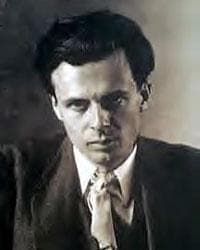
Aldous Leonard Huxley was an English writer and philosopher. His bibliography spans nearly 50 books, including novels and non-fiction works, as well as essays, narratives, and poems.
Similar books
- Vile Bodies
Evelyn Waugh
3.8 (12k) average on GoodreadsLiterary FictionShares a similar tone of social satire and a focus on the eccentricities of the 'Bright Young Things' era.
- Brideshead Revisited
Evelyn Waugh
4.0 (93k) average on GoodreadsLiterary FictionExplores themes of English aristocracy and intellectual circles, though with a more melancholic tone.
- Decline and Fall
Evelyn Waugh
3.9 (12k) average on GoodreadsLiterary FictionA comedic satire of English society and institutions, featuring a naive protagonist observing absurd situations.
- A Room With a View
E.M. Forster
3.9 (152k) average on GoodreadsHistorical FictionWhile stylistically different, Crome Yellow can be compared to E.M. Forster's A Room with a View (1908) in its setting and exploration of social conventions and personal liberation. Both novels feature protagonists (Denis and Lucy Honeychurch, respectively) navigating restrictive social environments and grappling with their desires and intellectual awakenings. However, Forster's novel is more focused on the individual's emotional and romantic development against a backdrop of Edwardian societal constraints, with a clearer romantic arc. Huxley's Crome Yellow, in contrast, prioritizes the clash of ideas and the intellectual dissection of various worldviews, with the romantic elements serving more as a vehicle for satirical observation than as the central narrative drive, making it less a story of personal growth and more a tableau of intellectual types.
- Nineteen Eighty-Four
George Orwell
4.2 (5.5M) average on GoodreadsFictionWinston Smith dreams of truth and rebellion in a world where Big Brother watches all, but he confronts the terrifying power of a regime that controls not just actions, but thoughts.
- The Frozen River
Ariel Lawhon
4.4 (600k) average on GoodreadsFictionIn 1789 Maine, a heroic midwife's diary helps her expose a murder and get justice in a town that wants to silence her.


Enjoyed the summary?
A summary gives you the shape of the book. The book itself has the detail, the examples and the voice.
Find Crome Yellow on AmazonAs an Amazon Associate, BookBrief earns from qualifying purchases. How we're funded