

Synopsis
Covers the whole plot, including the ending.
- Difficulty
- Medium
- Pacing
- Fast
- Mood
- Satirical, Cynical, Absurdist, Witty, Darkly Comic
- Read it if
- You enjoy classic British satire, dark humor, and stories about societal absurdity and the downfall of the innocent.
- Skip it if
- You prefer serious, character-driven narratives or are easily offended by cynical humor and morally ambiguous characters.
Decline and Fall Plot Summary
Covers the whole plot, including the ending.
The Bollinger Club Incident
Paul Pennyfeather, a quiet divinity student at Scone College, Oxford, finds his life changed when he gets mixed up with the Bollinger Club. One evening, drunk club members destroy his trousers during their annual party. As a result, the Dean, Dr. Fagan, wrongly identifies Paul as a culprit and expels him from the university. This expulsion leaves him jobless and forces him to find work, starting his entry into the absurd world outside academia, a world his sheltered life had not prepared him for.
Llanabba Castle and its Eccentric Staff
After his expulsion, Paul Pennyfeather gets a job as a schoolmaster at Llanabba Castle, a rundown and shady boys' school in Wales, thanks to Dr. Fagan's questionable agency. Here, he meets strange colleagues: Captain Grimes, a one-legged, always-drunk ex-military man who marries for money; Mr. Prendergast (Prendy), a former clergyman with doubts about his faith; and Mr. Best, an effeminate and artistic master. The school itself is disorganized, poorly run by Dr. Fagan, who cares more about appearances than education, often making up events and achievements to impress parents and inspectors.
The Llanabba Sports Day Fiasco
Dr. Fagan wants to impress local rich people and attract more students, so he decides to host a big Sports Day at Llanabba Castle. Despite the school's lack of athletic talent and proper equipment, Fagan plans a grand event, even hiring a brass band and inventing a guest list. The day, however, quickly turns into a joke. The band plays out of tune, races are fixed or canceled, and students are unruly. During this chaotic event, Paul Pennyfeather first sees the glamorous and wealthy Margot Beste-Chetwynde, who arrives in her expensive car, captivating Paul with her elegance amid the rural chaos.
Paul's Courtship of Margot
After Sports Day, Paul Pennyfeather feels increasingly drawn to Margot Beste-Chetwynde. She is a very wealthy, charming woman with a mysterious past, living a life of luxury. Paul, naive and easily impressed, quickly falls in love with her, despite her unusual life and hints of her shady business. Margot, amused by Paul's innocence and attracted by his unassuming nature, returns his affections somewhat. She invites him into her rich world, introduces him to her friends, and eventually proposes marriage, offering him a life of comfort and extravagance, a sharp contrast to his humble beginnings and the squalor of Llanabba.
The Decline of Llanabba
While Paul is courting Margot, Llanabba Castle continues to decline. A key inspection by the Board of Education is coming, and Dr. Fagan, despite his usual bragging, is unprepared. The inspectors, unimpressed by the school's poor condition, unqualified staff, and lack of education, give a harsh report. The school is judged unfit and ordered to close. This event ends Paul's brief and confusing career as a schoolmaster, freeing him to pursue his relationship with Margot but also showing the widespread incompetence and moral decay in much of the society he now inhabits.
Life with Margot
After Llanabba closes, Paul Pennyfeather moves to London and fully joins Margot Beste-Chetwynde's extravagant life. He attends lavish parties, meets many eccentric and morally flexible people, and sees the superficiality of high society. Despite the wealth and luxury, Paul remains somewhat detached and confused by the constant activity and the underlying lack of morals in Margot's world. He observes her questionable business associates and her casual disregard for normal morality, but his love for her, combined with his passive nature, stops him from questioning her too much. He is swept along, a willing participant in a life he barely understands.
The Engagement and the Trip Abroad
Paul and Margot become officially engaged, and Paul, still somewhat dazed, prepares for a life of married happiness and wealth. Margot, however, has an urgent business trip to Marseilles, which she describes as property sales. Paul goes with her, eager to please and unaware of her activities' true nature. In Marseilles, Paul is mostly left alone while Margot conducts her 'business.' He remains unaware of her illicit dealings, believing her explanations, even as subtle clues and suspicious characters hint at a darker truth. This trip leads to the unraveling of Paul's innocent world.
Margot's True Business Revealed
While in Marseilles, Paul Pennyfeather is asked by Margot to sign some papers, which she vaguely says are for her property ventures. Paul does not know these documents are linked to her international prostitution ring, which involves trafficking young women. He signs them without question, trusting Margot completely. Soon after their return to England, authorities act. Paul is arrested and charged with managing an international prostitution organization, mainly because his signature is on the incriminating documents. Margot, with her vast resources and connections, avoids capture, leaving Paul to face the law alone, a confused scapegoat.
Trial and Imprisonment
Paul Pennyfeather's trial is a joke, marked by sensationalism and the legal system's complete failure to understand his true innocence. Despite his sincere pleas, the evidence, especially his signature on Margot's documents, is damning. He is quickly convicted and sentenced to seven years in prison. During his time in various prisons, Paul meets familiar faces from his past, including Captain Grimes, who has repeatedly escaped and been caught, and Mr. Prendergast, who also ended up in prison after several unfortunate events, having found a new, if grim, form of 'faith' among the inmates.
Grimes's Escape and Prendergast's Demise
During his imprisonment, Paul Pennyfeather sees Captain Grimes's usual resilience and cleverness. Grimes, always an opportunist, manages to stage another seemingly easy escape from prison, disappearing again into the world, likely to resume his life of questionable marriages and financial schemes. Meanwhile, Mr. Prendergast, who had found a cynical religious conviction in prison, meets a tragic and absurd end. He is accidentally decapitated by a golf ball during a game played by a prison official, a bizarre and darkly humorous comment on the arbitrary nature of fate in this chaotic world.
Paul's 'Death' and Reappearance
Through a clever plan by Dr. Fagan, now the prison chaplain, Paul Pennyfeather is declared dead. A body, conveniently similar in appearance, is used to fake his death, letting him be released from prison without suspicion. With a new identity – Mr. Sniggs – and a small inheritance, Paul returns to Scone College, Oxford, to resume his theology studies, as if his adventure had been a dream. He finds himself back in the same rooms, studying the same books, and meets the same Bollinger Club members, who know nothing of his past ordeal, having forgotten the incident that led to his expulsion.
The Return to Scone College
Back at Scone College, Paul Pennyfeather, now 'Mr. Sniggs,' observes life's cyclical nature. The Bollinger Club continues its drunken antics, unaware of time passing or their actions' consequences. He overhears conversations like those from his past, realizing the world he left has barely changed. The novel ends with Paul thinking about his experiences, noting the big difference between the academic world and the 'real' world. He acknowledges the absurdity of both, yet finds some peace in the predictable, if sterile, university environment, having survived his wild journey through chaotic and morally corrupt society.
Principal Figures
Paul Pennyfeather
Protagonist
A naive and unassuming divinity student thrust into the absurd.
Paul is introduced as a quiet, innocent, and rather dull divinity student at Oxford, completely unprepared for the world outside academia. He is a passive character, often bewildered by the events that unfold around him, reacting to circumstances rather than actively shaping them. His inherent politeness and lack of cynicism make him an easy target for manipulation and misunderstanding. He possesses a strong sense of conventional morality, which is constantly challenged and ultimately overwhelmed by the amoral characters he encounters. Despite his misfortunes, he maintains a certain stoicism and a capacity for observation, making him the perfect lens through which Waugh critiques society.
Relationships: Margot Beste-Chetwynde (Fiancée, but ultimately his unwitting ensnarer); Captain Grimes (Colleague at Llanabba, fellow prisoner, and recurring symbol of resilience); Mr. Prendergast (Colleague at Llanabba, fellow prisoner, and intellectual sounding board); Dr. Fagan (Headmaster of Llanabba, later prison chaplain, and orchestrator of his 'death')
Margot Beste-Chetwynde
Antagonist/Love Interest
A glamorous, wealthy, and morally ambiguous socialite.
Margot is a sophisticated and beautiful woman of immense wealth and influence, with a shadowy past and a casual disregard for conventional morality. She is a symbol of the decadent upper class, living a life of luxury funded by illicit means. Charming and manipulative, she is attracted to Paul's innocence but ultimately uses him as a pawn in her criminal enterprises. Her character embodies the hypocrisy and corruption that Waugh satirizes, as she operates with impunity due to her social standing and wealth. She is a force of nature, always moving, always calculating, and utterly amoral.
Relationships: Paul Pennyfeather (Fiancée, whom she exploits); Peter Beste-Chetwynde (Her son, whom she largely ignores)
Captain Grimes
Supporting
A perpetually drunk, one-legged opportunist who always lands on his feet.
Captain Grimes is a veteran of the Great War, missing a leg, and a serial opportunist. He is a charismatic rogue, perpetually 'in the soup' (a euphemism for being in trouble), but always managing to escape consequences, usually by marrying for money or simply disappearing. He is a cynical hedonist, living purely for self-gratification, and offers a stark contrast to Paul's innocence. Grimes represents a certain kind of amoral resilience and adaptability, capable of thriving in the chaos that overwhelms others. His recurring appearances throughout Paul's journey highlight the cyclical nature of fate and the persistence of certain character types.
Relationships: Paul Pennyfeather (Colleague and fellow prisoner); Flossie (One of his many wives, whom he abandons)
Mr. Prendergast (Prendy)
Supporting
A former clergyman plagued by religious doubts, turned schoolmaster and later prisoner.
Mr. Prendergast is a sensitive and intellectual character who gave up his clerical duties due to profound religious doubts. He is a melancholic figure, constantly questioning and seeking meaning, but often finding only despair. At Llanabba, he is a reluctant schoolmaster, and later in prison, he finds a cynical form of 'faith' among the inmates. Prendy represents the intellectual and spiritual malaise of the era, a man adrift in a world that offers no clear answers. His tragic and absurd death by a golf ball underscores the novel's dark humor and the arbitrary nature of existence.
Relationships: Paul Pennyfeather (Colleague and fellow prisoner); Dr. Fagan (His employer at Llanabba)
Dr. Fagan
Supporting
The unscrupulous headmaster of Llanabba Castle and later a prison chaplain.
Dr. Fagan is a charlatan and an opportunist, the headmaster of the disastrous Llanabba Castle school. He is a master of deception, constantly fabricating achievements and events to maintain appearances and attract funds. Despite his incompetence, he possesses a certain resourcefulness and a talent for bureaucratic manipulation. He embodies the institutional corruption and hypocrisy that Waugh critiques. His reappearance as a prison chaplain, orchestrating Paul's 'death,' highlights the pervasive nature of his dubious influence and his ability to adapt and thrive in various corrupt systems.
Relationships: Paul Pennyfeather (Employer at Llanabba, later his 'rescuer' from prison); Captain Grimes (Colleague at Llanabba)
Peter Beste-Chetwynde
Supporting
Margot's precocious and somewhat sinister son.
Peter is Margot's young son, a highly intelligent and cynical boy who seems to possess an adult's understanding of the world's corruptions. He is detached and observant, often making unsettlingly mature remarks. Peter represents the next generation of the morally compromised elite, already jaded and complicit in the superficiality and amorality of his mother's world. His character serves as a chilling reminder that the cycle of decadence is likely to continue.
Relationships: Margot Beste-Chetwynde (His mother); Paul Pennyfeather (His temporary tutor and mother's fiancé)
Lord Tangent
Mentioned
An aristocratic figure whose name is frequently misused.
Lord Tangent is an aristocratic figure whose name is frequently invoked, often incorrectly, by Dr. Fagan and others at Llanabba to lend an air of prestige to the school. He is a symbol of the superficiality and name-dropping prevalent in society, where appearance and connections are valued over substance. Though he never truly appears, his name serves as a running gag, highlighting the pathetic attempts of the characters to create an illusion of respectability.
The Bollinger Club Members
Supporting
A group of wealthy, destructive, and oblivious Oxford undergraduates.
The Bollinger Club members are a symbol of aristocratic privilege and unchecked hedonism at Oxford. They are wealthy, destructive, and utterly oblivious to the consequences of their actions, particularly their role in Paul Pennyfeather's expulsion. They represent the upper-class youth who are insulated from reality by their wealth and social standing. Their unchanging behavior, even upon Paul's return to Oxford, underscores the cyclical nature of privilege and the lack of accountability for the elite.
Relationships: Paul Pennyfeather (Accidental victim of their revelry)
Themes & Insights
The Absurdity of Modern Life
Waugh's novel shows modern society as illogical and chaotic, where rational behavior is rare. From the farcical Llanabba Castle with its incompetent staff and made-up events (like Sports Day) to the legal system that convicts an innocent man like Paul Pennyfeather, the world appears as a series of nonsensical occurrences. Characters like Captain Grimes, who repeatedly escapes and reappears, and Dr. Fagan, who succeeds through deception, highlight the triumph of the absurd over reason. The novel suggests that trying to find order or justice in this world is pointless.
“'Oh, Paul, what a lot of trouble you've caused! It all comes of trying to be a gentleman.'”
Social Hypocrisy and Decadence
The novel critiques the hypocrisy and moral decay in British society, especially among the upper classes and institutions. Margot Beste-Chetwynde, with her glamorous appearance and international prostitution ring, embodies the moral emptiness of the elite. Llanabba Castle, a school that values looks over education and is run by frauds, exposes corruption in educational institutions. The legal system is easily manipulated by wealth and influence, and public opinion is swayed by sensationalism rather than truth. Paul's journey through these circles shows a society where appearances matter most and true morality is scarce.
“'You can't expect to be a gentleman and an honest man.'”
Loss of Innocence and Disillusionment
Paul Pennyfeather's journey moves from naive innocence to a passive disillusionment. He starts as a sheltered divinity student, believing in order and justice, only to have these beliefs systematically shattered. His expulsion from Oxford, his experiences at chaotic Llanabba, his involvement in Margot's criminal activities, and his unjust imprisonment all teach him the harsh realities of the world. By the end, though he returns to his studies, he carries the weight of his experiences, now understanding the inherent meaninglessness and amorality that fill society, leading to a quiet, weary acceptance rather than active rebellion.
“'I've seen the world,'' thought Paul, ''and it's a far more fantastic place than any one has any idea of.'”
The Cyclical Nature of Existence
A key theme is that life is cyclical, with events and characters repeating, suggesting that human foolishness and societal absurdities are unavoidable. Paul's return to Scone College, Oxford, at the novel's end, only to find the Bollinger Club still engaged in their drunken antics and his old rooms unchanged, strongly emphasizes this. Characters like Captain Grimes, who repeatedly escapes and reappears in different forms, further reinforce the idea that individuals and their behavior patterns recur. This cyclical structure implies that true progress or escape from the absurd is impossible, and that life, despite its dramatic turns, ultimately returns to a familiar state of chaos.
“'I wonder if I am the same Paul Pennyfeather who went down from Scone College in disgrace? It seems a long time ago. And yet, somehow, nothing has changed.'”
Plot Devices & Literary Techniques
Satire and Farce
Exaggerated situations and characters used to mock societal flaws.
Waugh employs satire and farce extensively to critique various aspects of British society, including the education system, the justice system, and the aristocracy. The events at Llanabba Castle, such as the disastrous Sports Day and the fabricated curriculum, are farcical exaggerations designed to mock the incompetence and dishonesty within schools. Paul's trial and unjust imprisonment, where logic is abandoned for sensationalism, serve as a satirical attack on the legal system. The exaggerated characters, like Captain Grimes and Dr. Fagan, contribute to the farcical tone, highlighting the absurdity of the world Waugh depicts.
The Innocent Abroad (or at Home)
A naive protagonist navigating a corrupt and bewildering world.
Paul Pennyfeather serves as the classic 'innocent abroad' figure, though his journey is often within England itself. His sheltered upbringing and inherent naivety make him an ideal lens through which Waugh can expose the corruption and absurdity of the world. Paul's lack of cynicism and his passive nature allow him to be swept along by events, making him a victim of circumstance rather than an active participant. His bewilderment and understated reactions to the outrageous events around him heighten the comic and critical impact of the narrative, as the reader experiences the madness through his untouched perspective.
Recurring Characters and Motifs
Characters and situations that reappear, emphasizing the cyclical nature of life.
The novel frequently features recurring characters and motifs that underscore its themes. Captain Grimes, for instance, repeatedly escapes and reappears in different contexts, symbolizing the persistence of certain character types and the cyclical nature of trouble and evasion. Dr. Fagan, initially the headmaster, later reappears as a prison chaplain, demonstrating his adaptability and the pervasive nature of his unscrupulousness. Paul's eventual return to Oxford, encountering the same Bollinger Club, reinforces the idea that despite his dramatic experiences, the world continues its unchanging patterns of absurdity and privilege.
Dramatic Irony
The audience knows more than the characters, particularly Paul.
Dramatic irony is a significant device, particularly in Paul Pennyfeather's interactions with Margot Beste-Chetwynde. The reader quickly understands the dubious nature of Margot's business and her morally questionable character, while Paul remains blissfully ignorant, blinded by his affection and naivety. This creates tension and humor, as the reader anticipates Paul's inevitable downfall. His unwitting involvement in the prostitution ring and subsequent arrest are prime examples of this, as the audience is aware of the danger long before Paul comprehends it, amplifying the tragicomic elements of his story.
Decline and Fall Quotes
“He had a happy childhood, which is to say that he was never struck by a motor car, or had his teeth knocked out by a cricket ball, or was ravished by a scoutmaster.”
“Poverty is a great thing, but it is better to be rich.”
“The only thing I ever really wanted to be was a gentleman.”
“Everyone has a natural gift for something. Mine is for being a cad.”
“It was a dark and stormy night. The rain fell in torrents—except at occasional intervals, when it was checked by a violent gust of wind which swept up the streets (for it is in London that our scene lies), rattling along the housetops, and fiercely agitating the scanty flame of the lamps that struggled against the darkness.”
“I can't imagine why anyone should want to be happy. It's so vulgar.”
“The world is like a continually developing film, and we are merely spectators.”
“It's a mistake to try to make things too logical. Life isn't logical.”
“There are some things that are better left unsaid. And some things that are better left undone.”
“I'm a man of simple tastes, easily satisfied with the best.”
“What do you do when you find a man with his head in a bucket of champagne? You leave him there, of course. It's the only humane thing to do.”
“It is a great mistake to try to be too original. The best things are always imitations.”
“One day I shall write a book about it all.”
“The whole thing was a mistake from beginning to end.”
Quiz
10 questions on the plot and the characters. Each answer comes with a short explanation.
Question 1
Why is Paul Pennyfeather 'sent down' from Oxford University at the beginning of the novel?
- He failed his final examinations.
- He was involved in a drunken brawl.
- He was caught streaking through the college quadrangle.
- He was de-bagged by the Bollinger Club and missed a meeting with the Dean.
Show answer
D. He was de-bagged by the Bollinger Club and missed a meeting with the Dean. Paul is 'sent down' after being de-bagged by the boisterous Bollinger Club, an incident for which he is unfairly blamed.
Question 2
What is the name of the school where Paul Pennyfeather first works as a schoolmaster?
- Castle Llanabba
- Llanabba Castle
- Llanabba Hall
- St. Cuthbert's Academy
Show answer
B. Llanabba Castle Paul secures a position as a schoolmaster at the rather chaotic Llanabba Castle school in Wales.
Question 3
Which character is described as 'always in the soup (or just plain drunk)' and has a wooden leg?
- Mr. Prendergast
- Dr. Fagan
- Captain Grimes
- Professor Silenus
Show answer
C. Captain Grimes Captain Grimes is a recurring character known for his perpetual troubles, alcoholism, and a distinctive wooden leg.
Question 4
What is Margot Beste-Chetwynde's primary profession or business, which ultimately leads to Paul's downfall?
- She is a wealthy socialite and philanthropist.
- She is an opera singer and patron of the arts.
- She runs an international chain of luxury hotels.
- She is involved in organizing and running brothels.
Show answer
D. She is involved in organizing and running brothels. Margot Beste-Chetwynde is revealed to be a proprietress of international brothels, and Paul's association with her leads to his arrest for white slavery.
Question 5
What happens to Mr. Prendergast, the disillusioned clergyman, during the course of the novel?
- He finds renewed faith and becomes a successful preacher.
- He is accidentally killed by a runaway car during Sports Day.
- He is murdered by one of his students at a progressive school.
- He elopes with a wealthy widow and leaves teaching.
Show answer
C. He is murdered by one of his students at a progressive school. Mr. Prendergast, after leaving Llanabba Castle, takes a position at a progressive school and is tragically decapitated by a student named Tangent during a field trip.
Question 6
What is the ultimate fate of Paul Pennyfeather after his trial and imprisonment?
- He escapes prison and flees the country with Margot.
- He is pardoned and becomes a respected academic.
- He fakes his own death and returns to Oxford under a new identity.
- He marries Margot Beste-Chetwynde and lives happily ever after.
Show answer
C. He fakes his own death and returns to Oxford under a new identity. After his imprisonment, Paul fakes his own death with the help of Margot and returns to Scone College, Oxford, under his original identity, as if nothing had happened.
Question 7
What is the primary thematic critique Waugh explores through the character of Paul Pennyfeather and his experiences?
- The triumph of innocence over corruption.
- The resilience of the human spirit in adversity.
- The arbitrary nature of justice and the absurdity of modern society.
- The importance of social climbing for personal success.
Show answer
C. The arbitrary nature of justice and the absurdity of modern society. Paul's journey, from being unfairly expelled to being unjustly imprisoned, highlights Waugh's cynical view of society's institutions and the randomness of fate.
Question 8
Which character frequently uses the phrase 'I'm in the soup again' and has a habit of marrying and abandoning women?
- Dr. Fagan
- Captain Grimes
- Mr. Prendergast
- Lord Tangent
Show answer
B. Captain Grimes Captain Grimes is notorious for his recurring crises, often expressed by his catchphrase 'I'm in the soup again,' and his pattern of marrying and leaving women.
Question 9
What specific event at Llanabba Castle's Sports Day leads to chaos and introduces Margot Beste-Chetwynde?
- A student sets fire to the sports pavilion.
- The school band plays the wrong national anthem.
- The absence of the official starter causes the races to descend into mayhem.
- A fight breaks out between the teachers and the parents.
Show answer
C. The absence of the official starter causes the races to descend into mayhem. The Sports Day is a disaster, largely due to the absence of the agreed-upon official starter, which leads to general disorder and is the setting for Margot's arrival.
Question 10
What is the significance of the novel's title, 'Decline and Fall,' in relation to Paul Pennyfeather's journey?
- It refers to the decline of the British Empire and Paul's role in it.
- It satirizes the decline of traditional educational values and the fall of moral standards.
- It ironically describes Paul's initial 'fall' from Oxford and subsequent 'decline' into absurd situations, yet ultimately a return to his original state, highlighting the cyclical nature of his misfortune and the futility of his efforts.
- It is a direct reference to Edward Gibbon's historical work, suggesting a grand, tragic narrative for Paul.
Show answer
C. It ironically describes Paul's initial 'fall' from Oxford and subsequent 'decline' into absurd situations, yet ultimately a return to his original state, highlighting the cyclical nature of his misfortune and the futility of his efforts. The title is an ironic commentary on Paul's supposed 'decline' from Oxford and his subsequent misfortunes, which ultimately lead him back to his starting point, emphasizing the cyclical and absurd nature of his experiences rather than a grand, tragic fall.
Decline and Fall FAQ
What leads to Paul Pennyfeather's expulsion from Scone College, Oxford?
Paul Pennyfeather is unjustly expelled from Scone College after being caught up in a riotous dinner party of the Bollinger Club. He is thrown into a quadrangle without his trousers by the drunken members of the club, and the dean, mistaking him for one of the instigators, expels him without a hearing, despite his complete innocence.
How does Paul Pennyfeather end up working at Llanabba Castle?
Following his expulsion from Oxford and subsequent loss of his allowance, Paul is forced to seek employment. He applies for a teaching position advertised in the Morning Post and, despite lacking qualifications or experience, is hired as a schoolmaster at the dubious Llanabba Castle school, a decision born more of necessity than ambition.
Who is Captain Grimes and what is his role at Llanabba Castle?
Captain Grimes is a fellow master at Llanabba Castle, a perpetually drunk and morally ambiguous character with a wooden leg and a penchant for getting 'in the soup.' He serves as a cynical mentor to Paul, often providing a jaded perspective on life and the absurdities of their situation, while also frequently disappearing or getting into trouble.
What is the significance of Margot Beste-Chetwynde's arrival at Llanabba Castle?
Margot Beste-Chetwynde's arrival for Sports Day marks a pivotal turning point in Paul's life. Her beauty and sophistication immediately captivate him, and her subsequent offer of a governess position for her son, Peter, initiates Paul's departure from Llanabba and his unwitting entanglement in her illicit activities, leading to his eventual downfall.
What ultimately happens to Paul Pennyfeather at the end of the novel?
After being unwittingly implicated in Margot Beste-Chetwynde's international prostitution ring and taking the fall for her, Paul is arrested, tried, and sentenced to seven years in prison. However, he eventually 'escapes' (with Margot's help) and returns to Scone College under a new identity, Lord Tangent, resuming his studies as if nothing happened.
How does Waugh use the character of Mr. Prendergast ('Prendy') to comment on faith and doubt?
Mr. Prendergast, or Prendy, is a former clergyman who lost his faith and now teaches at Llanabba, plagued by existential doubts. His struggles with belief, his attempts to find a new purpose, and his eventual, ironic murder by a student, highlight Waugh's satirical commentary on the fragility of faith and the often-absurd paths individuals take when grappling with spiritual crises.
What is the true nature of Margot Beste-Chetwynde's business ventures?
Margot Beste-Chetwynde is revealed to be the mastermind behind a sophisticated international prostitution ring, operating under the guise of an 'entertainment agency.' She uses her charm and social standing to facilitate the movement of young women across borders, exploiting them for profit, a detail Paul only fully comprehends when he is arrested as her accomplice.
Are there any subtle indications of Paul's fate early in the novel?
Waugh subtly foreshadows Paul's cyclical journey and his passive nature. His initial expulsion from Oxford, being a victim of circumstances rather than an instigator, mirrors his later role in Margot's scheme. The recurring motif of him being 'sent down' or removed from situations beyond his control hints at his eventual return to a similar starting point.
What does Paul Pennyfeather's passivity reveal about his character and societal critique?
Paul's extreme passivity, his constant acceptance of whatever fate befalls him without complaint or active resistance, highlights his detachment from the world and its moral complexities. This passivity allows Waugh to satirize the absurdity and corruption around Paul, as Paul serves as a neutral observer through whom the reader witnesses the grotesque realities of society, rather than a moral agent.
How does the novel explore themes of identity and social class through Paul's transformations?
Paul's journey from Oxford student to schoolmaster, then to Margot's fiancé, and finally to a prisoner and 'Lord Tangent,' reflects his fluid and ultimately interchangeable identity. His lack of a strong personal identity allows him to be molded by external circumstances and social pressures, satirizing the superficiality of class distinctions and how easily one can move through different social strata, often based on appearance rather than merit.
What psychological impact do his experiences have on Paul, if any?
Remarkably, Paul seems to experience very little lasting psychological impact from his tumultuous experiences. His detached and phlegmatic nature allows him to absorb shocks without significant emotional distress. He views his time in prison and his 'escape' with the same mild curiosity as his teaching career, suggesting a fundamental inability or refusal to deeply engage with his own trauma or the moral implications of his life.
How does Waugh use satire to critique specific aspects of British society in 'Decline and Fall'?
Waugh employs biting satire to target various institutions: the incompetence and moral bankruptcy of public schools (Llanabba Castle), the superficiality and hypocrisy of the upper classes (Margot Beste-Chetwynde's circle), the corruption of the justice system (Paul's trial), and the general absurdity of modern life. He exaggerates characters and situations to expose the inherent flaws and pretenses of society.
Is Paul Pennyfeather a tragic figure or merely a comedic pawn?
Paul is primarily a comedic pawn, designed to highlight the absurdity of the world around him. While he suffers unjust misfortunes, his lack of emotional depth and his quick, almost seamless reintegration into society prevent him from evoking genuine tragic pity. His story is a farce, and his experiences serve the humor and satirical aims of the novel rather than exploring profound human suffering.
What is the significance of the novel's cyclical ending, with Paul returning to Oxford?
The cyclical ending, with Paul resuming his studies at Scone College under a new identity, emphasizes the novel's pessimistic view of change and progress. It suggests that individuals and society are trapped in repetitive patterns, and that true reform or justice is elusive. Paul's return signifies that he has learned nothing, and the world itself remains unchanged in its capacity for absurdity and injustice.
How does the character of Paul Pennyfeather challenge traditional notions of a protagonist?
Paul challenges traditional notions of a protagonist by being remarkably passive, lacking ambition, and possessing little discernible inner life or moral agency. He is less an active hero shaping his destiny and more a blank slate onto which the bizarre events of the world are projected. This makes him an unusual, almost anti-heroic figure, serving as a vehicle for Waugh's satirical observations rather than a character with a compelling personal journey.
What is the symbolic meaning behind the name 'Llanabba Castle'?
The name 'Llanabba Castle' itself is a subtle joke, combining a Welsh-sounding prefix ('Llan-') with a rather childish or nonsensical suffix ('-abba'), and then appending 'Castle.' This immediately suggests a place that is both vaguely grand and utterly ridiculous, perfectly embodying the crumbling, farcical, and barely functional educational institution it represents.
How does Waugh use minor characters like Otto Silenus to enhance the satire?
Otto Silenus, the architect tasked with designing Margot's new house, serves as a caricature of modernist pretension and impracticality. His absurd designs, which prioritize abstract concepts over functionality, are a pointed satire on contemporary architectural trends and the intellectual fads embraced by the wealthy, further illustrating the novel's critique of superficiality.
What role does the British class system play in Paul's journey and the novel's themes?
The British class system is a constant undercurrent, dictating opportunities and perceptions. Paul's initial status as an Oxford student, his swift fall from grace, and his later re-entry into society under a different aristocratic guise, highlight the fluidity and sometimes arbitrary nature of class distinctions. Waugh suggests that while class dictates much, it can also be manipulated or entirely bypassed by sheer audacity or wealth, particularly by figures like Margot.
About the author
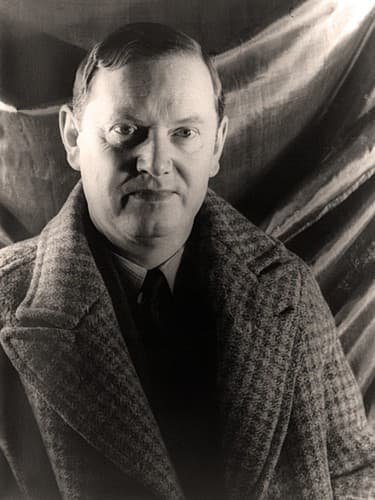
Arthur Evelyn St. John Waugh was an English writer of novels, biographies, and travel books; he was also a prolific journalist and book reviewer. His most famous works include the early satires Decline and Fall (1928) and A Handful of Dust (1934), the novel Brideshead Revisited (1945), and the Second World War trilogy Sword of Honour (1952–1961). He is recognised as one of the great prose stylists of the English language in the 20th century.
Similar books
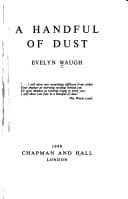
- A Handful of Dust
Evelyn Waugh
3.9 (23k) average on GoodreadsLiterary FictionShares Waugh's characteristic dark humor and critique of upper-class society.
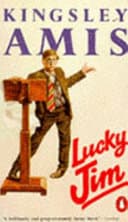
- Lucky Jim
Kingsley Amis
3.8 (25k) average on GoodreadsLiterary FictionFeatures an innocent protagonist navigating an absurd academic environment with satirical results.
- Catch-22
Joseph Heller
4.0 (723k) average on GoodreadsHistorical FictionExplores themes of absurdity and the individual's struggle against an irrational system, albeit in a different setting.
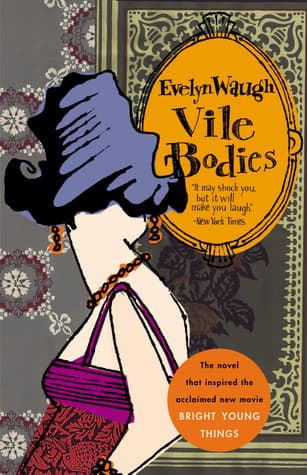
- Vile Bodies
Evelyn Waugh
3.8 (12k) average on GoodreadsLiterary FictionPublished shortly after Decline and Fall, Vile Bodies (1930) shares Waugh's satirical lens, focusing on the 'Bright Young People' of the interwar period. Both novels employ episodic structures and feature protagonists swept along by external forces. However, Vile Bodies often presents a more frantic and nihilistic vision of society, reflecting a deepening disillusionment, whereas Decline and Fall, while cynical, retains a slightly more detached, almost innocent comedic tone through Paul's perspective. The satire in Vile Bodies is arguably more focused on the superficiality and moral decay of a specific social set, while Decline and Fall casts a wider net over institutions.
- The Old Man and the Sea
Ernest Hemingway
3.8 (831k) average on GoodreadsLiterary FictionA Cuban fisherman's long struggle with a giant marlin becomes a story of endurance and dignity, now retold for young adults with illustrations, phonetic guides, and writing prompts in Traditional Chinese.
- One Hundred Years of Solitude
Gabriel García Márquez
4.1 (753k) average on GoodreadsLiterary FictionThrough the multi-generational story of the Buendía family, a mythical town deals with the repeating patterns of time, love, and solitude, as the extraordinary mixes with the ordinary.



Enjoyed the summary?
A summary gives you the shape of the book. The book itself has the detail, the examples and the voice.
Find Decline and Fall on AmazonAs an Amazon Associate, BookBrief earns from qualifying purchases. How we're funded