
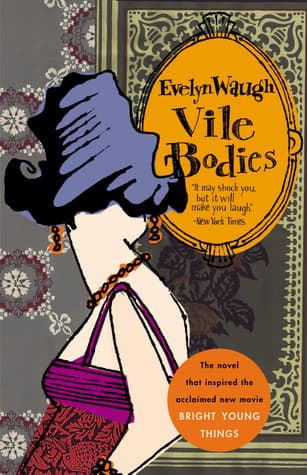
Synopsis
Covers the whole plot, including the ending.
- Difficulty
- Medium
- Pacing
- Fast
- Mood
- Satirical, Cynical, Decadent, Melancholy
- Read it if
- You enjoy sharp social satire, dark humor, and a glimpse into the chaotic lives of the 'Bright Young Things' in 1920s London.
- Skip it if
- You prefer a strong plot with clear character arcs, optimistic themes, or dislike satirical portrayals of superficiality.
Vile Bodies Plot Summary
Covers the whole plot, including the ending.
The Customs Incident and Adam's Manuscript
The novel begins with Adam Fenwick-Symes, a struggling writer, returning to England on a ferry. He shares a cabin with Father Rothschild, a Jesuit, and Lord Metroland, a minor peer. At Dover, customs officials confiscate Adam's autobiography manuscript, which he hoped to sell to afford marriage to Nina Blount, calling it obscene. This immediate problem shows Adam's ongoing money troubles and sets a tone of chaotic bad luck that follows him.
Engagement and Financial Woes
Adam proposes to Nina Blount, his on-again, off-again fiancée, who accepts despite his constant poverty. Their engagement is a recurring theme, always depending on Adam getting enough money. Nina's father, Colonel Blount, is wealthy but often forgets Adam and their engagement. Adam tries various ways to earn money, including writing for the 'Daily Excess' gossip column as 'Mr. Chatterbox' and later for 'The Twentieth-Century,' a more intellectual magazine. These jobs are often unstable or brief, reflecting the uncertain financial state of many Bright Young Things.
The Party Circuit
Adam, Nina, and their friends—including Miles Malpractice, Agatha Runcible, and Simon Balcairn—immerse themselves in the social scene of 1920s Mayfair. They attend many lavish parties, often fueled by alcohol and marked by reckless behavior, costumes, and general wildness. These gatherings are less about real connection and more about excitement, spectacle, and avoiding boredom. The parties serve as a setting for their aimless lives and superficial interactions, with gossip and short-lived alliances dominating.
The Chisholms' Disastrous Weekend
Adam and his friends are invited to a weekend party at the Chisholms' country estate. The event quickly devolves into typical Bright Young Things chaos, with excessive drinking, ill-advised pranks, and a general disregard for social rules. Agatha Runcible causes a significant disturbance. The weekend ends in scandal and embarrassment for the hosts, showing the group's destructive and self-indulgent activities, which often cause disruption without serious consequences for themselves.
Adam's Inheritance and its Loss
Adam unexpectedly receives a telegram saying he has inherited £1000. Believing this is his long-awaited financial solution, he tells Nina and plans their marriage. However, the inheritance is a mistake; the money was for another Adam Symes. Colonel Blount, in one of his memory lapses, had written a check for £1000, which Nina then gave to Adam. When the error is found, Adam must return the money, crushing his hopes and further delaying his marriage to Nina. This highlights the arbitrary nature of their financial struggles.
Nina's Alternative Suitors
As Adam's money prospects remain poor, Nina starts to consider other men who have the wealth Adam lacks. She is pursued by Ginger Littlejohn, a dull but rich young man, and later by Lord Metroland, a more established figure. Nina's practical view of marriage, driven by a desire for security, contrasts with Adam's romantic but impractical goals. Her willingness to consider other suitors shows the transactional nature of relationships in their social class and the pressure on women to marry well.
The Motor Race and Agatha's Demise
Agatha Runcible, in a daring stunt, decides to enter a dangerous motor race disguised as a male driver. Her reckless driving and the sport's inherent dangers lead to a horrific accident. Agatha dies in the crash, a sudden end for one of the most lively characters. Her death reminds readers of the nihilism and self-destructive tendencies beneath the glittering surface of the Bright Young Things' lives, bringing a moment of tragedy amid the satire and absurdity.
Adam's Return to Journalism and the 'Daily Excess'
After various setbacks and increasing despair, Adam finds himself again writing for the 'Daily Excess' under his 'Mr. Chatterbox' pseudonym. The work is unfulfilling and morally compromising, as he invents scandalous stories about his friends. This return to the gossip column symbolizes Adam's inability to escape his superficial world and his growing disappointment with his own life and his peers. The newspaper's sensationalism reflects the public's desire for scandal and the group's role in their own commodification.
Nina's Marriage to Ginger
Facing ongoing financial instability with Adam, Nina makes the practical choice to marry Ginger Littlejohn, a wealthy but uninteresting man. Her marriage marks the end of her romantic involvement with Adam and his hopes of marrying her. This event changes Adam's life, as he loses the main object of his affection and the reason for his attempts to earn money. Nina's choice highlights the reality that love alone cannot sustain relationships in their financially driven world, and social expectations often outweigh personal desires.
The Approaching War and Finality
The novel ends with the backdrop of an approaching global war. The frivolous parties and carefree lives of the Bright Young Things are suddenly overshadowed by the grim reality of conflict. Adam, now a soldier, finds himself in a desolate, war-torn landscape, sharing champagne with a General. The final scenes show a world completely changed, where the pleasure-seeking of the previous decade seems like a distant, irrelevant dream. The war ends their era of youthful indulgence, forcing a sober look at a much harsher reality.
Vile Bodies Characters
Adam Fenwick-Symes
Protagonist
A struggling writer and the central figure of the Bright Young Things.
Adam is a charming but perpetually impecunious young man, constantly trying to raise enough money to marry his fiancée, Nina Blount. He drifts through life, taking on various temporary jobs like writing gossip columns, but lacks real ambition or direction. He is witty and observant but ultimately passive, often a victim of circumstance and the chaotic world around him. His attempts to secure his future are repeatedly thwarted, reflecting the futility and aimlessness of his generation.
Relationships: Nina Blount (His on-again, off-again fiancée, whom he loves but cannot afford to marry.); Simon Balcairn (A cynical journalist and Adam's colleague, often a source of gossip and dark humor.); Agatha Runcible (A wild and reckless friend, whose antics Adam often observes with detached amusement.)
Nina Blount
Supporting
Adam's pragmatic and beautiful fiancée, who desires security.
Nina is beautiful, popular, and pragmatic, serving as Adam's primary love interest. While she genuinely cares for Adam, her desire for financial security and stability ultimately outweighs her romantic attachment. She is accustomed to a certain lifestyle and is not afraid to consider other, wealthier suitors when Adam's prospects fail. She represents the practical realities and societal pressures faced by young women of her class, contrasting with Adam's more romantic but unrealistic ideals.
Relationships: Adam Fenwick-Symes (Her fiancée, whom she loves but cannot marry due to his poverty.); Colonel Blount (Her eccentric, forgetful father.); Ginger Littlejohn (Her wealthy, ultimately chosen husband.)
Colonel Blount
Supporting
Nina's wealthy but eccentric and forgetful father.
Colonel Blount is Nina's father, a rich man whose wealth provides the backdrop for Nina's social standing, but whose memory is notoriously unreliable. He frequently forgets who Adam is, that Nina is engaged, and even details of his own life. His absentmindedness and bizarre behavior are a source of both humor and frustration, particularly for Adam. He represents the older generation's detachment and the somewhat arbitrary nature of wealth in the novel.
Relationships: Nina Blount (His daughter, whose affairs he frequently forgets.); Adam Fenwick-Symes (His daughter's fiancée, whom he struggles to remember.)
Agatha Runcible
Supporting
A flamboyant, reckless member of the Bright Young Things.
Agatha is one of the most vibrant and chaotic characters, known for her wild antics, cross-dressing, and general disregard for social norms. She embodies the extreme hedonism and recklessness of the Bright Young Things, constantly seeking new sensations and pushing boundaries. Her character provides much of the novel's comedic energy and represents the self-destructive edge of their lifestyle, culminating in her tragic death in a motor race.
Relationships: Adam Fenwick-Symes (A friend and fellow party-goer, often an observer of her antics.); Miles Malpractice (A close friend and fellow instigator of chaos.)
Simon Balcairn
Supporting
A cynical journalist and gossip columnist for the 'Daily Excess'.
Simon is a bitter, cynical journalist who writes the gossip column for the 'Daily Excess'. He is deeply embedded in the social scene but views it with disdain, constantly seeking out scandals and inventing stories about his acquaintances. He represents the parasitic nature of the media and the way the Bright Young Things are both subjects and victims of their own public image. His character adds a layer of dark humor and social commentary.
Relationships: Adam Fenwick-Symes (A colleague at the 'Daily Excess', often a source of information or gossip.); Miles Malpractice (A frequent subject of his gossip.)
Miles Malpractice
Supporting
A flamboyant and wealthy member of the Bright Young Things.
Miles is a flamboyant and wealthy young man, a prominent figure among the Bright Young Things. He is known for his extravagant parties, his often-outrageous behavior, and his general air of entitlement. He embodies the superficiality and self-indulgence of the group, rarely facing serious consequences for his actions due to his social standing and wealth. He is a constant presence in the social whirl, contributing to the novel's atmosphere of chaotic revelry.
Relationships: Adam Fenwick-Symes (A friend and fellow party-goer.); Agatha Runcible (A close friend and accomplice in many escapades.)
Father Rothschild
Supporting
An enigmatic Jesuit priest and astute observer.
Father Rothschild is a shrewd and observant Jesuit priest, who appears periodically throughout the novel. He often offers insightful, if sometimes cryptic, commentary on the behavior of the Bright Young Things and the state of society. He is an outsider looking in, providing a moral and intellectual counterpoint to the hedonism and superficiality of the main characters. His presence adds a layer of reflective depth and foreshadowing to the narrative.
Relationships: Adam Fenwick-Symes (A casual acquaintance, with whom he shares brief, significant encounters.)
Ginger Littlejohn
Supporting
A wealthy but dull suitor who eventually marries Nina.
Ginger Littlejohn is a wealthy young man who represents the more conventional, yet equally uninspired, aspect of the upper class. He is rather dull and unremarkable but possesses the financial stability that Adam lacks. He serves as a practical alternative for Nina, highlighting the transactional nature of marriage in their society. His eventual marriage to Nina underscores the triumph of practicality over romantic ideals.
Relationships: Nina Blount (Her eventual husband, chosen for his wealth and stability.)
Vile Bodies Themes
The Decadence and Emptiness of the Bright Young Things
The novel shows the superficiality, pleasure-seeking, and ultimate emptiness of the 'Bright Young Things' lives in 1920s Mayfair. Their existence is a cycle of parties, gossip, and fleeting sensations, without real purpose or connection. Characters like Adam, Nina, and Agatha Runcible constantly escape reality through promiscuity, drinking, or reckless stunts, all to avoid facing the void beneath their glittering surface. The constant pursuit of pleasure leads to disappointment and tragedy, as seen in Agatha's death and Adam's final despair.
“'Oh, Adam, when will you learn that the world is a place of infinite woe?”
The Decline of Society and Impending Doom
Waugh subtly includes a sense of coming disaster, reflecting post-World War I disillusionment and hinting at another global conflict. The Bright Young Things' frivolity contrasts with the world's underlying instability. Father Rothschild's cryptic warnings and the eventual outbreak of war in the novel's final scenes emphasize this theme. The characters' inability to adapt or find meaning beyond their self-indulgent lives suggests a broader societal decay, where old values have collapsed and no new ones have emerged.
“'The world was just getting ready for another of its periodical big bust-ups.”
The Futility of Love and Marriage without Money
A main conflict in the novel involves Adam and Nina's engagement, which is always stopped by Adam's lack of money. Their love, though present, is not enough to overcome the practical demands of their society. Nina's eventual marriage to the wealthy Ginger Littlejohn, despite his dullness, highlights the transactional nature of relationships and the societal pressure to marry for financial security rather than affection. This theme shows the economic realities that affect even the most seemingly frivolous social circles, demonstrating how money dictates personal choices and happiness.
“'Oh, Adam, when will you learn that one can't live on love?”
The Role of Media and Public Image
The novel examines the growing role of media, especially gossip columns, in shaping and distorting public perception. Adam's work as 'Mr. Chatterbox' for the 'Daily Excess' shows how journalists exploit and invent stories about the people they socialize with. This theme highlights the superficiality of fame and the blurred lines between public and private life in the age of mass media. The Bright Young Things themselves contribute to this, often performing for cameras and seeking notoriety, creating a cycle of sensationalism.
“'They weren't people any more. They were just names, and the names were the important thing.”
Loss of Innocence and Youthful Idealism
The 'Bright Young Things' begin with a mix of innocence and sophistication, but their journey ends with lost idealism. The relentless pursuit of pleasure and the superficiality of their lives gradually erase any real joy or hope. Adam's initial optimism about marrying Nina turns into cynicism and despair. The tragic death of Agatha Runcible, one of the most 'bright' of the young things, symbolizes the cost of their reckless abandon and the end of their carefree youth, replaced by the grim realities of war.
“'Masked and unmasked, they moved in a tinsel world.”
Plot Devices & Literary Techniques
The Unreliable Inheritance
A recurring false hope for Adam's financial salvation.
The 'inheritance' Adam receives is a significant plot device. It functions as a tantalizing but ultimately false promise of financial stability, repeatedly raising Adam's hopes for marriage to Nina only to cruelly dash them. This device emphasizes Adam's perpetual penury and the arbitrary, chaotic nature of the world he inhabits. It also highlights the theme of money as the primary barrier to his happiness, reinforcing the idea that love alone is insufficient in their materialistic society.
The 'Daily Excess' Gossip Column
A satirical representation of media exploitation and social commentary.
The 'Daily Excess' and Adam's role as 'Mr. Chatterbox' serve as a critical plot device. It allows Waugh to satirize the sensationalist press and the public's insatiable appetite for gossip about the upper classes. It also forces Adam into a morally ambiguous position, writing about his friends and exacerbating their superficiality. This device directly comments on the theme of media's influence and the commodification of private lives, while also illustrating Adam's own moral compromises in his struggle for survival.
Colonel Blount's Forgetfulness
A source of comedic absurdity and plot complications.
Colonel Blount's chronic forgetfulness is a recurring comedic device that also drives several plot points. His inability to remember Adam, Nina's engagement, or even basic facts about his own life creates absurd situations and contributes to Adam's frustration. It symbolizes the detachment and eccentricity of the older, wealthy generation, highlighting a disconnect from reality. This device also serves to emphasize the precariousness of Adam's position, as his future often depends on the whim of a man who can barely remember his name.
The Impending War
A looming threat that eventually shatters the characters' frivolous world.
The subtle and then overt references to an approaching war function as a powerful plot device. Initially, it's a distant, almost abstract threat, contrasting sharply with the characters' immediate concerns of parties and gossip. As the novel progresses, the war becomes more imminent, ultimately transforming their world entirely. It serves as a stark external force that brings an abrupt end to the era of the Bright Young Things, forcing a confrontation with reality and providing a somber, definitive conclusion to their aimless existence.
Vile Bodies Quotes
“Oh, my dear, I'm simply thrilled to be going to a party. I haven't been to a party for simply ages.”
“The world, in fact, was like a vintage champagne that had lost its fizz.”
“All that was left was the last, most desperate resource: to be amused.”
“It was a time of change, of experiment, of general topsy-turviness.”
“Masked parties, Savage parties, Victorian parties, Greek parties, Russian parties, Frolics, Fun-Fairs, Fancy-Dress, no one had been to bed for a week.”
“The world was not a stage, but a film set.”
“She took a long time to die, and when she did, nobody noticed.”
“The trouble with you, my dear, is that you are quite, quite mad.”
“It was a sad business, really, this business of being young.”
“Everything was getting faster and faster, and more and more complicated.”
“They were all in the same boat, drifting aimlessly, with no rudder and no destination.”
“The past was a foreign country; they did things differently there.”
“No one seemed to be able to tell the difference between a joke and a serious statement.”
“And then, quite suddenly, the lights went out.”
Quiz
10 questions on the plot and the characters. Each answer comes with a short explanation.
Question 1
What is Adam Fenwick-Symes's primary occupation, which he struggles with throughout the novel?
- Journalist for a gossip column
- Novelist
- Historian
- Writer, specifically trying to finish a book
Show answer
D. Writer, specifically trying to finish a book Adam is perpetually trying to finish his book, a task often interrupted by his social life and lack of funds.
Question 2
What significant event causes Adam to lose the money he desperately needs to marry Nina?
- He gambles it away at a casino.
- His manuscript is mistaken for his autobiography and confiscated by customs.
- He lends it to a friend who never repays him.
- It is stolen during a wild party.
Show answer
B. His manuscript is mistaken for his autobiography and confiscated by customs. Adam's manuscript, which contains the prize money, is mistakenly seized by customs officials who believe it to be his scandalous autobiography.
Question 3
Which character is known for hosting extravagant and often chaotic parties, epitomizing the Bright Young Things' lifestyle?
- Nina Blount
- Colonel Blount
- Agatha Runcible
- Miles Malpractice
Show answer
C. Agatha Runcible Agatha Runcible is a central figure among the Bright Young Things, constantly throwing or attending the most outrageous parties.
Question 4
What is the primary reason Adam and Nina's engagement is repeatedly postponed?
- Nina's family disapproves of Adam.
- Adam's chronic lack of financial stability.
- They both have too many other romantic interests.
- A series of misunderstandings and miscommunications.
Show answer
B. Adam's chronic lack of financial stability. Adam's inability to secure enough money to support a marriage is the constant barrier to his union with Nina.
Question 5
The novel satirizes the hedonistic lifestyle of the 'Bright Young Things' in post-WWI London. What underlying theme does this satire often reveal beneath the glittering surface?
- The enduring power of true love.
- The triumph of artistic expression.
- A sense of aimlessness, disillusionment, and impending doom.
- The importance of social hierarchy.
Show answer
C. A sense of aimlessness, disillusionment, and impending doom. Beneath the frantic partying and superficiality, the novel subtly hints at a generation's profound anxiety and lack of purpose in the aftermath of the war.
Question 6
What is the ultimate fate of Agatha Runcible, a prominent Bright Young Thing?
- She marries a wealthy American industrialist and moves abroad.
- She dies in a car crash while attempting to drive a car she believes is her own.
- She becomes a successful actress.
- She retreats from society to live a quiet life in the countryside.
Show answer
B. She dies in a car crash while attempting to drive a car she believes is her own. Agatha meets a tragic and absurd end, dying in a car accident while under the influence and confused about which car she is driving.
Question 7
How does Nina Blount eventually secure her financial future, leading to her marriage?
- She inherits a large sum from a distant relative.
- She marries Ginger Littlejohn, who is presumed to be the heir to a vast fortune.
- She successfully invests in the stock market.
- She sells her family's ancestral home.
Show answer
B. She marries Ginger Littlejohn, who is presumed to be the heir to a vast fortune. Nina marries Ginger Littlejohn for his supposed wealth, highlighting the transactional nature of relationships for security in their society.
Question 8
The novel concludes with a stark shift in tone and setting. What is the ultimate fate of Adam Fenwick-Symes and the world he inhabits?
- He finally marries Nina and they live happily ever after.
- He becomes a successful writer and moves to Paris.
- He finds himself working as a chauffeur in a world consumed by a looming war.
- He joins a religious order and abandons his former life.
Show answer
C. He finds himself working as a chauffeur in a world consumed by a looming war. The novel ends with Adam as a chauffeur, contemplating the absurdity and impending horror of a world on the brink of another major war, a stark contrast to the initial frivolity.
Question 9
How does Waugh use the character of Colonel Blount, Nina's father, to comment on societal values and perception?
- His consistent moral compass serves as a contrast to the youth's decadence.
- His ambiguous past and often fabricated stories highlight the superficiality and unreliability of truth.
- He represents the old aristocracy struggling to adapt to modern times.
- He is a symbol of financial prudence and stability.
Show answer
B. His ambiguous past and often fabricated stories highlight the superficiality and unreliability of truth. Colonel Blount's fantastical stories and questionable claims about his wealth and past underscore the theme of illusion versus reality, and the willingness of society to accept charming falsehoods.
Question 10
What is the significance of the recurring motif of speed, cars, and crashes throughout the novel?
- It symbolizes technological progress and innovation of the era.
- It represents the characters' desire for constant excitement and their reckless, self-destructive trajectory.
- It is a practical detail reflecting the popular mode of transport for the wealthy.
- It highlights the dangers of urbanization and traffic in London.
Show answer
B. It represents the characters' desire for constant excitement and their reckless, self-destructive trajectory. The obsession with speed and the frequent car crashes, culminating in Agatha's death, serve as a metaphor for the Bright Young Things' fast-paced, hedonistic, and ultimately self-destructive lifestyle.
Vile Bodies FAQ
What is the central premise of 'Vile Bodies'?
The novel follows the chaotic lives of the Bright Young People in 1920s London, particularly focusing on Adam Fenwick-Symes, a struggling writer, and his on-again, off-again engagement to the wealthy Nina Blount. Their pursuit of pleasure and sensation, characterized by endless parties, social events, and romantic entanglements, masks a deeper sense of aimlessness and the looming shadow of an impending global conflict.
Who are the main characters and what are their primary motivations?
Adam Fenwick-Symes is a penniless writer desperate to marry Nina Blount for her money, though he genuinely loves her. Nina Blount is a charming, somewhat detached heiress who loves Adam but is pragmatic about money and easily distracted by other suitors and social events. Other key figures include the eccentric Colonel Blount, the gossip columnist Agatha Runcible, and various members of the hedonistic Bright Young People set, all driven by a desire for novelty and escape.
How does the novel portray the 'Bright Young People' of the 1920s?
Waugh portrays them as a generation consumed by superficiality, hedonism, and a relentless pursuit of new sensations, often to the point of absurdity and self-destruction. They are characterized by their flippant attitudes, promiscuity, heavy drinking, and an almost childlike detachment from responsibility, all while existing in a privileged bubble oblivious to the world's wider problems.
What role does money play in Adam Fenwick-Symes's relationship with Nina Blount?
Money is a constant obstacle and driving force in their relationship. Adam repeatedly loses or fails to acquire the funds necessary for their marriage, leading to numerous postponements and Nina's increasing frustration and pragmatism. Their love is contingent on financial stability, highlighting the era's materialistic undercurrents and Adam's inability to conform to societal expectations.
What is the significance of the recurring motif of speed and cars in the novel?
Speed, represented by fast cars and reckless driving, symbolizes the characters' frantic pace of life and their desperate rush towards new experiences and oblivion. It reflects their desire to outrun boredom, responsibility, and perhaps even the underlying anxieties of the post-war era. Agatha Runcible's fatal car crash serves as a stark, tragic culmination of this dangerous obsession.
How does Waugh use the character of Father Rothschild?
Father Rothschild, a Jesuit priest, serves as a detached, omniscient observer and occasional commentator on the folly of the Bright Young People. He represents a moral and intellectual counterpoint to their hedonism, offering pronouncements that often foreshadow future events or highlight the absurdity of their actions, almost like a Greek chorus providing external perspective.
Are there any subtle allusions to the coming Second World War?
Yes, Waugh subtly weaves in hints of future conflict, most notably in the novel's bleak final chapter set on a desolate battlefield, implying a wider European war. There are also earlier mentions of political unrest and the general sense of a world on the brink, which serves to underscore the characters' frivolous pursuits as a temporary, ultimately doomed escape.
What does the ending of the novel, with Adam and Nina on the battlefield, signify?
The ending signifies the abrupt and brutal collapse of the hedonistic world the characters inhabited, swallowed by the grim reality of war. It strips away the glamour and frivolity, leaving Adam and Nina in a desolate, uncertain future, suggesting that their 'vile bodies' and meaningless pursuits were ultimately futile against the larger forces of history.
How does the novel explore the psychological impact of post-World War I disillusionment?
The characters' relentless pursuit of pleasure, their casual promiscuity, and their apparent lack of purpose can be interpreted as a coping mechanism for the profound disillusionment following WWI. They are a generation without heroes or clear ideals, attempting to fill the void left by the war with superficial distractions, rather than confronting deeper emotional wounds.
What psychological factors contribute to Nina Blount's detached and pragmatic view of love and marriage?
Nina's detachment stems from her upbringing in a wealthy, somewhat eccentric family and her immersion in a society that values convenience and status over deep emotional commitment. Her pragmatism about money, especially after Adam's repeated failures, reflects a self-preservation instinct and a realistic assessment of the precariousness of their situation in a materialistic world.
In what ways do Adam Fenwick-Symes's struggles reflect a deeper anxiety about masculinity and social status?
Adam's constant financial woes and his inability to secure a stable income for marriage challenge traditional notions of male provision and success. His struggles highlight the anxieties of a generation where inherited wealth was paramount and traditional career paths felt meaningless, leaving him feeling emasculated and unable to achieve the social standing expected of him.
How do the characters' constant need for 'sensation' and 'novelty' reflect a deeper psychological emptiness?
Their insatiable craving for new experiences, parties, and scandalous events points to a profound internal void. The characters are unable to find lasting satisfaction or meaning, constantly chasing fleeting thrills to distract themselves from an underlying sense of boredom, anxiety, and the lack of genuine connection or purpose in their lives.
Is 'Vile Bodies' primarily a satire or a tragedy?
'Vile Bodies' skillfully blends both satire and tragedy. It is deeply satirical in its depiction of the absurdities and moral bankruptcy of the Bright Young People, but it also carries a tragic undertone, particularly in its bleak ending and the sense of inevitable doom that pervades the narrative, suggesting the futility of their hedonism.
How does Waugh's narrative style, including the fragmented structure and rapid scene changes, contribute to the novel's themes?
The fragmented structure and rapid scene changes mirror the chaotic, disjointed, and superficial lives of the characters, reflecting their inability to focus or commit to anything for long. This experimental style enhances the sense of frenetic energy, instability, and the general feeling of a world spiraling out of control, mirroring the characters' own lack of direction.
What is the meaning of the title 'Vile Bodies'?
The title refers to the characters themselves – their physical bodies are 'vile' in their pursuit of hedonistic pleasures, often engaging in promiscuity and excess. More profoundly, it suggests their spiritual emptiness and moral decay, implying that their lives are ultimately meaningless and their physical existence is all that remains, devoid of deeper purpose or value.
Does Waugh condemn or simply observe the Bright Young People?
Waugh's stance is complex; he certainly satirizes and, to some extent, condemns their moral laxity and superficiality, but there's also an element of detached observation. While he highlights their flaws, he also captures their youthful energy and charm, suggesting a nuanced critique rather than outright condemnation, allowing the reader to draw their own conclusions about their ultimate fate.
How does the novel's portrayal of journalism and gossip columns contribute to its critique of society?
The pervasive presence of gossip columnists like Agatha Runcible and the constant media attention on the Bright Young People highlight the era's obsession with superficial celebrity and scandal. Waugh uses this to critique a society that values fleeting notoriety over substance, where private lives become public spectacle, further blurring the lines of morality and reality for the characters.
What is the significance of Adam's unwritten book, 'The English Malady'?
Adam's perpetually unwritten book, 'The English Malady,' symbolizes his own paralysis, lack of discipline, and inability to produce anything of lasting value amidst the distractions of his life. It also hints at a deeper societal malaise that he, ironically, is too caught up in to properly diagnose or articulate, reflecting the intellectual and creative stagnation of his generation.
About the author
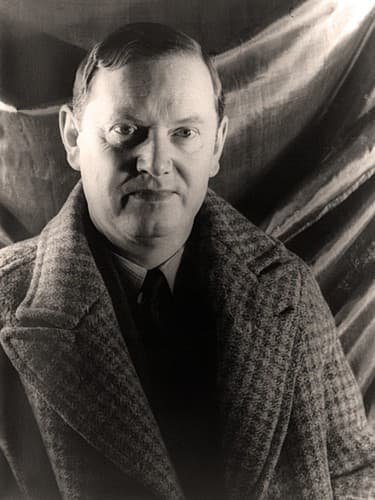
Arthur Evelyn St. John Waugh was an English writer of novels, biographies, and travel books; he was also a prolific journalist and book reviewer. His most famous works include the early satires Decline and Fall (1928) and A Handful of Dust (1934), the novel Brideshead Revisited (1945), and the Second World War trilogy Sword of Honour (1952–1961). He is recognised as one of the great prose stylists of the English language in the 20th century.
Similar books
- The Great Gatsby
F. Scott Fitzgerald
3.9 (3.8M) average on GoodreadsHistorical FictionExplores the decadence and disillusionment of the Jazz Age, with a focus on doomed romance and social critique.
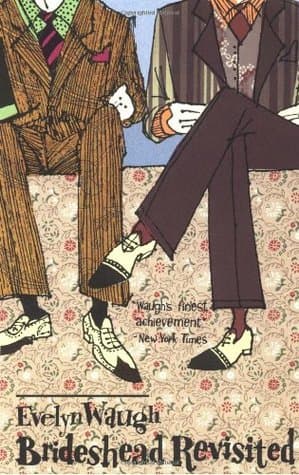
- Brideshead Revisited
Evelyn Waugh
4.0 (93k) average on GoodreadsLiterary FictionAnother Waugh novel exploring aristocratic life, class, and the changes in English society, though with a different tone.
- A Handful of Dust
Evelyn Waugh
3.9 (23k) average on GoodreadsLiterary FictionShares Waugh's cynical wit and dark humor in depicting the moral decay and tragic absurdities of the English upper class.
- Brave New World
Aldous Huxley
4.0 (1.4M) average on GoodreadsFantasyBoth are works of social critique, but Huxley's novel uses a dystopian future to expose societal flaws, offering a broad, philosophical critique of technological control and societal conditioning. Waugh, in contrast, grounds his satire in the immediate, albeit exaggerated, present of his own social milieu, providing a more direct and personal, if less speculative, indictment of contemporary manners and morals.
- The Old Man and the Sea
Ernest Hemingway
3.8 (831k) average on GoodreadsLiterary FictionA Cuban fisherman's long struggle with a giant marlin becomes a story of endurance and dignity, now retold for young adults with illustrations, phonetic guides, and writing prompts in Traditional Chinese.
- One Hundred Years of Solitude
Gabriel García Márquez
4.1 (753k) average on GoodreadsLiterary FictionThrough the multi-generational story of the Buendía family, a mythical town deals with the repeating patterns of time, love, and solitude, as the extraordinary mixes with the ordinary.




Enjoyed the summary?
A summary gives you the shape of the book. The book itself has the detail, the examples and the voice.
Find Vile Bodies on AmazonAs an Amazon Associate, BookBrief earns from qualifying purchases. How we're funded