

Synopsis
Covers the whole plot, including the ending.
- Difficulty
- Medium
- Pacing
- Moderate
- Mood
- Epic, Poignant, Thought-provoking, Melancholy, Hopeful
- Read it if
- You enjoy sweeping family sagas, medical dramas, and stories set in unique historical and cultural contexts, exploring themes of love, betrayal, and redemption.
- Skip it if
- You prefer fast-paced thrillers or lighthearted reads, or are sensitive to detailed descriptions of medical procedures and human suffering.
Cutting for Stone Plot Summary
Covers the whole plot, including the ending.
A Miraculous and Tragic Birth in Ethiopia
The story starts at Missing, a mission hospital in Addis Ababa, Ethiopia, in 1954. Sister Mary Joseph Praise, a young Indian nun, gives birth to conjoined twin boys, Marion and Shiva Stone. Their father is Dr. Thomas Stone, an English surgeon at the hospital. The birth is difficult; Sister Mary Joseph Praise dies soon after the twins are separated. Dr. Stone is devastated and feels guilty. Overwhelmed, Dr. Stone leaves the boys and the hospital, disappearing. Dr. Hema Chaudhury, an obstetrician, and Dr. Ghosh, a general surgeon, two Indian doctors, become the twins' adoptive parents.
Childhood at Missing and a Shared Destiny
Marion and Shiva grow up in the busy environment of Missing hospital. Dr. Hema and Dr. Ghosh give them a loving home. The boys do well among the medical staff. They have a strong, almost telepathic bond. They both love medicine, often watching surgeries and helping in small ways. Marion is more sensitive and expressive and does well in school. Shiva is quiet and very observant, with a natural surgical talent. Their early lives are full of the hospital's sights and sounds, shaping their future goals and their commitment to healing, even with the mystery of their unknown parents.
The First Glimpse of Thomas Stone and Growing Pains
Years pass, and the twins are teenagers. Dr. Thomas Stone, their biological father, returns to Ethiopia. He lives as an isolated, alcoholic surgeon in a remote clinic. Marion and Shiva meet him during a medical emergency. Dr. Stone, still affected by his past, is cold and distant. He offers no explanation or recognition of their relationship. This meeting leaves Marion deeply hurt and confused. Shiva seems to handle it with his usual quiet intensity. The experience highlights the emptiness left by their biological parents. It makes Marion want answers about their origins more, while Shiva focuses on his surgical skills in secret.
The Rise of Political Unrest and Genet's Influence
As the twins get older, political unrest in Ethiopia increases. Emperor Haile Selassie is overthrown, and the Derg regime begins. Their childhood friend, Genet, a spirited and smart girl, becomes involved in revolutionary activities. Both Marion and Shiva are attracted to her, but in different ways. Shiva secretly helps with Genet's political work. Marion, more openly in love, struggles with her radical ideas and the dangers they bring. Genet's choices and their shared past create a complex love triangle, made more difficult by the growing violence and uncertainty in their country.
A Betrayal and Marion's Exile
A turning point happens when Genet becomes pregnant. Marion thinks the child is his, and they plan to marry. However, it is revealed that Shiva is the father. This betrayal devastates Marion. It adds to his feelings of abandonment and creates a lasting break between the brothers. During this personal trouble, Marion is wrongly accused of anti-government activities planned by Genet and Shiva. He is arrested. To save him from prison or worse, Dr. Hema and Dr. Ghosh arrange for Marion to leave Ethiopia. They send him to New York City to study medicine, effectively sending him away from his home and his brother.
Life as a Surgeon in New York
In New York City, Marion focuses on his medical studies and becomes a successful surgeon. He deals with cultural differences, the loneliness of being away from home, and the pain of his past, especially the betrayal by Shiva and Genet. He works hard, finding comfort and purpose in his job. But the memories of Ethiopia, his family, and the unanswered questions about his origins still affect him. He forms new relationships, including a romantic one with a fellow doctor. However, his heart remains tied to his birthplace and the brother he left behind. He constantly seeks a sense of belonging and resolution.
The Search for Answers and Thomas Stone's Story
Years later, Marion learns that his biological father, Dr. Thomas Stone, is in New York, dying of cancer. Marion confronts him, wanting answers about his mother, Sister Mary Joseph Praise, and his father's leaving them. Thomas, now weak, finally tells the full, tragic story: his love for the nun, the difficult birth, his overwhelming guilt over her death, and his inability to cope with the twins, who reminded him of his loss. This painful confession helps Marion understand his father's actions, though it does not completely remove the hurt. It provides some closure.
A Call to Return: Shiva's Plight
After Thomas Stone's death, Marion gets an urgent letter from Dr. Hema. It says Shiva is very ill in Ethiopia, with a severe liver problem. The letter describes Shiva's declining health and the urgent need for a liver transplant, which is not possible in war-torn Ethiopia. This news makes Marion return to his homeland. He puts aside his lingering anger and fear for his own safety amid the political chaos. The need to save his brother rekindles their strong, complex bond, overcoming years of separation and unresolved conflict. It pulls Marion back into the life he thought he had left behind.
Return to a Changed Ethiopia and Reconciliation
Marion returns to a very different and dangerous Ethiopia, now under the harsh Derg regime. He navigates checkpoints, political violence, and the run-down Missing hospital. He finds Shiva gravely ill but still showing glimpses of his old self. The reunion is full of unspoken emotions, guilt, and the weight of their shared history. Marion learns about Shiva's continued involvement in underground medical work, treating the poor and politically targeted. Through their talks, Marion starts to understand Shiva's reasons and the depth of his brother's quiet sacrifices, leading to a fragile but deep reconciliation.
The Ultimate Sacrifice and Forgiveness
Marion realizes that Shiva's only chance of survival is a liver transplant, and he is the only compatible donor. He makes the difficult decision to donate part of his own liver. The surgery happens in basic conditions at Missing, with Dr. Hema and Dr. Ghosh assisting. During the operation, Marion feels a deep connection with Shiva. He understands the strength of their bond and forgives his brother for the past. Shiva recovers at first, but then dies from complications. Marion is heartbroken but at peace. This final act of sacrifice and forgiveness completes Marion's journey, letting him finally accept his identity and his connection to his family and homeland.
Principal Figures
Marion Stone
Protagonist
Eldest twin brother, a sensitive and skilled surgeon seeking his origins and identity.
Marion is the more outwardly sensitive and introspective of the Stone twins. He is highly intelligent, excels academically, and becomes a gifted surgeon. Throughout his life, he grapples with feelings of abandonment, the mystery of his birth, and the profound betrayal by his brother, Shiva, and Genet. His journey takes him from Ethiopia to New York and back, as he seeks to understand his past and reconcile with his family. He is driven by a deep sense of loyalty, a need for closure, and a profound connection to medicine. His experiences shape him into a compassionate and resilient individual.
Relationships: Shiva Stone (Twin brother, deeply connected yet rivalrous); Sister Mary Joseph Praise (Biological mother); Dr. Thomas Stone (Biological father, distant and guilt-ridden); Dr. Hema Chaudhury (Adoptive mother, mentor); Dr. Ghosh (Adoptive father, mentor); Genet (Childhood friend, unrequited love, source of betrayal)
Shiva Stone
Protagonist/Antagonist
Younger twin brother, a quiet, intuitive surgical genius with a mysterious and intense nature.
Shiva is the quieter, more enigmatic of the twins. He possesses an almost supernatural surgical intuition and a deep, unspoken bond with Marion. His actions are often driven by a fierce, protective love for those he cares about, though he expresses it in unconventional and sometimes destructive ways, such as his involvement with Genet. He is fiercely independent and prefers action over words, often operating in the shadows. His character represents the more primal, intuitive aspects of the human spirit and the complexities of sibling rivalry and love. He remains in Ethiopia, deeply committed to his people and his clandestine medical work.
Relationships: Marion Stone (Twin brother, deeply connected yet rivalrous); Sister Mary Joseph Praise (Biological mother); Dr. Thomas Stone (Biological father, distant and guilt-ridden); Dr. Hema Chaudhury (Adoptive mother, mentor); Dr. Ghosh (Adoptive father, mentor); Genet (Childhood friend, lover)
Dr. Thomas Stone
Supporting
Brilliant British surgeon, biological father of the twins, haunted by guilt and grief.
Dr. Thomas Stone is a highly skilled and dedicated British surgeon, but deeply flawed. He falls in love with Sister Mary Joseph Praise, leading to the twins' birth. Overwhelmed by her death during childbirth and his profound guilt, he abandons his sons and descends into alcoholism and reclusiveness. He is a tragic figure, consumed by his past and unable to form meaningful connections, even with his own children. His eventual confession to Marion provides crucial answers and a path towards understanding for his son, revealing the depth of his unexpressed love and sorrow.
Relationships: Sister Mary Joseph Praise (Lover, mother of his children); Marion Stone (Biological son, estranged); Shiva Stone (Biological son, estranged)
Sister Mary Joseph Praise
Supporting
Indian nun, biological mother of the twins, whose tragic death sets the story in motion.
Sister Mary Joseph Praise is a devout and compassionate Indian nun who comes to Ethiopia as a missionary. She is quiet, beautiful, and deeply committed to her faith and service. Her secret affair with Dr. Thomas Stone, despite her vows, leads to the birth of Marion and Shiva. Her death during childbirth is the catalyst for much of the novel's conflict and Marion's lifelong quest for identity. Though she appears only briefly in the narrative, her presence and memory profoundly impact all the main characters, particularly Thomas and Marion, shaping their fates and motivations.
Relationships: Dr. Thomas Stone (Lover, father of her children); Marion Stone (Biological son); Shiva Stone (Biological son)
Dr. Hema Chaudhury
Supporting
Indian obstetrician, adoptive mother to the twins, a pillar of strength and compassion.
Dr. Hema Chaudhury is a strong, intelligent, and compassionate Indian obstetrician at Missing hospital. She, along with Dr. Ghosh, adopts and raises Marion and Shiva, providing them with a loving and stable home. She is a maternal figure who instills in the boys a love for medicine and a sense of family. Hema is practical, resilient, and deeply ethical, serving as a moral compass for the twins and the hospital community. Her unwavering love and guidance are crucial to Marion's development, and she remains a constant source of support throughout their lives.
Relationships: Dr. Ghosh (Husband, adoptive father); Marion Stone (Adoptive son); Shiva Stone (Adoptive son)
Dr. Ghosh
Supporting
Indian general surgeon, adoptive father to the twins, a kind and dedicated mentor.
Dr. Ghosh is a kind, jovial, and dedicated Indian general surgeon at Missing hospital. He, along with Dr. Hema, adopts and raises Marion and Shiva, becoming a beloved father figure. He is a skilled doctor and a warm, nurturing presence, often providing comic relief and emotional support. Ghosh teaches the boys about medicine and life with patience and wisdom, embodying the humanitarian spirit of the hospital. His unwavering presence and quiet strength offer stability and love to the twins, particularly Marion, who looks to him for guidance and reassurance.
Relationships: Dr. Hema Chaudhury (Wife, adoptive mother); Marion Stone (Adoptive son); Shiva Stone (Adoptive son)
Genet
Supporting
Childhood friend of the twins, becomes a fiery revolutionary and object of their affection.
Genet is a bright, spirited, and fiercely independent Ethiopian girl who grows up alongside Marion and Shiva. She embodies the spirit of change and revolution sweeping through Ethiopia. Both brothers are drawn to her, and she becomes a central figure in their emotional lives, leading to a complex love triangle and a profound betrayal. Her political convictions drive her to dangerous actions, ultimately impacting the twins' fates and forcing Marion into exile. She represents the turbulent political landscape of Ethiopia and the intersection of personal relationships with historical events.
Relationships: Marion Stone (Childhood friend, object of his love); Shiva Stone (Childhood friend, lover, father of her child)
Rosina
Supporting
A nurse at Missing hospital and a surrogate mother figure to the twins in their early lives.
Rosina is a kind and nurturing nurse at Missing hospital who plays a significant role in caring for Marion and Shiva during their infancy and early childhood, particularly after their birth parents are gone and before Hema and Ghosh fully step into their adoptive roles. She provides practical care and emotional comfort, demonstrating the communal spirit of the hospital staff. Her presence highlights the collective effort required to raise the orphaned twins in a loving environment.
Relationships: Marion Stone (Caregiver); Shiva Stone (Caregiver)
Themes & Insights
Identity and Self-Discovery
The novel explores Marion's search for identity, which comes from being an orphan and the mystery of his birth. His journey from Ethiopia to New York and back is a continuous search for who he is, as an individual and in relation to his family and background. The absence of his biological parents, his brother's betrayal, and his exile all make him consider questions of belonging, purpose, and self-worth. When he finally understands his parents' story and reconciles with Shiva, he can bring together the broken parts of his identity.
“How can you blame a man for what he has done, when you understand the terrible things that have been done to him?”
Family, Love, and Betrayal
At its heart, 'Cutting for Stone' is a family story. It looks at the complexities of family love—between twin brothers, adoptive parents and their sons, and the tragic love between biological parents. The strong bond between Marion and Shiva is a main focus, marked by both connection and betrayal. The novel examines how love can heal and hurt, how secrets can break families, and how forgiveness is needed for reconciliation. The adoptive family of Hema and Ghosh contrasts with the biological family, showing different kinds of love and commitment.
“To be an Ethiopian, to be a doctor, to be a brother, to be a son, to be a lover, to be a human being, it was all of a piece.”
Medicine and Healing
Medicine is a central part of the novel, not just a background. Missing hospital is a small example of Ethiopia, showing both its difficulties and its strength. Practicing medicine is shown as a sacred calling, a way to serve, and a path to understanding humanity. Both Marion and Shiva are drawn to healing, though they approach it differently. The story has detailed descriptions of surgeries, showing the precision, dedication, and emotional cost of a doctor's life. Medicine also helps with personal healing, as Marion uses his skills to find purpose and to save his brother.
“The world, even the smallest parts of it, is filled with things you don't know.”
Fate vs. Free Will
The novel constantly looks at the connection between destiny and choice. The twins' conjoined birth and separation suggest an intertwined fate. Their lives are shaped by their birth, their parents' choices, and the political unrest in Ethiopia. However, both Marion and Shiva also make important choices that define their paths, from Marion's decision to leave Ethiopia to his choice to save Shiva. The story often asks if certain events were set in stone or if individual actions could have changed them, showing the fine line between what is given and what is chosen.
“We are all of us, always, the products of our choices. And the choices of others.”
Colonialism and Post-Colonial Ethiopia
The history and politics of Ethiopia, from the last days of Emperor Haile Selassie to the harsh Derg regime, are important to the story. The presence of foreign doctors (Indian, British) in a mission hospital relates to the legacy of colonialism and humanitarian aid. The political instability, revolution, and violence directly affect the characters' lives, causing exile, separation, and difficult choices. The novel shows the beauty and complexity of Ethiopian culture along with its struggles, showing how national history shapes individual lives and feelings of belonging.
“The Ethiopia we knew was a country of smiles and sunshine, of ancient churches and proud warriors. The Ethiopia we returned to was a country of shadows and fear, of starvation and summary executions.”
Plot Devices & Literary Techniques
Dual Narration (Implied)
The story is primarily told from Marion's first-person perspective, but often incorporates Shiva's experiences.
While the novel is narrated by Marion Stone, there are instances where he recounts events he could not have witnessed directly, particularly those involving Shiva alone or the early lives of his biological parents. This creates an 'implied dual narration' or an omniscient quality within Marion's voice, suggesting his deep intuitive connection to his twin and his comprehensive understanding of their shared history. It allows the reader access to Shiva's motivations and the full scope of the family's saga, enriching the emotional depth and narrative breadth.
The Conjoined Twins Metaphor
The physical reality of the twins' birth symbolizes their profound, often conflicted, lifelong connection.
The fact that Marion and Shiva were born conjoined is a powerful, overarching metaphor for their inseparable bond. Even after physical separation, their lives remain intertwined, marked by an almost telepathic understanding, shared experiences, and a destiny that continually pulls them back together. This device symbolizes the deep, sometimes burdensome, nature of sibling relationships, the idea of two halves making a whole, and the lasting impact of their shared origin on their individual identities and choices, even when they are physically apart and emotionally estranged.
The Missing Hospital as a Microcosm
The mission hospital serves as a symbolic representation of Ethiopia itself, reflecting its struggles and resilience.
Missing hospital is more than just a setting; it is a character in itself and a microcosm of Ethiopia. It embodies hope, healing, and humanitarian spirit amidst poverty and political turmoil. Its decline and eventual resurgence mirror the fate of the nation. The diverse staff and patients represent the multicultural fabric of Ethiopian society and the colonial influences. The hospital's ability to survive and continue its work, despite immense challenges, reflects the resilience of the Ethiopian people and the enduring power of medicine and compassion.
The Missing Father Archetype
Dr. Thomas Stone's abandonment creates a central void and driving force for Marion's quest.
The absence of Dr. Thomas Stone, both physically and emotionally, serves as a classic 'missing father' archetype. His abandonment creates a profound void in Marion's life, fueling his lifelong search for identity, answers, and a sense of belonging. This device generates much of the narrative tension, as Marion grapples with feelings of rejection and a desperate need to understand his origins. The eventual confrontation and confession provide a crucial turning point, allowing Marion to achieve a measure of closure and understanding, even if full reconciliation is impossible.
Medical Terminology and Procedures
Detailed descriptions of surgical procedures and medical conditions immerse the reader in the world of medicine.
Verghese, himself a physician, uses extensive and accurate medical terminology and vivid descriptions of surgical procedures throughout the novel. This device not only adds authenticity and realism to the hospital setting but also serves to highlight the characters' dedication to their profession, their skill, and the high stakes of their work. It immerses the reader in the world of medicine, making the triumphs and tragedies of the operating room palpable. The medical details also metaphorically reflect the 'cutting' and 'healing' that occur in the characters' emotional lives.
Cutting for Stone Quotes
“We come unbidden into this life, and if we are lucky we find a purpose beyond starvation, misery, and early death which, lest we forget, is the common lot.”
“The key to your happiness is to own your slippers, own who you are, own how you look, own your family, own the talents you have, and own the ones you don't.”
“We are all fixing what is broken. It is the task of a lifetime.”
“The world turns on our every action, and our every omission, whether we know it or not.”
“A good surgeon has the eyes of a hawk, the heart of a lion, and the hands of a woman.”
“What is the hardest thing you can do? To look at your own trouble and call it by its name.”
“The difference between a good surgeon and a great one is that the great surgeon knows when not to cut.”
“We are all patchwork, and so shapeless and diverse in composition that each bit, each moment, plays its own game.”
“The human body is a universe unto itself, a landscape of mystery and wonder.”
“Love and duty are like oil and water; they don't mix.”
“The past is a ghost, the future a dream, and all we ever have is now.”
“In medicine, as in life, we are all apprentices in a craft where no one ever becomes a master.”
“The heart is not a stone; it is a living, beating thing, and it can be broken.”
“We are born with a wound, and our whole life is a search for the salve.”
Quiz
10 questions on the plot and the characters. Each answer comes with a short explanation.
Question 1
What is the name of the Indian nun who gives birth to the twin brothers at the beginning of the novel?
- Sister Mary Joseph Praise
- Sister Anjali
- Sister Ruth
- Sister Beatrice
Show answer
A. Sister Mary Joseph Praise Sister Mary Joseph Praise is the Indian nun who has a secret relationship with British surgeon Thomas Stone and dies giving birth to the twins Marion and Shiva at Missing Hospital in Addis Ababa.
Question 2
Where do Marion and Shiva Stone grow up after being orphaned?
- At Missing Hospital in Addis Ababa, Ethiopia
- With their father in London
- At an orphanage in New Delhi, India
- With relatives in Boston, USA
Show answer
A. At Missing Hospital in Addis Ababa, Ethiopia After their mother dies in childbirth and their father disappears, the twins are raised by doctors Hema and Ghosh at Missing Hospital in Addis Ababa, where they develop their fascination with medicine.
Question 3
What medical specialty do both Marion and Shiva ultimately pursue?
- Surgery
- Internal medicine
- Obstetrics and gynecology
- Pediatrics
Show answer
C. Obstetrics and gynecology Both twins become obstetrician-gynecologists, following in the footsteps of their adoptive mother Hema, though their approaches to medicine differ significantly.
Question 4
Why does Marion flee Ethiopia and eventually settle in New York?
- He is recruited by a prestigious American hospital
- He is falsely accused of a crime and fears political persecution
- He wants to pursue advanced surgical training
- He follows his father who has resurfaced in America
Show answer
B. He is falsely accused of a crime and fears political persecution Marion is wrongly implicated in a political assassination during Ethiopia's revolutionary turmoil and escapes to avoid imprisonment, eventually building a new life as a surgeon in New York.
Question 5
What significant betrayal creates a lasting rift between Marion and Shiva?
- Shiva steals Marion's medical research
- Shiva has an affair with Genet, the woman Marion loves
- Marion refuses to help Shiva financially
- Shiva sides with the Ethiopian government against Marion
Show answer
B. Shiva has an affair with Genet, the woman Marion loves Shiva's affair with Genet—the childhood friend and love interest of both brothers—creates an irreparable breach in their relationship that lasts for years.
Question 6
What medical condition does Thomas Stone suffer from that affects his surgical career?
- Parkinson's disease
- Essential tremor
- Macular degeneration
- Hearing loss
Show answer
B. Essential tremor Thomas Stone develops an essential tremor in his hands that ends his surgical career, a condition that becomes significant when Marion later encounters him.
Question 7
Which character serves as both a childhood friend and political revolutionary figure in the novel?
- Rosina
- Genet
- Almaz
- Tsige
Show answer
B. Genet Genet grows up with the twins at Missing Hospital but becomes involved in Ethiopia's revolutionary politics, which ultimately impacts both brothers' lives dramatically.
Question 8
What is the significance of the title 'Cutting for Stone'?
- It refers to the surgical procedure that saves Marion's life
- It describes how the twins are separated at birth
- It symbolizes the cutting of family ties
- It represents the stone walls of Missing Hospital
Show answer
A. It refers to the surgical procedure that saves Marion's life The title references the Hippocratic Oath phrase 'I will not cut for stone' (referring to ancient bladder stone surgery), but in the novel it becomes literal when Thomas Stone must perform this exact surgery to save Marion's life.
Question 9
How does Marion finally reconcile with his father Thomas Stone?
- Thomas travels to Ethiopia to apologize to Marion
- Marion operates on Thomas to treat his essential tremor
- Thomas donates a kidney to save Marion's life
- They meet accidentally at a medical conference
Show answer
C. Thomas donates a kidney to save Marion's life After Marion develops a life-threatening condition requiring a kidney transplant, Thomas—who had abandoned him at birth—emerges as the only compatible donor, leading to their emotional reconciliation.
Question 10
What recurring medical theme is demonstrated through Shiva's unique approach to fistula surgery?
- The importance of technological advancement over traditional methods
- The conflict between Western medicine and Ethiopian healing practices
- The value of intuitive, hands-on skill versus textbook surgical technique
- The necessity of specialization over general medical practice
Show answer
C. The value of intuitive, hands-on skill versus textbook surgical technique Shiva develops an extraordinary talent for repairing obstetric fistulas through intuitive, almost artistic surgical technique rather than conventional training, illustrating the novel's theme that medicine combines both science and art.
Cutting for Stone FAQ
What is 'Cutting for Stone' about?
The novel follows twin brothers Marion and Shiva Stone, born in 1954 at Missing Hospital in Addis Ababa to Sister Mary Joseph Praise (an Indian nun) and Thomas Stone (a British surgeon). Orphaned at birth when their mother dies and father disappears, they are raised by doctors Hema and Ghosh. The story spans decades, tracing their intertwined lives through medical careers, the Ethiopian revolution, and a complex journey of betrayal, love, and reconciliation across Africa and America.
Why should I read 'Cutting for Stone'?
It's a richly layered epic that masterfully blends gripping family drama with vivid medical detail and historical context. Verghese's background as a physician brings authenticity to the surgical scenes, while the emotional depth of the twins' bond, the exploration of exile and identity, and the sweeping backdrop of Ethiopia's political turmoil create a powerful, immersive reading experience about forgiveness and destiny.
What is the background/setting of 'Cutting for Stone'?
The story begins in 1954 at Missing Hospital (a missionary hospital in Addis Ababa, Ethiopia), where much of the twins' childhood unfolds. Key events occur against the backdrop of Emperor Haile Selassie's reign and the 1974 Ethiopian Revolution. Later settings include a remote hospital in the Eritrean countryside, and Marion's life in New York City as a surgeon at Our Lady of Perpetual Succour hospital.
What are the most memorable quotes?
Notable quotes include: 'The key to your happiness is to own your slippers, own who you are, own how you look, own your family, own the talents you have, and own the ones you don't.' Also, 'We are all fixing what is broken. It is the task of a lifetime.' And 'Life, too, is like that. You live it forward, but understand it backward.'
What writing style does the author use?
Verghese employs a lyrical, descriptive prose rich with medical terminology and sensory detail, creating an almost cinematic vividness. The narrative is deeply introspective, shifting between Marion's first-person perspective and third-person omniscient sections, with a pace that balances slow, reflective moments with dramatic, plot-driven sequences.
What minor details add significant meaning?
The recurring image of the 'black suitcase'—containing Thomas Stone's surgical tools and his manuscript 'The Expedient Operator'—symbolizes the twins' inherited legacy and unresolved paternal connection. Similarly, Shiva's fascination with fistulas (a medical condition causing abnormal connections) mirrors the novel's themes of unexpected bonds and the 'fistula' of betrayal between the brothers.
What are some subtle foreshadowing moments?
Early scenes where Shiva displays an almost supernatural connection to Marion (like feeling his pain) foreshadow their eventual rift and deep, irreparable bond. Thomas Stone's abandonment and his manuscript's focus on surgical separation hint at the twins' later emotional and physical separation. The political unrest in Addis Ababa subtly foreshadows the personal upheavals in their lives.
What unexpected character connections exist?
A shocking revelation is that Genet, the daughter of the housekeeper Rosina and the twins' childhood friend/love interest, is revealed to be Thomas Stone's biological daughter—making her the twins' half-sister. This hidden familial tie intensifies the betrayal when Marion discovers Shiva and Genet's affair, adding layers to the themes of secrecy and interconnectedness.
What are unspoken character motivations?
Thomas Stone's abandonment stems from deep guilt over Sister Mary Joseph Praise's death during childbirth and his inability to save her, driving his lifelong obsession with surgical perfection. Shiva's detachment and focus on medicine mask a profound loneliness and envy of Marion's emotional depth. Marion's pursuit of surgery is partly a quest to understand and reconcile with his absent father.
What psychological complexities do characters exhibit?
Marion struggles with survivor's guilt over his mother's death and feelings of betrayal by Shiva and Genet, leading to self-exile and repressed anger. Shiva exhibits autistic-like traits, with a brilliant but socially awkward mind, making his betrayal of Marion more nuanced—rooted in a childlike misunderstanding of love rather than malice. Genet's actions are driven by a desperate search for identity and belonging in a world where she feels like an outsider.
What are the major emotional turning points?
Key turning points include: the twins' birth and immediate orphanage, which defines their bond; Shiva and Genet's affair, which shatters Marion's trust; Marion's near-fatal stabbing in New York, forcing him to confront his past; and the final surgery in Boston where Marion operates on Thomas Stone, leading to a tense but unresolved reconciliation between father and son.
How do relationship dynamics evolve?
Marion and Shiva's relationship shifts from an inseparable, almost symbiotic childhood bond to bitter estrangement after Shiva's betrayal with Genet, then to a distant, medically collaborative connection in adulthood, culminating in a fragile, unspoken forgiveness. Marion's relationship with Thomas Stone evolves from lifelong resentment and curiosity to a charged, surgical encounter that offers a glimmer of understanding but no full closure.
Which parts remain ambiguous or open-ended?
The novel leaves ambiguous whether Thomas Stone ever fully acknowledges Marion as his son or finds personal redemption. The future of Marion and Shiva's relationship after the surgery is unresolved—they reconnect professionally but the emotional wounds are not explicitly healed. Also, Genet's ultimate fate and her relationship with her daughter, Selam, are left uncertain, reflecting the ongoing nature of life's 'miracles and betrayals.'
What are controversial scenes or decisions?
Shiva's decision to have an affair with Genet, knowing Marion loves her, is deeply controversial, viewed by some as a profound betrayal and by others as an act of naive passion. Thomas Stone's abandonment of his newborn twins is morally contentious, sparking debate over whether his guilt justifies his absence. The graphic medical scenes, particularly surgeries, may disturb some readers but are integral to the themes.
'Cutting for Stone' ending explained: how it ends & what it means
The novel ends with Marion performing life-saving surgery on Thomas Stone in Boston, with Shiva's indirect help via medical advice. This act symbolizes Marion's forgiveness and acceptance of his past, though Stone never verbally apologizes. Marion returns to Addis Ababa to reunite with Shiva and possibly rebuild their bond, suggesting that healing comes from embracing one's history and connections, rather than escaping them. The title's reference to the Hippocratic Oath ('cutting for stone' means operating on bladder stones) mirrors the surgical and emotional 'cutting' required to remove life's burdens.
What is the significance of the title 'Cutting for Stone'?
The title refers to a historical surgical procedure for removing bladder stones, but it operates on multiple levels: it symbolizes the twins' surgical careers, the 'cutting' apart of their bond through betrayal, and the painful but necessary operations required to heal emotional and physical wounds. It also nods to their surname 'Stone,' representing the hard, calcified issues they must dissect throughout their lives.
How does the Ethiopian revolution impact the characters?
The 1974 revolution forces Marion into exile to escape political violence, leading to his life in America and estrangement from Shiva. It heightens the themes of displacement and loss, as characters like Ghosh face danger and the hospital community is disrupted. The revolution serves as a macrocosm of the personal upheavals and betrayals the twins experience, tying their fate to Ethiopia's turbulent history.
What role does medicine play in the novel?
Medicine is a central metaphor and practical force: it defines the twins' identities, provides a language for their emotions (e.g., describing betrayal as a 'fistula'), and drives the plot through key surgeries. The detailed medical scenes underscore themes of healing, sacrifice, and the intersection of science and humanity, reflecting Verghese's belief that medicine is an act of empathy and connection.
About the author
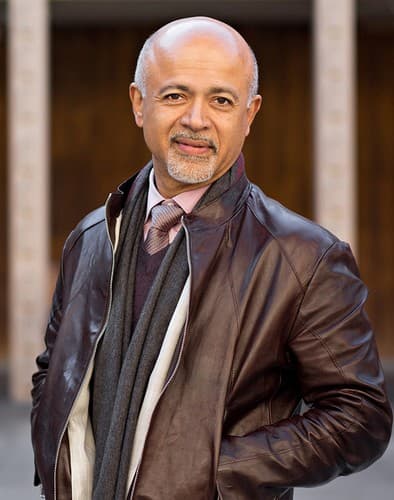
Abraham Verghese is an American physician, author, Professor of the Theory and Practice of Medicine and Vice Chair of Education at Stanford University Medical School. He is also the author of four best-selling books: two memoirs and two novels. In 2011, he was elected to be a member of the Institute of Medicine. He received the National Humanities Medal from President Barack Obama in 2015. He is the co-host with Eric Topol of the podcast Medscape Medicine and the Machine.
Similar books
- A Thousand Splendid Suns
Khaled Hosseini
4.4 (1.2M) average on GoodreadsHistorical FictionFeatures a compelling narrative set against a backdrop of political turmoil in an exotic locale, focusing on deep human connections.
- The House of the Spirits
Isabel Allende
4.2 (190k) average on GoodreadsFantasyA sprawling family saga with elements of magical realism, covering generations and political upheaval.
- A Fine Balance
Rohinton Mistry
4.3 (129k) average on GoodreadsLiterary FictionBoth novels explore post-colonial India and human resilience. However, Cutting for Stone places a much stronger emphasis on the medical profession and its ethical dilemmas, whereas Mistry's work focuses more on socio-political commentary and the struggles of ordinary citizens.
- The Kite Runner
Khaled Hosseini
4.3 (2.4M) average on GoodreadsHistorical FictionBoth novels explore themes of brotherhood, betrayal, and redemption against exotic backdrops. Cutting for Stone offers a more intricate and less overtly tragic portrayal of its protagonists, with a deeper dive into medical humanism, while The Kite Runner often emphasizes visceral pain and the weight of past actions.
- The Old Man and the Sea
Ernest Hemingway
3.8 (831k) average on GoodreadsLiterary FictionA Cuban fisherman's long struggle with a giant marlin becomes a story of endurance and dignity, now retold for young adults with illustrations, phonetic guides, and writing prompts in Traditional Chinese.
- One Hundred Years of Solitude
Gabriel García Márquez
4.1 (753k) average on GoodreadsLiterary FictionThrough the multi-generational story of the Buendía family, a mythical town deals with the repeating patterns of time, love, and solitude, as the extraordinary mixes with the ordinary.





Enjoyed the summary?
A summary gives you the shape of the book. The book itself has the detail, the examples and the voice.
Find Cutting for Stone on AmazonAs an Amazon Associate, BookBrief earns from qualifying purchases. How we're funded