
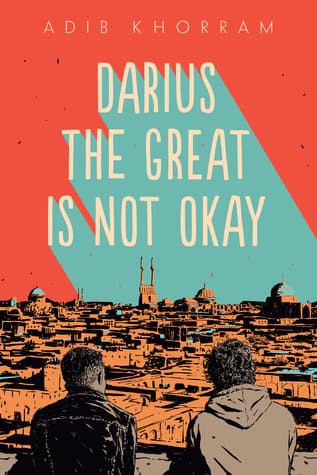
Synopsis
Covers the whole plot, including the ending.
- Difficulty
- Easy
- Pacing
- Moderate
- Mood
- Heartwarming, Reflective, Hopeful, Tender
- Read it if
- You're looking for a heartwarming story about self-discovery, cultural identity, and the power of friendship, especially if you enjoy character-driven YA novels with emotional depth.
- Skip it if
- You prefer fast-paced plots with high stakes and a lot of external conflict; this book is more introspective and focused on internal growth.
Darius the Great Is Not Okay Plot Summary
Covers the whole plot, including the ending.
The Departure and Initial Discomfort
Darius Kellner, a high school student struggling with clinical depression and a distant relationship with his father, prepares for his first trip to Iran. His mother, Shirin, is Iranian, and they are traveling to Yazd to visit her father, Babou, who is terminally ill. Darius feels like an outsider, uncomfortable with his limited Farsi and American appearance, especially compared to his more confident younger sister, Laleh. The long journey and unfamiliar environment worsen his social anxiety, making him feel overwhelmed and isolated upon arriving at his grandparents' home. He immediately feels a cultural disconnect, unable to fully participate in conversations and interactions with his extended family, deepening his sense of not belonging.
Meeting Sohrab, the Boy Next Door
Soon after arriving, Darius meets Sohrab, the boy next door and the son of his grandparents' neighbors. Sohrab is immediately friendly and outgoing, a contrast to Darius's introverted nature. Sohrab quickly helps Darius navigate the language barrier by translating conversations and explaining cultural nuances. Their initial interactions show Sohrab's genuine warmth and a shared love for soccer. For the first time, Darius feels seen and understood, not judged for his differences or his depression. Sohrab's presence begins to lessen Darius's loneliness, offering hope and connection in an otherwise overwhelming situation.
Bonding Over Soccer and Shared Spaces
Darius and Sohrab spend their days together, mainly playing soccer on neighborhood fields. Sohrab, an aspiring professional player, helps Darius improve his skills, and their shared passion for the sport becomes a strong form of non-verbal communication. They explore Yazd, visiting local shops, eating traditional foods like rosewater ice cream, and discovering a special rooftop spot overlooking the city, which becomes their sanctuary. During these outings, Sohrab gives Darius an Iranian National Football Team jersey. This gesture makes Darius feel like a 'True Persian' for the first time. Their friendship deepens through these shared experiences, built on mutual respect and quiet understanding that crosses language and cultural differences.
Navigating Family Dynamics and Babou's Illness
While Darius finds comfort with Sohrab, his family life in Iran remains complicated. His relationship with his father, Stephen, is still tense, marked by Stephen's critical nature and Darius's feeling of inadequacy. Stephen often comments on Darius's weight or lack of ambition, which triggers Darius's depression. Babou's illness casts a shadow over the family. Darius deals with the sadness of his grandfather's decline and the realization that he is only just getting to know him. He sees his mother's grief and strength and slowly begins to understand the complex family history and the deep love that binds them, despite unspoken tensions.
Sohrab's Vulnerability and a Moment of Connection
One day, Sohrab shares a deeper layer of his life with Darius. He says his father left their family, and he feels responsible for caring for his mother and younger sister. This revelation makes Sohrab more human for Darius, showing him that even his seemingly perfect friend carries his own burdens. This moment of vulnerability strengthens their bond, as Darius realizes he is not the only one dealing with personal struggles. It shows the unspoken understanding between them, proving that true friendship involves sharing not just joys, but also sorrows and fears. Darius feels a strong connection, recognizing Sohrab's trust in him.
A Misunderstanding and Its Resolution
During a soccer match, a misunderstanding happens between Darius and Sohrab. Darius, sensitive to criticism and prone to overthinking, misinterprets something Sohrab says or does, leading to a brief but painful argument. This incident triggers Darius's fear of abandonment and his belief that he is unlikable. He retreats into himself, convinced he has ruined his first real friendship. However, Sohrab, understanding Darius's anxieties, quickly seeks him out to apologize and clarify the situation. Their reconciliation reinforces the strength of their bond, as Sohrab shows his patience and genuine care for Darius, assuring him that their friendship is resilient.
Darius's Growing Confidence and Self-Acceptance
As the trip continues, Darius slowly starts to shed some of his insecurities. His daily interactions with Sohrab, who calls him 'Darioush' (the Persian version of his name), make him feel more authentically himself than ever before. He begins to participate more in family conversations, even if imperfectly, and finds comfort in the routines and traditions of his Iranian relatives. He starts to appreciate the complexity of his bicultural identity, realizing that he can be both American and Persian. The acceptance he receives from Sohrab and his Iranian family provides a foundation for him to build a stronger sense of self-worth and belonging, allowing him to see himself in a new, more positive light.
Confronting His Father and Finding Common Ground
During their time in Iran, Darius and his father, Stephen, have several tense moments. However, a turning point occurs when Darius confronts his father about his critical comments and the emotional distance between them. This difficult conversation allows Stephen to reveal his own struggles with depression and his fears for Darius, stemming from his own experiences. This vulnerability from his father is unexpected for Darius and helps him see Stephen not just as a critical figure, but as a flawed human being with his own pain. The conversation marks a shift, opening a path for greater empathy and understanding in their relationship, moving towards a more genuine connection.
Babou's Final Days and a Meaningful Farewell
As Babou's health continues to decline, Darius spends more time by his side. Despite the language barrier, they share quiet moments of connection, often through shared meals or simple gestures. Darius learns about his grandfather's life, his resilience, and his quiet strength. He realizes the impact Babou has had on his mother and his family's history. These interactions become meaningful, as Darius understands the preciousness of their time together. The impending loss is sad, but Darius finds comfort in having been present and having formed a connection with his grandfather before his passing, creating lasting memories.
The Bittersweet Departure
The time for Darius's family to return to America arrives, bringing a bittersweet feeling. He shares a poignant farewell with Sohrab, promising to stay in touch. Their goodbye is filled with unspoken affection and the quiet understanding of the impact they've had on each other. Darius also says goodbye to his grandmother and other relatives, feeling a deeper connection than he had at the beginning of the trip. He leaves Iran with a new sense of self-worth, a stronger understanding of his heritage, and the confidence that he can be 'Darioush' even back home. The experience has given him tools to navigate his depression and his identity with greater resilience.
Returning Home as Darioush
Upon returning to America, Darius feels different. The lessons learned and the connections made in Iran resonate deeply. He continues his medication for depression but approaches his daily life with a new perspective. He starts to apply the confidence he gained in Iran to his interactions at school and at home. While the transition back has challenges, he carries the memory of Sohrab and the warmth of his Iranian family with him. He understands that being 'Darioush' is not just about a name, but about embracing all parts of himself – his Persian heritage, his American upbringing, his depression, and his capacity for friendship and self-acceptance. He is not okay, but he is becoming more okay.
Darius the Great Is Not Okay Characters
Darius Kellner
Protagonist
A clinically depressed, socially awkward teenager who embarks on a journey of self-discovery in Iran.
Darius is a half-Persian, half-American teenager grappling with clinical depression, social anxiety, and a strained relationship with his father. He feels like an outsider both at school in America and initially in Iran due to his limited Farsi and lack of cultural understanding. He finds solace in his love for tea and fantasy literature (like Lord of the Rings and Star Trek). Darius is intelligent and observant but struggles with self-worth and often overthinks social interactions. He internalizes criticism and believes himself to be perpetually 'not enough.'
Relationships: Sohrab (Best friend, confidant, catalyst for self-acceptance); Stephen Kellner (Dad) (Strained, critical, but evolving towards understanding); Shirin Kellner (Mom) (Supportive, loving, cultural bridge); Laleh Kellner (Sister) (Typical sibling rivalry, but underlying affection); Babou (Grandfather) (Distant but growing bond, symbol of heritage); Mamou (Grandmother) (Warm, nurturing, traditional figure)
Sohrab
Supporting
Darius's kind, outgoing, and understanding Iranian friend who helps him navigate his identity.
Sohrab is a confident, athletic, and deeply empathetic Iranian boy who lives next door to Darius's grandparents. He is an aspiring soccer player and quickly befriends Darius, becoming his first true friend. Sohrab is patient, understanding, and protective, translating Farsi for Darius and helping him adapt to Iranian culture. He sees Darius for who he is, beyond his awkwardness and depression, and calls him 'Darioush,' helping Darius embrace his Persian identity. He also carries his own quiet burdens, including his father's absence, which he eventually shares with Darius.
Relationships: Darius Kellner (Best friend, deeply supportive); His Mother (Caring, responsible son)
Stephen Kellner
Supporting
Darius's American father, whose critical nature stems from his own struggles with depression and concern.
Stephen is Darius's father, an American man who often appears critical and emotionally distant towards Darius. He frequently comments on Darius's weight and perceived lack of ambition, contributing to Darius's feelings of inadequacy. Stephen struggles with his own undiagnosed or unacknowledged depression, which he eventually reveals to Darius. His criticism often comes from a place of fear and a desire for Darius to avoid the same struggles he faced. He is a complex character, trying to connect with his son in the only way he knows how, even if it's often counterproductive.
Relationships: Darius Kellner (Strained father-son, evolving); Shirin Kellner (Loving, supportive husband); Babou (Respectful son-in-law, navigating cultural differences)
Shirin Kellner
Supporting
Darius's Iranian mother, who acts as a cultural bridge and emotional anchor for her family.
Shirin is Darius's mother, a strong, loving, and resilient woman who immigrated from Iran to America. She is fluent in both Farsi and English and often acts as a translator and cultural guide for her family in Iran. Shirin is deeply devoted to her parents, especially her ailing father, Babou. She understands Darius's struggles with depression and his feelings of being an outsider, often trying to mediate between him and his father. She embodies the blend of cultures and provides a source of unconditional love and support for Darius.
Relationships: Darius Kellner (Loving, supportive mother); Stephen Kellner (Loving, supportive wife); Babou (Devoted daughter); Mamou (Loving daughter)
Laleh Kellner
Supporting
Darius's younger sister, who is more outgoing and comfortable in new environments.
Laleh is Darius's younger sister, who is portrayed as more confident, outgoing, and socially adept than him. She quickly adapts to the Iranian environment and effortlessly connects with their relatives, often making Darius feel even more self-conscious. While there's a typical sibling dynamic of teasing, Laleh also shows moments of genuine care for Darius, especially regarding his depression. She represents a different way of navigating their bicultural identity, one that Darius initially envies.
Relationships: Darius Kellner (Sister, with typical sibling dynamics); Stephen and Shirin Kellner (Daughter)
Babou (Darius's Grandfather)
Supporting
Darius's ailing but formidable Iranian grandfather, who represents his family's heritage and quiet strength.
Babou is Shirin's father and Darius's grandfather, who is terminally ill. Despite his illness, he maintains a dignified and somewhat formidable presence. He is a man of few words, especially with Darius due to the language barrier, but conveys his love and wisdom through actions and quiet observation. He represents Darius's Persian heritage and the deep roots of his family. His impending death is a central emotional driver for the family's trip and for Darius's journey of understanding his cultural background.
Relationships: Darius Kellner (Grandfather, initially distant but growing connection); Shirin Kellner (Beloved father); Mamou (Husband)
Mamou (Darius's Grandmother)
Supporting
Darius's warm and nurturing Iranian grandmother.
Mamou is Shirin's mother and Darius's grandmother, a kind, loving, and traditional Iranian woman. She is a source of warmth and comfort for Darius, despite the language barrier. She expresses her affection through food and gentle care, providing a sense of home and belonging. Mamou represents the nurturing aspect of Darius's Persian heritage and offers a contrast to the more strained relationship Darius has with his paternal grandmother.
Relationships: Darius Kellner (Loving grandmother); Shirin Kellner (Beloved mother); Babou (Wife)
Darius the Great Is Not Okay Themes
Identity and Belonging
Darius struggles with his bicultural identity, feeling like an outsider in both American and Iranian contexts. In America, he is 'too Persian' for some, while in Iran, his limited Farsi and American mannerisms make him feel 'not Persian enough.' His friendship with Sohrab, who calls him 'Darioush,' helps him reconcile these parts of himself. He realizes that identity is not about fitting neatly into one box but embracing the complexity of his heritage. The journey to Iran forces him to confront what it means to be Persian and how that integrates with his American upbringing, leading to a more complete sense of self.
“Maybe being Darioush wasn't about being in Iran, or even about being with Sohrab. Maybe it was just about being myself.”
Mental Health and Depression
Clinical depression is a main theme, openly discussed through Darius's experiences. The book realistically shows the daily challenges of living with depression, including medication, therapy, social anxiety, and the struggle to find motivation and self-worth. Darius's internal thoughts show his constant battle with negative thoughts and feelings of inadequacy. The narrative emphasizes that depression is an illness, not a weakness. It shows how support systems, like Sohrab's friendship and his family's understanding, are important for managing it. It also highlights the generational aspect as his father reveals his own struggles.
“Depression was a lot like that. A constant dull ache in the background, sometimes flaring up, sometimes just a throb.”
Friendship and Connection
The power of friendship is shown through Darius and Sohrab's relationship. Darius has never had a true friend before, and Sohrab's unconditional acceptance, patience, and understanding provide him with a lifeline. Their bond crosses language barriers and cultural differences, built on shared activities, quiet companionship, and mutual vulnerability. Sohrab's ability to see and appreciate Darius for who he is, without judgment, is a strong catalyst for Darius's self-acceptance. This friendship shows how genuine connection can combat loneliness and provide emotional support.
“Some friends you had to talk to. Some friends you just had to be with.”
Family Dynamics and Intergenerational Understanding
The novel explores the complexities of family relationships, particularly the strained dynamic between Darius and his father, Stephen. Their relationship has miscommunication, generational differences, and unspoken emotional baggage. The trip to Iran forces them to confront these issues, leading to a breakthrough where Stephen reveals his own struggles with depression, fostering empathy and a path towards healing. The story also explores the quiet love within Darius's Iranian family, his mother's role as a cultural bridge, and his grandfather's illness's impact on everyone. It highlights the importance of understanding and connection across generations.
“It was hard to love someone who hurt you. It was harder to hurt someone you loved.”
Cultural Exchange and Perspective
The entire novel uses cultural exchange. Darius, as an American-raised Iranian, experiences Iran through a dual lens. This highlights differences in customs, food, language, and social norms. The narrative shows the beauty of Persian culture, from his relatives' hospitality to traditional cuisine and the historical sites of Yazd. It also addresses stereotypes and misunderstandings that can arise between cultures. Through this immersion, Darius gains a deeper appreciation for his heritage and a more nuanced understanding of the world beyond his American bubble, challenging his ideas and enriching his perspective.
“I was American, and I was Persian. I was both, and neither, and all of it was me.”
Plot Devices & Literary Techniques
First-Person Narrative (Internal Monologue)
Allows deep insight into Darius's thoughts, anxieties, and struggles with depression.
The story is told entirely from Darius's perspective, which is crucial for understanding his internal battle with depression and social anxiety. His extensive internal monologues provide raw, unfiltered access to his feelings of inadequacy, his overthinking, and his observations about the world around him. This narrative choice immerses the reader in his psychological state, making his struggles and triumphs deeply personal and relatable. It also highlights the contrast between his inner world and his outward demeanor, particularly when he struggles to communicate or express himself verbally.
Symbolism of Tea
Represents comfort, tradition, and a quiet way of connecting with others.
Tea serves as a recurring symbol throughout the novel. For Darius, it's a source of personal comfort and a familiar ritual, especially when he feels overwhelmed or anxious. In Iran, tea is a staple of hospitality and social gatherings, and sharing it becomes a non-verbal way for Darius to connect with his family and with Sohrab, bridging language and cultural gaps. The act of preparing and drinking tea offers moments of quiet reflection and shared presence, symbolizing warmth, tradition, and the subtle ways people express care and connection without words.
The Rooftop
A sanctuary for Darius and Sohrab, symbolizing freedom, perspective, and their unique bond.
The rooftop overlooking Yazd becomes a significant symbolic space for Darius and Sohrab. It's their private sanctuary, a place where they can escape the pressures of family and society, talk openly, or simply exist in comfortable silence. From this vantage point, Darius gains a new perspective on the city and, metaphorically, on his own life. The rooftop represents freedom from judgment, the strength of their friendship, and a space where Darius can truly be 'Darioush,' unburdened by his usual anxieties. It's a physical manifestation of the mental space Sohrab helps him find.
The Iranian National Football Team Jersey
Symbolizes acceptance, belonging, and Darius's embrace of his Persian identity.
When Sohrab gives Darius an Iranian National Football Team jersey, it's more than just a gift; it's a powerful symbol of acceptance and belonging. For Darius, who has always felt 'not Persian enough,' wearing the jersey makes him feel like a 'True Persian' for the first time. It represents his connection to his heritage, his shared passion for soccer with Sohrab, and his growing comfort in his bicultural identity. The jersey is a tangible representation of the validation and sense of belonging that Sohrab provides, helping Darius reconcile different parts of himself.
Darius the Great Is Not Okay Quotes
“I was always like a cat, curious and cautious, but always coming back to the same warm spot, even if it meant getting burned again.”
“It’s hard to be yourself when you’re not entirely sure who yourself is yet.”
“Sometimes, the hardest part of being a person is realizing that other people are people too.”
“Maybe it’s okay to not be okay. Maybe it’s even good.”
“I was a planet, and everyone else was the sun, and I just orbited around them, reflecting their light.”
“You don't have to be perfect to be loved. You just have to be.”
“There are some things that only exist in a certain language, and if you don’t speak that language, you can’t know them.”
“It was like my heart had been a tightly closed fist, and now it was slowly, hesitantly, opening.”
“Real friends don’t try to fix you. They just sit with you in the broken pieces.”
“The world was a messy, complicated place, and I was just a messy, complicated person trying to find my way through it.”
“Grief is a strange thing. It’s like a room you walk into, and you don’t know how you got there, but suddenly you’re in it.”
“Sometimes, the most important conversations are the ones you have without saying a word.”
“It felt like I was finally inhaling after holding my breath for eighteen years.”
“You can’t choose your family, but you can choose how you let them affect you.”
Quiz
10 questions on the plot and the characters. Each answer comes with a short explanation.
Question 1
What is one of Darius's main struggles mentioned in the book's description that makes his trip to Iran overwhelming?
- A fear of flying
- Clinical depression
- An allergy to Persian food
- A broken leg
Show answer
B. Clinical depression The description explicitly states that Darius is 'dealing with clinical depression,' which contributes to his overwhelming feelings during the trip.
Question 2
What language does Darius speak better than Farsi?
- Elvish
- Dothraki
- Klingon
- Sindarin
Show answer
C. Klingon The text states, 'Darius Kellner speaks better Klingon than Farsi.'
Question 3
Who is Sohrab to Darius in Iran?
- His cousin
- His teacher
- The boy next door
- His older brother
Show answer
C. The boy next door The description introduces Sohrab as 'the boy next door who changes everything.'
Question 4
What specific item does Sohrab get for Darius that makes him feel like a 'True Persian'?
- A traditional Persian rug
- An Iranian National Football Team jersey
- A book of Persian poetry
- A set of Persian spices
Show answer
B. An Iranian National Football Team jersey Sohrab 'gets Darius an Iranian National Football Team jersey that makes him feel like a True Persian for the first time.'
Question 5
What is the original Persian version of Darius's name that Sohrab uses?
- Dariush
- Daryush
- Darioush
- Darrius
Show answer
C. Darioush Sohrab calls him 'Darioush—the original Persian version of his name—and Darius has never felt more like himself than he does now that he's Darioush to Sohrab.'
Question 6
Besides playing soccer, what other activity do Darius and Sohrab enjoy together in their 'special place'?
- Reading books
- Learning Farsi
- Sitting together for hours on a rooftop overlooking the Yazdi skyline
- Visiting ancient ruins
Show answer
C. Sitting together for hours on a rooftop overlooking the Yazdi skyline The description mentions, 'And he meets Sohrab... And he understands that sometimes, best friends don't have to talk. Darius has never had a true friend before, but now he's spending his days with Sohrab playing soccer, eating rosewater ice cream, and sitting together for hours in their special place, a rooftop overlooking the Yazdi skyline.'
Question 7
What aspect of Darius's social life in America is described as 'chronically anemic'?
- His relationship with his parents
- His academic performance
- His social life
- His interest in hobbies
Show answer
C. His social life The text explicitly states Darius is 'dealing with clinical depression, a disapproving dad, and a chronically anemic social life.'
Question 8
What is the central internal conflict Darius faces regarding his identity, as hinted by the title and description?
- Struggling to choose between a career in science or art.
- Feeling he will 'never be enough,' both in America and in Iran, and struggling with his Persian identity.
- Deciding whether to move to Iran permanently or stay in America.
- Overcoming his fear of public speaking.
Show answer
B. Feeling he will 'never be enough,' both in America and in Iran, and struggling with his Persian identity. The first sentence of the description sets up this core theme: 'Darius doesn't think he'll ever be enough, in America or in Iran.' This highlights his struggle with identity and belonging in both cultures.
Question 9
How does Sohrab facilitate Darius's understanding of conversations in Iran?
- He teaches Darius Farsi lessons every day.
- He makes sure people speak English so Darius can understand what's going on.
- He provides Darius with a translation app.
- He writes down conversations for Darius to read.
Show answer
B. He makes sure people speak English so Darius can understand what's going on. The text states, 'Sohrab makes sure people speak English so Darius can understand what's going on.'
Question 10
What does Darius realize he will have to do when he returns home to America after his trip?
- Forget everything he learned in Iran.
- Find a way to be Darioush on his own.
- Convince his parents to move to Iran.
- Never speak Farsi again.
Show answer
B. Find a way to be Darioush on his own. The final sentence of the description states, 'When it's time to go home to America, he'll have to find a way to be Darioush on his own,' indicating his journey of self-acceptance and integrating his newfound identity.
Darius the Great Is Not Okay FAQ
What is Darius's main internal struggle throughout the book, both in America and Iran?
Darius grapples with a profound sense of not belonging and inadequacy, stemming from his clinical depression and his bicultural identity. In America, he feels like an outsider due to his social anxiety and lack of friends, while in Iran, he fears he's 'not Persian enough' because he doesn't speak Farsi fluently and is unfamiliar with cultural norms.
How does Darius's relationship with his father, Stephen, evolve during their trip to Iran?
Their relationship is initially strained, marked by Stephen's perceived disapproval and Darius's feeling of never being good enough. However, the trip forces them to confront their shared struggles with depression and their complicated family history, leading to moments of vulnerability and a deeper, albeit still imperfect, understanding.
Who is Sohrab, and what role does he play in Darius's journey of self-discovery?
Sohrab is the boy next door in Yazd, Iran, who becomes Darius's first true friend. He provides Darius with a sense of acceptance and belonging, helping him navigate Iranian culture, encouraging him to embrace his Persian heritage, and making him feel seen and valued for who he is.
What is the significance of the name 'Darioush' for Darius?
Sohrab calling him 'Darioush,' the original Persian version of his name, is deeply significant for Darius. It represents an acceptance and embrace of his Persian identity, making him feel more authentic and connected to his heritage than he ever has before. It's a key moment in his journey of self-acceptance.
How does Darius's clinical depression manifest, and how does the author portray it?
Darius's depression is portrayed through his constant internal monologues of self-doubt, his social withdrawal, his struggles with motivation, and his reliance on medication. The author normalizes it as a part of his identity while also showing its profound impact on his daily life and relationships.
What specific cultural details about Iran are highlighted through Darius's experiences?
The book vividly portrays Iranian culture through details like the food (rosewater ice cream, ghormeh sabzi), the language barrier, the warmth of family gatherings, the significance of soccer, and the beauty of Yazd's architecture and rooftops. These details immerse Darius and the reader in the setting.
How does Darius's love for Star Trek and Hobbit lore serve as a coping mechanism or a way to understand the world?
Darius uses his knowledge of Klingon and Hobbit social cues as a framework to understand and navigate human interactions, especially when he feels overwhelmed or socially awkward. These fictional worlds offer him a sense of control and predictability that he lacks in his own life, acting as a mental refuge.
What is the unspoken bond between Darius and his grandfather, Babou, despite the language barrier?
Despite Babou's illness and their inability to communicate verbally, Darius and Babou share a profound unspoken bond, often through quiet moments of presence and understanding. Darius learns about Babou's past through his mother's stories, and their shared moments of simply 'being' together convey deep affection and connection.
How does the 'special place' on the rooftop with Sohrab symbolize Darius's transformation?
The rooftop overlooking the Yazdi skyline becomes a sanctuary for Darius and Sohrab, symbolizing a safe space where Darius can be his authentic self, Darioush. It represents freedom, perspective, and the quiet comfort of true friendship, marking a significant departure from his isolated existence in America.
How does Darius's journey in Iran help him reconcile his dual identities as an American and a Persian?
In Iran, Darius is forced to confront and embrace the Persian side of his heritage that he often felt disconnected from. Through his family, Sohrab, and experiencing the culture firsthand, he begins to see that his identities are not mutually exclusive but can coexist, leading to a more integrated sense of self.
What psychological impact does his father's depression have on Darius?
His father's depression creates a complex dynamic where Darius feels a profound pressure to be 'okay' and often interprets his father's own struggles as disapproval of him. This shared genetic and psychological burden contributes to Darius's self-doubt and fear of not being enough.
How does the concept of 'found family' manifest in Darius's relationship with Sohrab?
Sohrab becomes a pivotal figure in Darius's 'found family,' offering him the unconditional acceptance and understanding that he often lacks elsewhere. Their bond, built on shared experiences and quiet companionship, provides Darius with a sense of belonging and emotional support that is crucial for his well-being.
In what ways does Darius's social anxiety contribute to his isolation, and how does Sohrab help him overcome it?
Darius's social anxiety manifests as awkwardness, difficulty initiating conversations, and a fear of judgment, leading to his chronic social isolation. Sohrab helps him by creating a safe, non-judgmental space, patiently accommodating his Farsi limitations, and simply 'being' with him, which gradually builds Darius's confidence and comfort in social interactions.
Does Darius fully 'overcome' his depression by the end of the book, or is the ending more nuanced?
The ending is nuanced; Darius doesn't 'overcome' his clinical depression, as it's an ongoing condition. Instead, he gains tools, self-awareness, and a support system (like Sohrab and a better understanding with his father) that empower him to manage it. He learns to be 'Darioush' on his own, signifying growth and self-acceptance rather than a cure.
What is the significance of the Iranian National Football Team jersey that Sohrab gives Darius?
The jersey is highly symbolic, representing more than just a piece of clothing. It makes Darius feel like a 'True Persian' and part of something bigger, fostering a sense of pride and belonging in his heritage that he previously lacked. It's a tangible gift of acceptance from Sohrab.
How does the theme of communication (or lack thereof) play out between different characters?
Communication is a central theme, highlighted by Darius's Farsi struggles, the unspoken understanding between him and Babou, and the quiet comfort of his friendship with Sohrab where words aren't always necessary. It also manifests in the often-strained verbal exchanges with his father, contrasting with the more intuitive understanding Darius finds with others.
Is the relationship between Darius and Sohrab strictly platonic, or is there an underlying romantic subtext?
The book primarily portrays their relationship as a deep, transformative platonic friendship, emphasizing the profound impact of having a true, accepting friend for the first time. While some readers may interpret a romantic subtext due to their intense bond, the narrative focuses on their mutual support and the emotional growth Darius experiences through this unique friendship.
What does the phrase 'Darius the Great Is Not Okay' ultimately mean in the context of the story?
The title signifies that despite his impressive intellect (alluding to Darius the Great) and external pressures to be 'okay,' Darius is fundamentally struggling with his mental health and identity. It acknowledges his internal battles and the reality that it's okay not to be okay, emphasizing his journey towards self-acceptance rather than forced perfection.
Similar books
- The Perks of Being a Wallflower
Stephen Chbosky
4.2 (1.3M) average on GoodreadsPsychologyExplores themes of mental health, friendship, and finding your place as an outsider.
- Simon vs. the Homo Sapiens Agenda
Becky Albertalli
4.3 (288k) average on GoodreadsYoung AdultFeatures an endearing, somewhat anxious protagonist navigating self-discovery and a new friendship.
- American Born Chinese
Gene Luen Yang
3.9 (73k) average on GoodreadsFantasyDeals with cultural identity, fitting in, and reconciling heritage in a coming-of-age narrative.
- The Sun Is Also a Star
Nicola Yoon
4.1 (184k) average on GoodreadsYoung AdultWhile both books feature protagonists navigating complex identities and relationships, Darius the Great Is Not Okay focuses more on internal growth, cultural immersion, and familial bonds, with romance taking a backseat. Yoon's novel is more plot-driven with a whirlwind romantic narrative and a strong emphasis on fate and immigration issues, whereas Khorram's is a quieter, more introspective journey of self-discovery and mental health.
- The Hate U Give
Angie Thomas
4.5 (504k) average on GoodreadsYoung AdultBoth novels tackle significant contemporary issues for young adults, but The Hate U Give is a powerful, high-stakes narrative centered on systemic racism, police brutality, and social justice, with a strong external conflict driving the plot. Darius the Great Is Not Okay, in contrast, offers a more intimate and personal examination of identity, mental health, and biculturalism, with its impact stemming from internal character development and cultural exploration rather than large-scale societal conflict.
- Eleanor Oliphant Is Completely Fine
Gail Honeyman
4.3 (708k) average on GoodreadsLiterary FictionA lonely woman's structured life changes when an IT guy and an elderly man help her learn to open her heart.





Enjoyed the summary?
A summary gives you the shape of the book. The book itself has the detail, the examples and the voice.
Find Darius the Great Is Not Okay on AmazonAs an Amazon Associate, BookBrief earns from qualifying purchases. How we're funded