
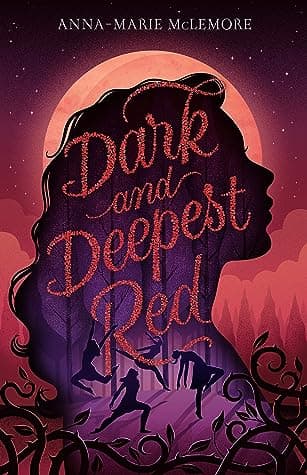
Synopsis
Covers the whole plot, including the ending.
- Difficulty
- Medium
- Pacing
- Moderate
- Mood
- Atmospheric, Ethereal, Melancholy, Hopeful
- Read it if
- You enjoy magical realism, historical mysteries, and dual-timeline narratives with a focus on social injustice and the power of stories.
- Skip it if
- You prefer hard fantasy with extensive world-building or are averse to stories with ambiguous magical elements and themes of historical trauma.
Dark and Deepest Red Plot Summary
Covers the whole plot, including the ending.
The Dancing Plague Begins
In Strasbourg, Summer 1518, Frau Troffea begins to dance uncontrollably in the town square. Her dance first draws attention, then becomes a spectacle, and finally, a source of worry as she shows no sign of stopping. Lavinia, a young Roma girl living near the city with her family, watches with fear and interest. Her family, known for their embroidery skills and unique life, already faces suspicion from many townspeople. As more people join Frau Troffea's dancing, a strange sickness grips the city, turning initial bewilderment into panic and whispers of demonic influence or witchcraft.
Rosella's Red Shoes
Five centuries later, Rosella Oliva, a talented seamstress, finds a pair of embroidered red shoes in a vintage shop. Drawn to their beauty, she tries them on, and they instantly seal to her feet. To her horror, the shoes force her to dance non-stop, mirroring the historical dancing plague. Rosella's family, also skilled in textiles, recognizes the connection to past stories. Her frantic search for answers leads her to Emil, a boy whose family, the Eulers, has a long, painful history with the 1518 dancing plague, having been wrongly accused of witchcraft.
Lavinia's Gift and the Accusations
Back in 1518, as the dancing plague worsens and more women succumb to the uncontrollable urge to dance, often to their deaths, the town's fear grows. The authorities, desperate for an explanation, look for scapegoats. Lavinia's family, with their Roma heritage and knowledge of herbs and 'charms' (intricate embroideries), become targets. Lavinia has a gift for enchanting her needlework, making her creations powerful. Her family's protective embroideries are misunderstood as dark magic, fueling accusations of witchcraft that threaten them and the entire Roma encampment.
Emil's Ancestral Guilt
In the modern timeline, Rosella, trapped by the red shoes, finds an ally in Emil. Emil, a descendant of the Eulers, carries the burden of his family's past, their name stained by witchcraft accusations during the 1518 plague. He has a deep knowledge of the historical events, having researched his ancestors' plight. He explains how his family was persecuted and driven from Strasbourg, their lives shattered by the hysteria. He recognizes the shoes as a manifestation of old magic and trauma, but he is wary of Rosella, fearing a repeat of the past and the reawakening of a dangerous power.
The Weaver's Secret
Lavinia's grandmother, a wise weaver, reveals a deeper truth about the dancing plague. It is not witchcraft in the traditional sense, but a manifestation of suppressed emotions and unspoken desires, particularly among Strasbourg women, amplified by a specific, magical thread. The Roma community, through their connection to the land and their craft, has long balanced weaving protection and understanding. Lavinia learns her family's embroidery is not just protective; it can also channel and influence these unseen forces. She realizes the responsibility that comes with her gift and her family's legacy.
Rosella and Emil's Unraveling Truth
As Rosella continues to dance, growing weaker, she and Emil delve deeper into the red shoes' mystery. They discover the shoes are not merely cursed objects but vessels, imbued with past magic and trauma. Their research uncovers inconsistencies in historical accounts, suggesting a cover-up or misdirection. They realize the shoes are connected to the threads and dyes used by Lavinia's family centuries ago. Emil's knowledge of historical accounts, combined with Rosella's connection to the shoes, helps them piece together the story, revealing the true perpetrators and victims of the 1518 events.
Lavinia's Sacrifice
With accusations against the Roma growing and the dancing plague claiming more lives, Lavinia faces an impossible choice. The town council, driven by fear and prejudice, demands a solution. To save her family and prevent a massacre, Lavinia must use her weaving abilities not just to protect, but to contain and redirect the plague's destructive energy. This requires a personal sacrifice, as she must sever a part of her connection to the magic, effectively sealing away a powerful aspect of her gift and the family's legacy, embodying their protective role, even if misunderstood.
The Shoes' Demand
The red shoes, imbued with the echoes of Lavinia's sacrifice and the dancers' suffering, become more demanding. Rosella understands the shoes are not just forcing her to dance, but compelling her to complete an unfinished story. They represent a tale that needs telling, a wrong that needs righting. Through her connection to the shoes, she begins to understand the specific 'payment' or 'action' required to break their hold. This involves not just understanding the past, but actively participating in its resolution, an act of empathy and truth-telling that can bring peace to the restless magic.
Unveiling the Truth
Working together, Rosella and Emil uncover the full truth: the 1518 dancing plague was not solely supernatural but worsened by the deliberate actions of powerful individuals in Strasbourg, who used the hysteria to consolidate power and persecute marginalized communities, particularly the Roma. The red shoes are a manifestation of the collective trauma and silenced stories of those who suffered. They realize the shoes' magic is connected to the suppressed desires and unacknowledged grief of the women, and to Lavinia's family's attempt to soothe and redirect this energy, which was then twisted and used against them.
Rosella's Resolution
Armed with knowledge of the past, Rosella prepares for a final confrontation with the red shoes. She understands that breaking their hold requires more than just removing them; it demands acknowledging and honoring the history they represent. Through an act of empathy and a re-interpretation of Lavinia's original protective magic, Rosella uses her skills as a seamstress to re-weave the narrative, literally and metaphorically. She finds a way to integrate the shoes' magic, not to suppress it, but to transform it, allowing the silenced voices to be heard and the lingering pain to be released. This act frees her and brings peace to the ancient curse.
Dark and Deepest Red Characters
Rosella Oliva
Protagonist
A modern seamstress cursed by red shoes, seeking answers to an ancient plague.
Rosella is a talented and intuitive seamstress with a deep connection to textiles and the stories they hold. She is initially an ordinary young woman, thrust into an extraordinary situation when a pair of red shoes seal to her feet, compelling her to dance uncontrollably. Her initial fear gives way to determination as she seeks to understand the shoes' curse and break free. She is empathetic, driven by a desire for truth and justice, and possesses an inherent understanding of magic and history through her craft. Her family, also skilled in textiles, provides her with a grounding in tradition and support.
Relationships: Emil (Romantic interest and research partner, initially wary but grows to trust and depend on each other.); Oliva Family (Supportive and traditional family of seamstresses, providing comfort and guidance.)
Lavinia
Protagonist
A Roma girl in 1518 Strasbourg, gifted with enchanting embroidery, caught in the dancing plague hysteria.
Lavinia is a young Roma girl living in 1518 Strasbourg, possessing a unique and powerful gift for imbuing her intricate embroideries with protective and guiding magic. She is observant, deeply connected to her family's traditions, and burdened by the growing suspicion and prejudice against her people. Lavinia is courageous and fiercely loyal, willing to make immense sacrifices to protect her loved ones. She feels the weight of her community's role in understanding and navigating the strange energies of the world, a role often misunderstood and feared by outsiders.
Relationships: Lavinia's Grandmother (Mentor and spiritual guide, teaching Lavinia about her family's magic and responsibilities.); Strasbourg Townspeople (Antagonistic relationship, marked by fear, prejudice, and accusations of witchcraft.)
Emil
Supporting
A descendant of a family blamed for the 1518 plague, obsessed with its history.
Emil is a studious and somewhat reclusive boy, a descendant of the Euler family, who were wrongly accused of witchcraft during the 1518 dancing plague. He carries the historical burden of his ancestors' persecution and is driven by a deep, almost academic obsession with understanding the events of the past. Initially guarded and skeptical, he eventually becomes Rosella's crucial partner in uncovering the truth. His knowledge of historical records and his family's oral history are invaluable, but he also struggles with the emotional weight of his heritage.
Relationships: Rosella Oliva (Research partner and romantic interest, initially wary but grows to trust and depend on each other.); Euler Family (ancestors) (Carries the burden of their persecution and the desire to clear their name.)
Lavinia's Grandmother
Supporting
The wise matriarch of Lavinia's Roma family, a powerful weaver and keeper of ancient knowledge.
Lavinia's Grandmother is the respected and wise elder of their Roma family, a skilled weaver whose craft goes beyond mere textiles, imbuing threads with protective and spiritual power. She is the primary teacher and guide for Lavinia, imparting knowledge of their ancestral magic, their connection to the land, and the delicate balance they must maintain. She understands the true nature of the dancing plague and the dangers their community faces, offering both practical advice and spiritual counsel. She is a figure of strength, tradition, and quiet power.
Relationships: Lavinia (Mentor and loving grandmother, teaching her the family's magical traditions.); Roma Community (Respected matriarch and spiritual leader.)
Frau Troffea
Mentioned
The first woman to begin dancing uncontrollably in 1518 Strasbourg.
Frau Troffea is the catalyst for the 1518 dancing plague, the first individual to begin dancing uncontrollably in the streets of Strasbourg. Her initial, inexplicable dance sets off the chain of events that leads to widespread hysteria, fear, and persecution. While not a central character in terms of narrative agency, her actions are pivotal to the entire plot, serving as the historical starting point for both Lavinia's struggle and Rosella's curse. She represents the initial, unexplainable manifestation of the suppressed emotions and magic that fuel the plague.
Relationships: Strasbourg Townspeople (Initially a spectacle, then a symbol of the terrifying and inexplicable plague.)
The Strasbourg Councilmen
Antagonist
The fearful and prejudiced authorities of 1518 Strasbourg.
The Strasbourg Councilmen represent the institutional power and prejudice of 16th-century society. Driven by fear, ignorance, and a desire to maintain order, they are quick to attribute the dancing plague to demonic influence and witchcraft. They actively persecute marginalized communities, particularly the Roma, using them as scapegoats to explain the inexplicable. Their actions are motivated by self-preservation and a rigid adherence to their societal beliefs, ultimately leading to severe injustices and contributing to the tragedy of the plague. They embody the societal forces that Lavinia and her family must contend with.
Relationships: Lavinia and the Roma Community (Persecutors, fueled by prejudice and fear.); Strasbourg Townspeople (Leaders who attempt to control the narrative and fear.)
The Red Shoes
Plot Device/Antagonist
Magical shoes that compel Rosella to dance and connect her to the past.
The red shoes are not merely an object but a powerful magical artifact, imbued with the history, trauma, and suppressed magic of the 1518 dancing plague and Lavinia's sacrifice. They act as a conduit between the past and present, compelling Rosella to dance uncontrollably and forcing her to confront the unresolved injustices of centuries ago. They are a manifestation of unexpressed grief, silenced stories, and the lingering power of Lavinia's protective magic, twisted by time and human suffering. Their beautiful, embroidered appearance belies their dangerous, demanding nature.
Relationships: Rosella Oliva (Curse-bearer, compelling her to dance and seek answers.); Lavinia (Created or imbued with Lavinia's magic and sacrifice.)
Dark and Deepest Red Themes
The Power of Storytelling and History
The novel shows how history is shaped and often distorted, and the impact of telling and re-telling stories. The dancing plague of 1518 is presented not just as a historical event, but as a narrative that has been obscured. Rosella and Emil's quest is about uncovering the 'true' story, challenging official accounts, and giving voice to the marginalized. Lavinia's embroideries are also a form of storytelling, weaving intentions and protections into fabric, preserving her family's history and magic. The red shoes are a physical manifestation of a story that demands to be heard and resolved, showing that unacknowledged histories can haunt the present.
“History is not what happened, but what is remembered and what is forgotten.”
Prejudice and Scapegoating
A central theme is how easily fear and ignorance lead to prejudice and the scapegoating of 'others.' In 1518 Strasbourg, the Roma community, including Lavinia's family, are targeted and accused of witchcraft due to their different customs, appearance, and perceived 'magic' (their craft). This historical persecution mirrors the societal biases Emil's family still experiences. The novel highlights how during crises, fear often turns into hostility against minority groups, leading to injustice and violence. The dancing plague becomes an excuse for existing prejudices to erupt.
“It was easier to blame the different than to understand the inexplicable.”
The Weight of Inheritance and Legacy
Both protagonists deal with their ancestral legacies. Rosella inherits her family's talent for sewing and, through the red shoes, the unfinished business of Lavinia's past. Emil carries the burden of his family's historical persecution, feeling compelled to redeem their name and understand the truth of 1518. Lavinia, in turn, inherits her grandmother's magic and the responsibility of her community's protective role. The novel explores how the past, both its triumphs and traumas, passes through generations, influencing identity, purpose, and even physical manifestations like the red shoes. It asks what it means to carry the burdens and gifts of those who came before.
“Some stories are sewn into your skin, passed down through the blood and the thread.”
Magic, Craft, and Artistry
The novel blurs the lines between magic, skilled craftsmanship, and art. Lavinia's embroidery is depicted as magic, imbued with intention and power, capable of protection and influence. Rosella's modern seamstress skills are shown to be a continuation of this magical connection to textiles. Creating with one's hands, particularly with fabric and thread, is elevated to a sacred and powerful art form. This theme suggests that true magic lies in the deep connection between creator and creation, and that traditional crafts hold an intrinsic power that can both heal and harm, depending on intent and understanding. The red shoes themselves are a product of this magical artistry.
“A needle can be a wand, and thread can be a spell.”
Plot Devices & Literary Techniques
Dual Narrative Structure
Alternating chapters between 1518 Strasbourg and the modern day.
The novel employs a dual narrative structure, alternating between Lavinia's story in 1518 Strasbourg and Rosella's story in the present day. This allows the reader to experience the origin of the dancing plague and its magical underpinnings firsthand, while simultaneously following Rosella's quest to understand and break the curse in the modern era. The juxtaposition highlights parallels between the past and present, emphasizing the enduring nature of prejudice, the power of magic, and the way historical events continue to resonate. The two timelines gradually converge, revealing their deep interconnectedness as the mystery unfolds.
The Red Shoes
A cursed magical artifact that binds Rosella to the past.
The red shoes serve as the central magical plot device, acting as a physical manifestation of the 1518 dancing plague and Lavinia's ancestral magic. They directly connect Rosella to the past, compelling her to dance and forcing her to confront the unresolved history. The shoes are more than a curse; they are a vessel for silenced stories and unacknowledged trauma, demanding to be understood and released. Their intricate embroidery suggests their connection to Lavinia's craft, making them a symbolic link between the two protagonists and their respective timelines.
Weaving/Embroidery as Magic
The act of sewing and threadwork as a source of power and protection.
Throughout the novel, weaving, embroidery, and general textile work are depicted not just as crafts but as a potent form of magic. Lavinia's family imbues their needlework with intentions, creating protective charms and influencing events. Rosella's own skills as a seamstress give her an innate understanding of the red shoes' magic. This device elevates traditional craft to a powerful, mystical art form, suggesting that the act of creation itself can be a conduit for magic, protection, and the preservation of history and identity. It is through this 'thread magic' that the curse is both created and ultimately unraveled.
Historical Allusion (Dancing Plague of 1518)
Grounding the fantastical elements in a real historical event.
The novel uses the real-life historical event of the Dancing Plague of 1518 in Strasbourg as its foundation. By weaving fantastical elements and a magical explanation into a documented historical phenomenon, the author grounds the story in a sense of reality while exploring themes of mass hysteria, societal fear, and the search for meaning in the inexplicable. This device adds a layer of eerie plausibility to the magic, making the fantastical elements feel more profound and the historical context more vivid and resonant, inviting readers to consider the 'unseen' forces behind historical mysteries.
Dark and Deepest Red Quotes
“The magic was in the stitches, and the stitches were in her blood.”
“There were some stories that had to be told, even if they were dangerous.”
“Some things are not meant to be forgotten, even if they are painful.”
“He knew what it was to be made of something beautiful and terrible, both at once.”
“The threads of their lives were tangled, knotted, and impossible to untangle, and maybe that was how they were meant to be.”
“Every stitch was a prayer, a wish, a piece of a story that wouldn't be lost.”
“Sometimes the greatest magic was just surviving, just making it through another day.”
“The world had a way of twisting beauty into something grotesque, if you weren't careful.”
“He had always known that the stories were real, because he carried them in his own skin.”
“To be seen, truly seen, was a kind of magic all its own.”
“The past wasn't dead; it was just sleeping, waiting for someone to wake it up.”
“She learned that fear could be a thread, too, weaving through a family, generation after generation.”
“Some things needed to burn to be understood, to be truly seen for what they were.”
“The magic wasn't always gentle, wasn't always kind. Sometimes it was a force that consumed.”
Quiz
10 questions on the plot and the characters. Each answer comes with a short explanation.
Question 1
In the 1518 timeline, what is the initial, visible symptom of the strange sickness that sweeps through Strasbourg?
- A sudden, debilitating fever
- Women dancing uncontrollably in the streets
- Loss of speech and memory
- Skin lesions resembling a rose pattern
Show answer
B. Women dancing uncontrollably in the streets The synopsis explicitly states that 'women dance in the streets, some until they fall down dead,' indicating this as the primary symptom of the sickness in 1518.
Question 2
What object seals to Rosella Oliva's feet in the modern timeline, causing her to dance uncontrollably?
- A pair of silver slippers
- A pair of red shoes
- A pair of wooden clogs
- A pair of embroidered boots
Show answer
B. A pair of red shoes The synopsis clearly states that 'a pair of red shoes seal to Rosella Oliva’s feet, making her dance uncontrollably.'
Question 3
Which character in the modern timeline is descended from the family blamed for the dancing fever five centuries ago?
- Rosella Oliva
- Emil
- Lavinia
- Strasbourg Mayor
Show answer
B. Emil The synopsis introduces Emil as 'a boy who knows the dancing fever’s history better than anyone: Emil, whose family was blamed for the fever five hundred years ago.'
Question 4
What is the primary accusation leveled against Lavinia and her family in the 1518 timeline due to the dancing sickness?
- Poisoning the town's water supply
- Spreading a contagious disease
- Practicing witchcraft
- Inciting rebellion against the authorities
Show answer
C. Practicing witchcraft The synopsis states, 'As rumors of witchcraft spread, suspicion turns toward Lavinia and her family,' indicating witchcraft as the primary accusation.
Question 5
What is a central thematic element shared between the 1518 and modern timelines, as suggested by the synopsis?
- The pursuit of scientific cures for unusual diseases
- The enduring impact of historical blame and secrets
- The struggle for women's suffrage
- The conflict between religious and secular power
Show answer
B. The enduring impact of historical blame and secrets The connection between Emil's family being blamed in 1518 and Rosella discovering 'more to what happened' in the modern day highlights the theme of historical blame and its lingering impact.
Question 6
What is the implied consequence for Lavinia if she fails to 'do the unimaginable' to save her loved ones in 1518?
- Exile from Strasbourg
- Her family being forced to pay a large fine
- Being accused and potentially executed for witchcraft
- Forced labor in the local monastery
Show answer
C. Being accused and potentially executed for witchcraft Given the historical context of witchcraft accusations in 1518, the implication of 'doing the unimaginable to save herself and everyone she loves' when 'suspicion turns toward Lavinia' strongly suggests facing severe punishment, likely execution, if she fails.
Question 7
What specific literary characteristic is highlighted as 'signature' to Anna-Marie McLemore's writing style in the synopsis?
- Fast-paced plot twists
- Extensive historical research
- Lush prose
- Sparse and direct language
Show answer
C. Lush prose The synopsis states, 'With McLemore's signature lush prose,' directly identifying this as a key characteristic of her writing.
Question 8
What genre elements are explicitly combined in 'Dark and Deepest Red' according to the synopsis?
- Science Fiction and Romance
- Historical Mystery and Contemporary Thriller
- Fairy Tale magic and a modern story of passion and betrayal
- Epic Fantasy and Dystopian Literature
Show answer
C. Fairy Tale magic and a modern story of passion and betrayal The synopsis concludes by stating the book 'pairs the forbidding magic of a fairy tale with a modern story of passion and betrayal,' explicitly combining these elements.
Question 9
The synopsis implies that Rosella's survival from the red shoes is directly dependent on what action?
- Finding a way to physically remove the shoes
- Uncovering the full truth behind the 1518 dancing fever
- Convincing Emil to share his family's secrets
- Learning to control the dancing through sheer willpower
Show answer
B. Uncovering the full truth behind the 1518 dancing fever The synopsis states, 'But there’s more to what happened in 1518 than even Emil knows, and discovering the truth may decide whether Rosella survives the red shoes,' directly linking her survival to uncovering the truth.
Question 10
What is the primary motivation for Lavinia's potential 'unimaginable' actions in the 1518 timeline?
- To gain power within her community
- To prove her innocence to the authorities
- To save herself and her loved ones from the accusations
- To find a cure for the dancing sickness
Show answer
C. To save herself and her loved ones from the accusations The synopsis explicitly states, 'Lavinia may have to do the unimaginable to save herself and everyone she loves,' clearly indicating her motivation is protection and survival for herself and her family.
Dark and Deepest Red FAQ
What is the central historical event that 'Dark and Deepest Red' is based on?
The novel is centered around the real-life dancing plague of 1518 in Strasbourg, where many women inexplicably began to dance uncontrollably, some to their deaths. This historical phenomenon serves as the magical and mysterious core connecting the two timelines.
Who are the main characters in the 1518 Strasbourg timeline?
In 1518, the primary protagonist is Lavinia, a young woman whose family is known for their embroidery and connection to the mysterious red shoes. Her family becomes entangled in the growing suspicion and accusations of witchcraft during the dancing plague.
Who are the main characters in the contemporary timeline?
The modern story follows Rosella Oliva, a girl who finds herself afflicted by a pair of red shoes that force her to dance. She encounters Emil, a boy whose family, the Emils, has a direct historical connection to the events of 1518 and the accusations of witchcraft.
What is the significance of the red shoes in the story?
The red shoes are a magical and cursed artifact that appear in both timelines, sealing to the wearer's feet and compelling them to dance uncontrollably. They are central to the dancing plague in 1518 and the affliction Rosella experiences in the present day, linking the past and present.
How does the novel explore the theme of magic versus superstition?
The book deftly blurs the lines between genuine magic, as seen with the red shoes, and the fear-driven superstitions of the townspeople in 1518. It examines how societal panic can misinterpret magical occurrences as malevolent witchcraft, leading to dangerous accusations and persecution.
What is the specific connection between Lavinia's family and Emil's family?
Emil's family, the Emils, were the ones accused of witchcraft and blamed for the dancing plague in 1518. Lavinia and her family, who crafted the red shoes, have a deeper, more complicated connection to the magical origins of the plague and the accusations, which Emil is only beginning to uncover.
What role does embroidery play in the novel's magical system?
Embroidery, particularly the creation of the red shoes, is depicted as a powerful form of magic in the book. The stitches and threads are not merely decorative but imbue objects with spells and intentions, making Lavinia's family's craft deeply significant to the magical events.
Are there any specific historical figures or events, besides the dancing plague, referenced or subtly woven into the narrative?
While the focus is on the dancing plague, the novel subtly incorporates the broader historical context of the Holy Roman Empire, the societal anxieties of the era, and the pervasive fear of witchcraft that led to widespread persecution, reflecting the real-world historical climate of the early 16th century.
How does the novel depict the psychological impact of the dancing plague on its victims?
The book vividly portrays the psychological torment of the dancers, trapped in their own bodies and forced to move against their will. It explores the fear, exhaustion, and despair they experience, highlighting the loss of autonomy and the public spectacle of their suffering.
What is the psychological journey of Lavinia as she faces accusations of witchcraft?
Lavinia undergoes immense psychological pressure, grappling with fear for her family's safety, the burden of their magical secret, and the difficult choices she must make. Her journey explores themes of self-sacrifice, resilience, and the internal conflict of protecting loved ones even at great personal cost.
How does Rosella's experience with the red shoes mirror and diverge from the 1518 dancers?
Rosella's forced dancing mirrors the physical affliction and loss of control experienced by the 1518 dancers. However, her modern context allows for a different kind of investigation and the possibility of understanding the magic, rather than simply being a victim of unexplained phenomena, offering a path to potential liberation.
What psychological elements contribute to Emil's initial reluctance to engage with his family's history?
Emil carries the weight of his family's historical shame and the trauma of being blamed for the plague, leading to a reluctance to confront the past. This manifests as a protective mechanism, as he tries to distance himself from the painful legacy, fearing further judgment or involvement in something dangerous.
How does the novel use the dual timelines to enhance its themes?
The dual timelines allow the novel to explore how historical injustices and magical curses echo through generations, showing both the immediate impact of the dancing plague and its enduring legacy. It highlights the cyclical nature of fear, blame, and the search for truth across centuries.
What is the significance of the book's title, 'Dark and Deepest Red'?
The title likely refers to the color of the magical red shoes, symbolizing passion, danger, and the depth of the curse. 'Dark and Deepest' suggests the hidden, mysterious, and potentially sinister origins of the magic, as well as the profound emotional and physical experiences of the characters.
Does the novel offer a definitive scientific or magical explanation for the dancing plague by the end?
The novel primarily leans into the magical explanation rooted in the red shoes and their enchantment, rather than offering a purely scientific one. It embraces the fairy tale aspect of the story, focusing on the magical origins and the human response to such phenomena, leaving some elements to the reader's interpretation of magic.
How does the book explore the concept of agency and free will?
Agency is a central theme, particularly through the forced dancing that strips characters of their physical autonomy. The story examines the struggle to reclaim free will in the face of magical compulsion and societal pressure, both for the individual dancers and for characters like Lavinia and Rosella making difficult choices.
What is the role of love and sacrifice in the narrative, particularly between the main characters?
Love and sacrifice are pivotal, especially in Lavinia's storyline as she considers unimaginable acts to protect her family. In the modern timeline, the developing connection between Rosella and Emil becomes a source of strength and motivation, influencing their choices and willingness to face danger together.
How does McLemore's signature lush prose enhance the storytelling in 'Dark and Deepest Red'?
McLemore's prose creates a rich, sensory experience, immersing readers in the textures of embroidery, the sounds of dancing, and the emotional landscapes of the characters. This lyrical style elevates the magical realism, making the fantastical elements feel deeply tangible and the historical settings vibrantly alive.
About the author

Anna-Marie McLemore is a renowned author celebrated for their magical realism and lyrical prose, often exploring themes of identity, family, and folklore. Their notable works include the award-winning "When the Moon Was Ours" and the critically acclaimed "Dark and Deepest Red." McLemore's writing is lauded for its rich imagery and authentic representation of diverse experiences within the young adult fiction genre.
Similar books
- A Curse So Dark and Lonely
Brigid Kemmerer
4.1 (53k) average on GoodreadsFantasyFeatures a fairy tale retelling with a curse and a focus on breaking it.
- The Dovekeepers
Alice Hoffman
4.0 (67k) average on GoodreadsHistorical FictionBoth novels explore women's roles in historical adversity and incorporate magical realism. However, McLemore's Dark and Deepest Red leans more into Young Adult sensibilities and a more overtly dreamlike, symbolic narrative, whereas Hoffman's work often has a more grounded, albeit magical, historical context.
- Harry Potter and the Sorcerer's Stone
J.K. Rowling
4.5 (7M) average on GoodreadsFantasyRescued from a miserable life under the stairs, an orphaned boy discovers he's a wizard destined for a magical school, where he uncovers a dangerous secret tied to the dark wizard who murdered his parents.
- The Hunger Games
Suzanne Collins
4.3 (6.4M) average on GoodreadsFantasyIn a future where children fight to the death on live television, Katniss Everdeen volunteers for the arena, turning a death sentence into a fight for survival and a spark of rebellion.
- 1984
George Orwell
4.2 (3.1M) average on GoodreadsPoliticsIn a future where surveillance and thought control are absolute, a man's search for truth clashes with the Party, showing that hope can be a form of rebellion.
- Divergent
Veronica Roth
4.2 (2.9M) average on GoodreadsFantasyIn a society divided by virtues, a sixteen-year-old's difference from the norm starts a rebellion that threatens her world.




Enjoyed the summary?
A summary gives you the shape of the book. The book itself has the detail, the examples and the voice.
Find Dark and Deepest Red on AmazonAs an Amazon Associate, BookBrief earns from qualifying purchases. How we're funded